Category Archives: SBO

Breaking the Silence: The Cost of Complicity in the Face of Injustice

By Dhabessa Wakjira
In the annals of human history, some of the darkest chapters were not written by tyrants alone. They were co-authored by the silence of those who witnessed evil and chose to look away, who heard the cries of the oppressed and chose to hear nothing, who saw injustice unfolding and chose to remain still.
“Remaining silent like sheep is the source of our problems,” the saying goes. “Failing to respond to those who are oppressing people with falsehoods is turning many just people into victims.”
These words carry a weight that transcends any single community or era. They speak to a universal truth: silence is not neutrality. Silence is a choice, and in the face of oppression, it is a choice that sides with the oppressor.
The Anatomy of Silence
Throughout history, silence has been the soil in which tyranny flourishes. The Holocaust did not begin with gas chambers; it began with whispers, with the gradual dehumanisation of neighbours, with the silence of those who saw their Jewish friends being marginalised and said nothing. The Rwandan Genocide was not spontaneous; it was enabled by the silence of the international community, which refused to call what was happening by its name. The enslavement of millions was sustained not only by chains but by the silence of those who profited from human suffering and those who looked the other way.
In the Oromo context, this silence has taken many forms. Political persecution has often been met with a deafening quiet from those in positions of power. Human rights abuses have been documented yet ignored. Communities have been displaced, lives have been destroyed, and voices have been silenced.
The question is not whether oppression exists—it does, in many forms, in many places. The question is: what are we doing about it?
The False Comfort of Neutrality
There is a dangerous myth that silence is a form of neutrality. Many believe that by staying out of political or social struggles, they are remaining impartial, above the fray, wise in their restraint.
This is a delusion.
As the philosopher Edmund Burke famously observed, “The only thing necessary for the triumph of evil is for good men to do nothing.” When we fail to respond to falsehoods, we allow them to become accepted truths. When we fail to challenge oppression, we allow it to become normalised. When we fail to speak for the voiceless, we become complicit in their suffering.
Silence is not a safe harbour; it is a choice to abandon the moral high ground.
The Weaponisation of Lies
In today’s world, falsehoods are weaponised with unprecedented sophistication. Disinformation campaigns, propaganda, and the deliberate distortion of truth are tools used to divide communities, incite hatred, and justify atrocities.
Those who oppress rely on the silence of the masses. When a lie is repeated often enough and loudly enough, and when no one challenges it, it begins to wear the mask of truth. In this environment, even the most just individuals can find themselves victimised—not just by the direct violence of the oppressor but by the collective silence that allows the oppressor to act with impunity.
When a community is falsely accused of violence, and good people remain silent, that community suffers. When a political leader spreads hatred against a minority, and people of conscience say nothing, that minority is endangered. When human rights abuses are reported, and no one demands accountability, the abuses continue.
The Courage to Speak
To break this cycle, we must cultivate the courage to speak. This courage is not always easy—it often comes with a cost. Speaking truth to power can lead to persecution, ostracism, or worse. But the cost of silence is far greater.
Speaking out does not always mean taking to the streets or publishing manifestos. It can take many forms:
- Amplifying the voices of the oppressed: Sharing their stories, supporting their struggles, and ensuring their perspectives are heard
- Challenging falsehoods: When you hear a lie about a community or individual, correct it. Do not let hate speech go unchallenged
- Using your privilege: If you have access to platforms that others do not, use them to speak for those who cannot
- Educating yourself and others: Understanding the issues, the history, and the context of oppression is the first step to effective action
- Supporting organisations that fight for justice: Many organisations work tirelessly to document human rights abuses, provide legal aid to the oppressed, and advocate for political change. They need support
The Power of Solidarity
Throughout history, solidarity has been the antidote to silence. When communities stand together, they create a force that oppressors cannot ignore.
The civil rights movement in the United States succeeded not only because of the courage of African Americans but because of the solidarity of people from all backgrounds who refused to be silent. The anti-apartheid movement in South Africa was sustained by global solidarity that isolated the regime and demanded change. The struggle of the Oromo people is no different—it requires solidarity from within and beyond the community.
Solidarity means recognising that the oppression of any group is a threat to all groups. It means understanding that the forces that silence one voice will eventually silence all voices. It means refusing to be divided by the false narratives that oppressors use to fragment potential resistance.
A Call to Action
The time for silence is over. The time for speaking, for action, and for solidarity is now. Every voice that rises in defence of justice strengthens the collective resolve. Every hand that reaches out to support the oppressed builds a barrier against injustice. Every person who refuses to be complicit through silence transforms the landscape of possibility.
Those who oppress rely on division and fear. They rely on us remaining silent, on us being too afraid to speak, too comfortable to act, too indifferent to care.
Let us prove them wrong.
Let us break the silence.
Let us stand with the oppressed, not as passive bystanders but as active participants in the struggle for justice, truth, and humanity.
“The only thing necessary for the triumph of evil is for good people to do nothing.” – Edmund Burke
#BreakTheSilence #JusticeForAll #Oromo #Solidarity #SpeakTruth #NoMoreComplicity

The History of Oromo Writing and the Role of Dr. Sheikh Mohammed Rashaad
Language is a tool of communication and a symbol of identity. But for the Oromo people, their language remained largely oral for centuries—confined to the spoken word while the world around them moved forward in ink. The story of how Afaan Oromoo finally found its written form is a story of struggle, sacrifice, and one man’s relentless vision.
A Language Without Letters
The Oromo language, spoken by tens of millions across the Horn of Africa, was for a long time a language of the spoken word alone. Unlike many of its neighbors, Afaan Oromoo lacked an indigenous writing system that could accurately capture its unique sounds and grammatical structure.
Efforts to write Oromo began in the 19th century. The first known written Oromo texts were religious manuscripts from the Rayya area, produced during the time of the sheikhs of Anniyya and Danniya. These were handwritten poetry collections, hymns to God and His Prophet, penned with a reed pen using the Arabic script.
But the Arabic script was never a perfect fit for Oromo. Arabic has only a limited set of vowels and consonant distinctions. Oromo, by contrast, has ten vowels and a richer set of consonants. Six Oromo phonemes—c, ch, dh, g, ny, and ph—had no direct equivalents in Arabic writing. Scholars had to adapt, improvise, and sometimes simply make do with imperfect approximations.
Three Scripts, Three Attempts
The Ethiopian Script (Ge’ez/Amharic)
In 1886, an Oromo man named Onisimos Nasiib (Abbaa Gammachiis) translated the Bible into Oromo and had it published in Asmara, Eritrea. He used the Ge’ez script—the same writing system used for Amharic and Tigrinya. This script, however, was designed for languages with seven vowels, not ten. It could not adequately represent Oromo sounds, and the translation, while groundbreaking, was limited by the tools at hand.
The Italian Contribution
After the Italian occupation of Ethiopia in 1935, the Italian linguist Martino Mario Moreno conducted systematic research on the Oromo language. In 1939, he published Grammatica teorico-pratica della lingua galla (Theoretical-Practical Grammar of the Galla Language) in Milan, using a Latin-based alphabet. His work was the first to accurately describe the phonology, morphology, and syntax of Oromo in a scientific way.
“The period of Moreno can be called the ‘Moreno Era’—a time when the science of linguistics began to properly understand the language”.
Moreno’s alphabet represented a significant step forward:
‘ A B C Č D Ḑ0 E F G H I J K L M N Ñ O H Q R S Ṧ T Ṭ U W Y Z
The Sheikh Bakri Script
Meanwhile, within Oromo society, a different approach was emerging. Sheikh Bakri Sapalo (born Abubakar Garad Usman, 1895-1980), an Oromo scholar and religious teacher, invented an entirely new writing system for Oromo in 1956. His script was designed from the ground up to capture Oromo sounds accurately.
Sheikh Bakri had studied under several distinguished Islamic teachers and became renowned for his poetry. Under Haile Selassie’s regime, however, Oromo language was banned in education, conversation, and administrative matters. Sheikh Bakri’s script was developed in secrecy, perhaps to avoid detection by authorities who would have opposed Oromo writing in any form.
His most important work was Shalda, a twenty-page pamphlet that purported to be religious instruction but was actually a veiled account of Oromo suffering under Haile Selassie. It became the first and last major work in his alphabet. In 1965, Sheikh Bakri was placed under house arrest. In 1978, he fled to a refugee camp in Somalia, where he died without ever seeing his script widely adopted.
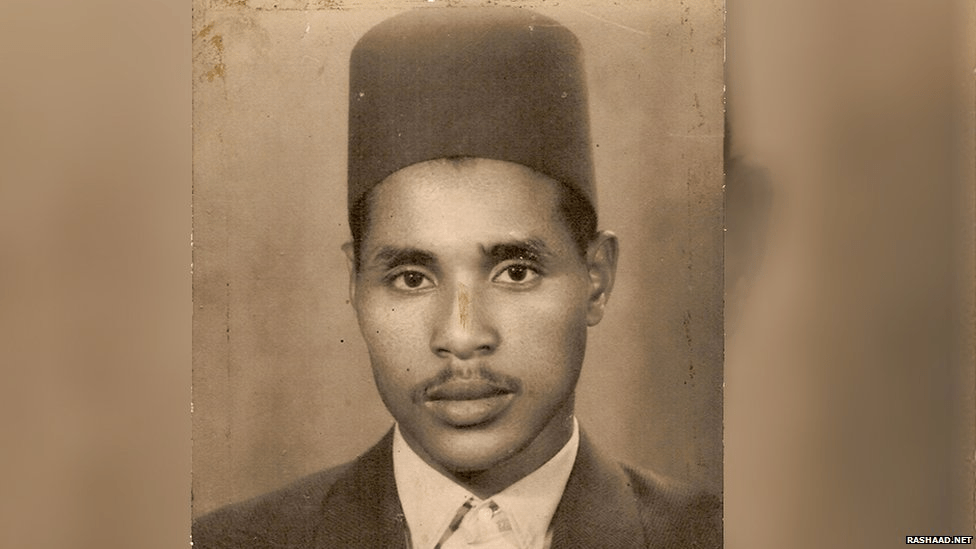
Dr. Sheikh Mohammed Rashaad: The Man Who Completed the Mission
A Journey Begins on Foot
Born in 1934 in Eastern Oromia, in a village called Laga Arba, Sheikh Mohammed Rashaad Abdullee grew up under the harsh realities of colonial settler rule. As a young man, he was severely chastised by one of the settlers. With no one to defend him, his young mind resolved on a radical course: he would go overseas to acquire skills and weapons for his people’s emancipation.
At the age of 15, in 1949, he left Ethiopia on foot. He traveled through Djibouti, Yemen, and Saudi Arabia, performing Hajj in 1950. From there, he continued to Syria, where he spent five years at the Fatul Islam school in Damascus, eventually earning the title of Mufti.
In 1956, he entered Al-Azhar University in Cairo, a center of learning and liberation movements across Africa. There, surrounded by students from across the continent, his Oromo consciousness deepened.
“When he entered Al-Azhar University in 1956, all nations began to showcase their languages, cultures, and identities. He saw histories of different countries beautifully written and thought, ‘We also have a history to tell, a language to speak, a script to write with'”.
The Mogadishu Years: Radio and Rebellion
After graduating with top honors in 1962, receiving an award from Egyptian President Gamal Abdel Nasser, Sheikh Rashaad was sent by Al-Azhar to Somalia. There, he was hired by the Somali government as a linguistic expert. This gave him a new opportunity to study Oromo language using available Somali sources.
In Mogadishu, he joined forces with other Oromo refugees and intellectuals, including the journalist Ayub Abubakar. Together, they started the first Oromo-language radio broadcast from Mogadishu in 1965. The program began at 15 minutes, grew to 30, and eventually to a full hour.
“The broadcast shook the Haile Selassie regime in Ethiopia, which dispatched agents to assassinate and put a stop to their work. Haile Selassie’s agents eventually assassinated Ayub but were apprehended in Mogadisho before they could similarly murder Sheikh Rashad”.
The Birth of Qubee
It was during this period that Sheikh Rashaad discovered the suitability of the Latin script for writing Oromo. His comparative studies of Oromo and Somali led him to develop the modern Oromo alphabet.
In 1969, he prepared a manuscript titled “Fura Afaan Oromoo” (The Key to Oromo), which was handwritten and circulated among Oromo communities. Two years later, in 1971, it was published—the first complete Oromo-language reader in the modern Latin alphabet.
The book faced immediate challenges. In Somalia, the regime tried to impose the label “Somali-Abbo” on Oromos and recalled his book to redo the cover. But in haste, they left the inside page intact, which still read “Fura Afaan Oromoo”—exposing the plot. In Ethiopia, his writings were strictly forbidden; anyone found with them would face severe punishment.
Exile and Lifelong Work
Under pressure from both sides, Sheikh Rashaad relocated to Saudi Arabia, where he continued his scholarly work. Over the following decades, he produced an extraordinary body of work:
- The first Quran translation in Afaan Oromoo
- Translation of over 40 Hadith books from Arabic to Oromo
- The first Somali-Oromo dictionary
- The first Arabic-Oromo dictionary
- Numerous articles on Islam with particular emphasis on Eastern Africa
- Hajj and Umra guidance for Oromo pilgrims
- Collections of Oromo traditional songs (miriysaa, dhiichisa, geerarsa)
- Children’s stories in Oromo
- History of the Prophet Muhammad in Oromo
- History of Islam in Oromo
“He spent over 15 years conducting research on the Oromo and Somali languages, which later became the focus of his thesis for a PhD in linguistic studies, which he received from the UK”.
Recognition and Final Years
In recognition of his lifelong contribution, the Oromo Studies Association bestowed on him its Lifetime Achievement Award in 2009. In 2010, the Oromiyaa Radio and Television (ORTO) recognized him for his contribution to the development of the Oromo alphabet.
In 2009, he returned to his homeland, settling in Adama, central Oromia. But his final years were not peaceful. When the Ethiopian regime tried to impose a particular interpretation of Islam on the faithful, Sheikh Rashaad objected. For his conviction, he was evicted from his home and forced to relocate to Dire Dawa.
Fiercely independent and unquestionably loyal to his people, Dr. Sheikh Mohammed Rashaad passed away with dignity on May 25, 2013, at the age of 79.
The Legacy
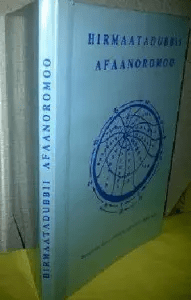
Sheikh Rashaad was not alone. He worked alongside others who contributed to the development of Oromo writing. Haylee Fidaa and Abdullaahi Yuusuf, Oromo students in Europe, adopted the Moreno alphabet with modifications and published two important books in 1973-74: Hirmaata Dubbii Afaan Oromoo (an Oromo grammar) and Bara Birraan Barihe (a drama about the suffering under the Neftenya system).
But it was Sheikh Rashaad who provided the definitive, scientifically-based alphabet that would eventually be adopted for all Oromo writing—from educational materials to official government communications to the translations that would bring the world’s knowledge into the Oromo language.
“His contribution in informing and educating the masses and in strengthening Oromo nationalism, despite serious threats and challenges, is immense. His works will live with the Oromo people forever and continue to inspire millions”.
Today, when millions of Oromo children learn to read and write in their own language, when Oromo scholars publish research in international journals, when the Bible and the Quran are read in Oromo by millions, the foundation they are building on—the alphabet they are using—is the one that Sheikh Mohammed Rashaad developed, refined, and fought to protect.
He ranks among the patriotic Oromo religious scholars from both Muslim and Christian traditions who, despite persecution from successive regimes, paid heavy sacrifices for their people. Among them are the Reverend Gudina Tumsa, who gave his life for the cause; Sheikh Bakri Saphalo, who died in a refugee camp; and the great Abbaa Gammachis, who endured humiliation and subjugation. They remain giant role models who will continue to inspire future generations—shining forever like lighthouses in a free Oromia.
May the angels welcome this man who made written Oromo language accessible to millions—a renewer of his time, a truly great man.

A Concise History of Oromo Media: From Colonial Radio to Digital Revolution
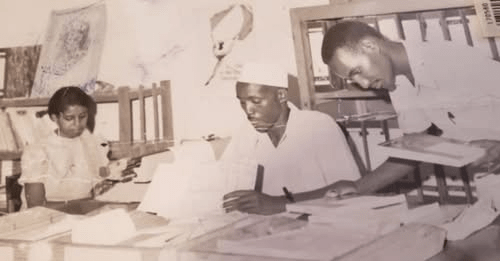
From the hills of Jimma to the screens of the diaspora, the journey of Oromo media is a story of resilience, sacrifice, and an unyielding quest for voice. It is a tale that begins not with ink on paper, but with electromagnetic waves cutting through the Ethiopian highlands during a time of war.
Part One: The Electronic Beginning
In the history of world media, print came first. Newspapers and magazines preceded radio and television. But in the story of Oromo media, the opposite is true. The first medium to speak the language of the Oromo people was not a newspaper—it was a radio station.
The Italian Experiment (1935-1941)
It was during the Italian occupation of Ethiopia that the first Oromo-language radio broadcast came to life. When Emperor Haile Selassie fled the country following Italy’s invasion, the fascist regime of Victor Emmanuel III sought to consolidate its control over the diverse peoples of the empire.
The Italians understood something the previous regime had ignored: that the Oromo people, who had been subjugated under the Neftenya (Amhara settler) system, harbored deep resentment toward the imperial order. To win their loyalty—or at least their compliance—the colonial administration needed to speak to them in their own language.
In a move that would forever change Oromo history, the Italians built a radio station near the city of Jimma. They called it “Centro Radio” in Italian, but the local Oromo people gave it a name that has stuck to this day—Shanta-Raadiyoonii (Radio Station). The hill where it was built, approximately 10 kilometers northwest of Jimma, still bears this name. To this day, visitors to Jimma can look toward the northwest and see the spot where the first Oromo voice entered the airwaves.
This radio station, however, served a calculated purpose. It was designed to persuade Oromos to embrace Italian fascism over Ethiopian imperialism—trading one master for another. The Italians dismantled the Neftenya system and replaced it with a form of ethnic-based administration, drawing borders along ethnic lines for the first time. But their propaganda was not liberation; it was another form of subjugation.
When Haile Selassie returned to power with British support in 1941, he quickly shut down the Italian-built station. Its equipment—studios, transmitters, and antennas—was dismantled and moved to Addis Ababa (Finfinne). The emperor tried to erase the memory of the station, even attempting to suppress the name “Shanta-Raadiyoonii.” But the people would not forget. For years after, Oromos remembered the brief time they had heard their language on the radio.
The Cairo Experiment (1960s)
The emperor had made a fatal miscalculation. He feared that acknowledging Oromo language on national radio would strengthen ethnic solidarity against his rule. And so, for decades, Oromo voices remained silent on Ethiopian airwaves.
But in the 1960s, a new voice emerged—from Egypt.
Oromo students studying at Al-Azhar University in Cairo, including the pioneering scholar Sheik Muhammad Rashaad Abdullee, established an Oromo-language radio broadcast from Cairo. This was different from the Italian station. The Cairo broadcast was not propaganda for any foreign power; it was a genuine Oromo voice advocating for Oromo rights, educating the people about their history, and mobilizing resistance against the Neftenya system.
The emperor’s government was alarmed. In his eyes, a broadcast of Oromo from Cairo was not a weapon to be used against him—and he could not allow it to continue. Through diplomatic pressure, Haile Selassie’s government persuaded the Egyptian regime to shut down the station.
The Mogadishu Martyrs (1967)
As soon as the Cairo station went silent, a new one emerged—this time from Mogadishu, Somalia. Oromo scholars and intellectuals who had studied in Egypt, including the likes of Sheik Muhammad Rashaad and others, moved to Somalia and established another Oromo-language radio station. Among those who joined this effort was a young Oromo journalist named Ayub Abubakar.
This station had a profound impact, particularly in the eastern Oromo regions of Hararge. The broadcasts ignited resistance and brought Oromo national consciousness to a new level. The emperor’s regime, already nervous, could not tolerate this. They struck a deal with the government of Siad Barre in Somalia to silence the station. When diplomatic pressure failed to achieve full compliance, the emperor’s agents reached into Mogadishu itself.
On a Friday afternoon in 1967, near a place called Liizo on the shores of the Indian Ocean, 25-year-old Ayub Abubakar was washing clothes. Agents of the imperial regime seized him and killed him. His body was found two days later and buried in Mogadishu. His crime? He had dared to give his people a voice.
Other journalists from that station managed to escape. Abubakar Muussaa, who would later bring his artistry to Radio Harar; Shantam Shubbisaa (the last living survivor today); Abdii Huseen; and Hindiyaa Ahmed (Shantam Shubbisaa’s wife) were among those who continued the struggle. They are the founding fathers and mothers of Oromo media, and their sacrifices paved the way for everything that followed.
Part Two: Radio Harar—A Calculated Gamble
By the early 1970s, the emperor had reached a desperate conclusion. The Mogadishu station had become too powerful to ignore. Fearful that the Oromo people of Hararge would align with Somalia against the Ethiopian state, Haile Selassie’s government made a strategic decision.
They would open their own Oromo-language radio station.
The Birth of Radio Harar (1973)
In 1973, Radio Harar was launched. But it was never intended as a genuine celebration of Oromo culture. According to veterans of the station, “Radio Harar was not originally intended for the Oromo when it was launched. Prior to that, a radio station broadcasting in Oromo was established in Mogadishu.”
The emperor’s government feared that if they opened an Oromo station in Addis Ababa (Finfinne), the Oromo people would unite around it. If they did nothing, the eastern Oromo would align with Mogadishu. Their solution was to create a limited, controlled Oromo-language program called “Qophii Afaan Oromoo”—a station they could monitor and manipulate.
The Price of Voice
But even under imperial control, Radio Harar became something more than its creators intended. The station’s Oromo staff—journalists, artists, and technicians—turned it into a genuine voice for their people.
The station faced immense pressure. Its journalists were imprisoned, persecuted, and killed. The bandleader Abubakar Muussaa survived persecution under Haile Selassie and later faced mortal danger from the Derg regime. The singer Abdi Qophee (Mohammed) wrote lyrics that became anthems of Oromo resistance.
For Jaafar Ali, who grew up listening to Radio Harar and later worked there as a producer of dramas and educational programs, the station was more than a workplace—it was family. “Our programming wasn’t just for entertainment,” he recalls. “We also produced programs for the struggle, about the persecution, imprisonment, and oppression that was being perpetrated against Oromos.”
Part Three: The Derg Era—From Suppression to Instrumentalization
In 1974, the Derg military regime overthrew Haile Selassie. At first, it seemed the new regime might be more amenable to Oromo aspirations. For the first time, Oromo language was allowed on Ethiopian national radio and television. Newspapers like Bariisaa began publication in Afaan Oromoo.
The Derg’s Instrumentalization
But the Derg’s motives were strategic, not benevolent. The regime used Oromo language to achieve three goals:
- Divide and co-opt: The Derg sought to bring educated Oromo elites into its fold, painting them as integral parts of a “revolutionary” Ethiopia while pitting them against the old Neftenya establishment.
- Create the illusion of change: By embracing Oromo language, the regime hoped to win the loyalty of the Oromo people and distinguish itself from the previous imperial order.
- Broadcast socialist ideology: Using Oromo language allowed the regime to disseminate its ideology to a wider audience, framing socialism as the true path to Oromo liberation.
Despite these political motivations, the Derg era brought significant development to Oromo media. Radio broadcasts in Oromo expanded. Oromo music flourished. Artists like Dr. Ali Birra and Wasannuu Didoo emerged, singing songs that, while occasionally paying lip service to the regime, secretly educated and mobilized the Oromo people.
Listen to the words of Dr. Ali Birra’s songs from that era:
“What did they say, what did they tell us?
When minds are tortured,
When life is spent in lies!
Those who lost land and had livestock stolen,
Those who fled from fear to the hills—
Why should they accept a bridle?!
Those who drove the enemy into foreign woods,
Those whose freedom was bought with blood…”
Songs like these resonated with the Oromo people across the country, reminding them of their shared suffering and inspiring a generation of resistance fighters. Even a radio station not built for Oromo liberation could, in the hands of Oromo artists, serve the cause of freedom.
The Birth of SBO (1988)
The most significant development of the Derg era came in 1988, when the first explicitly Oromo liberation radio station was established by Oromo freedom fighters. This was Sagalee Bilisummaa Oromoo (SBO)—the Voice of Oromo Liberation.
SBO was different from all previous Oromo broadcasts. It was established:
- By Oromos, for Oromos: Not as a colonial tool or a state calculation, but as an instrument of Oromo national liberation.
- On a scientific historical foundation: SBO educated Oromos about their history, culture, and political rights in a systematic, analytical way.
- At a time of technological expansion: By 1988, radio ownership had spread to many Oromo homes, both in cities and rural areas. SBO could reach a broad audience quickly.
SBO became the voice of the Oromo liberation struggle, broadcasting resistance messages and mobilizing the people. Its impact was profound, and it laid the groundwork for the media explosion that would follow.
Part Four: The Post-Derg Transformation (1991-2000s)
In 1991, the Derg regime fell. A new Ethiopia emerged, and with it, a new era for Oromo media.
ETV and the First Oromo Television Broadcast
For the first time in history, Oromo language was broadcast on Ethiopian Television (ETV). Oromo had moved from audio to video—from ears to eyes. This was a watershed moment.
The Written Word Emerges
Following the fall of the Derg, a true “Oromo media explosion” occurred:
- Oromo on television began for the first time.
- The Latin script for Afaan Oromoo was officially adopted, after extensive research by Oromo scholars. This paved the way for widespread literacy and publication.
- Independent newspapers and magazines began publishing in Afaan Oromoo in cities across Oromia and beyond—a first in Oromo media history.
- Mass literacy campaigns in the Oromo script meant that Oromos could now read and write in their own language, dramatically expanding the media market.
VOA and International Recognition (1996)
On November 8, 1996, another milestone was reached: the Voice of America (VOA) began broadcasting in Afaan Oromoo. This was a stunning development—Oromo had joined the ranks of major world languages recognized by one of the world’s most powerful broadcasters.
At first, Oromo broadcasts were only 15 minutes per day. Meanwhile, Amharic broadcasts were reduced from 60 to 30 minutes—a shift that caused significant political controversy. Critics accused VOA of bowing to Oromo pressure, but the American broadcaster had done its homework: it recognized that Oromo was the language of one of Africa’s largest ethnic groups, a language with a growing global presence.
Diaspora Media Grows
Throughout the 1990s and 2000s, Oromo diaspora media flourished. Diaspora radio stations like Radio Sagalee Oromoo (RSO) launched. In the 2000s, the first Oromo television station in the diaspora—Oromo TV—began broadcasting from Minnesota, USA.
Part Five: The Internet Revolution—A Level Playing Field
The most transformative development in Oromo media has been the rise of the internet. For the first time in history, Oromo language has achieved something truly revolutionary: it now competes on a level playing field with Amharic.
Script and Technology
A key factor in this transformation has been the script. Oromo’s adoption of the Latin alphabet gave it a massive advantage in the digital age. While Amharic and Tigrinya speakers struggled to adapt their ancient Ge’ez scripts to computers, keyboards, email, and social media, Oromos could simply type.
Today, 80% of Eritreans—who also used Ge’ez script—have shifted to Latin script for digital communication, including emails, Facebook, Messenger, Skype, and mobile texts. The situation for Amharic speakers in Ethiopia is not significantly different.
The Rise of Oromo Websites, Social Media, and Online Media
The internet has enabled:
- Oromo websites and online publications to flourish, providing news, analysis, and cultural content.
- Social media (Facebook, Twitter, Telegram) to become dominated by Oromo voices, with Oromo activists driving discourse on Ethiopian and international issues.
- Online radio and TV to reach a global Oromo audience, free from state control.
Oromo social media presence is often more vibrant and dynamic than Amharic presence—a remarkable development given the historical dominance of Amharic in Ethiopian public life.
Part Six: The Road Ahead—Challenges and Opportunities
Despite this progress, significant challenges remain.
The Rural Majority
More than 85% of the Oromo people still live in rural areas. Many do not have access to television, internet, or even reliable radio signals. Media content—no matter how powerful—cannot reach them effectively.
State Jamming and Censorship
State-owned media in Ethiopia remains tightly controlled. Oromo-language broadcasts are often co-opted for state propaganda, and independent Oromo media faces pressure, jamming, and censorship.
The Need for Strong, Unified Media
The proliferation of independent Oromo media organizations is a strength. But it also risks fragmentation. Many diaspora Oromo radio and TV stations operate with limited resources, broadcasting to small audiences. The sustainability of these efforts is questionable.
The solution, many argue, lies in consolidation. Instead of dozens of small, struggling stations, Oromos should pool resources to create one powerful, well-funded, well-staffed media organization capable of:
- Producing high-quality, standardized programming that reaches rural audiences.
- Overcoming state jamming and propaganda with technical sophistication.
- Serving as a true voice of the Oromo people—educating, entertaining, and mobilizing.
The Challenge of Content
Even as technology improves, content remains a challenge. Oromo media must move beyond mere entertainment and propaganda. It must deliver substantive, accurate, and transformative content that addresses the real needs of the Oromo people—from education to health, from economic development to cultural preservation.
Conclusion: A Voice That Will Not Be Silenced
The history of Oromo media is a story of struggle against overwhelming odds. From the colonial radio of Jimma to the diaspora television of Minnesota, from the martyred journalists of Mogadishu to the vibrant voices of social media, Oromos have never stopped seeking to speak—and to be heard.
The journey has been long and painful. The Italian radio was propaganda. The emperor’s station was a calculated gamble. The Derg’s broadcasts were instrumentalized. But in each case, Oromo artists, journalists, and intellectuals took these tools and turned them into instruments of liberation.
Today, Oromo media is more vibrant and accessible than ever before. But the work is not complete. Millions of Oromos still lack access to reliable, trustworthy media in their language. The state still seeks to control the narrative. The diaspora still struggles to reach the homeland.
But the trajectory is clear. Oromo media will continue to grow. The voice of the Oromo people, once silenced, will become louder and clearer. And the martyrs of Mogadishu, the dreamers of Cairo, the artists of Radio Harar—their legacy will be fulfilled.
The history of Oromo media is a history of defiance. It is proof that a people who refuse to be silenced, who insist on speaking their truth in their own language, can never truly be conquered.
May the voices of those who came before rest in peace. And may those of us who carry the microphone today do justice to their memory and their dream.
The above feature story is adapted from YB, February 2014, Asmara, Ertirea.

Stand Up and Be Counted: The Oromo Community’s Call to Action for the 2026 Australian Census
By Daandii Ragabaa
MELBOURNE/SYDNEY/CANBERRA – A powerful call is echoing across Australian cities and suburbs, urging every Oromo person to stand up and be counted. On Tuesday, 11 August 2026, the Australian Census will offer what community leaders describe as a once-in-a-five-year opportunity to secure the Oromo community’s visibility, identity, and influence in the national landscape.
For decades, Oromo Australians have been rendered statistically invisible, their rich heritage and growing numbers absorbed into broader, less specific categories such as “Ethiopian” or “Other African.” This lack of precise data has meant that government funding, language services, youth programs, and multicultural support have often failed to reach the community in proportion to its actual size. But this year, every Oromo person holds the power to change that narrative—simply by identifying clearly and proudly as Oromo.
The Power of Two Answers
Community advocates are spreading a clear and urgent message: On Census Day, every household must take two decisive steps.
- For Ancestry: Choose “Oromo.”
- For Language Spoken at Home: Choose “Oromo/Afaan Oromo.”
These two seemingly simple answers are, in fact, powerful political and social tools. They ensure that the community is not only counted accurately but also recognised in federal and state government planning. When the Australian Bureau of Statistics (ABS) compiles its data, accurate Oromo responses directly translate into evidence-based allocations for services, from interpreting and translation resources to culturally appropriate aged care and youth mentorship initiatives.
A History of Invisibility
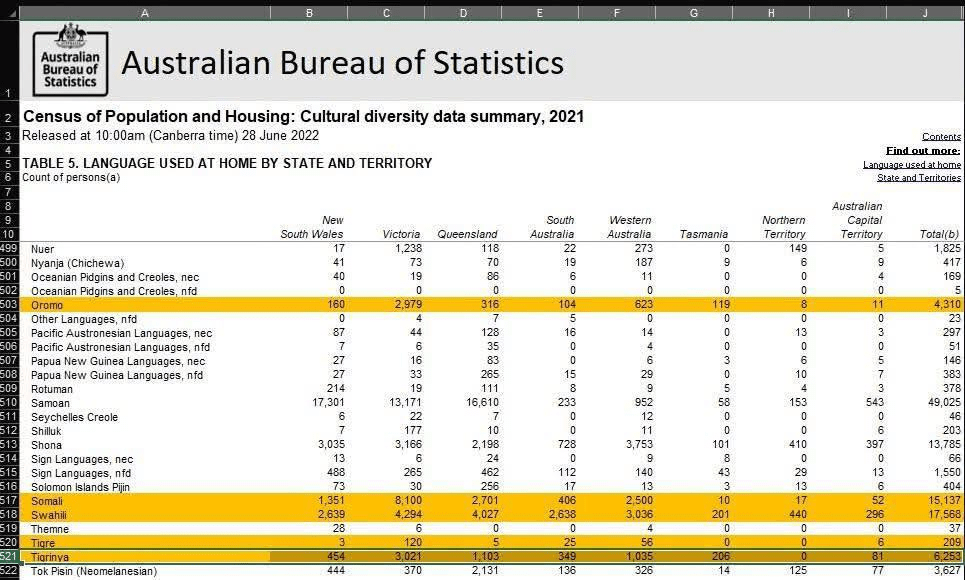
The numbers from previous Census years paint a sobering picture. In the 2021 Census, only 2,578 people recorded Oromo ancestry, while 4,310 reported speaking Afaan Oromo at home. The significant gap between these two figures suggests that many community members—perhaps out of habit, misunderstanding, or a lack of clear guidance—did not fully self-identify.
Community leader Aliye Geleto, who has been at the forefront of the awareness campaign, emphasises the stakes involved. “If the Oromo public wants to have any influence on any entity—whether government, media, or civil society—we must first match their success with our own organised success. Being counted in the Census is the first and most fundamental step,” he stated.
A Community-Wide Mobilisation
The campaign is now a grassroots movement. Community organisations, cultural associations, and religious institutions are being urged to spread the message through every channel available. Social media platforms, community radio, WhatsApp groups, and local gatherings are buzzing with the hashtags #OromoCensus2026 and #StandUpAndBeCounted.
The process itself has been made simpler than ever. Households will receive a unique code in the mail, allowing them to complete the Census online quickly and securely. The deadline is clear: every form must be submitted on or before 11 August 2026.
Organisers are emphasising that every member of the household—children, youth, adults, and elders—must be recorded as Oromo. “When a family of five all ticks ‘Oromo,’ that is five voices that were previously silent. When a thousand families do it, that is a community that can no longer be ignored,” one community organiser explained.
Beyond Numbers: A Future of Influence
This visibility is not merely an exercise in statistics. It is a declaration of existence, a demand for recognition, and a blueprint for organised success. Accurate Census data will enable the Oromo community to advocate effectively for:
- Language Services: Afaan Oromo interpreters in hospitals, courts, and government offices.
- Cultural Events: Funding for annual Oromo cultural festivals, music, and arts.
- Youth Programs: Mentorship and leadership initiatives tailored to second-generation Oromo Australians.
- Multicultural Support: Targeted social services that understand the unique experiences of Oromo refugees and migrants.
As Australia continues to evolve as a multicultural nation, the Oromo community has a unique chance to ensure its voice is heard in the halls of power. The Census is not just a government form; it is a mirror reflecting the nation’s diversity, and for too long, the Oromo reflection has been blurred.
A Final Plea
As 11 August approaches, the message is clear: Choose Oromo. Speak Oromo. Record Oromo. Share widely.
This is not just about being counted. It is about being seen. It is about being heard. And it is about building a future where the Oromo community in Australia is recognised for its true size, strength, and potential.
“Our future influence begins with our numbers,” Aliye Geleto reminds the community. “On 11 August 2026, let every Oromo in Australia stand up and be counted.”
#Oromo #OromoInAustralia #Census2026 #StandUpAndBeCounted #AfaanOromo

Adaamaa: The City of Many Names
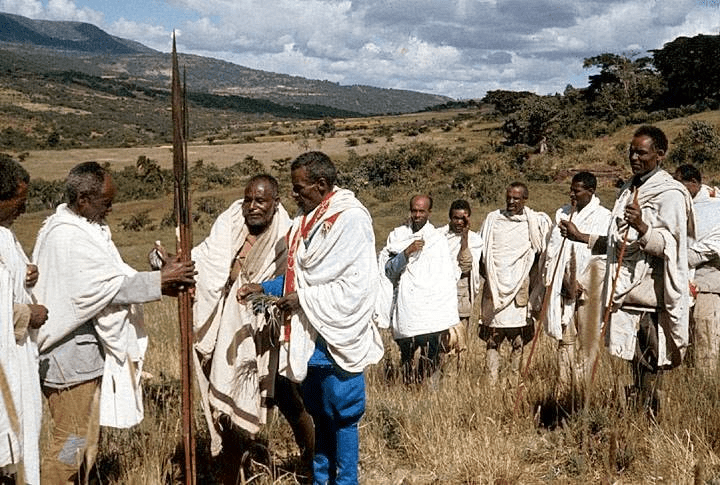
In the heart of Ethiopia’s Oromia region, nestled along the banks of the Awash River, lies a city that has worn many names like layers of history. To the Oromo, it is Adaamaa —a name given by a man. To others, it is Nazareth —a name imposed by empire. And to the elders who still remember, it is a land of ancient villages with names that whisper of a time before the city ever existed.
This is the story of Adaamaa, a city whose very name is a testament to the resilience of a people and the ever-shifting tides of power.
The Man Behind the Name
The name “Adaamaa” is not a random word. It comes from Adaamaa Buttaa, a man of the Torban Oboo clan . His story is woven into the fabric of the city’s founding, and the elders of his lineage have kept his memory alive through generations.
When the name was changed to “Nazareth” after 1948 G.C. , it was a wound that cut deep. The Oromo elders of the Torban Oboo clan responded with a biting poem, a lament that still echoes in the oral traditions of the region:
“Adaamaa gurrarraan yaasee, yaasee,
Dabalaa rabbiitu baasee,
Haylasillaseen kunumti ni maraatee?
Akka namaatti, lafa kiristinnaa kaasee”
Translated, it speaks of Adaamaa rising from the darkness, of God lifting the lowly, and of Haile Selassie’s attempt to claim the land as Christian territory. It was a poetic protest against the erasure of Oromo identity from a place that had long been theirs.
Before the City: A Landscape of Villages
Before Adaamaa was a city, before the name “Nazareth” was ever uttered, this land was home to Oromo villages. The Karrayyuu Oromo and the Torban Oboo clan lived in scattered settlements across the area . These were not empty lands waiting to be claimed; they were thriving communities with names that told stories of their own.
According to scholars like Alemayehu Haile, Corree (or Chorre) was not the name of a clan but the name of a place—a piece of Oromo land . The Karrayyuu Oromo called this area by that name long before any city was built. The villages of Kurriftuu, Sololoqaa, Qobboo, Ulkaa, and Marguu dotted the landscape, each with its own identity and history .
The site where the city would eventually rise was known as Didibbisa before the railway station was built . The river that flows through it, now called Hawaas, was known as Malkaa Hiddaa —a name that evokes the deep, flowing waters that sustained life in this land .
The Birth of a City
The modern city of Adaamaa was born from a single structure: a railway station . When the railway line connecting Addis Ababa to Djibouti was constructed, a station was built at this location, and the settlement began to grow around it. The train brought commerce, commerce brought people, and people brought a city into being.
In the 1940s, a massive wave of development transformed the settlement. An Armenian businessman named Armank Bagadsoniya built many of the city’s early shops and markets . He left a lasting mark on the city’s commercial landscape. When Bagadsoniya died without children, his wealth and property passed to his wife, Almaz Abboye . It was a small story of love and legacy in a city that was rapidly changing.
The Forced Change to Nazareth
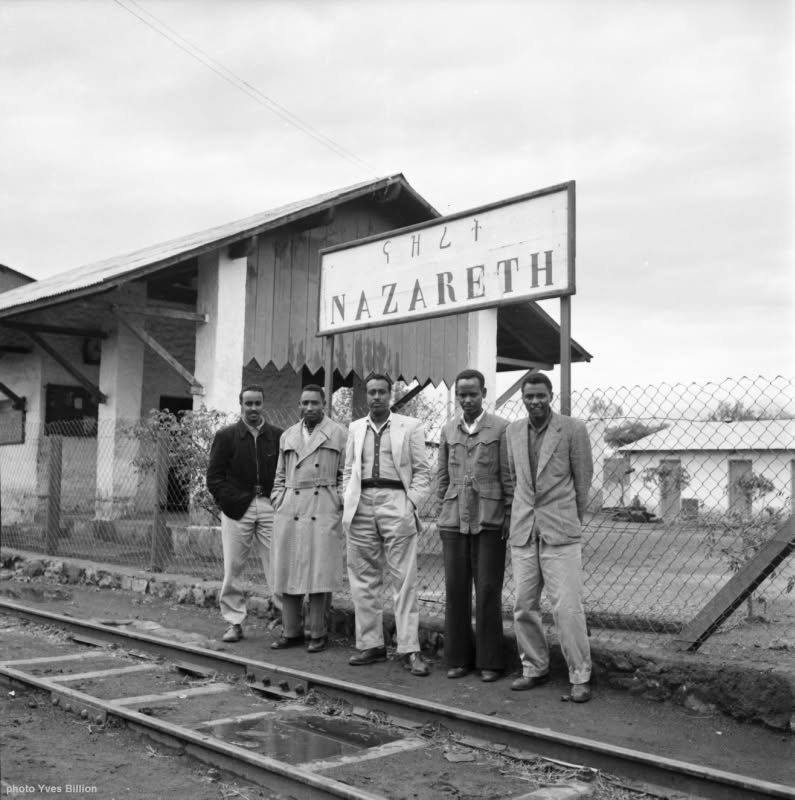
The transformation of Adaamaa into Nazareth was not a natural evolution—it was a deliberate act of political will. Dejazmach Sahlu Difaye, the governor of the city at the time, was the one who first erected a sign reading “Nazareth” in front of the railway station . The name was chosen, some say, to evoke the biblical city of Nazareth, aligning the growing settlement with Christian imagery and imperial ambition.
The renaming did not stop at the city itself. The oil company changed its name from “Kabanus” to “Nazareth Oil.” The American missionary school, the Abebe Andarge Hotel, the NAFC pasta factory—all adopted the new name . It was an effort to erase Adaamaa from the map, to rebrand a city that had been born of Oromo land and Oromo labor as something foreign.
Only the Akropool Palace Hotel stubbornly held onto its original name, a quiet act of resistance in a city that was being renamed piece by piece.
A City Under Administration
For decades, Adaamaa—now Nazareth—was administered under the Shawa Xeqlay Gizat (the Shewa province) . It became the capital of the Awrajaa Erer fi Karrayyuu (Erer and Karrayyuu District) . The name “Erer” represents the Torban Oboo Oromo, while “Karrayyuu” refers to the Karrayyuu Oromo . The district was further divided into the Bosat woreda (district), with Oolancitii serving as the woreda capital . This administrative structure, imposed from above, attempted to compartmentalize and control the Oromo people who had lived in these lands for centuries.
The Modern City
The city’s infrastructure grew with the times. The asphalt road connecting Adaamaa to Finfinnee (Addis Ababa) was constructed in 1963 G.C. , linking the city more closely to the capital. The city’s internal asphalt roads were completed in 1964 G.C. , paving the way for modernization.
Yet even as the roads were paved and the signs were changed, the memory of Adaamaa persisted. It survived in the songs of the elders, in the poems passed down through generations, and in the hearts of a people who refused to let their history be erased.
Adaamaa Today
Today, the city is officially known as Adama (the modernized spelling of Adaamaa) in government documents, though many still call it Nazareth in everyday speech. It has grown into one of Ethiopia’s largest cities, a bustling hub of commerce, education, and industry. But beneath the surface, the old tensions remain.
The story of Adaamaa is a story of names. Each name—Adaamaa, Nazareth, Didibbisa, Malkaa Hiddaa, Corree—represents a different layer of history, a different claim to the land. It is a testament to the enduring power of language and memory, and a reminder that a city is never just a city. It is a living archive of the people who built it, named it, and loved it.
As the Oromo elders said in their lament, “Adaamaa gurrarraan yaasee, yaasee” —Adaamaa rose from the darkness. And despite all attempts to rename it, Adaamaa still rises.
Sources: Local History of Ethiopia /Nazareth/ p-230, Nordic Africa Institute; Alemayehu Haile – Seenaa Oromoo Hanga Jaarraa 20ffaa – p-367; Journal of Ethiopia – 1966 – No-2 – pp-362-373.

The Lion’s Roar: How Wasanuu Didoo Carried Oromo Music Through Darkness to Light
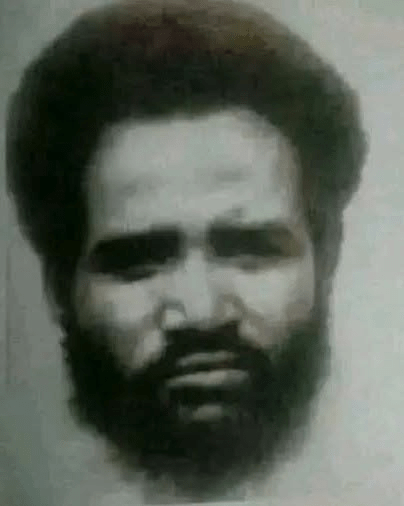
By Daandii Ragabaa
In the shadowed years when speaking Afan Oromo was itself an act of resistance, a young man from the heart of Oromia picked up his father’s masenqo and began to sing. He did not know then that his voice would become the soundtrack of a people’s struggle, or that his songs would outlive the very darkness that sought to silence them.
His name is Wasanuu Didoo—and in the story of modern Oromo music, he is the lion who refused to be caged.
The Son of the Masenqo
To understand Wasanuu is to understand that music, for him, was never a choice. It was inheritance.
Born into a family where the masenqo—the traditional one-stringed fiddle of Oromo culture—was as familiar as breath, Wasanuu learned his art at the feet of his father, Didoo Booraa. In their household, the day did not begin without the plucking of strings, the rasp of the bow, the call-and-response that connected the living to the ancestors.
“When Wasanuu sang, Didoo played,” an elder once recalled. “The father and son were not two artists but one spirit divided between hands and voice.”
The music they made together was not for fame or fortune. It was for something far more ancient: the preservation of a people’s soul.
Singing Through the Long Night
The era in which Wasanuu rose to prominence was one of profound hardship. These were the dark years when Afan Oromo was suppressed, when cultural expression was monitored, when even a song could be interpreted as sedition.
But Wasanuu Didoo did something unprecedented.
He was among the first to take Oromo music and arrange it for ensemble performance—transforming the solitary sound of the masenqo into something that could fill concert halls and rally crowds. He brought Oromo melody to the stage at a time when such visibility was dangerous, and he did so with a courage that earned him the title of pioneer.
“Before Wasanuu, Oromo music was something you heard in villages, in homes, in secret gatherings,” writes music historian Tilahun Gemeda. “He was the bridge that carried it into the public sphere, into the consciousness of the nation.”
The Songs That Would Not Die
Many of Wasanuu’s compositions from that era remain unmatched in their resonance. Two in particular stand as monuments to his vision.
“Alam mangistaata bira deemna” (“We Walk Alongside the System”) and “Maasaan gamaa lafa hinbaatu” (“The Dance Floor Does Not Touch the Ground”) were not merely songs—they were coded messages, poetic declarations that navigated the narrow straits between expression and survival.
His lyrics are layered with xiiqii—the Oromo tradition of poetic irony and metaphor that says one thing while meaning another. To the uninitiated, his words might seem simple. To those who understood, they were revolutionary.
A verse from one of his most famous compositions captures this perfectly:
“Sangaa oofaa jennaan, oofnee baane Shaggariinii
Kaan shaniin bitata, kuun shantamaan bita gariini
Yaa alaamaa qawwee, taa’an tola Labaniinii
Labaniin ni iyyaa, maarree yoo du’e jabaan gaafa biyyaa”
Roughly translated:
“They said drive the ox, and we drove them out, Shaggarii
Others buy with eight, this one buys with five and a half
O sign of the spear, sit well with Labanii
Labanii cries out, but if the strong man dies, the day belongs to the nation”
To sing of Labaniin—one of the legendary Oromo warriors—was to remind the people that resistance did not die with one generation. When the father falls, the son must rise. When one voice is silenced, a hundred more must take up the cry.
The Wellspring of Tradition
Wasanuu Didoo is often described as the foundation stone of Oromo art—the bu’uura from which all else flows.
His innovation did not lie in invention but in reverence. He reached backward to pull forward, drawing from the deep well of Oromo oral tradition and reimagining it for a new age. His rhythms carried the pulse of the qeerroo; his melodies echoed the arsii; his lyrics breathed the philosophy of the gadaa system.
When he sang, he was not alone on that stage. His father’s spirit sang with him. The ancestors sang with him. And the future—unborn and unshaped—sang through him as well.
The Spreading Light
From the household of Didoo Booraa, the fire spread.
The Oromo art movement that began in that modest home reached outward like water finding its level. It flowed to the Afran Qal’oo, to the great cities, to the diaspora. Artists who came after—many of whom owe their careers to the path Wasanuu cleared—remember him as the one who opened the door.
“Wasanuu Didoo is the gateway,” says contemporary Oromo musician Ali Birra, himself a legend in his own right. “He was the one who made it possible for us to dream.”
Indeed, Ali Birra would follow in Wasanuu’s footsteps, carrying the tradition even further, but he would be the first to acknowledge that without Wasanuu’s pioneering work, the road might never have been paved.
The Echo That Remains
Today, the songs of Wasanuu Didoo continue to be performed. They are played on radio stations in Addis Ababa and in cafes in Minneapolis. They are sung by grandmothers in rural villages and by university students in global capitals.
The world has changed since those dark years. Afan Oromo is now spoken freely, broadcast widely, celebrated publicly. But the music of Wasanuu Didoo does not feel like a historical artifact. It feels alive—because it was never really about the time in which it was composed.
It was about something timeless.
His lyrics, with their layered meanings and poetic resilience, speak to any generation facing oppression. His rhythms, rooted in the earth of Oromia, connect people across distances and decades. And his example—an artist who chose courage over comfort, purpose over safety—continues to inspire those who pick up instruments or lift their voices in the name of cultural preservation.
The Lion’s Legacy
They called him the lion—and for good reason. Like the leenca of the Oromo highlands, Wasanuu Didoo was both powerful and protective. He did not roar for himself. He roared for his people.
He carried a culture on his shoulders when no one else would. He sang songs that could have been his downfall. He looked into the darkness and found the courage to sing anyway.
In the annals of Oromo art, many names will be written. But at the very beginning—at the source, at the kallacha from which the river flows—there is one name that cannot be erased.
Wasanuu Didoo. The pioneer. The foundation. The lion who roared, and in roaring, set a people free.
“His strings are the fabric of freedom. His words are woven with irony and depth. And that irony—that xiiqii—it carries you, it holds you, it makes you feel something beyond yourself.”
— An Oromo elder reflecting on the music of Wasanuu Didoo
Author’s Note: Wasanuu Didoo’s contributions to Oromo music and culture remain largely undocumented in mainstream historical accounts, but among the Oromo people, his legacy is preserved in the songs that continue to be passed from generation to generation. This feature story draws from oral histories, musical scholarship, and the enduring presence of his work in contemporary Oromo cultural life.

The Written Word: The Story of Afaan Oromoo’s Journey to Script
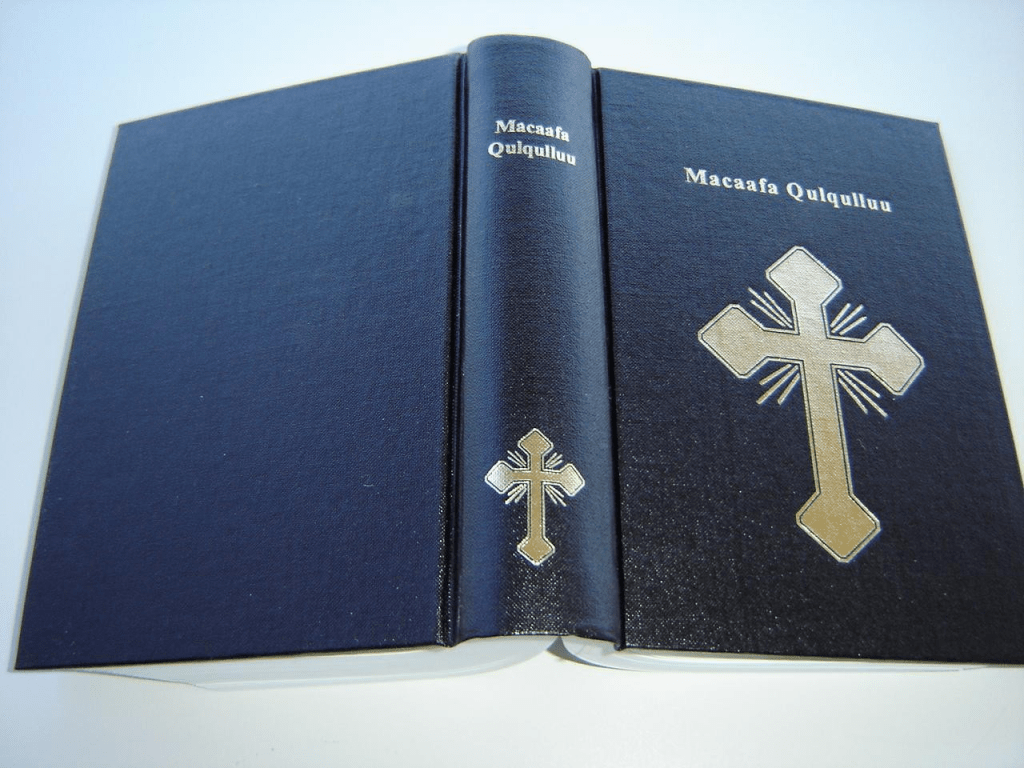
For centuries, Afaan Oromoo existed as a purely oral language—spoken by millions across the Horn of Africa, yet never written down in any systematic way. Stories, poems, history, and knowledge were passed from generation to generation through speech alone. Today, that has changed dramatically. The story of how Afaan Oromoo gained a writing system is not merely a linguistic tale—it is a story of resistance, identity, and cultural survival.
The Spoken Foundation
Before any script was ever applied to Afaan Oromoo, the language thrived through an rich oral tradition. Literature existed in the form of tales, poems, songs, epics, riddles, proverbs, and lullabies. These oral works served a vital purpose: they socialized Oromo youth into ethically committed and morally strong individuals, teaching what was good and evil, destructive and constructive. The language was the vessel for Oromo identity, a storehouse of values, myths, and collective experience.
This oral tradition would later prove crucial. When political forces attempted to suppress Afaan Oromoo and Oromo cultural identity, the grievances were articulated, recorded, and passed on vertically from generation to generation and horizontally across geographic areas through this oral literature. The language itself became an instrument of resistance.
The First Written Attempts (1840s)
The earliest known written documents in Afaan Oromoo date to the 1840s. They were the work of Johann Ludwig Krapf (1810–1881), a German missionary whose indefatigable endeavors left a lasting mark on languages across the Horn of Africa. Initially, Krapf used the Latin script to write Oromo, but he later shifted to the Ethiopic (Ge’ez) script.
Krapf’s work was foundational: he translated sections of the Bible into Afaan Oromoo and wrote its grammar. But this early flowering of Oromo writing was short-lived. After King Menilek annexed Oromo territories in the west, south, and southeast in the 1880s, the project was discontinued. The political winds had shifted against Oromo linguistic expression.
The Ge’ez Era: Onesimos Nasib’s Bible
The most significant contribution to Oromo writing in the Ge’ez script came from Onesimos Nasib (c. 1856–1931), an Oromo evangelist who was freed from slavery and educated by the Swedish Evangelical Mission. Nasib, whose birth name was Hika—meaning “Translator”—chose to use the Ge’ez alphabet, believing it would be better received by Ethiopia’s Coptic Orthodox priests than a Latin-based script.
His crowning achievement was the translation of the entire Bible into Afaan Oromoo, published in 1899. This was a monumental work that had a significant impact on introducing Oromo literacy. For decades, this Bible translation—along with the work of Aster Ganno and others—remained one of the few major published texts in the language.
Yet the Ge’ez script had limitations. It could not adequately represent certain Oromo sounds, particularly vowel length and consonant germination. The script, increasingly associated with Amharic dominance, also carried political baggage.
Indigenous Innovation: The Saphalo Script
In 1956, an Oromo scholar, poet, and religious teacher named Sheikh Bakri Sapalo (1895–1980) created his own writing system specifically designed for Oromo phonology. The Saphalo script—also known as Qubee Sheek Bakrii Saphaloo—was an abugida, like Ge’ez, but with no inherent vowels associated with consonants. It was, in many ways, more linguistically suited to Oromo than the scripts that preceded it.
The script gained acceptance in the Hararghe region of Ethiopia. But the Ethiopian government viewed it with suspicion, worrying it would make the Oromo self-aware and endanger national unity. In 1965, Sheikh Bakri Sapalo was placed under house arrest. He later fled to Somalia in 1978 and died in a refugee camp in 1980, his writings largely unpublished. The Saphalo script remains one of the few scripts so closely associated with a single individual—and one that met such a tragic end.
The Struggle Intensifies
Writing Afaan Oromoo in any script was banned under the government of Haile Selassie. This suppression only intensified Oromo determination. The struggle to write in Afaan Oromoo became inseparable from the broader Oromo national struggle.
During the Italian occupation (1936–1941), the Oromo experienced a brief period of linguistic freedom, as the Italians used Afaan Oromoo for education, broadcasting, and official activities. This taste of cultural freedom made the Oromo pose serious resistance against the restoration of Haile Selassie’s rule. The Harar and Bale uprisings, the Maccaa-Tuulamaa Association, the Afran Qalloo Cultural Movement—all emerged from the imposed language policies and gradually consolidated Oromo consciousness.
The Birth of Qubee
The search for an appropriate alphabet intensified in 1968, when Oromo students in Europe began the work. In 1972, an Oromo students’ study group formally adopted the Latin-based alphabet that would come to be known as Qubee. The Oromo Liberation Front (OLF) began using Qubee for communication and literacy work in the late 1970s, both at its bases and among Oromo refugees in neighboring countries.
The decisive moment came on November 3, 1991. The OLF convened a meeting of over 1,000 Oromo intellectuals to decide which alphabet to use for writing Oromo. After many hours of debate, they decided unanimously to adopt the Latin alphabet. The choice was conscious and political: the Ethiopic script was seen as the colonial script of the Amharic people, while the Latin script was not felt to be the colonial script of the Anglo-American world. Global functional considerations also played a role: the Latin alphabet was better suited to computer technology, more pedagogically accessible, and more linguistically adequate for representing Oromo sounds.
Qubee was formally adopted as the official orthography of Afaan Oromoo in 1991. For the first time, the language spoken by approximately 40 percent of Ethiopia’s population—more than 40 million people—had an officially recognized writing system.
A Literary Renaissance
The impact was immediate and profound. It is believed that more texts were written in the Oromo language between 1991 and 1997 than in the previous 100 years. Schools in Oromia began teaching in Afaan Oromoo. Oromo communities in the diaspora gained a standardized way to write their language. Literature flourished.
Today, Qubee consists of 33 fundamental letters: 5 vowels and 24 consonants, with additional combined consonant letters like CH, DH, NY, PH, SH, TS, and ZH. The alphabet has been adapted for modern use, including educational apps like “Qubee Kids” that teach children the letters through interactive games.
Challenges and Controversies
The adoption of Qubee has not been without controversy. Proponents of the Ge’ez script argue that its use would unite Ethiopians and that using other scripts threatens national unity. Some have actively petitioned regional governments to replace Qubee with the Ge’ez script.
Supporters of Qubee counter that the opposition is not based on linguistic analysis or technical considerations, but on subjective political grounds. They point to Qubee’s linguistic suitability, pedagogical ease, and adaptability to technology. The Latin-based alphabet, they argue, better represents Oromo sounds—showing vowel length, marking consonant germination, and adequately representing all Oromo phonemes.
Looking Forward
The story of Afaan Oromoo’s writing system is far from over. It is a living narrative of a people’s determination to see their language written, read, and preserved. From the oral traditions that sustained Oromo identity for centuries, through the missionary translations of the 1840s, the monumental Bible of Onesimos Nasib, the indigenous innovation of Sheikh Bakri Sapalo, and finally the political decision for Qubee in 1991—each chapter reflects the broader struggle for cultural survival and self-determination.
Today, Afaan Oromoo thrives in written form as never before. But challenges remain: internal debates about orthography, external political pressures, and the ongoing work of developing literature, educational materials, and digital resources. The language that was once officially unwritten now has a script that carries the hopes, history, and identity of millions.
As the Oromo saying goes: *”Afaan keenya, aadaa keenya”—our language, our culture. In the written word of Afaan Oromoo, that culture has found a new and enduring voice.

The Voice of Freedom: How Sagaleen Bilisummaa Oromoo Amplifies the Oromo Struggle
By Daandii Ragabaa
In the vast and complex landscape of the Oromo liberation movement, few tools are as powerful as the human voice. But when that voice is broadcast—amplified, repeated, and carried across borders, across battlefields, and across generations—it becomes something more than sound. It becomes a weapon. It becomes a comfort. It becomes a call to awaken.
This is the enduring role of Sagaleen Bilisummaa Oromoo (The Voice of Oromo Freedom).
For decades, this media platform has served as one of the most vital organs of the Oromo liberation struggle. Whether through radio waves that cross national boundaries, through digital content that reaches the global diaspora, or through the whispered sharing of cassette tapes in the dark years of repression, Sagaleen Bilisummaa Oromoo has been a constant companion to the Oromo people in their long march toward self-determination.
Strengthening the Struggle
The primary mission of Sagaleen Bilisummaa Oromoo has always been clear: to strengthen the Oromo liberation struggle.
In practical terms, this means providing a platform for the Oromo Liberation Front (ABO) and other Oromo political and civic actors to communicate directly with the Oromo people, without the filtering, distortion, or outright censorship that characterizes state-controlled media. It means broadcasting news from the frontlines, whether those frontlines are military, political, or cultural.
In the armed struggle years, Sagaleen Bilisummaa Oromoo was often the only source of information about the progress of Oromo fighters, the atrocities committed against civilians, and the diplomatic efforts being made on behalf of the Oromo cause. Families separated by war and exile could listen to the same broadcast and know that they were not alone.
Even in periods of relative peace and political openness, the Voice of Oromo Freedom continues to play this role. It holds the movement accountable. It debates strategy. It remembers martyrs. It celebrates victories, however small.
Awakening the Oromo People
But strengthening the struggle is only part of the mission. Sagaleen Bilisummaa Oromoo also exists to awaken the Oromo people—to dammaqsuu.
This awakening is both political and psychological. For generations, the Oromo people were told that their language was not fit for official use, that their history began with conquest, and that their identity was a threat to Ethiopian unity. This systematic campaign of erasure created a people who, in many cases, had internalized their own marginalization.
Sagaleen Bilisummaa Oromoo works to reverse this damage. It broadcasts Oromo poetry that stirs the soul. It tells Oromo history that textbooks omit. It gives voice to Oromo scholars, artists, and activists who articulate a vision of Oromo dignity and self-respect.
To listen to Sagaleen Bilisummaa Oromoo is to hear a different narrative—one in which the Oromo are not victims of history but agents of their own destiny. This is not propaganda. This is the restoration of a truth that has been deliberately suppressed.
When an Oromo farmer in a remote village hears his language spoken with authority and respect on the radio, something shifts inside him. When an Oromo student in the diaspora hears the names of Oromo heroes recited alongside the great liberators of the world, she understands that her people belong in the company of nations. This is awakening.
Proclaiming the Goal of Freedom
Finally, Sagaleen Bilisummaa Oromoo serves as a constant reminder of the ultimate objective: Kaayyoo Bilisummaa Oromoo—the goal of Oromo freedom.
The Oromo struggle has, at different times, been characterized in different ways. Some have framed it as a demand for human rights within a united Ethiopia. Others have articulated it as a quest for self-determination up to and including secession. Still others have focused on cultural and linguistic rights, economic justice, or political representation.
Through all these variations, Sagaleen Bilisummaa Oromoo has consistently held the line on the fundamental principle: the Oromo people have the right to be free. What that freedom looks like—whether a federal arrangement, a confederation, or an independent Oromo state—is a matter of political discussion. But the right itself is non-negotiable.
By consistently broadcasting this message, the Voice of Oromo Freedom ensures that the goal is never forgotten. In periods of political co-optation, when Oromo elites are tempted to trade long-term freedom for short-term positions, Sagaleen Bilisummaa Oromoo reminds listeners of the martyrs who died for the cause. In periods of despair, when the struggle seems endless and victory distant, it reminds listeners that freedom is not a gift to be requested but a right to be claimed.
The Evolution of the Voice
Sagaleen Bilisummaa Oromoo has not remained static. Like the struggle it serves, it has evolved with the times.
In the early decades, the Voice often operated clandestinely, broadcasting from neighboring countries, using makeshift equipment, and reaching audiences through shortwave radio. The signal could be weak. The hours were limited. The risk of jamming or retaliation was constant.
But the audience was loyal. Oromo families would gather around radios at specific times, turning the volume low to avoid detection, listening to every word. The Voice was a lifeline.
Today, Sagaleen Bilisummaa Oromoo has expanded into digital platforms. It reaches the global Oromo diaspora through social media, streaming services, and websites. Young Oromo who have never used a shortwave radio can access the same content on their smartphones. The technology has changed, but the mission remains.
Challenges and Resilience
Operating as a voice of liberation is never easy. Sagaleen Bilisummaa Oromoo has faced jamming, legal harassment, and political pressure from successive Ethiopian governments. Its journalists and broadcasters have been targeted. Its infrastructure has been attacked.
Yet, like the Oromo people themselves, the Voice endures.
Each time the signal is blocked, it finds a new frequency. Each time a broadcaster is silenced, another steps forward. The resilience of Sagaleen Bilisummaa Oromoo is a testament to the depth of the Oromo people’s commitment to their own liberation.
A Call to Listen
For those who are already part of the Oromo struggle, Sagaleen Bilisummaa Oromoo needs no introduction. It is a familiar companion, a trusted source, a rallying cry.
But for the younger generation—those who have grown up in the diaspora, those who have been disconnected from Oromo language and culture, those who are only beginning to understand the meaning of Oromummaa—the Voice of Oromo Freedom is an essential resource.
To listen is to learn. To learn is to understand. And to understand is to join the struggle, whether through political activism, cultural preservation, or simply the determination to live with dignity and pride.
Conclusion
Sagaleen Bilisummaa Oromoo is more than a radio station, more than a website, more than a collection of broadcasts. It is a living institution of the Oromo liberation movement. It is a witness to history. It is a voice that refuses to be silenced.
As the Oromo people continue their long journey toward freedom, the Voice will be there—broadcasting the news, awakening the consciousness, and proclaiming the goal.
Sagaleen Bilisummaa Oromoo – the voice that will not be stilled.
Daandii Ragabaa, reporting on Oromo liberation media.
Sagaleen Bilisummaa Oromoo: Qabsoo humneessuu, Ummata dammaqsuu, Kaayyoo beeksisuu.
(The Voice of Oromo Freedom: Strengthening the struggle, awakening the people, proclaiming the goal.)

The Voice That Would Not Be Silenced: How Sagalee Bilisummaa Oromoo Strengthened a Nation’s Liberation Struggle
The year is 1988.
Across the vast highlands of Oromia, state radio broadcasts only the official narrative in Amharic. Afaan Oromo—the mother tongue of Africa’s largest stateless nation—is banned from schools, courts, and airwaves. To speak it publicly is to invite suspicion. To seek liberation is to risk death.
But on June 15 of that year, a faint signal crackles through the static. It speaks in the forbidden language. It carries news the regime does not want heard. It names names, gives dates, and whispers hope.
The voice belongs to Sagalee Bilisummaa Oromoo (SBO)—the Voice of Oromo Liberation.
For 38 years—from 1988 to 2026—that voice has done what armies alone cannot. It has strengthened the Oromo liberation struggle, mobilized a scattered nation, and spread the goals of freedom across borders and generations.
—
I. Strengthening the Struggle: ‘More Than a Quarter-Century of Contribution’
In May 2023, as the Oromo Liberation Front (OLF) prepared to mark the 35th anniversary of SBO’s founding, the party issued a statement that captured the radio’s essential role. “Launched on June 15th 1988, SBO/VOL has been contributing a lot in the long journey of Oromo struggle for freedom,” the OLF said, “despite several relentless attempts of the enemy to quit the media”.
That phrase—“despite several relentless attempts”—is not rhetorical. Over nearly four decades, successive Ethiopian regimes have tried to jam SBO’s shortwave frequencies, block its diaspora websites, and intimidate its journalists. In 2013, on World Press Freedom Day, observers noted that “Afan Oromo shortwave radios, such as VOA and SBO…are under constant threat of jamming by the Ethiopian regime”. Countless Oromo journalists have been harassed, imprisoned, or exiled. Independent Oromo newspapers were closed down. But SBO endured.
Why? Because in a country where “internet is rare, satellite communication is unthinkable, TV is a luxury and FM is unknown, a shortwave radio still remains the only and an effective media outlet”. For rural Oromo families without electricity or cell service, the crackling voice from abroad was the only window onto a world where their language and their liberation mattered.
Senior SBO journalist Obbo Tolera Adaba, who has served the station since its inception, put it simply: “In a liberation struggle, media is alpha and omega”. Without information, there is no strategy. Without analysis, there is no direction. Without a voice, there is no nation.
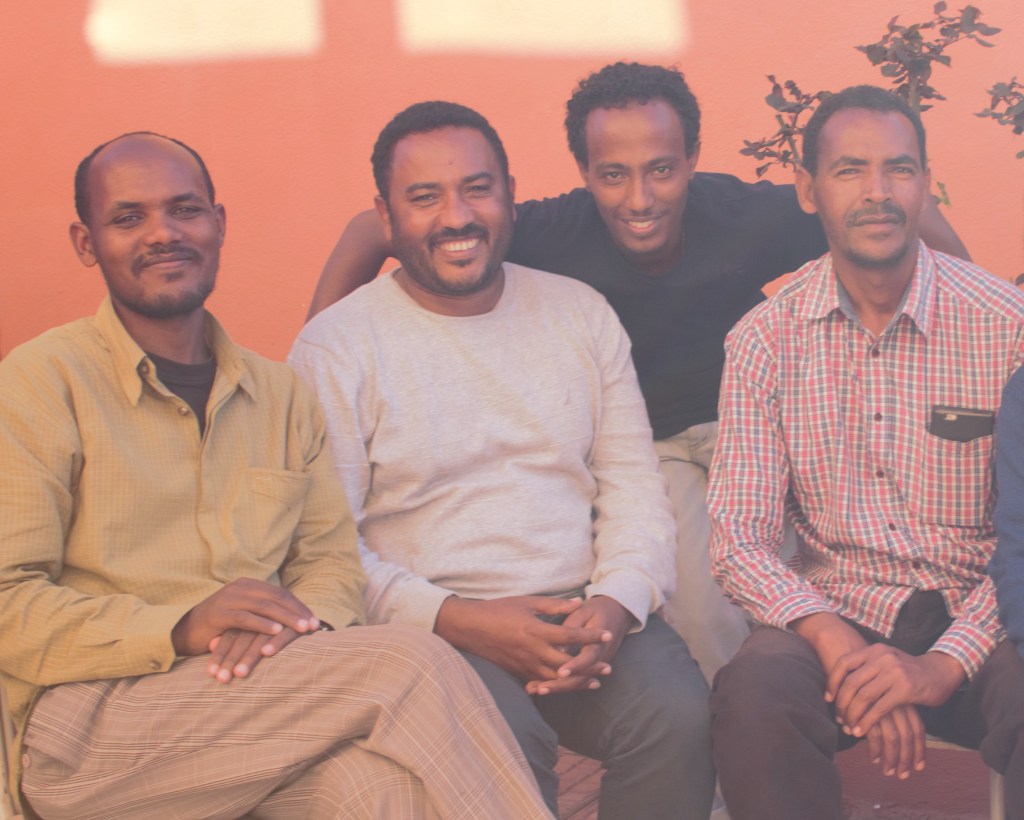
File: Miseensota SBO garii waliin bara 25/12/2016 keessa, Asmaraa
II. Mobilizing the People: Informing, Organizing, Inspiring
The OLF’s anniversary statement identified three interconnected functions that SBO has performed for nearly four decades. The station’s “quarter-a-century contribution,” the party said, has been in “informing, organizing and inspiring the Oromo nation for the struggle to self-determination”.
Informing: SBO broke the state’s information monopoly. It reported massacres, land seizures, political arrests, and the realities of military occupation that Ethiopian media ignored. It gave Oromo listeners facts their own government denied them.
Organizing: The radio broadcast practical information—meeting times, protest calls, strategies for resistance. It explained OLF’s political program, its vision for self-determination, and the legal and historical arguments underpinning Oromo nationhood. In a society denied political education, SBO became an open university.
Inspiring: Perhaps most crucially, SBO normalized Afaan Oromo as a language of serious political discourse. It broadcast Oromo poetry, music, and oral traditions. It reminded listeners that their identity was not a shameful secret but a proud inheritance. For countless Oromo families, tuning into SBO was an act of quiet rebellion—a refusal to accept erasure.
One grandson’s memory captures this intimacy. In a 2014 essay, an Oromo writer recalled how his grandfather “had a habit of making the entire family tune into his favorite radio station: The Voice of Oromo Liberation”. The grandfather would crank up the volume, urging his children and grandchildren to learn Afaan Oromo. The station broadcast daily in both Afan Oromo and Amharic“>. “Despite living in Finfinne most of his life,” the grandson wrote, “he never lost touch with his Oromo heritage”. SBO was the thread connecting him to a nation that official Ethiopia pretended did not exist.
—
III. Spreading the Goals of Oromo Liberation: A Blueprint for Freedom
SBO has never been merely a news service. From its inception, it has served as the official media organ of the Oromo Liberation Front, and its broadcasts have consistently advanced the core goals of Oromo self-determination.
What are those goals? As articulated by the OLF over decades, they include: the right of the Oromo people to political self-determination; the recognition of Afaan Oromo as a language of governance and education; the protection of Oromo cultural and historical sites; and the establishment of a democratic system that reflects Oromo values—values the Gadaa system has embodied for centuries.
SBO has spread these goals through:
– Political education: Explaining the legal and moral case for self-determination under international law.
– Historical recovery: Broadcasting Oromo history as Oromo historians write it, not as imperial chronicles distorted it.
– Cultural affirmation: Playing Oromo music, poetry, and oral traditions that state media ignored.
– Call to action: Announcing protests, mobilizing diaspora support, and coordinating with liberation forces on the ground.
In 2023, the OLF called SBO’s upcoming anniversary “a historical event with our people in Oromia and around the world”. The party thanked “those who have made unforgettable contributions to keep SBO staying on air to this very day” and called on supporters to donate, share ideas, and keep the radio alive.
—
IV. The Unfinished Work: A Voice Still Needed
Today, as SBO marks its 38th anniversary on June 15, 2026, the struggle is not over.
The Ethiopian state has undergone significant political changes since 2018, including the rise of Prime Minister Abiy Ahmed and a partial opening of political space. Some exiled media have returned. Some Oromo political prisoners have been released. But the fundamental question of Oromo self-determination remains unresolved. Independent Oromo media still cannot operate freely inside Oromia“>. And SBO continues to broadcast from abroad—six days a week, on shortwave and digital platforms, paid for by Oromos and friends of the Oromo people“>.
The station’s mission, as articulated in its founding charter, remains unchanged: “to promote awareness in peace and democracy, disseminate knowledge in elementary health care, environmental protection, and gender equality, and broadcast information on improved methods in agriculture, animal husbandry and rural development”. But beneath those practical goals lies a deeper purpose: to keep alive the idea that the Oromo people deserve to govern themselves, in their own language, under their own laws.
—
Conclusion: ‘Alpha and Omega’
On June 15, 2026, somewhere in the Oromo diaspora—in Minneapolis, in Toronto, in Berlin, in Nairobi—a grandfather will turn on his shortwave radio. He will crank up the volume. His grandchildren will roll their eyes. But the voice will come through, crackling and defiant, the same voice that has spoken for 38 years.
That voice has strengthened the liberation struggle when armies faltered. It has mobilized a scattered people into a political nation. And it has spread the goals of Oromo freedom across generations and continents.
In a liberation struggle, as Obbo Tolera Adaba said, media is alpha and omega—the beginning and the end. For the Oromo people, Sagalee Bilisummaa Oromoo has been both.
Baga Guyyaa SBO 38ffaa isin gahe! Congratulations on the 38th anniversary.
— Adda Bilisummaa Oromoo (ABO)
June 15, 2026
Finfinnee





 Advocacy for Oromia