Adaamaa: The City of Many Names
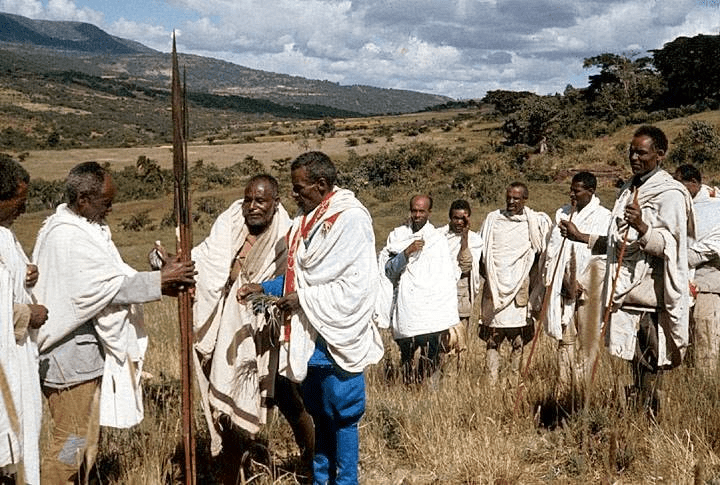
In the heart of Ethiopia’s Oromia region, nestled along the banks of the Awash River, lies a city that has worn many names like layers of history. To the Oromo, it is Adaamaa —a name given by a man. To others, it is Nazareth —a name imposed by empire. And to the elders who still remember, it is a land of ancient villages with names that whisper of a time before the city ever existed.
This is the story of Adaamaa, a city whose very name is a testament to the resilience of a people and the ever-shifting tides of power.
The Man Behind the Name
The name “Adaamaa” is not a random word. It comes from Adaamaa Buttaa, a man of the Torban Oboo clan . His story is woven into the fabric of the city’s founding, and the elders of his lineage have kept his memory alive through generations.
When the name was changed to “Nazareth” after 1948 G.C. , it was a wound that cut deep. The Oromo elders of the Torban Oboo clan responded with a biting poem, a lament that still echoes in the oral traditions of the region:
“Adaamaa gurrarraan yaasee, yaasee,
Dabalaa rabbiitu baasee,
Haylasillaseen kunumti ni maraatee?
Akka namaatti, lafa kiristinnaa kaasee”
Translated, it speaks of Adaamaa rising from the darkness, of God lifting the lowly, and of Haile Selassie’s attempt to claim the land as Christian territory. It was a poetic protest against the erasure of Oromo identity from a place that had long been theirs.
Before the City: A Landscape of Villages
Before Adaamaa was a city, before the name “Nazareth” was ever uttered, this land was home to Oromo villages. The Karrayyuu Oromo and the Torban Oboo clan lived in scattered settlements across the area . These were not empty lands waiting to be claimed; they were thriving communities with names that told stories of their own.
According to scholars like Alemayehu Haile, Corree (or Chorre) was not the name of a clan but the name of a place—a piece of Oromo land . The Karrayyuu Oromo called this area by that name long before any city was built. The villages of Kurriftuu, Sololoqaa, Qobboo, Ulkaa, and Marguu dotted the landscape, each with its own identity and history .
The site where the city would eventually rise was known as Didibbisa before the railway station was built . The river that flows through it, now called Hawaas, was known as Malkaa Hiddaa —a name that evokes the deep, flowing waters that sustained life in this land .
The Birth of a City
The modern city of Adaamaa was born from a single structure: a railway station . When the railway line connecting Addis Ababa to Djibouti was constructed, a station was built at this location, and the settlement began to grow around it. The train brought commerce, commerce brought people, and people brought a city into being.
In the 1940s, a massive wave of development transformed the settlement. An Armenian businessman named Armank Bagadsoniya built many of the city’s early shops and markets . He left a lasting mark on the city’s commercial landscape. When Bagadsoniya died without children, his wealth and property passed to his wife, Almaz Abboye . It was a small story of love and legacy in a city that was rapidly changing.
The Forced Change to Nazareth
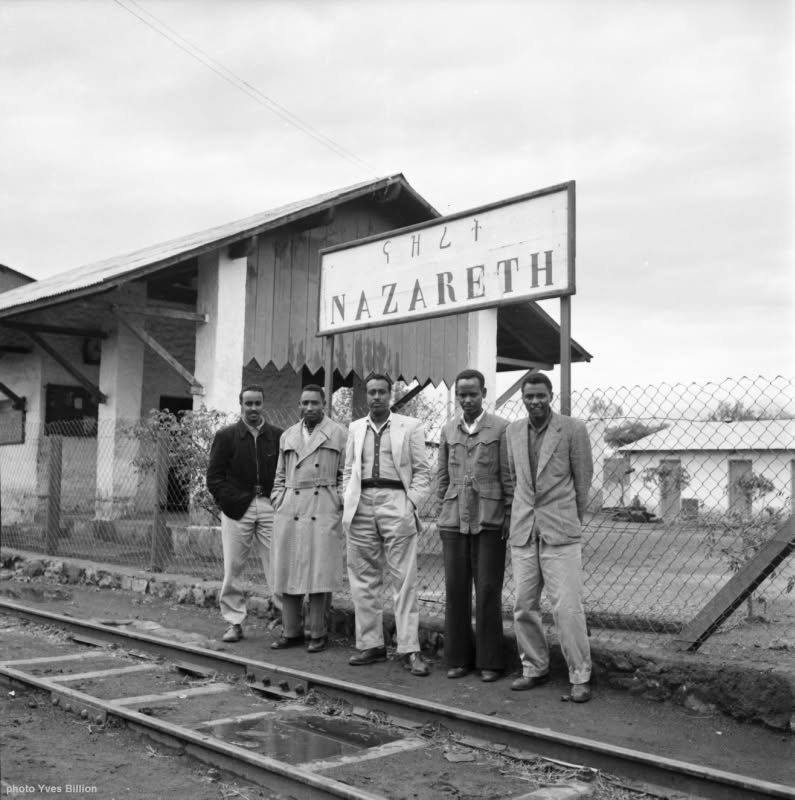
The transformation of Adaamaa into Nazareth was not a natural evolution—it was a deliberate act of political will. Dejazmach Sahlu Difaye, the governor of the city at the time, was the one who first erected a sign reading “Nazareth” in front of the railway station . The name was chosen, some say, to evoke the biblical city of Nazareth, aligning the growing settlement with Christian imagery and imperial ambition.
The renaming did not stop at the city itself. The oil company changed its name from “Kabanus” to “Nazareth Oil.” The American missionary school, the Abebe Andarge Hotel, the NAFC pasta factory—all adopted the new name . It was an effort to erase Adaamaa from the map, to rebrand a city that had been born of Oromo land and Oromo labor as something foreign.
Only the Akropool Palace Hotel stubbornly held onto its original name, a quiet act of resistance in a city that was being renamed piece by piece.
A City Under Administration
For decades, Adaamaa—now Nazareth—was administered under the Shawa Xeqlay Gizat (the Shewa province) . It became the capital of the Awrajaa Erer fi Karrayyuu (Erer and Karrayyuu District) . The name “Erer” represents the Torban Oboo Oromo, while “Karrayyuu” refers to the Karrayyuu Oromo . The district was further divided into the Bosat woreda (district), with Oolancitii serving as the woreda capital . This administrative structure, imposed from above, attempted to compartmentalize and control the Oromo people who had lived in these lands for centuries.
The Modern City
The city’s infrastructure grew with the times. The asphalt road connecting Adaamaa to Finfinnee (Addis Ababa) was constructed in 1963 G.C. , linking the city more closely to the capital. The city’s internal asphalt roads were completed in 1964 G.C. , paving the way for modernization.
Yet even as the roads were paved and the signs were changed, the memory of Adaamaa persisted. It survived in the songs of the elders, in the poems passed down through generations, and in the hearts of a people who refused to let their history be erased.
Adaamaa Today
Today, the city is officially known as Adama (the modernized spelling of Adaamaa) in government documents, though many still call it Nazareth in everyday speech. It has grown into one of Ethiopia’s largest cities, a bustling hub of commerce, education, and industry. But beneath the surface, the old tensions remain.
The story of Adaamaa is a story of names. Each name—Adaamaa, Nazareth, Didibbisa, Malkaa Hiddaa, Corree—represents a different layer of history, a different claim to the land. It is a testament to the enduring power of language and memory, and a reminder that a city is never just a city. It is a living archive of the people who built it, named it, and loved it.
As the Oromo elders said in their lament, “Adaamaa gurrarraan yaasee, yaasee” —Adaamaa rose from the darkness. And despite all attempts to rename it, Adaamaa still rises.
Sources: Local History of Ethiopia /Nazareth/ p-230, Nordic Africa Institute; Alemayehu Haile – Seenaa Oromoo Hanga Jaarraa 20ffaa – p-367; Journal of Ethiopia – 1966 – No-2 – pp-362-373.

Posted on June 20, 2026, in Aadaa, Biography, Bokkkuu, Election, Events, Finfinne, gadaa, gender, Information, Media, News, Oromia, Press Release, Promotion, SBO, Sirna Oromo. Bookmark the permalink. Leave a comment.






Leave a comment
Comments 0