Irreecha at Malkaa Meexxii: A Community’s Thanksgiving in West Oromia
By Daandii Ragabaa
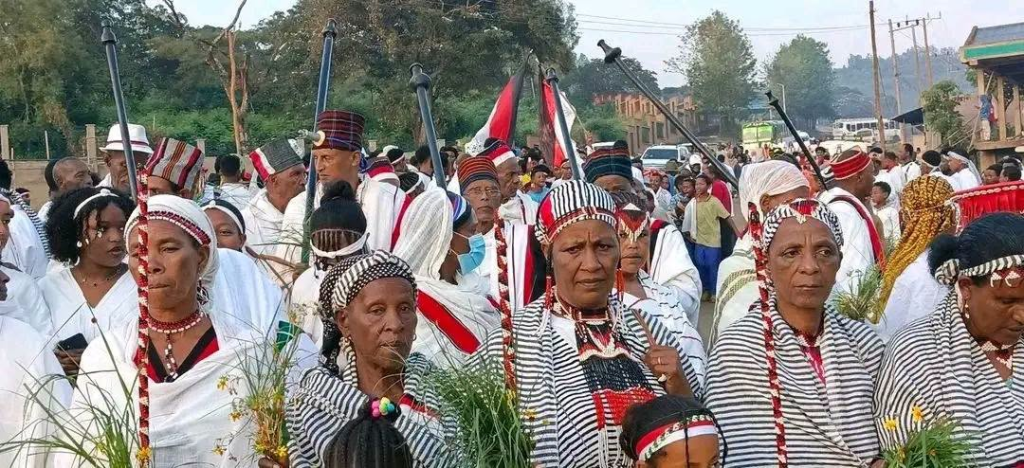
DAMBI DOLLO, West Oromia — The waters of Malkaa Meexxii ran clear and the grass was fresh as the Oromo community of Sayyo District gathered to celebrate Irreecha, the annual thanksgiving festival that marks the transition from the dark rainy season of Ganna into the light and renewal of Birraa. The celebration, held in Dambi Dollo, brought together Gadaa leaders, women elders, youth, and the wider community in a display of unity and gratitude that echoed traditions stretching back generations .
A Festival of Gratitude and Renewal
Irreecha is, at its core, a profound act of thanksgiving. The Oromo people gather at Malkaa—places associated with water—to give thanks to Waaqa (God) for life, rain, peace, and the blessings of the year that has passed, while praying for prosperity and a good season ahead . For the community of Sayyo, the celebration at Malkaa Meexxii was a moment to mark the end of the hardships of the rainy season and to welcome the renewal that Birraa brings.
The significance of the season is embedded in Oromo cosmology. The rainy months of June to September are understood as a time of difficulty—swollen rivers, floods, and the separation of families unable to travel. Irreecha marks the passage out of that darkness. As participants gather at the water’s edge, carrying fresh green grass and flowers, they enact a ritual of gratitude for survival and hope for what lies ahead.
The Presence of Gadaa and Elders
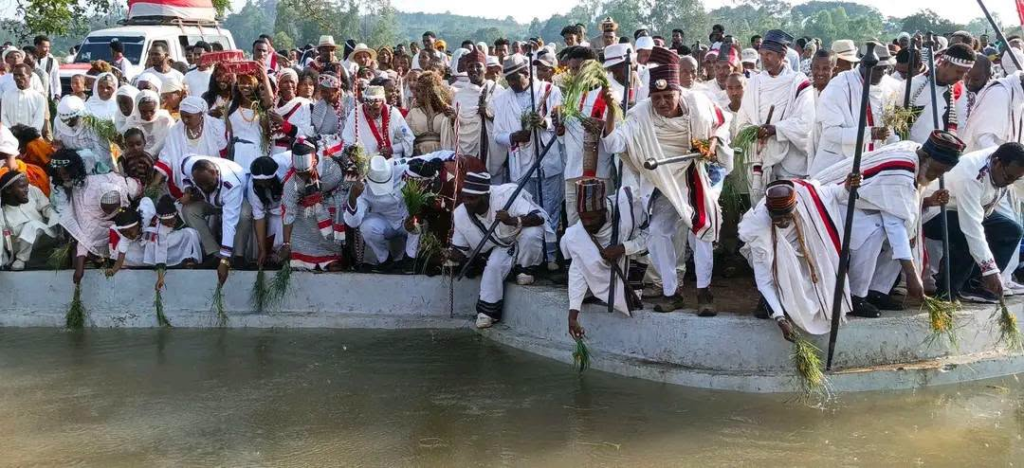
The celebration at Malkaa Meexxii was honored by the presence of the Abbootii Gadaa (Gadaa leaders) and Haadholii Siinqee (women elders), whose participation lends the festival its spiritual and institutional authority . In Oromo tradition, the Gadaa system provides the framework within which Irreecha is celebrated—an indigenous democratic order that regulates political, economic, social, and religious life . The elders’ presence at the river is not ceremonial decoration; it is the living expression of a system that has transmitted knowledge, values, and social organization across generations.
The Abbaa Malkaa (father of the river) and the Abbaa Gadaa play central roles in the blessing that precedes the communal thanksgiving. Traditionally, the Haati Malkaa (mother of the river) first cleanses the site, and the Abbaa Malkaa then blesses it, followed by the Abbaa Gadaa, before the gathered community is blessed in turn . At Malkaa Meexxii, this sequence unfolded as it has for countless seasons, connecting the present celebration to an unbroken chain of practice.
Youth and the Energy of Continuity
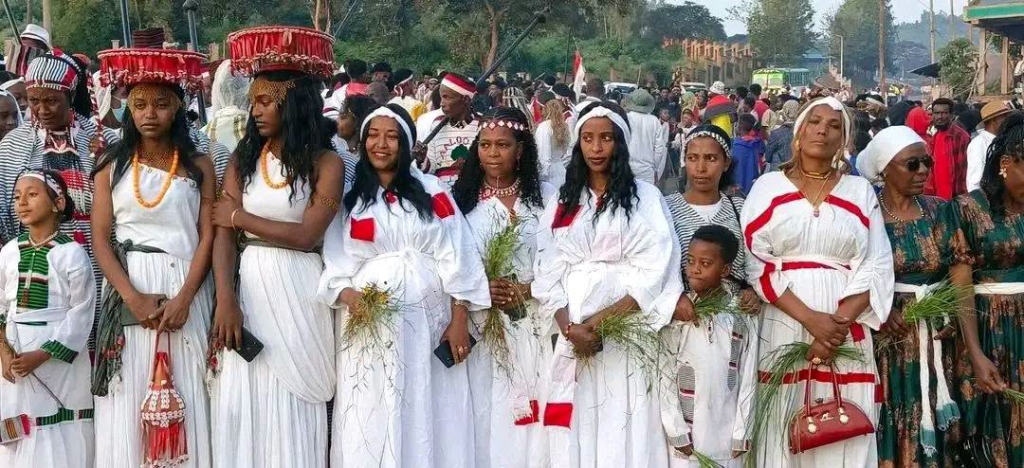
The festival was not only a gathering of elders. The youth were present in force, their energy a reminder that Irreecha is a living tradition, not a relic. The Qeerroo generation—young Oromo who have grown up in the wake of the cultural and political awakening of recent decades—brought their own vitality to the celebration. Their participation ensures that the knowledge and values embedded in Irreecha will be carried forward, even as each generation brings its own experiences and aspirations to the riverbank .
This intergenerational dimension is central to Irreecha’s enduring power. The festival is described as a meeting place between generations, where memory and modern life stand together. Elders pass on the values of peace, reconciliation, and respect for creation, while the young bring the energy that keeps the tradition alive.
A Call for Peace and Reconciliation
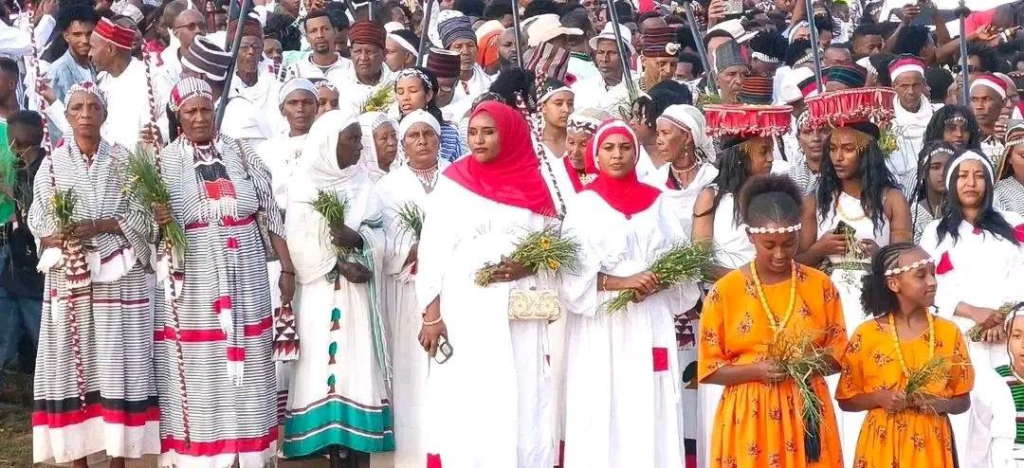
Irreecha is not only about gratitude for the past; it is also about repairing relationships for the future. Traditional teachings emphasize that people should reconcile before entering the sacred gathering. Conflict, insults, and resentment have no place at the water’s edge. The elders ask the gathered crowd: Are you at peace with each other? Are you at peace with the Creator? Are you at peace with creation? Only when the community affirms its peace does the thanksgiving officially begin .
At Malkaa Meexxii, this spirit of reconciliation was palpable. The festival brought together people from across the district, transcending the divisions that ordinary life can impose. For a day, the community was united in gratitude and hope—a reminder of what Irreecha at its best can achieve.
A Tradition That Lives
The celebration at Malkaa Meexxii is one of countless Irreecha gatherings taking place across Oromia and among the Oromo diaspora this season. While the largest celebrations draw millions to Hora Finfinnee in Addis Ababa and Hora Arsadi in Bishoftu, the festival’s meaning is not diluted in smaller settings. Indeed, it is in places like Dambi Dollo, at rivers like Malkaa Meexxii, that the tradition remains most intimately connected to the land and the community .
As the sun set on the celebration and families returned to their homes, the prayers offered at the water’s edge carried forward an ancient message: be grateful for what has been received, seek peace and reconciliation, respect creation, and face the future with hope. For the people of Sayyo, Irreecha at Malkaa Meexxii was not merely a festival. It was an affirmation of who they are—a nation that gives thanks, that remembers, and that endures.
Baga Irreecha Malkaa Meexxiitiin nu gahe!

Posted on November 1, 2026, in Aadaa, Afaan, Daaniyaa, Diaspora, Election, Events, Finfinne, freedom, gadaa, Information, Irreechaa, Language, Media, Oromia, Oromo diaspora, Seenaa, Siinqee. Bookmark the permalink. Leave a comment.






Leave a comment
Comments 0