Category Archives: Moyale
The Unbroken Spirit: The Story of Obbo Masfin Ittaanaa
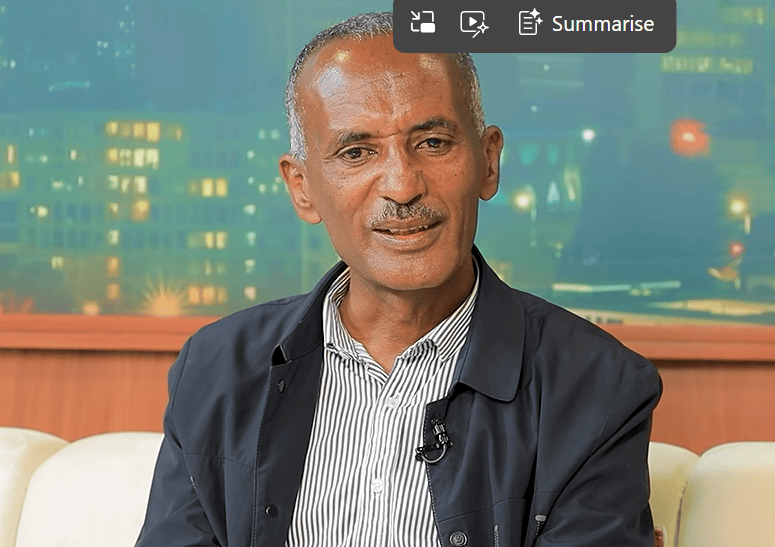
By Dhabessa Wakjira
In the annals of the Oromo struggle, there are names that echo through generations—names that carry the weight of sacrifice, resilience, and unwavering commitment to freedom. One such name is Obbo Masfin Ittaanaa, a man whose life story reads like a testament to the indomitable spirit of the Oromo people.
Twenty Years of Captivity
Obbo Masfiin Ittaanaa is a name that evokes both sorrow and pride. For two decades—twenty long years—he was held in chains across some of Ethiopia’s most notorious detention facilities: Maa’ikalawwii, Karchallee, and Qaallittii. These names are not merely locations on a map; they are synonymous with suffering, with the darkest chapters of the Oromo people’s struggle for self-determination.
Maa’ikalawwii, Karchallee, and Qaallittii—these are the places where countless Oromo sons and daughters have been subjected to unimaginable hardship. They are the places where the Ethiopian state sought to break the spirit of a people by breaking the bodies and minds of their leaders, their activists, their voices.
For Obbo Masfiin Ittaanaa, these facilities were his home for twenty years. Twenty years of separation from his family. Twenty years of deprivation. Twenty years of uncertainty. Twenty years of pain.
Released But Not Free
After two decades of imprisonment, Obbo Masfiin was finally released. The gates of the prison opened, and he walked out—a free man in the eyes of the law, but a man whose body and spirit bore the scars of those twenty years.
The phrase “warra hidhamee booda waggaa 20 booda dhiifamaan bahe”—”after being imprisoned, he was released after twenty years”—captures the stark reality of his ordeal. He was detained, held for two decades, and then released. The words are simple, but the weight they carry is immeasurable.
A Symbol of Resilience
Obbo Masfiin Ittaanaa’s story is not merely one of suffering. It is a story of resilience. The fact that he emerged from those twenty years—that he survived, that he endured, that he did not break—is a testament to the strength of the Oromo spirit.
In Oromo culture, elders like Obbo Masfin are revered not only for their age but for their wisdom, their experience, and their sacrifice. His twenty years in detention have made him a living symbol of the Oromo struggle—a reminder of the price that has been paid, and continues to be paid, for the dream of freedom.
The Places That Testify
Maa’ikalawwii, Karchallee, and Qaallittii are names that every Oromo knows. They are the sites of collective trauma, places where the state’s machinery of repression was unleashed against a people who dared to demand their rights. To be held in one of these facilities is to be marked for life. To be held in all three, over the course of twenty years, is an ordeal that few could survive.
Yet Obbo Masfiin survived. He emerged from those gates not broken, but bearing witness. His very existence is a testimony to what the Oromo people have endured—and to their refusal to be defeated.
A Legacy for the Future
Today, as the Oromo people continue their long journey toward freedom, justice, and dignity, the story of Obbo Masfin Ittaanaa serves as a reminder of the sacrifices that have been made. His twenty years of imprisonment are a debt that can never be fully repaid, but one that must never be forgotten.
For the younger generation—the Qeerroo and Qarree who continue the struggle today—Obbo Masfiin’s story is both a warning and an inspiration. It is a warning about the cost of resistance, and an inspiration about the power of resilience.
Honoring Masfin!
As we reflect on the life and sacrifice of Obbo Masfin Ittaanaa, we honor not only him but all those who have suffered in the struggle for Oromo freedom. We remember the nameless thousands who have passed through Maa’ikalawwii, Karchallee, Qaallittii, and countless other detention facilities. We remember those who never came out.
And we celebrate the fact that Obbo Masfin—after twenty years—walked out of those gates a free man. His freedom is a small victory in a larger struggle, but it is a victory, nonetheless. It is a reminder that no matter how long the night, the dawn will eventually come.
The story of Masfin Ittaanaa with Gammadaa show can be watched at:
This feature news is dedicated to Obbo Masfin Ittaanaa and to all Oromo political prisoners—past, present, and future—whose sacrifices will never be forgotten.

A Crisis of Blood and Borders: OSG Alleges Somali Region Forces Behind Deadly Moyale Attacks Amidst Wave of Displacement and Regional Fallout
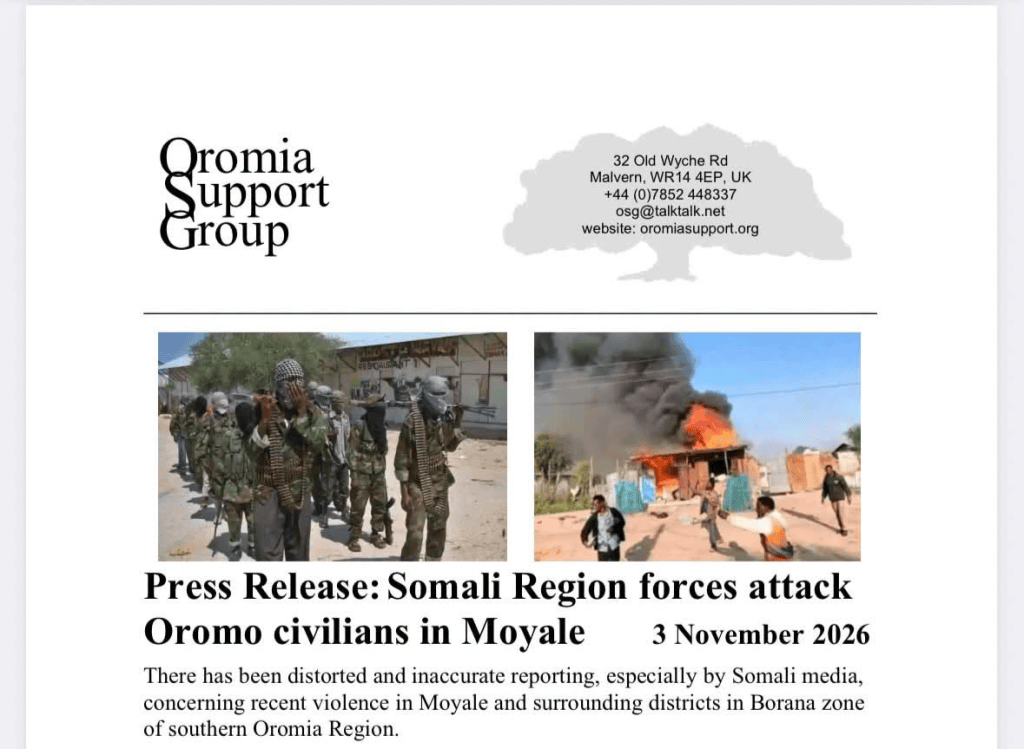
By ONA News Desk
November 3, 2026
MOYALE / LONDON — A harrowing picture of escalating violence, mass displacement, and deadly misinformation is emerging from the Borana zone in southern Oromia, following a new press release from the UK-based Oromia Support Group (OSG). The organization alleges that heavily armed Somali militia and Somali Region forces, potentially backed by al-Shabaab fighters, launched a devastating campaign against Oromo civilians in Moyale and surrounding districts between October 21 and 30.
According to the OSG, the violence has been met with little to no response from Ethiopian federal or regional forces. Instead, the group reports that federal troops themselves killed five Oromo civilians in the Borana zone earlier in the month on October 10.
A Spark of Violence and Grisly Discoveries
The OSG points to October 18 as a critical flashpoint, when the Somali Region and Somalia national flags were reportedly raised at an office on the Oromo side of Moyale. Following this, a 13-year-old girl, Diqqoo Jaataan Aaagaa, was killed. The OSG states that Somali forces denied her family access to her body for several days.
While national and international media have reported a death toll of nine, the OSG insists the true number of fatalities is much higher. On October 25, a reliable informant reportedly sent the OSG gruesome photographic evidence of ten severed heads and the mutilated body of an Oromo policeman. The group notes that while demonstrations by Oromo residents erupted on October 21, they were rapidly crushed as the violence intensified.
The humanitarian toll is staggering. By November 1, more than 50,000 residents had fled across the border into Kenya, with thousands more seeking refuge in the towns of Yabelo, Mega, Bokku, and Dubuluk. The OSG notes that the Borana Oromo have been pushed westward by Somali forces, losing much of their ancestral pastoral land—described as the cradle of the Oromo people and a historic stronghold of Gadaa democracy—over the last 140 years.
Misinformation and Regional Backlash
The OSG is sharply criticizing Somali media for what it calls “distorted and inaccurate reporting” that frames the violence as “Oromo expansionism” by an “Oromo government.” The organization vehemently rejects this, arguing that Oromo territory has actually shrunk and that the Oromo people are targets of the regime of Prime Minister Abiy Ahmed—a situation they describe as “drying out the ocean to catch the fish.”
This inflammatory rhetoric has had dangerous real-world consequences. On October 29, reportedly in response to these media reports, mobs in the city of Borama in Somaliland burnt down over 150 homes belonging to Oromo refugees. Thousands of refugees in Hargeisa now reportedly fear an increase in violence from their host communities.
Furthermore, the OSG warns that similarly misinformed accusations regarding the Oromo Liberation Army’s involvement in the recent killing of 60 Ethiopian Orthodox Christians in the Arsi zone are deliberately designed to foment discord between the Amhara and Oromo people.
Desperate Pleas from Yemen
Beyond the Horn of Africa, the OSG is also raising the alarm over the plight of destitute Oromo refugees in Yemen. The organization reports receiving desperate pleas for help from refugees who are suffering from fatal Saudi air attacks on Sana’a and a migrant detention center near the border in Sadaa. These refugees are facing severe insecurity as Houthi forces encircle Taiz and occupy the war zone around the al-Kharaz refugee camp, north of Aden. Citing an Al Jazeera report from a Yemeni rights group, the OSG noted that 189 civilians were killed by Houthi militia between September 1 and October 29.
As the situation on the ground remains highly volatile, the OSG is calling for immediate international attention. The organization notes that further details on the killings will be published in OSG Report 75.
For further information, contact:
Dr Trevor Trueman, Chair, OSG
Email: osg@talktalk.net
Phone: +44 (0)7852 448337
The OSG Press Release: Somali Region forces attack Oromo civilians in Moyale

“The Worqitu We Saw at Moyale”: Oromo Identity, Boorana Women, and the Fire of Defiance
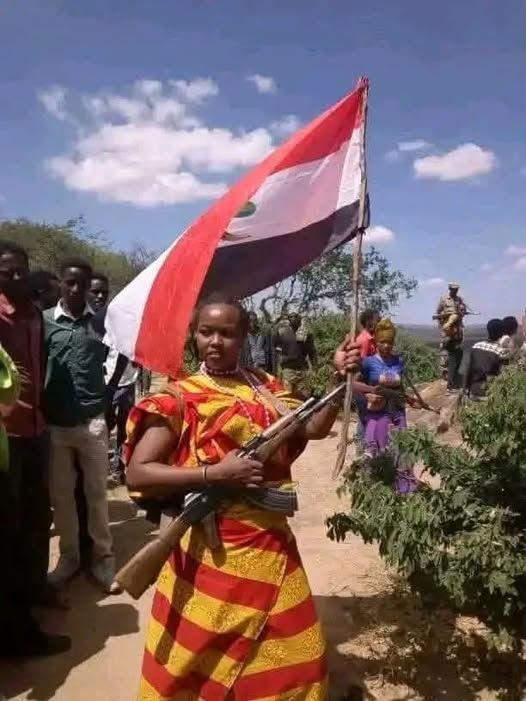
A viral message from the frontier of identity — celebrating the Boorana women who stand at the border of land and selfhood — has reignited a conversation about what it means to be Oromo, and who pays the price for defending it
By Daandii Ragabaa
—
It begins with a declaration, and it ends with a blessing.
Across social media this week, an impassioned message written in Afaan Oromoo has been shared and reshared — a tribute to the Oromo spirit, to the fighters at Moyale, and above all to the women of Boorana who, in the words of the post, stand for their land and their identity.
“Every Oromo, if she/he is wounded for her/his Oromoness and defies the enemy in this way — even if we become a plaything for anyone’s mockery — behold, at Moyale we have seen many Worqitus ones who struggle for their border and their identity,” the message reads. “May their seed multiply, Abo.”
Then, a proverb, and a salute: “Sabni Hidhannoo qabu mataa gadii hin qabu” — a nation with a covenant holds its head high. “Baga kabachiiftan! Ammallee duratti!” — Congratulations! And forward, still forward! “Dubartii Boorana!!” — Boorana women!!
A Message from the Frontier
Moyale sits at the edge of things — a place where land, identity, and history press against one another. In the Oromo imagination, and particularly in Boorana memory, such places are not merely geography. They are archives. Every ridge and river carries the story of who belongs to the land and who has defended it.
The message’s reference to “the border” is therefore more than a line on a map. It is the boundary of belonging itself — the place where a people’s right to be who they are is tested.
And it is there, the message insists, that “golden ones” have been seen. The imagery is deliberate: gold in Oromo and Boorana oral tradition is not merely precious — it is enduring, tested by fire, and impossible to counterfeit. To call the women of Boorana “golden” is to say that their worth has been proven in the crucible.
“Dubartii Boorana” — The Women Who Carry the Nation
The exclamation that closes the message — Dubartii Boorana! — is both salute and summons. In Boorana society, women hold a distinct and honored place: custodians of tradition, keepers of the gadaa calendar’s moral memory, and, in moments of crisis, the ones who stiffen the spine of the community.
The message’s author understands this. By centering women in a tribute to resistance, the post quietly overturns the assumption that the story of struggle belongs only to men. It is the mothers, the daughters, the wives, and the sisters who transmit identity across generations — who teach a child what it means to be Oromo before any flag or border can.
“May their seed multiply” is thus not a casual blessing. It is a prayer for continuity — for the future itself.
The Weight of “Being a Plaything”
Perhaps the most striking line in the message is also its most painful: the acknowledgment that a people who fight for their identity may be mocked, dismissed, or made “a plaything” in the eyes of others.
It is a recognition born of experience. Oromo communities have long contended with marginalization, with the distortion of their history, and with the casual contempt of those who see identity assertion as inconvenient. The message does not deny this. Instead, it absorbs the mockery and answers it with dignity: even if we are mocked, behold what we have seen at Moyale.
There is an old strength in that posture — the strength of a people who have learned that dignity is not granted by others but claimed by oneself.
“A Nation with a Covenant Holds Its Head High”
The proverb at the heart of the message — Sabni Hidhannoo qabu mataa gadii hin qabu — is a key to understanding everything else.
Hidhannoo is covenant, bond, agreement — the sacred compact that binds a community to its values, its land, and its future. A nation with such a covenant, the proverb says, need never bow its head. It can look the world in the eye.
For the Oromo, that covenant is carried in the gadaa system, in the oral epics, in the shared memory of the Boorana and beyond. It is the reason the message can move so quickly from lament to triumph — from the wound to the blessing, from the mockery to the gold.
A Blessing That Travels
What makes this message remarkable is not only its content but its movement. Composed in Afaan Oromoo and shared across platforms, it travels from the specific — a place called Moyale, a people called Boorana — to the universal: the right of any people to defend who they are.
“Baga kabachiiftan! Ammallee duratti!” — Congratulations! Forward, still forward!
It is the language of a people who know that the struggle for identity is never finished, only renewed. And it is a reminder, as the message’s author clearly intends, that the “golden ones” are not only at Moyale. They are wherever an Oromo woman teaches her child the name of her people, wherever a community holds its head high, and wherever the covenant is remembered.
The seed, the blessing says, will multiply.
—
The message referenced in this feature was widely shared in Afaan Oromoo on social media. This article honors the sentiment expressed in that message and the communities it celebrates.

“The Camp That Would Not Be Silenced”: Naomi Waqo and the Oromo Question in Kenya’s Parliament
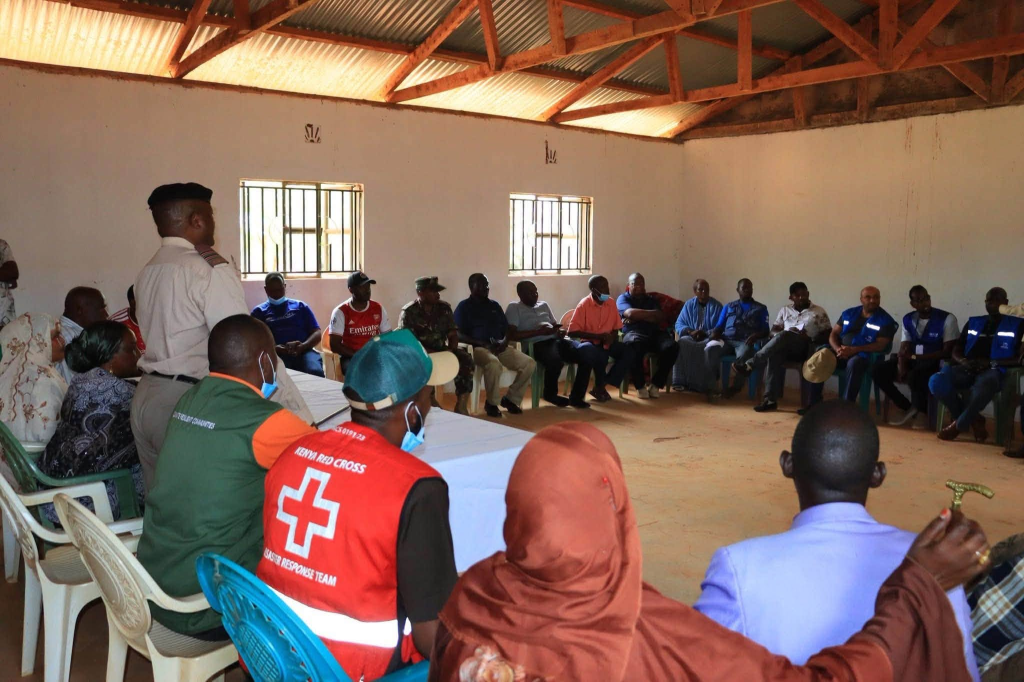
At a dusty camp called Odha, displaced Oromo families found their voice echoed in Kenya’s National Assembly — and the woman carrying it, MP Naomi Jillo Waqo, has become a symbol of a community’s refusal to be forgotten
By Dhabessa Wakjira
—
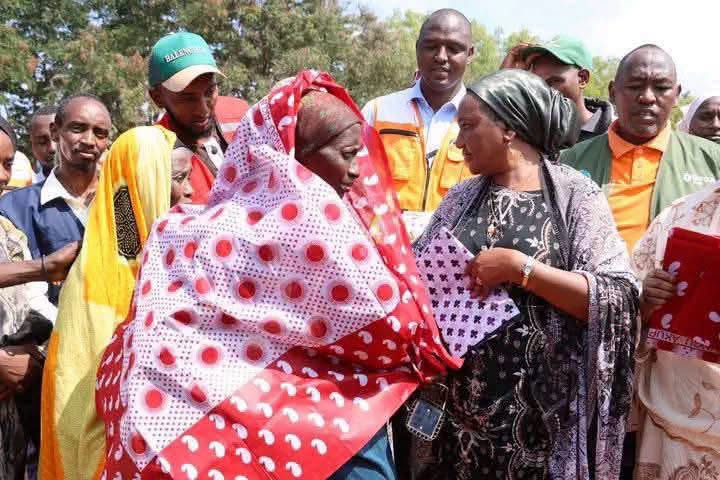
MOYALE, Kenya — The camp sits at the edge of Moyale, where the red earth of northern Kenya meets the borderlands that have carried Oromo memory for generations. It is called Odha — the camp of the displaced, the settlement of those who have lost homes, livestock, and the quiet certainty of belonging.
This week, a message circulating in Afaan Oromoo paid tribute to the families of that camp, and to the woman who has carried their cause into the chambers of power.
“Addee Naomi Jillo Waqo,” the message begins — using the Oromo honorific Addee, a term of respect for a distinguished woman. “She is the representative of the women of Marsabit and a Member of the Parliament of Kenya.”
The message goes on to salute “the Oromo people who have been displaced from their land and their property, scattered into the camp called Odha in Moyale, Kenya” — and to praise the woman who, in its words, “encouraged this people” when they were at their lowest.
It closes with a call that is as much a demand as a benediction: “The sons of Oromo who are Members of the Kenyan Parliament, and the administrators who sit at various levels, must be thanked and recognized.”
Who Is Naomi Jillo Waqo?
Naomi Jillo Waqo is a Kenyan politician who has represented the women of Marsabit County in the National Assembly, a vast and arid county in Kenya’s north that borders Ethiopia. Marsabit is a place of extraordinary diversity — home to Borana Oromo, Gabra, Rendille, Burji, Turkana, and other communities — and extraordinary pressure. Drought, resource competition, and cross-border insecurity have shaped its politics for decades.
For the Oromo of northern Kenya, representation in Nairobi is not a luxury. It is a lifeline. The Oromo of Marsabit and Moyale are a cross-border community, tied by language, kinship, and custom to the Oromo of Ethiopia, but citizens of Kenya. Their grievances — displacement, marginalization, contested land, and the slow violence of neglect — are routinely spoken in the language of security rather than rights.
The message’s tribute to Waqo is a recognition that she has chosen a different language. At a time when displaced Oromo families were confronting the loss of land and livelihood, she is described as having stood with them — visiting the camps, amplifying their voices, and insisting in Parliament that their suffering be named.
Odha: The Camp as a Political Fact
The reference to Odha is the heart of the message. Camps of displacement are often treated as temporary inconveniences — a humanitarian problem to be managed, not a political reality to be confronted. The Oromo families in Odha, according to the message, are not merely sheltering. They are waiting for justice.
Displacement in the Moyale borderlands is a familiar and painful pattern. Communities have long described being pushed from ancestral land by conflict, by administrative decisions, and by the quiet encroachment of more powerful interests. When families are forced into camps, they lose more than shelter. They lose grazing routes, burial grounds, and the social fabric that holds a pastoralist community together.
The message’s author understands this. To name the camp is to name the crime. To praise the MP who visited it is to insist that displacement is not a private misfortune but a public responsibility.
The Call to Kenya’s Oromo Leaders
The message’s closing line is pointed. It calls on Oromo members of Kenya’s Parliament and administrators at “various levels” to be recognized — and by implication, to be accountable.
It is a reminder that representation is not measured only in seats held but in service rendered. The Oromo of Kenya have produced legislators, county officials, and civil servants. The question the message implicitly poses is whether those leaders have used their positions to defend the most vulnerable among their people — or whether they have been content to enjoy the fruits of office while the camps fill.
The tribute to Naomi Waqo is thus also a standard against which others will be measured. Here is what it looks like, the message says, when a representative remembers the people who sent her.
A Borderland People, a Cross-Border Struggle
Moyale is a town split by an international border, but the Oromo who live on both sides share a single identity. The hashtags that accompany the message — #Moyale, #Borana, #Oromia, #Kenya, #NaomiWaqo — map a geography that no border can divide.
That geography has become increasingly contested. The Horn of Africa is in flux: Ethiopia is navigating conflict in Tigray and unrest in Oromia; Kenya is managing drought, insecurity, and a restive northern frontier; and the Oromo cross-border community sits at the intersection of all of it.
In such a moment, the message suggests, the Oromo must count on one another. The women of Marsabit, the families of Odha, the parliamentarians in Nairobi, and the administrators in the counties — all are part of a single chain of responsibility. When one link holds, the whole chain is strengthened.
The Meaning of Addee
The word Addee is not a title one can claim. It is granted by a community to a woman who has earned it — through wisdom, through service, through presence in moments of need. To call Naomi Waqo Addee is to say that she has been tested and found worthy.
The message that bears her name is, at its core, an act of remembrance. It remembers the displaced. It remembers the camp. It remembers the woman who came to the camp and did not look away.
“May the sons of Oromo who are Members of the Kenyan Parliament, and the administrators who sit at various levels, be thanked and recognized,” the message concludes.
But the deeper prayer is simpler: may there be more like her.
—
This feature honors the displaced Oromo families of the Moyale borderlands and the representatives who stand with them.

The Man Who Would Redefine Ethiopia
Jawar Mohammed’s “Progressive Patriotism” and the Oromo Question: A New Chapter in Ethiopia’s National Story
By Sultan Abda Neja, Ph.D.
—
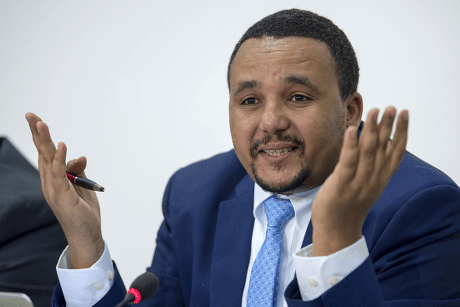
For much of modern Ethiopian history, the question of who owns the nation has been answered in blood, in policy, and in silence. It is a question that has haunted the Oromo people—Ethiopia’s largest ethnolinguistic community—for generations. Their relationship with the modern Ethiopian state has been shaped by conquest, land dispossession, political exclusion, and cultural marginalization. Yet something is shifting. The old binary of Oromo resistance versus Ethiopian state nationalism is being challenged—not by a soldier, not by a separatist, but by a media-savvy activist-turned-thinker named Jawar Mohammed.
At the heart of this shift is a deceptively simple concept: Progressive Patriotism. It is Jawar’s attempt to articulate a political framework in which Oromo identity and Ethiopian national belonging are not mutually exclusive. It asks a new question: Can Oromo nationalism help redefine Ethiopian nationalism from within?
—
The Long Road from Resistance
To understand the weight of Jawar’s proposition, one must first understand the weight of history. Oromo nationalism did not emerge in a vacuum. It grew out of the expansion and consolidation of the modern Ethiopian state, the incorporation of Oromo territories, and subsequent struggles over land, language, religion, and political representation.
The Ethiopian state-building project, for much of its history, was associated with centralized authority, cultural homogenization, and the marginalization of groups whose languages and political identities differed from those of the ruling elite. The Oromo Liberation Front (OLF), founded in 1973, became the most prominent expression of Oromo resistance. But even then, Oromo nationalism was never monolithic. Some advocated independence; others supported multinational federalism, stronger regional autonomy, or a democratic Ethiopian state.
The 1995 Constitution, which formally recognized the rights of nations, nationalities, and peoples—including the right to self-determination up to secession—represented a significant shift. Yet constitutional recognition did not automatically produce democratic governance. The political crisis that culminated in the 2014–2018 protests exposed the limits of the existing order. Oromo protesters mobilized against political exclusion, human rights abuses, and the proposed expansion of Addis Ababa into surrounding Oromia.
Then came 2018. Abiy Ahmed, an Oromo politician, became prime minister. It was a moment of symbolic triumph—an Oromo had reached the highest office in the land. But symbolism, as Jawar would later argue, is not transformation.
—
Jawar’s Intervention: From Resistance to Governance
Jawar Mohammed’s political trajectory—from a fiery activist and media owner to a prominent voice in the debate over Ethiopia’s future—mirrors the broader evolution of Oromo political consciousness. His call for a transition from resistance politics to governance politics, and from ethnonationalism to broader nation-building, represents a significant shift.
In his writings and interviews, Jawar argues that Oromo politics must evolve beyond its traditional oppositional orientation. A movement that has historically defined itself through resistance must now demonstrate its capacity to govern, build institutions, deliver public services, and contribute to national stability. Political legitimacy cannot be sustained indefinitely through historical grievances alone.
This is not to suggest that Jawar asks Oromos to abandon their identity or their legitimate demands. Rather, he challenges the assumption that protecting Oromo interests and building a common Ethiopian political future are mutually exclusive. Given the Oromo people’s demographic significance, geographical position, cultural influence, and historical role in Ethiopia, their political participation is essential to any sustainable project of national reconstruction.
In a recent interview on Kallatti Media, Jawar explained that Ethiopian nationalism should not be understood as an identity or political project owned exclusively by historically dominant groups. Oromos, like other peoples of Ethiopia, have an equal right to define, shape, and participate in the national project. An Oromo can embrace Ethiopian citizenship, contribute to national unity, and take pride in a shared political identity without surrendering Oromo cultural identity or constitutional rights.
From this standpoint, Progressive Patriotism challenges the historical tendency to associate Ethiopian nationalism with cultural assimilation, political centralization, or the dominance of one group. It opens the possibility of an inclusive nationalism in which belonging to Ethiopia does not require becoming less Oromo.
—
The Goobana Question: Heroes, Traitors, and the Politics of Memory
Jawar’s concept of Progressive Patriotism extends beyond constitutional arrangements. It also engages with the politics of memory—specifically, the way political movements construct historical narratives that distinguish heroes from traitors.
In his text, Goobana: The Hero-Traitor Narrative in the Oromo Struggle, Jawar examines how the figure of Goobana Daacee—a historical Oromo figure remembered as a collaborator with Emperor Menelik II and, consequently, a traitor—has been used within the Oromo national movement. The narrative of betrayal, Jawar argues, can serve important political purposes: it mobilizes communities, establishes collective memory, and defines political loyalties.
But when a movement moves from resistance to governance, such narratives become liabilities. A movement operating in opposition can organize its political identity around a clear distinction between the oppressed and the oppressor, resistance and collaboration, liberation and betrayal. A political movement that enters government, however, must negotiate competing interests, govern citizens with different identities, and build institutions that extend beyond its original constituency.
Jawar suggests that political movements may need to move from a resistance narrative toward a governing narrative. Figures previously condemned may be reassessed; figures celebrated may be subjected to new scrutiny. The task, he argues, is not to replace every hero with a traitor, but to create a political culture in which historical disagreements can be examined without becoming grounds for denying citizenship, identity, or political legitimacy.
—
The Abiy Paradox: An Oromo Leader, but an Oromo-Empowering Government?
The question of Oromo ownership of Ethiopian nationalism cannot be separated from the political trajectory of Abiy Ahmed. His rise to power in 2018 symbolized the opportunity to translate Oromo political mobilization into democratic transformation at the national level.
His early reform agenda generated expectations of political liberalization, reconciliation, and greater openness. His government’s peace initiative with Eritrea further strengthened the image of a leader seeking to move beyond longstanding regional hostility. But the subsequent political project—associated with the formation of the Prosperity Party in 2019 and the language of Medemer—proved contentious.
Supporters interpreted Medemer as an attempt to overcome political fragmentation and the limitations of ethnic-based party organization. Critics, including Oromo nationalists, argued that it weakened the political and institutional protections established under multinational federalism. The war in Tigray, the subsequent armed conflicts in other regions, political polarization, and serious allegations of abuses by state and non-state actors exposed the limitations of a political transition that did not produce a broadly accepted democratic settlement.
The broader lesson is that an Oromo’s accession to the center of Ethiopian power does not automatically mean that Oromo nationalism has achieved its democratic objectives. An Oromo-led government is not necessarily an Oromo-empowering government, just as an Ethiopian national identity is not necessarily an exclusionary identity. The decisive issue is the character of the institutions and policies through which political power is exercised.
—
The Critics Speak: Progressive Patriotism Under the Microscope
Jawar’s Progressive Patriotism has not gone unchallenged. Critics from across the political spectrum have raised important questions about its conceptual clarity, its practical implications, and its relationship to the status quo.
Moges Zewdu Teshome argues that Jawar conflates multinational federalism, multicultural federalism, and a multicultural unitary state—distinct institutional arrangements that cannot be resolved simply by democratizing an allegedly flawed constitutional structure. He advocates revisiting the constitutional order, strengthening an inclusive civic identity, and building a political community in which citizenship is not subordinated to ethnic affiliation.
Professor Messay Kebede challenges Jawar’s claim that ethnonationalism has become effectively irreversible, reasoning that political identities and institutions are historically constructed and can therefore change. He proposes democratic or civic nationalism as a more coherent alternative, arguing that inclusive democratic institutions can protect cultural diversity without making ethnic political sovereignty the organizing principle of the state.
Benti Geleta Buli, through a sentiment analysis of Jawar’s proposal, notes that the term “progressive” remains inadequately defined and could become a rhetorical framework that preserves the status quo rather than resolving Ethiopia’s political divisions. He presents constitutional patriotism as a more constructive alternative grounded in shared constitutional values, democratic participation, and inclusive citizenship.
And in my own earlier critique, I argued that Jawar’s distinction between “centripetal” and “centrifugal” political forces unfairly portrays ethnonationalist movements while underemphasizing the historical injustices, assimilationist policies, and authoritarian practices that gave rise to them. Appealing to right-wing Ethiopian nationalists by equating their historical responsibilities with those of ethnonationalist movements risks undermining the legitimate struggles and sacrifices of nations and nationalities, including the Oromo people.
These critiques are not dismissive. They are, in fact, a sign of the seriousness with which Jawar’s intervention is being taken. They demand that Progressive Patriotism move beyond slogan and toward institutional specificity.
—
Toward a Constitutional Patriotism: The Roadmap
If Progressive Patriotism is to become more than a rhetorical compromise, it must be grounded in concrete institutional commitments. One possible way to clarify it is to connect it to constitutional patriotism—attachment to a political community based on shared constitutional principles, democratic institutions, equal citizenship, and fundamental rights rather than ethnic or cultural uniformity.
For Ethiopia, such a framework would require at least five commitments:
1. Meaningful regional self-government and the rights of nations, nationalities, and peoples must be constitutionally protected.
2. Federal and regional governments must be accountable through genuinely competitive political processes and an independent judiciary.
3. Minorities within regional states must enjoy equal citizenship, cultural rights, security, and political participation.
4. National institutions must be accessible to citizens regardless of language, ethnicity, religion, or political affiliation.
5. Disputes over federal authority, regional boundaries, resources, and political representation must be resolved through credible constitutional procedures rather than coercion.
Beyond these constitutional commitments, a pragmatic roadmap for Oromo ownership of Ethiopian nationalism requires several practical steps: protecting political pluralism within Oromo society, democratizing multinational federalism, establishing credible national dialogue, creating effective mechanisms for accountability, promoting an inclusive national historical narrative, and defining Progressive Patriotism institutionally.
It also requires a crucial conceptual separation: national unity must be separated from unconditional support for a government. Citizens should be able to oppose a prime minister, criticize the federal government, or demand constitutional change without being branded enemies of Ethiopia. Likewise, support for Oromo rights should not require unconditional loyalty to an Oromo political organization.
—
The Future of Ethiopian Nationalism: A Shared Project
The most important question, ultimately, is not whether Oromo nationalism should disappear into Ethiopian nationalism or remain permanently opposed to it. It is whether both can be transformed through democratic institutions so that neither requires the political subordination of the other.
Jawar Mohammed’s Progressive Patriotism is an attempt to articulate a framework in which ethnic identity and shared national belonging can coexist. Its credibility depends on democratic institutions, constitutional protections, political pluralism, and an explicit rejection of coercive assimilation. Abiy Ahmed’s experience illustrates the dangers of attempting to build national cohesion by weakening the political forces and constitutional guarantees through which historically marginalized communities sought recognition.
The future of Ethiopian nationalism will depend on whether the country can build a political community in which unity is freely sustained rather than coercively imposed, ethnic identities are protected rather than demonized, and national citizenship is shared rather than monopolized.
Oromo nationalism’s most consequential contribution to Ethiopia may ultimately be its capacity to help transform Ethiopian nationalism from an inherited claim of state authority into a genuinely shared project of democratic citizenship. That is the promise of Progressive Patriotism. Whether it becomes a reality depends not on the eloquence of its advocates, but on the institutions through which it is enacted—and on the willingness of all Ethiopians, Oromo and non-Oromo alike, to engage in the difficult, patient work of democratic negotiation.
The question is no longer whether the Oromo belong to Ethiopia. The question is what kind of Ethiopia can belong equally to Oromos and all other citizens. The answer, if it comes, will not be found in slogans or in the shadow of a single leader. It will be found in the constitution, in the ballot box, and in the everyday practice of citizenship.
—
Sultan Abda Neja, Ph.D., is a political analyst and author specializing in Ethiopian politics, federalism, and ethnonationalism. His work has appeared in Borkena and other outlets.
The full article can be accessed:

The Thirst of Moyale: How Politics and Power Threaten the Sacred Wells of the Borana

By Daandii Ragabaa*
In the dry, unforgiving expanse of the Ethiopia-Kenya borderlands, water is not just a resource; it is the architecture of existence. For the Borana Oromo people, water is life, identity, and law. It is enshrined in the Tuula Saglan Booranaa—the Nine Sacred Water Wells—whose sanctity is still invoked in public blessings and whose historical significance was meticulously archived by British colonial anthropologists as “vital for the survival of the Borena tribes.”
Yet today, these ancient lifelines are at the center of a bitter, decades-long geopolitical struggle. Through the lens of a book written two years before the fall of the EPRDF regime by Obboo Alaka Simbiru, a former Governor of the Borena Zone, a troubling narrative emerges. It is a story of how the manipulation of borders, the politics of identity, and the heavy hand of the military eroded Borana autonomy and facilitated the capture of sacred resources by immigrant Somali groups.
A Border Drawn in Sand and Blood
The origins of the current crisis in Moyale can be traced back to the arbitrary drawing of colonial borders. As the book documents, the 1907 Anglo-Ethiopian treaties artificially divided the Borana people, splitting their traditional grazing lands and water sources between Ethiopia and Kenya. Moyale, located exactly 770 kilometers from Addis Ababa, became a divided town—a “twin city” straddling two nations.
For decades, this division was navigated through traditional governance. According to historical records and oral traditions cited in the text, the Borana managed their water sources through a deeply democratic system, rooted in the Gadaa system and governed by councils of elders. Under Emperor Haile Selassie and later the Derg regime, special administrative arrangements (like the Dembi Dollo and Goba systems) allowed the Borana to maintain relative control over their wells and grazing lands.
But the ascension of the TPLF-led EPRDF regime brought a seismic shift. The new government reorganized the country into ethnic federalism, redrawing internal boundaries and creating a volatile administrative reality on the ground.
The Anatomy of Dispossession
In 1991 and 1992, Moyale found itself at the center of a regional power struggle. The TPLF, consolidating its control over the south, established new administrative boundaries that placed the Borana and Somali communities in fierce competition for resources.
According to Simbiru’s account, the TPLF government did not merely redraw maps; it altered the demographic and political reality through force. The text highlights how the government systematically disarmed the local Borana population—leaving them defenseless—while allegedly arming and supporting immigrant Somali tribes, including groups crossing from neighboring countries.
The result was catastrophic for the Borana. As the book explicitly outlines, under the watch of TPLF military generals who controlled the region, two of the nine sacred Tuula Saglan Booranaa wells fell into the hands of these immigrant groups. This was not a natural migration, but a politically engineered displacement.
A Well is Cattle. A Well is Wife. A Well is Family.
To an outsider, the loss of two wells might seem like a minor logistical setback. But in Borana cosmology, the wells are sacred. They are the physical manifestation of a covenant between the people, their cattle, and Waaqa (God). “The well is cattle. The well is wife. The well is family,” the Borana say.
Access to these wells is governed by nagaa Boran—the peace and moral order of the Borana—which demands that no one is denied water. However, the political capture of the wells by rival groups, backed by military force, shattered this order.
The text details how the TPLF’s “divide and rule” tactics weaponized water and land. Borana politicians and elders who attempted to advocate for their people were systematically marginalized. The text notes that the Ethiopian government of the time pursued a deliberate strategy of “population settlement” and administrative gerrymandering to weaken the Borana demographic majority, thereby ensuring that the region’s resources were controlled by groups aligned with the central government.
The Echoes of LAPSSET and the Fight for the Future
Today, Moyale is no longer just a pastoral backwater; it is a strategic geopolitical node. The town is slated to be a major hub in the LAPSSET (Lamu Port-South Sudan-Ethiopia Transport) corridor. The promise of oil pipelines, highways, and international trade has made control of Moyale and its surrounding lands immensely valuable.
The historical grievances documented by Simbiru provide the necessary context for the intermittent violence that continues to plague the region. When communities feel that their sacred sites have been stolen and their traditional governance dismantled by state-backed forces, peace becomes elusive.
The River of Blessings, an essay written in honor of the late British anthropologist Dr. Paul Baxter, documented the resilience of Borana culture. But resilience has limits.
The story of Moyale is a cautionary tale about what happens when state power ignores traditional sovereignty and tramples on sacred ecology. As the Borana elders continue to recite the blessings of the Nine Sacred Wells, two of those names are now spoken with a sense of mourning and dispossession. The water still flows, but for the Borana, the moral order of the land remains broken.
Until the grievances of the past—the arbitrary borders, the militarized disarmament, and the stolen wells—are addressed with historical honesty, Moyale will remain a powder keg on the edge of the Horn of Africa. The thirst of the Borana is not just for water; it is for justice.
Daandii Ragabaa is a journalist covering the Horn of Africa, with a focus on land, water, and conflict in borderland communities.






