A Small Cottage in Wales, a Global Mission: How Understanding Bereavement Is Reaching the Children Who Need It Most
By Dhabessa Wakjira
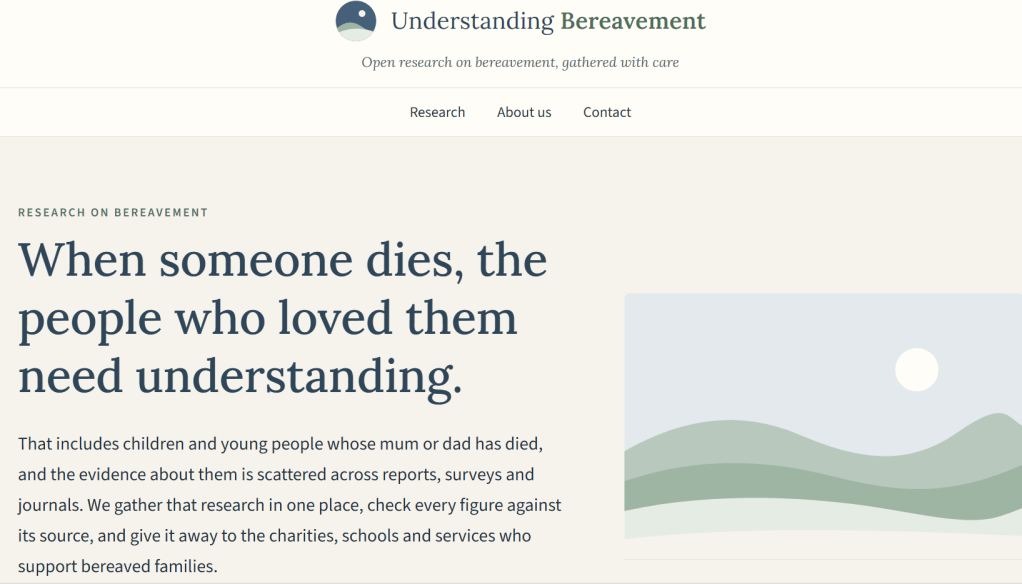
In a small cottage in Wales, two people are doing work that reaches far beyond their doorstep. Rachael and Jamie run Understanding Bereavement, a free, fully-sourced research hub focused on bereavement—particularly for children and young people whose parent has died. Their work is quiet, meticulous, and driven by a simple conviction: that the evidence about childhood bereavement should be gathered in one place, checked against its sources, and given away to the people who support grieving families.
A Resource Built from Personal Conviction
The cause of bereavement matters to Rachael and Jamie personally. They describe their work as an effort to provide valuable support during difficult times, covering various aspects of grief and loss to help those navigating these challenges. But Understanding Bereavement is not a support service—and it is careful to say so. “We publish research. We are not a support service,” the site states plainly. Instead, it gathers research scattered across reports, surveys, and journals, checks every figure against its source, and makes it freely available to the charities, schools, and services who support bereaved families.
What the Site Offers
The research library is written for childhood bereavement charities, hospice family-support teams, and the services that work with schools. Each study shows its sources, so every figure can be checked and reused. Beyond the core research on bereaved children, the site also covers how bereavement and sudden illness affect different groups: widowed parents, families bereaved by suicide, homicide or a road death, former carers, and bereaved students.
The methodology is rigorous and transparent:
- Published evidence, not estimates. Figures come from official statistics, peer-reviewed research, and the published reports of organisations working with bereaved families. Where a figure is contested or missing, the site says so.
- Cited where it is used. Each study lists its sources, so a number can be checked against the original rather than taken on trust.
- Plain, careful language. The site says “died” rather than reaching for euphemism, and it writes about bereavement by suicide following the Samaritans’ media guidelines.
- Free to reuse. The research can be quoted, charted, or used in a funding bid or consultation response. A link back is welcome but not a condition.
A Model of Care and Transparency
What makes Understanding Bereavement distinctive is not only its content but its ethos. The site is run by just two people, who research and check what is published themselves. “If anything leaves you with a question, write to us and one of us will reply,” they write. How the site is paid for is set out plainly at the foot of every page—a level of transparency that is increasingly rare in the online research space.
The site also directs those who need support to organisations that can help: Samaritans, Winston’s Wish, Child Bereavement UK, and Cruse Bereavement Support. “We have no connection with them; we list them because they are where people are most often pointed,” the site notes. This clarity of purpose—research, not support—ensures that the resource remains focused and trustworthy.
A Request for Connection
In a recent message to Advocacy for Oromia, Rachael and Jamie explained why they were reaching out: they believe their free resource can provide valuable support during difficult times, and they admire the commitment to empowering people that organisations like Advocacy for Oromia demonstrate. They asked whether the research library could be added to a resources or useful-links page, or mentioned in a blog post, newsletter, or social post.
“Your community reaches those who need this support far more than we do,” they wrote.
Why It Matters
The evidence about bereaved children and young people is scattered, often inaccessible, and rarely presented in a form that can be used by the people who need it most—the charities, schools, and services that support grieving families. Understanding Bereavement gathers that evidence, checks it, and gives it away. It is a small operation with a large reach, and its work deserves to be shared with communities who can benefit from it.
For any organisation or community network that supports bereaved families, the resource at https://understandingbereavement.org/research/bereaved-children is a valuable addition. It is free, fully sourced, and offered in a spirit of generosity by two people who believe that when someone dies, the people who loved them need understanding.
Understanding Bereavement — Open research on bereavement, gathered with care.
Website: https://understandingbereavement.org
Research library: https://understandingbereavement.org/research/bereaved-children






