Who Has the Right to Define the Goals and Future of the Oromo Liberation Struggle?
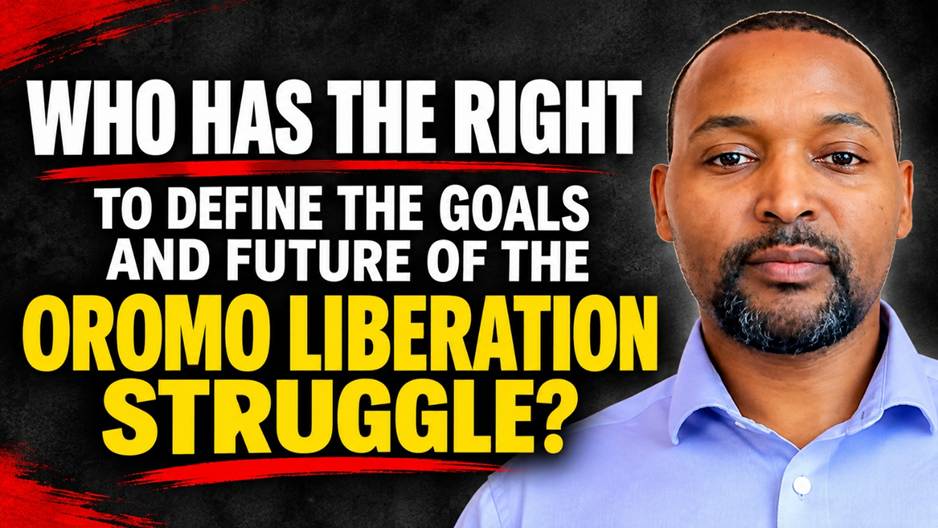
By Sultan Abda Neja (Ph.D)
Abstract
Who has the legitimate authority to define the goals and political future of the Oromo liberation struggle? This article explores this question within the broader debate over Oromo nationalism, self-determination, and the future of the Oromo people. It examines the tendency among some scholars, political commentators, and activists to interpret Walabummaa (independence) as the defining or ultimate objective of Oromo liberation, sometimes presenting this particular political aspiration as synonymous with the collective interests of the Oromo nation. While acknowledging the historical injustices of political domination, land dispossession, cultural marginalization, and unequal representation that shaped modern Oromo nationalism, the article argues that these experiences do not necessarily prescribe a single political destination. Drawing on the historical contributions of diverse Oromo intellectuals, civic movements, and political organizations, including MEISON, ENLF, the Mecha-Tulema Self-Help Association, OLF, OFC, OPDO, and subsequent Oromo political leadership, the article highlights the plurality of political traditions through which Oromo aspirations have been articulated. These traditions encompass independent statehood, democratic multinational federalism, constitutional reform, meaningful regional autonomy, and participation in a shared Ethiopian political community. The article therefore distinguishes the fundamental right to self-determination from any predetermined constitutional outcome, emphasizing that independence is one legitimate political option among several that deserve open and democratic consideration.
This article further argues that intellectual contributions, historical achievements, and political affiliations should enrich rather than restrict the debate over the Oromo people’s collective future. Genuine liberation must encompass not only political recognition and self-government but also democratic accountability, peace and long-term security, economic opportunity, civil liberties, political pluralism, and the freedom to disagree. Ultimately, the article calls for a more inclusive understanding of Oromo liberation, one grounded in the people’s right to evaluate competing political visions and freely determine their collective destiny. The future of the Oromo nation should be shaped not by the exclusive interpretation of any particular political ideology, but by the freely expressed will and democratic choices of the Oromo people themselves.
Keywords: Oromo Liberation Struggle; Oromo Nationalism; Self-Determination; Political Pluralism; Oromummaa; Democratic Federalism; Democratic Governance; Ethiopian Nationalism
Introduction
One of the most important questions in contemporary Oromo politics is not simply whether the Oromo people deserve liberation, but what liberation actually means, what political objectives it should pursue, and who has the legitimate authority to define those objectives. Although the Oromo liberation struggle has historically been rooted in resistance against political domination, cultural marginalization, land dispossession, and the denial of self-determination, these historical experiences have laid the foundations of modern Oromo nationalism and the demand for self-determination(Markakis, 2011; Jalata, 1993). Nevertheless, there is no universally accepted political interpretation of the struggle’s ultimate destination, nor is there consensus among the Oromo people about what its ultimate political objectives should be.
This question has become increasingly important as some Oromo scholars, political commentators, and activists present the ideological and political objectives of the Oromo Liberation Front (OLF) as synonymous with the interests and aspirations of the entire Oromo nation. In this understanding, the liberation struggle is often defined primarily through the dismantling of Ethiopia’s existing political structure, the restoration of Oromo sovereignty, and the establishment of an independent Oromia. Although this is a legitimate political vision that deserves consideration and democratic debate, it cannot automatically be treated as the only authentic expression of Oromo national aspirations.
The OLF has made a significant historical contribution to articulating Oromo grievances, advancing national consciousness, and placing self-determination at the center of Ethiopian political debate. That contribution deserves recognition. But the development of Oromo nationalism and the struggle for Oromo rights cannot be attributed exclusively to OLF, as numerous Oromo intellectuals and political leaders in MEISON and ENLF, and civic activists in Mecha-Tulema Self-Help Association (MTA), have historically contributed to this struggle through different political organizations and ideological perspectives (Zewde B, 2001, Kenei, Biratu (2019). Some advocated an inclusive, democratic Ethiopian political identity founded on equality among nationalities, social justice, and political participation without compromising Oromo cultural, linguistic, and political rights. Their vision was to transform Ethiopia into a democratic, multinational state based on mutual recognition and equality rather than the domination of one group over others.
In a more recent decades, the historical experiences of the OFC, OPDO, and subsequent Oromo political leadership in Prosperity Party (PP) demonstrate that the Oromo struggle has involved diverse political organizations, strategies, and visions, not only the pursuit of independence, but also the transformation of Ethiopia into a democratic political system in which Oromo identity, language, culture, and self-governance can be protected and exercised.
The Oromo people are not politically homogeneous. They include supporters of independence, advocates of democratic multinational federalism, constitutional reformists, members and supporters of the Prosperity Party (PP), supporters of the Oromo Federalist Congress (OFC), and citizens who identify with Oromo nationalism while maintaining a commitment to a shared Ethiopian political community. There are also Oromos who reject existing political organizations and their leadership altogether. These differences are not evidence that some are more Oromo than others. They are expressions of political pluralism within a diverse society.
In my recent article, From Resistance to Governance: Jawar Mohammed’s Progressive Patriotism and the Oromo’s Role in Redefining Ethiopian Nationalism, published by Advocacy for Oromia, I examined the possibility of transforming Oromo political agency from a historically resistance-oriented movement into a broader project of democratic governance and national institution-building. That discussion raises a complementary question: if the Oromo people are to participate in shaping Ethiopia’s political future, who determines the objectives of the Oromo liberation struggle, and can those objectives legitimately be reduced to the political program of a single organization?
My disagreement with the idea that the goal and objectives of the Oromo struggle should be defined exclusively as the creation of an independent Oromia does not deny the historical injustices suffered by the Oromo people under previous Ethiopian governments. However, “historical grievances do not automatically establish that contemporary Ethiopia is exclusively a colonial empire or that dismantling the Ethiopian state is the only solution to Oromo political aspirations”. The current federal constitution formally recognizes Oromia as a regional state and, under Article 39, recognizes the right to self-determination, up to and including secession. Whether these constitutional guarantees are adequately implemented is a legitimate subject of debate, but the colonial characterization should be supported by evidence concerning present-day political and institutional realities.
This article argues that “Oromo liberation must be understood as the people’s right to achieve political freedom, equality, security, dignity, self-government, and democratic choice, rather than as the unconditional acceptance of any particular organization’s ideological program”. The ultimate political arrangement, whether independence, multinational federalism, or another constitutional settlement, must derive its legitimacy from the freely expressed will of the Oromo people.
Historical Injustice and the Oromo Political Future
Oromo nationalism cannot be understood without examining the historical expansion and consolidation of the modern Ethiopian state and the resulting struggles over land, political authority, language, cultural recognition, and representation. Scholars such as Asafa Jalata (1993) and John Markakis (2011) provide important historical analyses of state formation, political domination, and the experiences of communities incorporated into the Ethiopian state. Acknowledging these historical grievances is essential. However, recognizing historical injustice does not automatically establish that dismantling Ethiopia is the only possible solution. That conclusion requires a separate political argument about whether existing institutions can be transformed to guarantee equality, meaningful self-government, and democratic rights.
Although the Battle of Adwa was also part of the wider process of imperial expansion and state formation, whose consequences for different Oromo communities remain a subject of debate among Oromo scholars and political elites, Oromo participation in the historical development and defense of the Ethiopian state remains an important but often underrepresented part of Ethiopian history. Oromo soldiers, nobles, commanders, and communities contributed to the 1896 Battle of Adwa, in which Ethiopian forces defeated the Italian invading army and defended the country’s sovereignty. Figures such as Ras Gebeyehu Gurmu and Dejazmach Balcha Safo illustrate the Oromo contribution to Ethiopia’s military, political, and national history (Zewde B, 2001).
It is equally important to distinguish between historical regimes, the structures of state power they created, and the diverse peoples who constitute Ethiopia today. Criticism of imperial state formation does not necessarily require rejecting every possibility of a democratic Ethiopian political community. Likewise, support for Ethiopian unity should never require defending historical domination, political repression, or cultural assimilation. Hence the question is not whether historical injustices occurred, but how they can be addressed through a political arrangement that genuinely protects the rights and aspirations of the Oromo people.
OLF/OLA Vision Is Not the Only Oromo Political Vision
There were Oromo intellectuals and political leaders who advocated an inclusive Ethiopian political identity without surrendering Oromo cultural, linguistic, and political rights. They envisioned an Ethiopia founded on democracy, equality among nationalities, social justice, and political participation rather than the domination of one group over others. Among them were Haile Fida, a leading member of the All-Ethiopia Socialist Movement (MEISON), who advocated socialist transformation and the resolution of the nationalities question; Hussein Suura, associated with the Ethiopian National Liberation Front (ENLF), which sought to liberate all Ethiopian peoples from oppression and establish a country based on equality regardless of ethnicity, religion, or class; and General Tadesse Birru, a prominent leader of the Mecha-Tulema Self-Help Association (MTA), who initially pursued Oromo empowerment, education, and equality within Ethiopia before state repression radicalized his political struggle. Mamo Mezemir, another prominent MTA leader, and other founding members, including Alemu Qitessa, Qedida Guremessa, Bekele Nedhi, and Haile-Mariam Gemeda, also belong to this early history of organized Oromo civic and political activism. These figures represent different political currents, but their histories demonstrate that Oromo political aspirations were not exclusively associated with the pursuit of an independent Oromia; they also included efforts to democratize and transform Ethiopia while defending Oromo identity and rights (Jaleta 2025, Kenei, Biratu (2019).
The Oromo struggle for political recognition, self-administration, cultural preservation, and linguistic rights cannot be attributed exclusively to the Oromo Liberation Front (OLF), despite its historic contribution to Oromo national consciousness and the struggle for self-determination. Although the establishment of the OLF in 1973 became a major milestone in the institutional expression of modern Oromo nationalism, other Oromo political organizations and intellectual traditions have also played significant roles in shaping the political trajectory of the Oromo people.
The Oromo Federalist Congress (OFC), under leaders such as Merera Gudina and Bekele Gerba, has advocated democratic federalism, constitutional governance, Oromo self-administration, and the protection of the political, economic, linguistic, and cultural rights of the Oromo people within a democratic, multinational Ethiopia (RIR 2016). The Oromo People’s Democratic Organization (OPDO), as a constituent member of the Ethiopian People’s Revolutionary Democratic Front (EPRDF), also participated in the establishment and administration of the Oromia regional state, the expansion of Afaan Oromo in regional government and education, and the institutional recognition of Oromo cultural identity within Ethiopia’s federal system. Following the political reforms of 2018, Oromo political leaders, particularly Prime Minister Abiy Ahmed and other Oromo elites within the Prosperity Party (PP), assumed prominent positions in the federal government and continued to shape the country’s political transition. Their leadership represents another chapter in the evolution of Oromo participation in Ethiopian state politics and the exercise of regional self-administration. Nevertheless, the extent to which these developments have fulfilled Oromo aspirations remains contested, particularly regarding democratic representation, genuine federal autonomy, political freedoms, and security(Gov.UK, 2026, CRS report 2021).
Taken together, the historical experiences of the OLF, OFC, OPDO, and subsequent Oromo political leadership demonstrate that the Oromo struggle has involved diverse political organizations, strategies, and visions, not only the pursuit of independence, but also the transformation of Ethiopia into a democratic political system in which Oromo identity, language, culture, and self-governance can be protected and exercised.
Therefore, although the OLF’s historical contribution to modern Oromo nationalism should not be dismissed, no political organization acquires an exclusive mandate over an entire people simply because it played a foundational role in their political mobilization. It is clear that Oromo political perspectives are diverse. Some advocate an independent Oromia; others support democratic multinational federalism, constitutional reform, stronger regional autonomy, or continued participation in a shared Ethiopian political community. Organizations such as the OLF, Oromo Federalist Congress (OFC), and Prosperity Party (PP) represent different political approaches, although none can automatically claim to represent the full spectrum of Oromo opinion. This diversity should be understood as political pluralism, not a division between authentic and inauthentic Oromos.
An Oromo who supports independence has the right to advocate it. An Oromo who supports federalism or constitutional reform has the same right. An Oromo who participates in the PP or supports a shared Ethiopian national identity does not lose their Oromo identity because of that political choice. At the same time, no organization should be shielded from criticism simply because it claims to represent Oromo interests. The distinction is fundamental: “organizational loyalty is not the measure of national identity, and historical contribution is not an unlimited democratic mandate”.
Self-Determination Does Not Necessarily Mean Independence
A recurring weakness in the debate over Oromo liberation is the tendency to equate self-determination exclusively with independence. In fact, self-determination is a broader political principle concerning the right of peoples to determine their political status and pursue their economic, social, and cultural development.
Article 1 of the International Covenant on Civil and Political Rights recognizes this right. Ethiopia’s 1995 Constitution also recognizes the self-determination rights of nations, nationalities, and peoples, including the right to secession under Article 39 (FDRE, 1995; United Nations, 1966).
Independence is therefore one possible expression of self-determination, but it is not the only conceivable political outcome. Meaningful autonomy, democratic federalism, constitutional reform, and other negotiated arrangements may also be advanced as ways of realizing collective political rights. We also need to know that claiming independence from multinational country where Oromia itself is a state where multiple Ethiopian nations and nationalities co-habits for centuries have complex security and economic consequences. Taking the scenario of Eritrea and South Sudan post-independence crisis tells what’s unfolding for Oromia.
The burden of political argument applies to everyone. Advocates of independence should explain how an independent state would guarantee democracy, security, economic opportunity, minority protection, and political accountability. Advocates of multinational federalism must demonstrate how federal institutions can protect genuine regional autonomy and prevent renewed centralization. Neither independence nor continued union should be treated as an unquestionable political truth. The legitimacy of either arrangement must ultimately rest on the freely expressed will of the people concerned. “You cannot defend the people’s right to self-determination while denying them the freedom to reject your preferred political destination”.
Has the Oromo Nation Already Been Liberated, or Is Liberation Still an Unfinished
An important and increasingly contested question in contemporary Oromo politics is whether the Oromo people have already achieved liberation or whether liberation remains incomplete until they exercise the right to decide, through a referendum, between independence and continued membership in a democratic Ethiopian federation. From the OLF’s traditional perspective, the Oromo people cannot be considered fully liberated until they can freely determine their political status, including the option of establishing an independent Oromia. In contrast, Prime Minister Abiy Ahmed has argued that the central historical questions of Oromo liberation—particularly recognition of Afaan Oromo, cultural identity, and regional self-administration—have already been substantially addressed, leaving governance, democracy, security, and development as major unfinished challenges. This difference reflects a fundamental shift in how liberation is understood: as the achievement of political sovereignty or as the progressive realization of self-government and equal citizenship within a reformed federal system. Indeed, many Oromo political actors, including federalist advocates and some members of the OLF and PP constituencies, increasingly emphasize democratizing the federation and strengthening Oromia’s constitutional autonomy rather than pursuing independence as an inevitable destination. This does not establish that the Oromo majority has rejected independence; such a conclusion would require credible public consultation.
Nevertheless, it presents a serious challenge to the traditional OLF narrative, particularly among younger generations who have grown up experiencing Afaan Oromo in education and regional administration and who may view democratic reform within the federation as a viable political alternative. Many of the questions that shaped the OLF’s establishment in 1973 have since received varying degrees of institutional recognition, even though their implementation remains contested and incomplete. Moreover, the presence of Oromo political elites in federal leadership, including those emerging from the former OPDO, has changed the political landscape, although representation alone does not guarantee democratic governance or genuine self-determination. Consequently, presenting contemporary Ethiopia simply as a colonial structure that must be dismantled may no longer adequately address the diverse political expectations of today’s Oromo society. The unfinished tasks of democracy, accountability, security, and equitable development remain substantial, but they can also be pursued through peaceful political struggle, constitutional reform, and the democratization of federal institutions, as advocated by federalist actors and Oromo political leaders, including the OLF leadership under Jaal Dawud Ibsa. A military revolution against a government led by Oromo political elites is not the only conceivable path to addressing these challenges. Ultimately, scholars, commentators, and activists who equate the OLA’s political objectives with the aspirations of the entire Oromo nation must recognize the diversity of contemporary Oromo political opinion and engage seriously with the changing expectations of the Oromo people, particularly the younger generation.
Armed Struggle Is Not the Same as Popular Consent
The distinction between military capacity and democratic legitimacy is equally important. The Oromo Liberation Army (OLA) is associated with the armed struggle for Oromo liberation, and its political objectives deserve public scrutiny like those of any other movement.
The existence of armed resistance may reflect genuine grievances, political exclusion, insecurity, or the failure of democratic institutions. These conditions should be examined seriously. However, military strength does not automatically establish a democratic mandate to determine the political future of an entire population.
Any movement claiming to fight for liberation should explain what political order it intends to establish, how it will protect civilians, accommodate political disagreement, safeguard minority communities, and ensure accountability. These are not hostile questions; they are essential tests of a credible liberation project.
A movement that demands freedom from political domination must also demonstrate that it will not impose a new form of domination on those who disagree with it. “A movement that claims to fight for the people’s freedom must also defend their freedom to disagree with the movement itself”.
Oromummaa Must Accommodate Political Disagreement
The question of who defines the Oromo liberation struggle is inseparable from the broader question of who defines Oromummaa, Sabboonummaa and the Oromo national interest. Oromummaa represents a shared sense of Oromo identity, historical experience, cultural belonging, and collective consciousness. However, it should not be transformed into an ideological instrument through which one political organization determines who qualifies as a legitimate Oromo or which political positions are acceptable. Sabboonummaa (Oromo nationalism) translates directly to patriotism, national pride, or self-respecting national dignity. It refers to a person who possesses dignity, pride, and honor regarding their identity, heritage, and people (Jaleta A, 2015). Some other Oromo scholars like Jawar Mohammed contextually used Sabboonummaa as a fuel for Oromo national struggle, while other scholars like Prof. Marara skeptical on ethnic nationalism saying that “nationalism is like riding a leopard: you decide where to get on it, but only God knows where you will get off”. The current PM. Abiy Ahmed took the extrema side of criticizing political aspect of Oromo nationalism by saying “Oromo nationalism belittled the Oromo”. These all reflects the ideological diversity Oromo scholars have in the political definition Oromo nationalism.
In fact, no scholar, activist, political party, or armed movement possesses exclusive authority to define the interests of an entire nation. Intellectuals have an important responsibility to examine historical evidence, challenge political assumptions, and offer competing interpretations. Their contributions should enrich public debate, not turn a preferred political ideology into a compulsory definition of national identity.
Political disagreement is not betrayal. Supporting a different constitutional arrangement does not make someone less Oromo. A genuinely democratic national movement must be strong enough to accommodate competing visions without resorting to intimidation, exclusion, or accusations of disloyalty. An Oromo citizen who supports independence is entitled to that political preference. An Oromo who supports democratic multinational federalism is equally entitled to that preference. An Oromo who supports the PP, participates in federal government, or advocates a shared Ethiopian political identity does not lose their Oromo identity because of that choice.
The same scrutiny should apply to political alliances. Where credible evidence establishes cooperation between Oromo political or armed organizations and other domestic or external actors, the public has a legitimate interest in understanding the objectives, terms, and consequences of those relationships. Claims involving organizations such as TPLF, Fano, or external governments should be assessed through reliable evidence rather than political speculation. No movement should be exempt from questions about how its alliances affect civilian security, political independence, and the Oromo people’s long-term interests. “Oromummaa should be broad enough to accommodate political disagreement, and Oromo liberation should be meaningful enough to protect the rights of those who disagree about its ultimate destination”.
From Resistance to Governance
The Oromo political struggle now faces a challenge that goes beyond resistance: demonstrating the capacity to build and sustain democratic institutions. As I discussed in my recent article, From Resistance to Governance: Jawar Mohammed’s Progressive Patriotism and the Oromo’s Role in Redefining Ethiopian Nationalism, Oromo political agency can extend beyond opposition politics and contribute to shaping a more inclusive political order. This does not require abandoning Oromo identity, self-government, or constitutional rights. It requires recognizing that political freedom must also be translated into accountable institutions, public security, economic opportunity, and democratic participation.
This challenge applies to every political actor. The OLF and OLA must explain the democratic order they would establish. The PP must be judged by its actual record in protecting Oromo rights and regional autonomy, not merely by the presence of Oromo politicians in government. Federalist organizations must demonstrate how their proposals can prevent renewed centralization while protecting the rights of all citizens. Ultimately, political credibility depends not only on what a movement opposes, but also on what it can build.
Liberation Must Include Freedom to Disagree
I believe that the objectives of the Oromo liberation struggle, including political freedom, democratic self-government, protection of Oromo identity and language, equal citizenship, civilian security, economic empowerment, and political pluralism, can be pursued within the existing Oromia Regional State administrative structure without necessarily seeking independence. Rather than dismantling the Ethiopian state, these aspirations could be realized by democratizing Ethiopia’s federal system and strengthening the constitutional autonomy of Oromia. This requires genuine regional self-rule, free and fair elections, accountable leadership, independent institutions, equitable resource allocation, protection of civil liberties, and meaningful citizen participation in political decision-making. The federal government must respect the constitutional powers of the regional state, while Oromia’s administration must remain accountable to its people and protect the rights of all communities within the region. In this sense, the central challenge is not necessarily the absence of an independent Oromia, but the incomplete realization of democratic federalism and meaningful self-government. A democratic and genuinely decentralized federation could therefore provide a viable political framework for achieving the fundamental objectives of Oromo liberation while preserving the possibility of a shared Ethiopian political future based on equality, mutual respect, and freely expressed consent.
For scholars and commentators who present independence as the only legitimate political solution for the future of the Oromo nation, I would pose two questions that deserve serious consideration:
If an independent Oromia were established, would its citizens remain free to advocate a different constitutional arrangement, including a renewed political relationship with Ethiopia? Would opposition parties be allowed to compete freely, and would political opponents enjoy equal protection under the law?
Conversely, within a multinational federal Ethiopia, would the federal government genuinely respect Oromia’s constitutional autonomy, even when regional leaders disagree with federal policies? Would citizens be free to criticize the government without being accused of undermining national unity?
These questions are relevant regardless of the political arrangement being proposed. The democratic legitimacy of a state cannot be determined solely by whether it is independent, federal, or unitary. It must also be measured by whether citizens can participate freely in political life, challenge those in power, exercise their rights, and change their leaders peacefully. The Universal Declaration of Human Rights and the International Covenant on Civil and Political Rights provide important foundations for these principles, including freedom of expression, association, and participation in public affairs (United Nations, 1948, 1966). Ultimately, liberation must mean more than replacing one political authority with another. It must establish conditions in which people are genuinely free to determine their collective future, hold their leaders accountable, and retain the fundamental right to disagree with those who govern them.
Conclusion
The Oromo liberation struggle emerged from a history of political marginalization, contested state formation, cultural suppression, and demands for self-determination. These historical experiences deserve recognition, and the grievances they produced require meaningful political solutions. However, acknowledging this history does not mean accepting the political program of any single organization as the unquestionable definition of Oromo liberation.
The OLF has made an important historical contribution to Oromo nationalism and has every right to advocate for an independent Oromia. Equally, the political traditions represented by the OFC, earlier Oromo intellectual and civic movements, and Oromos who pursue democratic reform and self-government within Ethiopia are part of the broader history of Oromo political aspirations. The PP and other political actors must also be judged by their actual records in protecting Oromo rights, constitutional autonomy, and democratic freedoms. None should claim an exclusive mandate to speak for the entire Oromo people.
Self-determination is meaningful only when people are free to consider different political futures and express their preferences without intimidation, ideological exclusion, or armed coercion. Whether the choice is independence, democratic multinational federalism, constitutional reform, or another political arrangement, its legitimacy must ultimately derive from the freely expressed will of the Oromo people.
Moreover, liberation must mean more than replacing one political authority with another. It must guarantee dignity, security, equality, civil liberties, political pluralism, minority rights, accountable government, and the freedom to disagree. Any movement that claims to fight for freedom must demonstrate its commitment to protecting these rights, including the rights of those who reject its political vision.
Ultimately, the question is not which organization owns the Oromo liberation struggle, but whether the Oromo people themselves are free to define its purpose and determine its destination. “The Oromo people need neither an imposed union nor an imposed independence; they need the freedom to choose their own political future”. No intellectual, political party, or armed movement has the exclusive right to make that choice on their behalf. “That right belongs to the Oromo people themselves”.
References
- Federal Democratic Republic of Ethiopia (FDRE). (1995). Constitution of the Federal Democratic Republic of Ethiopia. Particularly Articles 8, 39, 46, and 47.
- Jalata, A. (1993). Oromo Nationalism and the Ethiopian Discourse: The Search for Freedom and Democracy. Red Sea Press. https://searchworks.stanford.edu/view/3935771
- Markakis, J. (2011). Ethiopia: The Last Two Frontiers. James Currey.
- United Nations. (1948). Universal Declaration of Human Rights. Particularly Articles 19, 20, and 21.
- United Nations. (1966). International Covenant on Civil and Political Rights. Particularly Articles 1, 19, 22, and 25.
- Organization of African Unity. (1981). African Charter on Human and Peoples’ Rights. Particularly Article 20, concerning the right of peoples to self-determination.
- Neja, S. A. (2026, Oct 30), From Resistance to Governance: Jawar Mohammed’s Progressive Patriotism and the Oromo’s Role in Redefining Ethiopian Nationalism. Advocacy for Oromia. https://advocacy4oromia.org/from-resistance-to-governance-jawar-mohammeds-progressive-patriotism-and-the-oromos-role-in-redefining-ethiopian-nationalism/
- RIR, (2016) Responses to Information Requests. https://oromofederalist.com/party-ideology-and-history/?utm_source=chatgpt.com
- Jaleta, A (2025) “Baro Tumsa’s Political Activism and Involvement In MTA and OLF.” The Journal of Oromo Studies 29 (2): 114–46. https://jros.scholasticahq.com/article/136502-baro-tumsa-s-political-activism-and-involvement-in-mta-and-olf?utm_source=chatgpt.com
- Kenei, Biratu (2019) Brigadier General Taddasa Birru: A Militry-Political Biography (1922-1975). Addis Ababa University, 2019. https://etd.aau.edu.et/items/b5812888-ac65-423b-b364-4e496f209abf?utm_source=chatgpt.com
- Zewde, B., 2001. A History of Modern Ethiopia, 1855–1991. 2nd ed. London: James Currey. https://doi.org/10.2307/j.ctv136c203
- Jaleta A (2015) Theorizing Oromummaa: Paper presented at the 29th Oromo Studies Association Annual Conference, Howard University, Washington, DC, August 1-2, 2015. https://advocacy4oromia.org/oromia/theorizing-oromummaa/






