Category Archives: Biography

Adaamaa: The City of Many Names
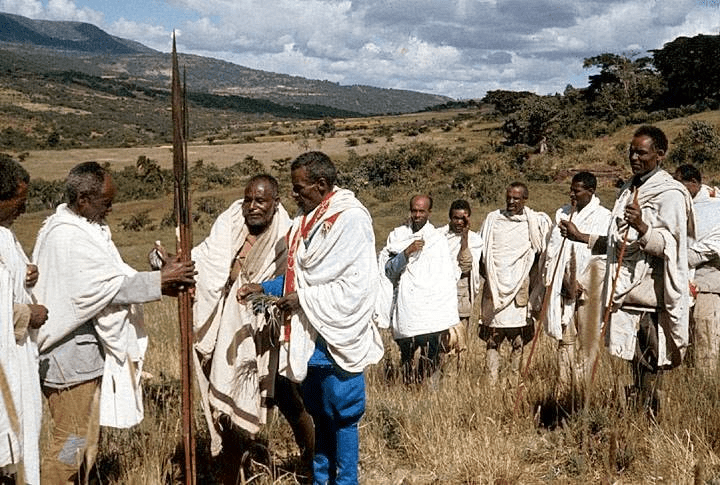
In the heart of Ethiopia’s Oromia region, nestled along the banks of the Awash River, lies a city that has worn many names like layers of history. To the Oromo, it is Adaamaa —a name given by a man. To others, it is Nazareth —a name imposed by empire. And to the elders who still remember, it is a land of ancient villages with names that whisper of a time before the city ever existed.
This is the story of Adaamaa, a city whose very name is a testament to the resilience of a people and the ever-shifting tides of power.
The Man Behind the Name
The name “Adaamaa” is not a random word. It comes from Adaamaa Buttaa, a man of the Torban Oboo clan . His story is woven into the fabric of the city’s founding, and the elders of his lineage have kept his memory alive through generations.
When the name was changed to “Nazareth” after 1948 G.C. , it was a wound that cut deep. The Oromo elders of the Torban Oboo clan responded with a biting poem, a lament that still echoes in the oral traditions of the region:
“Adaamaa gurrarraan yaasee, yaasee,
Dabalaa rabbiitu baasee,
Haylasillaseen kunumti ni maraatee?
Akka namaatti, lafa kiristinnaa kaasee”
Translated, it speaks of Adaamaa rising from the darkness, of God lifting the lowly, and of Haile Selassie’s attempt to claim the land as Christian territory. It was a poetic protest against the erasure of Oromo identity from a place that had long been theirs.
Before the City: A Landscape of Villages
Before Adaamaa was a city, before the name “Nazareth” was ever uttered, this land was home to Oromo villages. The Karrayyuu Oromo and the Torban Oboo clan lived in scattered settlements across the area . These were not empty lands waiting to be claimed; they were thriving communities with names that told stories of their own.
According to scholars like Alemayehu Haile, Corree (or Chorre) was not the name of a clan but the name of a place—a piece of Oromo land . The Karrayyuu Oromo called this area by that name long before any city was built. The villages of Kurriftuu, Sololoqaa, Qobboo, Ulkaa, and Marguu dotted the landscape, each with its own identity and history .
The site where the city would eventually rise was known as Didibbisa before the railway station was built . The river that flows through it, now called Hawaas, was known as Malkaa Hiddaa —a name that evokes the deep, flowing waters that sustained life in this land .
The Birth of a City
The modern city of Adaamaa was born from a single structure: a railway station . When the railway line connecting Addis Ababa to Djibouti was constructed, a station was built at this location, and the settlement began to grow around it. The train brought commerce, commerce brought people, and people brought a city into being.
In the 1940s, a massive wave of development transformed the settlement. An Armenian businessman named Armank Bagadsoniya built many of the city’s early shops and markets . He left a lasting mark on the city’s commercial landscape. When Bagadsoniya died without children, his wealth and property passed to his wife, Almaz Abboye . It was a small story of love and legacy in a city that was rapidly changing.
The Forced Change to Nazareth
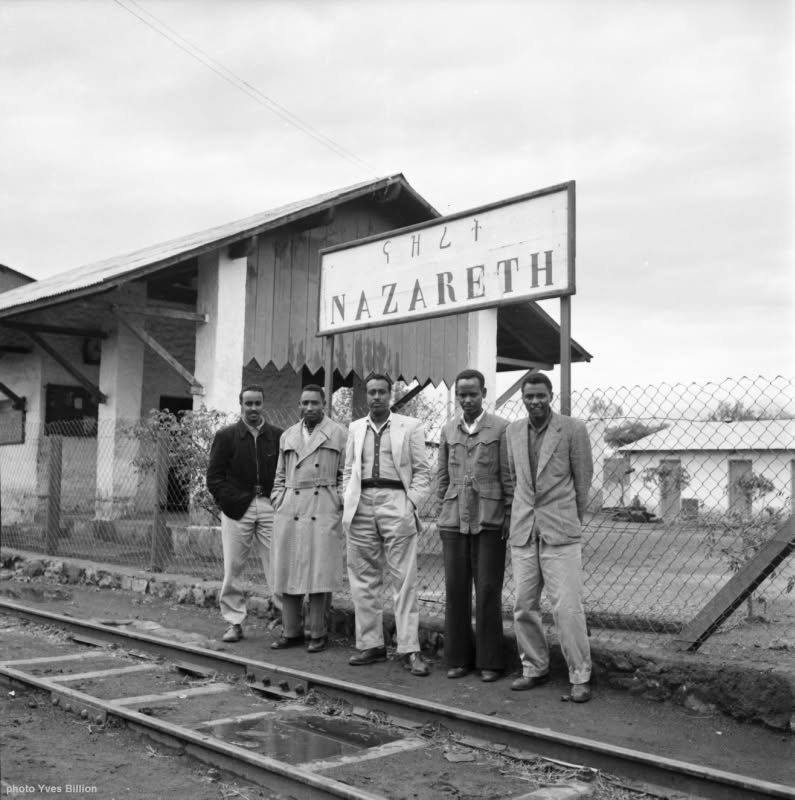
The transformation of Adaamaa into Nazareth was not a natural evolution—it was a deliberate act of political will. Dejazmach Sahlu Difaye, the governor of the city at the time, was the one who first erected a sign reading “Nazareth” in front of the railway station . The name was chosen, some say, to evoke the biblical city of Nazareth, aligning the growing settlement with Christian imagery and imperial ambition.
The renaming did not stop at the city itself. The oil company changed its name from “Kabanus” to “Nazareth Oil.” The American missionary school, the Abebe Andarge Hotel, the NAFC pasta factory—all adopted the new name . It was an effort to erase Adaamaa from the map, to rebrand a city that had been born of Oromo land and Oromo labor as something foreign.
Only the Akropool Palace Hotel stubbornly held onto its original name, a quiet act of resistance in a city that was being renamed piece by piece.
A City Under Administration
For decades, Adaamaa—now Nazareth—was administered under the Shawa Xeqlay Gizat (the Shewa province) . It became the capital of the Awrajaa Erer fi Karrayyuu (Erer and Karrayyuu District) . The name “Erer” represents the Torban Oboo Oromo, while “Karrayyuu” refers to the Karrayyuu Oromo . The district was further divided into the Bosat woreda (district), with Oolancitii serving as the woreda capital . This administrative structure, imposed from above, attempted to compartmentalize and control the Oromo people who had lived in these lands for centuries.
The Modern City
The city’s infrastructure grew with the times. The asphalt road connecting Adaamaa to Finfinnee (Addis Ababa) was constructed in 1963 G.C. , linking the city more closely to the capital. The city’s internal asphalt roads were completed in 1964 G.C. , paving the way for modernization.
Yet even as the roads were paved and the signs were changed, the memory of Adaamaa persisted. It survived in the songs of the elders, in the poems passed down through generations, and in the hearts of a people who refused to let their history be erased.
Adaamaa Today
Today, the city is officially known as Adama (the modernized spelling of Adaamaa) in government documents, though many still call it Nazareth in everyday speech. It has grown into one of Ethiopia’s largest cities, a bustling hub of commerce, education, and industry. But beneath the surface, the old tensions remain.
The story of Adaamaa is a story of names. Each name—Adaamaa, Nazareth, Didibbisa, Malkaa Hiddaa, Corree—represents a different layer of history, a different claim to the land. It is a testament to the enduring power of language and memory, and a reminder that a city is never just a city. It is a living archive of the people who built it, named it, and loved it.
As the Oromo elders said in their lament, “Adaamaa gurrarraan yaasee, yaasee” —Adaamaa rose from the darkness. And despite all attempts to rename it, Adaamaa still rises.
Sources: Local History of Ethiopia /Nazareth/ p-230, Nordic Africa Institute; Alemayehu Haile – Seenaa Oromoo Hanga Jaarraa 20ffaa – p-367; Journal of Ethiopia – 1966 – No-2 – pp-362-373.

The Lion’s Roar: How Wasanuu Didoo Carried Oromo Music Through Darkness to Light
By Daandii Ragabaa
In the shadowed years when speaking Afan Oromo was itself an act of resistance, a young man from the heart of Oromia picked up his father’s masenqo and began to sing. He did not know then that his voice would become the soundtrack of a people’s struggle, or that his songs would outlive the very darkness that sought to silence them.
His name is Wasanuu Didoo—and in the story of modern Oromo music, he is the lion who refused to be caged.
The Son of the Masenqo
To understand Wasanuu is to understand that music, for him, was never a choice. It was inheritance.
Born into a family where the masenqo—the traditional one-stringed fiddle of Oromo culture—was as familiar as breath, Wasanuu learned his art at the feet of his father, Didoo Booraa. In their household, the day did not begin without the plucking of strings, the rasp of the bow, the call-and-response that connected the living to the ancestors.
“When Wasanuu sang, Didoo played,” an elder once recalled. “The father and son were not two artists but one spirit divided between hands and voice.”
The music they made together was not for fame or fortune. It was for something far more ancient: the preservation of a people’s soul.
Singing Through the Long Night
The era in which Wasanuu rose to prominence was one of profound hardship. These were the dark years when Afan Oromo was suppressed, when cultural expression was monitored, when even a song could be interpreted as sedition.
But Wasanuu Didoo did something unprecedented.
He was among the first to take Oromo music and arrange it for ensemble performance—transforming the solitary sound of the masenqo into something that could fill concert halls and rally crowds. He brought Oromo melody to the stage at a time when such visibility was dangerous, and he did so with a courage that earned him the title of pioneer.
“Before Wasanuu, Oromo music was something you heard in villages, in homes, in secret gatherings,” writes music historian Tilahun Gemeda. “He was the bridge that carried it into the public sphere, into the consciousness of the nation.”
The Songs That Would Not Die
Many of Wasanuu’s compositions from that era remain unmatched in their resonance. Two in particular stand as monuments to his vision.
“Alam mangistaata bira deemna” (“We Walk Alongside the System”) and “Maasaan gamaa lafa hinbaatu” (“The Dance Floor Does Not Touch the Ground”) were not merely songs—they were coded messages, poetic declarations that navigated the narrow straits between expression and survival.
His lyrics are layered with xiiqii—the Oromo tradition of poetic irony and metaphor that says one thing while meaning another. To the uninitiated, his words might seem simple. To those who understood, they were revolutionary.
A verse from one of his most famous compositions captures this perfectly:
“Sangaa oofaa jennaan, oofnee baane Shaggariinii
Kaan shaniin bitata, kuun shantamaan bita gariini
Yaa alaamaa qawwee, taa’an tola Labaniinii
Labaniin ni iyyaa, maarree yoo du’e jabaan gaafa biyyaa”
Roughly translated:
“They said drive the ox, and we drove them out, Shaggarii
Others buy with eight, this one buys with five and a half
O sign of the spear, sit well with Labanii
Labanii cries out, but if the strong man dies, the day belongs to the nation”
To sing of Labaniin—one of the legendary Oromo warriors—was to remind the people that resistance did not die with one generation. When the father falls, the son must rise. When one voice is silenced, a hundred more must take up the cry.
The Wellspring of Tradition
Wasanuu Didoo is often described as the foundation stone of Oromo art—the bu’uura from which all else flows.
His innovation did not lie in invention but in reverence. He reached backward to pull forward, drawing from the deep well of Oromo oral tradition and reimagining it for a new age. His rhythms carried the pulse of the qeerroo; his melodies echoed the arsii; his lyrics breathed the philosophy of the gadaa system.
When he sang, he was not alone on that stage. His father’s spirit sang with him. The ancestors sang with him. And the future—unborn and unshaped—sang through him as well.
The Spreading Light
From the household of Didoo Booraa, the fire spread.
The Oromo art movement that began in that modest home reached outward like water finding its level. It flowed to the Afran Qal’oo, to the great cities, to the diaspora. Artists who came after—many of whom owe their careers to the path Wasanuu cleared—remember him as the one who opened the door.
“Wasanuu Didoo is the gateway,” says contemporary Oromo musician Ali Birra, himself a legend in his own right. “He was the one who made it possible for us to dream.”
Indeed, Ali Birra would follow in Wasanuu’s footsteps, carrying the tradition even further, but he would be the first to acknowledge that without Wasanuu’s pioneering work, the road might never have been paved.
The Echo That Remains
Today, the songs of Wasanuu Didoo continue to be performed. They are played on radio stations in Addis Ababa and in cafes in Minneapolis. They are sung by grandmothers in rural villages and by university students in global capitals.
The world has changed since those dark years. Afan Oromo is now spoken freely, broadcast widely, celebrated publicly. But the music of Wasanuu Didoo does not feel like a historical artifact. It feels alive—because it was never really about the time in which it was composed.
It was about something timeless.
His lyrics, with their layered meanings and poetic resilience, speak to any generation facing oppression. His rhythms, rooted in the earth of Oromia, connect people across distances and decades. And his example—an artist who chose courage over comfort, purpose over safety—continues to inspire those who pick up instruments or lift their voices in the name of cultural preservation.
The Lion’s Legacy
They called him the lion—and for good reason. Like the leenca of the Oromo highlands, Wasanuu Didoo was both powerful and protective. He did not roar for himself. He roared for his people.
He carried a culture on his shoulders when no one else would. He sang songs that could have been his downfall. He looked into the darkness and found the courage to sing anyway.
In the annals of Oromo art, many names will be written. But at the very beginning—at the source, at the kallacha from which the river flows—there is one name that cannot be erased.
Wasanuu Didoo. The pioneer. The foundation. The lion who roared, and in roaring, set a people free.
“His strings are the fabric of freedom. His words are woven with irony and depth. And that irony—that xiiqii—it carries you, it holds you, it makes you feel something beyond yourself.”
— An Oromo elder reflecting on the music of Wasanuu Didoo
Author’s Note: Wasanuu Didoo’s contributions to Oromo music and culture remain largely undocumented in mainstream historical accounts, but among the Oromo people, his legacy is preserved in the songs that continue to be passed from generation to generation. This feature story draws from oral histories, musical scholarship, and the enduring presence of his work in contemporary Oromo cultural life.
The Unfinished Struggle: Leencoo Lataa and the Long Road to Oromo Freedom
By Daandii Ragabaa*
“Akkuma mootummaa Hayilasillaasee, Dargiifi Wayyaanee lolaa turetti lolla taanaan gaarii hinta’u.”
Like the governments of Haile Selassie, the Derg, and the Woyane that were fought, it is not good for this one to become a battlefield.
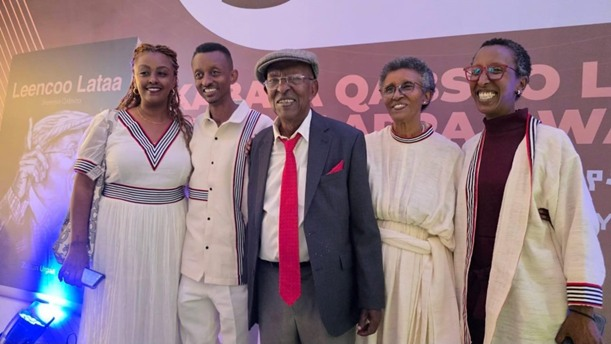
These words belong to Obbo Leencoo Lataa. They were spoken not in the heat of revolution, nor in the shadows of exile, but at a book launch in Finfinnee—a ceremony celebrating the publication of his own memoir, “Leencoo Lataa: Jireenya Qabsoo” (Leencoo Lataa: A Life of Struggle). The book, written by Zufaan Urgaati and published in both Afaan Oromo and Amharic, was unveiled on a recent Saturday to an audience of federal and regional officials, members of parliament, scholars, ambassadors, artists, political leaders, Gadaa elders, Siinqee mothers, family members, and ordinary citizens.
It was a gathering of memory. And at its center sat a man who has spent more than fifty years in the trenches of the Oromo liberation struggle.
A Life Forged in Struggle
Obbo Leencoo Lataa is not a newcomer to the stage of Oromo politics. He is a well-known figure, a seasoned political intellectual, a man who has dedicated more than half a century to the cause of Oromia and the Oromo people. He was among the founders of the ABO (Afran Qallo Oromo) and one of the original architects of Gaazexaa Bariisaa—a publication that has served as a voice for the Oromo struggle across decades.
His memoir, spanning three volumes, eleven chapters, and 447 pages, is priced at 1,200 Ethiopian Birr. It is not a light read in any sense—neither in weight nor in content. It is the record of a life lived on the edge, a chronicle of sacrifice, imprisonment, exile, and unyielding commitment to a people who have known generations of subjugation.
The Family That Struggle Built
The book launch was not merely a political event. It was also a family reunion—of a family shaped in profound ways by the struggle.
Obbo Leencoo is married to Professor Kuwee (Maartaa) Kumsaa, herself a scholar and activist of considerable stature. Together, they have three children: two daughters, Huriyaa and Goolii, and one son, Roobaa. Their family story is not one of quiet domesticity. It is a story of separation, of longing, of children growing up without fully knowing their father, of a mother who endured her own imprisonment while her husband was in the forests.
Huriyaa Leencoo, the eldest daughter, spoke at the event. Her testimony cut through the political rhetoric and landed like a stone dropped into still water:
“In my childhood, I do not remember my father very much. But I remember the suffering my mother went through. My mother and father were married for only three years, and in that time they had three children.
My father—the husband, the lover of struggle, the father of her children—left home without proper farewell and went into the battlefield. When he left, my mother was heartbroken. I remember her lying on the sofa, tears flowing, repeating, ‘Beenu ka’ii, beenu ka’ii, allaattii koo joobiraa beenu sifaanan bu’aa’ — ‘Let’s go, get up, let’s go, my bird, my joobira, let’s go down from here.’
At that age, I did not understand why she was crying. I tried to ask her, but I was afraid.
Before my father left for the battlefield, he used to play with us as a father plays with his children. We experienced his love. Then he left. After he was gone, my brother and I would constantly trouble our mother, asking, ‘Where is our father?’
Finally, our mother printed a poster of his photograph and hung it on the wall. She told us, ‘From today onward, do not ask me about your father! This is your father!’ But whenever we had the chance, we still wanted to talk about him.
After our mother was imprisoned, we hardly spoke of him at all. When she was released and we fled the country, crossing into Kenya, we finally heard his voice on the phone. He was at a conference in London. I listened as he spoke. The voice on the other end said, ‘Who is this?’ I said, ‘A wild animal told me to call.’ I felt in my heart that it was my father’s voice. I handed the phone to my mother. It was him.
For three months after that, we talked about him constantly at home. Then, just days before we left for Canada, he came and saw us.
We knew our father as Yohaannis Lataa. We had to learn to call him Leencoo Lataa. That name—Leencoo—appeared in my mind as someone very tall, very great. When he stepped out of the car to speak to us, the first thing that came out of my mouth was, ‘Why are you so short?’
The audience laughed. But the laughter carried tears. This is what struggle does to families. It steals the ordinary moments—the graduations, the birthdays, the simple act of a father coming home for dinner. And it replaces them with phone calls from London, with posters on walls, with children who must learn their father’s revolutionary name as if meeting a stranger.
Roobaa Leencoo, the son, added his own testimony:
“I did not know my father in my early childhood. Our family came together in Canada. Because we had not grown up together, my father once gathered the family and said, ‘Let’s start as friends, beginning with me.’ Slowly, patiently, we built our relationship. He became a good father to us. He is a man of great patience and strong determination.”
And Goolii Leencoo, the youngest daughter, reflected on the uniqueness of their family:
“My family is different from others—I have known this my entire life. When we were children, our parents were not with us. Our father was in the forest. Our mother was in prison.
The three of us grew up among relatives. Only after we had grown and gained some independence did I understand why we were separated from our mother and father. Our mother would tell us, ‘I was not imprisoned because I hated anyone or killed anyone. I was imprisoned because of Oromummaa.’
After we came to know our father, he would tell us why he fought. We came together as a family after we had already grown. But the love between us, the way we came to know each other, the patience, the mutual respect, the way we corrected and advised one another—for me, that is what makes us unique.”
The Scholar’s Reflection: Professor Kuwee Kumsaa
Professor Kuwee Kumsaa, wife of Leencoo and a distinguished intellectual in her own right, addressed the gathering with characteristic gravity:
“I want to speak briefly about the history of Obbo Leencoo’s struggle. When we entered the struggle in the early years, we knew that the struggle would take a long time—that it would span generations. The oppression and enslavement of our people was not a matter of one hundred or two hundred years. It was the work of many generations.
When we entered that struggle, we did not think we would live to see this moment.
Leencoo committed himself to the fight for justice. He met me as a fighter and an activist. A true fighter lives for the truth of his cause and does not harm his own people. A true fighter puts himself aside in order to pass the cause on to his nation. Leencoo’s purpose in entering the struggle was not for himself—it was to pass something on to his people. His purpose was made visible through his actions and his work. The spirit within us that seeks freedom, justice, and equality—that spirit is what endures.”
The Warning from a Veteran
Then Obbo Leencoo himself spoke. His words were not triumphant. They were measured, reflective, and laced with warning.
“The gratitude truly belongs to those who were sacrificed on this struggle. For those of us still living, any recognition we receive is enough. In my life, there are certainly those I have angered. Much criticism has come my way.
When we entered Finfinnee during the transition period, the Oromo language had reached the point of near disappearance. And the disappearance of the language, I say, means the disappearance of the nation itself.
Today, however, the Oromo is insulted as ‘Baala Gizee’—a leaf of the season. That kind of insult is good. Previously, we were not even able to be insulted like that. The struggle has a record of where it started and what it has accomplished. There is still work remaining.
If we only analyze what is missing and do not move forward, that is not good.
Like the governments of Haile Selassie, the Derg, and the Woyane that were fought, it is not good for this one to become a battlefield. We must adapt our strategy to the times. We must ask ourselves: What has been accomplished by the struggle we have waged? What is missing? We must complete what is lacking—not start again from zero.”
The Heart of the Warning
This is the core of Leencoo’s message—and the core of Natsaannat Taadsasaa’s reporting, as reflected upon by Daandii Ragabaa.
The Oromo struggle has known three regimes: the Imperial monarchy of Haile Selassie, the Marxist Derg, and the Woyane (TPLF) regime. Each was met with resistance. Each was fought. And each, eventually, fell or transformed.
Now, a new political order exists. Leencoo’s warning is clear: it is not good for this new order to become yet another battlefield. The Oromo people have spilled enough blood. They have filled enough prisons. They have raised enough children on posters and phone calls.
But this is not a call for surrender. It is a call for strategic evolution. Adaptation, not abandonment. Completion, not restarting from zero. The struggle has a record. It has accomplishments. It has sacrifices that cannot be forgotten. But it also has gaps—and those gaps must be filled.
The Unfinished Work
Huriyaa asked her father, through her testimony, why he was so short when she had imagined him so tall. It is a metaphor for the gap between the legend and the man, between the hero of the struggle and the father who missed his children’s childhoods.
But perhaps there is another meaning. Perhaps the struggle itself has been imagined as something larger, taller, more imposing than it has turned out to be. Not because it has failed—but because the mountain is still being climbed. The summit is not yet visible. And the climbers are tired.
Leencoo’s message, as carried through Natsaannat Taadsasaa’s reporting, is that the path forward is not to throw away the map and start over. It is to study the map, see where the journey has gone wrong, and correct the course.
Akkuma Hayilasillaasee, Dargiifi Wayyaanee lolaa turetti lolla taanaan gaarii hinta’u.
Like the governments of Haile Selassie, the Derg, and the Woyane that were fought, it is not good for this one to become a battlefield.
Conclusion: The Legacy and the Road Ahead
The book launch was a celebration—of a life, of a struggle, of a memoir that will preserve Leencoo Lataa’s experiences for future generations. But it was also something rarer: a moment of honest reckoning.
Professor Kuwee spoke of the spirit that seeks freedom, justice, and equality. That spirit, she said, endures.
Huriyaa spoke of a mother crying on a sofa, of a poster on a wall, of a phone call from London, of meeting a father who was shorter than she had imagined.
Roobaa spoke of patience and determination.
Goolii spoke of love built slowly, carefully, through mutual correction and advice.
And Leencoo himself—the man who spent fifty years in the struggle—spoke not of victory but of adaptation. Not of the end but of the unfinished.
The Oromo people have not yet reached their destination. But they have traveled far. They have paid a price that cannot be calculated in Birr or in years. And they have, in Leencoo Lataa and his family, a living testament to what the struggle costs—and what it is worth.
Galanni kan maluuf namoota qabsoo kanarratti wareegaman qofaafi.
The gratitude truly belongs to those who were sacrificed on this struggle.
May their sacrifice not be in vain. May the unfinished work be completed. And may the children of the struggle—Huriyaa, Roobaa, Goolii, and all the others who grew up on posters and phone calls—inherit a world where no father has to choose between the battlefield and the dinner table.
The struggle continues. But it must not continue forever as it has been. Adaptation. Completion. Liberation. That is the message of Leencoo Lataa
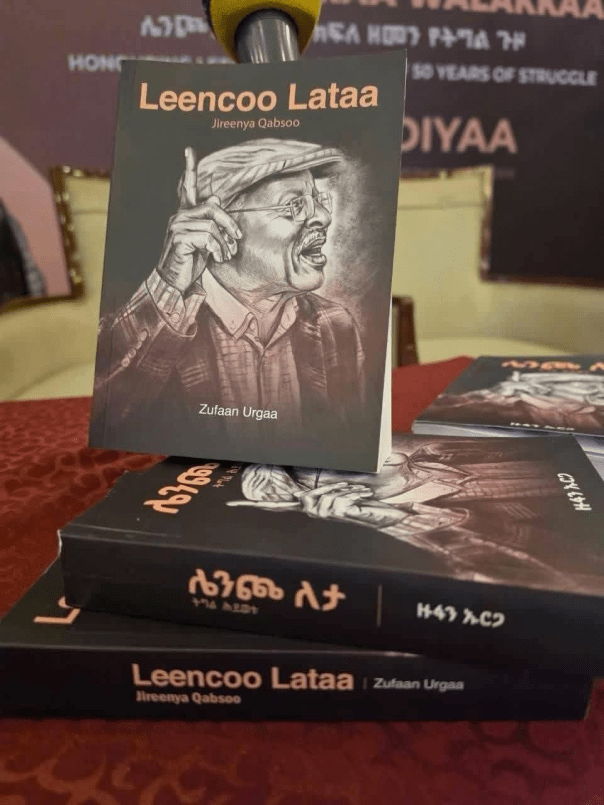
*Author’s Note on Attribution: The feature story is based on a post written by Natsaannat Taadsasaa and published in Gaazexaa Bariisaa on May 5, 2018 (according to the Ethiopian calendar). That post reported on the book launch event for Obbo Leencoo Lataa’s memoir, including remarks from Obbo Leencoo Lataa himself, Professor Kuwee Kumsaa, and his children Huriyaa, Roobaa, and Goolii Leencoo. Daandii Ragabaa has engaged with that reporting as a commentator, and the present reflection draws substantially from the ideas, testimonies, and framing originally presented by Natsaannat Taadsasaa. This feature story is offered as a synthesis and expansion of that shared conversation, with full acknowledgment of the original source.

Ibraahim Malkaa – The Forgotten Flame of Oromo Resistance
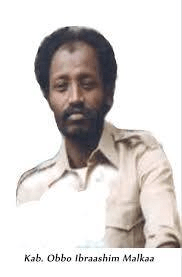
A activist, advocate, and patriot who fought for Oromo rights, language, and self-determination under Empire and Derg
By: Dhabessa Wakjira
Category: History / Oromo Struggle / Biography
He was not a general. He did not command armies. He did not sit on thrones or sign treaties. But Obbo Ibraahim Malkaa was a warrior nonetheless – a warrior of words, of ideas, of relentless advocacy for Oromo rights during the darkest decades of Ethiopian history.
Born and active during the 1970s and 1980s, Ibraahim Malkaa is remembered as one of the key figures connected to the Oromo liberation movement. He was a student, a thinker, an activist, and a man who refused to accept the marginalization of his people – whether under the ancient Imperial regime of Haile Selassie or the revolutionary terror of the Derg.
His story is not written in official archives. It is carried in the oral histories of the Oromo people. And it is time that story was told.
The Era of Darkness
To understand Ibraahim Malkaa, one must understand the world in which he lived.
During the Imperial era and continuing through the Derg regime, the Oromo people suffered systematic marginalization. The Afaan Oromo language – spoken by millions – was banned from education, from government offices, from official communication. Oromo culture, traditions, and religious practices were suppressed. Oromo political expression was criminalized.
In this environment, speaking Afaan Oromo in public could be dangerous. Writing about Oromo rights could mean imprisonment. Organizing for self-determination could mean death.
Yet there were those who did it anyway.
Ibraahim Malkaa was one of them.
The Student Movement and the Rise of Oromo Consciousness
Ibraahim Malkaa emerged from the Oromo student movement – a generation of young intellectuals who, in the 1960s, 1970s, and 1980s, began to question the foundations of Ethiopian imperialism. They read. They debated. They wrote. They organized.
Their goals were clear:
- Recognition of Oromo culture – not as a folkloric relic, but as a living, equal civilization.
- Official status for Afaan Oromo – the right to be educated, judged, and governed in one’s own mother tongue.
- Self-determination – the right of the Oromo people to control their own political destiny.
These were not radical demands. They were basic human rights. But under the Imperial and Derg regimes, they were treated as treason.
Ibraahim Malkaa became part of this wave. He connected with other activists, thinkers, and organizers who shared the vision of an Oromo nation that would no longer be silent, no longer be invisible, no longer be oppressed.
The Nature of the Struggle
The Oromo liberation movement during this period was not a conventional war. It was a hidden struggle – conducted in secret meetings, in underground publications, in whispered conversations behind closed doors.
The risks were immense:
- Imprisonment – often without trial, often for years.
- Exile – forced to flee the country, leaving behind family, home, and identity.
- Death – extrajudicial killings, disappearances, executions.
Many of Ibraahim Malkaa’s generation chose one of these paths. Some were caught and never seen again. Others escaped to build the Oromo cause from abroad. Still others survived inside Ethiopia, carrying the flame of resistance in their hearts while pretending to conform.
Ibraahim Malkaa is remembered as one who participated – not as a bystander, not as a distant sympathizer, but as an active agent in the struggle for Oromo rights.
The Core Issues – Language, Culture, and Self-Determination
What did Ibraahim Malkaa and his generation fight for? Three interconnected causes:
1. Afaan Oromo – The Right to Speak
During the Imperial and Derg periods, Afaan Oromo was excluded from formal education and government business. Oromo children were forced to learn in Amharic – a language many did not speak at home. This was not merely inconvenient. It was educational violence – designed to assimilate Oromo into a dominant culture while erasing their own.
Ibraahim Malkaa and his peers demanded that Afaan Oromo be recognized, respected, and institutionalized. This was not separatism. It was linguistic justice.
2. Oromo Culture – The Right to Exist
Oromo customs, religious practices, and social institutions – including the Gadaa system, one of the world’s most ancient democratic systems – were dismissed as primitive or suppressed altogether. The activists of Ibraahim Malkaa’s generation fought for the right of Oromo culture to be seen, celebrated, and passed down to future generations.
3. Self-Determination – The Right to Choose
The most politically charged demand was for self-determination – the right of the Oromo people to govern themselves, to control their own resources, to decide their own future within or outside the Ethiopian state. This demand was, and remains, the heart of the Oromo struggle.
The Legacy – Remembering a Forgotten Hero
Oral history and community memory tell us that Ibraahim Malkaa was one of the early figures in this struggle. He worked alongside a network of Oromo activists and advocates. He participated in the difficult, dangerous, clandestine work of building a movement.
Many of his contemporaries were imprisoned. Some were killed. Some fled into exile. Some survived to see the fall of the Derg and the opening of political space in the 1990s.
But Ibraahim Malkaa’s name, like so many others, has not been widely recorded. Official histories of Ethiopia – written from the center – ignore him. Academic studies often focus on leaders, not on the foot soldiers of the struggle. And the Oromo themselves, busy with the demands of survival, have not always preserved the names of every hero.
This feature news is a small correction to that neglect.
What the 1970s and 1980s Generation Achieved
It would be a mistake to think that Ibraahim Malkaa and his generation failed. They did not achieve independence. They did not see Afaan Oromo become the language of government overnight. They did not live to see an Oromo head of state.
But they laid the foundation.
The student activists of the 1960s and 1970s created the intellectual framework for the Oromo liberation movement. Their writings, their debates, their clandestine organizing – all of this prepared the ground for the armed struggle that followed and for the political movements that emerged after 1991.
Without Ibraahim Malkaa and his peers, there would have been no Oromo political consciousness. There would have been no Qeerroo. There would have been no international Oromo diaspora advocacy. There would have been no one to demand that Afaan Oromo be written, published, and taught.
They were the roots. We are the branches. And we should not forget who put us in the ground.
A Call to Remember
Ibraahim Malkaa is no longer with us – though the exact date of his passing is not widely recorded. But his legacy lives on in every Oromo child who learns to read and write in Afaan Oromo. In every Oromo cultural festival. In every political demand for self-determination.
He is remembered, in the words of the community:
“Ibraahim Malkaa is considered among those who made a great contribution to history and is one of the remembered figures of the Oromo struggle.”
But memory is not automatic. It requires effort. It requires telling stories like this one. It requires naming the names that regimes tried to erase.
Let this article be one small act of remembrance.
Nagaatti, Ibraahim Malkaa. Your work was not in vain.
| Subject | Detail |
|---|---|
| Name: | Obbo Ibraahim Malkaa |
| Era active: | 1970s – 1980s |
| Role: | Activist, student leader, advocate for Oromo rights |
| Key issues: | Afaan Oromo language rights, Oromo cultural recognition, self-determination |
| Regimes opposed: | Imperial Ethiopia (Haile Selassie) and Derg |
| Methods: | Clandestine organizing, student movement participation, advocacy |
| Legacy: | Remembered in oral history as one of the early figures of the Oromo struggle |
| Status: | Deceased (exact date not widely recorded) |
Dhabessa Wakjira is a social worker dedicated to advocating for the stories of Oromo freedom fighters whose sacrifices have been overlooked or erased from official narratives. Through careful research and a commitment to oral history, he brings to light the lives and legacies of those who fought for Oromo rights, language, and self-determination during the darkest decades of Ethiopian history. This is a feature news article honouring the memory and legacy of Obbo Ibraahim Malkaa, a notable figure in the Oromo liberation movement during the 1970s and 1980s.





 Advocacy for Oromia