Category Archives: Promotion

Terror in Mandera: Ethiopian Oromos Seek Refuge After Fatal Stabbing Amid Rising Border Tensions
By Daandii Ragabaa
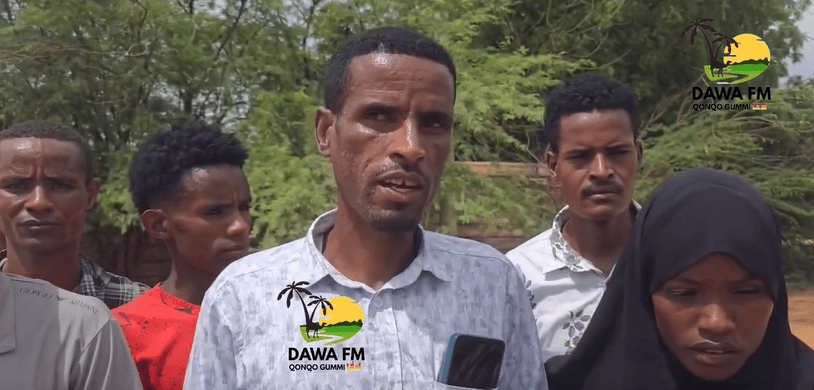
Fear has gripped the Ethiopian Oromo community in Mandera town, Kenya, following the brutal stabbing to death of one of their colleagues. In a desperate bid for survival, several members of the community have reportedly sought refuge at the Mandera Police Station, appealing to the Kenyan government and security agencies for urgent protection.
The killing, which has sent shockwaves through the cross-border community, highlights the precarious reality facing Ethiopian nationals living and working in Kenya, many of whom are fleeing the devastating conflict in their home country.
According to community members, the victim was targeted simply for being an Ethiopian Oromo. The group is insisting they are innocent civilians who should not be forced to pay the price for the ongoing political violence and tensions linked to events across the border.
“We are appealing to the authorities to intervene and guarantee our protection,” a community representative said. “We should not be held responsible for tensions or violence linked to events across the border. We are here to work and live in peace.”
The fatal stabbing has raised serious concerns about the security of Ethiopian nationals in Mandera, a town that sits squarely on the Ethiopia-Kenya border—a region already deeply scarred by arbitrary colonial borders, resource-based conflicts, and the spillover effects of the Ethiopian government’s military campaigns in Oromia.
For many Oromos, crossing into Kenya is a matter of survival. As documented by human rights organizations, Oromo civilians displaced by government forces and state-aligned militias constitute the bulk of Ethiopian refugees fleeing to neighboring countries. Yet, as the tragedy in Mandera demonstrates, the search for safety often leads them into new environments of hostility and xenophobia, where they are scapegoated for broader geopolitical tensions.
The situation in Mandera remains highly volatile. The affected individuals are now calling on community leaders, the Kenyan government, and security agencies to step in immediately to prevent any retaliatory attacks and ensure calm and restraint among residents.
They emphasize a fundamental principle of human dignity: that all residents, regardless of their nationality or ethnic background, must be able to live and work without fear.
As the community mourns the loss of their colleague and huddles in police stations for safety, the incident serves as a stark reminder of the regional fallout of the crisis in the Horn of Africa. It is a humanitarian emergency that ignores national borders, demanding urgent attention and protection for vulnerable civilians caught in the crossfire of a conflict they did not choose.
Video credit: Dawa FM

Celebrating Oromia Media: The Unyielding Voice of a People

By Dhabessa Wakjira
In a country where the state maintains a near-monopoly on the levers of national and international media, the existence of independent Oromia media is nothing short of an act of defiance. To celebrate Oromia media today is to celebrate the resilience of a people who, for over a century, have seen their history distorted, their language suppressed, and their struggles silenced.
While the government in Finfinnee projects a façade of progress to the international community, the reality on the ground—as documented by human rights organizations—is a landscape scarred by violence, displacement, and systemic marginalization. In this environment, Oromia media serves as the vital, beating heart of the Oromo nation’s quest for truth and self-determination.
The Battle Against Erasure
The importance of an independent Oromo press cannot be understood without acknowledging the historical context. As the Oromia Support Group (OSG) notes in its submissions to the UN Human Rights Council, the Oromo people were subjected to the neftenya-gabbar system of subjugation, and while formal slavery was abolished, the culture of supremacy continued. Even today, the OSG warns that the gains in autonomy and the adoption of the Oromo language within the 1995 constitution are in danger of being lost as power is centralized.
For decades, mainstream Ethiopian media has been complicit in this erasure. It has often served as a mouthpiece for the state, demonizing Oromo organizations, masking state-sponsored atrocities, and amplifying biased narratives. When international human rights organizations are sometimes duped into publishing poorly researched reports that wrongly attribute massacres to the Oromo Liberation Army (OLA), independent Oromia media becomes the essential corrective mechanism. It is the platform that documents the drone strikes in East Wallega, the mass displacements in West Showa, and the forced conscription of children.
Oromia media does not just report the news; it archives the truth. It ensures that the 7,862 civilian killings documented since 2018 are not reduced to mere statistics, but are remembered as the mothers, fathers, and children lost to a brutal conflict.
Amplifying the Culture of Gadaa
To view Oromia media solely through the lens of conflict is to miss its profound cultural significance. The Oromo people possess a rich, vibrant heritage rooted in the ancient Gadaa system—a democratic, egalitarian, and consensus-based governance model recognized by UNESCO as a World Heritage treasure.
Oromia media is the guardian of this heritage. Through music, poetry, literature, and broadcasting in Afaan Oromoo, it nourishes a language that was once forbidden in schools and public life. It carries the voices of the Borana elders reciting the blessings of the Tuula Saglan Booranaa (the Nine Sacred Water Wells) across the diaspora. It celebrates the resilience of the Qerroo youth, who have stood at the forefront of demanding justice.
In a world where the government and its allies abuse their influence in global media and institutions to demonize Oromo people, these independent platforms offer a counter-narrative of dignity. They remind the world that the Oromo are not merely victims of a geopolitical crisis, but a proud nation with a sophisticated history of compromise, power-sharing, and democracy.
The Courage of the Diaspora
Much of this vital work is shouldered by the Oromo diaspora. Fleeing the violence that has created a global refugee crisis—with Oromos facing xenophobia in South Africa, detention in Egypt, and extortion in Yemen—the diaspora has weaponized media as a tool for survival.
Organizations like the Oromia Support Group (OSG) and various independent Oromo media outlets operate under immense pressure. They face digital surveillance, smear campaigns, and the constant threat of being discredited by state-aligned actors. Yet, they persist. They bridge the gap between the isolated villages of Oromia and the halls of the United Nations in Geneva.
A Voice for the Future
As the Horn of Africa faces increasing instability, the role of Oromia media will only grow in importance. It is the vehicle through which the Oromo people can demand accountability for the crimes committed against them, and it is the medium through which they articulate their vision for the future—a future built on self-determination, human rights, and the revival of their indigenous democratic values.
The existence of a free Oromia media is a testament to the fact that no amount of state repression, drone strikes, or media manipulation can extinguish the spirit of a people. To celebrate Oromia media is to celebrate the journalists, the poets, the citizen reporters, and the diaspora activists who refuse to let the world look away.
It is the sound of a nation reclaiming its own story. And it is a sound that will not be silenced.
Dhabessa Wakjira is a commentator on Horn of Africa affairs and human rights.

A Nation Behind the Façade: Inside the Oromo Crisis Ahead of the UN Human Rights Council
By Dhabessa Wakjira
When the 63rd Session of the UN Human Rights Council convenes in Geneva from 7 September to 9 October 2026, diplomats will debate frameworks, resolutions, and language. But beneath the procedural veneer lies a brutal reality documented by the Oromia Support Group (OSG) in its submission to the Council: a nation where the state’s monopoly on violence has been turned against its own people, and where the international community’s attention remains dangerously fragmented.
The OSG’s submission, drawing on Reports 73 and 74, paints a portrait of Ethiopia that stands in stark contrast to the narrative of progress and development promoted by the government in Finfinnee. It is a portrait of a country where at least 7,862 civilians have been killed since September 2018—a figure the OSG acknowledges is only a fraction of the total. Since April 2026 alone, at least 245 civilians have been killed, 38 of them by Amhara Fano militants.
The Anatomy of a Massacre
The numbers, however staggering, cannot capture the human cost. In early March 2026, 32 villagers—including women and children—were slaughtered in a single attack by Fano in Abee Dongoroo district, Horo Guduru. On 30 June and 1 July, at least 12 were killed in Agamsa, Horo Guduru. On 24 July, 11 or more were killed in Hanger Gutin, East Wallega, where they had gathered for a football tournament.
These are not isolated incidents. They are part of a systematic campaign of violence that has engulfed Oromia, driven by a confluence of forces: government security forces, Amhara Fano militants, and government operatives masquerading as Fano or as the Oromo Liberation Army (OLA) to sow hatred between communities.
The OSG submission is explicit: “Government forces masquerading as Fano and OLA are deployed against Amhara, Oromo and Gumuz communities with the sole purpose of fomenting hatred between them.” This is not a byproduct of war; it is a strategy of division, a modern iteration of the zero-sum, supremacist culture that has haunted Ethiopia for over a century.
Displacement, Destruction, and the Vanity of Development
Beyond the killings, the OSG documents a systematic campaign of displacement and destruction. Since March 2026, artillery barrages and drone strikes have killed people and animals in East Wallega, North Showa, and East Showa. Homes have been burned and villagers displaced across North, West, and Southwest Showa, Wollo, Hararge, Bale, Arsi, Qellem, West Wallega, and Buno Bedele zones.
This violence is not merely a security operation; it is deeply intertwined with economic interests. The OSG notes that displacement continues for “corridor and vanity projects and clearing of land for foreign investors.” The government’s vision of modernization, it seems, is built on the ruins of Oromo homes and the graves of Oromo farmers.
The submission also highlights the lawlessness and extortion by government militias, the forced conscription of youngsters—often under 17 years of age—into national defense forces, and more recently, into the Sudanese Rapid Support Forces (RSF) based in Asosa zone. Older and infirm men are press-ganged into local militia. Refusal of conscription leads to detention, torture, and killing.
The Weaponization of Rape and the Corruption of Aid
The OSG submission reiterates previous findings: the rape and murder of young girls and women continue with impunity. But it also raises a troubling new dimension: the weaponization of these crimes in the international media.
“Even Amnesty International has been duped into biased and inflammatory propaganda against OLA,” the submission states, “singling it out as almost the sole perpetrator of sexual violence against women in West Wallega, despite this being the opposite of the conclusions drawn by the UN Independent Commission of Human Rights Experts in Ethiopia.”
This is a damning indictment of the international human rights community’s ability to be manipulated by state actors. Massacres committed by government forces masquerading as OLA have been attributed to OLA itself in poorly researched and biased reports. The result is a global narrative that legitimizes state violence while demonizing those who resist it.
Meanwhile, behind the façade of progress in Finfinnee and other major cities, the OSG paints a picture of a destitute and hungry population, heavily dependent on foreign aid—aid whose distribution is “once again rife with corruption and discrimination.” The government and its allies, the submission notes, abuse their connections in national and international media, NGOs, and institutions to demonize Oromo people and their organizations.
The Refugee Crisis: From Bad to Worse
The violence has created a refugee crisis of staggering proportions. Oromo civilians, displaced by government and Fano forces, constitute the bulk of Ethiopian refugees fleeing to neighboring countries and beyond—to Egypt, Yemen, South Africa, and further afield.
But the world is not welcoming them. The OSG documents a global shift away from treating refugees with dignity and compassion. In Egypt, hundreds of Oromo and Sudanese refugees have been detained, and many, including registered asylum-seekers, have been returned against their will. At least one Oromo died in detention in Cairo on 22 July 2026. In Cape Town, South Africa, at least two Oromo registered asylum-seekers were killed by xenophobic mobs in early July. Thousands are trapped in Sana’a, Yemen, unable to escape because of forced conscription by Houthi militia and violence and extortion by traffickers. UNHCR offices are closed and unable to help. Migrants who survive lethal violence by border guards are liable to summary justice and execution for minor offenses in Saudi Arabia.
The Historical Roots of the Crisis
The OSG submission does not shy away from history. It traces the roots of the current crisis to the 19th and early 20th centuries, when the Oromo—the majority people of Ethiopia—were overrun by Amhara and Tigrayan tyrants. Although slavery was abolished by Italian invaders in 1936, serfdom within the neftenya-gabbar system continued until 1974. Amhara racist and supremacist culture, the submission argues, continues to exert itself under the Prosperity Party government.
“Although nominal Oromo are part of that government, all the gains in autonomy and the adoption of the Oromo language within the 1995 federal constitution are in danger of being lost as the incumbent Prime Minister attempts to monopolise control within a presidential system,” the OSG warns.
This is the crux of the matter: the fear that the hard-won gains of federalism, however imperfect, are being rolled back in favor of a centralized, authoritarian state that serves the interests of a narrow elite.
The Gadaa Alternative
Against this bleak backdrop, the OSG offers a vision of hope rooted in indigenous knowledge. The Oromo culture of compromise, power-sharing, consensus decision-making, and checks and balances to avoid the monopoly of power by individuals and small groups is evidenced in the ancient Gadaa system, recognized by UNESCO as of World Heritage significance.
“By enabling the emancipation and self-determination of the Oromo, it would be possible to experience again the benefits of this culture,” the submission states. “This could be the only way to restore peace, stability, and respect for human rights in Ethiopia for all its peoples.”
A Call to the International Community
As the UN Human Rights Council convenes in Geneva, the OSG submission is a stark reminder that the international community cannot afford to look away. The crisis in Ethiopia is not a distant, intractable conflict; it is a manufactured catastrophe, sustained by a government that has weaponized ethnicity, manipulated international institutions, and deployed its security forces against its own citizens.
The submission’s conclusion is unambiguous: “Without self-determination for the Oromo and other oppressed peoples of Ethiopia, there will be no stability in Ethiopia. A peaceful and prosperous Ethiopia would allow stability and peace to develop in the Horn of Africa.”
The choice before the international community is clear. It can continue to reward a government that has turned its guns on its own people, or it can stand with those who seek a different path—one rooted in the ancient wisdom of the Gadaa system, where power is shared, dissent is tolerated, and every voice is heard.
For the people of Oromia, the stakes could not be higher. They have endured over a century of subjugation, and they are now facing a government that seems determined to erase their gains and silence their demands. The world must decide whether it will stand with them—or stand aside as the slaughter continues.
The Oromia Support Group’s full submission is available at oromiasupport.org.

53 Years of Oromo Freedom Struggle, 53 Years of Impact
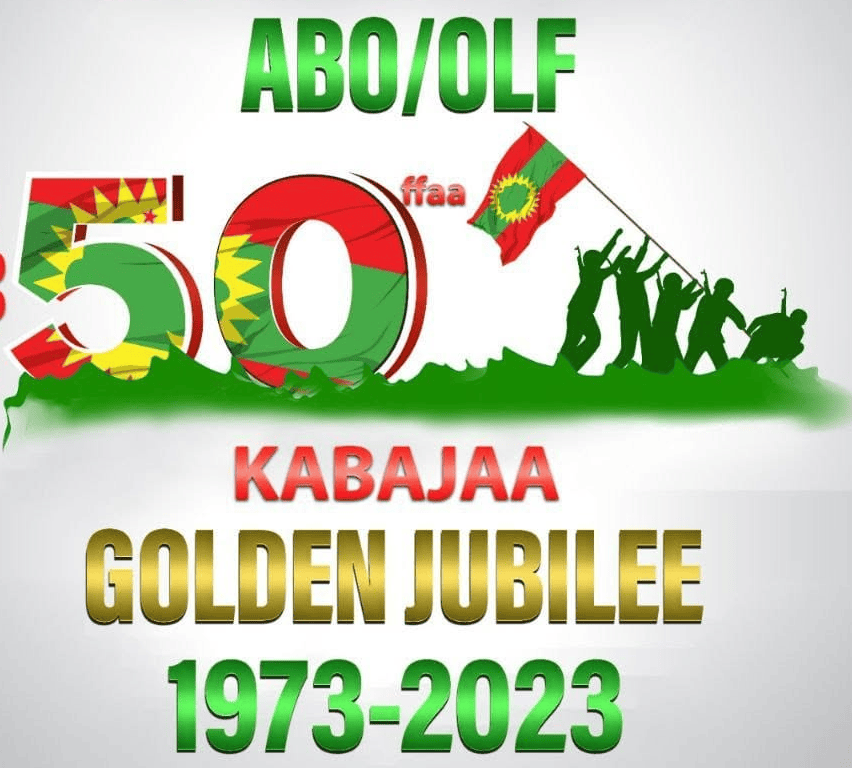
Half a century after a small band of nationalists took up the Oromo cause, the movement has transformed the political landscape of Ethiopia—even without achieving the independent state it once sought. Its deepest impact lies not in territorial control, but in the irreversible awakening of a people who can no longer be governed as before.
The Oromo Liberation Front was founded in 1973, emerging from the ferment of Oromo student activism and the memory of the banned Mecha-Tulama Self-Help Association . What began as a clandestine project among intellectuals would, over five decades, become the central axis of Ethiopian political contestation—not because it won, but because the questions it raised about identity, land, and power could never again be buried.
The early years were defined by armed insurgency and brutal repression. The OLF established itself as a guerrilla force operating across Wollega, Bale, and Hararghe, drawing recruits from peasants who had watched the imperial and then Derg regimes dispossess and marginalize them . The Derg’s response was predictable and catastrophic: mass arrests, executions, and a campaign of terror that killed thousands accused of harboring OLF sympathies. Yet repression produced what it so often does—martyrdom, recruitment, and an enduring sense of grievance that outlasted the gun.
The movement’s most significant impact, however, came not on the battlefield but in the realm of consciousness. The OLF’s founding vision articulated something that had been suppressed for generations: that the Oromo were a nation, not merely a labor force or a demographic majority to be managed. This idea, once planted, proved impossible to uproot. Even after the OLF was pushed out of the transitional government in 1992 and reduced to a marginal political actor, the seeds of Oromo nationalism continued to grow underground .
The eruption came in 2014, when the Qeerroo—Oromo youth—took to the streets over the Addis Ababa master plan, a policy they saw as another chapter in a long history of land dispossession. The protests spread, intensified, and by 2018 had forced the ruling coalition to install Abiy Ahmed, an Oromo, as prime minister . It was a remarkable inversion: a ruling party that had once sought to contain Oromo nationalism now depended on Oromo street power to survive.
The human cost of this struggle has never been abstract. In 2020, the assassination of Hachalu Hundessa, a musician whose lyrics had given voice to a generation’s anger and longing, triggered days of unrest that left at least 166 people dead, according to police figures . Hachalu’s music had become an instrument of the movement itself—his songs were sung at protests, his death a rallying cry. The violence that followed exposed how fragile the gains remained and how deeply the wounds of marginalization had festered.
Fifty-three years on, the struggle’s landscape is fractured. The OLF split in 2018, with its political wing entering legal politics and its armed wing—the Oromo Liberation Army—continuing an insurgency that the government has designated as terrorism . Peace talks between the government and the OLA have repeatedly collapsed, with Addis Ababa accusing the rebels of “unrealistic demands” and the OLA charging the government with seeking co-optation rather than addressing root causes . Meanwhile, the regional government in Oromia pursues a dual track: encouraging surrender through elders and Abba Gadas while waging military operations against those who refuse .
Yet the struggle’s most enduring legacy may lie elsewhere—in the cultural and intellectual infrastructure that no military campaign can dismantle. The Gada system, the indigenous Oromo governance structure that regulates political, social, and religious life through rotating eight-year cycles, was inscribed on UNESCO’s Representative List of the Intangible Cultural Heritage of Humanity in 2016 . What was once dismissed or ignored by the Ethiopian state is now recognized globally as a sophisticated democratic tradition. Oromummaa—the articulation of Oromo peoplehood and identity—has become a force in Ethiopian politics that no government can afford to ignore .
What, then, does 53 years of impact look like? It looks like a language once suppressed now spoken in parliament. It looks like a youth movement that toppled a prime minister and then grew disillusioned with his successor. It looks like a struggle that began as a separatist insurgency and became, instead, a permanent renegotiation of what Ethiopia means. The OLF’s founding dream of an independent Oromia has not been realized. But the conditions that made that dream thinkable—a people conscious of their history, their numbers, and their rights—have become irreversible.
The next chapter remains contested. The government insists the answer is peace and reintegration. The OLF’s political wing insists it is negotiation. The OLA insists it is continued resistance. The Qeerroo, who inherited a struggle they did not start, wait to see which vision will prevail. What is certain is that 53 years after a handful of nationalists took up the Oromo cause, the question they raised is no longer a question at all. It is a fact of Ethiopian life, and it will not be resolved by ignoring it.

16 Years of Advocacy for Oromia, 16 Years of Impact

Marking a Milestone of Dedication, Resilience and Progress
For 16 years, the cause of Oromia has been carried forward with unwavering commitment — through advocacy, community engagement and a steadfast belief in justice, dignity and development for the Oromo people. Today, we mark 16 years of advocacy and 16 years of impact.
What began as a shared vision among a dedicated few has grown into a sustained movement built on perseverance, solidarity and the collective voice of a community determined to be heard. Over these 16 years, advocacy for Oromia has taken many forms — raising awareness, amplifying community concerns, fostering dialogue, and championing the rights and aspirations of the Oromo people both at home and in the diaspora.
The impact of this work is reflected not only in the milestones achieved, but in the lives touched, the voices empowered and the awareness built across communities. Each year has brought new challenges, and each challenge has been met with renewed resolve. Through it all, the commitment to Oromia’s future has remained constant.
This milestone belongs to everyone who has contributed to the journey — the advocates, the community members, the partners and the supporters who have stood together over the years. Your dedication has made a difference, and your efforts continue to shape a brighter path forward.
As we celebrate 16 years of advocacy and 16 years of impact, we look ahead with hope and determination. The work continues, and so does the vision of a prosperous, peaceful and dignified Oromia.
Here’s to 16 years of dedication — and to the many years of impact still to come.
16 Years of Advocacy for Oromia. 16 Years of Impact.

Celebrating 75 Years of Impact: AMES Australia Honors a Legacy of Building New Lives
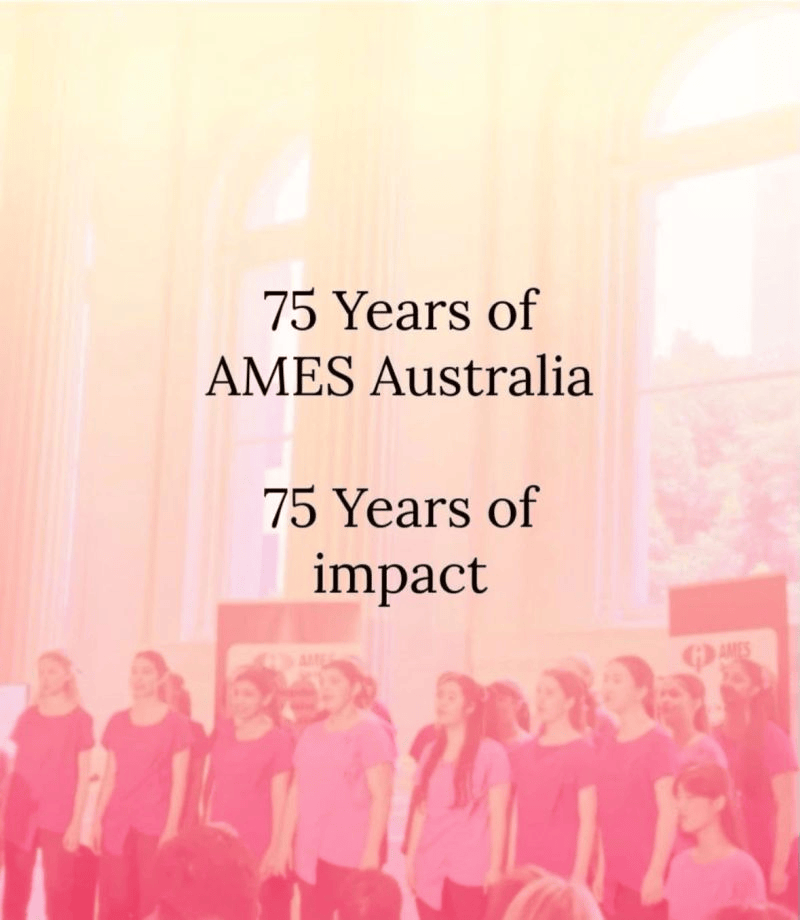
For 75 years, AMES Australia has been a cornerstone of the nation’s multicultural success, and last night, community leaders, politicians, and advocates gathered to celebrate a remarkable milestone.
Under the glowing banner of “75 Years of AMES Australia, 75 Years of impact,” attendees reflected on the transformative power of support, training, and opportunity. The celebration highlighted the absolutely incredible stories and achievements of refugees and migrants who have successfully built their new lives in Australia.
The event underscored why Australia’s multiculturalism remains so successful and vibrant. It is the result of dedicated organizations like AMES providing vital services—from settlement and employment assistance to English language training and ongoing support. These foundational pillars have helped nearly one million clients transition into their new communities and thrive.
The anniversary was a moment to honor the visionaries and hard workers behind the organization’s success. Special congratulations were extended to Melinda Collinson (GAICD), Vanda Fortunato (PhD, FAICD), the current and former AMES Board members and CEOs, and the entire AMES Australia team.
The celebration also brought together notable figures, including Laura Lo Bianco-Smith, Matt Carrick, Lee Tarlamis OAM MP, and Meena Naidu (GAICD), who gathered to recognize the profound #Impact that skills and education (#Skills) have had on the state of Victoria (#Victoria) over the decades.
As AMES Australia marks 75 years of making a difference, the evening served as both a powerful retrospective of past achievements and a hopeful look toward the future, continuing its mission of empowering individuals and strengthening the fabric of Australian society.

Celebrating Our Community This Mashujaa Day
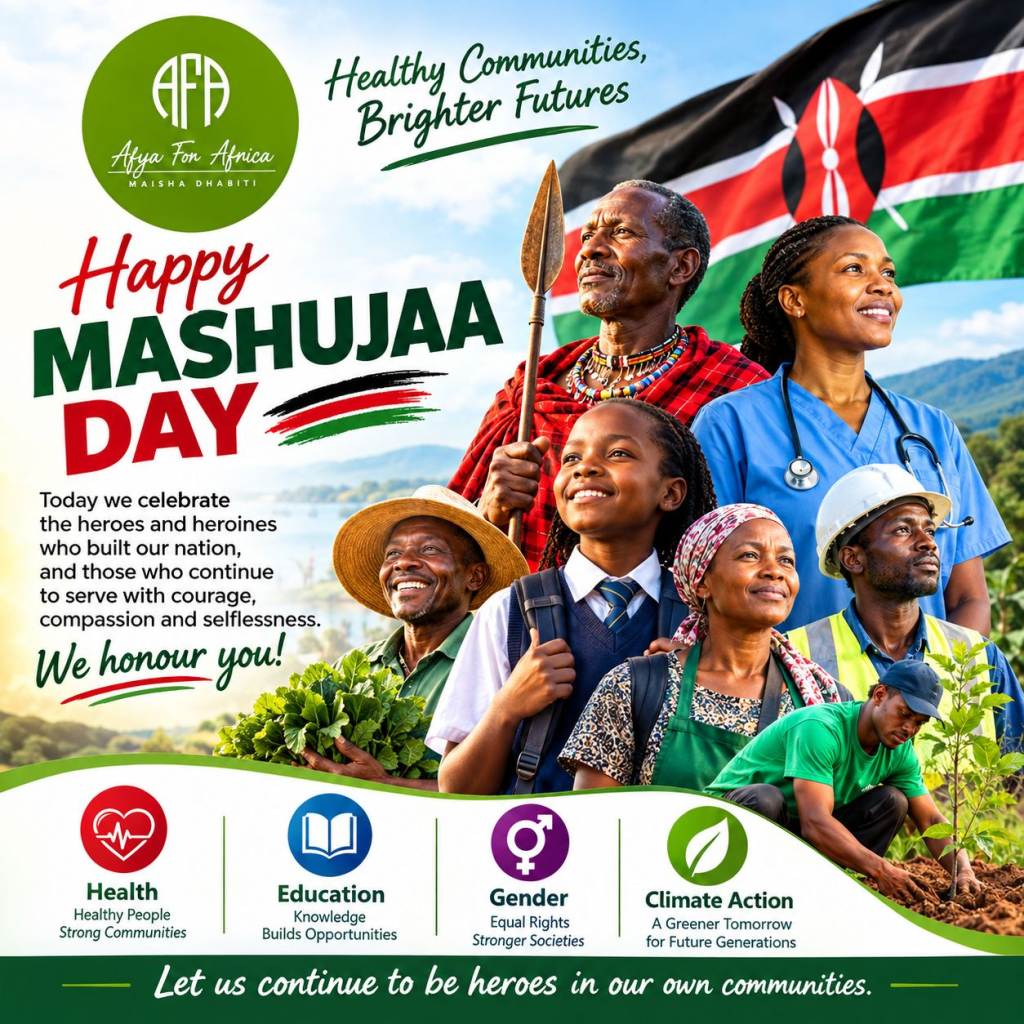
Honouring the Heroes Among Us
Mashujaa Day is a time to reflect on the spirit of heroism that lives within our communities — not only in the historic figures who shaped our nation, but in the everyday people whose quiet dedication, sacrifice and resilience hold us together.
This Mashujaa Day, we celebrate our community and the many heroes who walk among us: the parents working tirelessly for their families, the volunteers who give their time without hesitation, the neighbours who lend a hand in times of need, and the young people striving to build a better future.
Heroism is not always loud. Often, it is found in small acts of kindness, in perseverance through hardship, and in the commitment to lift others as we rise.
Today, we honour every member of our community who contributes to making it stronger, kinder and more united. Your efforts do not go unnoticed, and your spirit inspires us all.
Join us in celebrating our community — because the true heroes of our nation are the people who make it what it is, every single day.
#MashujaaDay #CelebratingOurCommunity #HeroesAmongUs

IYYANNAA MAATII: BARBAACHAA ILMA ISAANII ELIYAAS WADAJOO FIDAA WAGGOTA 30F
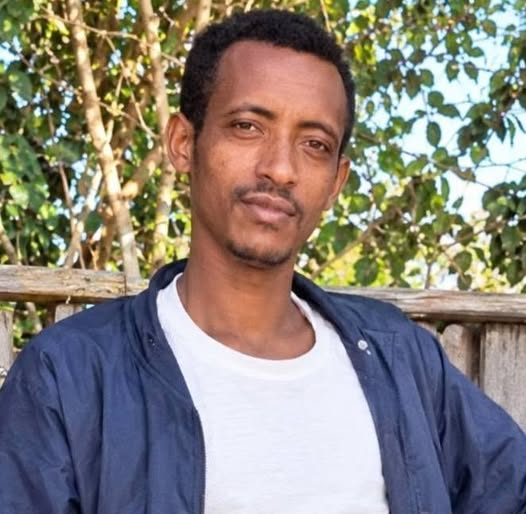
Abdiin Maatii Hin Citu: Barbaachaan Eliyaas Waggoota Soddoma Booddees Itti Fufe
Oromiyaa, Godina Wallaggaa Lixaa, Aanaa Boojjii Coqorsaa, Ganda Fiigaa Koobbaraa 01 keessatti dhalatee guddate Eliyaas Wadajoo Fidaa, maatiin isaa waggoota soddomaa ol erga adda ba’anii abdii isaanii hin kutanne.
Eliyaas barnoota sadarkaa 1ffaa fi giddugaleessaa Mana Barumsaa Fiigaa Koobbaraatti barate; barnoota sadarkaa 2ffaa immoo Boojjii Dirmajiitti xumure. Bakkaa fi bara sirriitti isaa adda baafnee yaadachuu baannus, kolleejjii irraa eebbifamee naannoo sanatti barsiisaa ta’ee hojjechaa ture. Akkasumas hojii daldalaatiin bobba’ee jiraachaa ture.
Yeroo naannoo sanaa irraa fagaatetti dargaggeessa, nama gaa’ila hin qabne ture. Garuu, waggoota gara 30 dura, sababa sirriitti hin beekamneen naannoo dhaloota isaa irraa erga deeme kaasee, hanga har’aatti bakka inni jiru maatiin isaa hin beekan.
IYYANNAA MAATII
Waggoota dheeraaf maatiin Eliyaas isa barbaadaa jiru. Abbaanii fi haati isaa, akkasumas maatiin isaa guutuun, bakka inni jiru, haala jireenyaa isaa fi nageenya isaa beekuu hawwu. Yoomiyyuu abdii osoo hin kutatin, odeeffannoo waa’eesaa kamiyyuu dhaga’uu hawwu. Waaqayyo hin godhin malee yoo rakkoon addaa isa mudatee jiraate illee, maatiin isaa hirmii baafatanii garaa kutachuu barbaadu.
AKKATAA GARGAARSAA
Namooti kabajamoo, ergaa kana dubbisaa jirtan hundi:
- Yoo Eliyaas Wadajoo Fidaa beektan, yookaan waa’ee isaa odeeffannoo qabaattan, maaloo nuuf qoodaa.
- Yoo namoota isa beekan arguu dandeessan, ergaa kana isaan biraan ga’aa.
- Yoo odeeffannoo isaa hin qabne, maaloo ergaa kana SHARE gochuun namoota hedduu bira akka ga’u nu gargaaraa.
Odeeffannoo xiqqoon isin qabdan nama waggoota dheeraaf maatiin isaa barbaadaa jiran kana argamsiisuu danda’a. Ergaan isin qooddan tokko maatii fi ilma isaanii waggoota hedduuf addaan ba’an walitti fiduu keessatti gahee guddaa qabaachuu danda’a.
ELIYAASIIF ERGAA:
Eliyaas, yoo ergaa kana argite, maatiin kee si barbaadaa jiru. Maaloo nageenya kee beeksisi!
ODEEFFANNOOF QUNNAMTII
Namni odeeffannoo waa’ee Eliyaas qabu kamiyyuu, maaloo lakkoofsa bilbilaa armaan gadii irratti nu qunnamaa:
+251 920419911
+251 945322544
+251 932920632
+251 917928869
ERGAA KANA SHARE GODHAA—MAATII WALITTI FIDUU KEESSATTI GARGAARAA
Waaqayyo nama kana haa eegu; maatii isaas haa gammachiisu!
ULFAADHAA!!

Family’s 30-Year Search for Missing Son Eliyaas Wadaajoo Fidaa
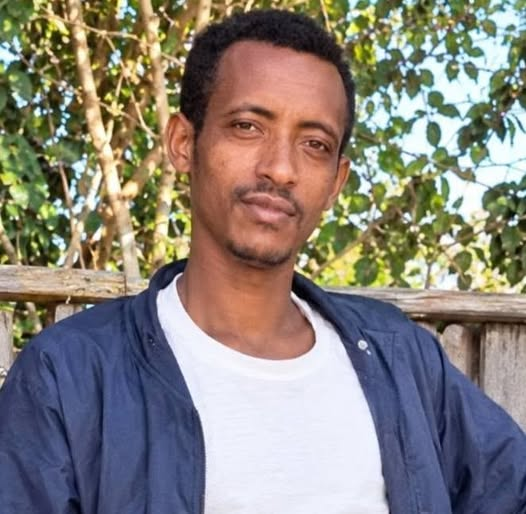
A Family’s Unwavering Hope: The Search for Eliyaas Continues After Three Decades
In the heart of Oromia, in West Wollega Zone, Bojji Chokorsa District, a family continues to hold onto hope after nearly 30 years of separation from their beloved son, Eliyaas Wadaajoo Fidaa.
Born and raised in Fiigaa Kobara Village, Kebele 01, Eliyaas completed his primary and secondary education at Fiigaa Kobara and Bojji Dirmaji schools respectively. Though the exact dates remain unclear, it is known that he graduated from college and worked as a teacher in the area before eventually venturing into business.
At the time he left his home region, Eliyaas was a young, unmarried man. However, for reasons that remain unknown, he departed from his birthplace approximately 30 years ago—and since that day, his family has had no knowledge of his whereabouts.
A Family’s Plea
For decades, Eliyaas’s family has been searching for him. His father and mother, along with his entire family, long to know where he is, how he is living, and whether he is safe. They have never given up hope, holding onto the possibility that they might one day hear news of him. Even if he has faced hardships, his family wants him to know they are waiting to embrace him with open arms.
How You Can Help
This is a heartfelt appeal to all who read this message:
- If you know Eliyaas Wadaajoo Fidaa or have any information about him, please share it with the family.
- If you know people who might recognize him, please pass this message along.
- If you have no information, please SHARE this message to help it reach as many people as possible.
Even the smallest piece of information could reunite a family that has been waiting for decades. One share could play a significant role in bringing together a family and a son who have been separated for far too long.
A Message to Eliyaas
Eliyaas, if you see this message, your family is searching for you. Please let them know you are safe.
Contact Information
Anyone with information about Eliyaas is kindly asked to reach out through the following numbers:
+251 920419911
+251 945322544
+251 932920632
+251 917928869
Share This Message—Help Reunite a Family
May God protect Eliyaas and bring joy to his family.
ULFAADHAA!!

AMES Australia Manager Inducted into Victorian Multicultural Honour Roll
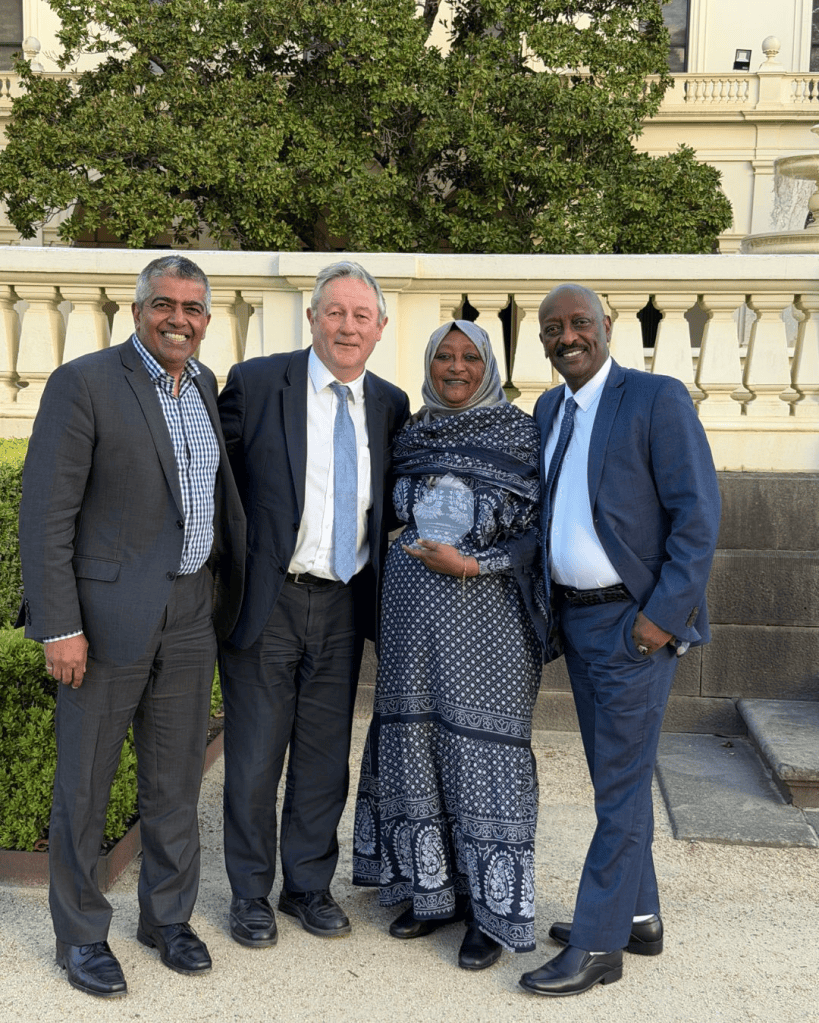
Dr. Melika Sheik-Eldin recognised for more than two decades of advocacy for refugees and multicultural communities
AMES Australia is proud to congratulate Dr. Melika Sheik-Eldin, Manager International and Community Development, on her induction into the Victorian Multicultural Honour Roll.
The honour recognises Dr. Melika’s exceptional and lasting contributions to multiculturalism in Victoria, capping a remarkable period of recognition that follows her recent induction into the Victorian Honour Roll for Women.
The induction took place at the Victorian Multicultural Awards for Excellence 2026 at Government House, where 23 individuals were welcomed into the Honour Roll for their outstanding contributions to multiculturalism across the state.
For more than two decades, Dr. Melika has been a powerful advocate for refugees and multicultural communities across Victoria, drawing on her own lived experience of fleeing conflict and rebuilding her life in Australia. Her work has been defined by a deep commitment to supporting others on similar journeys.
Dr. Melika has worked at AMES Australia for 24 years, focusing primarily on settlement, community development and capacity building programs, as well as community advocacy. Her leadership has helped shape initiatives that empower newcomers to build new lives and fully participate in Australian society.
Reflecting on the recognition, Dr. Melika said the honour belonged not only to her but to the communities she serves.
“This recognition is a reflection of the resilience and strength of the people I have had the privilege to work alongside,” she said. “I am grateful to be able to contribute to a Victoria where everyone, regardless of where they come from, has the opportunity to belong and thrive.”
Dr. Melika was accompanied at the ceremony by her family, as well as AMES Australia Chief of Strategy, Innovation & Partnerships, Praveen Reddy, and Media Manager, Laurie Nowell.
“Melika’s dedication to refugees and multicultural communities is an inspiration to all of us at AMES Australia,” Mr Reddy said. “This honour is thoroughly deserved and reflects the profound impact of her work over more than two decades.”
AMES Australia extends its warmest congratulations to Dr. Melika on another well-deserved honour.
#AMES #AMESAustralia #Award #VictorianMulticulturalHonourRoll






