Beyond Separatism: The Six Pillars of Oromo Identity and the Transformative Vision for Ethiopia
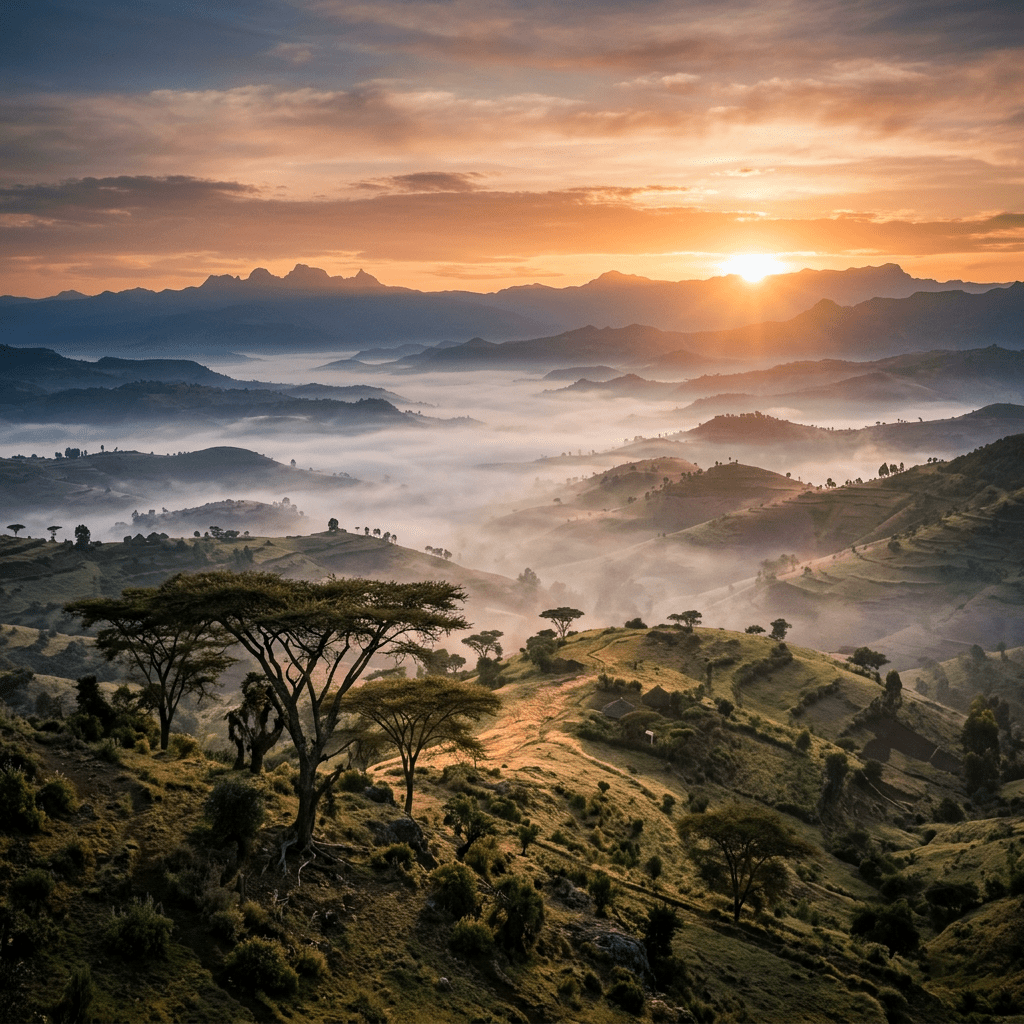
In the turbulent theatre of Ethiopian political discourse, few narratives are as polarising as the aspirations of the Oromo people. Too often reduced to a simplistic caricature of ethnic nationalism or separatist ambition, the Oromo political project is frequently misunderstood.
Yet, underneath the surface of party politics and electoral calculations lies a deeper, more cohesive reality. Regardless of political function, ideological leaning, or generational gap, there exist critical political common denominators shared and protected by the Oromo people. These are not revolutionary slogans designed to dismantle a nation; they are foundational principles intended to reshape, support, and sustain Ethiopia into the future.
They are Oromia, Afaan Oromo, Gadaa, Oromummaa, Finfinnee, and Dirree Dhawa.
To understand these six pillars is to understand the soul of modern Oromo political consciousness—and to recognise that the Oromo quest is fundamentally a quest for a more equitable, federal, and democratic Ethiopia.
Oromia: The Territorial Bedrock
For the Oromo, Oromia is far more than an administrative region drawn on a map; it is the historical and political homeland. Spanning vast swathes of the Ethiopian highlands and lowlands, it anchors the collective memory of a people who have inhabited these lands for millennia.
Oromia embodies the historical struggle for autonomy and self-determination. It is the territorial foundation upon which claims to political representation, federal restructuring, and resource control are built . In the current constitutional era, the debate surrounding Oromia is central to Ethiopia’s federal future. For the Oromo, the protection of Oromia’s territorial integrity is non-negotiable—not as a fortress against the rest of Ethiopia, but as a recognised base from which the Oromo can contribute equally to the national fabric.
Afaan Oromo: The Linguistic Unifier
If Oromia is the body, Afaan Oromo is the soul. After over a century of systemic suppression, the Oromo language has re-emerged as the strongest cultural and political bond among scattered Oromo communities . It is more than a tool for communication; it is a symbol of restored dignity and a vibrant declaration of identity.
In the political arena, Afaan Oromo serves as a practical instrument for mass mobilisation. Its expansion into federal institutions—from the parliament floor to educational curricula—is viewed not as an encroachment but as an essential correction for historical inequality. Asserting Afaan Oromo enhances Oromo political visibility and ensures that the voice of the country’s largest ethnic group is heard in its own tongue . For the Oromo, linguistic pluralism is not a threat to national unity but the very bedrock of a just and inclusive Ethiopian state.
Gadaa: The Indigenous Democratic Blueprint
While the initial prompt highlights the political pillars, the Gadaa system stands proudly among them as the indigenous democratic governance system of the Oromo people. Recognised by UNESCO as an Intangible Cultural Heritage of Humanity, Gadaa represents a sophisticated political, social, and ritual framework that has governed Oromo society for centuries .
Gadaa is built upon principles of term limits, checks and balances, and consensus-based decision-making—ideas that resonate deeply with modern democratic values . For contemporary Oromo political thought, Gadaa is not merely an ancient relic; it is a living philosophy that informs the demand for transparent, participatory, and decentralised governance. To dismiss Oromo political aspirations is to dismiss a system that predates many modern states, and which offers profound lessons for Ethiopia’s own governance challenges.
Oromummaa: The Cultural Conscience
Oromummaa translates roughly to “Oromoness”—but it defies a simple definition. It is the collective cultural ethos, the shared moral compass, and the intricate web of values, histories, and worldviews that unite the Oromo people.
Critically, Oromummaa is historically inclusive. It is not an ethnic fortress; rather, it embodies a form of cultural nationalism that has traditionally welcomed outsiders and assimilated diverse groups . In the political sphere, Oromummaa serves as the ethical conscience of the Oromo struggle. It underscores the demand for justice not out of a desire for superiority, but out of a profound belief in equity, respect, and the fundamental dignity of all peoples. It is this cultural resilience that has sustained the Oromo through decades of marginalisation and continues to fuel their push for constitutional recognition.
Finfinnee: The National Crucible
Few spaces in Ethiopia are as contested—or as symbolic—as Finfinnee (Addis Ababa). Historically Oromo land, it has evolved into the cultural and political melting pot of the nation, serving as the seat of the federal government and the headquarters of the African Union .
For the Oromo, Finfinnee represents more than a capital city; it is a living testament to their historical rootedness in the central highlands . The political consciousness of modern Oromo movements was largely shaped within the streets and universities of Finfinnee. The governance of this city is tied inextricably to Oromo identity, the balance of federal power, and national symbolism. The Oromo claim to Finfinnee is not a call for exclusivity, but a demand for a seat at the table in deciding its future. Recognising the Oromo heritage of Finfinnee is seen as essential for healing historical grievances and fostering true federal balance.
Dirree Dhawa: The Multicultural Frontier
Finally, Dirree Dhawa stands as a testament to Ethiopia’s complex diversity and the unresolved questions of its federal architecture. As a multicultural frontier shared among Oromo, Somali, Amhara, and other communities, its administrative status is a microcosm of the nation’s broader federal challenges.
Unlike the exclusivist narratives that often dominate ethnic politics, the Oromo perspective on Dirree Dhawa symbolises a vision of inclusive governance . The city’s mixed demographic makeup and strategic economic importance require a governance model that transcends ethnic domination. For the Oromo, the resolution of Dirree Dhawa’s status represents a litmus test for whether Ethiopia can truly accommodate its diverse peoples within a single, unified federal system.
A Transformative, Not Separatist, Agenda
Taken together, these six pillars present a compelling counternarrative to the accusations of separatism often levelled against the Oromo political movement . The Oromo demand for territorial integrity, linguistic equality, cultural recognition, democratic governance, and balanced federalism is not an attempt to break up Ethiopia. On the contrary, it is an attempt to save it—to build a nation where no group is marginalised, where resources are shared equitably, and where federalism functions as originally intended.
These Oromo political common-denominator aims are not merely separatist or nationalist—rather, they are transformative, aiming to reshape, support, and sustain Ethiopia into the future . A strong Oromia is a strong Ethiopia. A recognised language is a unified nation. A respected culture is a peaceful society.
The question for Ethiopia is not whether it can accommodate these Oromo pillars, but whether it can afford not to. For in the recognition of these fundamental rights lies the potential for a new dawn—one where the Oromo, and all Ethiopians, can walk forward together.
The Oromo quest is not a call for division. It is a call for a new Ethiopia—one built on justice, equality, and the recognition that diversity is not a weakness, but the nation’s greatest strength.

Posted on July 4, 2026, in Aadaa, Afaan, Biography, Bokkkuu, Diaspora, Events, Finfinne, gadaa, Information, Language, Media, News, Oromia, Promotion, Sirna Oromo. Bookmark the permalink. Leave a comment.






Leave a comment
Comments 0