Daily Archives: August 13, 2026

Irreecha: A Day of Thanksgiving and Renewal for the Oromo People

By Dhabessa Wakjira
Introduction: A Celebration Like No Other
As the golden hues of the Ethiopian spring—known as Birraa—begin to blanket the landscape, a profound spiritual and cultural awakening stirs across Oromia. This year, the 2018 Irreecha festival, celebrated on September 24th at Hora Finfinne and September 25th at Hora Arsadee-Bishooftuu, carries a particularly resonant theme: “Irreecha: Olka’iinsa Biyyaatiif” (Irreecha: For the Elevation of the Nation). Following a sacred itinerary, the Council of Oromo Gadaa Elders has announced the events will be observed consecutively, beginning with morning rituals.
This year’s Irreecha stands apart, marking a triumphant return to tradition after a long night of cultural suppression. The proclamation of the Oromo Cultural Renaissance, coinciding with the blessing of the Great Ethiopian Renaissance Dam (GERD), adds a layer of double joy and profound national significance. The very air hums with the promise of renewal.
The Soul of a Nation: Culture as Identity
Culture is the radiant mirror of a people’s soul. It is through their customs, rituals, and traditions that a community reveals its unique character to the world. For the Oromo people, one of the largest nations in the Horn of Africa, culture is not merely a collection of artifacts but the living fabric of daily existence.
The Oromo possess a rich cultural tapestry, interwoven with the rhythms of their environment. Their traditions—from the sacred union of marriage and the art of traditional attire to the intricate wisdom of the Gadaa system—all reflect a deep, symbiotic relationship with the land and the cosmos. Central to this worldview is a profound reverence for Waaqa (God), the Creator.
For centuries, Oromo life was guided by a seamless integration of work, social structure, governance, and spirituality. This harmony was, however, violently disrupted from the era of Emperor Menelik II through the oppressive Derg regime. The Oromo people endured systematic marginalization, their identity and cultural practices suppressed. Their language, customs, and even their names were targets of state-sanctioned denigration.
Yet, like the resilient birbirsaa plant that thrives after the rains, the Oromo spirit endured. The fall of the Derg in 1991 and the subsequent constitutional recognition of the Oromo language and culture heralded a new dawn. A people once forced into the shadows of history could now reclaim their heritage in the full light of day.
Waaqeffanna: The Oromo Spiritual Tradition
At the heart of Oromo identity lies Waaqeffanna, the indigenous belief system. The Oromo have been custodians of a monotheistic faith since time immemorial, believing in a single, omnipotent Waaqa who is the sole Creator of the universe.
Unlike other systems, Waaqeffanna does not worship idols or intermediary deities. It is a direct, personal connection between the worshipper and the Creator. The Oromo believe that Waaqa is the source of all life and power, and that this power manifests through the natural world. The rivers, mountains, trees, and lakes are not gods themselves but sacred creations through which Waaqa’s majesty is revealed.
This philosophy is elegantly expressed through Irreecha, the ultimate act of thanksgiving and spiritual communion. The elders teach that Irreecha is simply “giving thanks to the one God.” It is the pinnacle of Oromo religious and cultural expression, a testament to the enduring faith of a people in the face of adversity.
The Seasons of Life: Why Irreecha is Celebrated
To understand Irreecha, one must understand the Oromo calendar and the life-giving cycle of the seasons. Following the long, harsh rains of the Ganna (winter) season, the landscape transforms. Mighty rivers swell, roads turn to impassable mud, and communities are often separated. Nature, in its raw power, hibernates.
Then comes Birraa, the spring season. The rains recede. The sky clears to a brilliant blue. The mud dries, opening pathways. The once-dormant earth erupts in a spectacular bloom of yellow, white, and purple flowers. The oyiruu (crops) transform from green foliage to golden, life-sustaining grain. This is the season of hope, rebirth, and abundance.
It is in this moment of transition, from the darkness of winter to the light of spring, that the Oromo offer Irreecha. It is a heartfelt “thank you” to Waaqa for guiding them through the difficult months and for bestowing the first fruits of the harvest. It is a powerful acknowledgment of the divine order that governs existence.
“Baga Booqa Birraa geessan!” — “Welcome, the freshness of spring!” is the joyful greeting of the season.
Two Hallowed Places: Irreecha Tulluu and Irreecha Malkaa
The Irreecha rituals are held in two distinct settings, each reflecting a different phase of the spiritual and agricultural cycle.
Irreecha Tulluu (Irreecha of the Mountain)
As the dry season (Bona) takes hold, the land becomes parched, and water sources dwindle. The elderly of the community, acting on ancient knowledge, would gather at a designated highland—a Tulluu—believed to be closer to the divine. Here, they would raise their hands to the sky, beseeching Waaqa for rain. Their prayers, steeped in the wisdom of the Cushitic cosmological tradition, seek to restore the balance of nature and ensure the renewal of life.
Irreecha Malkaa (Irreecha of the River)
This is the main event. Held at the outset of Birraa around mid-September, Irreecha Malkaa is a vibrant, joyous, and public festival. The Oromo gather at the banks of rivers, lakes, or springs—places where the life-giving water is most tangible.
For this occasion, the community dresses in their finest traditional attire. The men wear colorful Wandaboo (shoulder cloths) and carry traditional weapons or staffs, while the women don elegant, flowing gowns and adorn themselves with intricate hairstyles and beaded jewelry, known as Calallee. The youth, particularly the Kormoomsaa (young warriors), move through the crowd, sprinkling people with fresh water, a gesture of cleansing and blessing.
At the appointed time, the Abbaa Gadaa (the Gadaa leader) and elders lead the procession. They carry the sacred Bokkuu (staff of office), Margaa (leaves of peace), and Callacha (ceremonial container). Chanting the sacred mantra “Maareewoo, Maareewoo!”—a powerful invocation of the divine—the throng moves toward the water’s edge.
Water is dipped from the river and touched to the forehead. This act signifies purification and a prayer for longevity and prosperity. The air fills with the sound of devotional songs and prayers.
“Obiin, kunni, malkaa nu gaha, ya Waaqa, nu eebbisi!” (Leader, take us to the river, O God, bless us!)
Irreecha Finfinne and Bishooftuu: The Heartbeat of the Festival
While Irreecha is celebrated across Oromia, the largest and most significant gatherings take place in two locations.
Hora Finfinne (Lake Finfinne), in the heart of the capital, is a site of profound historical significance. For decades, under oppressive regimes, public celebrations were banned. Holding Irreecha in Finfinne is a powerful act of reclaiming space and identity.
Hora Arsadee-Bishooftuu in the city of Bishooftuu is another major center. This location is famed for its beautiful, natural landscape. The specific gathering spot is near a sacred body of water believed to be a site of ancient Oromo worship. The historical figure Harsadi, of the Liiban clan, is associated with this lake.
In recent years, the scale of these gatherings has been staggering. It is estimated that over four million people attend the main Irreecha in Bishooftuu, making it one of the largest annual gatherings of people on the African continent. International media, including the BBC, Al Jazeera, and CNN, have taken note, broadcasting the awe-inspiring images of hundreds of thousands of people dressed in a vibrant sea of colors, moving with purpose and joy.
The day is a total immersion in culture and community. After the prayers and rituals, families and friends return home to share a meal of traditional dishes and freshly brewed Bunaa (coffee). The atmosphere is one of profound peace and unity.
A Culture Reborn
This year’s Irreecha is more than a religious ceremony; it is a powerful statement of cultural resilience. The revival of Irreecha after years of suppression represents a people reconnecting with their spiritual roots, reclaiming their heritage, and looking towards the future with hope.
The Oromo are announcing to the world that their culture, with its deep-rooted values of democracy, community, and spirituality, is not a relic of the past but a vibrant force for the present and future. Irreecha stands as a testament to the enduring spirit of a nation that has overcome immense challenges and continues to celebrate life, faith, and unity with unparalleled passion and dignity.
Deebi’uu: As the sun sets on the banks of Hora Arsadee, the echoes of “Maareewoo” fade into the cool evening air. The Oromo people have once again fulfilled their covenant of thanksgiving, carrying in their hearts the promise of a bright and prosperous future.


The Price of Silence: A Reflection on Inaction and the Tragedy of Our People

We Knew This Was Coming — Yet We Chose to Stay Silent
By Koste Abdiisaa
If we had shown even 1% of the outrage we have expressed over the past two days three, four, or five years ago—when Fano killed hundreds of innocent Oromos in Kiramu, Hagamsa, Amuru, Alibo, Jardega-Jartee, and elsewhere—perhaps these killings would not have happened.
We knew this was coming. The signs were everywhere. The warnings were clear. Yet we chose to remain silent. We chose to look away. We chose to believe that the storm would pass us by.
But storms do not pass by those who refuse to prepare. They break over them.
The Warning Signs We Ignored
For years, the enemies of the Oromo people have been methodically preparing for this moment. While we argued among ourselves, they were opening training camps in our backyard. While we engaged in name-calling and petty divisions, they were building security structures and training hundreds of people to carry out their plans.
We saw it happening. We heard the reports. We knew that innocent farmers—our farmers—were being killed in Kiramu, Hagamsa, Amuru, Alibo, Jardega-Jartee, and countless other places. And what did we do?
We expressed outrage on social media. We posted our anger, shared our grief, and then went back to business as usual.
Our collective inaction allowed this to continue. Our silence gave them permission to proceed. Our failure to act was an invitation for more violence.
The Consequences of Inaction
This is not about hindsight. This is about foresight—and our failure to use it. We cannot pretend that these killings were unexpected. We knew what was coming. We had every warning. But we failed to act.
And now, the consequences are here.
The killing of our innocent farmers is not just a tragedy—it is a judgment on our collective failure to protect our own. It is the result of years of political naivety, misplaced priorities, and a refusal to confront the reality of the threat we faced.
We were good at crying after the fact. We were good at expressing outrage on social media after tragedies happened. But we were very poor at recognizing threats early on, listening to those who recognized them, and preparing ourselves to face them.
The Deeper Outrage
Like many of you, I am outraged by the killing of our innocent farmers. But I am even more outraged by our inaction—our lack of political awareness, our failure to recognize and respond to such cruelty for so long.
What is even more troubling is that some of our so-called political entities—those who claim to speak for us—continue to seek alignment with those responsible. They act as if there is still some humanity left in them to appeal to. They still hope for dialogue with those who have shown, time and again, that they have no interest in peace, only in domination.
This is not leadership. This is delusion.
And we, as a people, have allowed it. We have allowed ourselves to be led by those who refuse to see the enemy for what they are. We have allowed ourselves to be distracted by petty divisions while our people are being slaughtered.
The Beginning, Not the End
Let us not pretend that this is the end. This is the beginning. The attacks will continue. The killings will escalate. And if we do not act now—with unity, determination, and clarity—the tragedies we see today will seem small compared to what is coming.
I fear that we may still fail to act in a timely manner. I fear that we will continue to cry and express outrage for a week, and then return to normal life. I fear that we will continue to do what we seem to be good at: mourning after the fact, but never preparing for what lies ahead.
A Call to Look Within
If this senseless killing of our people does not make us angry enough to question our collective inaction, then perhaps we need to look within ourselves and ask: What kind of society have we become?
Have we become a people who only react after the damage is done? Have we become a people who prioritize social media outrage over real action? Have we become a people who are more concerned with who is right than with what is right?
We must ask ourselves these questions. And we must answer them honestly.
The Path Forward
We cannot change the past. The blood that has been spilled cannot be unspilled. But we can change the future. We can act now—today—to ensure that these tragedies do not continue.
This requires several things:
- Unity: We must put aside our petty divisions and unite as a people. Our enemies are united; we must be even more united.
- Awareness: We must wake up to the reality of the threat we face. We must recognize the signs and act before it is too late.
- Action: We must support those who are willing to sacrifice and risk their lives to defend our people. We must build the structures and institutions necessary to protect ourselves.
- Accountability: We must hold our political entities accountable. We must demand that they prioritize the defense of our people over their own political ambitions.
- Resilience: We must be prepared for the long fight ahead. This is not a battle that will be won in a day. It requires patience, courage, and an unwavering commitment to our people.
Conclusion: Enough Is Enough
The killing of our innocent farmers is a crime against humanity. But our collective inaction is a crime against ourselves.
We cannot afford to continue down this path. We cannot afford to remain silent while our people are being slaughtered. We cannot afford to wait until the next tragedy to express our outrage.
Enough is enough.
Let us honor the memory of those who have been killed by resolving to act—not just with words, but with deeds. Let us build a future where our people are safe, our land is protected, and our dignity is restored.
Injifannoon Ummata Oromoo!
Nagaan haa jabaatu!
This reflection is dedicated to the innocent Oromo farmers who have lost their lives, and to all those who are determined to build a future of peace, justice, and security for our people.

The Kuni-Muktar Mountain Nyala Sanctuary: A Hidden Gem of Oromia
A Haven for Wildlife and Nature Lovers in East Hararghe
By Malbaa Olaanaa
(ONA, Chiro, 13 August 2026)-Nestled in the breathtaking highlands of East Hararghe, near the town of Chiro, lies one of Oromia’s most remarkable natural treasures—the Kuni-Muktar Mountain Nyala Sanctuary. This protected area, established in 1989 to rescue the endangered mountain nyala from the brink of extinction, is a sanctuary not only for wildlife but also for the spirit of conservation.
A Sanctuary Born of Urgency
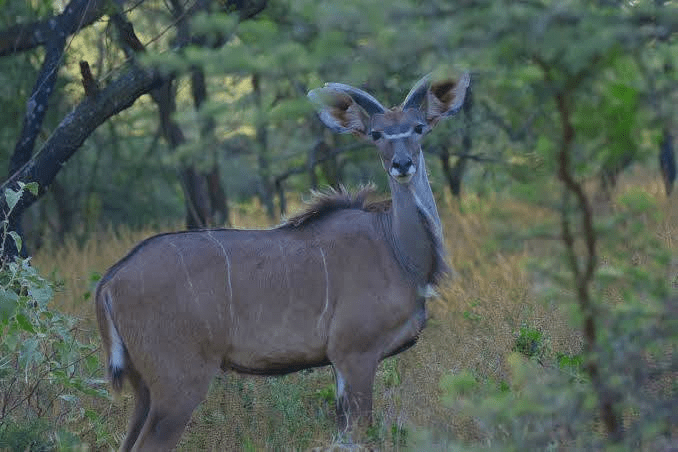
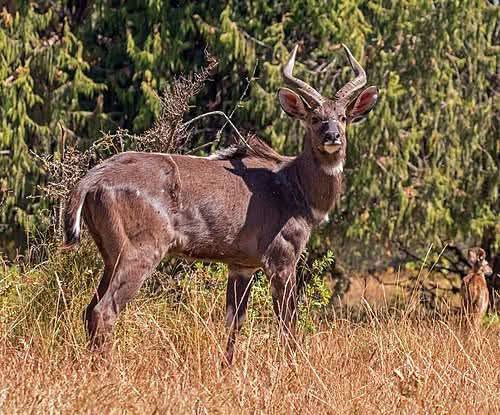
The Kuni-Muktar Sanctuary was created with a singular purpose: to protect the mountain nyala (Tragelaphus buxtoni), one of Ethiopia’s most iconic and endangered antelope species. The mountain nyala is endemic to Ethiopia, found only in the highlands of the country, and its population has been severely threatened by habitat loss and poaching.
In 1989, recognizing the urgent need to safeguard this majestic animal, the Ethiopian government established the sanctuary to provide a safe haven for the species. Today, the sanctuary covers an area of approximately 230 square kilometers, with altitudes ranging from 2,300 to 3,075 meters above sea level. The landscape is dominated by Afromontane forests, open grasslands, and dense thickets—a perfect habitat for the mountain nyala and other wildlife.
A Landscape of Beauty and Biodiversity
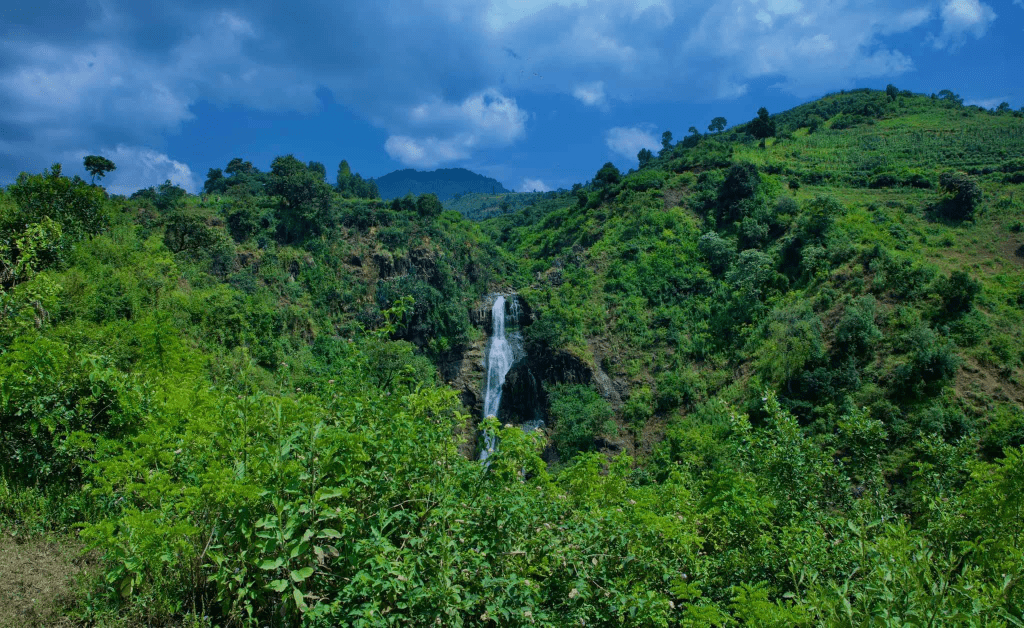
The Kuni-Muktar Sanctuary is a stunning example of Ethiopia’s natural beauty. The area is characterized by rolling hills, deep valleys, and lush vegetation that changes with the seasons. The Afromontane forests are home to a rich diversity of plant species, many of which are endemic to the region.
The sanctuary is also a haven for a wide variety of wildlife. In addition to the mountain nyala, visitors may encounter:
- Bushbuck
- Warthogs
- Olive baboons
- Colobus monkeys
- Spotted hyenas
- Leopards (rarely seen)
- A rich diversity of bird species
The sanctuary is a paradise for birdwatchers, with numerous endemic and migratory species calling the area home. The combination of stunning landscapes and abundant wildlife makes the sanctuary a must-visit destination for nature enthusiasts.
The Mountain Nyala: A Conservation Success Story
The mountain nyala is a symbol of Ethiopia’s unique biodiversity. This majestic antelope, with its spiral horns and striking markings, is one of the most sought-after species for wildlife enthusiasts. The establishment of the Kuni-Muktar Sanctuary has played a crucial role in the conservation of this species, providing a protected environment where the population can recover.
Efforts to protect the mountain nyala have been bolstered by community involvement and international conservation partnerships. Local communities have been engaged in conservation efforts, recognizing the importance of protecting the sanctuary for future generations.
A Destination for Nature Lovers
The Kuni-Muktar Mountain Nyala Sanctuary is not only a critical conservation area—it is also a stunning destination for those who appreciate nature. Visitors can explore the sanctuary’s diverse landscapes, enjoy the breathtaking views, and observe wildlife in their natural habitat.
The sanctuary offers opportunities for:
- Wildlife viewing
- Birdwatching
- Hiking and nature walks
- Photography
- Cultural tours in nearby communities
Challenges and the Path Forward
Despite its importance, the Kuni-Muktar Sanctuary faces ongoing challenges. Habitat encroachment, poaching, and climate change continue to threaten the delicate balance of the ecosystem. Additionally, limited resources and infrastructure pose challenges for effective management and conservation efforts.
However, the sanctuary represents a beacon of hope for conservation in Oromia and Ethiopia as a whole. By raising awareness, supporting conservation initiatives, and promoting sustainable tourism, we can help protect this incredible natural treasure for generations to come.
How to Visit
The sanctuary is located near the town of Chiro in East Hararghe Zone. Visitors can reach the sanctuary by road from major cities such as Finfinne (Addis Ababa) and Dire Dawa. The best time to visit is during the dry seasons (October to March), when the weather is pleasant and wildlife viewing is optimal.
Conclusion: A Treasure Worth Protecting
The Kuni-Muktar Mountain Nyala Sanctuary is a testament to the beauty and biodiversity of Oromia. It is a place where nature thrives, where endangered species find refuge, and where visitors can connect with the natural world in a profound way.
As we look to the future, it is our collective responsibility to protect this sanctuary and ensure that it remains a haven for wildlife and a source of inspiration for generations to come.
Qunnii-Muktar haa jabaattu!
This feature news is dedicated to all those working to protect Oromia’s natural heritage and preserve the beauty of the Kuni-Muktar Mountain Nyala Sanctuary.





 Advocacy for Oromia