Category Archives: Press Release

Irreechaa: The Ancient Oromo Thanksgiving That Science Is Only Beginning to Understand
By Daandii Ragabaa
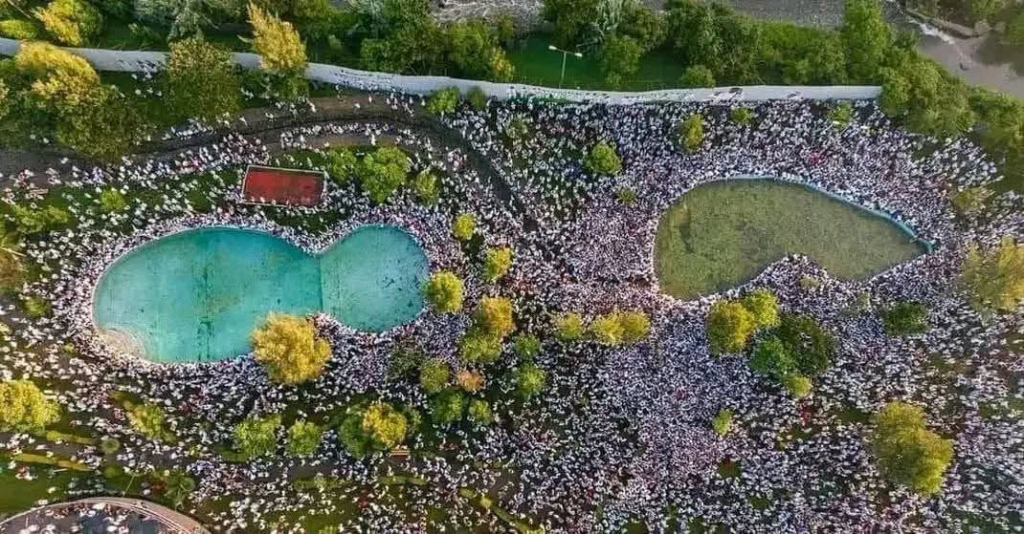
OROMIA, Ethiopia — At the banks of rivers and lakes across Oromia, millions gather each year for Irreechaa, the annual Oromo thanksgiving festival. They carry fresh green grass and yellow daisies, dip them into the water, and sing ancient songs of gratitude that have echoed across these lands for thousands of years.
To the Oromo people, Irreechaa is a sacred spiritual and cultural celebration — a time to thank Waaqa (God) for the rains, the harvest, and the gift of life itself. But a growing body of scientific research reveals that this ancient festival is also something else: a sophisticated, multisensory pathway to mental well-being that modern science is only beginning to fully understand.
A Festival Older Than Empires
According to Oromo tradition, Irreechaa was established by Oromo forefathers during the time of Gadaa Melbaa, marking the end of the rainy season known as Ganna. The festival has been celebrated for thousands of years, predating the institutionalized religions of Christianity and Islam. It is rooted in Waaqeffannaa, the traditional Oromo belief in one supernatural power called Waaqa.
Irreechaa was systematically outlawed for more than a century following the fall of the Oromo nation under the rule of Menelik II and subsequent regimes. Despite these challenges, the tradition survived in the hearts of the people and has undergone a powerful revival in recent decades.
As one Oromo historian noted, “Irreechaa has revived putting the Oromo identity foremost before anything else.”
The Sacred Elements
Every element of Irreechaa carries layered meaning. Water holds profound significance — the festival is celebrated at Malkaa (riverside) and Hora (lakeside), where communities gather to dip fresh green grass and flowers into the water. This act symbolizes purification, renewal, and the washing away of the past year’s hardships.
The fresh green grass and yellow daisies carried by participants are symbols of hope (abdi) and renewal. In the Oromo worldview, these plants represent the life and fertility that Waaqa has granted. By carrying them to the water’s edge and offering them, participants express gratitude for the past and pray for future abundance.
The procession to the water is led by the Abbaa Malkaa (lineal chiefs) and Abbaa Gadaa (Gadaa leaders), accompanied by traditional songs, dances, and ululations. Women play a particularly prominent role, walking in front of the leaders. If they stop on the road, the entire procession stops — nobody passes before them, because Oromo culture symbolizes women as sacred and as peace. This is rooted in the Siinqee institution, the customary women’s institution that serves as a peace mission and mediator.
After reaching the water, the Abbaa Malkaa, Abbaa Gadaa, and Qaalluu (spiritual leaders) bless the participants and make speeches on rules and regulations. This blessing carries the authority of the Gadaa system, which regulates political, economic, social, and religious life. Irreechaa is also an occasion when those in conflict bury the hatchet — a powerful, community-enforced deadline for resolving disputes.
What Science Says About Chanting
Chanting, a central practice in Irreechaa’s riverside ceremonies, has been shown to produce measurable reductions in stress and anxiety. A randomized controlled trial conducted in Australia found that just twelve minutes of group chanting — whether vocal or silent — resulted in significant decreases in cortisol levels and self-reported anxiety.
The reduction in cortisol, the body’s primary stress hormone, was similar for both vocal and silent chanting. However, self-reported anxiety decreased more following vocal chanting, suggesting that the act of voicing — singing the songs of Irreechaa — amplifies the psychological benefit.
The study also found that altruism scores increased following both vocal and silent chanting, indicating that the ritual practice fosters pro-social tendencies. Group synchronisation, a feature of communal chanting, is thought to promote cooperation and feelings of connection to others.
Research on singing in groups confirms that music can “reach our deepest emotions without using language or images” and that when people sing together, they share “a form of emotion that carries along the participants so that they experience their bodies responding emotionally in very similar ways.”
This aligns with the experience of Irreechaa participants, who sing together in a shared expression of gratitude and hope. The Marewoo songs sung during the procession express gratitude and hope for the new year. Women sing “Maariyoo… Maareyoo…” meaning “your mercy on us,” while men chant the Irreechaa song with them.
One traditional prayer begins:
“Dukkana gannaa nubaaftee / Booqa Birraa nugarsiiftee / Akkanumatti fuuldura keenyaafis / Waan horre walin nagaa nu godhi”
This translates to: “You have ended the darkness of winter / You have brought us the hope of spring / Likewise, for our future / Make us peaceful with what we have gathered.”
The song is both thanksgiving for the past and prayer for the future — a complete expression of the Oromo relationship with Waaqa.
The Healing Touch of Grass
The fresh green grass carried by Irreechaa participants — dipped into the water as an offering and symbol of renewal — also carries documented psychological benefits when touched. A 2024 study published in the Journal of Urban Health investigated the effects of tactile interaction with real grass versus artificial grass among older adults.
The findings showed that touching real grass produced a heightened sense of relaxation and calmness, increased mean systolic blood pressure reduction, and upward trends in brainwave patterns associated with relaxation.
A separate study involving young adults found that five minutes of tactile stimulation with real landscape grass, applied through the palm of the hand, produced significant reductions in diastolic blood pressure, increased alpha brainwave activity (a marker of relaxed alertness), and alleviation of anxiety compared to a control condition.
The researchers concluded that “palming grass — the act of touching grass with one’s hand — has a calming effect on both physiological and psychological responses to stress.”
For Irreechaa participants, the act of holding grass and dipping it into the water is thus not only a spiritual gesture but a tactile experience with measurable calming effects on the nervous system.
The Restorative Power of Water
Irreechaa’s setting at rivers and lakes — Irreechaa Malkaa — places participants in what researchers call “blue spaces,” environments featuring water. A systematic evidence map of blue space research confirms that contact with water environments is associated with mental health benefits, including reduced stress and enhanced well-being.
A landmark 19-country study involving over 17,000 participants found that all blue space settings were recalled as restorative, with rural rivers and canals among the most restorative. The study also found a reciprocal relationship between restoration and nature connectedness — the more restored an individual felt, the more connected to nature they became, and vice versa.
Research specifically examining Irreechaa notes that water’s acoustic properties and its natural setting “engage biophilia, enhancing mental well-being.” Acoustically, water’s ability to transmit sound four times faster than air creates immersive soundscapes, amplifying the emotional impact of riverside songs.
The Oromo people have long understood what environmental psychology now confirms: that gathering at the water’s edge, with the sound of flowing water and the sight of its expanse, creates a sense of calm and repose that supports spiritual reflection and communal bonding.
The Synergy of Sound, Grass, and Water
What makes Irreechaa psychologically powerful is not any single element in isolation, but their combination. The ritual brings together vocal chanting, tactile contact with fresh grass, and immersion in a water environment — a multisensory experience that engages multiple pathways to well-being simultaneously.
Research on Irreechaa explicitly describes this synergy: “water’s fluidity and reflectivity, paired with the resonance of sound, create multisensory rituals that deepen spiritual engagement.”
The study notes that “psychologically, chanting and singing reduce stress and trigger dopamine release, fostering emotional uplift and communal bonding,” while “natural water settings engage biophilia, enhancing mental well-being and aligning with the spiritual clarity sought in rituals.”
The communal dimension is equally important. The Oromo people gather at sacred rivers and lakes to thank their creators for the greenery that the rains have brought. Men, women, the elderly and the young all join in, adorned in eye-catching clothes and jewellery. They sing, dance, share stories and place freshly cut grass and flowers in water — a symbol of life, renewal and hope.
For a community gathering after the isolating rainy season, this reconnection — through shared sound, shared touch of grass, and shared presence at the water — serves as a collective psychological renewal. The festival’s requirement for reconciliation before participation further reinforces this, creating a culturally mandated pathway for repairing broken social bonds before they solidify into chronic distress.
A Culturally Rooted Pathway to Well-Being
For the Oromo people, Irreechaa is a spiritual and cultural celebration. The scientific evidence now confirms what generations have experienced intuitively: the ritual’s elements — sound, grass, and water — are also powerful tools for mental health.
In a context where formal mental health services are scarce, Irreechaa offers an accessible, culturally meaningful pathway to stress relief, emotional restoration, and social connection.
The psychological power of Irreechaa lies in its integration of body, mind, and community — a holistic approach to well-being that modern research is only beginning to fully understand.
As the festival continues to grow in participation and recognition, these ancient symbols remain as relevant as ever — reminding the Oromo people of their connection to Waaqa, to the earth, and to one another.
Irreechaa is celebrated annually at the banks of rivers and lakes across Oromia, with Irreechaa Malkaa taking place in mid-September at the end of the rainy season, and Irreechaa Tulluu during the dry season at the beginning of spring.

Peace Celebrations Behind the Storm: The “Festival Politics” of Oromia and Tigray
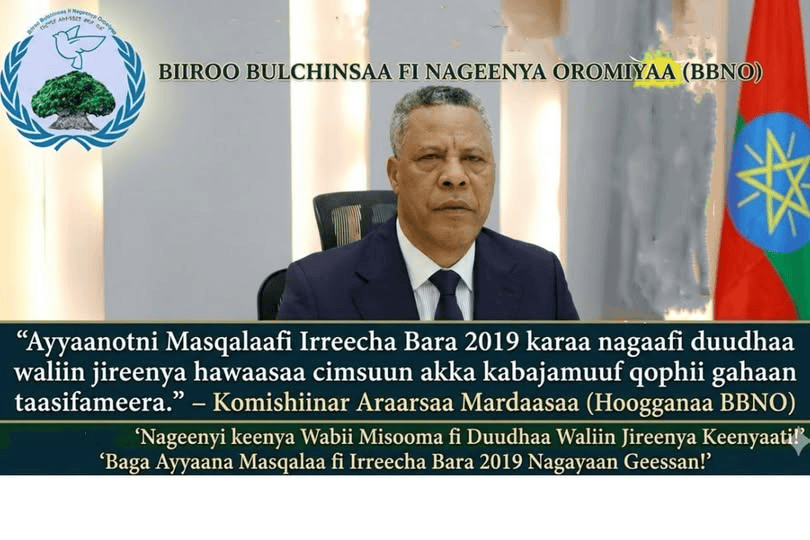
FINFINNE — When the Oromo thanksgiving festival Irreecha and the Ethiopian Orthodox Meskel festival arrive in the capital and surrounding areas within two weeks of each other, the official messaging is strikingly uniform: everything is for peace.
Mardasa, Director of the Oromia Bureau of Administration and Security and Peace Commissioner, stated that security agencies have made full preparations to celebrate both festivals “in a peaceful manner and under the traditions of unity and coexistence.” The federal police have also pledged to deploy adequate forces at Hora Finfinne, Hora Harsadi, and other locations.
Yet behind this placid official statement, Ethiopia in 2026 faces its most severe security situation since the end of the Tigray war in 2022. For a country mired in multi-front conflicts, the “security preparations” for two festivals are far from routine.
Surface Calm and Deep Fear
Irreecha is the single most important thanksgiving celebration for the Oromo people, marking the end of the rainy season and the beginning of the harvest. This year’s Irreecha will be held on Meskerem 23 and 24 in the Ethiopian calendar (October 3 and 4 in the Gregorian calendar) at Hora Finfinne in Addis Ababa and Hora Harsadi in Bishoftu. Masqala took place two weeks earlier in mid-September, with the Demera bonfire ceremony at Meskel Square in the capital drawing large crowds.
Official statements emphasize “coordinated cooperation between security agencies and religious leaders, Gadaa elders, Siinqee women’s representatives, and youth,” and call on the public to “immediately report any suspicious circumstances to the nearest security agency.” This phrasing itself reveals tension.
The concern is not unfounded. During the 2016 Irreecha celebration in Bishoftu, clashes between police and protesters triggered a stampede that killed at least 52 people, becoming a turning point for large-scale anti-government protests in Oromia. At that time, protesters raised crossed wrists—a gesture that later became a symbol of resistance—and advanced toward the stage. Police responded with tear gas and rubber bullets, and people fell into deep ditches as they fled.
A decade later, the political fractures in that land are far from healed.
“Peace” Under Siege
Peace Commissioner Mardasa’s statement was issued at an extremely delicate moment. Just days earlier, seven armed groups announced an alliance aimed at “overthrowing” Prime Minister Abiy’s federal government. Alliance members include the Tigray People’s Liberation Front (TPLF), the Amhara Fano militia, and the Oromo Liberation Army (OLA)—organizations whose historical enmity runs so deep that their union itself is a signal.
The federal government now faces armed insurgencies on three fronts simultaneously: Tigray, Amhara, and Oromia. Against this backdrop, the large gatherings for Irreecha and Masqala are both a security challenge and a political litmus test: can the government maintain effective control over the capital and surrounding areas in a wartime posture?
The U.S. State Department’s travel advisory lists large parts of Oromia at “Do Not Travel” level, citing “risks of armed conflict, kidnapping, and unrest.” Finland’s Ministry of Foreign Affairs warns that Ethiopia’s “political and ethnic tensions have led to an unstable situation, and unrest may further intensify.” A clear temperature gap exists between these international assessments and the official “everything is ready” posture.
The Dual Function of Festivals
Irreecha has never been merely a religious festival. In the Oromo Gadaa tradition, it is the transition from the “dark season” to the “light season,” a moment for the community to collectively wash away the misfortunes of the past year and pray for a bountiful year ahead. But in contemporary Ethiopia, it is also the largest-scale staging ground for Oromo identity politics.
Similarly, Masqala has a unique cultural embedding in the Oromia region. Academic research documents that during Masqala, Oromo communities perform Garmaama singing, which carries the collective emotional expression of “joy, sorrow, love, and longing,” a cultural ritual of “transition from the old era to the new.”
When these festivals are framed by officials under the banner of “peace and unity,” a sharp question emerges: who defines “peace”? Is it community reconciliation in the Gadaa elders’ tradition, or order and stability under federal government rule?
Peace Commissioner Mardasa’s statement repeatedly emphasizes coordination between “security agencies” and “community leaders,” but the real question may be: when community leaders themselves become a party to political contestation, are festival celebrations an opportunity for unity or a fuse for conflict?
The Risk of Silence
Addis Ababa police say they have made “coordinated preparations” for the Demera ceremony at Meskel Square, but as of press time, authorities have not published any specific traffic control plans, crowd management measures, or security deployment details for any single day. The Oromo Abbaa Gadaa Council frames this year’s Irreecha as an expression of “national consensus,” but in Ethiopia’s current context, that phrase reads more like a prayer than a description.
For the millions about to travel to Hora Finfinne and Hora Harsadi, the reality they face is: a government fighting on multiple fronts simultaneously, an armed opposition that has just formed an anti-government alliance, and a traumatic memory that cost 52 lives a decade ago.
The Peace Commissioner’s statement ends with a blessing: “May you return safely in this harvest season.” In this harvest season, the weight of those words is heavier than ever.

Advocacy for Oromia Rejects Northern Forces Alliance, Demands Genuine Security and Respect for Oromo Gains

FOR IMMEDIATE RELEASE
September 21, 2026 — Advocacy for Oromia has issued a formal statement rejecting the alliance recently concluded with northern forces, condemning it as a political maneuver that fails to address the fundamental grievances of the Oromo people. In its statement, the organization outlined four key demands:
- The government must engage in dialogue with armed groups operating within Oromia in order to establish genuine and sustainable security for the region.
- Armed groups operating within Oromia must refrain from any actions that harm Oromo interests, and must cease all activities that undermine the wellbeing of the Oromo people.
- Armed groups operating within Oromia must work together in coordination to ensure the security of Oromia, placing unity of purpose above division.
- All parties must firmly safeguard and uphold the victories achieved by the Oromo people, ensuring that no agreement or political arrangement dishonors or diminishes those hard-won gains.
Advocacy for Oromia emphasized that any political framework that fails to recognize the historical suffering of the Oromo people — spanning the imperial era, the Derg regime, the EPRDF government, and the current administration — cannot serve as a legitimate basis for peace or justice. The organization warned that alliances built on the omission of past wrongs risk perpetuating the same structural injustices that have long afflicted Oromia.
The statement further criticized the recent alliance for portraying the current crisis as an aberration rather than the inevitable consequence of centuries of Oromo subjugation, insisting that genuine transformative justice — not symbolic recognition — is the only path forward.
Advocacy for Oromia reaffirmed its commitment to the liberation, justice, and systemic change sought by the Oromo people, declaring that mere survival is not enough.
###

Gadaa Maccaa: Ceremonies of Baallii Transfer, Oofkaltii, and Buttaa Qaluu Underway Across East Maccaa, Liiban
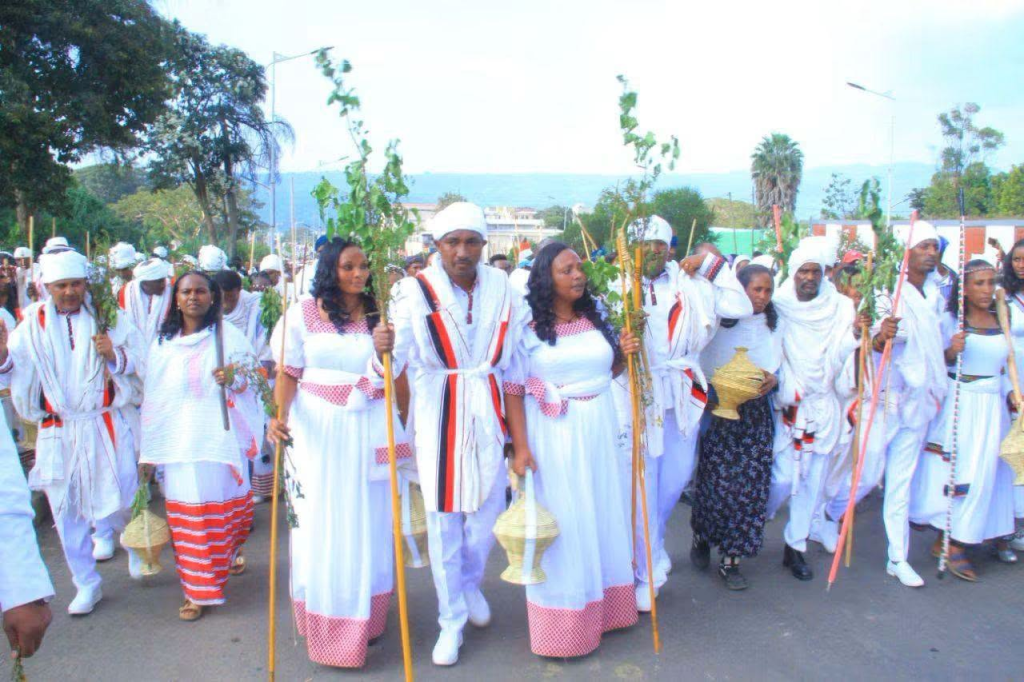
Kallacha Oromiyaa, Fulbaana 13, 2019 — The Oromo people are a nation that created the Gadaa system and gifted it to the world. Now, in a powerful return to ancient traditions, the Maccaa Oromo are strengthening, renewing, and revitalizing their Gadaa system across West Shawa Zone.
The Government of Oromia Region has been working to promote and revitalize Oromo culture, strengthening the pillars of the Gadaa system. In line with this effort, the Maccaa Oromo community is actively reinforcing its Gadaa system through a series of traditional ceremonies.
The Ceremonies Underway
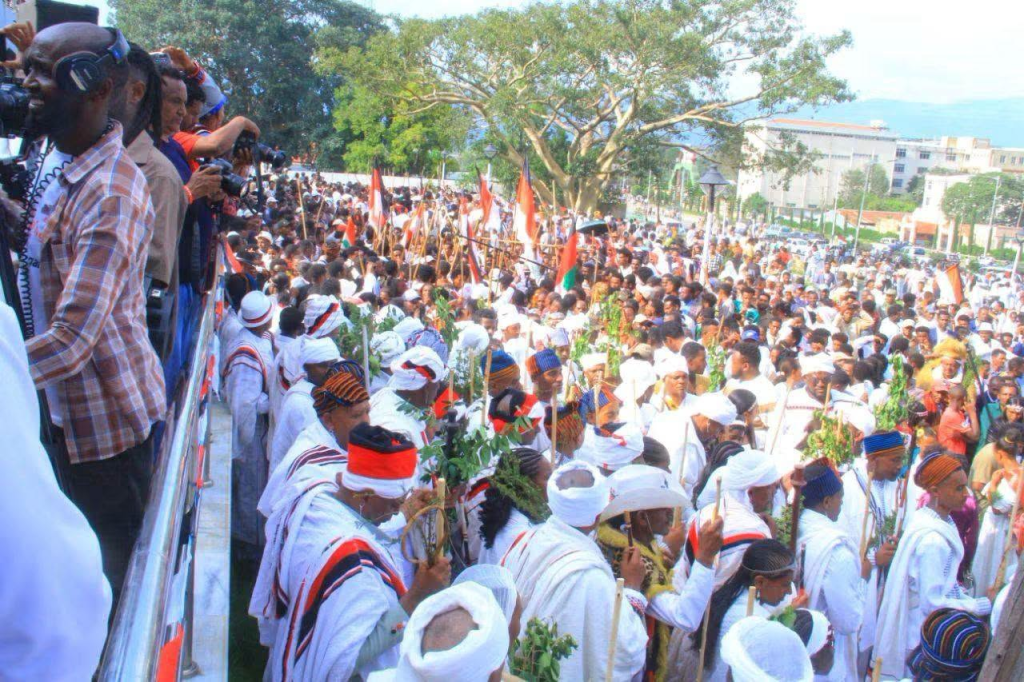
In various districts of West Shawa Zone, the rituals of Oofkaltii (preparation) and Buttaa Qaluu (the cutting of the buttaa) are being conducted as part of the Baallii transfer ceremony — the sacred passage of authority from one Gadaa grade to the next.
The Baallii transfer is one of the most significant moments in the Gadaa cycle. It marks the formal transition of power, responsibility, and leadership from the outgoing grade to the incoming one. The Buttaa ceremony — the ritual cutting of the buttaa — symbolizes the clearing of the path for the new leadership, the enactment of laws that will govern the next eight years, and the renewal of the community’s covenant with Waaqa (God) and with one another.
Conducted According to Tradition
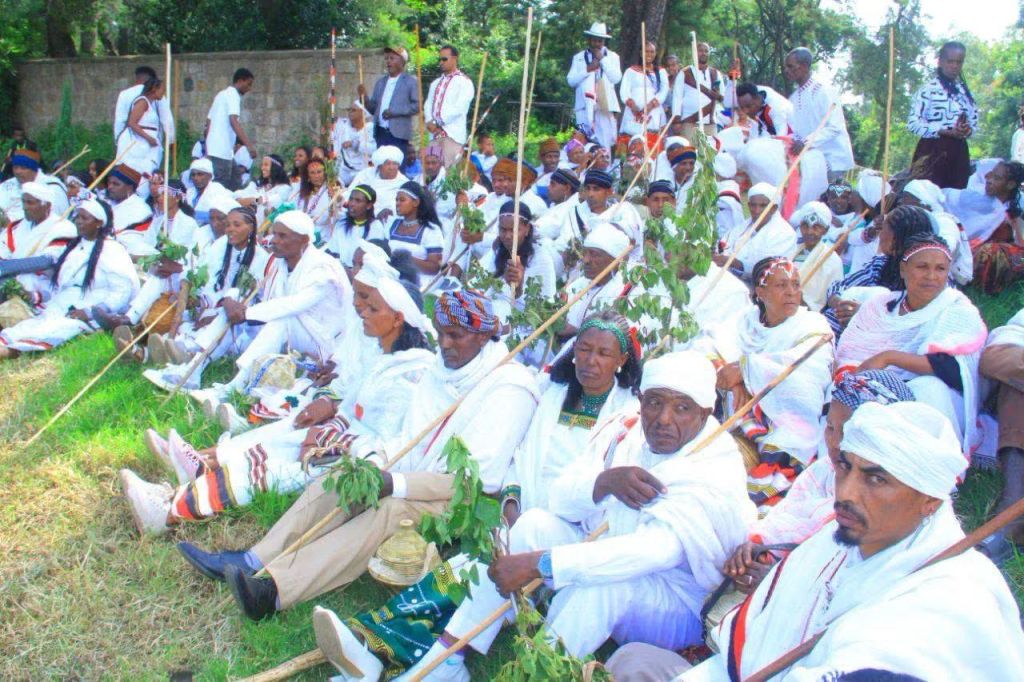
These ceremonies are being carried out in full accordance with Oromo culture, tradition (duudhaa), and sacred norms (safuu). The elders, Abbaa Gadaas, and community leaders are overseeing the process to ensure that every ritual is performed correctly and that the integrity of the Gadaa system is preserved.
The Oofkaltii — the period of preparation — involves the training and initiation of those who will assume leadership roles in the new Gadaa grade. It is a time of learning, reflection, and spiritual readiness. The Buttaa Qaluu then formally seals this transition, marking the beginning of a new eight-year cycle of governance, justice, and community service.
A Living Heritage
The Gadaa system, recognized by UNESCO as an Intangible Cultural Heritage of Humanity, remains a living, breathing institution among the Oromo people. It regulates political, economic, social, and religious life, providing a framework for democracy, conflict resolution, environmental stewardship, and the protection of rights.
The Maccaa Oromo’s active observance of these ceremonies is a testament to the resilience and vitality of Oromo culture. Despite centuries of suppression and the pressures of modernization, the Gadaa system continues to be passed down from generation to generation — unbroken and undiminished.
A Source of Pride and Identity
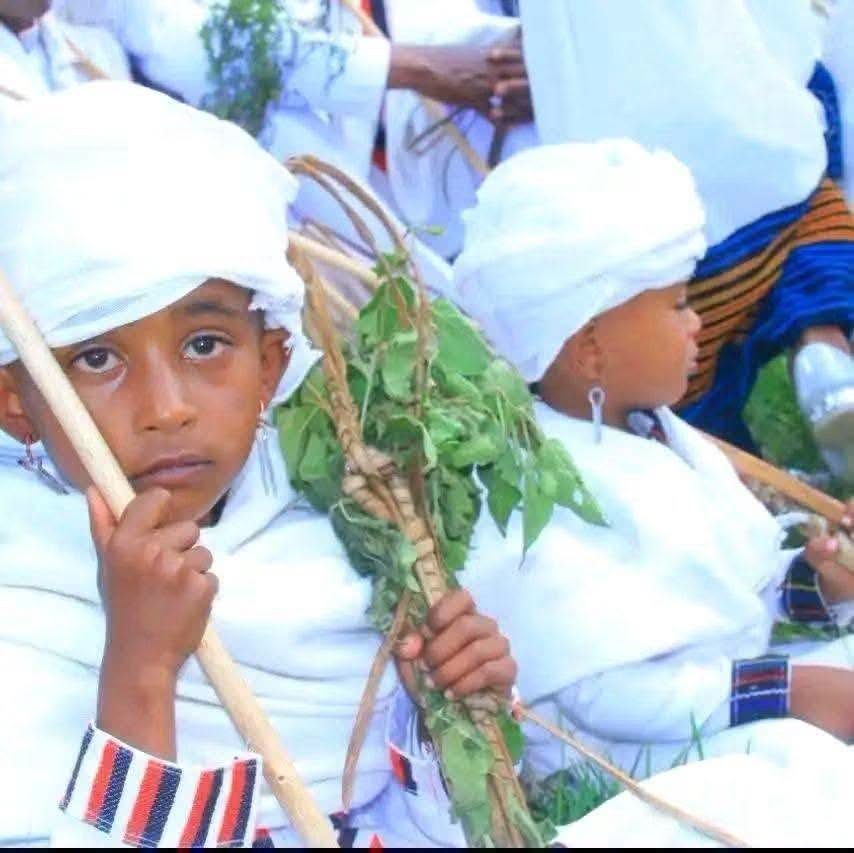
For the Oromo people, the Gadaa system is not merely a historical relic. It is a source of pride, identity, and belonging. It is a gift to humanity — a model of democratic governance, peaceful power transfer, and community solidarity that predates many modern political systems.
As the Baallii transfer, Oofkaltii, and Buttaa ceremonies continue across West Shawa, the Maccaa Oromo are reaffirming their commitment to their ancestors’ wisdom and to the future generations who will inherit this sacred tradition.
Baga oofkaltan! Gadaan quufa fi gabbina!
Source: BATO

Why Fresh Grass and Water Are Essential in Oromo Blessings
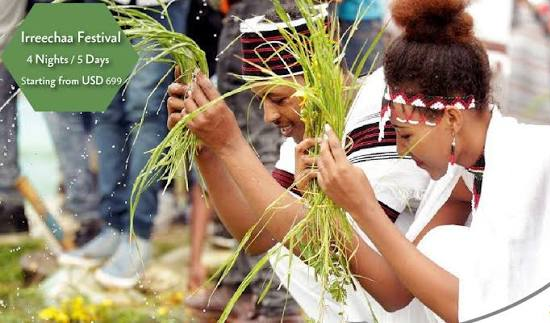
In Oromo culture, fresh grass (Marga Jiidhaa) and water are far more than simple elements of nature. They are sacred symbols that carry the deepest meanings of life, fertility, peace, and divine connection. They transform abstract blessings into visible, tangible rituals and serve as the medium through which humans communicate with Waaqa (God).
Fresh Grass (Marga Jiidhaa): The Symbol of Life and Fertility
In Oromo culture, fresh grass is the most direct expression of life force and abundance.
The Meaning of “Irreechaa” Itself: The very word “Irreechaa” — the grand Oromo thanksgiving festival — means “fresh and green grass.” The festival celebrates the end of the rainy season and the renewal of all life, and fresh grass is the most vivid sign of that season.
The Carrier of Life: Grass is the food of livestock — the foundation of Oromo wealth and survival. When animals eat grass, they grow strong, produce milk, and reproduce. Fresh grass is therefore seen as a symbol of fertility, productivity, and prosperity.
The Medium of Blessing: During Irreechaa rituals, people hold fresh grass and dip it into water, then sprinkle the water on themselves and others. This is not merely an act of thanksgiving — it is a way of transferring the “life force” of the grass and the “purifying power” of the water to the participants, praying for health and offspring. In Gadaa blessing prayers, phrases like “may the grass grow (margi nimarga)” are common, placed alongside rain, livestock reproduction, and peace as manifestations of divine grace.
Water (Bishaan): The Source of Purity, Holiness, and Peace
Water in Oromo blessings holds both material and spiritual significance. It is the dwelling place of sacred power.
The Dwelling of God and Divine Gift: In traditional Oromo belief, rivers and lakes are sacred — they are places where the spirit of Waaqa (God) resides. Water bodies like Hora (sacred springs/lakes) are themselves considered blessings from Waaqa, possessing healing and fertility-giving powers. Infertile women may wet their chests with water, believing it will make their wombs fertile.
Purification and Reconciliation: Water symbolizes “cleansing” and “purification.” One of the core rituals of Irreechaa is the act of libation — dipping fresh grass into water and sprinkling it — which symbolizes washing away the sins and conflicts of the past year, achieving reconciliation, and welcoming a new beginning in a purified state.
The Metaphor of Peace: In Oromo thought, “Nagaa” (peace) is the foundation of all blessings. They believe that only when humans live in peace with nature, with God, and with one another can fertility and abundance be achieved. Water, through its flowing and gathering nature, symbolizes this universal connection, unity, and harmony. Blessings pray for “peace to descend upon our land,” and water is the physical embodiment of that peace.
The Union of Both: The Sacred Blessing Ritual
The combination of fresh grass and water creates the most powerful sacred moment in Oromo blessings. In rituals like Irreechaa, people dip fresh grass into water, and this very act is a prayer:
- Connection: Fresh grass represents the earth and life; water represents the sacred and purification. Together, they symbolize offering the life of the earth to God and praying for God’s blessings to return to humanity through the water.
- Transmission: Participants then sprinkle the sacred water on themselves and others, symbolizing the receiving and sharing of God’s grace, life force, and the blessing of peace.
Therefore, in Oromo blessings, fresh grass and water are ritual tools that fuse “life” with “the sacred.” Without them, blessings would lose their concrete form and power — they could not truly “touch” and “transform” the participants. They are the visible signs of an invisible grace, the tangible carriers of divine blessing.

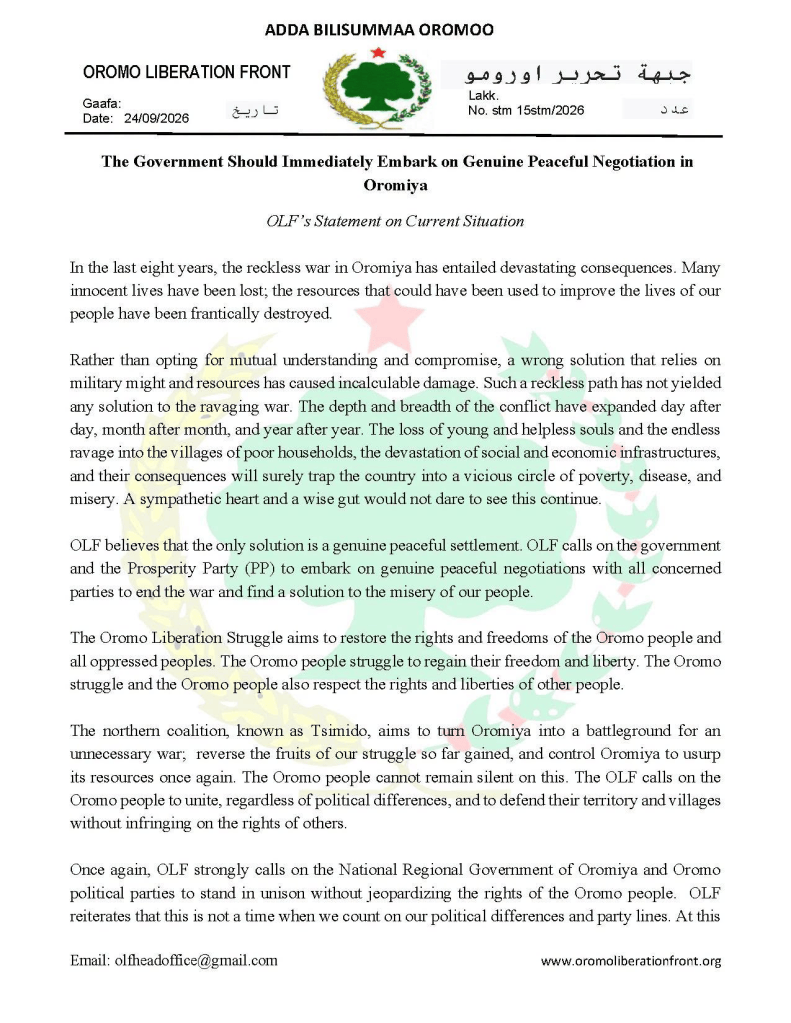
OLF Calls for Immediate Peaceful Negotiations in Oromiya, Warns of Devastating War
Finfinnee, September 24, 2026 — The Oromo Liberation Front (OLF) has issued a strongly worded statement calling on the Ethiopian government and the Prosperity Party (PP) to immediately embark on genuine peaceful negotiations to end the devastating war in Oromiya, warning that continued military action will only trap the country in a vicious cycle of poverty, disease, and misery.
In a statement released today from Finfinnee, the OLF declared that the “reckless war” of the past eight years has entailed devastating consequences, with many innocent lives lost and resources that could have improved the lives of the people “frantically destroyed.”
A War Without Solution
The OLF criticized the government’s reliance on military might rather than mutual understanding and compromise, stating that such an approach “has not yielded any solution to the ravaging war.” Instead, the statement warned, “the depth and breadth of the conflict have expanded day after day, month after month, and year after year.”
The organization painted a grim picture of the conflict’s toll: “The loss of young and helpless souls and the endless ravage into the villages of poor households, the devastation of social and economic infrastructures, and their consequences will surely trap the country into a vicious circle of poverty, disease, and misery.”
“A sympathetic heart and a wise gut would not dare to see this continue,” the statement read.
The Only Solution: Genuine Peaceful Settlement
The OLF was unequivocal in its position: “OLF believes that the only solution is a genuine peaceful settlement.” The organization called on the government and the Prosperity Party to “embark on genuine peaceful negotiations with all concerned parties to end the war and find a solution to the misery of our people.”
The statement reaffirmed the OLF’s longstanding position that “war and military action have never been a lasting solution to political conflict.”
Defending Oromiya Against External Threats
The OLF also raised concerns about what it described as the “northern coalition, known as Tsimido,” which it accused of aiming “to turn Oromiya into a battleground for an unnecessary war; reverse the fruits of our struggle so far gained, and control Oromiya to usurp its resources once again.”
“The Oromo people cannot remain silent on this,” the statement declared. The OLF called on the Oromo people to “unite, regardless of political differences, and to defend their territory and villages without infringing on the rights of others.”
A Call for Oromo Unity
In a direct appeal to Oromo political parties and the regional government, the OLF urged all Oromo stakeholders to “stand in unison without jeopardizing the rights of the Oromo people.”
“This is not a time when we count on our political differences and party lines,” the statement emphasized. The OLF warned that “detaining political activists and party members exacerbates the suffering of our people” and called for the immediate release of those in custody.
“The meaningless detention of innocents should abate, and those in custody should be immediately released,” the statement read.
A Warning to Those Who Stand with Aggressors
The OLF also directed a sharp warning at those it accused of standing “with our historical aggressors and exploiters while claiming to struggle for the Oromo people.”
“You are making a historical mistake that history will never forgive you,” the statement declared, calling on them to “reconsider their path.”
A Call to All Peace-Loving People
In its concluding appeal, the OLF called on “all parties, especially the Government and the ruling party, to embark on genuine peaceful negotiations that end the suffering of our people once and for all.”
The organization urged “all stakeholders, including religious leaders, Abba Gadas, Haadha Sinqees, diplomats, media personnel, journalists, and all peace-loving people, to campaign for a peaceful settlement to avert the ugly, devastating war confronting us.”
The Stakes for Oromiya and Ethiopia
The OLF’s statement comes at a critical juncture for Oromiya and for Ethiopia as a whole. The eight-year conflict has exacted a heavy toll on civilians, infrastructure, and the social fabric of the region. The OLF’s call for negotiations reflects a growing consensus among many observers that military solutions have failed and that only dialogue can bring sustainable peace.
The statement’s appeal to Oromo unity — across political lines — signals the OLF’s recognition that internal divisions weaken the collective ability to address the crisis. By calling on the regional government, political parties, and civil society to work together, the OLF is positioning itself as a voice for a unified Oromo approach to peace.
Whether the government and the Prosperity Party will heed the call for negotiations remains to be seen. But the OLF’s message is clear: the time for war is over, and the time for genuine dialogue has come.
“Victory to the Mass!!”
Source: Oromo Liberation Front (OLF)

Irreecha: A Festival for National Unity and Patriotic Covenant
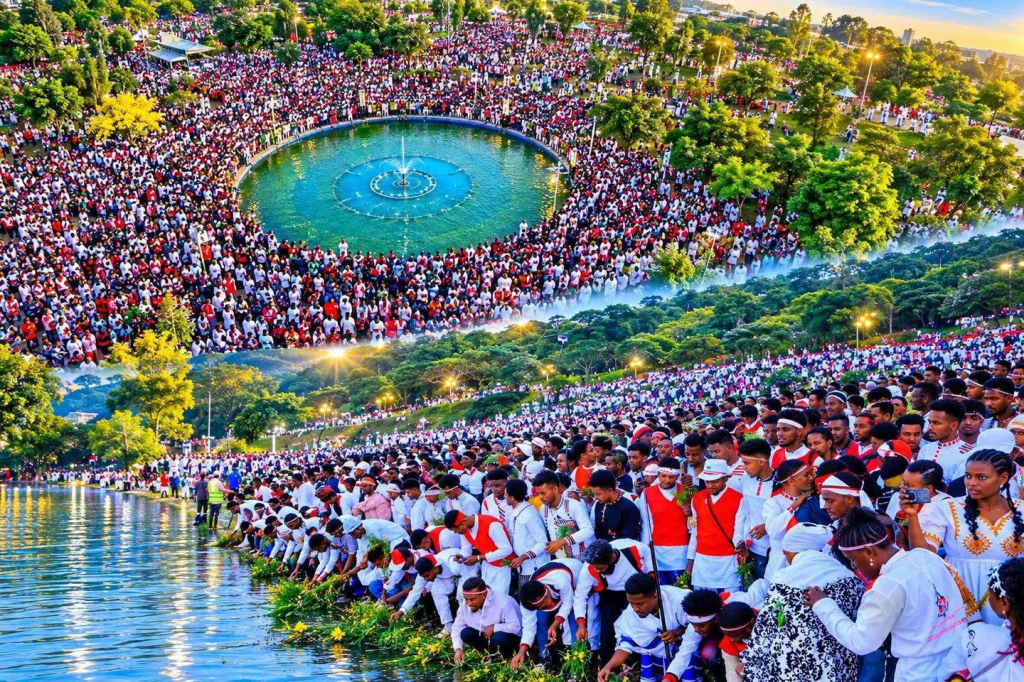
Oromia, Ethiopia — National festivals play a vital role in accelerating peace, love, unity, and shared development. Among the festivals that exemplify peace, love, and solidarity, Irreecha stands as one of the most significant. Rooted in the Gadaa system, Irreecha embodies the ancient Oromo traditions of working together, eating together, supporting one another, standing side by side, reconciliation, holding good wishes for one another and the country, and translating unity into action.
Irreecha is celebrated as a festival that manifests the spirit of togetherness and brotherhood among peoples. It serves as a source of collective strength, a fountain of love, a spring of friendship, and a foundation for living together in harmony.
A Festival That Embraces All Humanity
This grand festival holds a special place in fostering a national covenant because it is enriched with values that enable people to see one another with equal respect, to understand one another, and to draw closer together. Irreecha teaches that every human being deserves dignity and honor, regardless of their background.
That is why the Oromo people celebrate this festival of thanksgiving and gratitude to the Creator with unwavering unity. No distinction is made based on appearance, gender, age, religion, or any other criterion. Everyone is welcome. Everyone is equal. Everyone belongs.
A Unifying Force for All Nations and Nationalities
Because of this inclusive and unifying character, Irreecha has today become a celebration that brings together nations, nationalities, and peoples of Ethiopia. What began as a traditional Oromo thanksgiving festival has grown into a national event that transcends ethnic boundaries, drawing participants from all walks of life who wish to share in its message of peace, gratitude, and togetherness.
The festival’s ability to unite diverse communities is not accidental. It flows from the core values embedded in the Gadaa system — values of consensus, mutual respect, and collective responsibility. These values have been passed down through generations and remain as relevant today as they were centuries ago.
A Call to Celebrate in Unity
The message is clear: all people are invited to come out in unity to celebrate this festival of Irreecha and to give thanks to the Creator. The festival belongs to everyone — not to any single group, region, or faith. It is a shared heritage, a common treasure, and a living expression of Ethiopia’s diversity and unity.
In a time when divisions often dominate public discourse, Irreecha offers a powerful counter-narrative. It reminds us that our shared humanity is greater than our differences, that our collective strength lies in our unity, and that our future depends on our ability to stand together.
A Covenant for the Nation
For these reasons, Irreecha holds an elevated role in strengthening national unity and fostering a patriotic covenant. It is not merely a festival — it is a declaration that peace, love, and togetherness are not abstract ideals but lived realities. It is a promise that the bonds between peoples are stronger than the forces that seek to divide them.
As millions gather at the banks of rivers and lakes to dip fresh grass into the water and lift their voices in song, they do more than celebrate a tradition. They renew a covenant — with Waaqa, with one another, and with the nation they share.
Baga Irreecha! Baga Tokkummaa!
Source: Oromo Cultural Heritage

Irreecha Falls on Meskerem 23 and 24, and Finfinne Has Two Mass Gatherings in Two Weeks
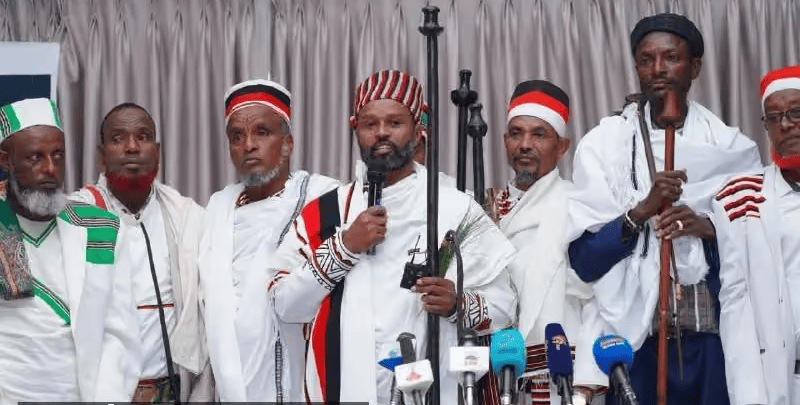
The union of Oromo Abbaa Gadaas has set this year’s Irreecha for Meskerem 23 and 24 — Hora Finfinne first, Bishoftu the next day. Addis Abeba police say preparations for the Meskel Demera are also complete.
This year’s Irreecha will be observed on Meskerem 23 and 24 on the Ethiopian calendar — 3 and 4 October — the union of Oromo Abbaa Gadaas has announced. Hora Finfinne, in Finfinne, is marked on the 23rd; Hora Harsadi, at Bishoftu, on the 24th. The union has framed this year’s observance around national consensus.
Separately, Lt. Gen. Asrat Denero, head of the Addis Abeba Police Commission, said preparations are complete for the Meskel Demera to be observed in the capital. He described the arrangements as coordinated between the Addis Abeba Peace and Security Office, the city’s assembly of religious institutions, the Ethiopian Orthodox Tewahedo Church, the Addis Abeba diocesan office and city police.
A note on the date, because the translation gets it wrong
Amharic reports of this announcement are routinely rendered into English as “September 23 and 24”. The original says Meskerem 23 and 24, which is the Ethiopian calendar’s first month. Meskerem 1 of 2019 E.C. fell on 11 September 2026, so Meskerem 23 and 24 are 3 and 4 October 2026 — a fortnight later than the machine translation implies.
If a calendar, a delivery schedule or a staff roster in your organisation was built from an English-language feed, it is worth checking which date it took.
What businesses in the capital should plan for
Two mass public observances land inside two weeks, both centred on Addis Abeba, with the second spilling into Bishoftu on the Sunday.
- Road closures and diverted transport around Meskel Square and, on 3 October, the Hora Finfinne site.
- The Bishoftu leg on 4 October draws heavy outbound traffic on the road southeast — relevant to anyone routing freight or staff that way.
- Staffing. Both observances draw employees out of the capital as well as into it.
Open
Neither announcement carried road-closure details, security arrangements or a crowd estimate, and the city has not published a traffic plan for either day. The Meskel Demera date was not stated in the police commission’s remarks as reported.
Sources: Fana Television, 22 September 2026, Fana Television, 22 September 2026, Tikvah Ethiopia, 22 September 2026

Gadaa Elders Announce Irreechaa 2019 Dates: A Call for Unity, Tradition, and Peaceful Celebration
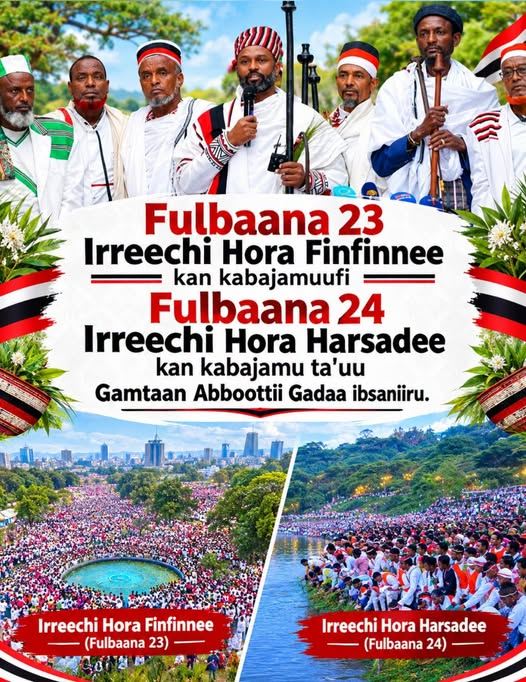
Finfinnee, Oromia — The Assembly of Gadaa Elders of Oromia has officially announced the dates for the celebration of Irreechaa in 2019, confirming that the festival at Hora Finfinnee will be celebrated on September 23, while the celebration at Hora Harsadee will take place on September 24.
The announcement was made through an official statement issued by the Assembly of Gadaa Elders, the traditional custodians of Oromo cultural and spiritual life, who oversee the proper observance of the festival in accordance with ancient customs, traditions, and sacred norms.
A Festival That Reflects the Greatness of a People
In their statement, the Gadaa elders emphasized that Irreechaa is not merely a seasonal celebration but a profound expression of the greatness of the Oromo nation. The festival, they noted, must be observed in a manner that honors the culture, traditions, and sacred norms (safuu) of the Oromo people, preserving the customs handed down from their ancestors.
The elders stressed that Irreechaa should serve as an occasion to strengthen the bonds of brotherhood and unity among all people, regardless of their faith or political outlook. The festival, they affirmed, belongs to all — and its celebration must transcend differences of religion and political opinion.
A Call for a United, Orderly Observance
The Assembly issued a call to all sectors of society to support the proper and orderly observance of Irreechaa. The festival, they said, must be conducted according to its established rules and procedures, with a spirit of oneness and shared purpose. No difference of faith or political perspective should divide the community during this sacred time.
The elders’ call underscores the deep significance of Irreechaa as a unifying force in Oromo society. The festival draws together millions of people from across Oromia and the diaspora, gathering at sacred water sites to give thanks to Waaqa (God), seek reconciliation, and welcome the new season of Birraa (spring).
A Tradition Preserved Through Generations
The announcement by the Gadaa elders reflects the continued vitality of the Gadaa system, the ancient democratic and social governance structure of the Oromo people. Recognized by UNESCO as an Intangible Cultural Heritage of Humanity, the Gadaa system organizes Oromo society into age sets and generational grades, each with its own roles, rights, and responsibilities. The elders’ role in announcing and overseeing Irreechaa is a testament to the enduring strength of this institution.
A Festival of Thanksgiving and Renewal
Irreechaa is the annual Oromo thanksgiving festival, celebrated at the banks of rivers and lakes across Oromia. It marks the end of the rainy season (Ganna) and the beginning of spring (Birraa), a time of renewal, gratitude, and hope. Participants carry fresh green grass and yellow daisies to the water’s edge, dipping them into the water as an offering of thanks for the blessings of the past year and a prayer for peace and abundance in the year to come.
The festival’s requirement for reconciliation before participation creates a powerful, community-enforced deadline for resolving disputes. There is a widespread belief that Waaqa will not accept the prayers of those who carry grievances. Irreechaa is thus not only a time of celebration but also a time of healing and reconciliation.
A Call to All
As the dates for Irreechaa 2019 approach, the Gadaa elders’ message is clear: Irreechaa is a festival for all Oromo people and for all who wish to join in the spirit of gratitude and unity. It is a time to set aside differences, to come together as one community, and to give thanks to Waaqa for the blessings of life, peace, and abundance.
The Assembly’s call for support from all sectors of society reflects the communal nature of the festival. Irreechaa is not organized by any single institution or group — it is a collective expression of the Oromo people’s faith, culture, and identity.
Baga Irreechaa! Baga Birraa!
Source: Assembly of Gadaa Elders of Oromia

The Psychological Power of Ritual Sound, Fresh Grass, and Water in Irreechaa
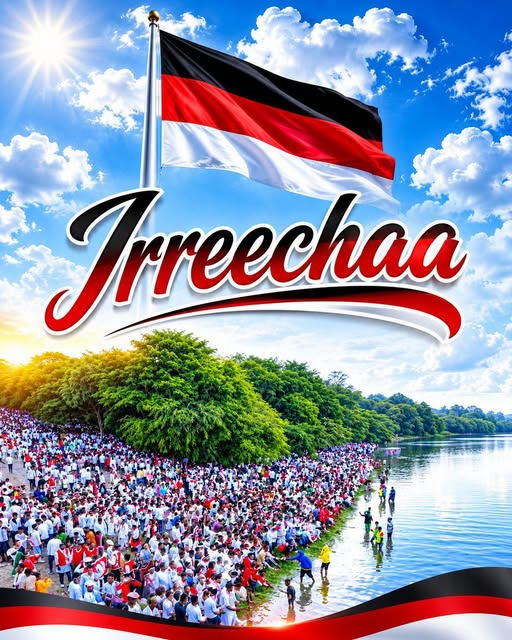
Oromia, Ethiopia — Irreechaa is the annual Oromo thanksgiving festival celebrated at the banks of rivers and lakes across Oromia. Its rituals — communal chanting, the dipping of fresh green grass into water, and the gathering of communities at the water’s edge — are not merely symbolic acts of cultural identity. A growing body of scientific research reveals that these elements engage powerful psychophysiological mechanisms that promote mental well-being, reduce stress, and foster social connection.
The Sound of Chanting: Reducing Stress and Anxiety
Chanting, a central practice in Irreechaa’s riverside ceremonies, has been shown to produce measurable reductions in stress and anxiety. A randomized controlled trial conducted in Australia found that just twelve minutes of group chanting — whether vocal or silent — resulted in significant decreases in cortisol levels and self-reported anxiety . The reduction in cortisol, the body’s primary stress hormone, was similar for both vocal and silent chanting. However, self-reported anxiety decreased more following vocal chanting, suggesting that the act of voicing — singing the Marewoo songs of Irreechaa — amplifies the psychological benefit .
The study also found that altruism scores increased following both vocal and silent chanting, indicating that the ritual practice fosters pro-social tendencies . Group synchronisation, a feature of communal chanting, is thought to promote cooperation and feelings of connection to others . This aligns with the experience of Irreechaa participants, who sing together in a shared expression of gratitude and hope.
Research specifically examining Irreechaa notes that “chanting reduces stress hormones and triggers dopamine, promoting transcendence” . The sonic dimensions of the ritual, combined with its setting at the water’s edge, create what researchers describe as an immersive environment that unites communities and reinforces cultural identity .
The Touch of Fresh Grass: Tactile Contact and Relaxation
The fresh green grass carried by Irreechaa participants — dipped into the water as an offering and symbol of renewal — also carries documented psychological benefits when touched. A 2024 study published in the Journal of Urban Health investigated the effects of tactile interaction with real grass versus artificial grass among older adults. The findings showed that touching real grass produced a heightened sense of relaxation and calmness, increased mean systolic blood pressure reduction, and upward trends in brainwave patterns associated with relaxation .
A separate study involving young adults found that five minutes of tactile stimulation with real landscape grass, applied through the palm of the hand, produced significant reductions in diastolic blood pressure, increased alpha brainwave activity (a marker of relaxed alertness), and alleviation of anxiety compared to a control condition . The researchers concluded that “palming grass — the act of touching grass with one’s hand — has a calming effect on both physiological and psychological responses to stress” .
For Irreechaa participants, the act of holding grass and dipping it into the water is thus not only a spiritual gesture but a tactile experience with measurable calming effects on the nervous system.
The Presence of Water: Blue Space and Restoration
Irreechaa’s setting at rivers and lakes — Irreechaa Malkaa — places participants in what researchers call “blue spaces,” environments featuring water. A systematic evidence map of blue space research confirms that contact with water environments is associated with mental health benefits, including reduced stress and enhanced well-being .
A landmark 19-country study involving over 17,000 participants found that all blue space settings were recalled as restorative, with rural rivers and canals among the most restorative . Perceived safety was the quality most strongly associated with restoration, and actively engaging with the water was associated with greater restoration than remaining on land . The study also found a reciprocal relationship between restoration and nature connectedness — the more restored an individual felt, the more connected to nature they became, and vice versa .
Research specifically examining Irreechaa notes that “water’s acoustic properties (transmitting sound four times faster than air) create immersive ritual environments,” and that the natural water setting “engages biophilia, enhancing mental well-being” . The riverside location of Irreechaa thus amplifies both the sonic and the restorative dimensions of the festival.
The Synergy of Sound, Grass, and Water
What makes Irreechaa psychologically powerful is not any single element in isolation, but their combination. The ritual brings together vocal chanting, tactile contact with fresh grass, and immersion in a water environment — a multisensory experience that engages multiple pathways to well-being simultaneously.
Research on Irreechaa explicitly describes this synergy: “water’s fluidity and reflectivity, paired with the resonance of sound, create multisensory rituals that deepen spiritual engagement” . The study notes that “psychologically, chanting and singing reduce stress and trigger dopamine release, fostering emotional uplift and communal bonding,” while “natural water settings engage biophilia, enhancing mental well-being and aligning with the spiritual clarity sought in rituals” .
The communal dimension is equally important. Group chanting, being a synchronous activity, promotes feelings of social connection and altruistic tendencies . For a community gathering after the isolating rainy season, this reconnection — through shared sound, shared touch of grass, and shared presence at the water — serves as a collective psychological renewal.
A Culturally Rooted Pathway to Well-Being
For the Oromo people, Irreechaa is a spiritual and cultural celebration. The scientific evidence now confirms what generations have experienced intuitively: the ritual’s elements — sound, grass, and water — are also powerful tools for mental health. In a context where formal mental health services are scarce, Irreechaa offers an accessible, culturally meaningful pathway to stress relief, emotional restoration, and social connection.
The psychological power of Irreechaa lies in its integration of body, mind, and community — a holistic approach to well-being that modern research is only beginning to fully understand.






