Why Fresh Grass and Water Are Essential in Oromo Blessings
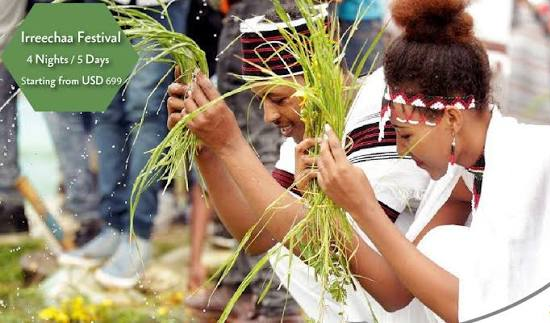
In Oromo culture, fresh grass (Marga Jiidhaa) and water are far more than simple elements of nature. They are sacred symbols that carry the deepest meanings of life, fertility, peace, and divine connection. They transform abstract blessings into visible, tangible rituals and serve as the medium through which humans communicate with Waaqa (God).
Fresh Grass (Marga Jiidhaa): The Symbol of Life and Fertility
In Oromo culture, fresh grass is the most direct expression of life force and abundance.
The Meaning of “Irreechaa” Itself: The very word “Irreechaa” — the grand Oromo thanksgiving festival — means “fresh and green grass.” The festival celebrates the end of the rainy season and the renewal of all life, and fresh grass is the most vivid sign of that season.
The Carrier of Life: Grass is the food of livestock — the foundation of Oromo wealth and survival. When animals eat grass, they grow strong, produce milk, and reproduce. Fresh grass is therefore seen as a symbol of fertility, productivity, and prosperity.
The Medium of Blessing: During Irreechaa rituals, people hold fresh grass and dip it into water, then sprinkle the water on themselves and others. This is not merely an act of thanksgiving — it is a way of transferring the “life force” of the grass and the “purifying power” of the water to the participants, praying for health and offspring. In Gadaa blessing prayers, phrases like “may the grass grow (margi nimarga)” are common, placed alongside rain, livestock reproduction, and peace as manifestations of divine grace.
Water (Bishaan): The Source of Purity, Holiness, and Peace
Water in Oromo blessings holds both material and spiritual significance. It is the dwelling place of sacred power.
The Dwelling of God and Divine Gift: In traditional Oromo belief, rivers and lakes are sacred — they are places where the spirit of Waaqa (God) resides. Water bodies like Hora (sacred springs/lakes) are themselves considered blessings from Waaqa, possessing healing and fertility-giving powers. Infertile women may wet their chests with water, believing it will make their wombs fertile.
Purification and Reconciliation: Water symbolizes “cleansing” and “purification.” One of the core rituals of Irreechaa is the act of libation — dipping fresh grass into water and sprinkling it — which symbolizes washing away the sins and conflicts of the past year, achieving reconciliation, and welcoming a new beginning in a purified state.
The Metaphor of Peace: In Oromo thought, “Nagaa” (peace) is the foundation of all blessings. They believe that only when humans live in peace with nature, with God, and with one another can fertility and abundance be achieved. Water, through its flowing and gathering nature, symbolizes this universal connection, unity, and harmony. Blessings pray for “peace to descend upon our land,” and water is the physical embodiment of that peace.
The Union of Both: The Sacred Blessing Ritual
The combination of fresh grass and water creates the most powerful sacred moment in Oromo blessings. In rituals like Irreechaa, people dip fresh grass into water, and this very act is a prayer:
- Connection: Fresh grass represents the earth and life; water represents the sacred and purification. Together, they symbolize offering the life of the earth to God and praying for God’s blessings to return to humanity through the water.
- Transmission: Participants then sprinkle the sacred water on themselves and others, symbolizing the receiving and sharing of God’s grace, life force, and the blessing of peace.
Therefore, in Oromo blessings, fresh grass and water are ritual tools that fuse “life” with “the sacred.” Without them, blessings would lose their concrete form and power — they could not truly “touch” and “transform” the participants. They are the visible signs of an invisible grace, the tangible carriers of divine blessing.

Posted on September 24, 2026, in Aadaa, Afaan, Bokkkuu, Events, Finfinne, gadaa, health, Information, Irreechaa, Kindness, Language, Media, News, Oromia, Press Release, Promotion. Bookmark the permalink. Leave a comment.






Leave a comment
Comments 0