Daily Archives: September 23, 2026

OLF Calls for Immediate Peaceful Negotiations in Oromiya, Warns of Devastating War
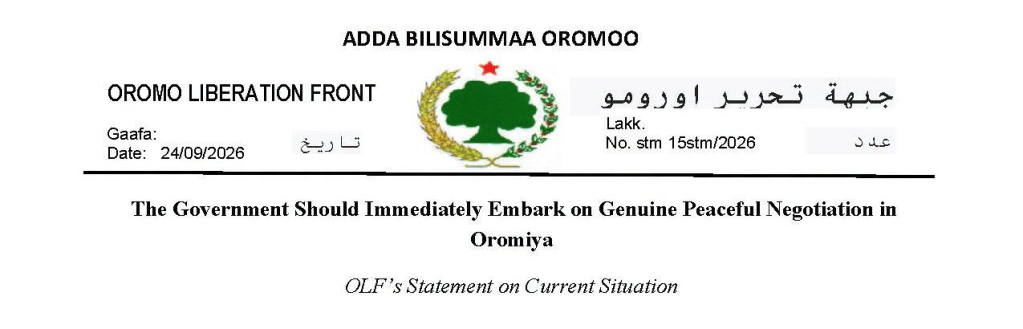
Finfinnee, September 24, 2026 — The Oromo Liberation Front (OLF) has issued a strongly worded statement calling on the Ethiopian government and the Prosperity Party (PP) to immediately embark on genuine peaceful negotiations to end the devastating war in Oromiya, warning that continued military action will only trap the country in a vicious cycle of poverty, disease, and misery.
In a statement released today from Finfinnee, the OLF declared that the “reckless war” of the past eight years has entailed devastating consequences, with many innocent lives lost and resources that could have improved the lives of the people “frantically destroyed.”
A War Without Solution
The OLF criticized the government’s reliance on military might rather than mutual understanding and compromise, stating that such an approach “has not yielded any solution to the ravaging war.” Instead, the statement warned, “the depth and breadth of the conflict have expanded day after day, month after month, and year after year.”
The organization painted a grim picture of the conflict’s toll: “The loss of young and helpless souls and the endless ravage into the villages of poor households, the devastation of social and economic infrastructures, and their consequences will surely trap the country into a vicious circle of poverty, disease, and misery.”
“A sympathetic heart and a wise gut would not dare to see this continue,” the statement read.
The Only Solution: Genuine Peaceful Settlement
The OLF was unequivocal in its position: “OLF believes that the only solution is a genuine peaceful settlement.” The organization called on the government and the Prosperity Party to “embark on genuine peaceful negotiations with all concerned parties to end the war and find a solution to the misery of our people.”
The statement reaffirmed the OLF’s longstanding position that “war and military action have never been a lasting solution to political conflict.”
Defending Oromiya Against External Threats
The OLF also raised concerns about what it described as the “northern coalition, known as Tsimido,” which it accused of aiming “to turn Oromiya into a battleground for an unnecessary war; reverse the fruits of our struggle so far gained, and control Oromiya to usurp its resources once again.”
“The Oromo people cannot remain silent on this,” the statement declared. The OLF called on the Oromo people to “unite, regardless of political differences, and to defend their territory and villages without infringing on the rights of others.”
A Call for Oromo Unity
In a direct appeal to Oromo political parties and the regional government, the OLF urged all Oromo stakeholders to “stand in unison without jeopardizing the rights of the Oromo people.”
“This is not a time when we count on our political differences and party lines,” the statement emphasized. The OLF warned that “detaining political activists and party members exacerbates the suffering of our people” and called for the immediate release of those in custody.
“The meaningless detention of innocents should abate, and those in custody should be immediately released,” the statement read.
A Warning to Those Who Stand with Aggressors
The OLF also directed a sharp warning at those it accused of standing “with our historical aggressors and exploiters while claiming to struggle for the Oromo people.”
“You are making a historical mistake that history will never forgive you,” the statement declared, calling on them to “reconsider their path.”
A Call to All Peace-Loving People
In its concluding appeal, the OLF called on “all parties, especially the Government and the ruling party, to embark on genuine peaceful negotiations that end the suffering of our people once and for all.”
The organization urged “all stakeholders, including religious leaders, Abba Gadas, Haadha Sinqees, diplomats, media personnel, journalists, and all peace-loving people, to campaign for a peaceful settlement to avert the ugly, devastating war confronting us.”
The Stakes for Oromiya and Ethiopia
The OLF’s statement comes at a critical juncture for Oromiya and for Ethiopia as a whole. The eight-year conflict has exacted a heavy toll on civilians, infrastructure, and the social fabric of the region. The OLF’s call for negotiations reflects a growing consensus among many observers that military solutions have failed and that only dialogue can bring sustainable peace.
The statement’s appeal to Oromo unity — across political lines — signals the OLF’s recognition that internal divisions weaken the collective ability to address the crisis. By calling on the regional government, political parties, and civil society to work together, the OLF is positioning itself as a voice for a unified Oromo approach to peace.
Whether the government and the Prosperity Party will heed the call for negotiations remains to be seen. But the OLF’s message is clear: the time for war is over, and the time for genuine dialogue has come.
“Victory to the Mass!!”
Source: Oromo Liberation Front (OLF)

A New Chapter for Multicultural Victoria: VMC Bids Farewell as MMV Begins
Melbourne, Victoria — After four decades of championing inclusion, belonging, and community voice, the Victorian Multicultural Commission (VMC) has issued its final Community Update, marking the end of an era and the beginning of a new chapter for multicultural and multifaith Victoria.
As of 1 October 2026, Multicultural and Multifaith Victoria (MMV) will formally commence, taking over the VMC’s legacy of community engagement, advocacy, and partnership with government.
A Legacy Built on People, Not Policies
In her farewell message, VMC Chairperson Louise Perry reflected not on programs or policies, but on the people who made the Commission’s work possible.
“The community leaders, volunteers, faith representatives, young people, elders, advocates and families who have shared their stories, welcomed us into their communities and worked alongside us,” she wrote. “It is neither the programs nor the policies that come to mind, but the people.”
That people-centered reflection captures the essence of the VMC’s four-decade journey. Since its establishment, the Commission has worked through moments of both celebration and challenge, championing inclusion and belonging, responding to crises, and ensuring that community voices are heard in the decisions that shape Victoria.
Standing Together in Times of Crisis
The VMC’s work during the COVID-19 pandemic stands as a defining example of what can be achieved when government and communities work together. At a time of great uncertainty, multicultural and multifaith organisations, community leaders, and volunteers played a vital role in sharing trusted information, supporting vulnerable people, and helping keep communities connected.
That same spirit of community was evident recently when Louise Perry joined Victoria’s Nepalese community to celebrate Hartalika Teej, a significant Hindu festival observed by women. The VMC also expressed solidarity with the Nepalese community following the devastating monsoon floods in Nepal — a reminder that the bonds between Victoria’s communities and their homelands remain strong and deeply felt.
A Legacy of Trust and Candour
As the VMC closes this chapter, Louise Perry extended her gratitude to former commissioners, staff, partners, and countless community leaders who contributed to the Commission’s legacy.
“Most importantly, I thank the communities who placed their trust in the VMC and who, to this day, continue to engage with us with candour and generosity,” she said.
That trust, built over forty years, represents the true measure of the VMC’s success. It is a legacy not of institutions, but of relationships — of communities that felt seen, heard, and valued.
Looking Ahead: MMV and the Future
Multicultural and Multifaith Victoria now represents an opportunity to deepen engagement with communities, strengthen partnership with government, and ensure that community voices continue to help shape Victoria’s future.
“I am excited for what lies ahead,” Perry said. “The story of multicultural and multifaith Victoria continues to evolve in our neighbourhoods, places of worship, businesses, community organisations and homes.”
The transition from VMC to MMV is not an ending but a renewal — a recognition that the work of building an inclusive, harmonious, and vibrant multicultural society is never complete. Each generation must take up the task anew, adapting to changing circumstances while holding fast to the values of respect, belonging, and shared humanity.
A Story That Continues
As Multicultural and Multifaith Victoria begins its work, it inherits not only the structures and responsibilities of the VMC but also its spirit — a spirit of partnership, trust, and unwavering commitment to the communities it serves.
The story of multicultural and multifaith Victoria is a story still being written — in the neighbourhoods where neighbours of different backgrounds share meals, in the places of worship where faiths coexist in mutual respect, in the businesses that bridge cultures, and in the homes where traditions are passed to the next generation.
It is a story that belongs to all Victorians. And it is a story that continues.
Source: Victorian Multicultural Commission

Irreecha: A Festival for National Unity and Patriotic Covenant
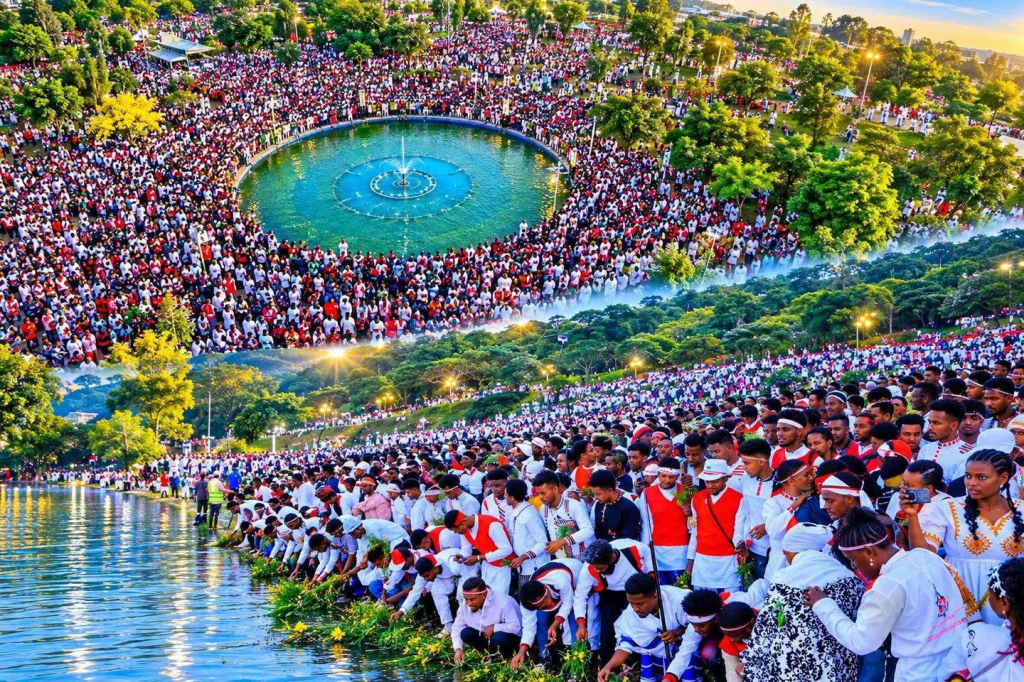
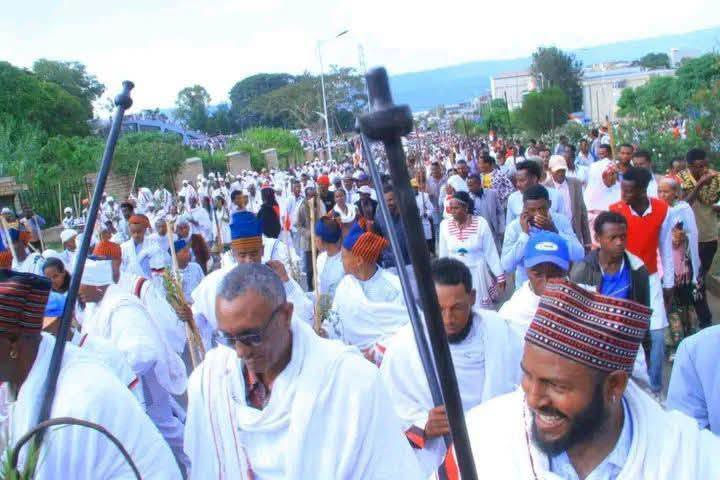
Oromia, Ethiopia — National festivals play a vital role in accelerating peace, love, unity, and shared development. Among the festivals that exemplify peace, love, and solidarity, Irreecha stands as one of the most significant. Rooted in the Gadaa system, Irreecha embodies the ancient Oromo traditions of working together, eating together, supporting one another, standing side by side, reconciliation, holding good wishes for one another and the country, and translating unity into action.
Irreecha is celebrated as a festival that manifests the spirit of togetherness and brotherhood among peoples. It serves as a source of collective strength, a fountain of love, a spring of friendship, and a foundation for living together in harmony.
A Festival That Embraces All Humanity
This grand festival holds a special place in fostering a national covenant because it is enriched with values that enable people to see one another with equal respect, to understand one another, and to draw closer together. Irreecha teaches that every human being deserves dignity and honor, regardless of their background.
That is why the Oromo people celebrate this festival of thanksgiving and gratitude to the Creator with unwavering unity. No distinction is made based on appearance, gender, age, religion, or any other criterion. Everyone is welcome. Everyone is equal. Everyone belongs.
A Unifying Force for All Nations and Nationalities
Because of this inclusive and unifying character, Irreecha has today become a celebration that brings together nations, nationalities, and peoples of Ethiopia. What began as a traditional Oromo thanksgiving festival has grown into a national event that transcends ethnic boundaries, drawing participants from all walks of life who wish to share in its message of peace, gratitude, and togetherness.
The festival’s ability to unite diverse communities is not accidental. It flows from the core values embedded in the Gadaa system — values of consensus, mutual respect, and collective responsibility. These values have been passed down through generations and remain as relevant today as they were centuries ago.
A Call to Celebrate in Unity
The message is clear: all people are invited to come out in unity to celebrate this festival of Irreecha and to give thanks to the Creator. The festival belongs to everyone — not to any single group, region, or faith. It is a shared heritage, a common treasure, and a living expression of Ethiopia’s diversity and unity.
In a time when divisions often dominate public discourse, Irreecha offers a powerful counter-narrative. It reminds us that our shared humanity is greater than our differences, that our collective strength lies in our unity, and that our future depends on our ability to stand together.
A Covenant for the Nation
For these reasons, Irreecha holds an elevated role in strengthening national unity and fostering a patriotic covenant. It is not merely a festival — it is a declaration that peace, love, and togetherness are not abstract ideals but lived realities. It is a promise that the bonds between peoples are stronger than the forces that seek to divide them.
As millions gather at the banks of rivers and lakes to dip fresh grass into the water and lift their voices in song, they do more than celebrate a tradition. They renew a covenant — with Waaqa, with one another, and with the nation they share.
Baga Irreecha! Baga Tokkummaa!
Source: Oromo Cultural Heritage

Irreecha Falls on Meskerem 23 and 24, and Finfinne Has Two Mass Gatherings in Two Weeks
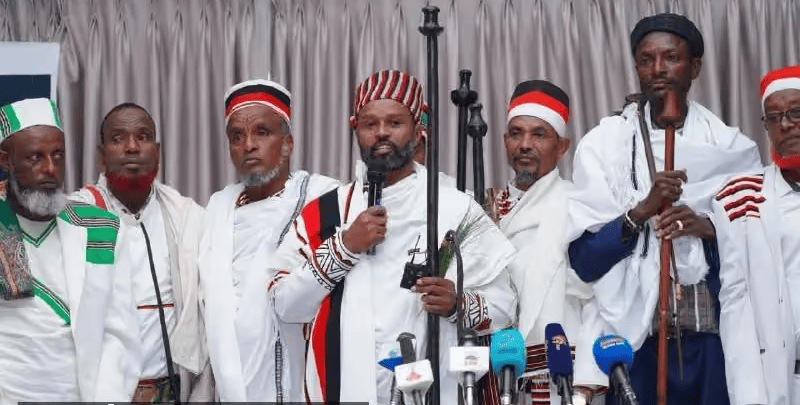
The union of Oromo Abbaa Gadaas has set this year’s Irreecha for Meskerem 23 and 24 — Hora Finfinne first, Bishoftu the next day. Addis Abeba police say preparations for the Meskel Demera are also complete.
This year’s Irreecha will be observed on Meskerem 23 and 24 on the Ethiopian calendar — 3 and 4 October — the union of Oromo Abbaa Gadaas has announced. Hora Finfinne, in Finfinne, is marked on the 23rd; Hora Harsadi, at Bishoftu, on the 24th. The union has framed this year’s observance around national consensus.
Separately, Lt. Gen. Asrat Denero, head of the Addis Abeba Police Commission, said preparations are complete for the Meskel Demera to be observed in the capital. He described the arrangements as coordinated between the Addis Abeba Peace and Security Office, the city’s assembly of religious institutions, the Ethiopian Orthodox Tewahedo Church, the Addis Abeba diocesan office and city police.
A note on the date, because the translation gets it wrong
Amharic reports of this announcement are routinely rendered into English as “September 23 and 24”. The original says Meskerem 23 and 24, which is the Ethiopian calendar’s first month. Meskerem 1 of 2019 E.C. fell on 11 September 2026, so Meskerem 23 and 24 are 3 and 4 October 2026 — a fortnight later than the machine translation implies.
If a calendar, a delivery schedule or a staff roster in your organisation was built from an English-language feed, it is worth checking which date it took.
What businesses in the capital should plan for
Two mass public observances land inside two weeks, both centred on Addis Abeba, with the second spilling into Bishoftu on the Sunday.
- Road closures and diverted transport around Meskel Square and, on 3 October, the Hora Finfinne site.
- The Bishoftu leg on 4 October draws heavy outbound traffic on the road southeast — relevant to anyone routing freight or staff that way.
- Staffing. Both observances draw employees out of the capital as well as into it.
Open
Neither announcement carried road-closure details, security arrangements or a crowd estimate, and the city has not published a traffic plan for either day. The Meskel Demera date was not stated in the police commission’s remarks as reported.
Sources: Fana Television, 22 September 2026, Fana Television, 22 September 2026, Tikvah Ethiopia, 22 September 2026

Gadaa Elders Announce Irreechaa 2019 Dates: A Call for Unity, Tradition, and Peaceful Celebration
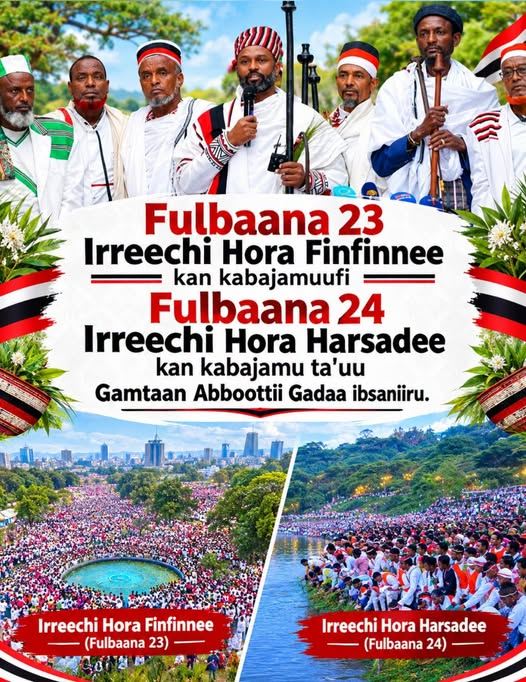
Finfinnee, Oromia — The Assembly of Gadaa Elders of Oromia has officially announced the dates for the celebration of Irreechaa in 2019, confirming that the festival at Hora Finfinnee will be celebrated on September 23, while the celebration at Hora Harsadee will take place on September 24.
The announcement was made through an official statement issued by the Assembly of Gadaa Elders, the traditional custodians of Oromo cultural and spiritual life, who oversee the proper observance of the festival in accordance with ancient customs, traditions, and sacred norms.
A Festival That Reflects the Greatness of a People
In their statement, the Gadaa elders emphasized that Irreechaa is not merely a seasonal celebration but a profound expression of the greatness of the Oromo nation. The festival, they noted, must be observed in a manner that honors the culture, traditions, and sacred norms (safuu) of the Oromo people, preserving the customs handed down from their ancestors.
The elders stressed that Irreechaa should serve as an occasion to strengthen the bonds of brotherhood and unity among all people, regardless of their faith or political outlook. The festival, they affirmed, belongs to all — and its celebration must transcend differences of religion and political opinion.
A Call for a United, Orderly Observance
The Assembly issued a call to all sectors of society to support the proper and orderly observance of Irreechaa. The festival, they said, must be conducted according to its established rules and procedures, with a spirit of oneness and shared purpose. No difference of faith or political perspective should divide the community during this sacred time.
The elders’ call underscores the deep significance of Irreechaa as a unifying force in Oromo society. The festival draws together millions of people from across Oromia and the diaspora, gathering at sacred water sites to give thanks to Waaqa (God), seek reconciliation, and welcome the new season of Birraa (spring).
A Tradition Preserved Through Generations
The announcement by the Gadaa elders reflects the continued vitality of the Gadaa system, the ancient democratic and social governance structure of the Oromo people. Recognized by UNESCO as an Intangible Cultural Heritage of Humanity, the Gadaa system organizes Oromo society into age sets and generational grades, each with its own roles, rights, and responsibilities. The elders’ role in announcing and overseeing Irreechaa is a testament to the enduring strength of this institution.
A Festival of Thanksgiving and Renewal
Irreechaa is the annual Oromo thanksgiving festival, celebrated at the banks of rivers and lakes across Oromia. It marks the end of the rainy season (Ganna) and the beginning of spring (Birraa), a time of renewal, gratitude, and hope. Participants carry fresh green grass and yellow daisies to the water’s edge, dipping them into the water as an offering of thanks for the blessings of the past year and a prayer for peace and abundance in the year to come.
The festival’s requirement for reconciliation before participation creates a powerful, community-enforced deadline for resolving disputes. There is a widespread belief that Waaqa will not accept the prayers of those who carry grievances. Irreechaa is thus not only a time of celebration but also a time of healing and reconciliation.
A Call to All
As the dates for Irreechaa 2019 approach, the Gadaa elders’ message is clear: Irreechaa is a festival for all Oromo people and for all who wish to join in the spirit of gratitude and unity. It is a time to set aside differences, to come together as one community, and to give thanks to Waaqa for the blessings of life, peace, and abundance.
The Assembly’s call for support from all sectors of society reflects the communal nature of the festival. Irreechaa is not organized by any single institution or group — it is a collective expression of the Oromo people’s faith, culture, and identity.
Baga Irreechaa! Baga Birraa!
Source: Assembly of Gadaa Elders of Oromia

The Psychological Power of Ritual Sound, Fresh Grass, and Water in Irreechaa
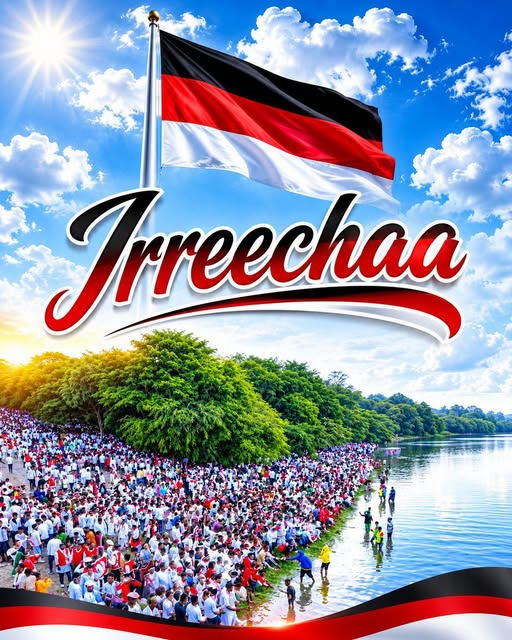
Oromia, Ethiopia — Irreechaa is the annual Oromo thanksgiving festival celebrated at the banks of rivers and lakes across Oromia. Its rituals — communal chanting, the dipping of fresh green grass into water, and the gathering of communities at the water’s edge — are not merely symbolic acts of cultural identity. A growing body of scientific research reveals that these elements engage powerful psychophysiological mechanisms that promote mental well-being, reduce stress, and foster social connection.
The Sound of Chanting: Reducing Stress and Anxiety
Chanting, a central practice in Irreechaa’s riverside ceremonies, has been shown to produce measurable reductions in stress and anxiety. A randomized controlled trial conducted in Australia found that just twelve minutes of group chanting — whether vocal or silent — resulted in significant decreases in cortisol levels and self-reported anxiety . The reduction in cortisol, the body’s primary stress hormone, was similar for both vocal and silent chanting. However, self-reported anxiety decreased more following vocal chanting, suggesting that the act of voicing — singing the Marewoo songs of Irreechaa — amplifies the psychological benefit .
The study also found that altruism scores increased following both vocal and silent chanting, indicating that the ritual practice fosters pro-social tendencies . Group synchronisation, a feature of communal chanting, is thought to promote cooperation and feelings of connection to others . This aligns with the experience of Irreechaa participants, who sing together in a shared expression of gratitude and hope.
Research specifically examining Irreechaa notes that “chanting reduces stress hormones and triggers dopamine, promoting transcendence” . The sonic dimensions of the ritual, combined with its setting at the water’s edge, create what researchers describe as an immersive environment that unites communities and reinforces cultural identity .
The Touch of Fresh Grass: Tactile Contact and Relaxation
The fresh green grass carried by Irreechaa participants — dipped into the water as an offering and symbol of renewal — also carries documented psychological benefits when touched. A 2024 study published in the Journal of Urban Health investigated the effects of tactile interaction with real grass versus artificial grass among older adults. The findings showed that touching real grass produced a heightened sense of relaxation and calmness, increased mean systolic blood pressure reduction, and upward trends in brainwave patterns associated with relaxation .
A separate study involving young adults found that five minutes of tactile stimulation with real landscape grass, applied through the palm of the hand, produced significant reductions in diastolic blood pressure, increased alpha brainwave activity (a marker of relaxed alertness), and alleviation of anxiety compared to a control condition . The researchers concluded that “palming grass — the act of touching grass with one’s hand — has a calming effect on both physiological and psychological responses to stress” .
For Irreechaa participants, the act of holding grass and dipping it into the water is thus not only a spiritual gesture but a tactile experience with measurable calming effects on the nervous system.
The Presence of Water: Blue Space and Restoration
Irreechaa’s setting at rivers and lakes — Irreechaa Malkaa — places participants in what researchers call “blue spaces,” environments featuring water. A systematic evidence map of blue space research confirms that contact with water environments is associated with mental health benefits, including reduced stress and enhanced well-being .
A landmark 19-country study involving over 17,000 participants found that all blue space settings were recalled as restorative, with rural rivers and canals among the most restorative . Perceived safety was the quality most strongly associated with restoration, and actively engaging with the water was associated with greater restoration than remaining on land . The study also found a reciprocal relationship between restoration and nature connectedness — the more restored an individual felt, the more connected to nature they became, and vice versa .
Research specifically examining Irreechaa notes that “water’s acoustic properties (transmitting sound four times faster than air) create immersive ritual environments,” and that the natural water setting “engages biophilia, enhancing mental well-being” . The riverside location of Irreechaa thus amplifies both the sonic and the restorative dimensions of the festival.
The Synergy of Sound, Grass, and Water
What makes Irreechaa psychologically powerful is not any single element in isolation, but their combination. The ritual brings together vocal chanting, tactile contact with fresh grass, and immersion in a water environment — a multisensory experience that engages multiple pathways to well-being simultaneously.
Research on Irreechaa explicitly describes this synergy: “water’s fluidity and reflectivity, paired with the resonance of sound, create multisensory rituals that deepen spiritual engagement” . The study notes that “psychologically, chanting and singing reduce stress and trigger dopamine release, fostering emotional uplift and communal bonding,” while “natural water settings engage biophilia, enhancing mental well-being and aligning with the spiritual clarity sought in rituals” .
The communal dimension is equally important. Group chanting, being a synchronous activity, promotes feelings of social connection and altruistic tendencies . For a community gathering after the isolating rainy season, this reconnection — through shared sound, shared touch of grass, and shared presence at the water — serves as a collective psychological renewal.
A Culturally Rooted Pathway to Well-Being
For the Oromo people, Irreechaa is a spiritual and cultural celebration. The scientific evidence now confirms what generations have experienced intuitively: the ritual’s elements — sound, grass, and water — are also powerful tools for mental health. In a context where formal mental health services are scarce, Irreechaa offers an accessible, culturally meaningful pathway to stress relief, emotional restoration, and social connection.
The psychological power of Irreechaa lies in its integration of body, mind, and community — a holistic approach to well-being that modern research is only beginning to fully understand.

Dr. Trevor Trueman: The British Physician Who Became a Voice for the Oromo People
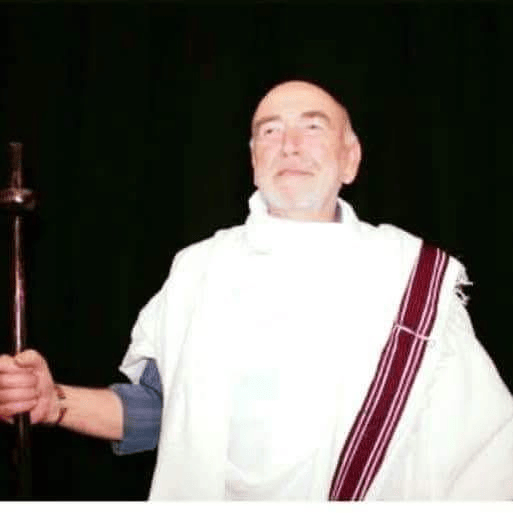
London, United Kingdom — In the annals of human rights advocacy, few figures embody the intersection of medicine and justice as profoundly as Dr. Trevor Trueman. A prominent British physician and human rights advocate, Trueman has dedicated decades of his life to documenting and exposing human rights violations against the Oromo people, the largest ethnic group in Ethiopia, who have historically faced systemic marginalization and repression under various Ethiopian governments.
A Doctor’s Call to Justice
Dr. Trueman’s journey into human rights advocacy began not in the halls of power, but in the examination rooms where he treated survivors of state violence. His medical expertise gave him a unique vantage point — one that allowed him to witness firsthand the physical and psychological trauma inflicted on Oromo refugees who had fled Ethiopia.
In 1994, Trueman co-founded the Oromia Support Group (OSG) , an organization established to amplify the voices of Oromo refugees and victims of state violence. The OSG collects testimonies, publishes reports, and lobbies international bodies to address abuses in Ethiopia. What distinguished the OSG from other advocacy groups was its founder’s medical rigor — a commitment to evidence, accuracy, and the documented truth of human suffering.
Documenting the Unspeakable
Trueman’s most influential contribution came in 1996 with the publication of “Human Rights in Ethiopia: Through the Eyes of the Oromo Refugees.” The report detailed extrajudicial killings, torture, and mass arrests under the EPRDF-led government. His medical expertise lent credibility to accounts of health crises and physical trauma among survivors — accounts that might otherwise have been dismissed as exaggeration or propaganda.
The report became a landmark document, cited by organizations including Amnesty International and Human Rights Watch. It painted a picture of systematic oppression that could not be ignored, precisely because it was grounded in the clinical observations of a physician.
A Voice in the Corridors of Power
Dr. Trueman did not confine his advocacy to written reports. He testified before institutions including the UK Parliament and the United Nations, urging action against Ethiopian government crackdowns. His work highlighted issues such as the 2003-2005 military campaigns in Oromia, which displaced thousands and left communities shattered.
His testimony brought the realities of Oromo suffering into the halls of international decision-making, forcing policymakers to confront uncomfortable truths about an ally government’s abuses.
The OSG’s Enduring Legacy
While Dr. Trueman has been less publicly active in recent years, the Oromia Support Group continues its advocacy under his foundational principles. The group remains a critical resource for journalists, researchers, and policymakers seeking accurate, well-documented information about the situation in Oromia.
The OSG’s reports are frequently cited by major human rights organizations — a testament to the standards of rigor and reliability that Trueman instilled in the organization from its earliest days.
Recognition and Respect
Though not widely decorated, Dr. Trueman’s efforts are deeply respected within human rights circles. His work has been recognized not through formal awards, but through the impact it has had — the lives it has helped document, the stories it has helped tell, and the awareness it has helped raise.
His blend of medical rigor and humanitarian advocacy has uniquely positioned the OSG to expose systemic oppression in Ethiopia. His work underscores the intersection of health and human rights, emphasizing the long-term impacts of state violence on communities.
A Legacy of Truth and Compassion
Dr. Trevor Trueman’s legacy is one of courage and conscience. He chose to use his medical training not only to heal individuals, but to diagnose a society’s ills and prescribe a course of justice. He gave voice to the voiceless, evidence to the ignored, and hope to the oppressed.
For the Oromo people, he is not merely a British physician — he is a friend, an ally, and a witness to their suffering. His work reminds us that human rights are not the concern of any single nation or people, but of all humanity.
As the Oromia Support Group continues its work, the principles Dr. Trueman established — truth, rigor, compassion, and justice — remain its guiding light.
Source: Oromia Support Group

Sons of Maccaa Celebrate Buttaa Ceremony: A Milestone of Generational Passage
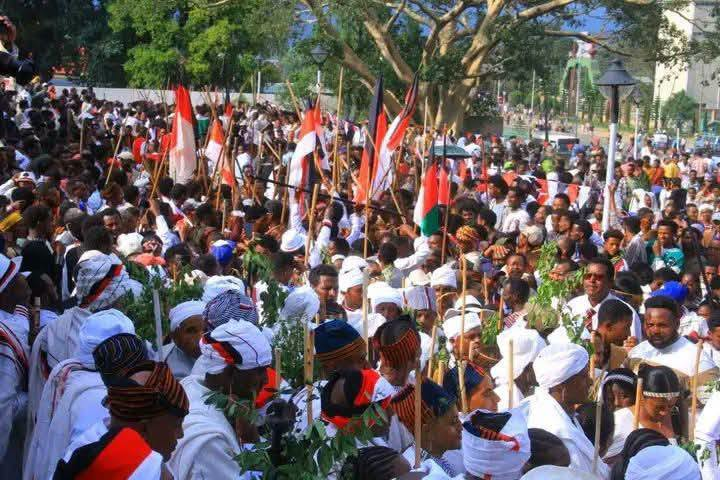
Oromia, Ethiopia — In a powerful display of cultural continuity and ancestral reverence, the Gadaa-Hortee sons of Maccaa — members of the Gadaa Birmajii grade — have successfully completed the sacred Buttaa ceremony, marking a significant milestone in their journey through the ancient Oromo Gadaa system.
The occasion was marked with blessings and congratulations: “Baga 80 akaakayyuu fi 40 abbaa keessanii geessanii sirna buttaa qaluu nagaan oofkaltan!” — Congratulations on safely reaching the Buttaa ceremony, having honored the eighty grandfathers and forty fathers who came before you.
The Significance of Buttaa
The Buttaa ceremony is a pivotal ritual within the Gadaa system, symbolizing the formal transition of power and responsibility from one generation to the next. For the sons of Maccaa in the Birmajii grade, this ceremony represents their readiness to assume leadership roles and carry forward the duties entrusted to them by their ancestors.
The numbers referenced — eighty grandfathers and forty fathers — speak to the deep ancestral lineage that the Gadaa system honors. Each generation stands on the shoulders of those who came before, and the Buttaa ceremony is a moment of connection between past, present, and future.
Honoring the Sacred Elements
The congratulatory message continues with a blessing that honors the visible and invisible elements of the ceremony:
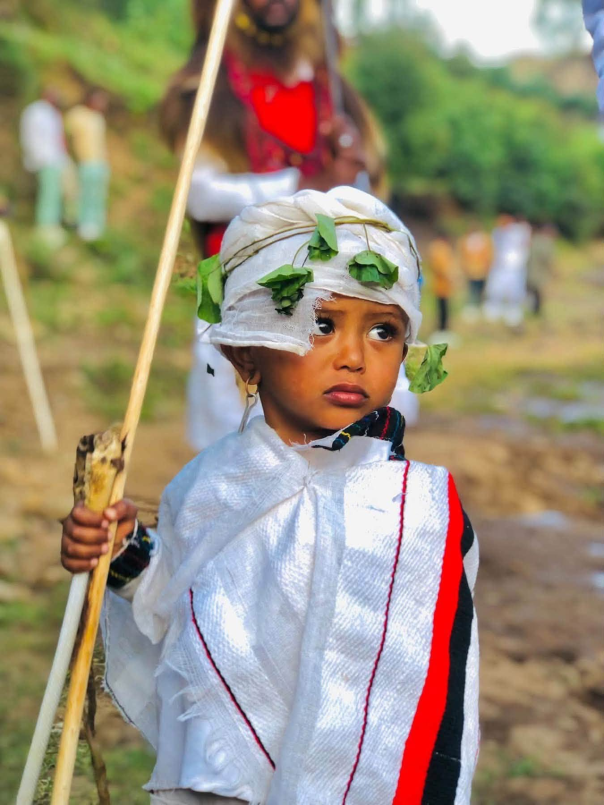
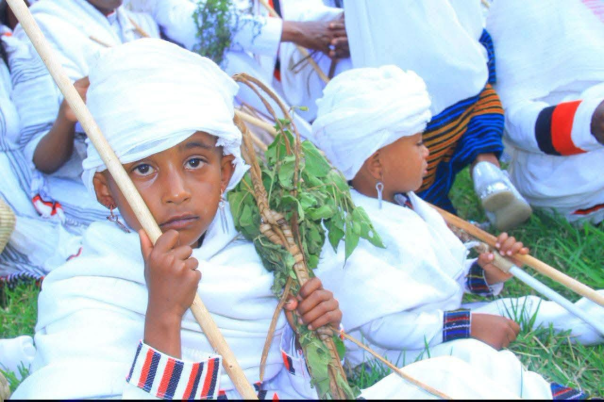
“Haaduu kofa keessanii, dhugoo gurra keessanii fi ruufa mataa keessanii hunda baga oofkaltan!”
This translates to: “Congratulations on all — the grass at your door, the grass in your ears, and the grass on your head!”
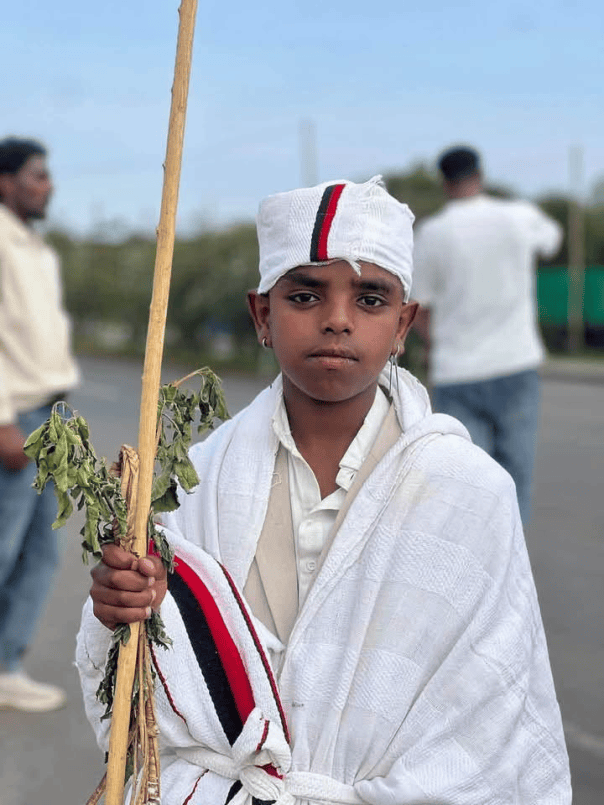
These elements — haaduu kofa (grass at the door), dhugoo gurra (grass in the ears), and ruufa mataa (grass on the head) — are sacred symbols within the Gadaa system. Fresh green grass represents life, renewal, and the presence of Waaqa (God). Wearing or carrying grass during Gadaa ceremonies signifies that the individual is in a state of peace, purity, and readiness to receive blessings.
The reference to grass at different parts of the body and home also reflects the holistic nature of the Gadaa system — it encompasses every aspect of life, from the threshold of one’s home to the crown of one’s head.
A Community Celebration
The Buttaa ceremony is not merely an individual achievement — it is a communal celebration. The Gadaa-Hortee sons of Maccaa have completed this rite together, reinforcing the bonds of brotherhood and shared responsibility that define the Gadaa system.
The ceremony involved the ritual cutting of the buttaa (a symbolic act of clearing and preparing the way), the enactment of laws that will govern the next eight years, and the formal transfer of authority from the outgoing Gadaa grade to the incoming one.
Blessings for Abundance
The message concludes with a powerful blessing:
“Gadaan quufa fi gabbina! Gabbis Waaq!”
“May Gadaa bring fullness and abundance! May Waaq bless!”
This prayer invokes the dual blessings of material prosperity and spiritual completeness. In the Oromo worldview, quufa (fullness) and gabbina (abundance) are not merely economic concepts — they represent a state of harmony in which the community is whole, at peace, and aligned with divine will.
A Living Tradition
The successful completion of the Buttaa ceremony by the Gadaa-Hortee sons of Maccaa is a testament to the resilience and vitality of the Gadaa system. Despite centuries of suppression and the pressures of modernization, the Oromo people continue to pass down this ancient tradition from generation to generation, unbroken and undiminished.
As the sons of Maccaa step into their new roles, they carry with them the blessings of eighty grandfathers and forty fathers — a lineage of wisdom, courage, and commitment that stretches back through time.
Baga oofkaltan! Gadaan quufa fi gabbina! Gabbis Waaq!