Author Archives: advocacy4oromia

Oromo Communities Worldwide Mark Ebla 15 – Oromo Heroes Day on April 15
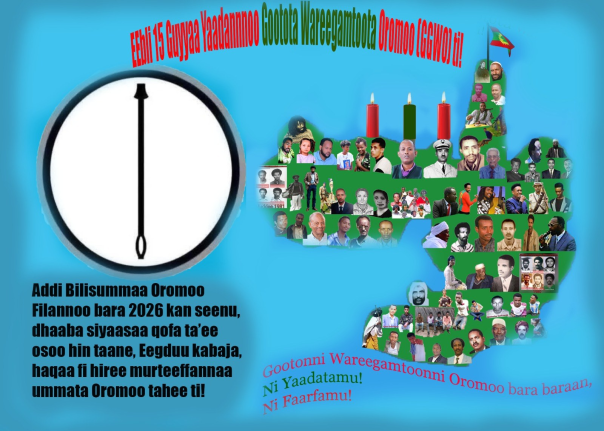
PRESS RELEASE
Call to Honor the Fallen, Celebrate Resistance, and Reaffirm Commitment to Justice, Democracy, and Peace
[Oromia– April 15, 2026] – Today, millions of Oromo people across Oromia, Ethiopia, and diaspora communities in North America, Europe, Australia, and Africa are observing Oromo Heroes Day – known as Guyyaa Gootota Oromoo – on Ebla 15, which falls on April 15.
This annual day of remembrance honors the countless known and unknown heroes who have sacrificed their lives, liberty, and livelihoods for the rights, dignity, and freedom of the Oromo people. From 19th-century horseback warriors who fought colonialism to modern-day Qeerroo (youth) and Qarree (young women) who have led peaceful protests for justice and democracy, the day pays tribute to the enduring spirit of Oromo resistance.
A Day Rooted in Memory, Not Decree
Oromo Heroes Day is not a government-declared holiday. It is a people’s holiday – born from grassroots memory and observed with flags, songs, poetry, cultural events, and moments of silence. The date, Ebla 15 (April 15), has become a symbol of courage, particularly linked to modern uprisings where unarmed Oromo civilians raised the banned Oromo flag and demanded fundamental rights.
“We do not celebrate because the struggle is finished,” said Dhabessa Wakjira, community leader in Melbourne. “We celebrate because our heroes gave us a reason to continue. Every April 15, we remind ourselves and the world: the Oromo people have not been erased. We are here. We remember. And we will keep marching toward Nageenya (justice), Misooma (development), Badhaadhina (progress), Dimokiraasii (democracy), and Nagaa (true peace).”
Five Pillars of the Oromo Struggle
Community organizations and cultural institutions are using Oromo Heroes Day to reaffirm five core values that heroes fought and died for:
- Nageenya – Justice, peace, and well-being for all, regardless of ethnicity or social status.
- Misooma – Equitable development that reaches the most marginalized villages and families.
- Badhaadhina – Progress, both material and spiritual, moving forward without forgetting the past.
- Dimokiraasii – Genuine democracy, including free expression, assembly, and the right to self-determination.
- Nagaa – Lasting peace and safety, where no family fears a midnight knock on the door.
Events and Observances
On April 15 / Ebla 15, Oromo communities are holding:
- Flag-raising ceremonies (where permitted) and cultural gatherings.
- Virtual panels discussing the legacy of Oromo heroes and the future of the struggle.
- Poetry readings and music performances featuring traditional krar and modern resistance songs.
- Moments of silence at 12:00 PM local time to honor the fallen.
- Social media campaigns using hashtags such as #OromoHeroesDay, #Ebla15, #April15, and #Nagaa.
Calls for International Attention
Human rights organizations and Oromo advocacy groups are using the day to draw international attention to ongoing concerns, including political prisoners, restrictions on peaceful assembly, and the continued criminalization of the Oromo flag in some contexts. Supporters are urging the international community to:
- Recognize Oromo Heroes Day as a day of significance for human rights.
- Call for the release of imprisoned Oromo activists and journalists.
- Support dialogue and genuine political inclusion for the Oromo people, Ethiopia’s largest ethnic group.
Statements from Community Representatives
“On Ebla 15, we stand on the shoulders of giants. Our heroes did not have social media or international platforms. They had courage. Today, we honor them by continuing their unfinished work.”
— Dhabessa Wakjira, Oromo community organizer, Melbourne, Australia.
“The Oromo struggle is not about hate. It is about Nagaa – peace with dignity. Our heroes dreamed of a day when an Oromo child could speak their language, sing their songs, and walk the earth without shame. That dream is not yet reality, but every April 15, we get closer.”
— Yaasoo Kabbabaa, Oromo cultural activist, Finfinne, Oromia.
How to Support or Participate
Members of the media, human rights defenders, and the general public are encouraged to:
- Amplify Oromo voices by sharing content directly from Oromo creators and organizations.
- Educate themselves on Oromo history, including the Gadaa democratic system and the legacy of resistance.
- Attend or cover local Oromo Heroes Day events (contact below for diaspora chapter information).
- Use respectful language – recognize that for many Oromo, this day is both a celebration and a mourning.
About Oromo Heroes Day
Oromo Heroes Day (Ebla 15 / April 15) is an annual observance honoring Oromo historical and contemporary figures who sacrificed for the rights, identity, and freedom of the Oromo people. The day is observed globally by Oromo communities regardless of legal recognition. It is a day of cultural pride, political reflection, and intergenerational remembrance.
“Bilisummaa! Nagaa! Happy Oromo Heroes Day – Ebla 15, April 15!”
The Blood Tribute of the Heroes: Advanced by the Oromo Liberation Struggle
FOR IMMEDIATE RELEASE
—
PRESS RELEASE
The Blood Tribute of the Heroes: Advanced by the Oromo Liberation Struggle
Ebla 15 – Day of Oromo Martyred Heroes – Official Message from the Oromo Liberation Front (ABO)
Finfinnee – April 14, 2026
—
TO: Members and Supporters of the Oromo Liberation Front (ABO), All Freedom Fighters and Patriots of the Oromo People, and the Broader Oromo Nation
SUBJECT: Commemoration of Ebla 15 – Day of Oromo Martyred Heroes (2026)
—
The Oromo Liberation Front (ABO) extends its greetings to all members, supporters, freedom fighters, patriots, and the entire Oromo nation on the occasion of **Ebla 15, the Day of Oromo Martyred Heroes for the year 2026**.
1. Significance of Ebla 15
Ebla 15 is a day of profound solemnity and honor. It serves as the annual commemoration of those heroes who, without hesitation, sacrificed their lives to:
– Break the chains of subjugation;
– Restore the dignity of Oromo nationhood;
– Achieve freedom and self-determination;
– Manifest a homeland long denied; and
– Defend the inalienable rights of the Oromo people.
2. Historical Background of the Day
The designation of Ebla 15 as the Day of Oromo Martyred Heroes finds its origin in the **Shiniggaa Martyrdom of 1980**, a pivotal event in the history of the Oromo liberation struggle. On that day, ten senior fighters and high-ranking leaders of the ABO — including those from the Hayyu-Duree and Itti Aanaa leadership structures — were martyred together under harrowing circumstances.
What rendered this event uniquely honorable was the manner of their martyrdom. The fallen heroes refused to be bound back-to-back and executed by enemy forces. Instead, they embraced the cause of unity and freedom for their people, stood shoulder to shoulder, and faced death collectively, falling into a single grave. It is in recognition of this supreme sacrifice that Ebla 15 was established as the Day of Oromo Martyred Heroes, to be remembered by generations forever.
3. Scope of Commemoration
The ABO emphasizes that Ebla 15 is not limited to commemorating only its own fallen members. Rather, it honors **all Oromo sons and daughters** who have perished in the struggle against the enslavement of the Oromo people — whether they fell in direct confrontation, were targeted by state-sponsored violence, or succumbed to various forms of foreign domination. All who fought against the oppressive system and sacrificed their lives for the rights and dignity of the Oromo nation are equally honored on this day.
4. The Price of Liberation
The Oromo nation has paid an immense and irreplaceable price in blood for its land and freedom. Countless individuals have suffered physical wounds, lost family members, and forfeited their property. From the youngest to the oldest, every segment of Oromo society has contributed to this struggle. The martyrs — whose names cannot be fully enumerated — shine eternally in the annals of history. Their *gumaa* (blood tribute) is carried forward by the success of the cause for which they gave their lives.
5. Renewed Commitment of the ABO
As the ABO commemorates Ebla 15, the organization renews its call to all fighters, members, and supporters: continue the struggle with unwavering resolve, undeterred by any difficulties or circumstances, so that the cause for which the martyrs sacrificed may be fully achieved. The ABO further reaffirms its commitment to a peaceful struggle, even as it honors those who fell in battle.
6. Electoral Participation – A Historic Decision
The commemoration of Ebla 15 in 2026 carries distinct significance. For the first time in its history, the ABO has decided to participate in **Ethiopia’s 7th round of national elections**. This decision reflects the organization’s strategic commitment to:
– Achieve lasting peace for the Oromo people;
– Realize the goals of the Oromo liberation struggle — the very goals for which tens of thousands of Oromo sons and daughters were martyred; and
– Pursue all available peaceful avenues without betraying the sacrifice of the fallen.
To succeed in this endeavor, the ABO calls upon its members, fighters, and supporters to work with greater dedication than ever before, to remain prepared to overcome all challenges, and to stand united in support of the organization.
7. Call to the Oromo Nation
The ABO addresses the broader Oromo nation with the following appeal: to achieve lasting peace, to obtain true freedom, to secure the right to self-determination and nationhood, to attain democracy and equality, and to foster mutual development — choose the ABO. It is the organization in which your own children have united, fought for your rights, and paid the highest price with their lives.
Choosing the ABO means fulfilling the very goal of the Oromo liberation struggle — the goal for which the heroes, the sons and daughters of the Oromo nation, fought and fell.
8. Concluding Affirmations
– Ebla 15 is the Day of Oromo Martyred Heroes.
– The Martyred Heroes of Oromo shall be remembered forever; they shall be honored forever.
– Honor and respect to our Martyred Heroes.
– Victory to the broad masses.
– For the Freedom of Oromia.
—
Issued by:
The Oromo Liberation Front (ABO)
Date: April 14, 2026
Location: Finfinnee
“The Guma (Blood Tribute) of the Heroes: Carried Forward by the Oromo Liberation Struggle!
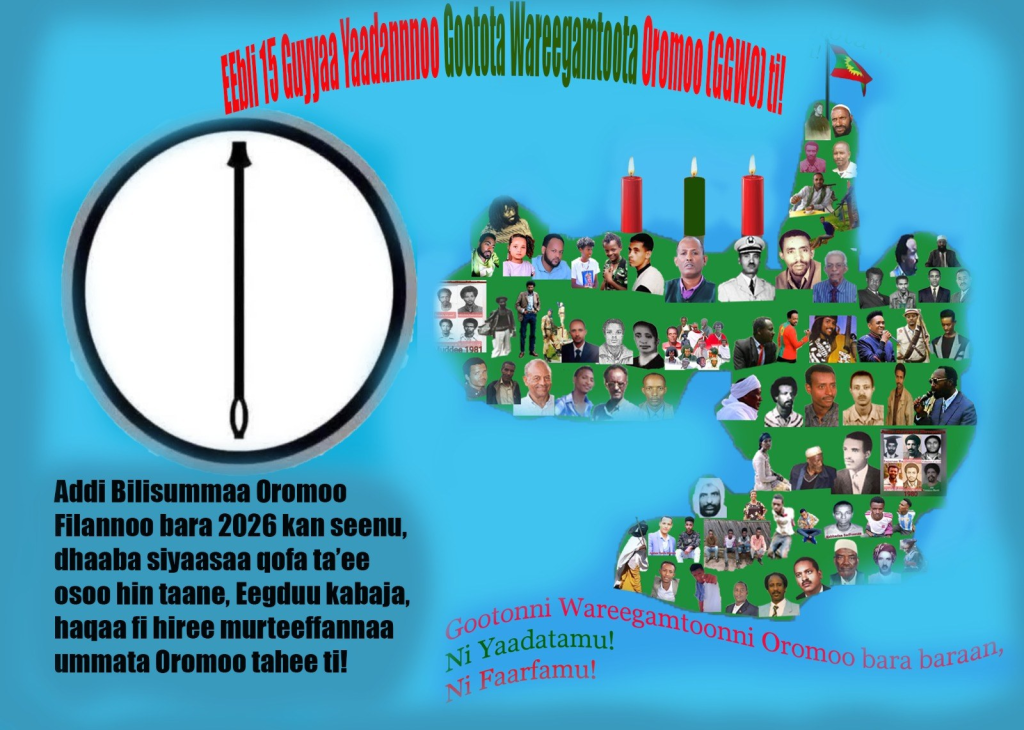
Ebla 15 – Day of Oromo Martyred Heroes – Message from the ABO (Oromo Liberation Army)
To the members and supporters of the ABO, all freedom fighters and patriots of the Oromo people, and the broader Oromo nation: Welcome, and may Ebla 15, the Day of Oromo Martyred Heroes of this year 2026, meet you and us alike.
The day of Ebla 15 is a solemn and honorable day. It is the day we remember the heroes who, without hesitation, gave the most precious gift of all — their lives — to break the chains of slavery, restore the dignity of nationhood, achieve freedom, manifest a homeland we once lost, and fight for the rights of Oromo. They gave their lives.
Within the great struggle for Oromo liberation, countless heroes have fallen in the front lines and advanced the fight. They waded through blood-soaked trenches. To save Oromo nationhood from extinction, to secure the Oromia that exists on the ground today, and to bring about the rights and victories the Oromo have now achieved — tens of thousands of sons and daughters of the nation, brave ones, determined and resolute ones, whose names cannot be fully counted, have joined together in the vanguard struggle of the ABO and paid the ultimate price of their lives.
From the leaders of the organization to its members and supporters, they have written a glorious history. Thousands upon thousands have sacrificed their lives for the freedom of their people. All of them shine like stars in the annals of history. They will be remembered by generations forever.
The Shiniggaa Martyrdom of 1980 holds a special place in the history of the Oromo liberation struggle. It left a unique imprint on the memory of our fighters and our people.
On that day, ten senior fighters and high-ranking leaders of the ABO — from Hayyu-Duree and Itti Aanaa — were martyred together in a single location under deeply harrowing circumstances.
What made that martyrdom most honorable and unforgettable is the manner in which our beloved ones faced their end with supreme resolve. They refused to be tied back-to-back and shot by the enemy. Instead, they embraced the unity and freedom of their people, stood shoulder to shoulder, and faced death together, falling into a single grave side by side. That is why Ebla 15 was established as the Day of Oromo Martyred Heroes — to be remembered forever.
When the ABO decided that Ebla 15 should be commemorated as the Day of Oromo Martyred Heroes, we remind ourselves repeatedly that this day is not only for remembering our fallen members. It is for all Oromo sons and daughters who died resisting the enslavement of the Oromo people — whether they fell refusing oppression, were targeted by roving violence, or exposed and fought against foreign systems of domination in their various forms. Those who believed that after slavery, in different places, the burden of subjugation must be lifted from the Oromo people so that their rights might be honored as a nation — all those who fought against the oppressive system and fell as martyrs — it is for them that Ebla 15 was established as a Day of Heroes.
The Oromo nation has paid a great and heavy price in blood for its land and freedom — this is beyond dispute. The harm inflicted under oppression is incomparable, and the number of martyrs has never diminished the resolve. Because they refused oppression and being oppressed, they continue to sacrifice for their freedom.
Many Oromo have been physically wounded in the liberation struggle, and many have lost their families and property. Young and old, every segment of society — for the sake of this struggle’s goal — has paid the highest price, even the loss of family. All the fallen martyrs shine clearly in the pages of history. Their gumaa (blood tribute) is carried forward by the success of the cause for which they gave their lives.
As we honor Ebla 15, the Day of Oromo Martyred Heroes, the ABO renews its message: while remembering our martyrs and renewing our resolve, fighters, members, and supporters must continue the struggle steadfastly, undeterred by any difficulties or circumstances, so that the cause for which they sacrificed may be achieved.
To all Oromo sons and daughters who believe in the just cause of the Oromo people — freedom and the right to self-determination — and to the Oromo nation as a whole, our message is this: let us all, wherever we stand, intensify the struggle by fulfilling the pledge we owe to our martyrs — to repay their gumaa with freedom.
What makes this year’s Ebla 15, the Day of Oromo Martyred Heroes (2026), distinct is that the ABO has decided, for the first time in its ongoing peaceful struggle, to participate in Ethiopia’s 7th round of elections. Through this decision, the ABO is making a historic effort to achieve peace for our people and to realize the goal of Oromo liberation — the very goal for which tens of thousands of Oromo sons and daughters were martyred — without betraying their sacrifice.
To succeed in this work, members, fighters, and supporters of the ABO must work harder than before, be prepared to overcome any challenges, and affirm with one voice that we stand with our organization in every way.
To the broader Oromo nation: to achieve lasting peace, to obtain true freedom, to secure the right to self-determination and nationhood, to attain democracy and equality, and for mutual development — we call upon you to choose the ABO, the organization in which your own children have united, fought for your rights, and paid the highest price of their lives.
Choosing the ABO means fulfilling the goal of the Oromo liberation struggle — the goal for which the heroes, the sons and daughters of our nation, fought and fell. Therefore, our message is: Choose the ABO.
Ebla 15 is the Day of Oromo Martyred Heroes!
The Martyred Heroes of Oromo shall be remembered forever! They shall be sung forever!
Honor and respect to our Martyred Heroes!
Victory to the broad masses!
For the Freedom of Oromia
April 14, 2026
Finfinnee

The Unbroken Walk of Jaal Lagaasaa Wagii: From the Hills of Shinoo to the Frontlines of Oromo Freedom
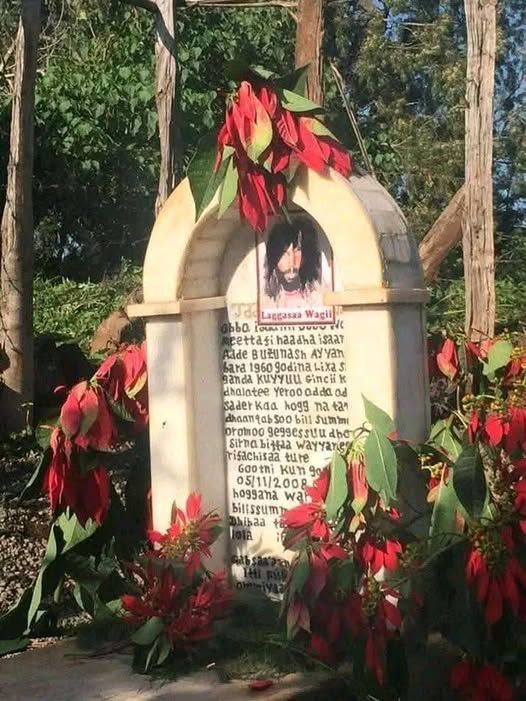
He left behind a wife, three daughters, and a thriving business. He walked into the wilderness not because he hated comfort, but because he loved his people more than his own breath.
In the quiet dawn of 1960, in a small village called Kuyyuu Giccii, nestled in the Meettaa Robii district of Aanaa Shinoo, West Shawaa, a child was born. The land was green. The air smelled of fresh buna (coffee) blossoms. No one knew then that this child—named Lagaasaa, son of Wagii—would one day become a name that governments would hunt and that a nation would memorize.
His father was Obbo Wagii Meettaa. His mother was Adde Buzunash Ayyaanaa. They were farmers, like most of their neighbors. But they gave their son something more precious than land: the gift of education.
The Schoolboy Who Dreamed Beyond the Fields
Young Lagaasaa Wagii walked barefoot to primary school in Bakkamee, where he sat on a wooden bench and learned to read and write—grades 1 through 4. For grades 5 through 8, he walked farther, to Hincinnii. Then, like many ambitious Oromo youth of his generation, he made the long journey to Finfinne (Addis Ababa) for grades 10 and 11.
But the classroom was not enough. The world was changing. In 1975, with the Dergue regime tightening its grip, Lagaasaa decided to learn a trade. He studied mechanics and driving—skills that would later prove as useful in the underground struggle as any weapon.
He worked. He saved. He traded. For seven years, he lived in the town of Dirree Dhawaa, moving goods, carrying merchandise on long journeys to western Oromiyaa. He was, by all accounts, a successful businessman. He had a future.
He also had a conscience.
The Call That Could Not Be Ignored
By 1990, Lagaasaa Wagii was a married man. On Waxabajjii 27, 1987 (Ethiopian calendar), he had wed Adde Waynisheet Geetaahu. Together, they had three beautiful daughters: Bilisummaa Lagaasaa, Fireehiwat Lagaasaa, and Natsaannat Lagaasaa. Their names meant Freedom, Joy, and Salvation—as if the father was already dreaming of a different Ethiopia.
But the suffering of the Oromo people—the land grabs, the cultural suppression, the daily humiliations—gave him no rest. He watched his people be treated as strangers in their own homeland. And something inside him broke open.
In 1990, he made a decision that would cost him everything. He left his beloved family, his business, his security. He walked west.
He joined the Oromo Liberation Front (ABO).
The Making of a Commander
Lagaasaa Wagii was not a natural soldier. He was a mechanic, a trader, a father. But he was also a fast learner. In 1991, he completed the 18th round of political and military training. He was assigned to the western front. He rose quickly—not because he sought power, but because he had something rarer: judgment.
He was sent for advanced training in Beelmuuguu in 1991. Then to Qaaqee as an administrator. Then, when the Dergue fell and the TPLF-led government (Woyyaanee) took over, the struggle did not end. It only changed shape.
Between 1993 and 1998, Lagaasaa Wagii moved from ordinary membership to senior military command. He fought in the western lowlands. He crossed into Sudan and back. He was part of the 1994 return to western Oromiyaa with newly organized forces. When the Woyyaanee regime crushed Sudanese bases in Kurmuk and Giizan in 1997, Lagaasaa was among those who held the line, ensuring the resistance did not collapse.
The Organizer of Exiles
Between 1998 and 2000, Lagaasaa was sent for special training abroad. When he returned, he was given a new mission: not to fight, but to build. In the diaspora, among Oromo communities living outside Ethiopia, he worked tirelessly to organize the scattered sons and daughters of Oromia.
In the year 2000, he achieved something remarkable. He helped establish the Oromo Community Association of Eritrea (Waldaa Hawaasa Oromoo Eritrea). He ensured that Oromos living in exile could contribute to the struggle—not just with money, but with unity.
The Lion of the Western Zone
By 2002, Lagaasaa Wagii had become a legendary figure on the western front. Under the overall command of Jaal Irreessaa Caalaa, he served as a commander of the Western Zone of the Oromo Liberation Front (WBO). He led operations in Qeebbee, Dambi Dolloo, Gidaamii, Begii, and Mandii—areas where the Woyyaanee military was heavily entrenched.
After Jaal Irreessaa Caalaa was executed, Lagaasaa Wagii took over as the commander of the Western Zone. From that moment until his own martyrdom on November 5, 2008 (05/11/2008), he led with a combination of tactical brilliance, personal courage, and deep love for his fighters.
The regime feared him. They called him “Abbaa tooftaa fi malaa”—the father of strategy and cunning. But his own people called him something else: Jaallataa (the beloved one).
The Meaning of Martyrdom
The Oromo have a proverb: “Namni gaafuma dhalate du’e” — Everyone born will die. But there is death, and there is sacrifice. Lagaasaa Wagii did not die because he was unlucky. He died because he chose to give his life for the rights of his people.
On that day in November 2008, after years of fighting—hungry, thirsty, exhausted, climbing mountains, crossing forests, enduring rain and sun—Lagaasaa Wagii fell.
But those who knew him say he did not fall defeated. He fell standing. He fell with his face toward the enemy. He fell as a goota—a hero whose blood does not disappear into the soil but waters the tree of freedom.
The Legacy That Refuses to Die
Lagaasaa Wagii left behind three daughters. He left behind a wife who never stopped waiting. He left behind comrades who still whisper his name before battle.
He was never wealthy. He never held a ministerial post. He never signed a peace treaty from a position of power. But he did something harder: he remained faithful to the end.
His name is not taught in Ethiopian government schools. No statue stands in Finfinne. But in the villages of West Shawaa, in the refugee camps of Sudan, in the living rooms of Oromo families in Minneapolis and Rome, his story is told.
They say: “Jaal Lagaasaa Wagii beela’e, dheebodhe, dadhabe, garuu hin jenne. Baddaa fi gammoojjii keessatti rooba, qorraa fi aduu danda’e.”
(He knew hunger, thirst, and exhaustion—but he never gave up. He endured the rain, the cold, and the sun in the highlands and lowlands.)
Epilogue: The Unfinished Sentence
There is a famous Oromo saying, repeated by the poet Mammo Mazamir:
“Qabsaawaan Kufus Qabsoon Itti Fufa!!!”
(Even when the fighter falls, the struggle continues!)
Jaal Lagaasaa Wagii is gone. But the walk he began—from a small village in Kuyyuu Giccii to the battlefields of western Oromiyaa—has not stopped. Thousands of young Oromos now carry his spirit. They do not carry his bones. They carry his example.
And one day, when the Oromo flag flies not in secret but in the open sky, over a land where justice is not a dream but a law, someone will point to that flag and say:
“This cloth was sewn with many threads. But one of the strongest threads was a man from Shinoo—a mechanic, a trader, a father, a freedom fighter. His name was Lagaasaa Wagii.”
Until that day, the struggle continues.
“Mirgi saba ofii akka kabajamuu fi abbaan biyyummaa ummata Oromoo akka mirkanaahu taasisuuf waan hunda caalaa gootummaan murteessa dha.”
(To ensure the rights of one’s people are respected and the nationhood of the Oromo is affirmed, nothing is more essential than heroism.)
— In everlasting memory of Jaal Lagaasaa Wagii (1960 – November 5, 2008)

The Living Clock of the Oromo: How the Gadaa System Keeps Time, Justice, and Identity
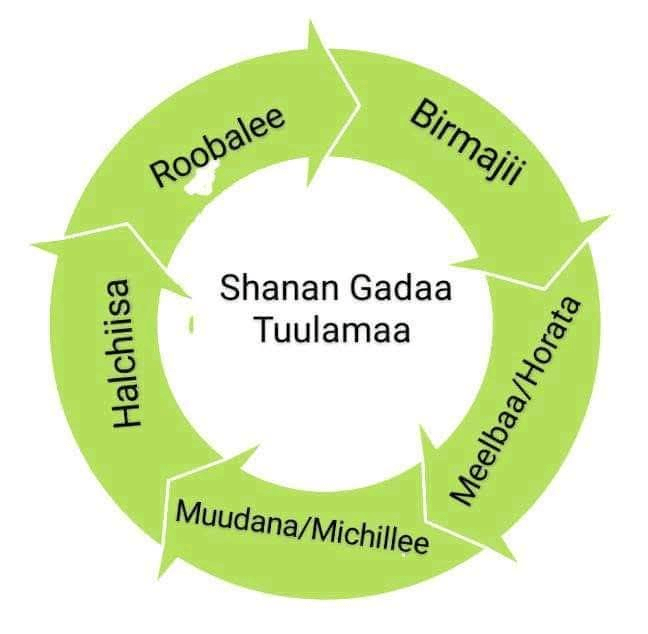
In the highlands of Tuulama, where the horizon rolls like an endless green drum, there is no king on a throne. There is only a cycle—a sacred, unforgetting wheel of five names.
In an era when most nations measure leadership by coups, elections, or hereditary bloodlines, the Oromo people have for centuries followed a stranger, wiser rhythm: the Gadaa system.
Among the Tuulama Oromo, this ancient democracy is not a relic in a museum. It is a living, breathing constitution written not on parchment, but on memory, ritual, and the rotating faces of fathers who pass power like a baton in a relay that has never stopped.
The system has five drums. Each beats for eight years. And together, they have kept time for over five centuries.
The Five Gates of Power
The Tuulama Gadaa cycle is built around five maddaa (parties or classes), each taking its turn to rule. They are:
- Roobalee – the rainmakers, the openers of the cycle.
- Birmajii – the sharpeners, who hone the laws of the previous generation.
- Meelbaa (Horata) – the gatherers, who are in power today.
- Muudana (Michillee) – the annointers, who will inherit the sceptre next.
- Halchiisa – the closers, who seal the cycle before handing it back to Roobalee.
👉 Right now, at this moment in history: the Gadaa Meelbaa holds the staff of authority.
👉 Next in line: Gadaa Muudana (Michillee) will take the baallii (ceremonial flag) when the birin (transition) comes.
The Fathers Who Did Not Die
The Gadaa system is not anonymous. It remembers names. Over the last 32 years—four full cycles of eight years each—four Abbaa Gadaa (fathers of the law) have stood at the center of the Oromo universe:
- Halchiisa – Abbaa Gadaa Lammaa Baarudaa
- Roobalee – Abbaa Gadaa Naggasaa Nagawoo
- Birmajii – Abbaa Gadaa Bayyanaa Sanbatoo
- Meelbaa – Abbaa Gadaa Goobana Hoolaati
Each man was not a dictator. In the Gadaa way, an Abbaa Gadaa is a custodian, not a commander. He sits under the odaa tree, listens to the assembly (chaffee), and speaks only after the women, the elders, and the youth have had their say.
Democracy, Oromo style, was never borrowed from Athens. It grew from these highlands.
When the Cycle Was Wounded
The Gadaa system has not had an easy path. Colonial conquest, imperial absorption, and modern state centralization—first under the Abyssinian emperors, then under Marxist Dergue, and later under ethnic federalism—all tried to break the clock.
For decades, the formal installation of an Abbaa Gadaa was driven underground. Rituals became whispers. The odaa tree became a dangerous meeting place.
But the Oromo people, stubborn as the volcanic rock of their homeland, found ways to keep the cycle turning.
They invented adaptive traditions:
- Foollee – a system of camouflage, where Gadaa rituals were hidden inside coffee ceremonies and weddings.
- Goodannaa – a form of itinerant counsel, where elders traveled secretly between villages to align the lunar and solar calendars of the cycle.
- Haarrii Buqqifannaa – a practice of renewal through symbolic “plowing,” where old wounds were ritually buried to make way for a new Gadaa generation.
These were not defeats. They were proof that a living tradition cannot be outlawed—only forced to sing in a quieter voice.
The Clock Is Still Ticking
Today, as Oromia navigates the pressures of modernity—urbanization, social media, formal state law—the Gadaa system faces new questions. Can a rotational indigenous democracy coexist with a national parliament? Should the Abbaa Gadaa be recognized by the modern constitution?
In Tuulama, the elders do not rush to answer. They sit. They listen to the wind in the sycamore. And they repeat the old law:
“Gadaan hin citu. Gadaan hin badu. Gadaan waan bineensi nyaate hin ta’u.”
(The Gadaa does not break. The Gadaa does not perish. The Gadaa is not food for wild animals.)
Epilogue: The Fifth Drum
There is a reason the Tuulama cycle has five gadaa—not four, not six. Five is the number of fingers on a hand. Five is the number of directions: east, west, north, south, and the center—where the odaa tree stands.
The Halchiisa closes the circle. The Roobalee opens it again. And between them, the Oromo people have learned that power is not a prize to hoard but a season to steward.
Today, as Gadaa Meelbaa holds the staff, the drum of Muudana is already being tuned. Somewhere in the countryside of Tuulama, a boy born into the next class is being taught the names of his ancestors—not as history, but as a promise.
He will rule in thirty years. And when he does, the clock will still be ticking.
The Gadaa system is not a memory. It is a meeting that never adjourned.
“Sirni Gadaa yeroo adda addaatti rakkoo seenaa keessa darbeera. Haata’u malee, uummanni Oromoo duudhaa isaa tikfachuuf jira.”
(The Gadaa system has passed through many historical trials. Nevertheless, the Oromo people live to preserve their custom.)

The Pharmacist Who Prescribed Freedom: Baro Tumsa and the Birth of the Oromo Dream
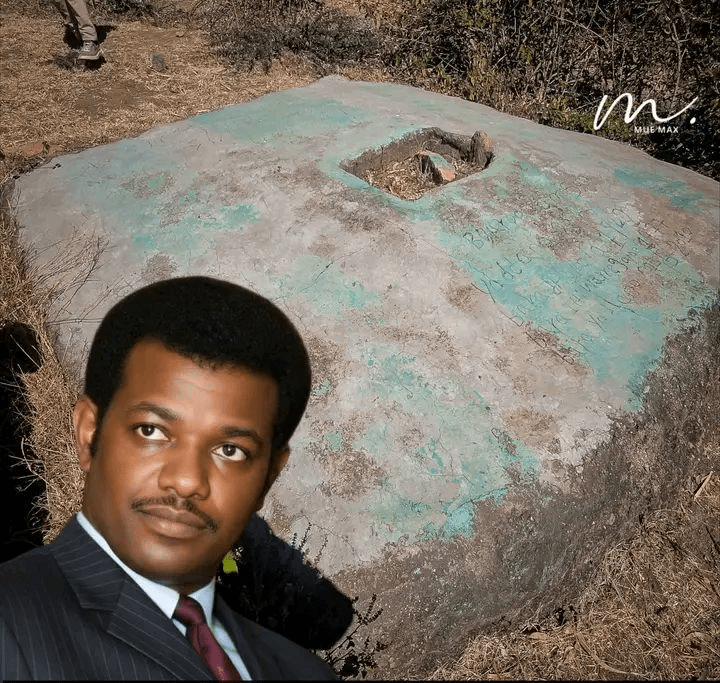
He carried two degrees—one in pharmacy, another in law. But his greatest prescription was not a pill or a legal brief. It was the idea that the Oromo people deserved a name, a flag, and a future.
In the cold, damp cells of an Ethiopian prison in 1978, a man in his forties scratched a final message into a piece of torn cardboard. He was not a soldier by training. He had never fired a weapon in anger. But he was about to become one of the most dangerous men the Dergue regime had ever captured.
His name was Jaal Baaroo Tumsaa. To his people, he was simply Baro Tumsa—the quiet revolutionary who built an army not with bullets first, but with books, chemistry, and a radical belief in Oromo unity.
The Making of a Nationalist
Born in 1938 in western Oromia, Baro Tumsa grew up in a world where speaking Afaan Oromo in a classroom could earn you a slap. Where Oromo history was written by the conquerors. Where the word Oromo itself was sometimes used as an insult.
But young Baro had a different chemistry in his blood.
He excelled in school—brilliant with numbers, sharper with words. He became a pharmacist, learning the precise science of healing bodies. But he soon realized that a deeper sickness afflicted his people: the sickness of silence, of land alienation, of a culture forced underground.
So he went back to school. This time, he studied law.
Now he had two weapons: the knowledge of how to heal, and the knowledge of how to fight injustice within a system that had been designed to ignore the Oromo.
The Quiet Architect of the OLF
By the early 1970s, Baro Tumsa had become a restless soul. He watched as successive Ethiopian regimes—imperial, then Marxist—treated Oromia as a colony within a colony. Land was taken. Languages were suppressed. Young Oromo men were conscripted into wars that were not theirs.
Baro Tumsa began to meet with other Oromo intellectuals, students, and farmers in secret. In living rooms, under odaa trees, in the back rooms of pharmacies in Addis Ababa, they asked a forbidden question: What if the Oromo organized for themselves?
That question became the seed.
In 1973, Baro Tumsa became one of the principal founders of the Oromo Liberation Front (OLF). Unlike the armed struggle that would follow, his early role was ideological and structural. He helped draft the movement’s early political programs. He connected rural grievances with urban intellect. He argued, passionately, that Oromo liberation was not a tribal ambition—it was a democratic necessity for all of Ethiopia.
He was, in every sense, the goota jiraachuu—the living hero who gave his life so that Oromiyaa could be built from the bones of the fallen.
The Arrest and the Silence
The Dergue, the brutal military junta that seized power in 1974, had long ears. By 1978, Baro Tumsa was on their most-wanted list. They did not want him for a crime. They wanted him because he had given the Oromo people something harder to kill than any guerrilla: a political consciousness.
He was arrested. Not in a dramatic firefight, but in the quiet way revolutions are often crushed—a knock at dawn, a hood over the head, a car disappearing into the gray morning.
For weeks, he was interrogated. The regime wanted names. They wanted confessions. They wanted him to renounce the OLF on the radio.
According to surviving accounts from fellow prisoners, Baro Tumsa refused every time. He did not shout. He did not weep. He simply repeated, in his calm pharmacist’s voice: “You can kill a man. You cannot kill a people’s right to exist.”
Freedom Fighter in the Mountains of Gara Mulata
Tumsa left behind the comfort of his privileged life in Finfinne to join the nascent guerrilla force of the OLF in the eastern command in 1978 and sacrificed his life for the freedom of the Oromo nation.
By then he was married and a father of three children. He comes from an unprivileged background and established himself as a member of the urban elite educated and well connected middle class.
However, he swapped these luxuries for the hardships in the mountains of Oromia for the sake of the freedom of his people whom he loved with all his heart and mind. The circumstances of his death remains unclear to this day.
He was 40 years old.
His body was never returned. No grave bears his name. The regime buried him in anonymity, hoping that without a tomb, the man would also be forgotten.
Why Ebla 15 Still Burns
Every year on Ebla 15, Oromos across the globe—from Finfinne (Addis Ababa) to Minneapolis, from Nairobi to Melbourne—pause. They do not hold parades with permission. They do not wait for government recognition. They light candles. They recite poetry. They name their children Baro and Tumsa.
They remember not just a man, but a generation: the gootota tokkummaa Oromoo—the heroes of Oromo unity who were executed together in 1980 so that a movement could live.
And they say a simple prayer, whispered in Afaan Oromo:
“Bakka jirru maratti maqaa isaa ol kaafnee faarsina.”
(Wherever we are, we raise his name and praise him.)
The Unfinished Pharmacy
Baro Tumsa left behind no mansion, no autobiography, no statue in a capital city. What he left behind was something more fragile and more powerful: an example.
He showed that an intellectual can be a revolutionary. That a pharmacist can heal a nation’s spirit before its body. That law, when it fails the people, must be resisted by a higher law—the law of dignity.
Today, the OLF has gone through splits, peace talks, and transformations. Ethiopian politics has shifted in a thousand ways. But the question Baro Tumsa asked in 1973 has never gone away: Who speaks for the Oromo?
And every Ebla 15, the answer echoes back: We do. Because he did.
Epilogue: The Cardboard Testament
They say that in his final days, Baro Tumsa wrote a message on a scrap of cardboard—a last prescription. It was smuggled out of prison by a guard whose heart had turned.
It read, in part:
“Do not cry for me. Cry for the land that makes its children prisoners. Then dry your tears. And finish what we started.”
The cardboard was lost. The guard disappeared. But the words have been memorized by thousands of Oromo youth who never met Baro Tumsa, but who carry him in their names, their songs, and their unbroken walk toward Bilisummaa—freedom.
He was not just a hero of the past. He is a verb in the present tense.
“Goota ofii wareegamee dhiiga lafee isaan Oromiyaa ijaare darbe.”
(A hero who sacrificed himself, whose blood and bones built the foundation of Oromia, has passed.)
Ebla 15. Remember. Raise his name. Continue the walk.

The Day Oromia’s Ten Sons Chose Unity Over Surrender
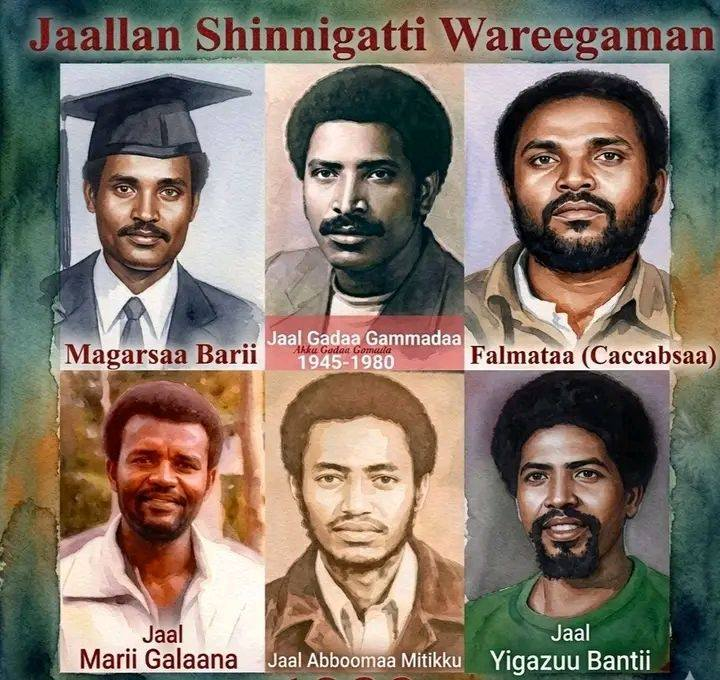
Remembering the Ebli 15 Martyrs of the Shinnigga Pit
(SHINNIGGA, Ethiopia) – In the chronicles of a people’s struggle for freedom, certain dates become etched not in ink, but in bone. For the Oromo people, one such date is **Ebli 15, 1980** (roughly late April in the Gregorian calendar). On that single, terrible day, the soil of Shinnigga drank a blood cocktail of revolutionary courage, religious tolerance, and unbreakable unity.
This is not merely a story of death. It is a story of how ten men—commanders and fighters of the Oromo liberation struggle—faced a common grave and refused to let their faith divide them.
They were the sons of *Oromiyaa hadhaa dhiigaa fi lafee isaaniin ijaaran*—Oromia built by their blood and bones. They were warriors of the *Adda Bilisummaa Oromoo* (Oromo Liberation Front), leaders who had carried the weight of the struggle during its darkest hours. Among them were legendary figures like Hayyuu-Duree Jaal Magarsaa Barii (Barisoo Waabee) and his deputy, Itti Aanaa Jaal Gadaa Gammadaa (Damisee Tacaanee).
But when the end came, they were not just commanders. They were brothers.
The Trap at Shinnigga
By 1980, the Oromo liberation army had become a thorn in the side of the Derg regime. The fighters, seasoned by the harsh terrains of Waabe and the strategic depth of the *Dirree Qabsoo Hidhannoo*, were pushing toward a new phase of the armed struggle. But war is also a game of betrayal.
While on a critical mission, a group of ten key figures—including the intellectual giants and tactical minds of the movement—were ambushed. Somali *Shifta* militia, operating as proxies for the regime, surrounded them near the rugged lowlands of Shinnigga. Outnumbered and cut off from reinforcements, the Oromo fighters fought to their last bullet.
They were not killed in the heat of battle.
They were captured alive.
The Pit
The militia dug a single, wide pit. It was not a grave for an individual. It was a mass tomb designed to swallow an ideology. The ten prisoners were forced to kneel at its edge. Their hands were bound. Their clothes were torn and stained with the dust of a long march.
According to survivors’ accounts passed down through the Oromo oral tradition, the *Shifta* executioners tried one final trick. They separated the prisoners by their names—some Muslim, some Christian, some following the *Waaqeffannaa* tradition of their ancestors.
“You see,” a commander allegedly said to the prisoners in a low, mocking voice. “You fought together. But you will die apart. Let each man pray to his own god before we throw him in.”
The executioners expected fear. They expected a scramble for last rites—a final, petty division to prove that the Oromo cause was a fragile lie.
They were wrong.
‘We Are One Name’
Jaal Magarsaa Barii, the senior commander, looked at his men. There was Jaal Abbaa Xiiqii (Abboomaa Mitikku), the strategist. Jaal Doorii Barii (Yiggazuu Bantii), the fearless cavalry leader. Jaal Faafam Dooyyoo, whose voice had rallied thousands. Falmataa (Umar/Caccabsaa), whose faith was as steadfast as his rifle. Jaal Irra’anaa Qacalee (Dhinsaa), Jaal Dhaddachoo Boruu, Jaal Dhaddachoo Mul’ataa, and the youngest, Jaal Marii Galaan.
Ten men. Ten names. One nation.
Without a word, they stood up. Jaal Magarsaa did not ask for a Christian priest. Jaal Gadaa did not ask for a *sheikh*. Falmataa did not turn his back on the others. Instead, they linked their arms—bound as they were—and stepped forward together.
“*Maqaa amantaan gargar hin baanu*,” Jaal Magarsaa declared. “We do not divide names by religion. Dig the pit wider or throw us in together. We are Oromo first.”
According to legend, Jaal Gadaa Gammadaa, the deputy, turned to the executioner and smiled. “You want to see us pray? Watch this.”
And together, the ten men—Muslim, Christian, and Waaqeffataa—intoned a single prayer. Not to Mecca. Not to the Cross. But to *Waaqa Oromoo*, the God of their land, who had seen their mothers’ tears and their fathers’ bones scattered across the highlands.
The executioners, unnerved, shoved them into the pit.
They fell as one. They died as one.
The Legacy of Ebli 15
Forty-six years have passed. The Shinnigga pit has long since been covered, but no grass grows there without a story attached. In Oromia today, the names of those ten men are whispered in schools, sung in protest songs, and invoked in political meetings.
They are called the *Ebli 15 Wareegamtoota*—the martyrs of Ebli 15.
They did not die for a flag or a single faith. They died for an idea: that an Oromo is an Oromo, whether they pray in a church, a mosque, under a tree, or in silence.
Jaal Marii Galaan, the youngest of the ten, was just 19 years old. Before he was pushed into the pit, he reportedly looked at the sky—the wide, unforgiving sky of Shinnigga—and shouted:
“*Oromiyaan hin duutu!* Oromia will not die!”
It hasn’t. And every Ebli 15, when the Oromo people gather to remember, they do not mourn ten separate men. They mourn one collective heart that beat for freedom until the dirt filled their mouths.
And in that final, defiant act of unity, they won a victory the pit could never bury.

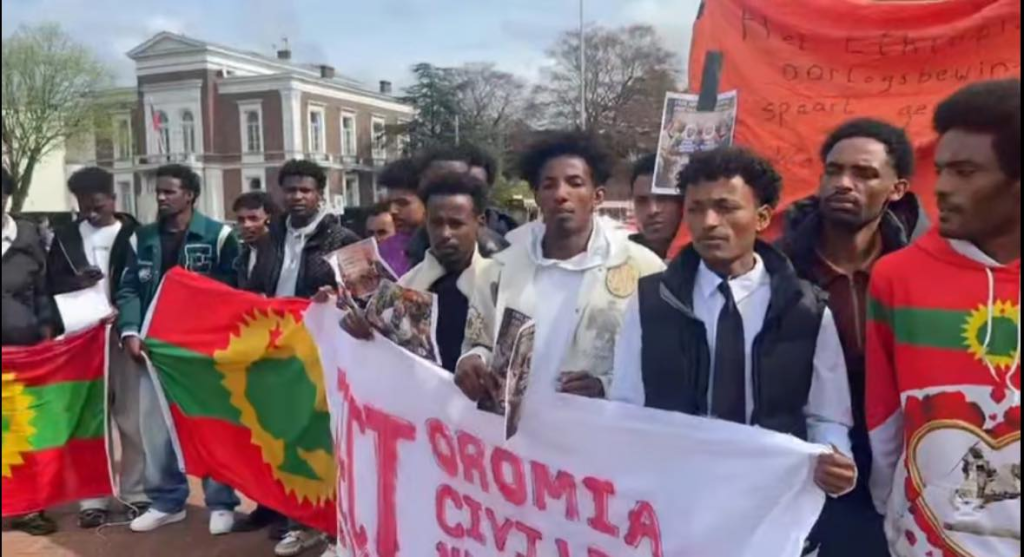
Oromo Diaspora in the Netherlands Declares Independence, Rejecting Ethiopian Rule
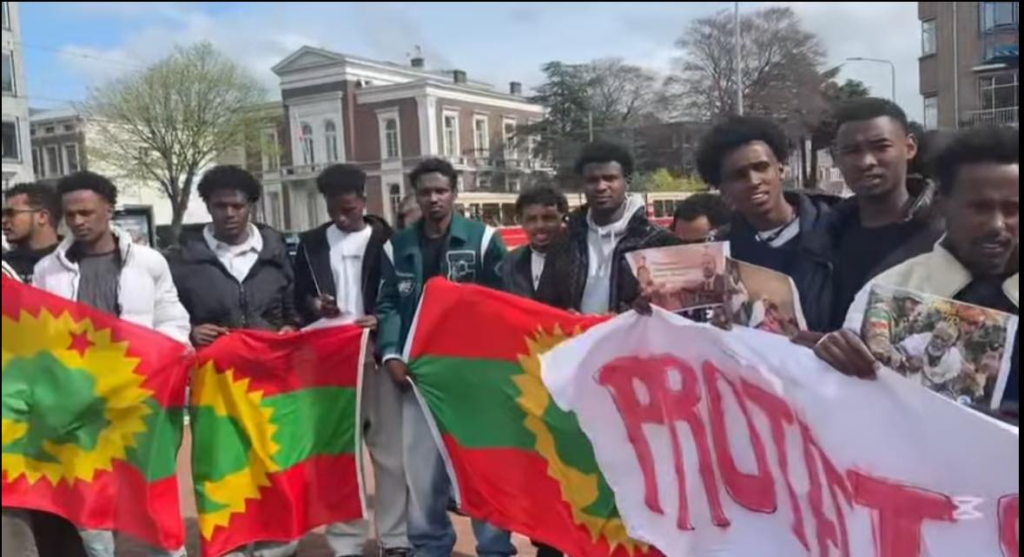
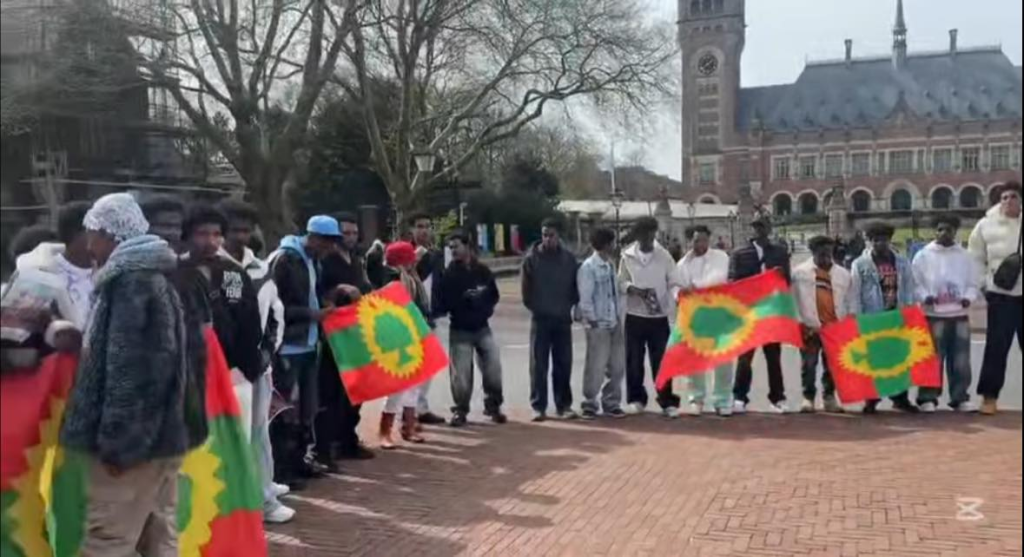
(THE HAGUE, Netherlands – April 10, 2026)– In a historic gathering that shook the diplomatic silence of this international city, members of the Oromo diaspora assembled in the heart of The Hague on Friday to declare their independence from the Ethiopian government, citing decades of alleged atrocities, border violations, and ongoing military campaigns in their homeland.
The declaration, which unfolded in a solemn ceremony near the Peace Palace, saw hundreds of Oromo men and women raise their voices in a chorus of defiance. For nearly four hours, testimonies echoed through the square—stories of loved ones lost, villages razed, and a people determined to chart their own destiny.
“We are no longer asking,” said one community elder who helped organize the event, speaking on behalf of the gathered crowd. “We are declaring. The blood of our people has soaked the soil of Oromia for too long.”
A Protest Born from Blood
The independence declaration did not emerge from a vacuum. Organizers and participants pointed to three specific grievances that have galvanized the movement:
Extrajudicial killings – Allegations that Ethiopian security forces have systematically targeted civilians in Oromia, with witnesses describing massacres in rural villages that never make international headlines.
Border violations – Claims that the Ethiopian government has unilaterally redrawn regional boundaries, carving up traditional Oromo lands and displacing entire communities without consultation or consent.
Ongoing war – The continuation of military operations across Oromia, which protesters described not as counterinsurgency but as collective punishment against the Oromo people.
“We have watched our children die. We have watched our elders dragged from their homes,” said a woman who identified herself only as Fatuma, her voice cracking as she addressed the crowd. “We are here because The Hague is where the world comes to talk about justice. And we need the world to finally listen.”
The Hague as a Stage for Justice
The choice of location was deliberate. The Hague, home to the International Court of Justice and the International Criminal Court, has long served as the symbolic capital of international law. For the Oromo diaspora—scattered across Europe, North America, and Australia—it represented the one place where their voices might carry legal and moral weight.
“Ironically, we cannot seek justice in our own land because the institutions there are controlled by those who oppress us,” said one young protester, a university student who arrived in the Netherlands as a refugee three years ago. “So we bring our case here, to the world.”
Throughout the afternoon, speakers took turns reading aloud the names of villages they said had been destroyed. Each name was followed by a moment of silence. The list stretched long enough that by the twentieth village, many in the crowd were weeping openly.
Testimonies of the Displaced
The gathering also served as an informal truth commission. Diaspora members who had fled Ethiopia at different times over the past decade compared accounts, finding disturbing consistencies in their stories.
One man, a former farmer from western Oromia, described how government forces arrived in his village at dawn. “They separated the men from the women. They took my brother behind a tree. I heard the shot. I never saw him again.” He fled to Kenya the following week, eventually making his way to Europe through a patchwork of smugglers and humanitarian visas.
Others spoke of families scattered across three continents, of parents who refused to leave ancestral lands despite the dangers, of children born in refugee camps who have never seen the Oromia their parents describe with such aching nostalgia.
“Independence is not a slogan for us,” said another organizer, a woman in her forties wearing traditional Oromo colors woven into a contemporary scarf. “It is survival. It is the only guarantee that what happened to our parents will not happen to our children.”
Ethiopian Government Response
As of press time, the Ethiopian government had not issued an official response to the declaration. However, in previous statements regarding diaspora activism, Ethiopian officials have characterized such movements as the work of “a small, extremist fringe” amplified by foreign media and hostile foreign governments.
Human rights organizations tracking the Horn of Africa have offered more nuanced assessments. Multiple reports from international bodies have documented abuses in various Ethiopian regions, though attributing responsibility remains complex in a country fractured by ethnic federalism and competing armed groups.
What Independence Would Mean
The declaration in The Hague carries no immediate legal weight. No nation has extended recognition. No ambassador has been dispatched. But for the thousands of Oromo in the Netherlands—and the millions more across the global diaspora—the act of declaration was itself a form of liberation.
“Legally, we know what we are doing today changes nothing on the ground tomorrow,” one speaker acknowledged to the crowd. “But politically? Morally? We have said what needed to be said. We have drawn our line. The world cannot claim it did not hear us.”
As evening fell over The Hague, the crowd did not disperse angrily. Instead, they stood in small clusters, embracing one another, singing old songs that had been passed down through generations—songs of resistance, of longing, of a homeland they refuse to surrender.
The declaration papers, signed by dozens of community representatives, were formally presented to a representative of the city government—a symbolic gesture, but a gesture nonetheless.
“We will send copies to the United Nations. To the African Union. To every embassy that will accept mail from us,” the lead organizer said. “And if no one responds, we will declare again. And again. Until our independence is no longer a declaration. It is simply a fact.”
For now, the Oromo diaspora in the Netherlands has planted its flag—not on soil, but in history. Whether the world will salute or look away remains to be seen. But on April 10, 2026, in The Hague, a people spoke.
And for one afternoon, the world listened.

The Martyrs of the Western Front: How April 15 Became Oromia’s Day of Sacrifice
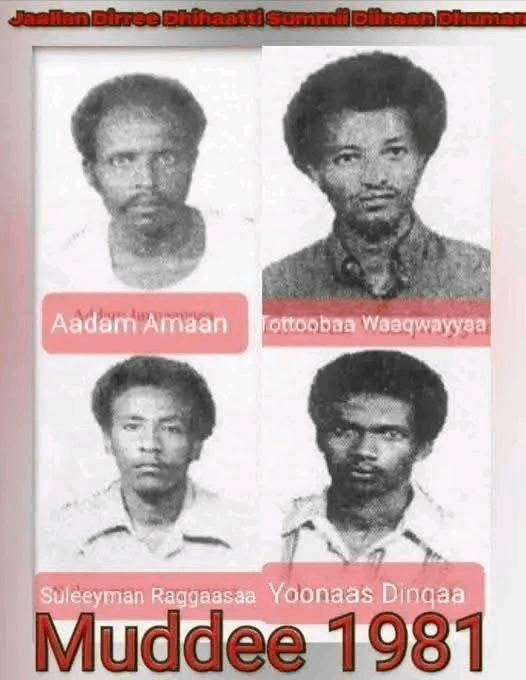
In the dense forests and rugged terrain of western Oromia, a band of liberation fighters once gathered under the cover of darkness. Their mission was audacious. Their fate was sealed. And their memory now echoes across generations every April 15.
The year was 1980. The Ethiopian Derg regime, led by Mengistu Haile Mariam, was at the height of its brutal military rule. Armed resistance had become the only language the regime understood. And the Oromo Liberation Front (ABO) was preparing to expand its armed struggle into a new theater: the Western Front.
A Mission Born in the Shadows
It began with a leadership change. On April 15, 1980, the ABO appointed a new chairman in Shinnigga. One year later, the leadership that would command the Western Front—mirroring that Shinnigga structure—was installed. The goal was clear: launch an armed resistance in the West.
The ABO’s new commanders meticulously planned their next move. They sent 12 batches of fighters to Eritrea for military training. After completing their preparations, 17 fighters were dispatched to the Western Zone to begin operations.
These were not faceless soldiers. They were fathers, brothers, and sons. Their names would eventually be carved into Oromia’s collective memory:
· Daawud Ibsaa — Battalion Commander
· Abbaa Caalaa Lataa — Deputy Battalion Commander
· Jaal Tottoobaa Waaqwayyaa — Squad Leader
· Jaal Birruu Taasisaa (Gabbisaa)
· Jaal Caalaa Ulmaanaa (Kormee Dinqaa)
· Jaal Taarreqanyi Ayyaanaa (Waaqgaarii)
· Jaal Abdallaa Raggaasaa
· Jaal Suleemaan Raggaasaa
· Jaal Waaqoo Guyyoo (Abbaa Gadaa)
· Jaal Abdulra’uuf
· Jaal Miijanaa Yandoo
· Jaal Adam Amaan
· Jaal Saanii Abdullaahi (Kerkedee)
· Jaal Yohaannis Dinqaa (Wayyeessaa)
· Jaal Kabbadaa Fufaa (Gambel)
· Jaal Taaddalaa Makuriyaa (Bayyanaa)
· Jaal Abduqqee (Habbuuqaa)
These 17 commanders were sent to ignite the Western Front resistance. But the Derg regime had no intention of allowing the ABO to take root. A fierce counterinsurgency campaign was already underway, designed to crush the liberation movement at its foundation.
The Work Before the War
Before bullets could fly, the commanders focused on what would make the struggle sustainable: mobilizing communities, building infrastructure, and educating the people. They recruited new members. They strengthened the resistance. They worked in the shadows, knowing that discovery meant death.
It was during this organizing phase that the leadership made a strategic decision. Commander Daawud Ibsaa and his deputy, Abbaa Caalaa Lataa, along with a man named Taaddasaa Shorroo and one other, divided their forces into two groups. One group, loyal to Daawud Ibsaa, headed toward Gidaami. The other, following Abbaa Caalaa Lataa, moved toward Begi.
On December 21, 1981, the two groups agreed to return to their base and reunite. They planned to share intelligence and coordinate their next moves. But the reunion would never happen as intended.
The Poisoned Reunion
The two groups did not return in triumph.
The faction led by Daawud Ibsaa headed toward Gidaami, in the village of Giraayii Sonkaa. On December 23, 1981, they received an order from Nugusee Faantaa, then the security chief of Wallagga Zone, in coordination with Zakariyaas Shorroo, Dirribaa Moggaa, and Hiikaa Masaadii—the administrator of Gidaami district at the time.
The orders were chilling: the fighters were to be poisoned.
But not through open combat. The betrayal came from within. Zakariyaas Shorroo, whose own brother Taaddasaa Shorroo was among the fighters, became the instrument of the regime. He provided the poison that would kill his own kin.
Eight ABO commanders ingested the poison prepared by the Derg regime. Among them were:
· Jaal Daawud Ibsaa
· Jaal Tottoobaa Waaqwayyaa
· Jaal Hinsarmuu
· Jaal Adam Amaan
· Jaal Yohaannis Dinqaa
· Jaal Suleemaan Raggaasaa
· Jaal Shaanqoo
· Jaal Taaddasaa Shorroo
They died in the same place, their bodies falling together. A brother had handed poison to his brother. The regime’s strategy of divide and rule had found its most devastating expression.
A Slow Death in Captivity
Jaal Daawud Ibsaa did not die immediately. Severely weakened by the poison, he was captured alive by Derg forces and taken to Dambi Dollo Hospital. From there, he was transferred to Maikelawi Prison and other detention centers, where he endured a slow, agonizing decline. He eventually suffered in custody—a martyr twice over, first by poison and then by neglect.
The ABO had lost eight of its most promising commanders in a single stroke. The Western Front resistance, still in its infancy, suffered a blow from which it would take years to recover.
Remembering the Fallen
For one year, the surviving ABO leadership grappled with the loss. The struggle continued, but the wound was deep. The Derg regime, along with collaborators like Ziyaad Barree, intensified its campaign. Blood and bone were spilled across Oromia. Heroes were buried in unmarked graves.
Then, in 1984, the remaining ABO leaders convened. They made a decision. Beginning in 1985, April 15—the date of the Shinnigga leadership appointment in 1980—would be permanently commemorated as Oromo Martyrs’ Day. Article 56, subsection 2 of the ABO constitution formally recognized it as one of the organization’s official holidays.
Since 1985, April 15 has been observed in the forests of Oromia and in the diaspora. Inside Oromia, ABO members commemorate the day in secret, risking arrest or death. Outside, in refugee camps and community centers across Europe, North America, and Australia, Oromos gather openly to honor those who fell.
Today: A People’s Memorial
Today, the Oromo people remember April 15 as Guyyaa Gootota Oromoo—Oromo Martyrs’ Day. It is a day to honor not only the 17 commanders of the Western Front but all those who have fallen in the struggle for Oromo liberation.
The names of the Western Front martyrs are recited in poems and songs. Their faces appear on banners at diaspora protests. Their story is taught to Oromo children growing up far from the forests where their fathers died.
“April 15 is the day we remember all the martyrs of the Oromo liberation struggle,” one elder in the Oromo community explains. “The commanders who were poisoned. The fighters who fell in battle. The civilians killed in their villages. We remember them all on this day.”
The Western Front mission of 1980-81 ultimately failed to achieve its immediate military objectives. The resistance there was crushed. The commanders were killed or captured. But the memory of their sacrifice outlived the regime that murdered them.
Mengistu Haile Mariam fled to Zimbabwe in 1991. The Derg is gone. But the names of Daawud Ibsaa, Taaddasaa Shorroo, and their comrades remain. Every April 15, the Oromo people prove that while regimes can poison bodies, they cannot poison history.
—
This feature article is dedicated to the 17 commanders of the Western Front and to all Oromo martyrs who gave their lives for the liberation of their people. April 15 — Guyyaa Gootota Oromoo.

Join the Irreecha Arfaasaa Celebration on April 26, 2026
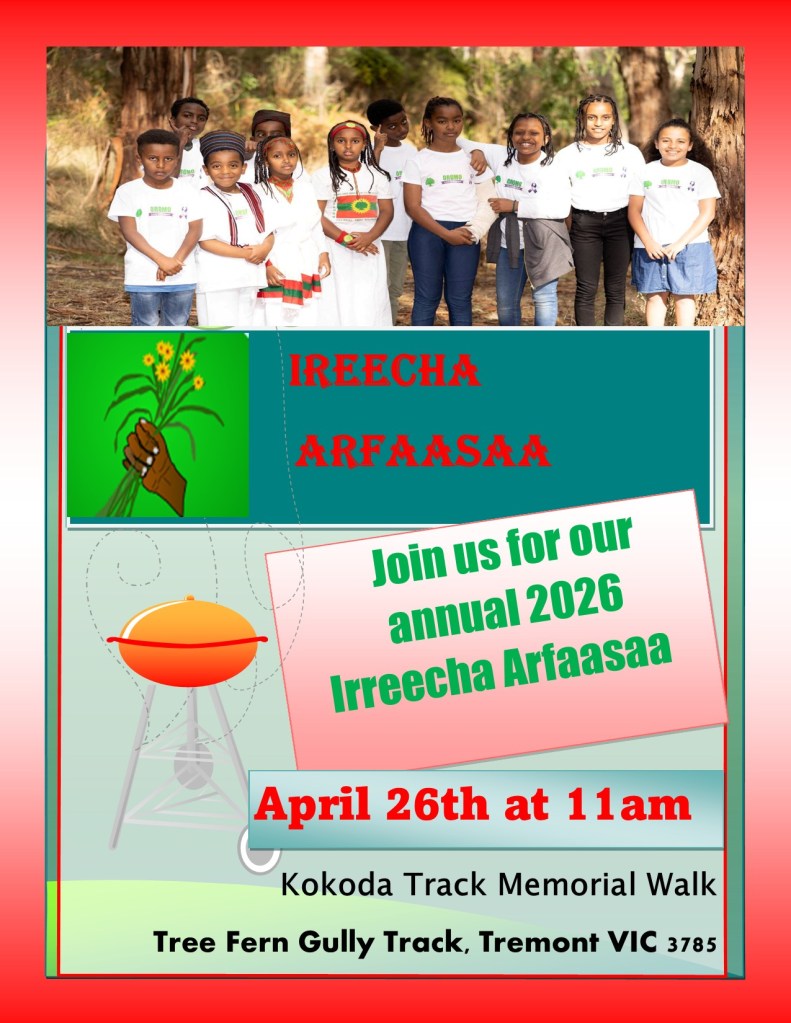
Irreecha Arfaasaa (the spring thanksgiving festival) being celebrated on April 26, 2026, at Tulluu Dandenong (likely a reference to the Dandenong Ranges in Victoria, Australia). This appears to be a diaspora celebration organized by the Oromo community in Melbourne, and Oromo Irrecha Association.






