Why Water Is So Important in Religious Practice Across the World
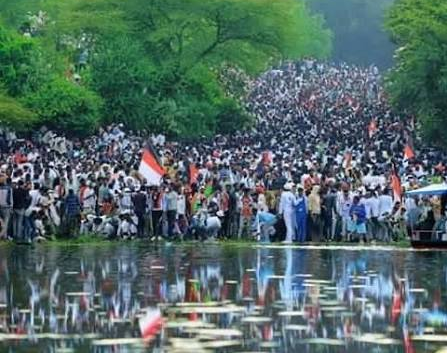
Water is the most universal symbol in human spirituality. From the Ganges to the Jordan, from the Zamzam well to the Gadaa springs of Oromia, virtually every faith tradition on Earth places water at the center of its most sacred rituals. The reasons are both practical and profound — rooted in the basic facts of human survival and in the deepest questions of meaning, purity, and renewal.
Water as the Source of Life
The most fundamental reason water is sacred is that it is the source of all life. Every civilization in history has understood that without water, there is no life — no crops, no animals, no human community. This biological reality translates naturally into spiritual reverence.
In the Oromo tradition, this understanding is explicit: water bodies are places where the spirit of Waaqa (God) resides, and the Irreechaa festival draws millions to rivers and lakes to give thanks for rain, fertility, and abundance. Similarly, in ancient Egypt, the Nile was worshipped as a god; in Hinduism, the Ganges is a goddess; in Islam, the Quran states that “We made from water every living thing” (21:30). The recognition of water as the physical basis of life makes it the natural vessel for the spiritual force that sustains life.
Water as a Purifier
Nearly every religion uses water for purification — washing away not just physical dirt but spiritual impurity. This is one of the most consistent patterns in the study of religion.
In Christianity, baptism symbolizes the washing away of sin and the beginning of new life. In Islam, wudu (ritual ablution) precedes prayer, and ghusl (full-body washing) is required after major impurities. In Judaism, the mikveh is a ritual bath used for spiritual cleansing. In Hinduism, bathing in sacred rivers like the Ganges is believed to cleanse sins accumulated over lifetimes. In Shinto, misogi involves purification in waterfalls and rivers. In the Oromo Gadaa system, water in Irreechaa rituals is used to wash away conflict and restore peace.
The logic is consistent: water dissolves and carries away. Just as it removes physical grime, it is believed to remove moral and spiritual stain — restoring the individual to a state of purity before the divine.
Water as the Boundary Between Worlds
Anthropologists have long observed that water often serves as a threshold — a boundary between the ordinary and the sacred, the living and the dead, the human and the divine.
Rivers mark the edge of the underworld in Greek mythology (the Styx), the boundary of the promised land in the Hebrew Bible (the Jordan), and the passage to enlightenment in Buddhism (the crossing of the river). In many traditions, crossing water — or being immersed in it — represents a transition: from death to life (baptism), from sin to forgiveness, from ignorance to awakening.
In Oromo tradition, the riverside (malkaa) where Irreechaa is celebrated is precisely such a threshold — a meeting place between the human community and the divine presence of Waaqa. The act of dipping fresh grass into the water and sprinkling it is a way of drawing the sacred across that boundary and into the community.
Water as a Mirror of the Divine
Water’s reflective surface has made it a natural symbol of the divine. It mirrors the sky, the heavens, and the face of the one who looks into it. In many mystical traditions, the calm surface of water represents the purified soul capable of reflecting God’s image.
This is present in the Oromo practice of gathering at still lakes (Hora) — the mirrored surface of the water symbolizes the peace (nagaa) that the community seeks. In Christian mysticism, the “living water” that Jesus offers is a metaphor for the Holy Spirit. In Sufi poetry, the reflection in water symbolizes the soul’s mirroring of the beloved Divine.
Water as a Source of Healing
Water is widely associated with healing — both physical and spiritual. Pilgrimages to sacred springs and rivers are a global phenomenon: Lourdes in France, the Ganges in India, the Zamzam well in Mecca, and countless local springs across Africa and the Americas.
Research confirms that “blue spaces” — environments with water — promote mental health, reduce stress, and enhance well-being. This scientific finding echoes what religious traditions have known for millennia: water restores. In the Oromo tradition, the healing power of water at Irreechaa is both spiritual and psychological — the community gathers at the water’s edge to renew mind, body, and spirit.
Water as a Symbol of Community
Finally, water is often a communal symbol. It flows and gathers, connecting people and places. Rivers bring communities together; wells are shared gathering places; rain falls on all regardless of status or wealth.
The Oromo Irreechaa festival draws millions of people to the same water sites, celebrating together in a shared and unified manner. This communal dimension of water is present in the Jewish mikveh, the Islamic hammam, and the Christian baptismal font — all places where individuals are incorporated into a larger community of faith.
A Universal Language of the Sacred
Water’s importance across religious traditions is not a coincidence. It reflects something deep in the human condition: our dependence on water for life, our need for cleansing, our longing for renewal, and our search for connection with the divine and with one another.
Whether it is the fresh grass dipped into the Oromo river, the waters of baptism, the ablution before Islamic prayer, or the immersion in the Ganges, water speaks a language that every human being understands. It is the universal symbol of life, purity, transition, and hope.
And wherever humans gather at water’s edge to pray, they are repeating an act as old as humanity itself — and as meaningful as it has ever been.

Posted on September 24, 2026, in Aadaa, Afaan, Bokkkuu, Daaniyaa, Events, Finfinne, freedom, gadaa, Gumaa, health, Information, Irreechaa, Language, Media, News. Bookmark the permalink. Leave a comment.






Leave a comment
Comments 0