Category Archives: mental health

Peace Celebrations Behind the Storm: The “Festival Politics” of Oromia and Tigray
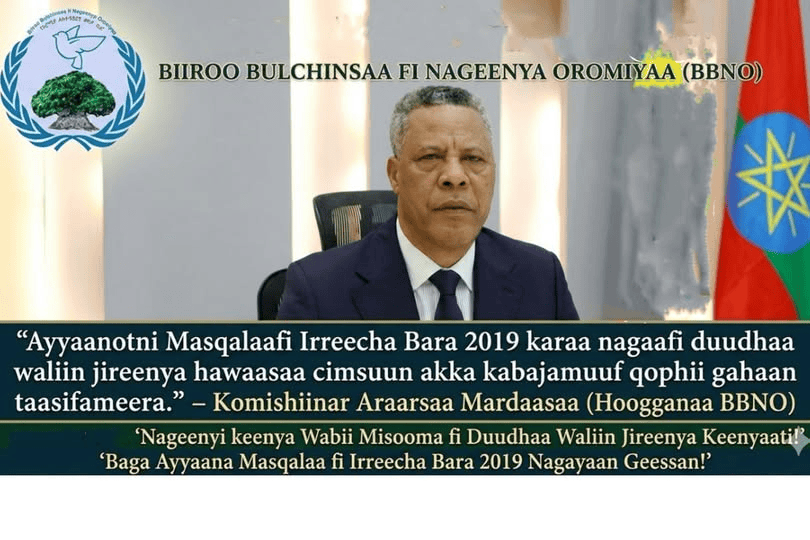
FINFINNE — When the Oromo thanksgiving festival Irreecha and the Ethiopian Orthodox Meskel festival arrive in the capital and surrounding areas within two weeks of each other, the official messaging is strikingly uniform: everything is for peace.
Mardasa, Director of the Oromia Bureau of Administration and Security and Peace Commissioner, stated that security agencies have made full preparations to celebrate both festivals “in a peaceful manner and under the traditions of unity and coexistence.” The federal police have also pledged to deploy adequate forces at Hora Finfinne, Hora Harsadi, and other locations.
Yet behind this placid official statement, Ethiopia in 2026 faces its most severe security situation since the end of the Tigray war in 2022. For a country mired in multi-front conflicts, the “security preparations” for two festivals are far from routine.
Surface Calm and Deep Fear
Irreecha is the single most important thanksgiving celebration for the Oromo people, marking the end of the rainy season and the beginning of the harvest. This year’s Irreecha will be held on Meskerem 23 and 24 in the Ethiopian calendar (October 3 and 4 in the Gregorian calendar) at Hora Finfinne in Addis Ababa and Hora Harsadi in Bishoftu. Masqala took place two weeks earlier in mid-September, with the Demera bonfire ceremony at Meskel Square in the capital drawing large crowds.
Official statements emphasize “coordinated cooperation between security agencies and religious leaders, Gadaa elders, Siinqee women’s representatives, and youth,” and call on the public to “immediately report any suspicious circumstances to the nearest security agency.” This phrasing itself reveals tension.
The concern is not unfounded. During the 2016 Irreecha celebration in Bishoftu, clashes between police and protesters triggered a stampede that killed at least 52 people, becoming a turning point for large-scale anti-government protests in Oromia. At that time, protesters raised crossed wrists—a gesture that later became a symbol of resistance—and advanced toward the stage. Police responded with tear gas and rubber bullets, and people fell into deep ditches as they fled.
A decade later, the political fractures in that land are far from healed.
“Peace” Under Siege
Peace Commissioner Mardasa’s statement was issued at an extremely delicate moment. Just days earlier, seven armed groups announced an alliance aimed at “overthrowing” Prime Minister Abiy’s federal government. Alliance members include the Tigray People’s Liberation Front (TPLF), the Amhara Fano militia, and the Oromo Liberation Army (OLA)—organizations whose historical enmity runs so deep that their union itself is a signal.
The federal government now faces armed insurgencies on three fronts simultaneously: Tigray, Amhara, and Oromia. Against this backdrop, the large gatherings for Irreecha and Masqala are both a security challenge and a political litmus test: can the government maintain effective control over the capital and surrounding areas in a wartime posture?
The U.S. State Department’s travel advisory lists large parts of Oromia at “Do Not Travel” level, citing “risks of armed conflict, kidnapping, and unrest.” Finland’s Ministry of Foreign Affairs warns that Ethiopia’s “political and ethnic tensions have led to an unstable situation, and unrest may further intensify.” A clear temperature gap exists between these international assessments and the official “everything is ready” posture.
The Dual Function of Festivals
Irreecha has never been merely a religious festival. In the Oromo Gadaa tradition, it is the transition from the “dark season” to the “light season,” a moment for the community to collectively wash away the misfortunes of the past year and pray for a bountiful year ahead. But in contemporary Ethiopia, it is also the largest-scale staging ground for Oromo identity politics.
Similarly, Masqala has a unique cultural embedding in the Oromia region. Academic research documents that during Masqala, Oromo communities perform Garmaama singing, which carries the collective emotional expression of “joy, sorrow, love, and longing,” a cultural ritual of “transition from the old era to the new.”
When these festivals are framed by officials under the banner of “peace and unity,” a sharp question emerges: who defines “peace”? Is it community reconciliation in the Gadaa elders’ tradition, or order and stability under federal government rule?
Peace Commissioner Mardasa’s statement repeatedly emphasizes coordination between “security agencies” and “community leaders,” but the real question may be: when community leaders themselves become a party to political contestation, are festival celebrations an opportunity for unity or a fuse for conflict?
The Risk of Silence
Addis Ababa police say they have made “coordinated preparations” for the Demera ceremony at Meskel Square, but as of press time, authorities have not published any specific traffic control plans, crowd management measures, or security deployment details for any single day. The Oromo Abbaa Gadaa Council frames this year’s Irreecha as an expression of “national consensus,” but in Ethiopia’s current context, that phrase reads more like a prayer than a description.
For the millions about to travel to Hora Finfinne and Hora Harsadi, the reality they face is: a government fighting on multiple fronts simultaneously, an armed opposition that has just formed an anti-government alliance, and a traumatic memory that cost 52 lives a decade ago.
The Peace Commissioner’s statement ends with a blessing: “May you return safely in this harvest season.” In this harvest season, the weight of those words is heavier than ever.

Irreecha: A Festival for National Unity and Patriotic Covenant
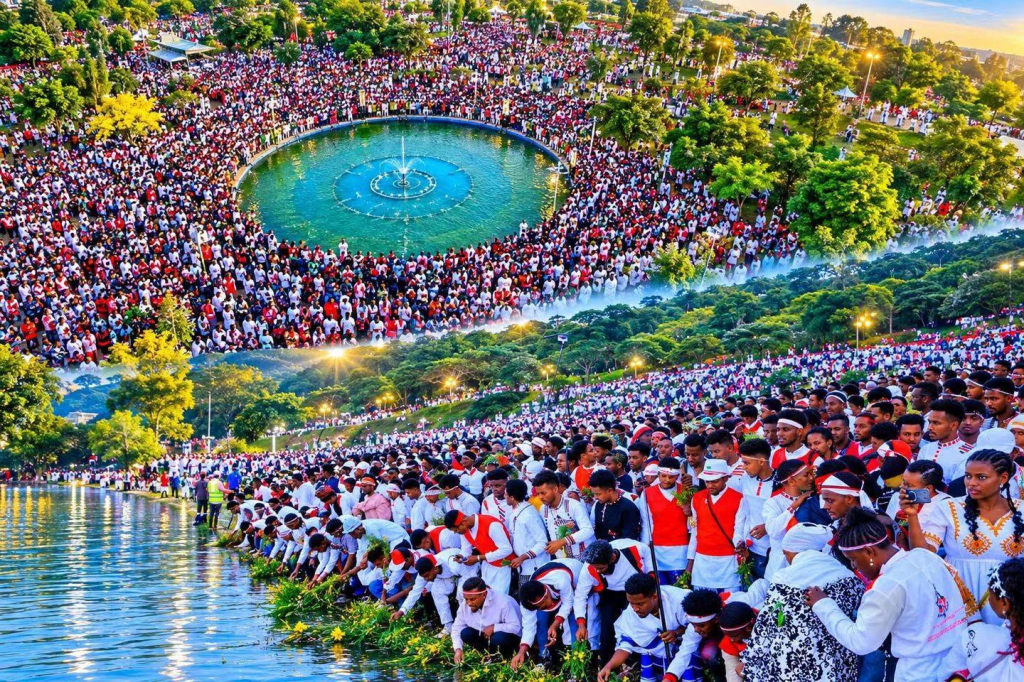
Oromia, Ethiopia — National festivals play a vital role in accelerating peace, love, unity, and shared development. Among the festivals that exemplify peace, love, and solidarity, Irreecha stands as one of the most significant. Rooted in the Gadaa system, Irreecha embodies the ancient Oromo traditions of working together, eating together, supporting one another, standing side by side, reconciliation, holding good wishes for one another and the country, and translating unity into action.
Irreecha is celebrated as a festival that manifests the spirit of togetherness and brotherhood among peoples. It serves as a source of collective strength, a fountain of love, a spring of friendship, and a foundation for living together in harmony.
A Festival That Embraces All Humanity
This grand festival holds a special place in fostering a national covenant because it is enriched with values that enable people to see one another with equal respect, to understand one another, and to draw closer together. Irreecha teaches that every human being deserves dignity and honor, regardless of their background.
That is why the Oromo people celebrate this festival of thanksgiving and gratitude to the Creator with unwavering unity. No distinction is made based on appearance, gender, age, religion, or any other criterion. Everyone is welcome. Everyone is equal. Everyone belongs.
A Unifying Force for All Nations and Nationalities
Because of this inclusive and unifying character, Irreecha has today become a celebration that brings together nations, nationalities, and peoples of Ethiopia. What began as a traditional Oromo thanksgiving festival has grown into a national event that transcends ethnic boundaries, drawing participants from all walks of life who wish to share in its message of peace, gratitude, and togetherness.
The festival’s ability to unite diverse communities is not accidental. It flows from the core values embedded in the Gadaa system — values of consensus, mutual respect, and collective responsibility. These values have been passed down through generations and remain as relevant today as they were centuries ago.
A Call to Celebrate in Unity
The message is clear: all people are invited to come out in unity to celebrate this festival of Irreecha and to give thanks to the Creator. The festival belongs to everyone — not to any single group, region, or faith. It is a shared heritage, a common treasure, and a living expression of Ethiopia’s diversity and unity.
In a time when divisions often dominate public discourse, Irreecha offers a powerful counter-narrative. It reminds us that our shared humanity is greater than our differences, that our collective strength lies in our unity, and that our future depends on our ability to stand together.
A Covenant for the Nation
For these reasons, Irreecha holds an elevated role in strengthening national unity and fostering a patriotic covenant. It is not merely a festival — it is a declaration that peace, love, and togetherness are not abstract ideals but lived realities. It is a promise that the bonds between peoples are stronger than the forces that seek to divide them.
As millions gather at the banks of rivers and lakes to dip fresh grass into the water and lift their voices in song, they do more than celebrate a tradition. They renew a covenant — with Waaqa, with one another, and with the nation they share.
Baga Irreecha! Baga Tokkummaa!
Source: Oromo Cultural Heritage

Gadaa Elders Announce Irreechaa 2019 Dates: A Call for Unity, Tradition, and Peaceful Celebration
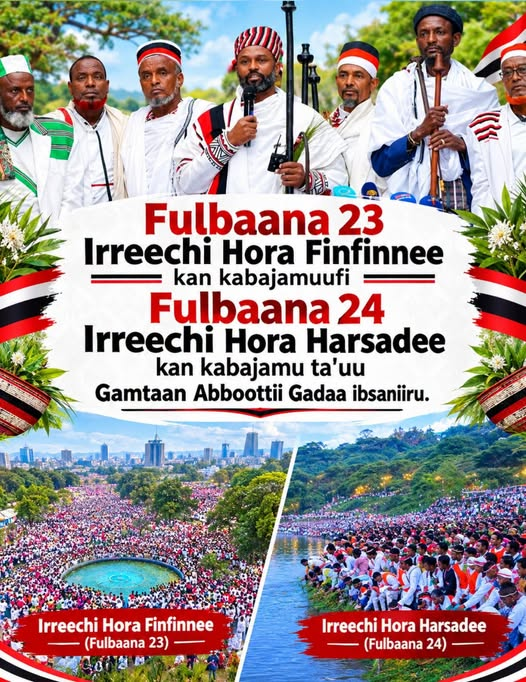
Finfinnee, Oromia — The Assembly of Gadaa Elders of Oromia has officially announced the dates for the celebration of Irreechaa in 2019, confirming that the festival at Hora Finfinnee will be celebrated on September 23, while the celebration at Hora Harsadee will take place on September 24.
The announcement was made through an official statement issued by the Assembly of Gadaa Elders, the traditional custodians of Oromo cultural and spiritual life, who oversee the proper observance of the festival in accordance with ancient customs, traditions, and sacred norms.
A Festival That Reflects the Greatness of a People
In their statement, the Gadaa elders emphasized that Irreechaa is not merely a seasonal celebration but a profound expression of the greatness of the Oromo nation. The festival, they noted, must be observed in a manner that honors the culture, traditions, and sacred norms (safuu) of the Oromo people, preserving the customs handed down from their ancestors.
The elders stressed that Irreechaa should serve as an occasion to strengthen the bonds of brotherhood and unity among all people, regardless of their faith or political outlook. The festival, they affirmed, belongs to all — and its celebration must transcend differences of religion and political opinion.
A Call for a United, Orderly Observance
The Assembly issued a call to all sectors of society to support the proper and orderly observance of Irreechaa. The festival, they said, must be conducted according to its established rules and procedures, with a spirit of oneness and shared purpose. No difference of faith or political perspective should divide the community during this sacred time.
The elders’ call underscores the deep significance of Irreechaa as a unifying force in Oromo society. The festival draws together millions of people from across Oromia and the diaspora, gathering at sacred water sites to give thanks to Waaqa (God), seek reconciliation, and welcome the new season of Birraa (spring).
A Tradition Preserved Through Generations
The announcement by the Gadaa elders reflects the continued vitality of the Gadaa system, the ancient democratic and social governance structure of the Oromo people. Recognized by UNESCO as an Intangible Cultural Heritage of Humanity, the Gadaa system organizes Oromo society into age sets and generational grades, each with its own roles, rights, and responsibilities. The elders’ role in announcing and overseeing Irreechaa is a testament to the enduring strength of this institution.
A Festival of Thanksgiving and Renewal
Irreechaa is the annual Oromo thanksgiving festival, celebrated at the banks of rivers and lakes across Oromia. It marks the end of the rainy season (Ganna) and the beginning of spring (Birraa), a time of renewal, gratitude, and hope. Participants carry fresh green grass and yellow daisies to the water’s edge, dipping them into the water as an offering of thanks for the blessings of the past year and a prayer for peace and abundance in the year to come.
The festival’s requirement for reconciliation before participation creates a powerful, community-enforced deadline for resolving disputes. There is a widespread belief that Waaqa will not accept the prayers of those who carry grievances. Irreechaa is thus not only a time of celebration but also a time of healing and reconciliation.
A Call to All
As the dates for Irreechaa 2019 approach, the Gadaa elders’ message is clear: Irreechaa is a festival for all Oromo people and for all who wish to join in the spirit of gratitude and unity. It is a time to set aside differences, to come together as one community, and to give thanks to Waaqa for the blessings of life, peace, and abundance.
The Assembly’s call for support from all sectors of society reflects the communal nature of the festival. Irreechaa is not organized by any single institution or group — it is a collective expression of the Oromo people’s faith, culture, and identity.
Baga Irreechaa! Baga Birraa!
Source: Assembly of Gadaa Elders of Oromia

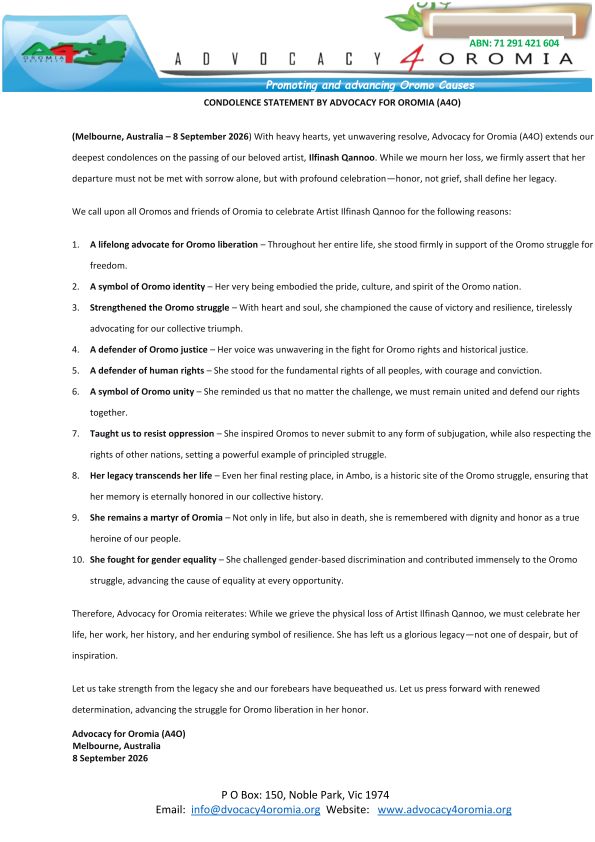
A Life Worth Celebrating—A4O Calls for Honor, Not Grief, for Artist Ilfinash Qannoo
By Our Correspondent
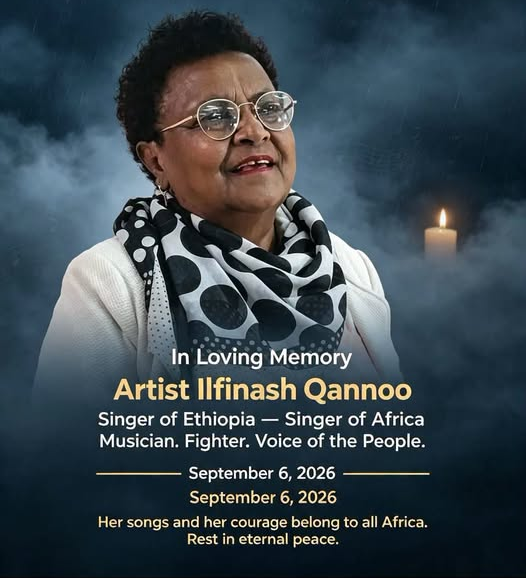
(Melbourne, Australia – 8 September 2026)-In a poignant and powerful statement released today, Advocacy for Oromia (A4O) has called on Oromos and friends of the struggle worldwide to transform mourning into celebration for the late artist and freedom fighter, Ilfinash Qannoo.
The Melbourne-based advocacy group, speaking from their Australian headquarters, emphasized that while the loss of the beloved artist is deeply felt, her life, legacy, and unwavering commitment to the Oromo cause demand a response of honor rather than sorrow.
A Life Dedicated to Liberation
Ilfinash Qannoo was no ordinary artist. According to A4O, she was a steadfast pillar of the Oromo liberation movement, dedicating her entire life to the struggle for Oromo self-determination. Her artistry was not merely entertainment—it was resistance. Her voice was not just melody—it was a clarion call for justice.
“Artist Ilfinash Qannoo spent her whole life supporting and advancing the Oromo struggle for freedom,” the statement reads, positioning her among the most committed cultural warriors of her generation.
More Than an Artist—A Symbol
A4O’s statement highlights ten compelling reasons why Ilfinash Qannoo’s legacy must be celebrated:
A Symbol of Oromo Identity: She embodied the pride, dignity, and cultural richness of the Oromo nation. Her very presence was a testament to Oromo resilience and identity.
Champion of Justice: She was a fearless defender of Oromo rights, human rights, and gender equality. She challenged oppression in all its forms and stood against discrimination, including gender-based injustice.
Unifier of the Oromo People: At a time when division threatens the struggle, Ilfinash Qannoo stood as a powerful symbol of Oromo unity, reminding her people that solidarity is the foundation of victory.
Teacher and Inspiration: Through her life and work, she taught Oromos to resist subjugation with dignity, while also respecting the rights of other nations—a rare and powerful example of principled advocacy.
Martyr for the Cause: Her final resting place in Ambo is now etched into the historical landscape of the Oromo struggle. Her grave, like her life, has become a site of memory and honor.
A Legacy That Transcends Death
Perhaps the most striking aspect of A4O’s tribute is the assertion that Ilfinash Qannoo’s impact extends far beyond her lifetime. She did not simply live for Oromia; she ensured that even in death, she would remain a rallying figure for the movement.
“She left us not with despair, but with a glorious legacy,” the statement declared. “We are called to take strength from what she and our forebears have left us, and to rededicate ourselves to the struggle with renewed vigor.”
A Call to Action, Not Lamentation
In what can be described as a clarion call to the Oromo diaspora and the wider movement, A4O urged supporters to channel their grief into action. The organization stressed that the most fitting tribute to Ilfinash Qannoo is not tears, but a renewed commitment to the goals she championed.
“We must celebrate her life, her work, her history, and her enduring symbol of resilience,” the statement emphasized. “Let us march forward in her honor, advancing the struggle for Oromo liberation with determination and unity.”
Global Reach of the Statement
Issued from Melbourne, Australia, on 8 September 2026, the statement reflects the global nature of the Oromo struggle and the far-reaching influence of cultural icons like Ilfinash Qannoo. A4O’s message transcends geographic boundaries, speaking directly to Oromos in the homeland and across the diaspora.
The advocacy group concluded with an unwavering declaration: “Victory to Oromia!” —a fitting epitaph for a woman whose life was dedicated to that very cause.
Historical Context
Ilfinash Qannoo’s passing marks the end of an era in Oromo cultural and political history. She was among a generation of artists who used their craft as a weapon of resistance, challenging the status quo and inspiring millions. Her death is not just a loss of talent, but the departure of a moral compass for a movement in constant pursuit of justice.
As Oromos around the world reflect on her legacy, A4O’s message is clear: Grieve, yes—but more importantly, celebrate. Honor her by carrying the torch she has passed on.
About Advocacy for Oromia (A4O): Based in Melbourne, Australia, A4O is a diaspora advocacy organization committed to advancing the rights, justice, and self-determination of the Oromo people through awareness, advocacy, and solidarity initiatives.
“We mourn her loss, but we celebrate her life—for in her, Oromia found a voice that will never be silenced.”

On the Passing of Artist Ilfinash Qannoo – Beloved Cultural Icon and Symbol of Oromo Resistance

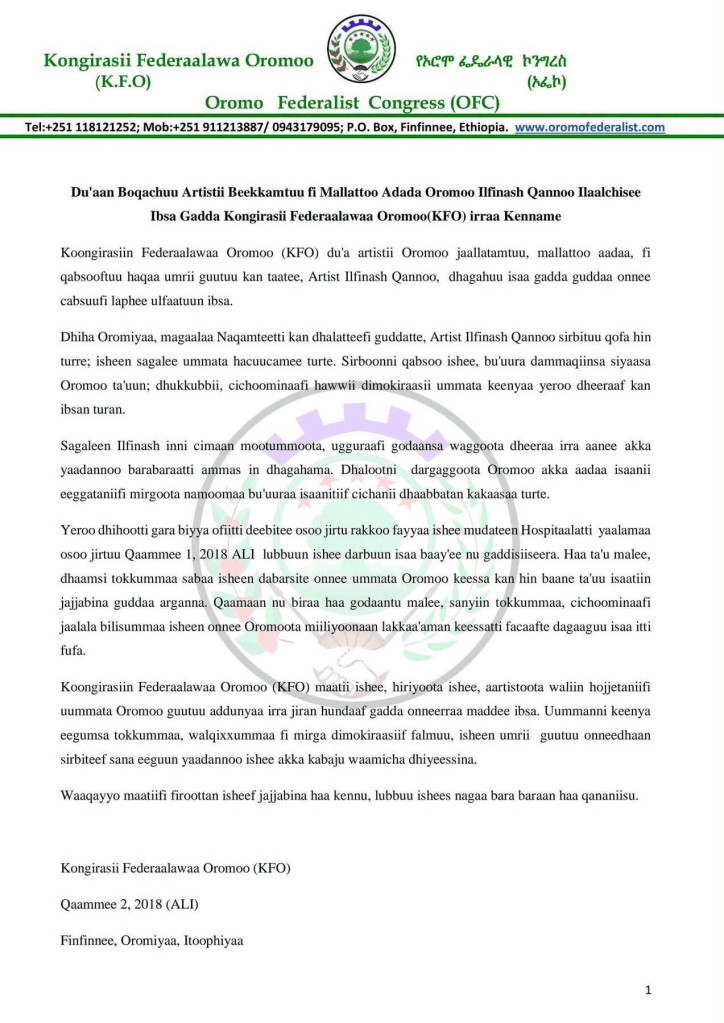
The official press release from the Oromo Federalist Congress (OFC/KFO) regarding the passing of Artist Ilfinash Qannoo:
OFFICIAL FEATURE STATEMENT
On the Passing of Artist Ilfinash Qannoo – Beloved Cultural Icon and Symbol of Oromo Resistance
Issued by the Oromo Federalist Congress (OFC/KFO)
Qaammee 2, 2018 (E.C.) | Finfinnee, Oromia, Ethiopia
A Profound Loss to the Oromo Nation
The Oromo Federalist Congress (OFC/KFO) received with deep sorrow, profound heartbreak, and heavy grief the news of the passing of the beloved Oromo artist, cultural emblem, and lifelong advocate for justice – Artist Ilfinash Qannoo.
Born and raised in Naqamtee, Western Oromia, Ilfinash Qannoo was never merely a performer. She was the voice of a silenced people. Her protest songs became the very foundation of Oromo political awakening – lyrics that for decades spoke unflinchingly of oppression, marginalization, and the long-cherished dream of democracy for our people.
A Voice That Would Not Be Silenced
The powerful voice of Ilfinash – which for years had challenged regimes, dictators, and prolonged systems of subjugation – still echoes as an eternal memory. She inspired generations of Oromo youth to preserve their culture, stand firm in their identity, and fight courageously for their fundamental human rights.
Her music was not entertainment; it was resistance set to melody. Her stage was not a platform; it was a pulpit for truth. Her audience was not merely fans; they were a movement in the making.
Her Final Days and Peaceful Departure
In her final days, she had recently returned to her homeland. While undergoing medical treatment at a hospital, she was overtaken by illness, and on Qaammee 1, 2018 (E.C.), she passed from this life – a departure that has left an unfillable void in the heart of the Oromo nation.
Yet, even in this loss, we draw immense strength from the message of unity she left behind – a message that will never fade from the hearts of the Oromo people. Though her physical form may depart, the seeds of unity, resilience, and love for freedom that she planted in the hearts of millions of Oromos will continue to grow and flourish across generations.
A Call to Honor Her Legacy
The Oromo Federalist Congress (OFC/KFO) extends its deepest condolences to her family, her friends, her fellow artists, and the entire Oromo community across the globe.
We call upon our people to honor her memory by upholding the very principles she sang for throughout her lifetime:
- Unity – standing together as one nation.
- Equality – demanding justice for all.
- Democracy – continuing the struggle for fundamental rights.
Let her music remain our anthem. Let her courage be our compass. Let her sacrifice fuel our determination.
Final Prayer and Tribute
We pray to the Almighty to grant her family and loved ones strength and patience during this time of immense loss, and to bestow upon her soul eternal peace and rest.
Her name shall not be forgotten. Her songs shall not fade. Her spirit shall walk with every Oromo who dares to dream of a free and just tomorrow.
Rest in Power, Ilfinash Qannoo.
Your voice was our weapon. Your legacy is our foundation.
Issued by:
Oromo Federalist Congress (OFC/KFO)
Finfinnee, Oromia, Ethiopia
Qaammee 2, 2018 (E.C.)
#IlfinashQannoo #OromoUnity #CulturalHero #JusticeForOromia #LegacyLives

The Voice That Refused to Be Silenced: Minnesota Oromo Community Mourns Iconic Artist Ilfinash Qannoo

A tribute to a pioneering artist whose music and courage shaped Oromo identity across generations and continents
MINNEAPOLIS, Minnesota – September 6, 2026
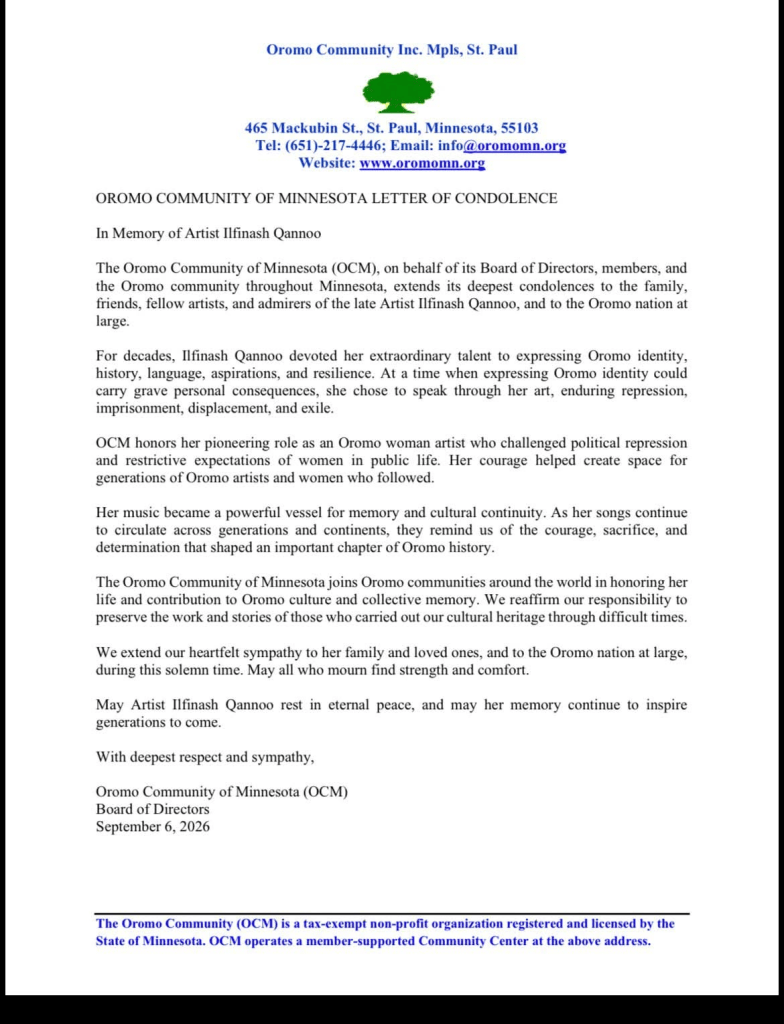
The Oromo Community of Minnesota (OCM), one of the largest Oromo diaspora organizations in the United States, has issued a formal letter of condolence honoring the life and legacy of Artist Ilfinash Qannoo, whose passing marks the end of an era for Oromo arts and cultural expression.
In a statement released today, the organization paid tribute to an artist who, for decades, transformed personal sacrifice into an enduring cultural treasure, becoming a symbol of resistance, resilience, and identity for Oromo people worldwide.
A Life Dedicated to Cultural Preservation
Ilfinash Qannoo was more than a musician or performer. She was a cultural archivist, a linguistic guardian, and a fearless voice who understood that art could carry the weight of an entire people’s history. Through her extraordinary talent, she devoted her life to expressing Oromo identity, history, language, aspirations, and resilience—often at great personal cost.
The OCM statement emphasized that during decades when openly expressing Oromo identity could carry grave personal consequences, Ilfinash chose to speak through her art. She endured repression, imprisonment, displacement, and exile, yet her creative spirit remained unbroken. Her music and performances became acts of quiet defiance in the face of political oppression, preserving the Oromo language and traditions at a time when they were systematically marginalized.
A Pioneer for Oromo Women in Public Life
Perhaps one of her most significant legacies was her role as a trailblazer for Oromo women. At a time when restrictive expectations limited women’s participation in public life, Ilfinash challenged both political repression and social conventions.
The OCM honored her as a “pioneering role as an Oromo woman artist who challenged political repression and restrictive expectations of women in public life.” Her courage helped create space for generations of Oromo artists and women who followed, proving that creative expression and political consciousness could go hand in hand.
“Her courage helped create space for generations of Oromo artists and women who followed,” the OCM board wrote, acknowledging that her influence extended far beyond music into the very fabric of Oromo social and political life.
Music as Memory and Resistance
Ilfinash’s music became a powerful vessel for memory and cultural continuity. Her songs, which continue to circulate across generations and continents, have served as an informal archive of Oromo history, preserving stories, struggles, and triumphs that might otherwise have been lost.
The OCM statement noted that her music “reminds us of the courage, sacrifice, and determination that shaped an important chapter of Oromo history.” For Oromo communities scattered across the globe—from the Horn of Africa to the diaspora centers of North America, Europe, and Australia—her voice became a thread connecting them to their homeland and heritage.
A Global Mourning
The Minnesota Oromo community, which numbers in the thousands, joins Oromo communities around the world in mourning this profound loss. The OCM pledged to continue preserving her work and the stories of those “who carried our cultural heritage through difficult times.”
“We reaffirm our responsibility to preserve the work and stories of those who carried our cultural heritage through difficult times,” the statement reads, acknowledging that the preservation of Oromo culture rests on the shoulders of those who, like Ilfinash, sacrificed their safety and comfort for the sake of collective memory.
Calls for Celebration Amid Grief
The OCM’s formal letter follows a growing chorus within the Oromo diaspora and homeland alike, urging that Ilfinash’s life be celebrated as much as her death is mourned. Many have echoed sentiments expressed in recent weeks that her legacy is one of joy, defiance, and triumph—not merely sorrow.
“May Artist Ilfinash Qannoo rest in eternal peace, and may her memory continue to inspire generations to come,” the OCM concluded in their letter, striking a tone of solemn respect mixed with hope for the future.
A Legacy That Endures
Ilfinash Qannoo’s death represents a significant loss for the Oromo cultural landscape. Yet her life’s work ensures that her voice will continue to resonate through the generations she inspired and the communities she helped to empower.
As the Oromo diaspora reflects on her contributions, her songs will undoubtedly continue to play in homes, community gatherings, and cultural events—each note carrying the defiance, resilience, and pride of a people whose identity she devoted her life to preserving.
The Oromo Community of Minnesota’s full letter of condolence can be accessed through the organization’s official channels. The Oromo community across Minnesota and beyond extends its deepest sympathy to her family, friends, fellow artists, admirers, and the Oromo nation at large.
With deepest respect and sympathy,
Oromo Community of Minnesota (OCM)
Board of Directors
September 6, 2026
#IlfinashQannoo #OromoArt #CulturalResilience #OromoDiaspora #MinnesotaOromo #LegacyOfResistance

THE RAINS HAVE CEASED, THE FLOWERS BLOOM: CELEBRATING IRREECHAA, THE OROMO THANKSGIVING
By Dhabessa Wakjira
In the highlands of Ethiopia, where the skies weep for months on end and the earth turns to mud, there comes a sacred morning when the clouds finally part. The sun, a golden orb of promise, kisses the damp grass, and a new season is born. This is the moment of Birraa—the spring—and for the Oromo people, it is a time to pause, breathe, and pour out their hearts in gratitude.
This is the spirit of Irreechaa, a festival that transcends mere celebration. It is the Oromo Thanksgiving, a profound spiritual and cultural touchstone that marks the end of the punishing rainy season and the beginning of a season of renewal, peace, and hope.
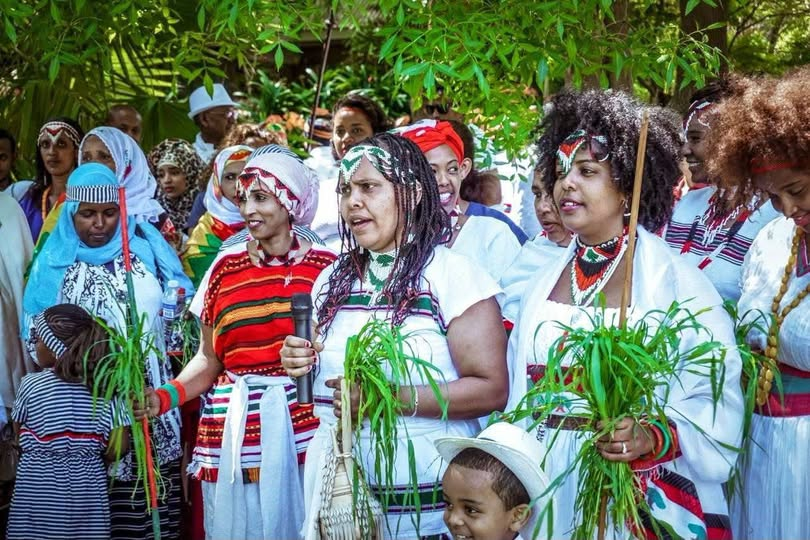
Held annually at the end of September or the beginning of October, Irreechaa is not a quiet affair of private reflection. It is a magnificent, vibrant explosion of life. Thousands, dressed in dazzling traditional attire, converge on sacred rivers, lakes, and hilltops. The air hums with the rhythm of drums, the melodic chants of elders, and the joyous ululations of the crowd. In their hands, they hold the symbols of the season: lush green grass and delicate yellow daisies, emblems of fertility, flourishing life, and the promise of a bountiful year.
The Heart of the Festival: Giving Thanks to Waaqa
At its core, Irreechaa is a dialogue with the divine. The Oromo people lift their prayers to Waaqa (God), offering thanks not for material wealth alone, but for the bedrock of their existence: a good harvest that fills the granaries, the health of their precious livestock, and the most precious gift of all—peace. It is a recognition that survival through the harsh, dark months was not by human effort alone, but by divine mercy.
“We come to the water to wash away our sorrows and our grudges,” explains an elder during a recent ceremony at Lake Hora Arsadi, near Addis Ababa. “The rain has stopped. Now, we cleanse our hearts and start anew.”
A Living Testament to the Gadaa System
Irreechaa is more than a religious observance; it is the vibrant pulse of the Gadaa System, the ancient, indigenous democratic governance structure of the Oromo people. Inscribed by UNESCO as an Intangible Cultural Heritage of Humanity, the Gadaa System organizes society into generations, guiding leadership, law, and morality. Irreechaa serves as a unifying moment for this system, reinforcing the social contracts and spiritual values that hold the community together.
Reconciliation and Unity
In a world often fractured by division, Irreechaa stands as a powerful advocate for unity. The festival is a designated time for reconciliation. It is a communal balm where feuds are set aside, misunderstandings are forgiven, and the bonds of kinship are strengthened. The shared experience of prayer and dance melts away social barriers, weaving a tapestry of harmony that includes not just the Oromo, but neighboring communities as well.
A Cultural Showcase
To witness Irreechaa is to witness the soul of Oromo culture. The hills become a runway of breathtaking fashion, with men and women adorned in intricately woven garments and vibrant beadwork. The music is hypnotic, with traditional songs that speak of heroism, love, and history. The dances are energetic, a physical manifestation of joy and liberation.
As the sun sets on the celebration, the green grass is often placed upon the heads of participants as a blessing, a final act of connection to the earth and the creator. The festival concludes, but its spirit lingers—a reminder that every ending is a new beginning, and that gratitude is the foundation upon which communities are built.
Irreechaa is not just a festival. It is a declaration: We have survived. We are thankful. We are one.
—
Key Aspects of Irreechaa at a Glance:
· Thanksgiving: Central purpose is to thank Waaqa (God) for blessings over the past year.
· End of Winter: Celebrates the conclusion of the rainy season and the dawn of spring (Birraa).
· Sacred Sites: Observed at rivers (Malkaa), lakes, and hilltops (Tulu).
· Symbols of Life: Participants carry wet grass and daisy flowers to represent fertility and flourishing.
· Cultural Expression: A vibrant display of traditional costumes, music, chants, and dances.
· Unity & Peace: A time for community bonding, spiritual reflection, and reconciliation.
· Gadaa System: An integral ritual within the traditional Oromo governance and social structure.

Oromo Literacy Day: Celebrating the Power of Stories Held in Oromia
By Maatii Sabaa
—
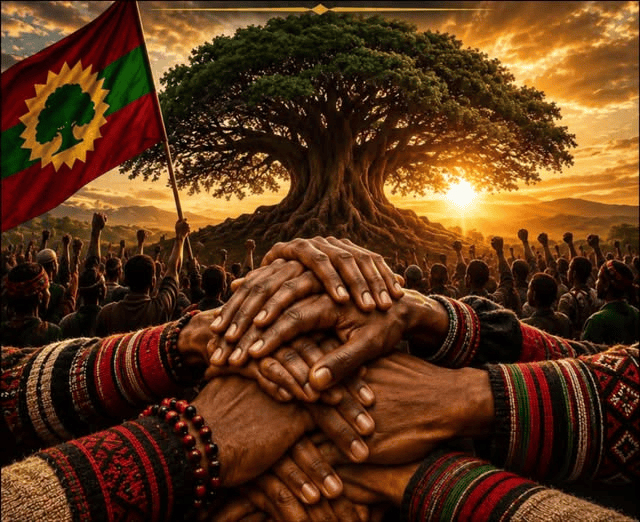
Every year, Oromo Literacy Day is more than a date on a calendar—it’s a living tribute to the resilience of a people and their language. It celebrates Afaan Oromoo, a language that carries the weight of history, the songs of ancestors, and the dreams of a nation. But how did the Oromo people arrive at this moment, where their stories can finally be written, read, and shared with the world? The answer lies in a long and courageous journey toward literacy.
A Written History of Resistance and Revival
The story of Oromo literacy is one of relentless struggle. The Oromo people have long possessed a rich oral tradition, but for much of Ethiopia’s modern history, their language was marginalized. It was a household language—spoken, sung, and whispered—but rarely seen on paper . The first major push to change this came in the late 19th and early 20th centuries.
A pivotal figure was Onesimos Nasib, an Oromo freed from slavery who trained as a teacher in Sweden. Upon his return, he and his colleague Aster Ganno worked with an almost missionary zeal to promote literacy in Afaan Oromoo. Onesimos created the Oromo Reader, a book filled with stories that were “short and funny” and designed to be both accessible and engaging. His aim was not just religious instruction but to cultivate a love for reading itself . He would famously ask young people he met, “Can you read and write?” and persuade them of its immense value .
However, their work met fierce opposition from the imperial government. In the mid-1940s, the Haile Selassie regime placed a total ban on Oromo literature . The language was effectively erased from public life, becoming a symbol of defiance.
The Quest for the Perfect Script
The suppression only intensified the desire for a written Oromo. The question of how to write the language became a central point of debate. Early works, like those of Onesimos, used the Ge’ez alphabet. But many activists and intellectuals believed this script was inadequate for Oromo sounds, failing to represent vowel length and consonant gemination—features that change a word’s meaning .
In the 1960s, the movement for a new script gained momentum. At Addis Ababa University, Oromo students began printing the first newspaper in Afaan Oromoo, Kana Beektaa? (“Do you know this?”), in 1968. The paper was a bold act of cultural preservation, collecting “Oromo songs, proverbs, war and grievance chants, Oromo prophecies, nuptials, baby lullabies, and others” . This was more than journalism—it was a declaration of identity. The paper was short-lived, forced to cease publication in 1971 .
Simultaneously, Oromo students in Europe were rigorously debating the script question. In 1968, a study group led by figures like Haile Fidaa concluded that a modified Latin alphabet was the most practical and linguistically sound choice for Oromo . This decision was not just technical; it was a political act of resistance, rejecting a script associated with the establishment.
A New Dawn: The Adoption of Qubee
After years of struggle, the fall of the military Derg regime in 1991 brought a turning point. The new Ethiopian constitution granted greater autonomy to regional states. Oromo was finally made the official language of the Oromia Regional State .
The Latin-based alphabet, known as Qubee, was officially adopted for writing Oromo . This was a victory decades in the making. The script’s simplicity and adaptability to modern technology made it a practical choice for a language finally stepping into the digital age. As one study noted, Qubee “enabled the language to grow faster as the script can be learned easily” .
However, the adoption was not without controversy. For some, the Ethiopic script held deep cultural significance, and the switch to a Latin alphabet was seen as an emotional and political break . Yet for the majority, Qubee represented liberation.
The Stories That Endure
The adoption of Qubee unlocked a literary explosion. Oromo youth and intellectuals began producing “newspapers, magazines, novels, translations and plays that describe their nation and their state in Afaan Oromoo” . Stories once confined to memory were now printed, preserved, and shared.
The journey has also involved recovering alternative scripts. A fascinating chapter is the story of Sheek Bakrii Saphaloo, a scholar who created a unique indigenous Oromo script. He developed an abugida, a writing system where each base glyph has multiple vocalic components, making it distinct from both the Ge’ez and Latin alphabets . This script has been used for over 70 years and is now being considered for digital preservation and inclusion in Unicode, highlighting the deep connection between literacy and cultural identity .
Why Oromo Literacy Day Matters
Oromo Literacy Day is a celebration of this entire journey. It honors the tenacity of Onesimos Nasib, the courage of student activists, and the vision of scholars who fought to give their language a written form. It is a day to recognize that literacy is not just about reading and writing; it is about power, identity, and survival.
The stories held in Oromia are now written down for the world to see. This day celebrates their liberation and their enduring power.
—
“The stories, with the exception of a couple of martyr stories, are short and funny, and the subjects vary in order to attract.” — Onesimos Nasib on the Oromo Reader
—
 Maatii Sabaa is a writer and advocate of the Oromo stories.

A New Chapter in Storytelling: African Australians Take the Mic
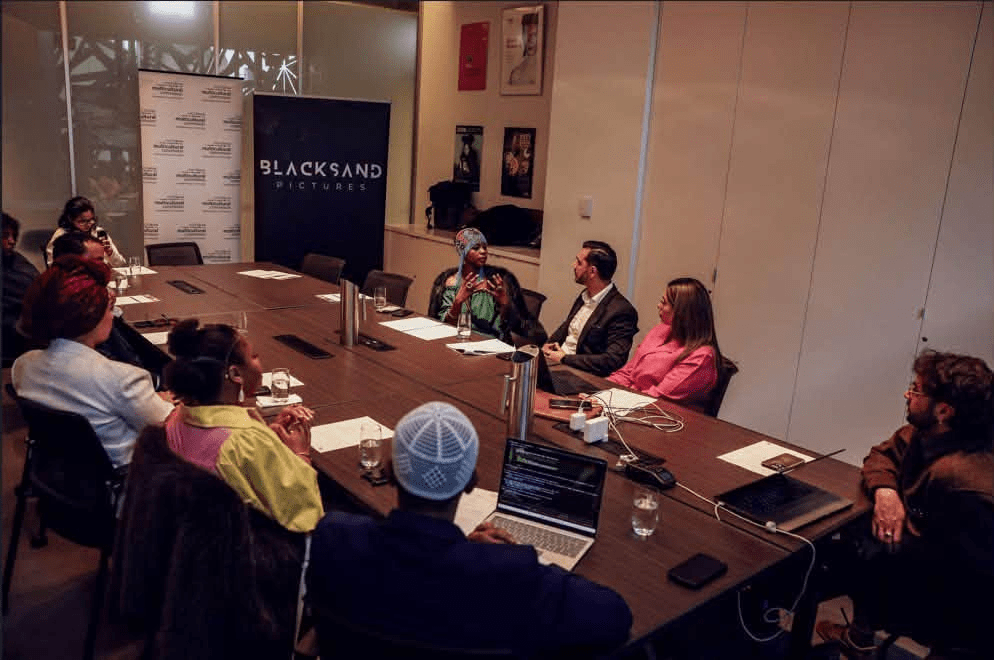
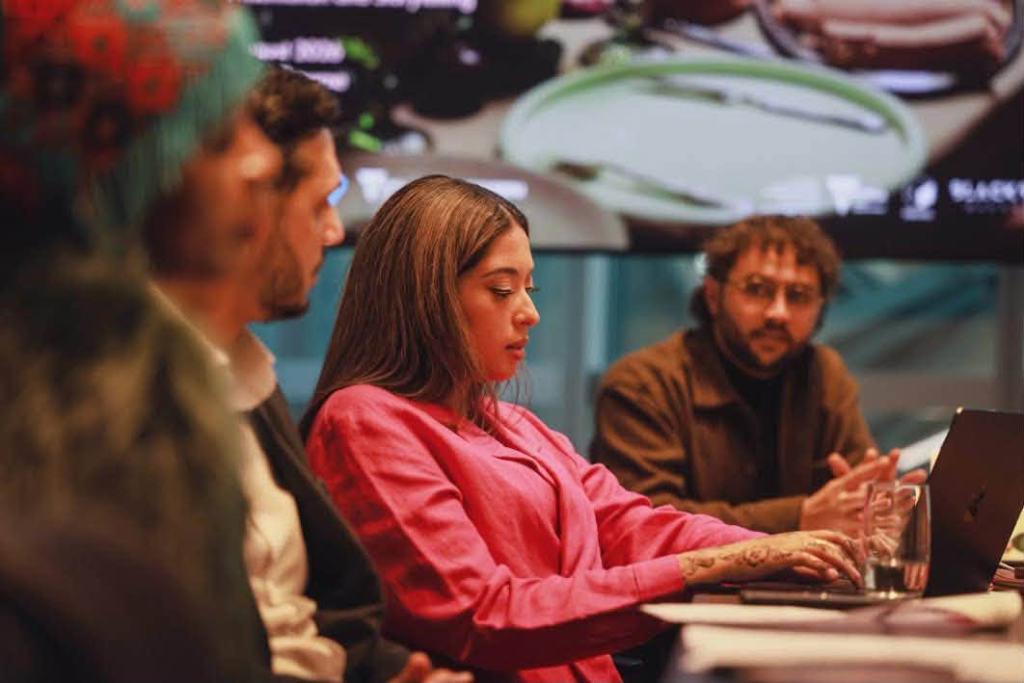
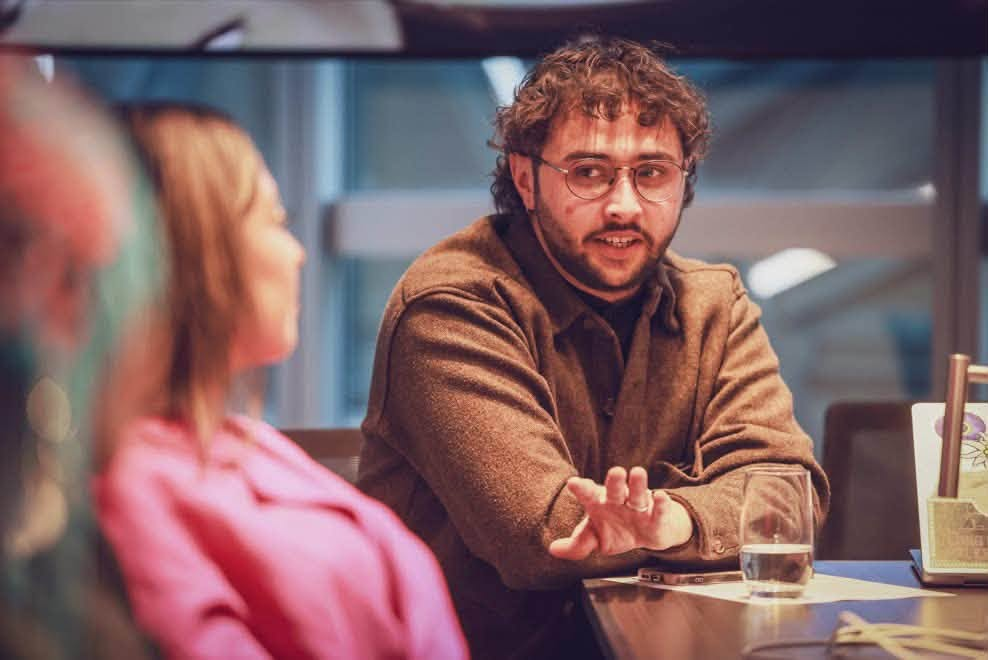
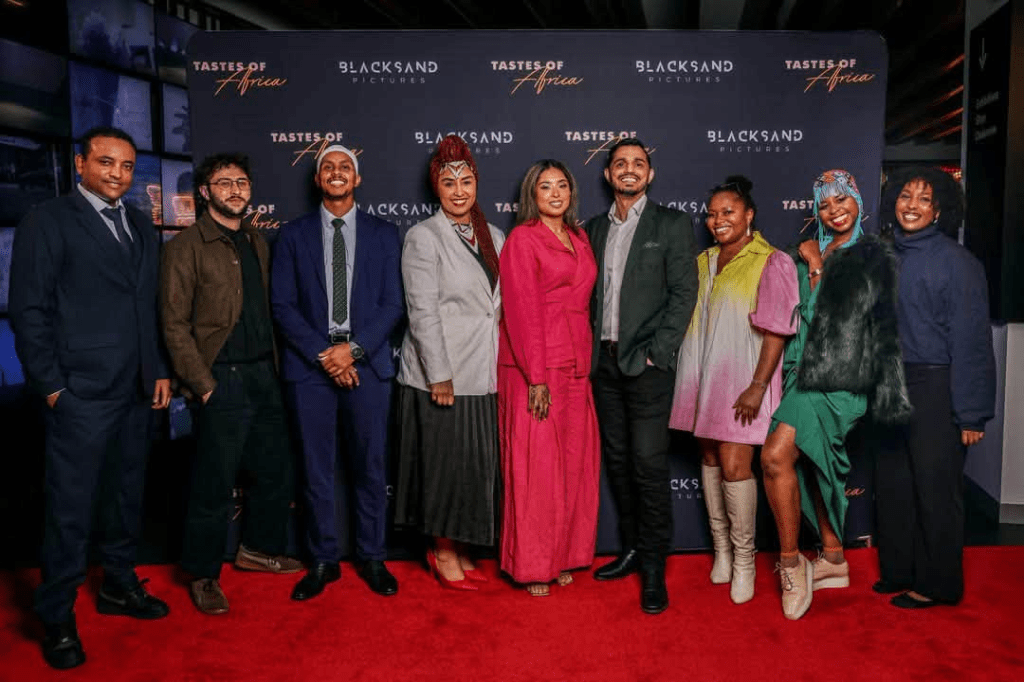
(ONA, 1 September 2026)-In a powerful step towards reshaping Australia’s cultural landscape, the Victorian Multicultural Commission, in partnership with Blacksand Pictures, recently hosted a community consultation with Victoria’s African Australian community. The focus? Media representation, authentic storytelling, and the urgent need for African Australians to control their own narratives.
The message was clear: the time for passive representation is over. Australian media must create meaningful opportunities for African Australians to tell their own stories, in their own voices. This isn’t just about checking diversity boxes—it’s about building a media landscape where lived experiences are portrayed with depth, nuance, and authenticity .
This need for self-representation is not new. Mimo Mukii, an emerging producer and filmmaker, began their filmmaking journey researching the necessity of African Australian self-representation in media. As Mukii observes, “It is getting better. But there are still barriers for people to get into the industry. Big companies, broadcasters, governments, whatever—taking a risk on emerging storytellers is—I think—what’s going to change that” .
The community consultation set the stage for exactly that kind of risk-taking.
A Feast of Stories
Following the discussion, attendees were treated to the premiere of Tastes of Africa, a three-part documentary series that celebrates the rich cultural heritage of African cuisine and its diaspora in Melbourne.
Produced by Blacksand Pictures’ Kauthar Abdulalim and written and directed by Rendah Haj, the series takes viewers on a sensory journey through Melbourne’s kitchens, community cook-ups, and hidden eateries . Hosted by Zambian-born filmmaker, historian, and author Santilla Chingaipe—recognised by the United Nations as one of the most influential people of African descent in the world in 2019—the series weaves together observational documentary and intimate first-person narration .
Viewers are guided by the traditional wisdom of African aunties, while also seeing younger African Australians boldly reinterpreting recipes for a new generation. As Kauthar Abdulalim explains, “Tastes of Africa reflects the kind of storytelling Blacksand Pictures is committed to culturally grounded, audience-facing, and globally resonant. This series celebrates African Australian communities with intimacy and joy, while creating space for stories that have long been underrepresented in Australia’s factual landscape”.
Supported by principal production funding from Screen Australia, in association with VicScreen, the series marks a significant investment in African Australian storytelling. Distribution partner African Australian will make the series available to audiences on YouTube, with plans for an international screening tour across Africa later in the year.
Building Momentum
The community consultation and Tastes of Africa premiere are part of a broader movement to amplify African Australian voices. Initiatives like the African Australian Creative Media Grants, administered by Ubuntu Project, provide $10,000 grants to support platform development and content creation by African Australian creatives. These grants are helping to build a sustainable storytelling ecosystem, enabling individuals and organisations to create, distribute, and market their work.
As African Professionals of Australia noted upon being named among grant recipients, this support is “critical” for “amplifying the voices, stories, and innovation of African Australians across media and the arts”.
What’s Next
A summary report from the community consultation, prepared by @cinespace_inc, will be released soon. In the meantime, audiences can watch the first episode of Tastes of Africa on YouTube now by following @blacksandpictures and @africanaustralian.
As Mimo Mukii reflects, creating authentic representation requires institutional support and a willingness to take risks on emerging storytellers. With projects like Tastes of Africa and growing community-led initiatives, Victoria is proving that when African Australians tell their own stories, everyone benefits. The future of Australian storytelling is more diverse, more authentic, and more delicious than ever.
—
Stay tuned: Follow @cinespace_inc for the upcoming summary report from the community consultation. Watch Tastes of Africa on YouTube via @blacksandpictures and @africanaustralian.

UNDERSTANDING THE TRAUMA TREE
Why Addressing Symptoms Alone Isn’t Enough
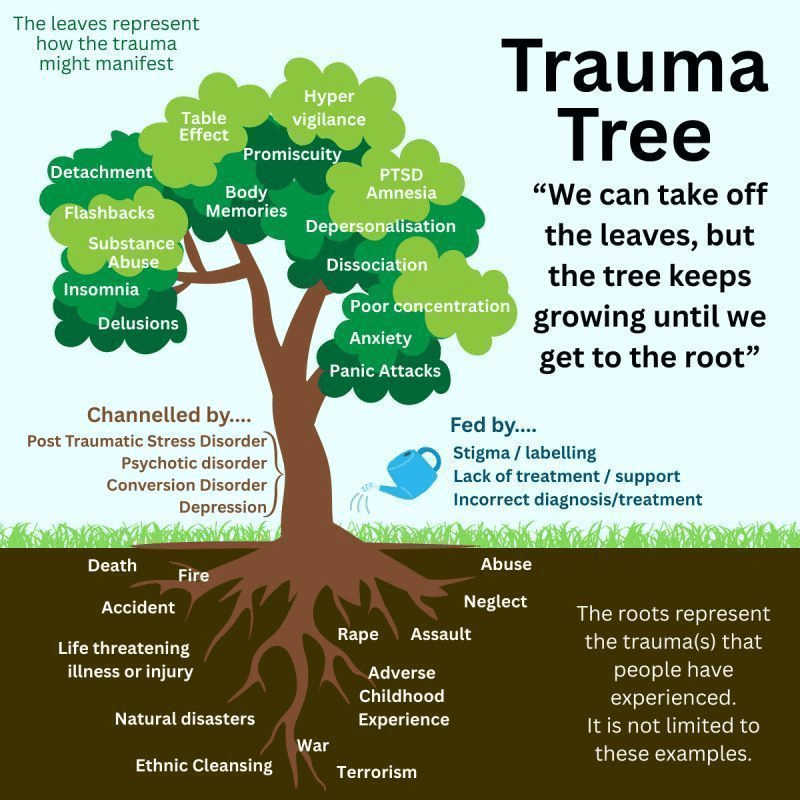
🌳 “We can take off the leaves, but the tree keeps growing until we get to the root.”
This powerful metaphor reveals a truth that modern mental health care is only beginning to fully embrace: that true healing from trauma requires more than just managing symptoms. It demands that we dig deeper—right down to the roots.
The numbers tell a sobering story. Research shows that 70% of individuals experience trauma at some point in their lives. Yet for far too many, the path to recovery remains frustratingly elusive. Why? Because we have been treating the leaves while ignoring the roots.
THE LEAVES – HOW TRAUMA MANIFESTS
Trauma does not announce itself with a single, obvious signal. Instead, it manifests in a tangled canopy of symptoms that can be as bewildering as they are debilitating.
Hypervigilance and anxiety – The body remains on high alert, scanning for danger even in the safest environments. The nervous system, once triggered, struggles to return to calm.
Flashbacks and nightmares – The past refuses to stay in the past. Traumatic memories intrude without warning, forcing the individual to relive moments of terror again and again.
Panic attacks and dissociation – The mind and body disconnect. Some feel as though they are watching themselves from outside their own body. Others experience overwhelming waves of terror that seem to come from nowhere.
Depression and emotional numbing – Feeling nothing becomes a defence mechanism. The heart hardens to protect itself, but in doing so, it also loses the capacity for joy, connection, and hope.
Substance abuse and insomnia – Sleep becomes a battleground. Substances offer a temporary escape, but they also deepen the wound, creating a cycle of dependency that further obscures the underlying pain.
These are the leaves. They are visible. They are painful. And they demand attention.
But treating symptoms alone leads to temporary relief—not true healing. The leaves may be trimmed, but the tree continues to grow, fed by hidden forces beneath the surface.
WHAT FEEDS THE TREE – BARRIERS TO HEALING
If the leaves are symptoms, what nourishes the tree and keeps it alive? What prevents healing from taking root?
Stigma and labelling – Society often reduces trauma survivors to their symptoms. “You’re just anxious.” “You’re depressed.” “You need to get over it.” These labels, however well-intentioned, can become self-fulfilling prophecies. They define the person by their struggle rather than their resilience.
Lack of trauma-informed treatment – Many therapeutic approaches still focus on managing behaviour rather than understanding its origins. Without a framework that acknowledges the pervasive impact of trauma, treatment can feel like rearranging deck chairs on the Titanic.
Misdiagnosis and limited support – Trauma symptoms often mimic other conditions. Depression, anxiety disorders, and even ADHD can be misdiagnosed when the root cause—trauma—remains unidentified. Limited access to appropriate mental health services compounds the problem, leaving many to navigate their recovery alone.
These are the soil conditions that allow the trauma tree to thrive. Change the soil, and you change the tree.
THE ROOTS – ORIGINAL TRAUMA
To truly heal, we must go where the pain began.
Childhood abuse and neglect – The earliest wounds often cut the deepest. When a child’s developing brain is exposed to chronic stress or betrayal, it shapes the architecture of their nervous system, setting patterns that persist into adulthood.
Accidents and medical trauma – A single moment can change everything. Car crashes, serious injuries, and terrifying medical procedures can leave lasting psychological scars that are often overlooked.
War, terrorism, and violence – For survivors of conflict, the trauma is not a single event but a sustained assault on the sense of safety and humanity. The effects ripple across generations.
Natural disasters and grief – Loss on a massive scale, whether through earthquake, flood, or pandemic, shatters the illusion that we are safe in our world. Grief becomes complicated when it is intertwined with collective trauma.
Systemic oppression and discrimination – For marginalised communities, trauma is not an isolated experience but a chronic reality. Racism, sexism, homophobia, and other forms of oppression create ongoing wounds that demand healing at both the individual and societal levels.
These are the roots. They are deep. They are tangled. And they are often hidden from view.
But evidence shows trauma-informed interventions address both the symptoms AND the root causes, leading to real recovery and improved wellbeing for those struggling with PTSD, anxiety, and depression.
THE PATH TO ROOT-LEVEL HEALING
True healing requires a shift in perspective. It means moving from “What is wrong with you?” to “What happened to you?” It means recognising that symptoms are not weaknesses but adaptations—the mind’s way of protecting itself from overwhelming pain.
Trauma-informed care offers a different approach. It asks:
- Safety first – Healing cannot begin without a sense of physical and emotional safety.
- Choice and control – Trauma strips away agency. Recovery restores it.
- Collaboration – Healer and client walk together, not as expert and patient, but as partners.
- Trustworthiness – Transparency and consistency rebuild the trust that trauma shattered.
- Empowerment – The goal is not to fix the person but to help them reclaim their strength.
READY TO FINALLY ADDRESS TRAUMA AT THE ROOTS?
The journey to healing is not easy. It is not linear. But it is possible.
For those ready to begin, the “You Are Not Broken” Trauma Healing Workbook for Beginners offers a gentle, evidence-based guide to genuine emotional healing. Designed by trauma therapists, this workbook provides:
- Practical exercises for understanding trauma responses
- Grounding techniques for managing symptoms
- Guided reflections to explore the roots of pain
- A compassionate framework for self-discovery and recovery
The leaves can be trimmed. The soil can be nourished. The roots can be healed.
Start your journey today.
#TraumaHealing #TraumaInformedCare #MentalHealthRecovery #PTSD #EmotionalHealing
Image Credit – Unknown
📖 Featured Article
Understanding the Trauma Tree: A Clinical Perspective
The metaphor of the trauma tree is more than poetic imagery—it is grounded in neuroscience and clinical practice. When trauma occurs, it impacts the brain’s fear circuitry, particularly the amygdala, hippocampus, and prefrontal cortex. The “leaves” we see—hypervigilance, flashbacks, dissociation—are direct expressions of this rewired nervous system.
Treating only these symptoms without addressing the underlying trauma is like repeatedly taking painkillers for a broken leg. The pain may temporarily subside, but the bone remains unhealed.
Trauma-informed therapy, by contrast, works to rewire the brain’s response to threat. Through approaches such as EMDR, somatic experiencing, and cognitive processing therapy, individuals can process traumatic memories, integrate them into their life story, and reduce their power over the present moment.
The “roots” of trauma often lie in attachment wounds—relationships that should have been safe but were instead a source of danger. Healing these roots involves rebuilding the capacity for trust, connection, and self-compassion.
Remember: You are not broken. You are wounded. And wounds, with the right care, can heal.
This article is part of a series on trauma-informed mental health care. For more resources, follow our page and join the conversation on trauma recovery, resilience, and healing.






