Category Archives: Festival

“Don’t Let Them Win”: A Powerful Call for Shared Humanity and Connection
Feature Article
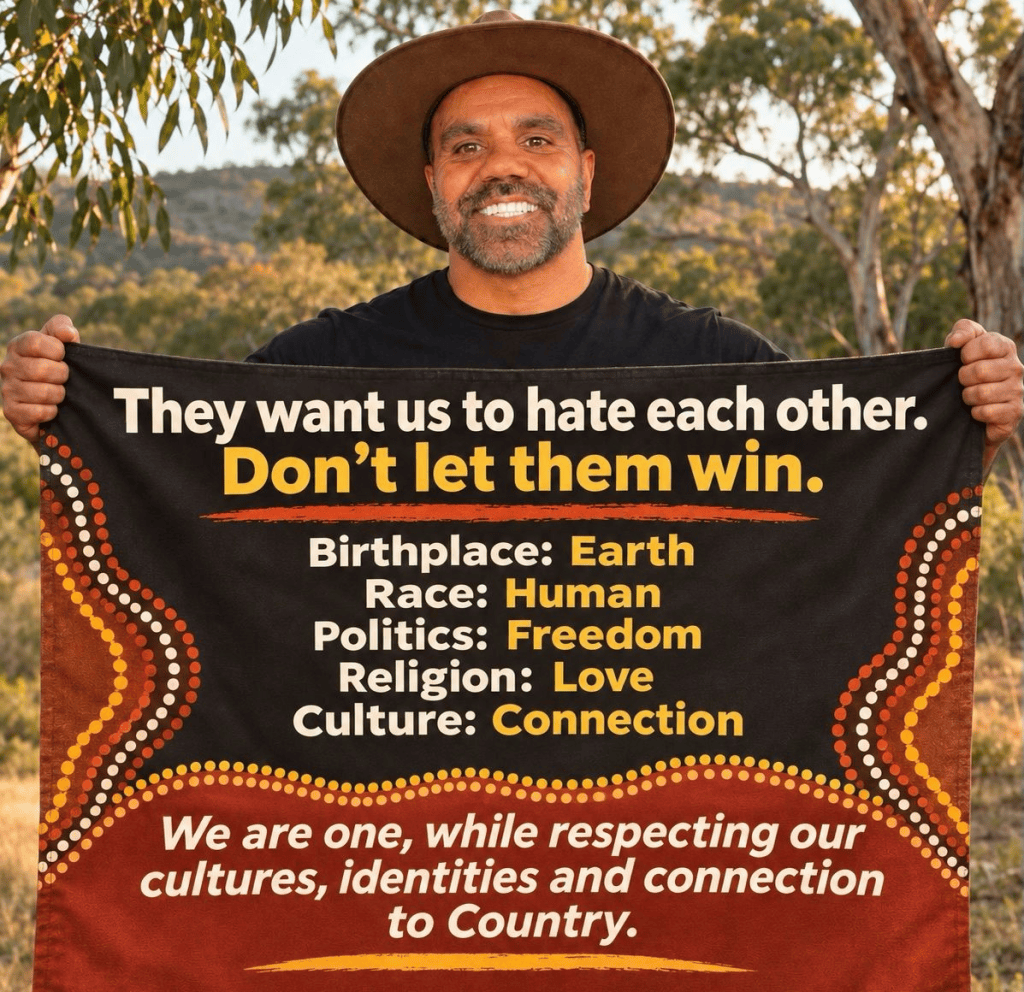
In a world often defined by division, a simple yet profound message is cutting through the noise. It is a message carried on a banner, held firmly by a man standing against the backdrop of the Australian bush—a landscape rich with ancient history and natural beauty. The banner’s words offer a direct challenge to the forces of polarization: “They want us to hate each other. Don’t let them win.”
This is not just a statement of resistance; it is a declaration of identity. It asks us to look past the constructed barriers that so often separate us and to recognize the fundamental truths that bind us together.
At the heart of the banner is a list of definitions that reimagine how we see ourselves and each other:
- Birthplace: Earth
- Race: Human
- Politics: Freedom
- Religion: Love
- Culture: Connection
By stripping away the labels that often fuel conflict, the message suggests a radical reorientation of our priorities. When our birthplace is the planet itself, and our race is simply humanity, the reasons we use to justify hatred and division begin to crumble. When politics is guided by freedom and religion by love, the ideologies that seek to separate us lose their power. And when culture is recognized as a tool for connection rather than a barrier, we open the door to genuine understanding.
The banner’s message is particularly resonant given the visual context. The man stands on the traditional lands of First Nations peoples, holding a banner adorned with intricate dot artwork—a visual language deeply rooted in the oldest continuous cultures on Earth. The artwork and the words together form a bridge between ancient wisdom and a modern call for unity.
The final lines of the banner provide the crucial balance to this call for universality: “We are one, while respecting our cultures, identities and connection to Country.”
This is perhaps the most vital part of the message. Unity does not mean erasing differences or forcing everyone into a single mold. True connection is not about homogenization; it is about standing together in solidarity while celebrating the unique stories, traditions, and ties to land that make us who we are. Respecting identity and connection to Country is fundamental to healing historical wounds and moving forward together.
In a time when it is easy to be consumed by outrage and division, this image serves as a quiet, powerful act of resistance. It reminds us that the forces that seek to divide us—whether political, social, or ideological—only win if we allow them to dictate how we treat one another.
The message is clear: we are all human, our connections are our strength, and when we respect each other’s cultures and identities, we build a future where hate cannot prevail.
Don’t let them win.

Her Safety Is Not a Privilege — It Is Her Right
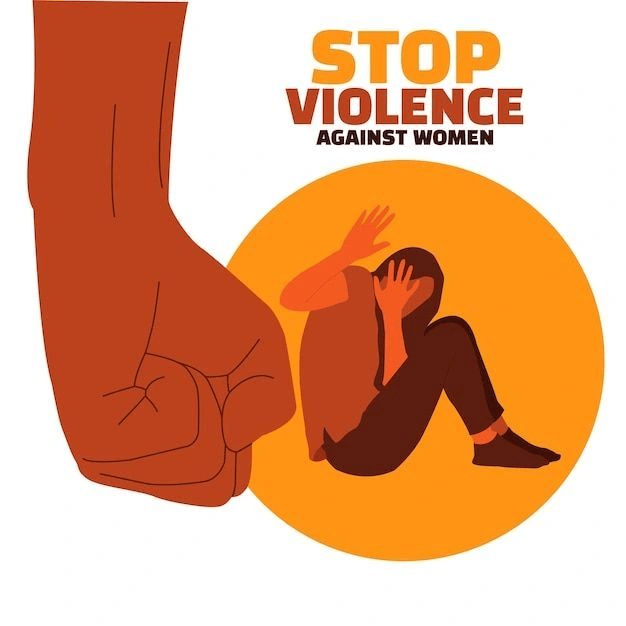
Ending violence against women and girls starts with each of us
Every woman and girl deserves to live without fear, abuse, harassment or discrimination.
That simple truth is the foundation of the 16 Days of Activism against Gender-Based Violence — a global campaign that reminds us that violence is never inevitable, and that change begins with ordinary people making extraordinary choices in their everyday lives.
Violence should never be excused, normalised or ignored. Too often, harmful behaviours are dismissed as “just the way things are.” Too often, survivors are met with silence instead of support. Too often, perpetrators are shielded by excuses rather than held to account. This must change.
We must speak up — in our homes, our workplaces, our schools and our communities. We must support survivors, believing their stories and ensuring they have access to the help and healing they deserve. We must challenge harmful behaviours, even when it is uncomfortable, even when it is someone we know. And we must hold perpetrators accountable, because accountability is not punishment — it is the first step toward a safer world for everyone.
Ending violence starts with each of us. It starts with the conversations we have with our children about respect. It starts with the workplace cultures we build and the policies we demand. It starts with the communities we shape, where women and girls are not merely protected but genuinely safe, respected and valued.
This is the message behind the 16 Days of Activism, the Orange the World campaign, and the global call for gender equality and human rights. It is a message that transcends borders, cultures and generations — because violence against women and girls is not a women’s issue. It is a human issue. It is everyone’s issue.
Her safety is not a privilege. It is her right.
Let us create homes, workplaces and communities where women and girls feel safe, respected and protected — not because they are lucky, but because it is their fundamental right as human beings.
The work begins today. The work begins with you.
#EndViolenceAgainstWomen #16DaysOfActivism #OrangeTheWorld #GenderEquality #HumanRights

From Warrnambool to Federation Square: How Victoria Is Turning Diversity Into Belonging
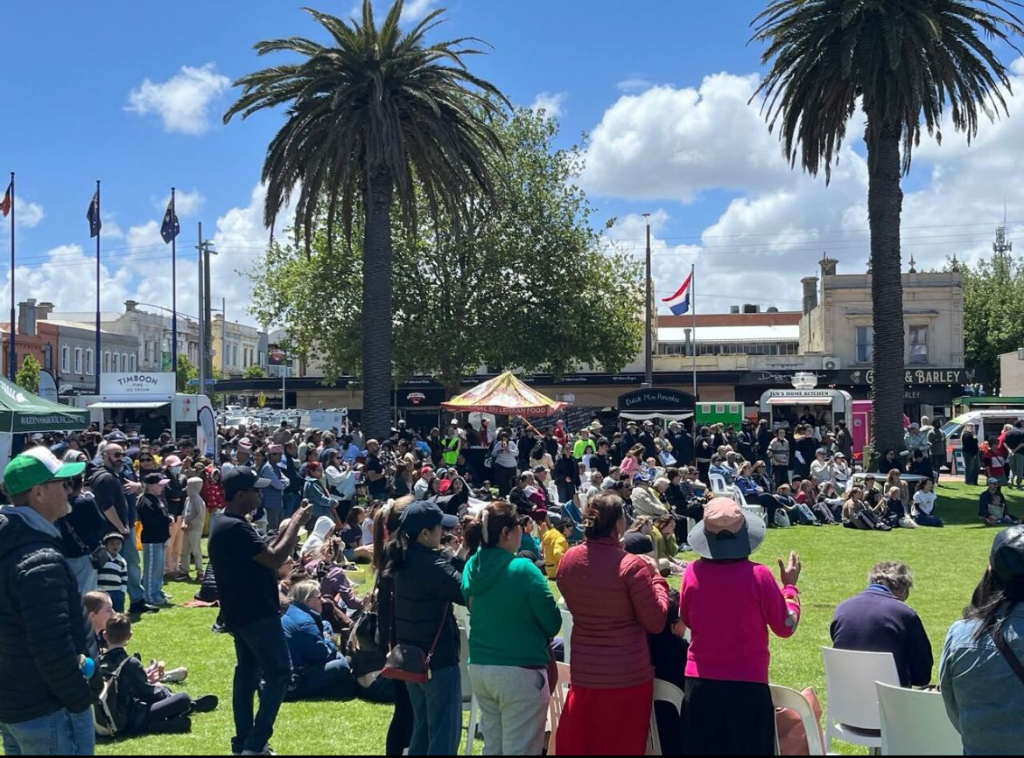
A feature article on the power of community, care and connection across multicultural Victoria
There is a simple answer to what makes the work of Multicultural and Multifaith Victoria (MMV) worthwhile: it is the opportunity to engage closely with communities, to hear their hopes and their worries, and then to drive system change and reform that brings those hopes to life and addresses those worries.
That answer came in response to a question posed this week by one of MMV’s top-notch team members — and it captures something essential about what it means to build a truly inclusive Victoria. The work is not abstract. It is about listening, and then acting.
Earlier this month, that commitment to listening and acting was on full display at the Warrnambool Multicultural Festival, organised by an absolute force of nature, Daisy Ye. Joining Maria Dimopoulos and Jasmin Herro on a panel, the conversation explored how a whole-of-community approach, placed-based support and strong partnerships can turn diversity into belonging and build connected, inclusive and prosperous communities.
Warrnambool itself tells a remarkable story of migration. Home to cultures ranging from English, Irish and Scottish to Chinese, Dutch, German, Italian, Filipino, Indian, Thai, Pacific Islands and Vietnamese, the regional city became a Refugee Welcome Zone in 2023 and in 2024 entered into partnerships to help skilled migrants and displaced people access local employment opportunities. It sits on the traditional homeland of the Peek Whurrong people of the Maar Nation — a city with a fascinating migration history centred on Fletcher Jones, the Australian clothing manufacturer and retailer.
With a mantra of “people before profits,” Fletcher Jones representatives would wait at the docks for boats carrying post-war migrants and refugees, offering them jobs on the spot, housing, and eventually profit sharing and staff shareholding — giving migrants a financial stake and a voice in the company. That generosity and end-to-end settlement approach resulted in many different cultures forming a rich social fabric, and was largely credited with producing Warrnambool’s first soccer team, thanks to the Italian-born tailors.
The theme of care and responsibility continued at the annual Betty and Shmuel Rosenkranz Oration, delivered by the Governor-General of Australia, Sam Mostyn AC, titled “What Do We Stand For? History, Memory and Responsibility in a Changing World.” The Governor-General joined Holocaust survivor Nina Bassat AM, Holocaust Museum CEO Dr Breann Szczepanik and Dr Dan Haumschil. Care, kindness and respect were the threads woven throughout the oration.
“Care is the gentle thought and the outstretched hand that Australians have always been ready to share when great challenges come,” the Governor-General said. “We need to care for each other … care for country, for our civics and institutions and for the way we discuss and debate the toughest issues of our time — always with respect and without anger or division. We can always wrestle the idea and not the person.”
That spirit of celebration and connection was also evident on a rainy Friday night spent with Prerana Mehta and the FECCA (Federation of Ethnic Communities’ Councils of Australia) crew at the magnificent Melbourne Asia Gamechanger Awards, hosted by the Asia Society Australia. With winners across sustainability, tech and innovation, arts and culture, and business, the Leadership award went to leading paediatrician Dr John Yu AC, who spoke of the incredible opportunities Australia had afforded him and his determination to give back.
The month also included time with the Housing for the Aged Action Group, a remarkable group of people who turn up every day for older people at risk of or experiencing homelessness — many of whom are culturally diverse. They help people every year with little family support, often with English as a second language, to navigate complex systems and find housing.
And as we know, celebration is an important part of belonging too. The 13th African Music and Cultural Festival at Federation Square last weekend delivered in a major way under the leadership of Fred Alale AM. Amidst the music, the dancing and the food was an important message: culture is something to be proud of and something to share, because interculturalism builds connections and connections build belonging.
From the docks of Warrnambool to the stages of Federation Square, the lesson is consistent. Belonging is not something that happens by accident. It is built — through care, through partnership, through respect, and through the simple, powerful act of listening to communities and then working alongside them to bring their hopes to life.

Festival of Lights: Victorian Thai Community Celebrates Loi Krathong
By Dhabessa Wakjira
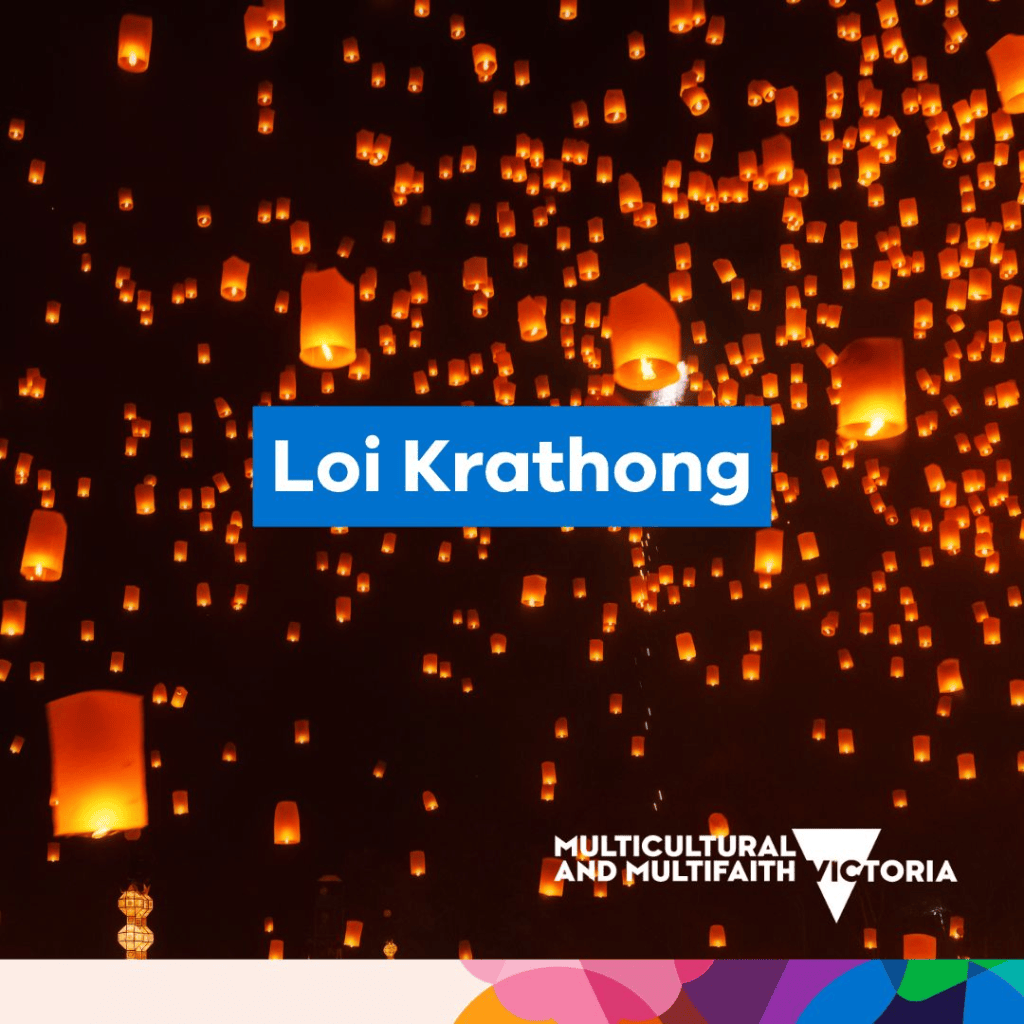
[Melbourne, Victoria] – As evening falls and the waters of Victoria’s rivers and lakes begin to shimmer with the glow of countless candles, Thai communities across the state come together to celebrate one of their most cherished traditions: Loi Krathong. Known worldwide as the Festival of Lights, this ancient celebration is a time for gratitude, reflection, and the embrace of new beginnings.
A Festival of Gratitude and Renewal
Loi Krathong, which translates roughly to “floating banana leaf cup,” is celebrated annually on the evening of the full moon of the twelfth lunar month, typically falling in November. The festival is deeply rooted in Thai culture and is observed with profound reverence and joy.
At its heart, Loi Krathong is an expression of gratitude. Participants thank the water goddess, Phra Mae Khongkha, for providing life-sustaining water throughout the year. It is also a moment to reflect on the past—acknowledging mistakes, releasing burdens, and seeking forgiveness—while welcoming new beginnings with hope and optimism.
Krathongs: Symbols of Hope and Letting Go
The central ritual of the festival involves the creation and floating of krathongs. These small, intricately crafted vessels are traditionally made from banana leaves and contain candles, incense sticks, flowers, and sometimes coins. As participants gently place their krathongs on the water, they make wishes and release their worries, symbolizing the letting go of negativity and the welcoming of good fortune.
The sight of hundreds of flickering candles drifting across the water is a breathtaking spectacle, a visual representation of collective hope and unity. For Thai communities, it is a moment of profound spiritual connection—to nature, to tradition, and to one another.
Celebrating Across Victoria
In Victoria, the Thai community has embraced Loi Krathong as an opportunity to share their rich cultural heritage with the broader public. Events across the state bring together Thai-Australians and friends of Thailand to partake in the beauty and meaning of the festival.
These celebrations feature traditional Thai music and dance performances, delicious Thai cuisine, and of course, the creation and floating of krathongs. They are a testament to the vibrancy and resilience of the Thai diaspora in Australia and a reminder of the importance of cultural preservation and sharing.
A Message of Unity and Warmth
As krathongs are set afloat on Victoria’s waterways, they carry with them the warm wishes of an entire community. The festival is a time to come together—regardless of background—to celebrate a shared humanity and the universal desire for peace, prosperity, and new beginnings.
To all those celebrating Loi Krathong, we extend our warmest wishes. May the light of your krathongs illuminate the path ahead, may your reflections bring clarity and peace, and may the new beginnings you welcome be filled with joy and promise.
Conclusion
Loi Krathong is more than a festival; it is a living expression of Thai identity, spirituality, and community. As the candles flicker and drift downstream, they remind us of the beauty of letting go and the power of hope. In Victoria and beyond, the Festival of Lights continues to shine brightly, uniting hearts and cultures in a shared celebration of life and renewal.
This feature article is based on a Loi Krathong greeting message shared with Thai communities across Victoria.

Preserving Oromo Identity: A Call to Resist Religious Co-optation and Defend Cultural Heritage
By Bona Oromia
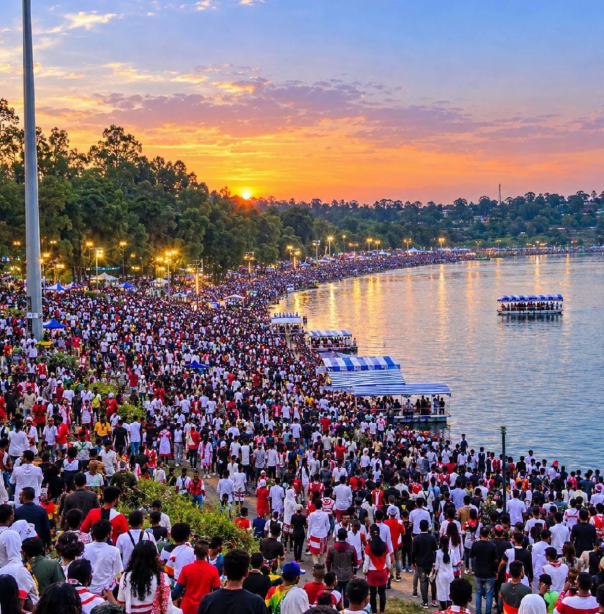
[FINFINNE] – In the complex tapestry of Ethiopia’s diverse nations, the Oromo people stand at a critical juncture. A growing chorus of voices within the community is raising alarm over what they describe as a systematic erosion of Oromo identity under the guise of religious movements. The message is clear and urgent: the Oromo people must protect their identity and culture, and they must not remain silent while their heritage is attacked in the name of faith.
Identity Under Siege
At the heart of this concern lies a troubling phenomenon: the use of religion as a vehicle to undermine Oromo identity. According to community advocates, certain actors are weaponizing religious narratives to cast aspersions on Oromo cultural practices, effectively stoning the very essence of what it means to be Oromo. This is not a matter of theological debate but a calculated assault on a people’s right to exist and express their cultural heritage.
The warning is stark: “The Oromo must protect their identity and culture. No one should stand by silently while stones are thrown at their identity in the name of religion.” This statement captures the frustration and resolve of those who see their cultural foundations being chipped away by forces that conflate religious devotion with cultural erasure.
Faith and Identity in Harmony
It is crucial to emphasize that this is not an attack on religion itself. The Oromo people are deeply religious, with vibrant communities of both Muslims and Christians. The call is not to reject faith but to ensure that religious practice and Oromo identity coexist harmoniously, without contradiction or conflict.
There are countless Oromo individuals who seamlessly integrate their religious beliefs with their cultural identity. They are Muslims who are proud Oromos. They are Christians who celebrate their Oromo heritage. These individuals represent the harmonious coexistence that is not only possible but flourishing within the community. They must be encouraged, celebrated, and held up as examples of how faith and culture can enrich one another rather than compete.
The Need for Vigilance and Dialogue
However, beyond celebrating this harmony, there is a pressing need for action. Those who use religion as a pretext to attack Oromo identity must be counseled and corrected. Dialogue, education, and community engagement are essential tools in this endeavor. It is not enough to simply disagree; there must be a concerted effort to engage with those who propagate divisive narratives and to guide them toward a more inclusive understanding of faith and identity.
The call for “advice and correction” is rooted in a belief that dialogue can bridge divides. But the message also carries a warning: those who refuse to listen, who persist in their attacks on Oromo identity, must face consequences. “For those who will not heed advice, we must establish a system,” the statement asserts. This suggests a need for community structures—whether legal, social, or cultural—that can hold accountable those who seek to undermine Oromo identity through religious manipulation.
A Defining Moment
This is a defining moment for the Oromo people. The preservation of identity is not a luxury but a necessity. Culture is the bedrock upon which communities build their futures. To allow it to be eroded—whether through violence, marginalization, or religious co-optation—is to risk losing the soul of a nation.
The Oromo people have a rich history, a vibrant language, and a culture that has survived centuries of challenge. That legacy must not be surrendered in the face of contemporary pressures. The call to action is clear: stand firm, speak out, engage in dialogue, and build systems that protect the cultural and identity rights of every Oromo person.
Conclusion
The path forward requires courage and unity. It requires the Oromo people to embrace their diversity—including their religious diversity—while standing resolutely against any attempt to use faith as a weapon against identity. It requires a commitment to dialogue and a willingness to hold accountable those who would sow division.
The message from within the community is unambiguous: the Oromo identity is worth defending. It is worth protecting. And it is worth preserving for generations to come. The time to act is now.
This feature article is based on statements circulating within Oromo community discussions on identity, religion, and cultural preservation.

SOOLANEE: Award-Winning Oromo Film Now Available on YouTube
By Dhabessa Wakjira
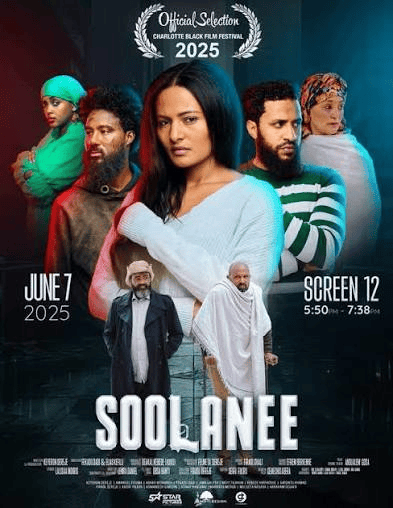
MELBOURNE — SOOLANEE, a landmark Oromo-language film released in 2024, is now available for free viewing on YouTube. The film’s producers are warmly inviting the broader Oromo community and film lovers everywhere to subscribe to Guuboo Entertainment and watch the acclaimed production.
A Film of Many Firsts
SOOLANEE was written by Keeyeroon Darajjee and directed by Rabbirraa Daadhii and Eliyaas Kifilu. Produced by 5 STAR FILM PRODUCTION, the film was released in 2024 and has since become a significant milestone in Oromo cinema.
The film’s title, Soolanee, carries cultural resonance, and its production values have earned it recognition beyond Ethiopia’s borders.
International Acclaim
In 2025, SOOLANEE won the Best International Film award at the Charlotte Black Film Festival in North Carolina, USA. The film has also been selected and screened at numerous international film festivals, earning widespread recognition and critical acclaim. Additionally, SOOLANEE was nominated for a Gumaa Award, further cementing its place as one of the most celebrated Oromo films of recent years.
Now Available to All
The full film is now available on YouTube, and the producers are inviting everyone to watch, subscribe, like, comment, and share.
Watch SOOLANEE here: https://www.youtube.com/watch?v=vAV2vWGKlXU
The film’s release on YouTube marks an important moment for Oromo-language cinema—making an internationally recognized production accessible to audiences around the world, free of charge.
A Call to the Community
The producers extend their warm invitation: “Guutummaa Soolanee YouTube irraa akka daawattan kabajaan afeeramtanii jirtu”—”You are respectfully invited to watch the entirety of Soolanee on YouTube.”
They also encourage viewers to Subscribe, Like, Comment, and Share, helping to amplify the reach of Oromo cinema and support the growing industry of Afaan Oromoo filmmaking.
Watch SOOLANEE now: https://www.youtube.com/watch?v=vAV2vWGKlXU
#SOOLANEE #OromoFilm #AfaanOromoo #GuubooEntertainment #OromoCinema

Diwali Across Victoria: A Festival of Light, Hope, and Community
By Dhabessa Wakjira
MELBOURNE — On 8 November, many Victorians will celebrate Diwali, the Festival of Lights. Observed by Hindu, Jain, Sikh, and Buddhist communities, Diwali holds different meanings and traditions across cultures and faiths. Across these celebrations, the festival is associated with hope, the triumph of good over evil, light over darkness, and knowledge over ignorance.
A Festival Shared Across Faiths
Diwali, also known as Deepavali, is one of the most widely celebrated festivals in the world. Its name derives from the Sanskrit word deepavali, meaning “row of lights.” For Hindus, it marks the return of Lord Rama to Ayodhya after fourteen years of exile and his victory over the demon king Ravana—a celebration of the triumph of dharma (righteousness) over adharma (evil). For Jains, it commemorates the attainment of nirvana by Lord Mahavira. For Sikhs, it marks the release of Guru Hargobind Ji from imprisonment and the Bandi Chhor Divas, a celebration of freedom and justice. For Buddhists, particularly in Nepal and parts of India, it is associated with the day Emperor Ashoka embraced Buddhism.
Despite these different origins, the common thread is unmistakable: light overcoming darkness, knowledge overcoming ignorance, and hope overcoming despair.
How Victorians Celebrate
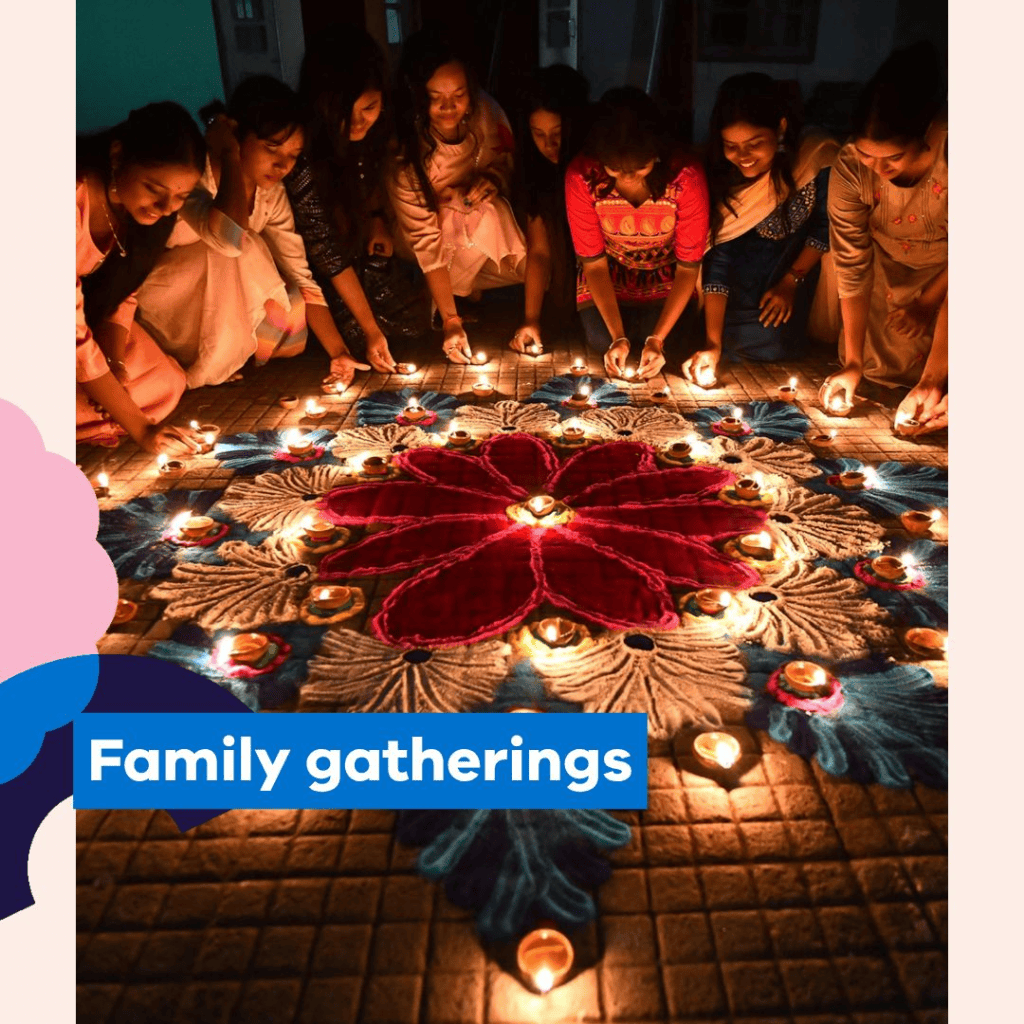
Across Victoria, Diwali is celebrated with a richness that reflects the diversity of the communities who observe it. Homes are cleaned and decorated with rangoli—intricate patterns made from coloured powders, rice, and flower petals. Diyas (oil lamps) are lit and placed around homes and in temples, symbolizing the light of knowledge and the presence of the divine. Families gather for prayers, share sweets and festive meals, and exchange gifts.
In Melbourne, public celebrations have become a major feature of the city’s cultural calendar. From Federation Square to local community halls, Diwali events bring together thousands of people each year for music, dance, food, and fireworks. Temples across the state—including the Shree Swaminarayan Temple in Tarneit, the Sri Durga Temple in Rockbank, and the Hindu Society of Victoria in Carrum Downs—hold special services and celebrations. Community organisations host cultural programs, and the annual Diwali at Fed Square has become one of the city’s most anticipated multicultural events.
A Celebration of Community
Beyond the lights and the festivities, Diwali carries a deeper message about community and belonging. It is a time when families come together, when neighbours exchange greetings, and when the bonds of friendship are renewed. For the Indian diaspora in Victoria—one of the fastest-growing communities in the state—Diwali is also an opportunity to share their heritage with the wider public, fostering understanding and connection across cultural boundaries.
The festival’s emphasis on hope and renewal resonates beyond the communities who celebrate it. In a world often marked by division and uncertainty, the image of lamps lit against the darkness speaks to something universal: the human desire for goodness, knowledge, and peace.
Wishing Everyone a Joyful Diwali
As Victorians prepare to celebrate, the message is one of warmth and inclusivity. Whether through the lighting of diyas, the sharing of sweets, the explosion of fireworks, or the simple act of gathering with loved ones, Diwali is a reminder that light—however small—has the power to dispel darkness.
Wishing everyone celebrating a joyful Diwali!
#Diwali2026 #FestivalOfLights #Victoria #MulticulturalAustralia #DiwaliMelbourne