Ethiopia’s Media Regulator Under Fire: Ambassador Redwan Hussein’s Warning Remarks Spark Debate
By Daandii Ragabaa
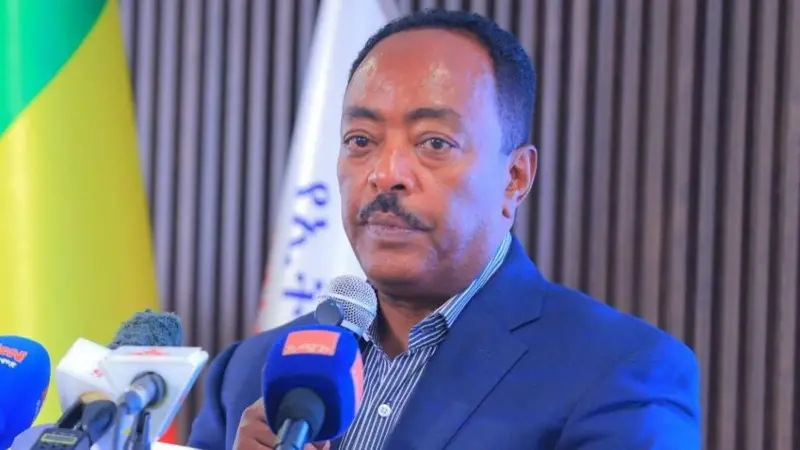
ADDIS ABABA — Ethiopia’s top media regulator has sparked debate after stating that no media outlet has ever been warned more than five times without being told what it did wrong, what damage it caused, or which law it violated. The remarks, made by Ambassador Redwan Hussein, Board Chairperson of the Ethiopian Media Authority (EMA), came in a speech at the Media Excellence Center graduation ceremony on October 26, 2026.
A Warning Without a Wrongdoing?
Ambassador Redwan’s comments centered on the country’s media landscape—its problems, its challenges, and the ways some outlets operate. He stated that no media outlet has ever been warned more than five times without being told what it did wrong, what damage it caused, or which law it violated. The remark appeared to suggest that the regulatory body has been transparent and patient in its dealings with media organizations.
The comments came just days after the Authority announced that the registration certificate of the Media and Communication Center—the publisher of Reporter, a newspaper that has been in print for 30 years, and its English-language counterpart The Reporter—had been suspended “for an indefinite period.” The Authority stated that the newspapers published under the institution would remain “completely barred from printing and broadcasting.”
The EMA said it had monitored Reporter‘s content for over a year and confirmed repeated violations of “the law and professional ethics.” Among the accusations leveled against the newspaper were: disseminating content contrary to national interest; amplifying topics with significant negative impact on the political, social, and economic context; creating suspicion and confusion among the public through misleading reports; and transmitting information that undermines the unity and values of the people.
A Call for Responsible Media
Ambassador Redwan, who also serves as Director of National Intelligence and Security, said the government “encourages responsible media” and noted that the number of media outlets has increased since Prime Minister Abiy Ahmed came to power.
However, he also acknowledged that print media is declining—not only in Ethiopia but globally. He warned that no one can live above the law. “No matter how many embassies know me, how many foreigners speak for me, how much money I have, or how many years I have lived,” he said, “one cannot live above the law.”
He noted that some outlets had been advised as many as 15 times, and that each time they had been shown what they did wrong and had promised to correct it. The media, he said, had agreed to rectify its mistakes.
International Criticism
The suspension of Reporter has drawn criticism from international human rights organizations. Human Rights Watch condemned the move, describing it as part of the Ethiopian government’s “attack on the country’s media and civil space.” HRW called Reporter “one of the few independent institutions remaining in the country” and urged the government to reverse its decision immediately, calling on the country’s partners to pressure the government.
The Challenges of Ethiopia’s Media Landscape
Ambassador Redwan also addressed the broader challenges facing Ethiopian media. He noted that some individuals have launched media outlets simply because they have money, without knowing anything about journalism. “They don’t even know the identity of the person they hired,” he said.
He emphasized that a journalist has a professional responsibility beyond the owner of the outlet. While some “deliberately work to incite the country,” he said, the vast majority make mistakes out of ignorance. He cited Al Jazeera as an example of foreign media that “treats Ethiopia’s affairs in a balanced way” comparable to the BBC.
He warned that a media outlet with a license should not appear to be above both the country’s parliament and its government. “Media can be criticized and questioned,” he said. “There is no need for a campaign. There must be cooperation through procedure.”
A Warning Against Victimhood
In a pointed remark, Ambassador Redwan said: “If you are advised forty times, make forty mistakes, and then, when you are warned once, you campaign about it, you are thinking you have more power than Ethiopia.”
He emphasized the importance of knowing the country’s laws, its interests, and one’s own role. “When we make mistakes, we need to correct them,” he said.
He recalled that there have been media outlets that made mistakes and were corrected. “If they make mistakes five times, they will be corrected five times,” he said. “The main thing is whether they are ready to be corrected.”
The Road Ahead
The suspension of Reporter and the remarks of Ambassador Redwan have reignited debate about press freedom in Ethiopia—a debate that has intensified in recent years as the government has taken action against media outlets it accuses of violating the law. Last year, the licenses of Addis Standard and Wazema were revoked, and the reporting credentials of foreign media were cancelled.
For the Ethiopian government, the actions are a matter of enforcing the law and protecting national interests. For critics, they represent a narrowing of the space for independent journalism in a country where access to information is already constrained. What is clear is that the relationship between the Ethiopian state and its media remains fraught—and the debate over where the line between regulation and repression lies is far from resolved.
Source: BBC Amharic, Ethiopian Media Authority, Human Rights Watch

Posted on November 6, 2026, in Aadaa, Afaan, Diaspora, Finfinne, Information, Language, Media, News, Oromia, Press Release, Promotion. Bookmark the permalink. Leave a comment.






Leave a comment
Comments 0