Why Oromo Unity Remains a Constant Theme in the Oromo Freedom Struggle?
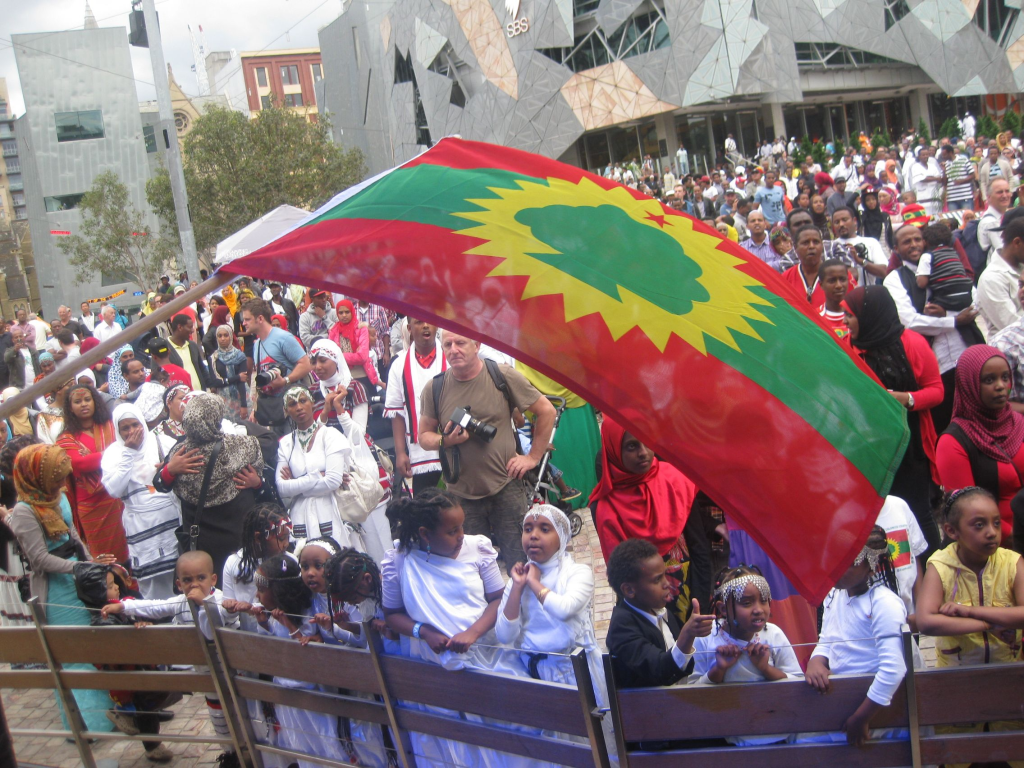
By Bona Oromia
Across more than a century of the Oromo freedom struggle, “unity” (Tokkummaa) has remained an unavoidable core theme. It serves both as a profound diagnosis of historical setbacks and as a fundamental precondition for the future. The Oromo people constitute the largest ethnic group in the Horn of Africa, yet they have long been politically marginalized. This paradox—a majority without power—makes unity not merely a moral appeal but a strategic necessity for survival and liberation.
The Official Diagnosis: Lack of Internal Unity as the Main Reason the Struggle Remains Unfinished
In October 2026, Ethiopian Prime Minister Abiy Ahmed, in an interview on Oromia Broadcasting Network, offered a rare systematic assessment of why the Oromo struggle has not achieved rapid victory. He categorized the Oromo people’s core demands into three pillars: economic (autonomy over land and resources), identity (preservation of culture, language, and moral values—Safuu), and democratic (self-governance based on Gadaa principles).
However, he explicitly stated that despite the struggle having lasted more than a century, it has not achieved its desired victory, and one of the primary reasons is a lack of internal unity. He explained that although the Oromo are geographically dispersed and share an identity, political conspiracies, religious divisions, and geographic boundaries formed by rivers and regional lines have prevented them from maintaining strong internal cohesion. This judgment from the highest level of government confirms, from another angle, the central place of the unity question in Oromo political discourse.
Historical Echoes: Unity Was the Starting Point of the Movement
The history of modern Oromo political mobilization is itself a history of the practice of unity. In 1963, three limited-scale Oromo self-help associations—Jibat and Macha, Metta Robii, and Tulama Shawa—merged to form the Macha-Tulama Self-Help Association. The significance of this merger went far beyond organizational integration: it “embraced all Oromo irrespective of religion and region,” and within just three years registered over two million members, becoming the symbol of the public rise of Oromo nationalism.
Although the association’s charter was framed around social services such as education, healthcare, and road construction, its core orientation was “Oromo national development.” As scholarly literature notes, its formation “laid the foundation for the centralized leadership of the Oromo liberation struggle.” In other words, the organizational form of unity—integrating scattered self-help groups into a unified national movement—was precisely the starting point of all subsequent political struggle. When the imperial government banned the association in 1967, it had already demonstrated the energy that unity could unleash.
Cultural Wisdom: Unity as a Defense Against Being “Consumed from Within”
In Oromo political discourse, the emphasis on unity also stems from a deep cultural vigilance. Academic research has analyzed metaphors in Oromo political speeches: How does a weak wolf defeat a strong elephant? The answer is “from inside the elephant’s belly.” This analogy is used to explain why Oromo unity is difficult for external enemies to shake, yet easily weakened by “a few Oromo politicians pursuing personal interests.”
This “self-centeredness” is seen as a corrosive agent of unity. Another set of metaphors in the speeches—the sickle and the saw—further illustrates this point: the curved blade of the sickle symbolizes politicians who take everything for themselves, while the straightness of the saw symbolizes fair sharing. These cultural expressions reveal a core understanding: the greatest threat to unity is often not external oppression itself, but internal division and self-interest. For this reason, the call for unity carries enduring urgency in Oromo political culture.
Contemporary Echoes: Religious Leaders Practicing Unity
The theme of unity has not remained confined to history or rhetoric. In September 2026, in Finfinnee (Addis Ababa), leaders of the three major faith pillars of Oromo society—Waaqeffannaa (traditional belief), Christianity, and Islam—gathered at a rare roundtable dialogue. Participants reached a series of consensus points, the most central of which was the commitment: “Yoo rakkoon jiraate waliin dhaabbannee hiikuu”—”If difficulty comes, we will stand together and solve it.”
Religious leaders also explicitly condemned “any act that uses religious identity to sow discord or harm the Oromo nation,” and pledged to use the Oromo language and culture as tools of unity rather than weapons of division. This event demonstrates that unity remains, in contemporary Oromo society, a practical goal that must be actively constructed and continually reaffirmed—not an accomplished fact to be taken for granted.
Conclusion
Oromo unity remains a constant theme in the freedom struggle because it simultaneously carries three functions: diagnostic—it explains why the Oromo people, despite their large population, have not achieved their political goals; historical—it was the organizational principle through which the modern Oromo national movement was born; and normative—it is seen as the fundamental safeguard against internal division and for consolidating collective strength. In Oromo political discourse, unity has never been a settled question, but a task that each generation must take up anew.

Posted on November 6, 2026, in Aadaa, Afaan, Bokkkuu, Diaspora, Events, Face of Injustice, Finfinne, freedom, gadaa, gender, Grief Support, Information, Language, Media, News, Oromia, Uncategorized. Bookmark the permalink. Leave a comment.






Leave a comment
Comments 0