Daily Archives: November 5, 2026

Gadaa System Revived in Shaggar: Nine Gadaa Leaders Inaugurated in Gafarsa Gujee District
By Dhabessa Wakjira
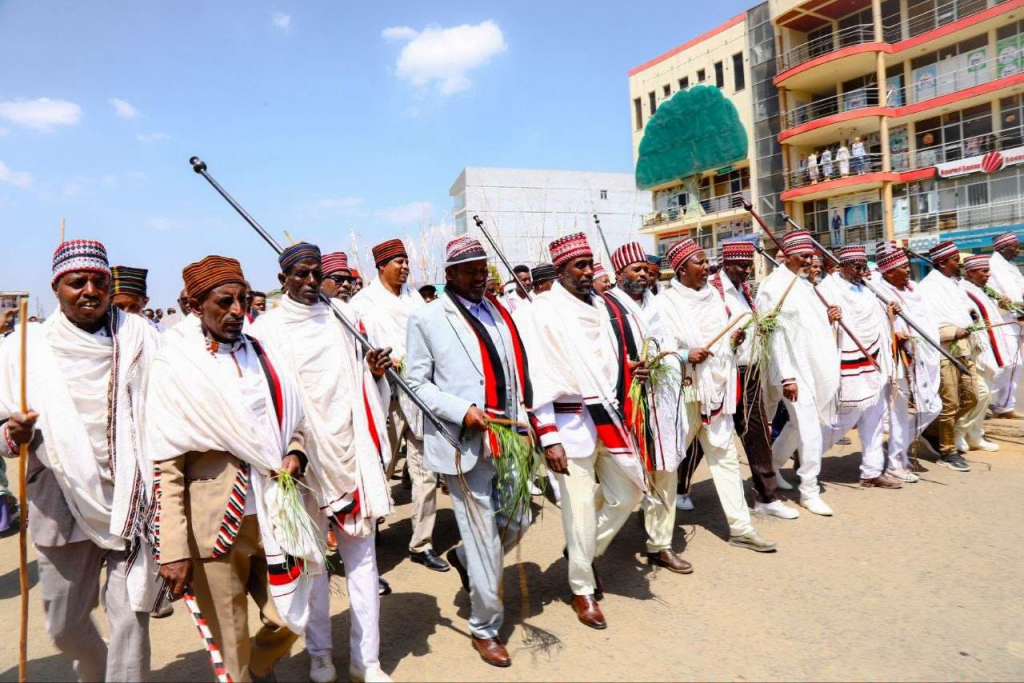
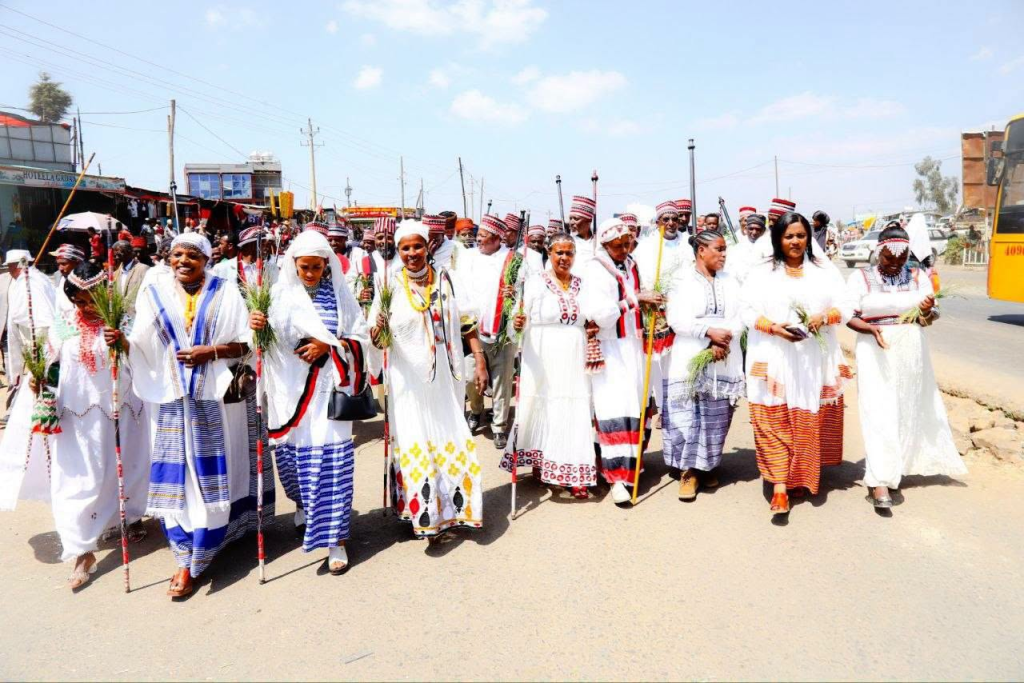
SHAGGAR, Oromia — In a ceremony rich with cultural significance and democratic symbolism, the Gadaa system has been formally revived in Gafarsa Gujee District of Shaggar City Administration, with nine Gadaa leaders (Abbootii Gadaa) inaugurated in a peaceful transfer of power that reaffirms one of Africa’s oldest democratic traditions.
A Democratic Heritage Reclaimed
The Gadaa system, described in the announcement as “a democratic governance system through which the Oromo people govern themselves and a foundation for modern democracy worldwide,” has been a central pillar of Oromo identity for centuries. The system regulates political, economic, and social life through a rotating leadership structure that ensures accountability, balance, and the peaceful transfer of power.
In Shaggar City Administration, efforts are underway to revitalize the cultural heritage and identity of the Oromo people, which had been systematically marginalized under previous administrative arrangements. The Tuulama Oromo community has been actively supporting the completion of the Gadaa power transfer through peaceful and orderly means, in accordance with the traditions of the system.
The Ceremony in Gafarsa Gujee
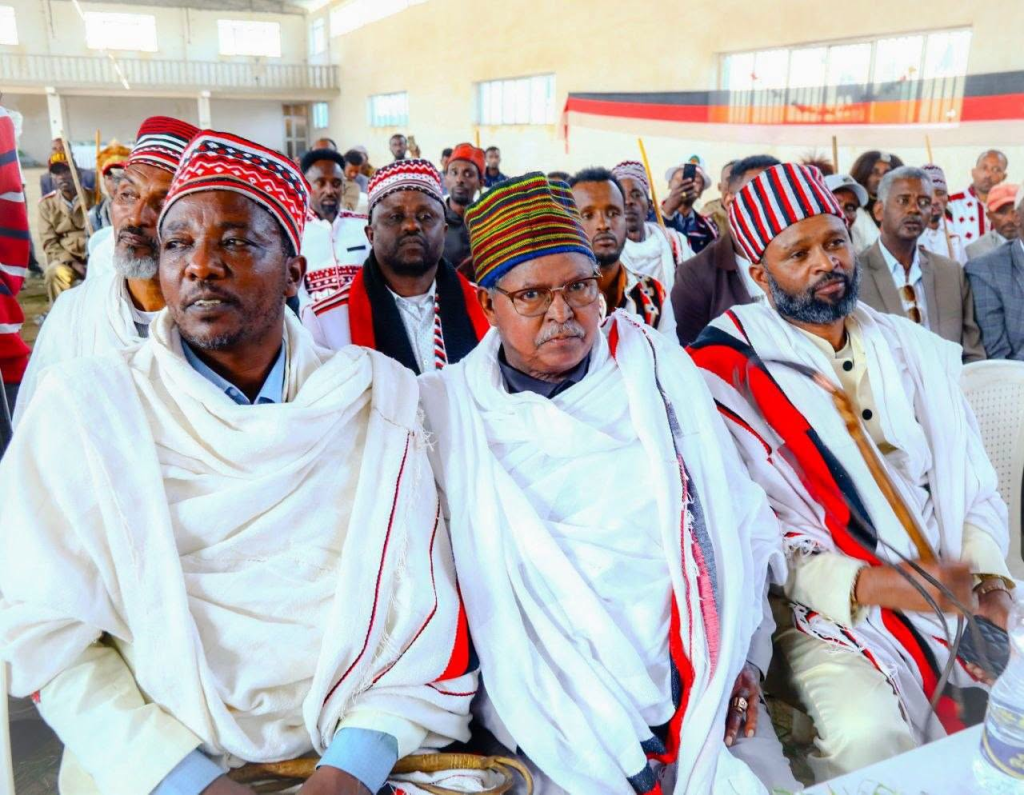
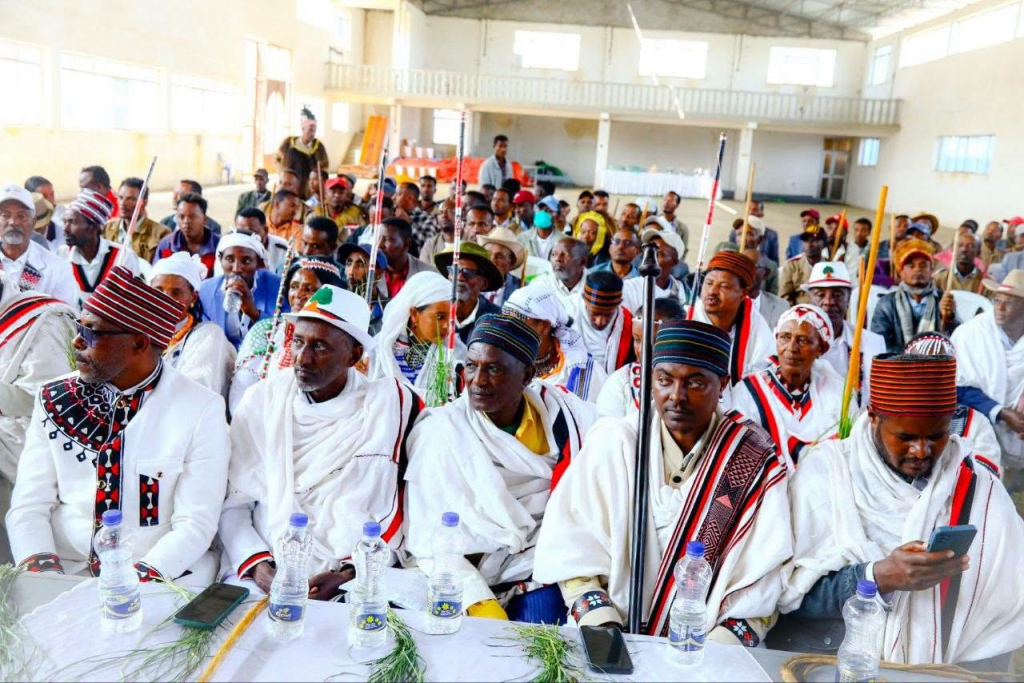
The inauguration ceremony, held in Gafarsa Gujee District, was attended by Gadaa leaders, Haadholii Siinqee (women elders), and members of the community. The Gadaa Muudanaa—the incoming Gadaa leadership—formally assumed power from the outgoing Gadaa Meelbaa, marking the completion of the transition cycle.
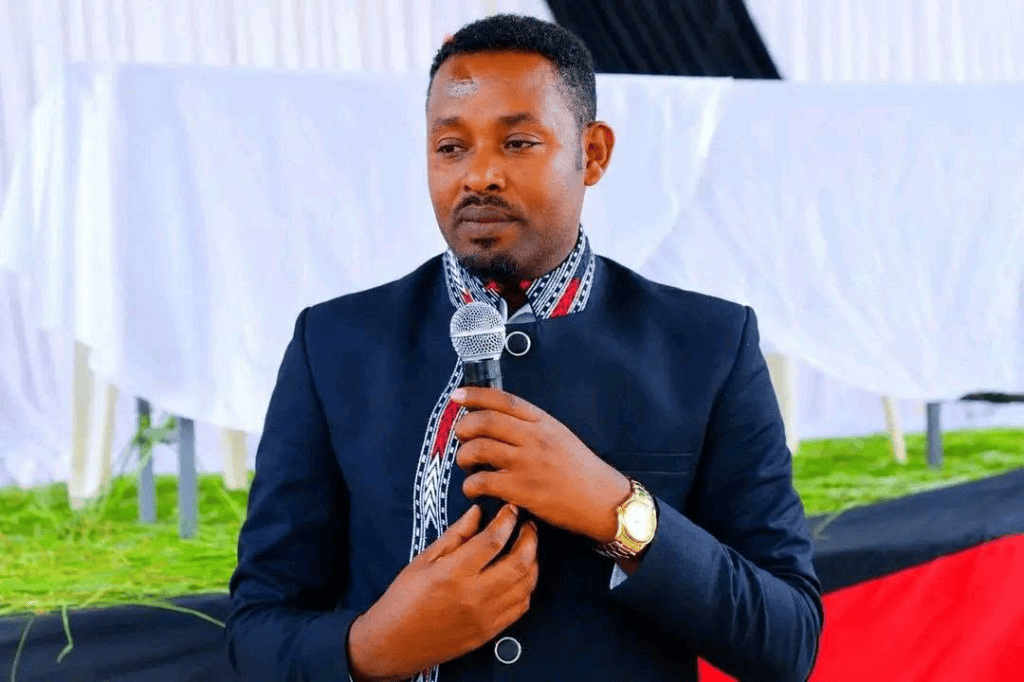
Abbaa Gadaa Tuulamaa Geetuu Taliilaa addressed the gathering, emphasizing that the Oromo people govern themselves through the Gadaa system by transferring authority peacefully and in accordance with tradition. The Gadaa Muudanaa leaders confirmed that they have assumed authority from Gadaa Meelbaa and are now organizing their structures.
The nine newly inaugurated Gadaa leaders were entrusted with the responsibility of preserving and strengthening Oromo culture and traditions during their term, and of passing this heritage on to future generations.
A Model of True Democracy
Injiinar Yirdaaw Nagaash, the administrator of Gafarsa Gujee District, praised the revival of the Gadaa system as a demonstration of the Oromo people’s commitment to genuine democracy based on social equality. He stated that the Oromo people governing themselves through Gadaa serves as a model for the world and a testament to the greatness of the Oromo nation.
The administrator also noted that the Oromia Regional Government has been working with a focus on cultural renewal and the promotion of Oromo culture and traditions. He called on various stakeholders to support efforts to elevate and showcase the culture and traditions of the Oromo people.
A Living Tradition
The revival of Gadaa in Shaggar is part of a broader movement across Oromia to reclaim and revitalize indigenous governance systems that were suppressed under centralized rule. The Gadaa system, inscribed by UNESCO as Intangible Cultural Heritage in 2016, is recognized globally as a sophisticated democratic framework that predates many modern democratic institutions.
The inauguration of nine Gadaa leaders in Gafarsa Gujee is not merely a ceremonial event. It is a statement that the Oromo people’s democratic traditions are alive, that their cultural identity is being restored, and that the peaceful transfer of power—the hallmark of true democracy—is being practiced according to the wisdom of their ancestors.
Source: ENA (Ethiopian News Agency), Shaggar City Administration Communications

Four Women, One Heritage: Ethiopian American Women Make History in 2026 Elections
By Dhabessa Wakjira
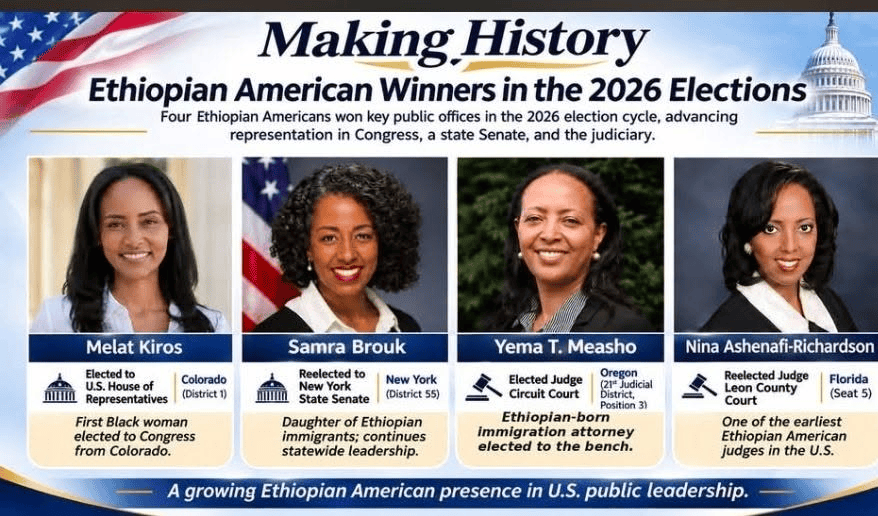
WASHINGTON, D.C. — Based on 2026 U.S. election results confirmed so far, four women of Ethiopian heritage have won seats in Congress, state government, and the judiciary—a milestone that reflects the growing political representation of Ethiopian Americans across the United States.
Melat Kiros: A Historic First in Colorado
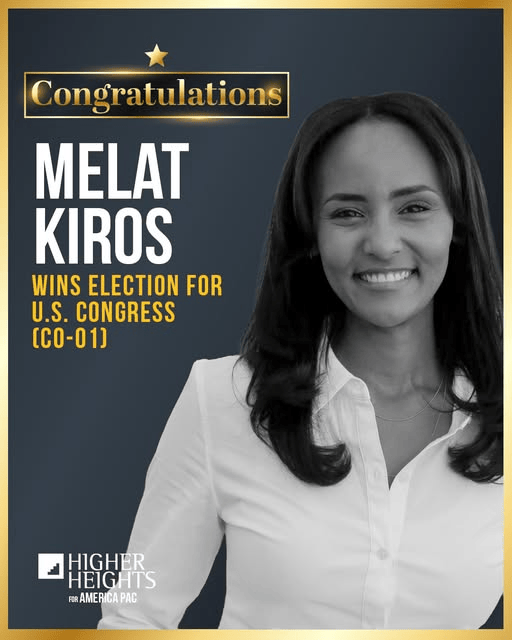
Melat Kiros has been elected to the U.S. Congress from Colorado’s 1st Congressional District, becoming the state’s first Black woman elected to Congress. At 29 years old, Kiros is also the first Gen Z woman ever elected to the House of Representatives. Born in Addis Ababa before moving to America to study law, she defeated a 15-term incumbent in the primaries before winning the general election. Her victory is a testament to the rising influence of a new generation of Ethiopian American leadership.
Samra Brouk: Re-elected to the New York State Senate
Samra Brouk has been re-elected to the New York State Senate, continuing her service as a voice for her constituents in Rochester and the surrounding region. Brouk, who has been a prominent advocate for mental health reform and community investment, represents the deepening roots of Ethiopian American political engagement in New York.
Yema T. Measho: Elected Circuit Court Judge in Oregon
Yema T. Measho has been elected as a circuit court judge in Oregon, bringing her legal expertise and commitment to justice to the bench. Her election reflects the growing presence of Ethiopian Americans in the judicial system—a crucial arena where representation matters for ensuring fairness and equity.
Nina Ashenafi-Richardson: Securing Another Judicial Term in Florida
Nina Ashenafi-Richardson has secured another judicial term in Florida, continuing her distinguished career on the bench. Her re-election is a vote of confidence in her service and a reminder that Ethiopian American women are shaping the legal landscape in states across the country.
A Growing Presence
These four women represent different journeys—from Congress to state senate to the judiciary, from Colorado to New York to Oregon to Florida. But they share one thing: Ethiopian heritage. Their achievements reflect the growing representation of Ethiopian Americans in the political and civic life of the United States.
The 2026 elections have been described as a watershed moment for diversity in American politics. The election of Black women to Congress, the rise of Gen Z leadership, and the growing presence of immigrant communities in elected office all point to a changing political landscape—one that is more reflective of the country’s demographics and more responsive to its diversity.
Congratulations
To Melat Kiros, Samra Brouk, Yema T. Measho, and Nina Ashenafi-Richardson: congratulations. Your victories are not only personal achievements but milestones for the Ethiopian American community and for all who believe in the promise of representative democracy.
Four women. Different journeys. One shared Ethiopian heritage.
#EthiopianAmerican #Election2026 #WomenInPolitics #RepresentationMatters

Melat Kiros: 29-Year-Old Ethiopian-Born Trailblazer Elected to Congress
By Dhabessa Wakjira
DENVER, Colorado — In a political season that has already made history, one victory stands out as particularly remarkable. Melat Kiros, a 29-year-old Democrat, has been elected to Congress from Colorado’s 1st Congressional District—becoming the first Gen Z woman ever elected to the United States House of Representatives.
From Addis Ababa to the Halls of Congress
Kiros was born in Addis Ababa, Ethiopia, before moving to America to study law. Her journey from the Ethiopian capital to the chambers of Congress is a testament to the possibilities that education, determination, and public service can unlock. She is a member of the Democratic Party and brings with her a legal background that has prepared her for the rigors of legislative work.
A Historic First
Kiros is the first Gen Z woman elected to Congress and the second Gen Z member elected to the House of Representatives, following Maxwell Frost. At 29 years old, she represents a new generation of leadership—one that has come of age in a time of profound social and political change and is now stepping into the institutions that shape the future.
The Road to Victory
Her path to Congress was not an easy one. In the primaries, Kiros defeated Diana DeGette, a 15-term incumbent—a stunning upset that signaled voters’ appetite for fresh leadership and new voices. She then went on to face Republican Christy Peterson in the general election, emerging victorious.
The victory is not only a personal triumph but a milestone for Ethiopian Americans and for the broader diaspora community. As one supporter put it: “Ethiopia to the world.”
A New Generation Takes Its Seat
Kiros’s election comes at a moment when American democracy is being tested and renewed. Her presence in Congress will bring a perspective shaped by her immigrant experience, her legal training, and her generation’s commitment to addressing the challenges of the 21st century—from climate change to economic inequality to the defense of democratic norms.
She joins a historic class of Black women elected to Congress in 2026, a group that includes Nikema Williams, Lucy McBath, Jasmine Clark, Ayanna Pressley, and many others. Together, they represent a transformation of American political representation—one that is younger, more diverse, and more reflective of the country’s changing demographics.
Congratulations
Melat Kiros’s victory is a moment of pride not only for Colorado and the United States but for Ethiopia and the global Ethiopian diaspora. Her story—from Addis Ababa to the U.S. Congress—is a reminder that the distance between struggle and leadership is often smaller than it appears, and that the children of immigrants can rise to the highest levels of public service.
Congratulations, Congresswoman-elect Melat Kiros.
#AmericaDecides #Election2026 #MelatKiros #EthiopiaToTheWorld