Category Archives: Bokkkuu

Irreechaa: A Festival of Peace, Reconciliation, and Ethiopia’s Renaissance
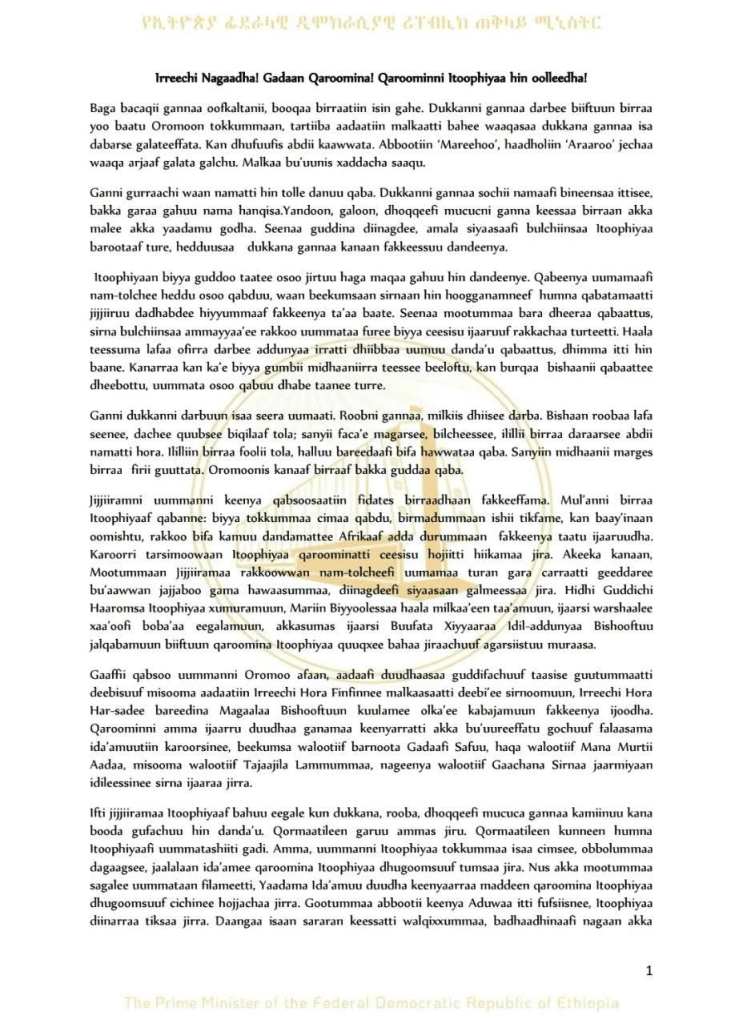
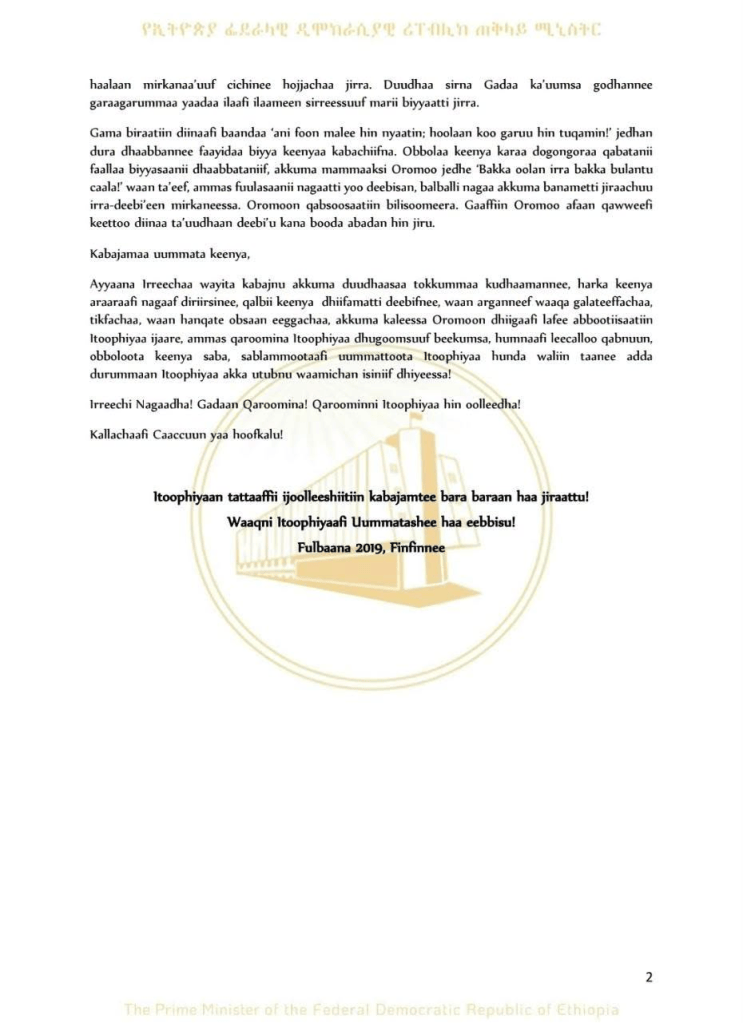
A Feature Address Delivered by Prime Minister Abiy Ahmed Ali
FINFINNEE, October 2026 — As the dark clouds of the rainy season give way to the bright sunshine of spring, millions of Oromo people across Ethiopia and the world are celebrating Irreechaa — the ancient thanksgiving festival that marks the transition from darkness to light, from hardship to hope, and from isolation to unity.
This year’s celebration carries a message that resonates far beyond the Oromo community: Irreechaa is peace. Change is prosperity. And Ethiopia’s prosperity has not yet arrived.
A Season of Transition
Irreechaa is rooted in the agricultural and spiritual rhythms of Oromo life. The festival marks the end of Ganna — the dark, rainy season — and the beginning of Birraa, the bright spring season. During the rains, movement is restricted, roads become impassable, and daily life slows. When the rains end, the land blooms, rivers fill, and the people emerge to give thanks.
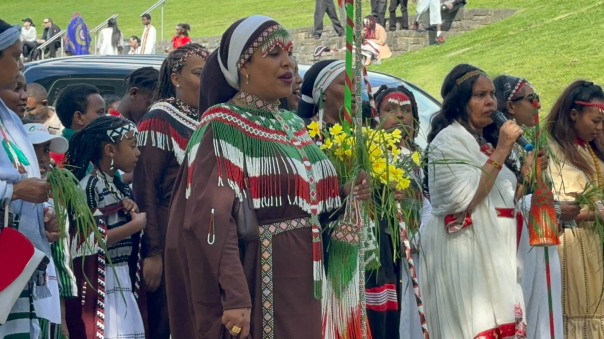
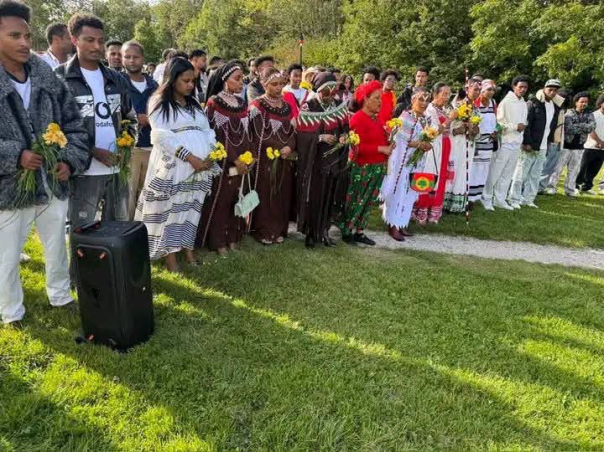
The Oromo people gather at riversides and lakeshores — at Hora Finfinnee in Addis Ababa and Hora Har-sadee in Bishoftu — to thank Waaqa (God) for bringing them safely through the darkness. Elders offer blessings. Mothers pray for peace. The green grass of the season is dipped into the water and sprinkled as a blessing for the land, the cattle, and the people.
The Symbolism of Darkness and Light
The text of this year’s celebration draws a powerful parallel between the natural seasons and Ethiopia’s political and economic journey.
For generations, Ethiopia has been a country of immense potential — rich in natural resources, strategically located, and home to diverse peoples. Yet, as the message notes, “Ethiopia, though a great country, has not been able to reach its potential.” The darkness of the rainy season serves as a metaphor for the decades of struggle, underdevelopment, and political turmoil that have held the nation back.
But just as the rains must eventually end, so too must the darkness of Ethiopia’s past give way to a new dawn. The message declares: “The sun of Ethiopia’s prosperity is beginning to rise.”
A Call for Unity and Reconciliation
Central to the Irreechaa message is a call for peace, reconciliation, and national unity.
The text invokes the Oromo proverb: “Bakka oolan irra bakka bulantu caala” — meaning that where one spends the night is better than where one grazes. In other words, reconciliation and return are preferable to prolonged conflict and estrangement.
The message extends an olive branch to those who have taken up arms against the state: if they return to peace, “the door of peace remains open.” It emphasizes that the Oromo struggle has been resolved through peaceful means, and that there is no longer any reason for armed conflict.
At the same time, the message reaffirms Ethiopia’s sovereignty and territorial integrity, invoking the legacy of Adwa — the historic victory of Ethiopian forces over colonial invaders in 1896. “We are continuing the heroism of our fathers at Adwa, protecting Ethiopia from enemies,” the text declares.
A Vision of Prosperity
The message outlines a vision of Ethiopia’s future built on the foundations of its ancient heritage and modern development.
It points to ongoing national projects — the completion of the Grand Ethiopian Renaissance Dam (GERD), the convening of the National Dialogue, the construction of fertilizer and fuel factories, and the development of Bishoftu International Airport — as signs that “the sun of Ethiopia’s prosperity is beginning to shine.”
The message also emphasizes the importance of the Gadaa system, the traditional Oromo governance structure recognized by UNESCO as intangible cultural heritage. It calls for the integration of Gadaa principles — including Safuu (moral code), customary courts, and community service — into modern governance.
“We are building a system that builds on our ancient traditions,” the text states. “Knowledge for all through Gadaa and Safuu education; justice for all through customary courts; service for all through public administration; and security for all through institutional protection.”
Irreechaa as a National Festival
This year’s Irreechaa celebration at Hora Finfinnee and Hora Har-sadee has drawn particular attention as a symbol of Oromo cultural revival and national unity.
The return of Irreechaa to Hora Finfinnee — the original sacred site in the heart of Addis Ababa — is seen as a historic reclamation of cultural space. For decades, public celebrations of Irreechaa were suppressed, and the Oromo people were denied the right to gather at their sacred sites.
The celebration at Hora Har-sadee in Bishoftu, attended by millions, has become one of the largest annual gatherings in Africa. The festival has also been celebrated by Oromo communities around the world — from Melbourne to Amsterdam to Minneapolis — where the diaspora gathers to maintain their cultural heritage.
A Message of Hope
The Irreechaa message concludes with a call to action and a prayer:
“Irreechaa is peace! Change is prosperity! Ethiopia’s prosperity has not yet arrived! May the green grass and flowers flourish! May Ethiopia be honored by the efforts of its children and live forever! May God bless Ethiopia and its people!”
As the green grass is sprinkled and the blessings are spoken, Irreechaa serves as a powerful reminder that after every dark season comes a season of light, and that the enduring spirit of a people — rooted in tradition, united in purpose, and committed to peace — can overcome any obstacle.
Irreechi Nagaadha! Gadaan Qaroomina! Qaroominni Itoophiyaa hin oolleedha!
Finfinnee, Ethiopia
October 2026

Irreechaa Celebration Honors Fallen Heroes at ABO Gullallee Headquarters
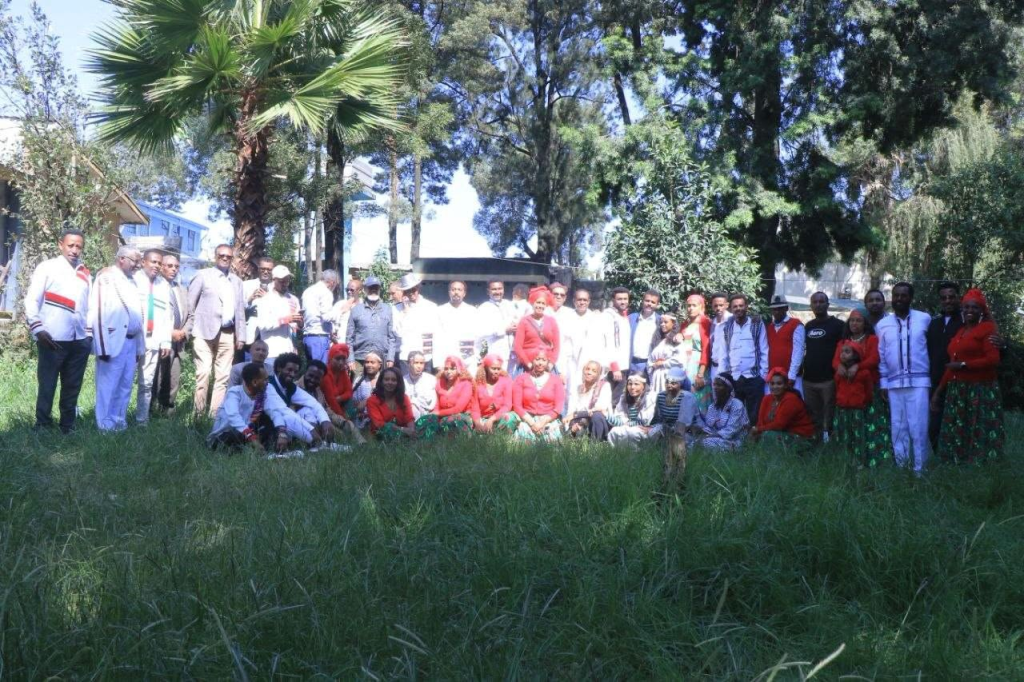
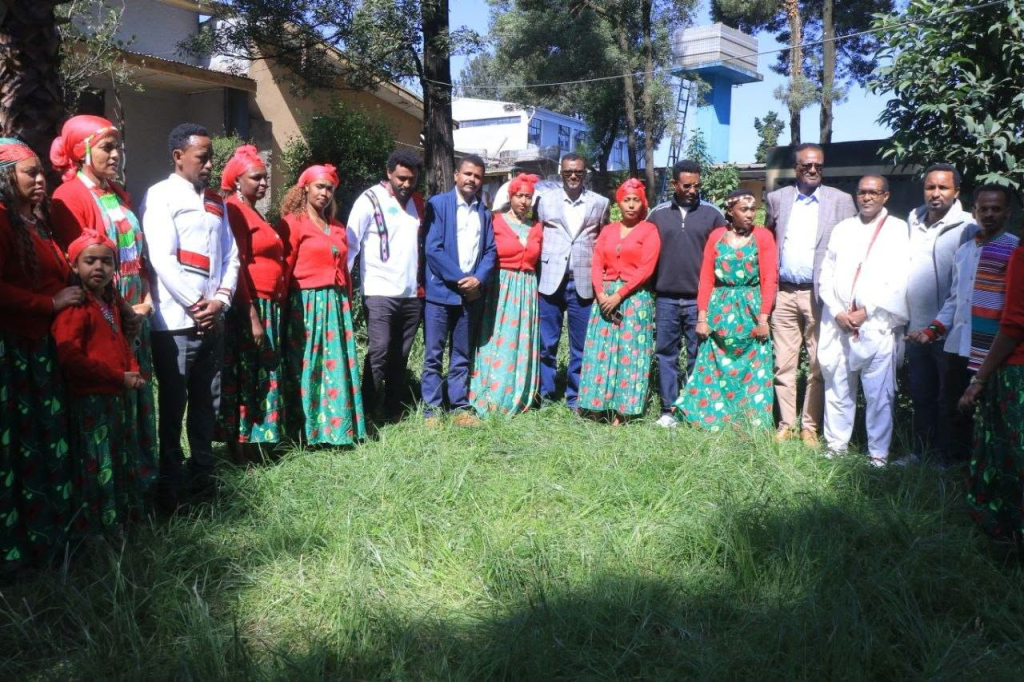
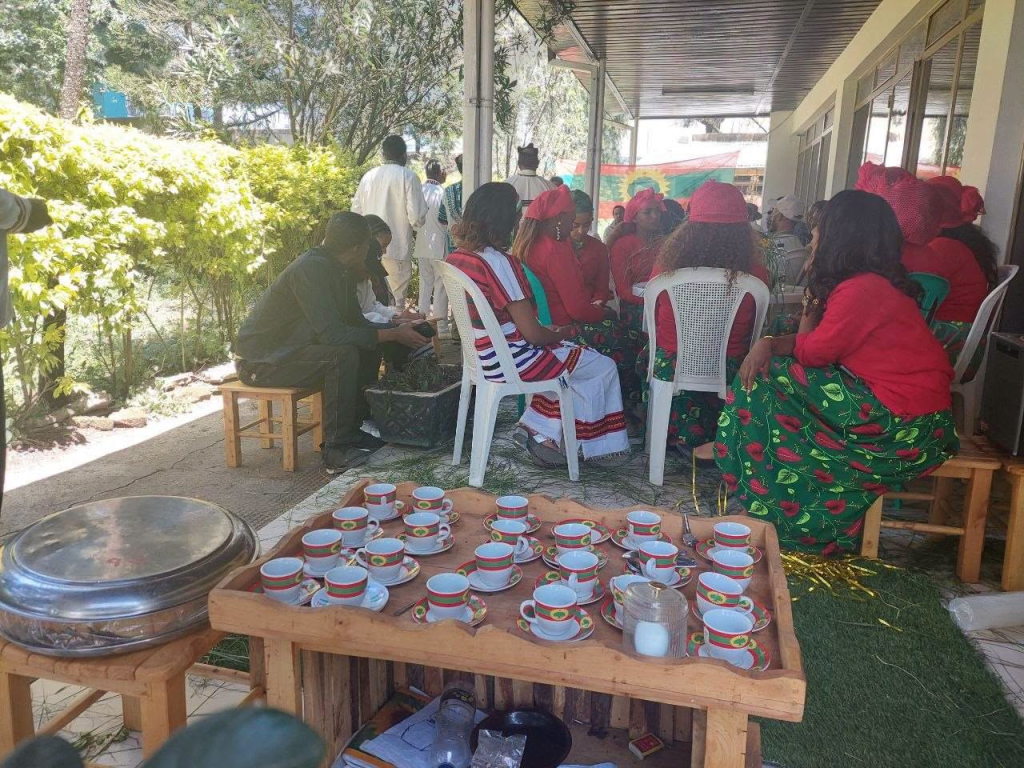
(Gullallee, OROMIA — October 1, 2026) — In a solemn yet joyful observance of tradition, members of the Oromo Liberation Army (ABO) gathered today at the organization’s Central Office in Gullallee to celebrate Irreechaa, the ancient Oromo thanksgiving festival marking the transition from the dark rainy season to the bright season of Birraa.
The celebration, held under the theme of remembrance and renewal, brought together members and leaders in a ceremony that honored both the spiritual foundations of Irreechaa and the sacrifices of Oromo heroes who have fallen in the struggle for freedom and dignity.
A Ceremony Rooted in Tradition
The day’s events unfolded in accordance with longstanding Oromo custom, beginning with Eebba Manguddootaa — the blessings of elders and community leaders. These blessings, central to any Irreechaa observance, invoked peace, prosperity, and divine favor upon the gathering and upon the broader Oromo nation.
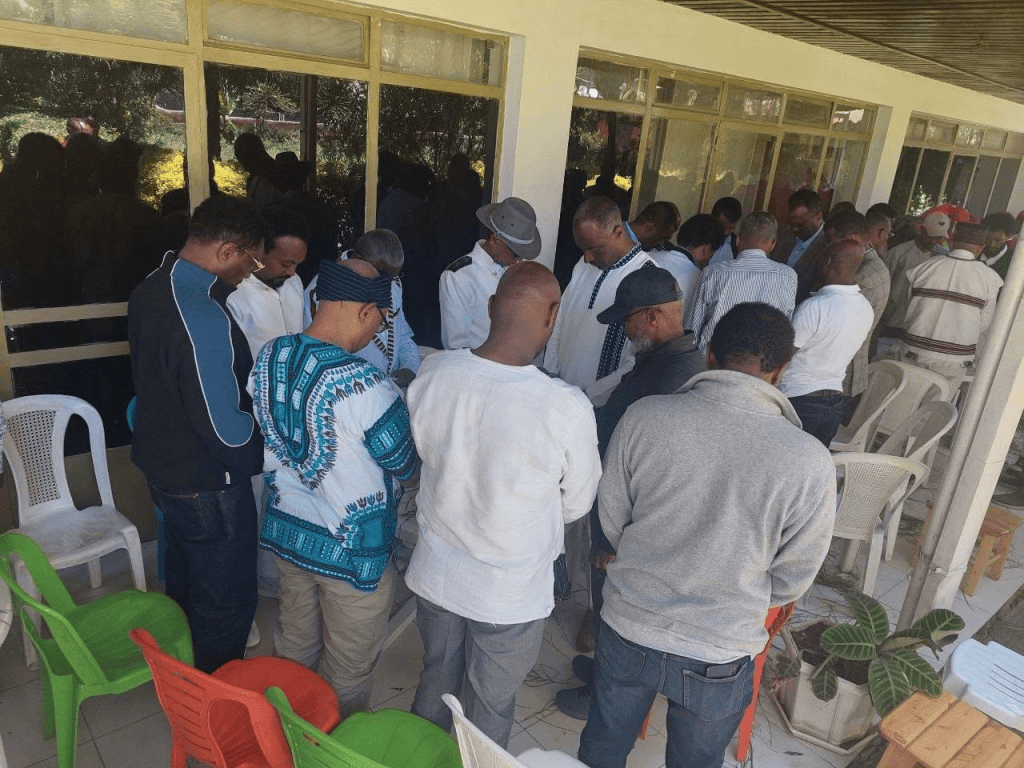
Following the traditional blessings, participants turned their hearts and minds to remembrance. A memorial tribute was offered for the gootota wareegamtoota Oromoo — the martyred heroes of Oromia who gave their lives in the pursuit of freedom. The solemn moment served as a reminder that Irreechaa is not only a celebration of life and abundance but also an occasion to honor those who sacrificed everything for the generations that followed.
“From Where Did Irreechaa Rise, and Where Has It Arrived?”
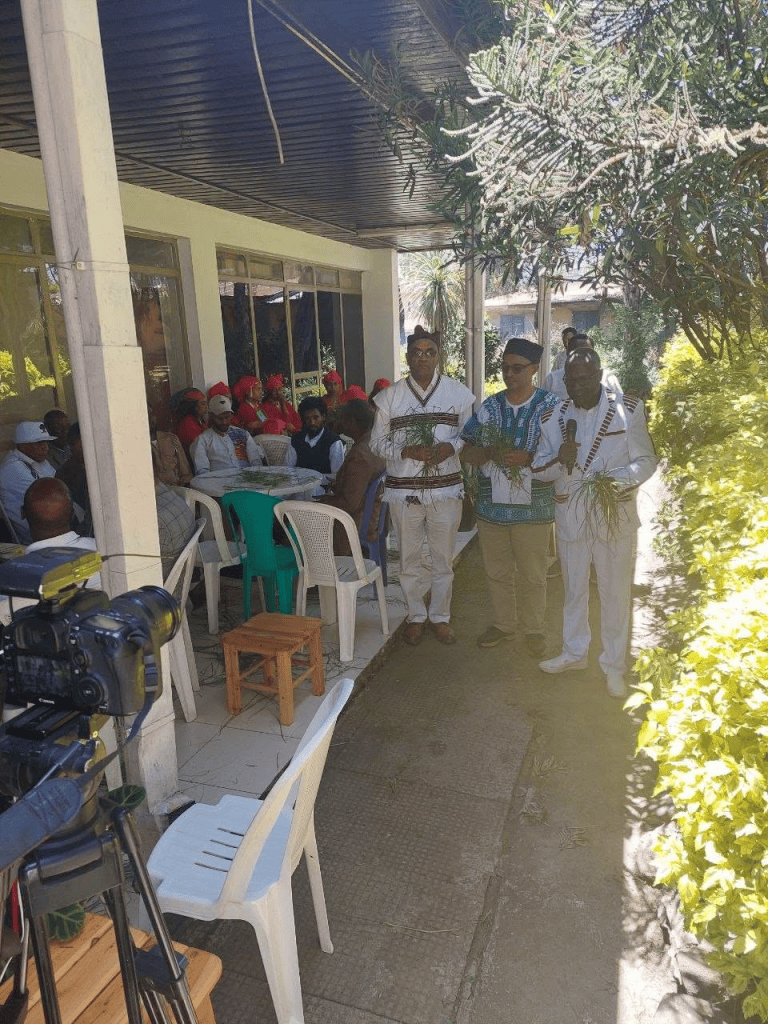
The ceremonial program featured a keynote address delivered by a scholar on the theme: “Irreechi eessaa ka’ee eessa gahe?” — “From where did Irreechaa rise, and where has it arrived?”
The reflection traced the historical and spiritual journey of Irreechaa from its ancient origins in Oromo cosmology and the Gadaa system to its contemporary significance as a pan-Oromo cultural and political touchstone. The speaker explored how the festival has survived centuries of suppression, adapted to changing circumstances, and emerged today as one of the most powerful expressions of Oromo identity and unity.
A Feast of Fellowship
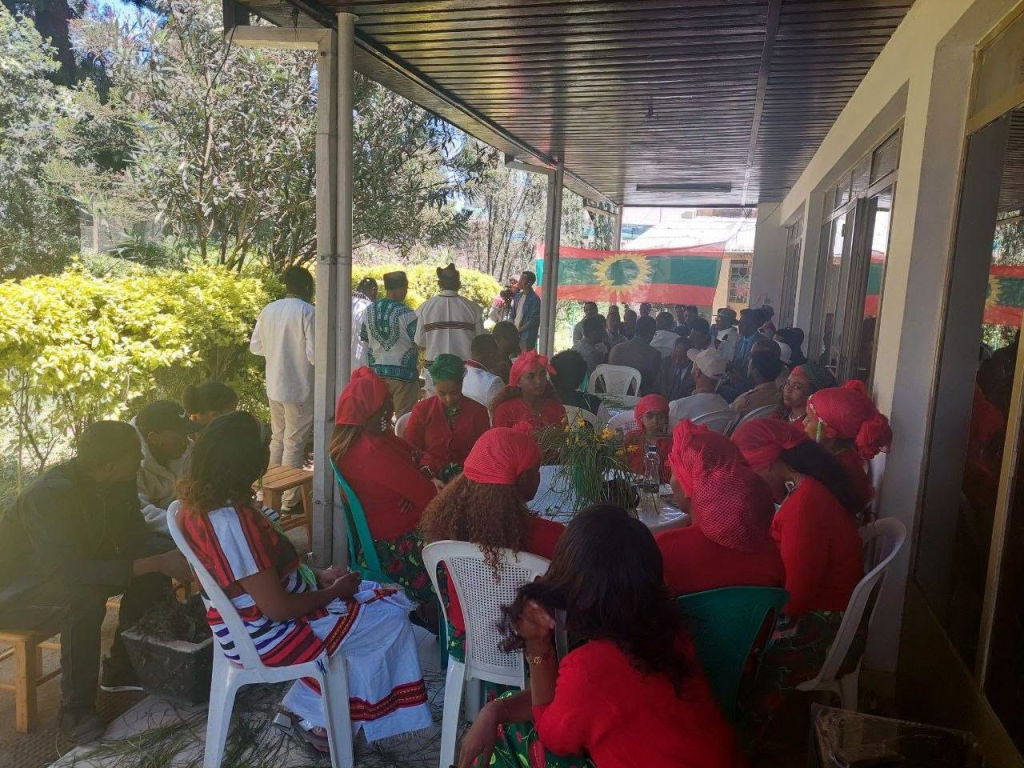
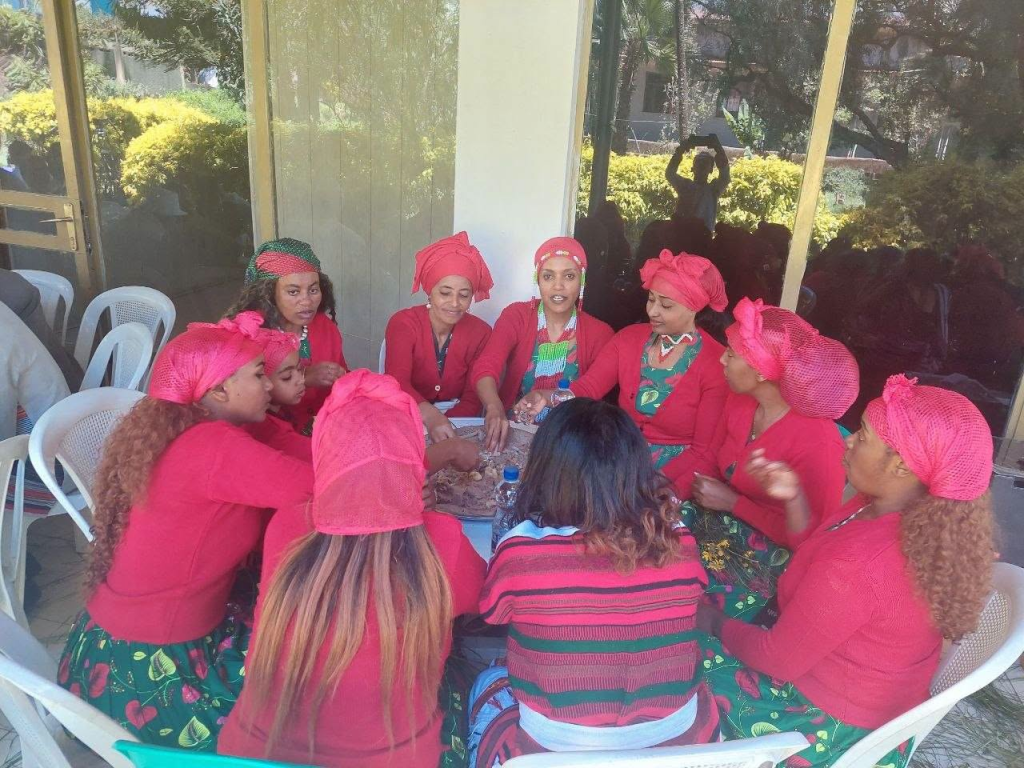
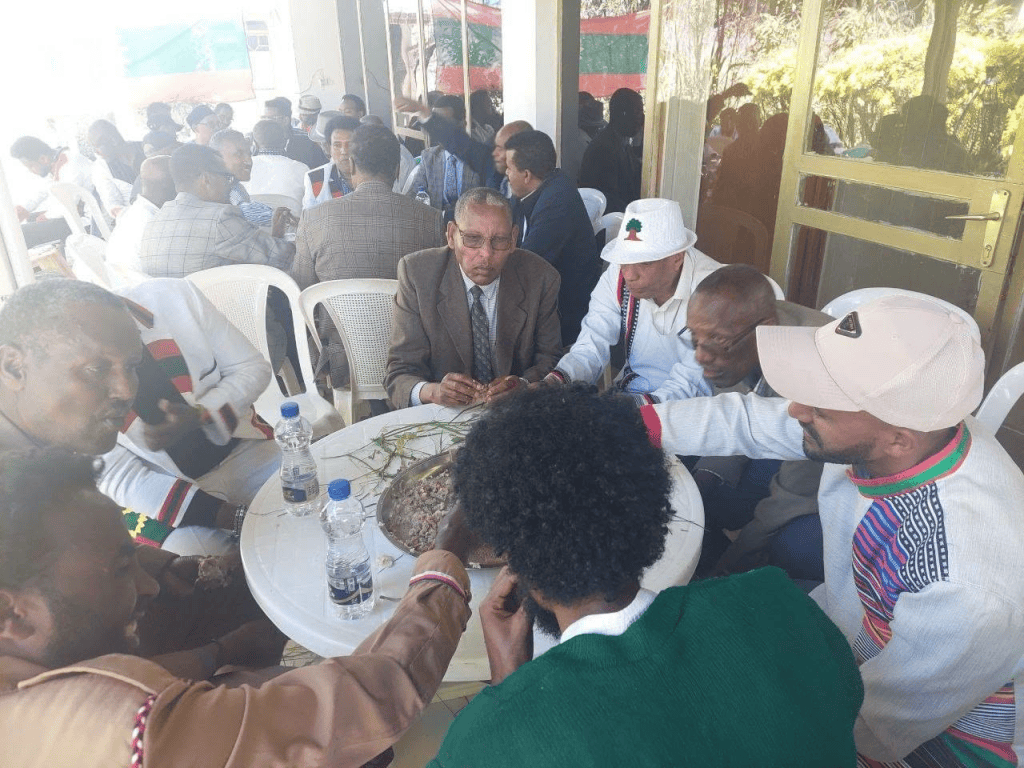
The formal proceedings concluded with a communal meal — a tradition that has marked Irreechaa celebrations for generations. Members shared food and drink in an atmosphere of brotherhood and solidarity, reinforcing the bonds that unite them in purpose and commitment.
The gathering was described as having concluded “with success and victory,” a phrase that resonated with the day’s dual themes of thanksgiving and resolve.
Irreechaa in Context
Irreechaa remains the most significant cultural and spiritual event on the Oromo calendar. Traditionally celebrated twice annually — at spring on hilltops (Irreechaa Tulluu) and after the rains at riversides and lakeshores (Irreechaa Malkaa) — the festival draws millions of participants from across Oromia and the global diaspora.
This year’s celebration at the ABO Gullallee headquarters reflects the enduring importance of Irreechaa as both a religious observance and a statement of cultural and national identity. For communities that have faced decades of marginalization and conflict, the festival serves as a vital space for gathering, remembrance, and the reaffirmation of shared values.
Looking Forward
As the Oromo people across Ethiopia and the world continue to observe Irreechaa celebration in the year 1959, the celebration at Gullallee stands as a testament to the resilience of tradition and the power of collective memory.
In honoring the past — both the ancient heritage of Irreechaa and the recent sacrifices of those who fought for freedom — participants looked toward a future of peace, unity, and the fulfillment of the Oromo people’s long-held aspirations.
Irreechi keenyas injifannoo keenya.

High Leadership Committee for the Newly Established Oromia Zones Assigned
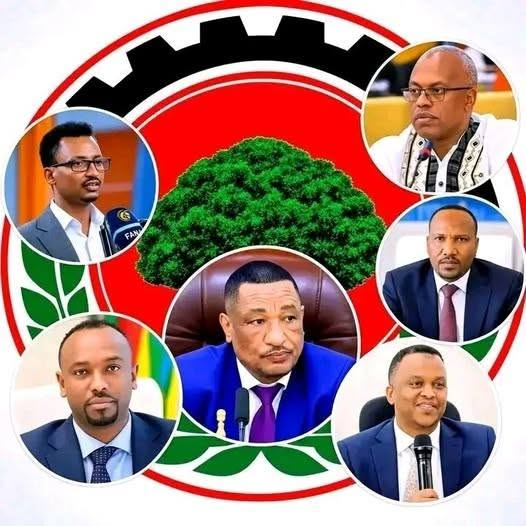
Finfinnee — The Oromia Regional Government has established a new reform by restructuring the administrative structure of Oromia from 21 zones to 6 zones, with the aim of building a strong system and government that can ensure the historic decision of people’s ownership. Accordingly, the high leadership committee for these newly established zones has been assigned.
The Oromia Communication Service has announced this information. The reform is said to be prepared to improve the administrative system and expedite services delivered to the people.
East Oromia Zone
For East Oromia Zone, whose seat is Harar, Obbo Abdurrahmaan Abdallaa has been assigned as Chief Administrator of East Oromia Zone at the rank of Deputy President.
Aadde Miski Muhammad has been assigned as Deputy Head of Development Affairs for East Oromia Zone at the rank of Bureau Head, with her seat at Ciroo. Obbo Anas Aliyyii has been assigned as Deputy Head of Peace and Justice Affairs for East Oromia Zone at the rank of Bureau Head, with his seat at Galamsoo.
Obbo Jaarsoo Boruu has been assigned as Senior Advisor to the Administrator of East Oromia Zone at the rank of Bureau Head, with his seat at Gurawaa. Obbo Fiqaaduu Miiliyoon and Aadde Saamiyaa Abdallaa have been assigned as Advisors to the Administrator of East Oromia Zone at the rank of Bureau Head.
Central Oromia Zone
For Central Oromia Zone, whose seat is Shaggar and Adaamaa, Dr. Mangistuu Baqqalaa has been assigned as Chief Administrator of Central Oromia Zone at the rank of Deputy President.
Obbo Abbaabbuu Waaqoo has been assigned as Deputy Head of Development Affairs for Central Oromia Zone at the rank of Bureau Head, with his seat at Waliso. Obbo Kifalaw Adaree has been assigned as Deputy Head of Peace and Justice Affairs for Central Oromia Zone at the rank of Bureau Head, with his seat at Fiichee.
Obbo Makkonnin Baay’isaa has been assigned as Senior Advisor to the Administrator of Central Oromia Zone at the rank of Bureau Head, with his seat at Ambo. Obbo Ashannaafii Ajjamaa and Obbo Taaddalaa Diriirsaa have been assigned as Advisors to the Administrator of Central Oromia Zone at the rank of Bureau Head.
South West Oromia Zone
For South West Oromia Zone, whose seat is Jimma, Dr. Rashaad Kamaal has been assigned as Chief Administrator of South West Oromia Zone at the rank of Deputy President.
Obbo Indaalkaachaw Tafarii has been assigned as Deputy Head of Development Affairs for South West Oromia Zone at the rank of Bureau Head, with his seat at Beddellee. Obbo Amaan Danuu has been assigned as Deputy Head of Peace and Justice Affairs for South West Oromia Zone at the rank of Bureau Head, with his seat at Limmuu Gannat.
Obbo Didhaa Guddataa has been assigned as Senior Advisor to the Administrator of South West Oromia Zone at the rank of Bureau Head, with his seat at Mattuu. Obbo Muhaammadxaahaa Abbaa Fiixaa and Obbo Moosisaa Lammeessaa have been assigned as Advisors to the Administrator of South West Oromia Zone at the rank of Bureau Head.
South Oromia Zone
For South Oromia Zone, whose seat is Yaabeelloo, Obbo Ahmad Haajii has been assigned as Chief Administrator of South Oromia Zone at the rank of Deputy President.
Obbo Adulaa Hirbaayyee has been assigned as Deputy Head of Development Affairs for South Oromia Zone at the rank of Bureau Head, with his seat at Adoolaa. Obbo Liiban Areeroo has been assigned as Deputy Head of Peace and Justice Affairs for South Oromia Zone at the rank of Bureau Head, with his seat at Nageellee Booranaa.
Obbo Wandimmuu Roobee has been assigned as Senior Advisor to the Administrator of South Oromia Zone at the rank of Bureau Head, with his seat at Bulee Horaa. Obbo Ibraahim Abdii and Obbo Isaaq Xaachoo have been assigned as Advisors to the Administrator of South Oromia Zone at the rank of Bureau Head.
West Oromia Zone
For West Oromia Zone, whose seat is Naqamte, Obbo Masfin Malaakuu has been assigned as Chief Administrator of West Oromia Zone at the rank of Deputy President.
Obbo Mirreessaa Fiixee has been assigned as Deputy Head of Development Affairs for West Oromia Zone at the rank of Bureau Head, with his seat at Gimbii. Obbo Gammachuu Gurmeessaa has been assigned as Deputy Head of Peace and Justice Affairs for West Oromia Zone at the rank of Bureau Head, with his seat at Shaambuu.
Obbo Taliilaa Tarrafaa has been assigned as Senior Advisor to the Administrator of West Oromia Zone at the rank of Bureau Head, with his seat at Dambii Doolloo. Obbo Badhaasaa Dhaabaa and Obbo Dassuu Lammii have been assigned as Advisors to the Administrator of West Oromia Zone at the rank of Bureau Head.
South East Oromia Zone
For South East Oromia Zone, whose seat is Roobee, Obbo Ahimad Idriis has been assigned as Chief Administrator of South East Oromia Zone at the rank of Deputy President.
Obbo Asaffaa Tolasaa has been assigned as Deputy Head of Development Affairs for South East Oromia Zone at the rank of Bureau Head, with his seat at Gindhiir. Obbo Abdurrazaaq Huseen has been assigned as Deputy Head of Peace and Justice Affairs for South East Oromia Zone at the rank of Bureau Head, with his seat at Asallaa.
Obbo Ibraahim Kadiir has been assigned as Senior Advisor to the Administrator of South East Oromia Zone at the rank of Bureau Head, with his seat at Shaashamannee. Obbo Izzaddiin Abuubakar and Obbo Birhaanuu Arfaasaa have been assigned as Advisors to the Administrator of South East Oromia Zone at the rank of Bureau Head.
The reform restructuring Oromia’s zones from 21 to 6 has been described by the Oromia Communication Service as being prepared to improve the administrative system and expedite services delivered to the people. The high leadership committee for these newly established zones has now been assigned.

Adanech Abiebie Appointed Mayor of Addis Ababa: A New Chapter for Ethiopia’s Capital
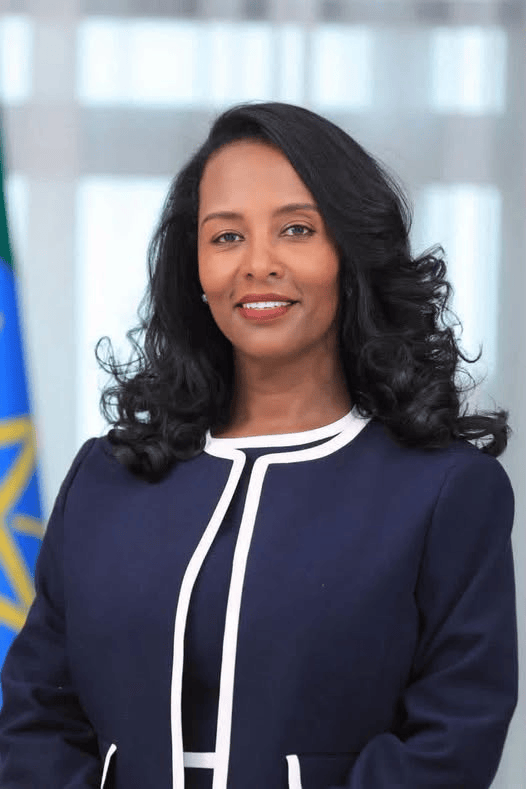
Congratulations pour in as a seasoned leader takes the helm of Africa’s diplomatic hub
(Addis Ababa, 30 September 2026)-In a moment that has captured the attention and hopes of millions, Mrs. Adanech Abiebie has been appointed Mayor of Addis Ababa — a city that stands as both the political heart of Ethiopia and the diplomatic capital of Africa.
The announcement has sparked an outpouring of congratulations and goodwill from citizens, colleagues, and observers across the nation and beyond.
A Leader for a Rising City
Addis Ababa is not just any city. It is home to the African Union headquarters, a growing hub for international diplomacy, and a metropolis undergoing rapid transformation. Its mayor carries a responsibility that extends far beyond municipal boundaries — shaping the experience of residents, visitors, and the global community alike.
With her appointment, Adanech Abiebie steps into a role that demands vision, resilience, and an unwavering commitment to public service. Those who have followed her career describe her as a leader who understands the complexities of urban governance and the aspirations of everyday Ethiopians.
A Wave of Congratulations
The response to her appointment has been swift and heartfelt.
“Congratulations! May you have a blessed term of service, outstanding success, and a fruitful journey ahead!”
These words, echoed across social media and community gatherings, reflect a deep well of hope. For many, this is not simply a political appointment — it is an opportunity to see leadership that listens, delivers, and inspires.
The Weight of the Moment
Addis Ababa faces no shortage of challenges: rapid urbanization, infrastructure demands, housing needs, and the task of ensuring that development benefits all residents, not just a few. Yet within these challenges lie extraordinary opportunities.
The city is emerging as a center of innovation, commerce, and culture. Its streets pulse with the energy of a young population eager for progress. Its markets, universities, and cultural institutions tell a story of a city on the move.
The question that now rests before the new mayor is simple yet profound: How can Addis Ababa become a city that works for everyone?
A Prayer and a Promise
For those who offered their congratulations, the sentiment was clear: this is a moment for prayer as much as celebration.
“May God guide your steps, grant you wisdom, and bless your service to our beloved city and nation.”
Such words carry the weight of a community that understands the gravity of leadership. They are not merely formalities but genuine expressions of hope — that this new chapter will bring not only progress but also fairness, compassion, and lasting change.
Looking Ahead
As Adanech Abiebie takes office, the eyes of the nation — and indeed the continent — are upon her. The road ahead is long, and the expectations are high. But if the enthusiasm surrounding her appointment is any indication, she does not walk it alone.
A city is not built by one leader. It is built by a people united in purpose. And in this moment, there is a palpable sense that Addis Ababa is ready to rise — together.
Congratulations, Mayor Adanech Abiebie. May your term be marked by achievement, may your leadership be a blessing to all, and may the city you serve flourish in the years to come.

What is the significance of Irreechaa Celebrations in Diaspora?
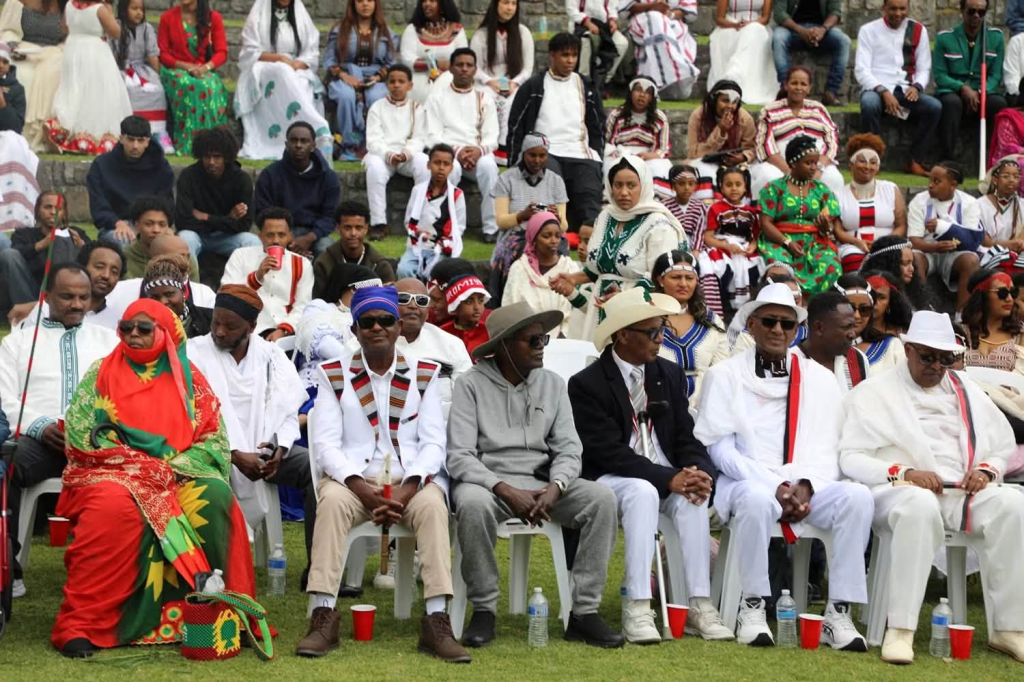
For the Oromo diaspora, Irreechaa serves as a vital cultural anchor—far more than a festival, it is an act of identity preservation, a bridge across generations, and a powerful statement of resilience. It connects Oromos living far from their ancestral homeland to their ancestors, their language, and one another, ensuring that a tradition preserved through centuries of suppression continues to thrive on foreign soil.
🌍 A Home Away from Home
Irreechaa provides a sacred space where the diaspora can recreate the spiritual and communal essence of the homeland. In cities like Melbourne, Toronto, and Minneapolis, the ritual structure remains remarkably intact:
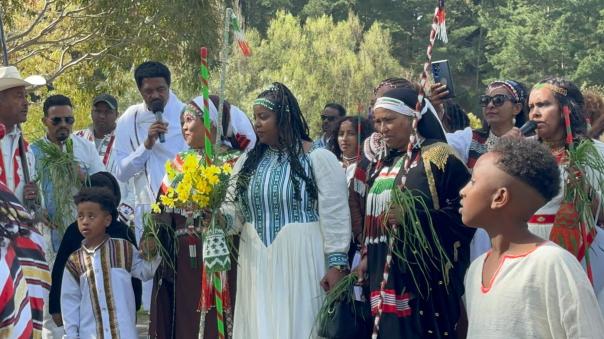
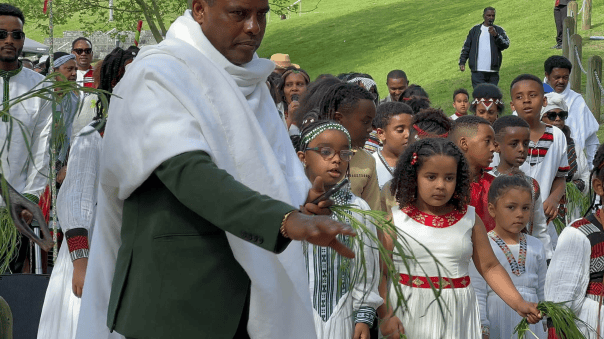
- Traditional Rituals: Participants carry fresh green grass and yellow daisies to the water’s edge, dipping them in as an offering of gratitude—the same act performed by millions at Hora Arsadi and Hora Finfinnee.
- Spiritual Continuity: Elders lead blessings and prayers to Waaqa (God), maintaining the spiritual essence of the festival even in a foreign landscape.
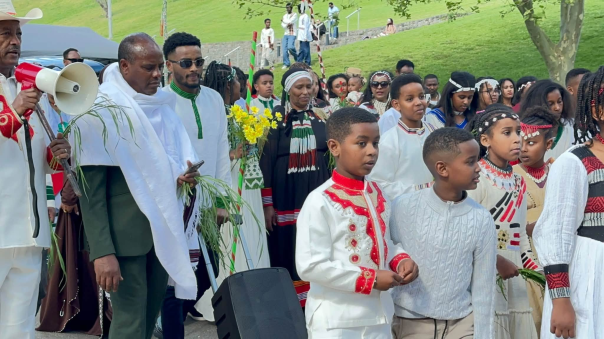
- Processions and Songs: Communities walk together toward water bodies or parks, singing traditional faaruu (songs of praise), with women often walking in front—a practice rooted in the Siinqee institution symbolizing women as sacred agents of peace.
🔗 Forging Unity and Identity
Irreechaa transcends religious and political divisions, functioning as a transreligious symbol of Oromummaa (Oromo identity). As one analysis notes, attendees include Christians, Muslims, non-believers, and Waaqeffatas alike—all united by a shared cultural heritage. This unity is particularly significant for a diaspora that fled political marginalization, as it allows diverse Oromo communities to come together under a single, proud identity.
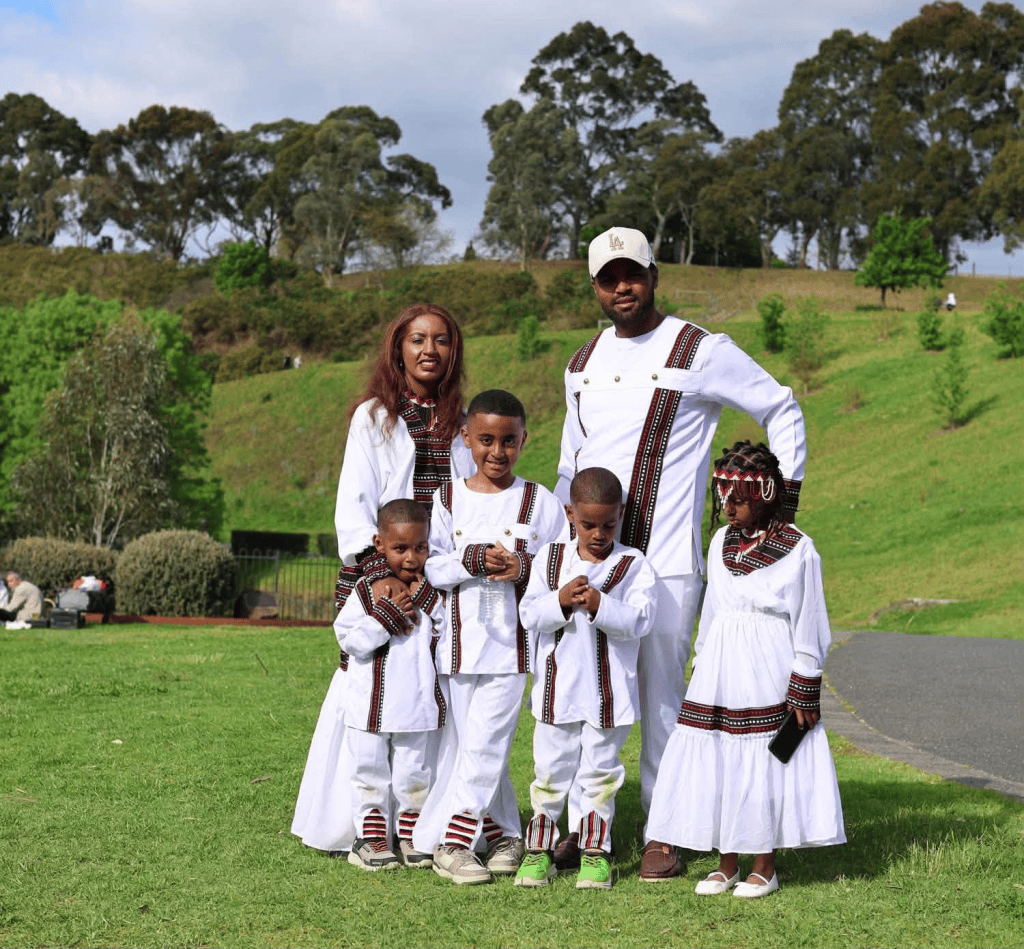
🛡️ Resilience Through Remembrance
The diaspora celebration carries a profound weight of survival. Irreechaa was historically suppressed and forced underground, making its public, joyful observance abroad an act of cultural resistance. In Minnesota, for instance, the festival is explicitly framed as a symbol of resilience—a tradition that was “looked down upon” for about a century but is now celebrated openly and proudly. For the Melbourne community, it is a “living prayer” that refuses to become a mere memory.
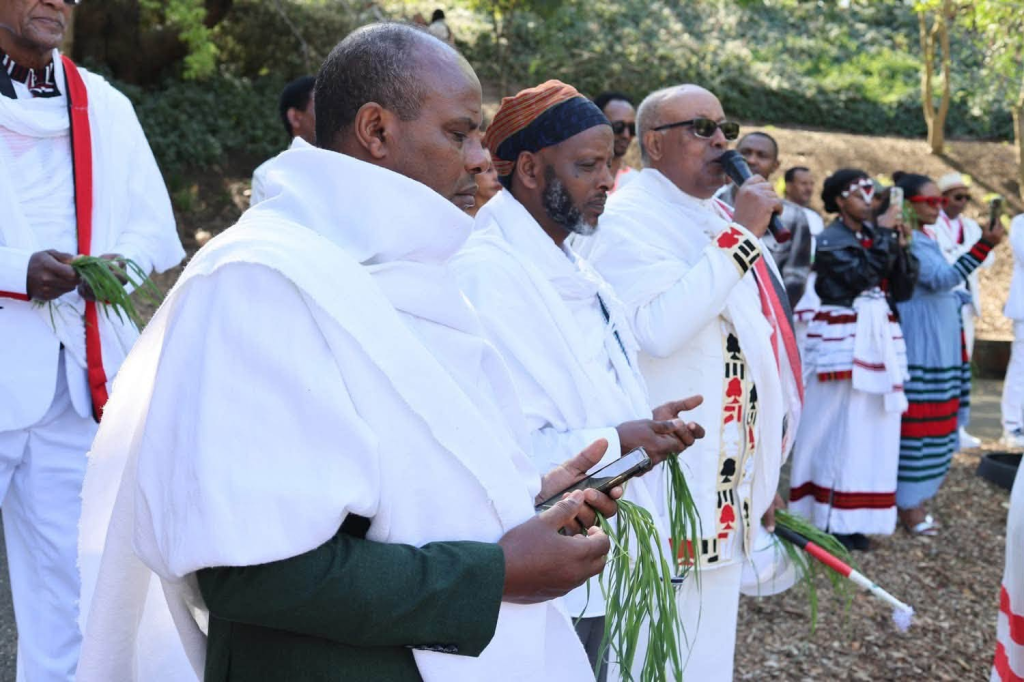
🌱 Passing the Torch to the Next Generation
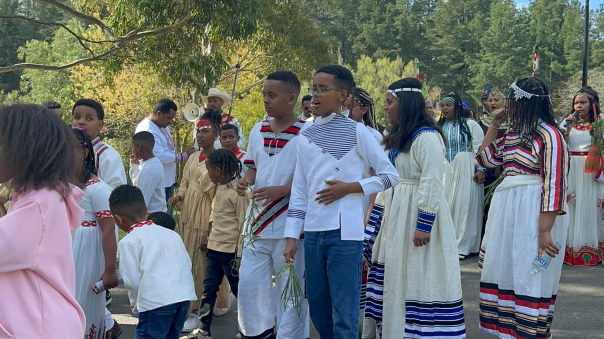
A central mission of diaspora Irreechaa organizations is youth engagement and cultural transmission. In Melbourne, “Irrecha Australia” emphasizes empowering young people to carry traditions forward with pride. In Minnesota, youth are described as a driving force behind the festival’s growing popularity, even teaching non-Oromos about its meaning. By involving children in rituals—from dressing in traditional wandaboo to learning the steps of cultural dances—the diaspora ensures that Irreechaa remains a living tradition, not a distant memory.
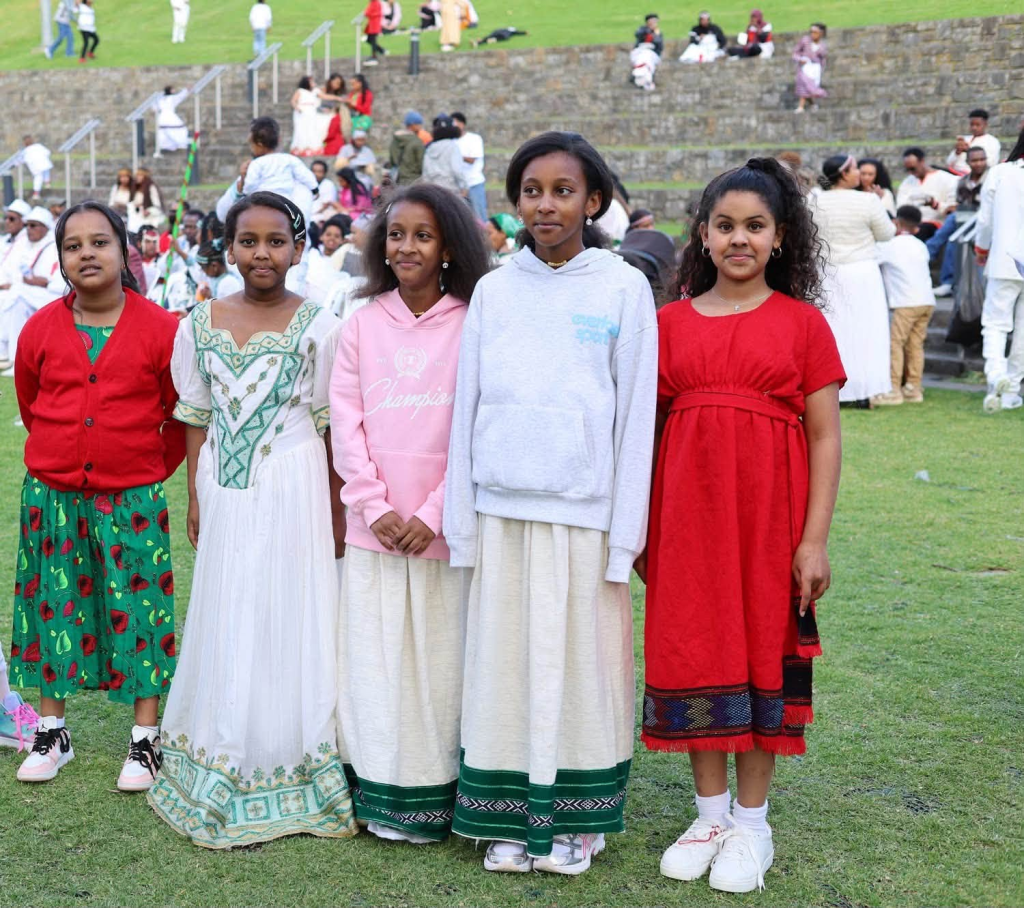
🤝 A Bridge to the Wider World
Beyond the Oromo community, diaspora Irreechaa celebrations serve as an open invitation for intercultural exchange. In Toronto, the festival has attracted visitors from Germany and the United States. In Dubai, celebrations have included local Emiratis and other Ethiopian ethnic groups. These events showcase Oromo values of peace, gratitude, and harmony with nature, fostering understanding within the broader multicultural societies where Oromos now live.
In essence, Irreechaa in the diaspora is not a diminished version of the homeland celebration—it is an amplified testament to a people’s unbreakable connection to their roots. It is where identity is renewed, community is strengthened, and the flame of Oromummaa is passed on, undimmed, to the next generation.

Ethiopia Launches E-Passport Service at Its Embassy in Canberra
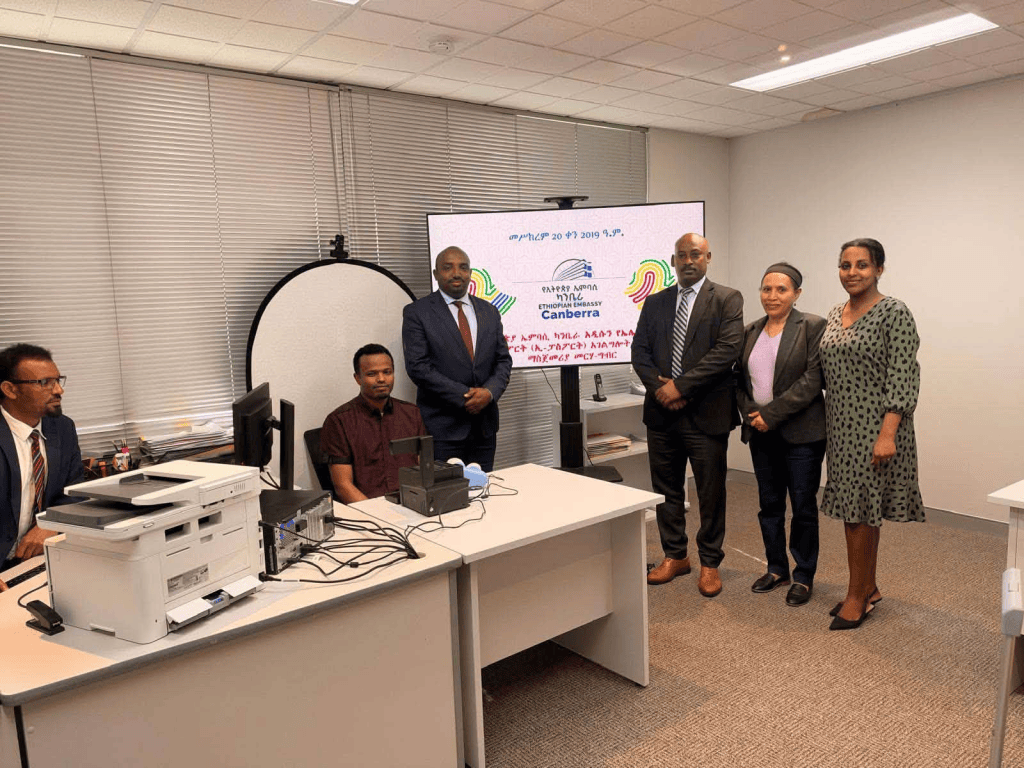
A new era of consular service begins as Ethiopian citizens in Australia gain access to biometric passport processing closer to home.
(CANBERRA, 30 September 2026)-The Embassy of the Federal Democratic Republic of Ethiopia in Canberra has officially launched its E-Passport service, marking a significant milestone in the country’s efforts to modernize consular services and better serve its citizens abroad.
The inauguration ceremony took place today, September 20, 2019 E.C. (Ethiopian Calendar), with Mr. Yalalet Getachew, the mission’s Chargé d’Affaires, officially opening the service to the public.
Meeting International Standards
The new electronic passport is designed to comply with the standards set by the International Civil Aviation Organization (ICAO). This compliance ensures that Ethiopian travelers benefit from enhanced service at international airports worldwide, reducing the inconveniences that have long plagued citizens traveling with older document formats.
The E-Passport represents a leap forward in both security and efficiency, aligning Ethiopia with global best practices in travel documentation.
A Breakthrough for Citizens Abroad
Perhaps the most transformative aspect of this development is what it means for Ethiopians living in Australia and the surrounding region. Previously, the biometric data collection service — a mandatory step in the passport application process — was only available at the headquarters of the Immigration and Citizenship Service in Addis Ababa.
This meant that citizens abroad faced the burdensome prospect of traveling back to Ethiopia simply to complete a procedural requirement.
Now, with the service available at the embassy level, citizens can:
- Submit their passport applications online from the comfort of their current location
- Provide their biometric data at the embassy in Canberra
- Avoid the expense and hardship of international travel solely for administrative purposes
This shift represents a fundamental change in how the Ethiopian government approaches diaspora services — moving from a centralized model to one that meets citizens where they are.
Expanding Access Across Australia
The embassy has indicated that this is only the beginning. In its announcement, the mission stated that additional information regarding the service will be shared in due course, and that preparations are already underway to extend the service to other cities where Ethiopian citizens reside.
This commitment to reaching communities beyond the capital signals a broader strategy to make consular services more accessible and responsive to the needs of the Ethiopian diaspora across the continent.
A Step Forward in Diplomacy
The launch of the E-Passport service in Canberra is more than an administrative upgrade — it is a statement about the relationship between Ethiopia and its citizens abroad. By investing in accessible, modern consular services, the government is acknowledging the importance of its diaspora and the role they play in the nation’s global presence.
For Ethiopians in Australia, this development brings not only practical benefits but also a sense of connection and recognition. The distance between home and abroad just became a little shorter.
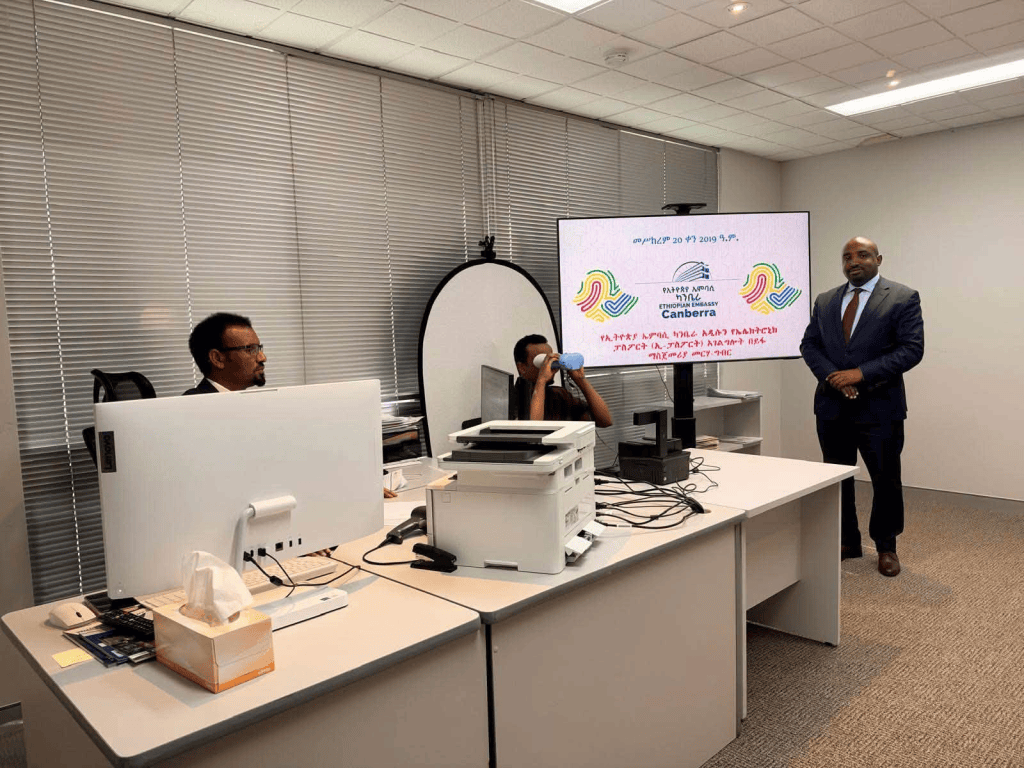
For more information about the E-Passport service, citizens are encouraged to follow the embassy’s official channels for updates.
#Ethiopia #EPassport #Canberra #Diplomacy #EthiopianDiaspora #ConsularServices

Oromia Consolidates 21 Zonal Administrations into Six Powerful Regional Clusters
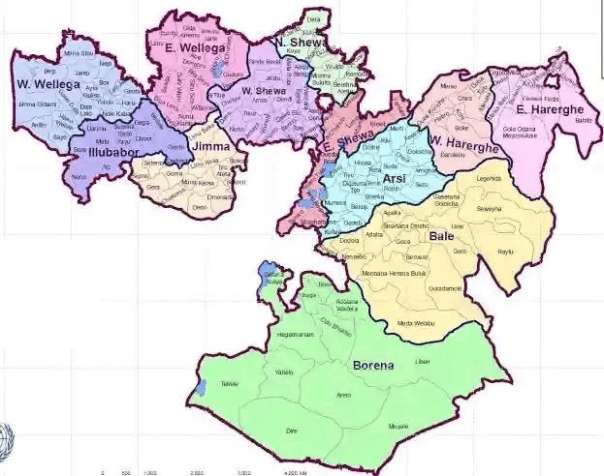
A historic restructuring aims to streamline governance, strengthen service delivery, and bring the state closer to its people
FINFINNE — In a decision described as historic and far-reaching, the Government of Oromia Regional State has approved a major restructuring of its administrative architecture, reducing the region’s 21 zonal administrations to six powerful regional clusters. The reform is designed to build a stronger, more efficient government and to ensure that public services genuinely reach the people they are meant to serve.
The decision, ratified through a draft proclamation by the Oromia Regional State Council during its first-year, seventh-term regular session, consolidates related administrative functions into unified structures. At its core, the reform emphasizes coordination, complementarity, and the effective delivery of services to the public.
With the new structure now in force, the senior leadership of each of the six clusters has been officially assigned.
East Oromia Cluster
Headquarters: Harar
- Abdurrahman Abdalla — Cluster Chief, rank of Deputy President. Office: Harar.
- Miski Muhammad — Deputy Cluster Chief for Development, rank of Bureau Head. Office: Chiro.
- Anas Aliyi — Deputy Cluster Chief for Peace and Justice, rank of Bureau Head. Office: Galamso.
- Jaarso Boru — Senior Advisor to the Cluster Chief, rank of Bureau Head. Office: Gurawa.
- Fiqadu Miliyoon — Advisor to the Cluster Chief, rank of Bureau Head.
- Samia Abdalla — Advisor to the Cluster Chief, rank of Bureau Head.
Central Oromia Cluster
Headquarters: Shaggar and Adama
- Dr. Mengistu Bekele — Cluster Chief, rank of Deputy President. Office: Shaggar and Adama.
- Abbabu Waqo — Deputy Cluster Chief for Development, rank of Bureau Head. Office: Waliso.
- Kifalaw Adare — Deputy Cluster Chief for Peace and Justice, rank of Bureau Head. Office: Fitche.
- Makonnen Bayisa — Senior Advisor to the Cluster Chief, rank of Bureau Head. Office: Ambo.
- Ashannafi Ajjama — Advisor to the Cluster Chief, rank of Bureau Head.
- Taddasa Dirriba — Advisor to the Cluster Chief, rank of Bureau Head.
Southwest Oromia Cluster
Headquarters: Jimma
- Dr. Rashad Kamal — Cluster Chief, rank of Deputy President. Office: Jimma.
- Indalkachaw Tafari — Deputy Cluster Chief for Development, rank of Bureau Head. Office: Bedele.
- Aman Danu — Deputy Cluster Chief for Peace and Justice, rank of Bureau Head. Office: Limu Gannat.
- Didha Guddata — Senior Advisor to the Cluster Chief, rank of Bureau Head. Office: Mattu.
- Muhammadxahaa Abba Fixaa — Advisor to the Cluster Chief, rank of Bureau Head.
- Mosisa Lammessa — Advisor to the Cluster Chief, rank of Bureau Head.
South Oromia Cluster
Headquarters: Yabelo
- Ahmad Haji — Cluster Chief, rank of Deputy President. Office: Yabelo.
- Adula Hirbayye — Deputy Cluster Chief for Development, rank of Bureau Head. Office: Adola.
- Liban Areero — Deputy Cluster Chief for Peace and Justice, rank of Bureau Head. Office: Nageelle Borana.
- Wandimmu Robe — Senior Advisor to the Cluster Chief, rank of Bureau Head. Office: Bule Hora.
- Ibrahim Abdi — Advisor to the Cluster Chief, rank of Bureau Head.
- Isaaq Xaachoo — Advisor to the Cluster Chief, rank of Bureau Head.
West Oromia Cluster
Headquarters: Nekemte
- Masfin Melaku — Cluster Chief, rank of Deputy President. Office: Nekemte.
- Mirressa Fixee — Deputy Cluster Chief for Development, rank of Bureau Head. Office: Gimbi.
- Gammachu Gurmeessa — Deputy Cluster Chief for Peace and Justice, rank of Bureau Head. Office: Shambu.
- Talila Tarrafa — Senior Advisor to the Cluster Chief, rank of Bureau Head. Office: Dambi Dollo.
- Badhasa Dhaba — Advisor to the Cluster Chief, rank of Bureau Head.
- Dassu Lammi — Advisor to the Cluster Chief, rank of Bureau Head.
Southeast Oromia Cluster
Headquarters: Robe
- Ahimad Idris — Cluster Chief, rank of Deputy President. Office: Robe.
- Asaffa Tolasa — Deputy Cluster Chief for Development, rank of Bureau Head. Office: Ginir.
- Abdurrazaq Huseen — Deputy Cluster Chief for Peace and Justice, rank of Bureau Head. Office: Asella.
- Ibrahim Kadir — Senior Advisor to the Cluster Chief, rank of Bureau Head. Office: Shashemene.
- Izzaddin Abuubakar — Advisor to the Cluster Chief, rank of Bureau Head.
- Birhanu Arfasa — Advisor to the Cluster Chief, rank of Bureau Head.
What the Reform Means
The restructuring reduces Oromia’s sprawling 21-zonal system to six consolidated clusters, each led by a chief holding the rank of deputy president. Each cluster also has dedicated deputies for development and for peace and justice, along with senior advisors — a structure that mirrors the executive architecture of the regional government itself.
Officials say the reform is rooted in a simple principle: government should not be distant or fragmented. By grouping similar functions under one coordinated structure, the new system aims to eliminate duplication, improve efficiency, and make public services more accessible to ordinary citizens.
Oromia is Ethiopia’s largest regional state, spanning more than 350,000 square kilometers with a population estimated at over 27 million. For years, analysts and citizens alike have questioned whether a 21-zone structure could effectively serve such a vast and diverse population. The new six-cluster model is presented as the answer.
A Historic Decision With High Stakes
The proclamation was approved during the Council’s first regular session of its seventh term — a detail that underscores the political weight of the decision. The reform is not merely administrative; it is a reimagining of how Oromia governs itself.
Supporters see it as a bold step toward a stronger, more responsive state. Critics, however, have raised questions about political motivations, wondering whether consolidation could weaken the influence of individual zones or shift power in ways that are not immediately visible.
What is certain is that the six clusters are now operational, their leaders appointed, and their headquarters designated. For the people of Oromia, the real test will be felt in the everyday: faster permits, closer services, and a government that listens.
As the region embarks on this new chapter, one thing is clear — Oromia has chosen to reorganize not by dismantling its diversity, but by uniting it under a stronger, more coordinated whole.
#OromiaPresidentOffice2026

Irreechaa: A Billion Hearts, One Festival of Light
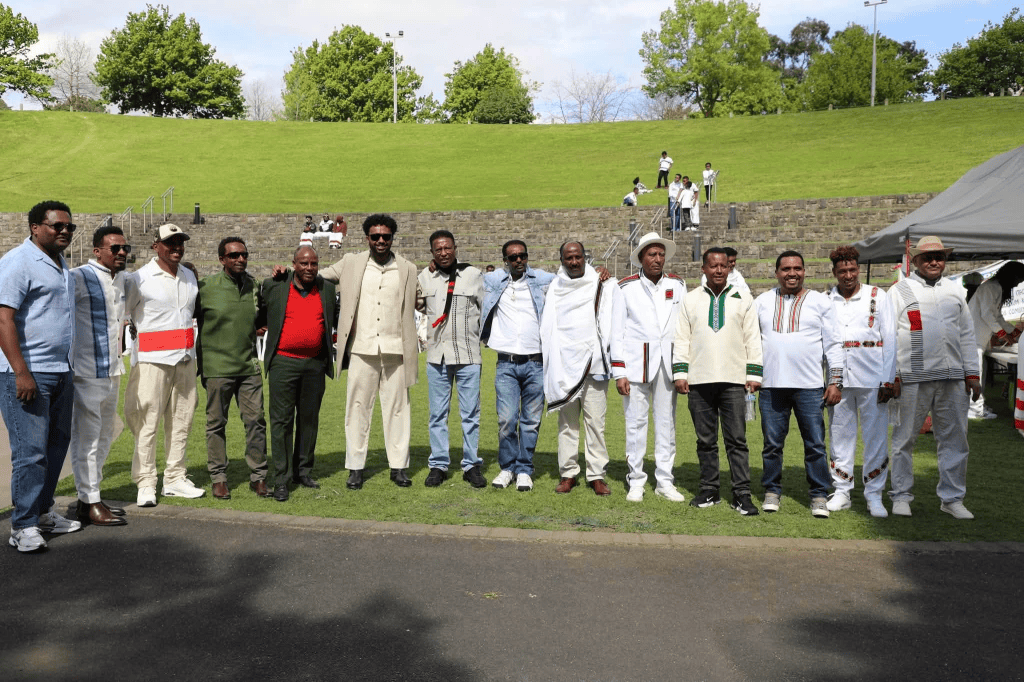
Across continents and generations, the Oromo nation celebrates the victory of light over darkness — a festival that unites, sustains, and inspires
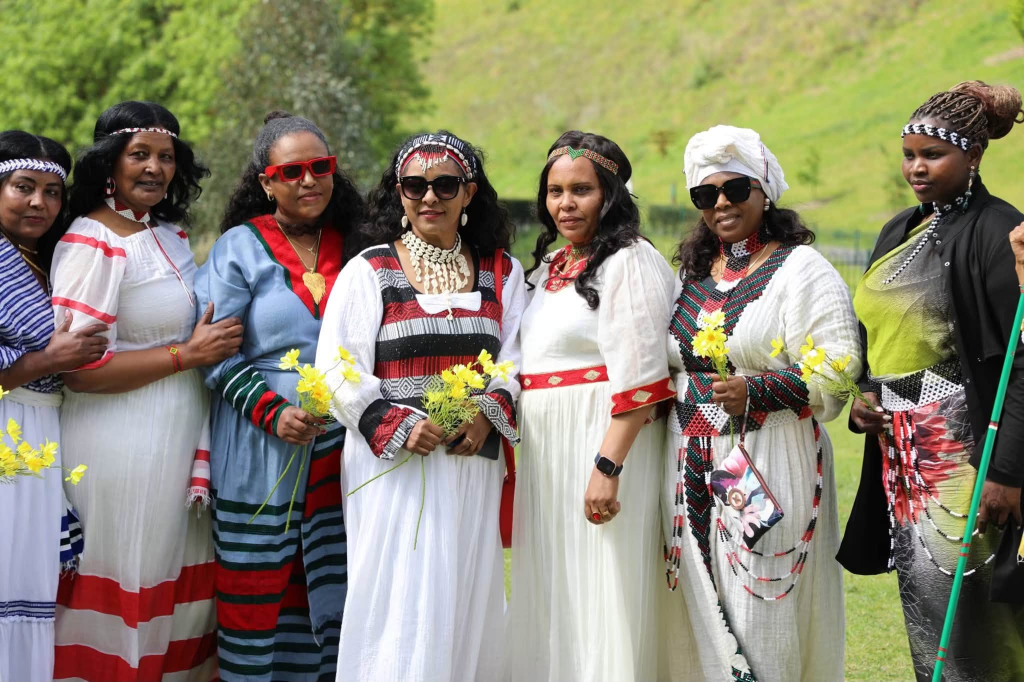
(MELBOURNE, AUSTRALIA, 27 September 2026) — This week, more than a billion people around the world are celebrating Irreechaa, the cultural festival celebrating the victory of light over darkness. It’s an important time for the Oromo nation. Across states, regions and cities, it fostered unity, sustainability, and joy, illuminating paths to prosperity and peace.
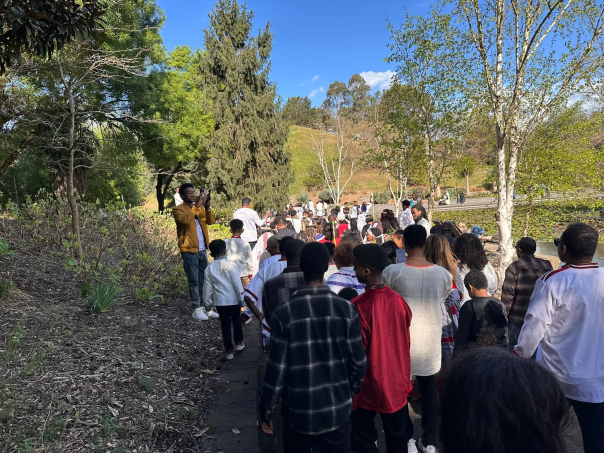
From the sacred shores of Hora Arsadi in Bishoftu to the riverbanks of the Awash, from the bustling streets of Addis Ababa to the quiet parks of Melbourne, Minneapolis, and London, the sounds of shaggooyyee and the colors of calanchi have once again filled the air. Irreechaa has returned — and with it, a message that transcends borders, generations, and circumstances.
A Festival Rooted in Gratitude
At its heart, Irreechaa is a thanksgiving. It marks the end of the rainy season and the beginning of the harvest, a moment when the Oromo people gather at the water’s edge to offer thanks to Waaqa (God) for the gift of life, fertility, and renewal. The festival is celebrated twice a year: Irreechaa Hiyyessa (the small Irreechaa) and Irreechaa Guddaa (the great Irreechaa), with the latter drawing millions to sacred sites across Oromia and beyond.
But Irreechaa is more than a ritual. It is a philosophy. The triumph of light over darkness is not merely a seasonal metaphor — it is a declaration of hope. It reminds us that even after the longest night, the sun rises. Even after the heaviest rain, the land blooms. Even in the face of adversity, a people united by faith and tradition can find their way forward.
Unity Across Divides
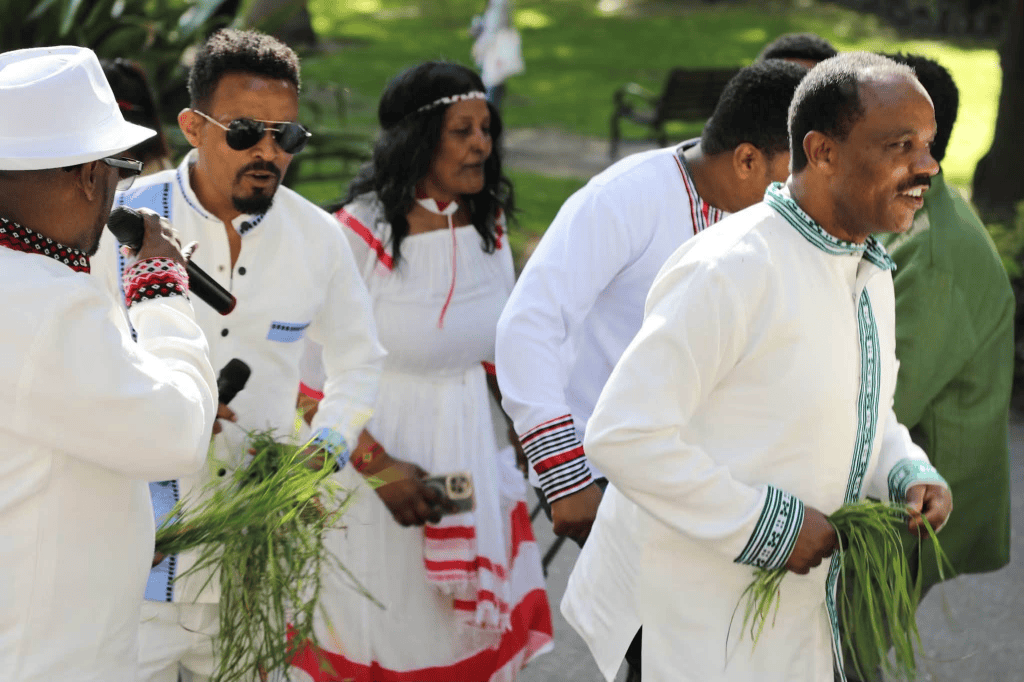
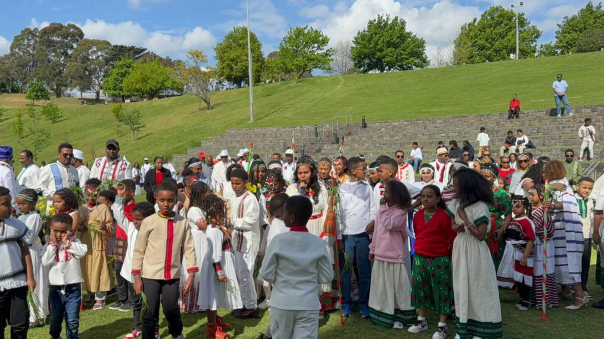
This year’s celebrations carried particular weight. In a world often divided by politics, religion, and geography, Irreechaa stood as a powerful counter-narrative. In cities across Ethiopia and the diaspora, people of all ages, backgrounds, and walks of life gathered side by side. Elders passed down blessings. Mothers sang songs of gratitude. Children danced in celebration. And for a moment, the divisions that so often define modern life seemed to dissolve.
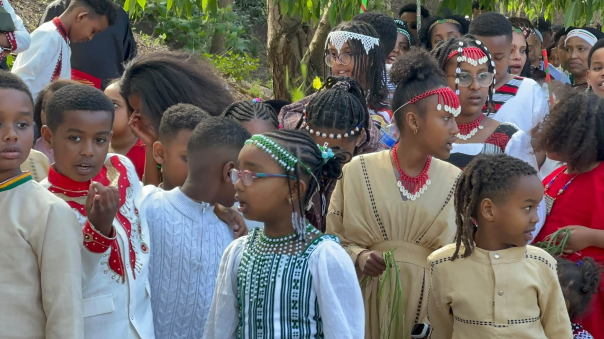
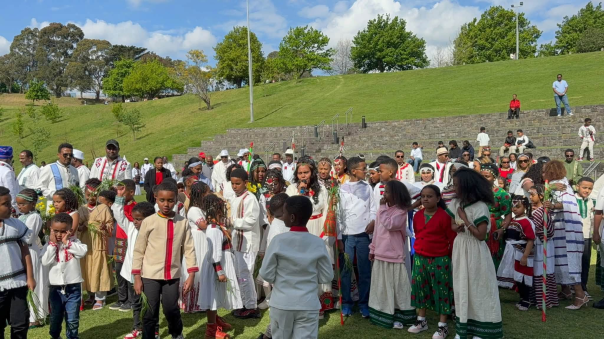
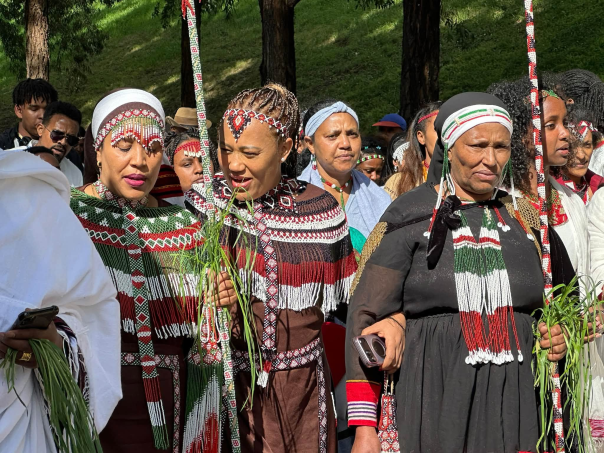
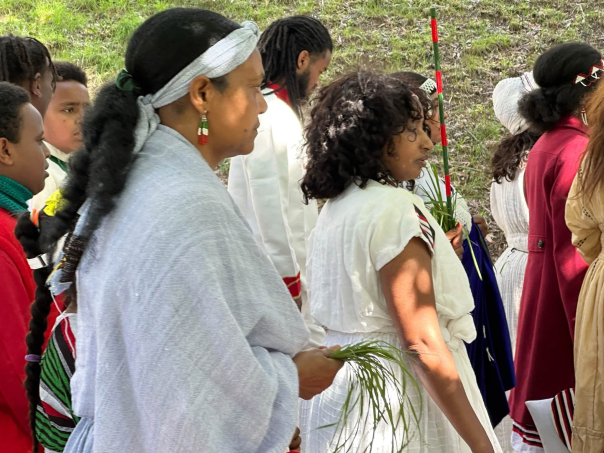
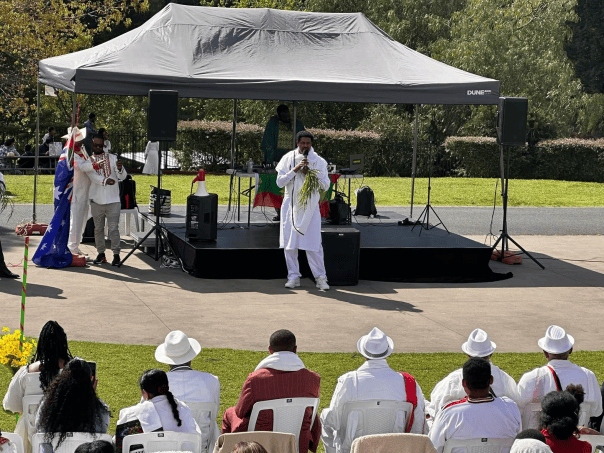
In Melbourne, where the Oromo community has grown into a vibrant and organized presence, Irreechaa was celebrated with the same reverence as it is in the homeland. Families dressed in traditional wandaboo and uffannaa aadaa, exchanged greetings of “Happy Irreechaa!” and shared meals that tasted of home. The event was a testament to the resilience of a people who, even thousands of miles from their ancestral land, refuse to let their culture fade.
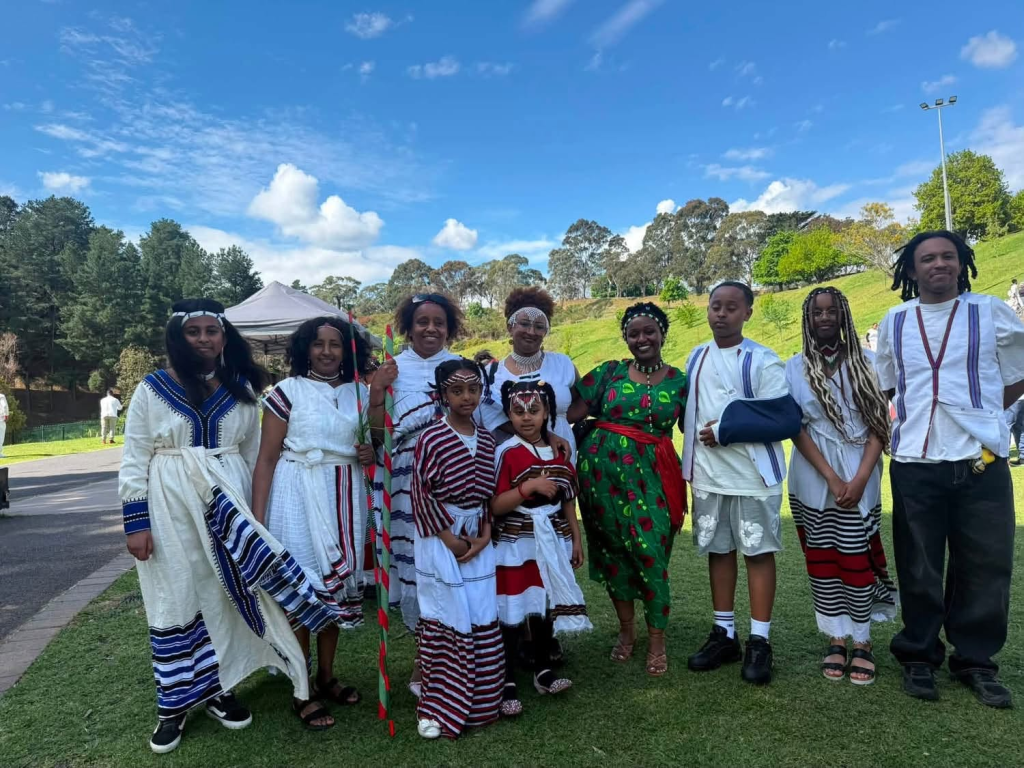
Sustainability: A Legacy of Respect for the Earth
Irreechaa is also a reminder of humanity’s relationship with nature. The festival is intrinsically tied to the land, the rivers, and the changing seasons. It teaches that gratitude must be accompanied by stewardship — that the earth is not ours to exploit but to protect.
In an era of climate crisis, this message could not be more urgent. The Oromo people’s reverence for water, land, and life offers a model of sustainability that the world would do well to heed. Irreechaa is not just a celebration of what we have received; it is a commitment to preserve it for those who come after us.
Joy as Resistance
Perhaps most powerfully, Irreechaa is a celebration of joy. In a world that often demands we focus on what divides us, the festival insists on what unites us. It is a reminder that joy is not frivolous — it is revolutionary. To celebrate in the face of hardship is to declare that hardship will not have the final word.
The images emerging from this year’s celebrations tell that story. A grandmother teaching her granddaughter the steps of a traditional dance. A young man helping an elder across the river. A group of friends laughing as they share a meal under the open sky. These are the moments that define Irreechaa. These are the memories that will be passed down.
Illuminating Paths to Prosperity and Peace
As the celebrations draw to a close, the message of Irreechaa lingers. Light has triumphed over darkness. Gratitude has triumphed over despair. Unity has triumphed over division.
For the Oromo nation, Irreechaa is not just a festival — it is a compass. It points toward a future built on peace, prosperity, and mutual respect. It reminds us that the path forward is illuminated not by the brightness of any single star, but by the collective light of a people who refuse to be extinguished.
And as the sun rises on another year, that light shines on — in Bishoftu, in Melbourne, in Minneapolis, and in every corner of the world where the Oromo spirit lives.
Baga Irreechaa Nagayaan Geessan! Baga Bara Haaraa Geessan!
May the light of Irreechaa guide us all toward a year of peace, unity, and abundance.
Irreechaa: A Living Memory Across Generations
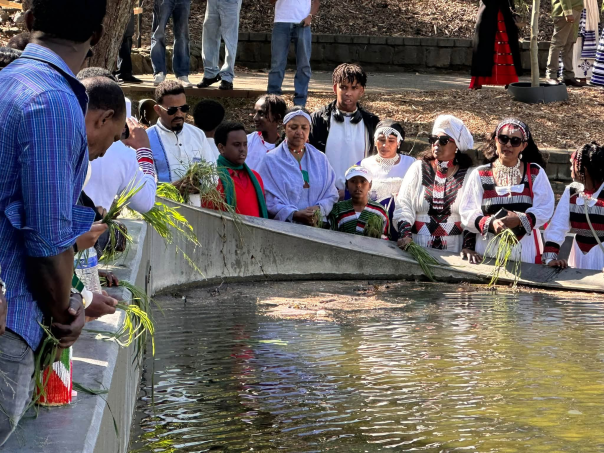
“Irreechaa waggaatti naanna’e dhufa; ayyaana kana irratti yaadannoo barayyuu jiraatu dhalootaaf kahanii darbuu waanti fakkaatu hin jiru.”
Irreechaa returns year after year; there is nothing that seems to pass beyond the reach of generations when the memory of this festival lives on and is preserved.
This profound truth captures the essence of Irreechaa — a festival that refuses to be confined to a single moment in time. It is a celebration that travels with its people, crossing rivers, mountains, and oceans, carrying with it the sacred duty of remembrance.
A Festival That Travels With Its People
Irreechaa is more than a thanksgiving ceremony. It is a living testament to the resilience, faith, and unity of the Oromo people. Celebrated at the banks of rivers and lakes, it marks the transition from the rainy season to the harvest, a moment of gratitude to Waaqa (God) for the blessings of life, fertility, and community.
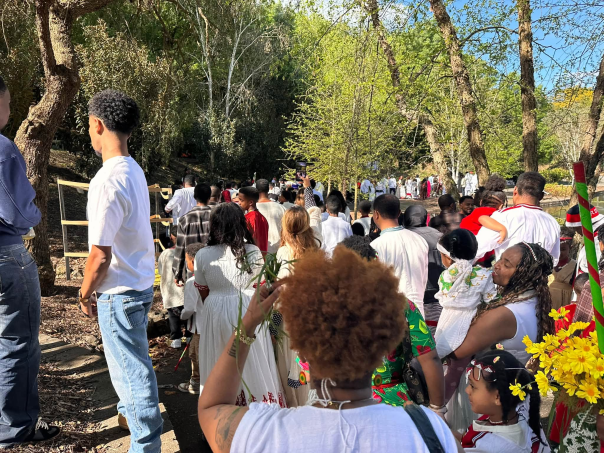
But when Irreechaa travels — as it has with the Oromo diaspora to cities like Melbourne — it does not lose its meaning. Instead, it multiplies. Each celebration in a new land becomes a bridge between the homeland and the heart, between ancestors and descendants, between memory and hope.
Melbourne: A New Chapter in an Ancient Story
The Irreechaa celebrations in Melbourne are a vivid reminder that distance does not diminish devotion. Under the open sky of a foreign land, Oromo families gather in their traditional attire, sing songs of praise, and perform the sacred rituals that have been passed down for centuries. The colors of the calanchi and the rhythm of the shaggooyyee echo the same spirit that fills the banks of the Hora Arsadi and the Awash River.
These gatherings are not merely cultural events; they are acts of survival. They are declarations that no matter where life takes a people, their identity remains rooted in their traditions.
The Power of Shared Memories
“Suuraalee Irreechaa Melbourne kana waliif qooduunis yaadannoo keenyatti lubbuu haa horru!”
Sharing the photos of this Irreechaa in Melbourne breathes life into our memory!
In the age of digital connection, every photograph, every video, every shared post becomes a vessel of memory. When we share these images, we are not simply documenting an event — we are breathing life into our collective story. We are telling the next generation: This is who we are. This is where we come from. This is what we carry with us.
For those who could not attend, these shared moments become a lifeline. For those who were present, they become anchors of joy. For those yet to be born, they become a legacy.
A Call to Keep the Flame Alive
We extend our deepest gratitude to Yadeta Lemu, Kasahun Soboka, Aliye Geleto, Dhabessa Wakjira, and Yadesa Bedhasa for their dedication in capturing and sharing the spirit of Irreechaa Melbourne. Their efforts ensure that the memory of this celebration does not fade with time but grows stronger with each passing year.
Their work reminds us that preserving culture is not a passive act. It requires effort, commitment, and love. It requires people who understand that when we share our traditions, we are not just looking back — we are building forward.
Conclusion: Irreechaa as a Bridge
Irreechaa is a bridge. It spans the distance between generations, between homelands, between hearts. It teaches us that as long as we remember, we are never truly far from home. As long as we celebrate, we are never truly alone.
So let us continue to share. Let us continue to remember. Let us continue to breathe life into our memories — for in doing so, we ensure that Irreechaa will indeed return, year after year, carrying our stories to generations yet to come.
Irreechaa fi yaadannoo keenya — dhalootaaf kahanii darbuu hin danda’u!
Irreechaa and our memory — they cannot pass beyond the reach of generations!

🩸 THREE MOMENTS. ONE PEOPLE. ONE NAME. 🩸

They tried to split us by faith. We chose to die as OROMO.
1️⃣ ARSII — 1966
📍 Hundee Tokkummaa Oromoo
In the mountains of Arsii, the foundation was laid. In 1966, brave Oromo sons — Muslim and Christian together — raised the banner of Oromo unity. The enemy’s plan was simple: use religion to break us. They failed. They dug deep foundations that no conspiracy could shake. From Arsii, the root of Oromo unity was planted in blood and fire. 🔥
“Hundee Tokkummaa Oromoo — Arsii, 1966”
2️⃣ SHINNIGAA — 1980
📍 Tokkummaa Oromoo Shinnigaa
In 1980, at Shinnigaa, they came with the same weapon — religion. “Separate yourselves,” they said. “Die apart.” But our heroes looked at the pit, looked at each other, and said:
“Maqaa amantaan gargar hin baanu.”
We do not divide the name by religion.
They refused to separate. They were massacred together, as one people, under one name. Their blood soaked the same ground. Their sacrifice became our foundation. 🕯️
“Tokkummaa Oromoo Shinnigaa — 1980”
3️⃣ BISHOOFTUU — 2016
📍 Walgaltee Ilmaan Oromiyaa
Thirty-six years later, in Bishooftuu Harsadii, the enemy tried again. Same tactic. Same lie. Separate the Muslim from the Christian. Divide the youth. Break the unity.
They failed again.
The youth of Oromiyaa refused to be divided. They were buried together — in one place, under one identity. They became the pillars of our identity (utubaa eenyummaa). We will never forget them. Not today. Not ever. ✊
“Walgaltee Ilmaan Oromiyaa — Bishooftuu Harsadii, 2016”
⚡ THE MESSAGE ⚡
From Arsii 1966 → Shinnigaa 1980 → Bishooftuu 2016
The enemy’s strategy never changed:
Use religion to divide. Use division to destroy.
Our answer never changed either:
We are OROMO first. We die together. We rise together.
They built pits expecting us to fall apart.
We built monuments of unity from our bones.
🔥 “Seenaa keenya keessatti barayyuu cululuqee jiraata.” 🔥
In our history, it lives forever — shining.
🔁 SHARE if you refuse to be divided.
❤️ LIKE if you honor their sacrifice.
💬 COMMENT the name of your hero.
📌 SAVE this. Teach it. Never forget.
#Oromo #Oromia #Arsii1966 #Shinnigaa1980 #Bishooftuu2016 #MaqaaAmantaanGargarHinBaanu #TokkummaaOromoo #NeverForget #OromoUnity #SeenaaKeenya #Qeerroo #OromoIdentity #OnePeopleOneName
“Those who tried to bury them did not know: a people who refuse to be divided have found something stronger than death.” 🩸✊






