The Gadaa System: A Living Democratic Heritage of the Oromo People
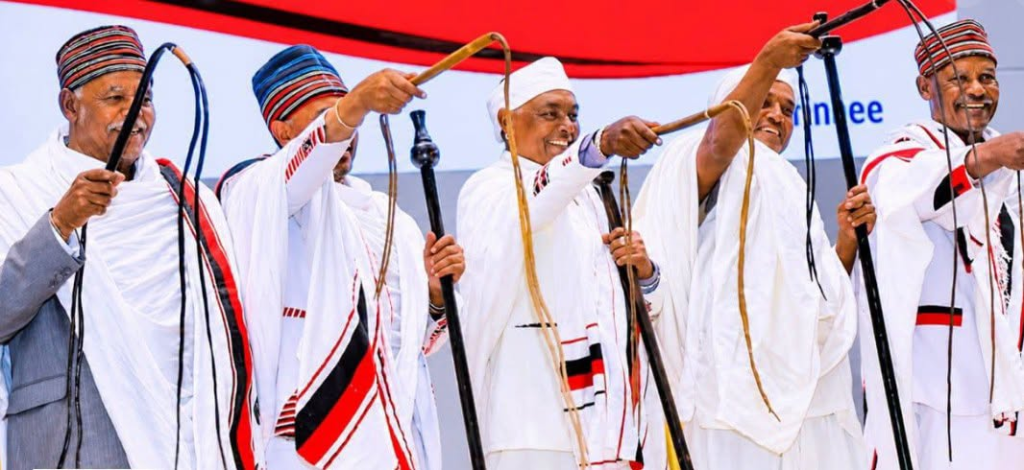
By Bona Oromia
FINFINNE — Ten years ago, on November 21, 2009, the Oromo Gadaa system was inscribed by UNESCO as Intangible Cultural Heritage. A decade later, the Gadaa system remains not merely a historical relic but a living, functioning democratic order that continues to regulate the political, economic, and social life of the Oromo people. Drawing on materials from the Oromia Culture and Sport Bureau, this feature explores the principles, institutions, and enduring significance of one of Africa’s most sophisticated indigenous governance systems.
A Democratic System of Governance
Gadaa is the traditional system of governance through which the Oromo people have organized their political, economic, and social life for centuries. It is a democratic system in which all members of society participate on equal footing. The system organizes the Oromo people into five Gadaa groups, without dividing them by clan or class, and each group governs in rotation for a period of eight years.
Gadaa is not limited to a single dimension of life. It encompasses all aspects of Oromo existence and provides guidance in every direction. As the source material emphasizes, “Gadaa is not merely a celebration or a feast. Within Gadaa, there are cultural institutions such as Guddifachaa (adoption), Gumaa (compensation), Araara (reconciliation), Meedhacha (mediation), Raakoo (assembly), Waaqeffannaa (traditional worship), Irreecha (thanksgiving festival), Siiqqee (women’s institution), Marabbaa (council), and many others.”
The Role of Women in Gadaa
In the Oromo Gadaa system, women hold an elevated and respected position. The dignity of women is an undeniable truth within the system. The major institutions associated with women under Gadaa include:
Qanafaa — a symbol of honor that Oromo women, particularly among the Arsii, wear on their heads during childbirth. The Qanafaa is tied with fresh grass, grain flowers, and butter.
Siiqqee — a straight staff made from the Harooressa tree, which a mother gives with honor to her daughter upon marriage, along with a Barree Itittuu and Buqqee (Hodhaa). The Siiqqee is the instrument through which Oromo women assert and protect their rights.
Ateetee — a system with its own rules and procedures, practiced by Oromo women, connected to spirituality. It is the cultural institution through which women honor their rights and pray to and through the Creator (Waaqayyo).
The Qeerroo and the Gadaa System
The term Qeerroo refers to a young man who has not yet married. In the Gadaa system, young men in the Kuusaa (Foollee) and Raabaa grades are considered Qeerroo. In the Gadaa system, young men in these grades do not marry; marriage is permitted when they reach the Doorii grade.
In the construction of Oromo military power, the special force trained for high military duty is known as Qeerroo or Buttuu. This force is selected from the Foollee (Kuusaa) grade and takes shape in the Raabaa grade.
In the Gadaa system, the military or defense force of the country is known as Raayyaa. The Oromo Raayyaa is composed of three types of soldiers: the Cavalry Force (Humna Waraana Fardaa), the Infantry Force (Humna Waraana Lafoo), and the Special Force (Humna Addaa). The Special Force, trained and organized for special missions, is known as Buttuu in some places and Qeerroo in others. The meaning is strong, decisive, fast, and unyielding—symbolizing determination.
Qaalluu and Ayyaantuu
In the Gadaa system, the Qaalluu is the leading religious institution, and below it are smaller religious leadership structures known as Waayyuu and Ayyaantuu. The Qaalluu institution is led by Abbaa Muudaa.
The Qaalluu exists among all Oromo groups, with the most senior being the Qaalluu of Warra Odituu. Others include the Qaalluu Beerree. Among the Gujii, the Qaalluu is Warra Odituu. The Odituu is known among the Maccaa, Tuulamaa, and Booranaa, while the Qaalluu of Warra Sapha is also known among the Tuulamaa. Among the institutions under the Qaalluu, Ayyaantuu is one, while Waayyuu is considered the backbone of the great Qaalluu. In some places, Waayyuu acts in place of the Qaalluu and leads the people.
A Living Heritage
The Gadaa system’s inscription by UNESCO a decade ago was a recognition of its global significance as a democratic heritage. But for the Oromo people, Gadaa is not a museum piece. It is a living system that continues to shape governance, resolve disputes, transmit values, and bind the community together. Its principles—equality, rotation of power, accountability, and the participation of all—remain as relevant today as they have been for centuries.
As the Oromo people continue to navigate the challenges of the modern world, the Gadaa system offers a foundation rooted in their own history and traditions—a source of identity, resilience, and hope for the future.
Source: Barii (Gaazexaa Bariisaa), October 15, 2019; Oromia Culture and Sport Bureau; UNESCO Intangible Cultural Heritage.

Posted on November 6, 2026, in Aadaa, Afaan, Bokkkuu, Events, Finfinne, gadaa, health, Information, Language, Media, News, Oromia, Oromo diaspora, Oromo truth telling, Press Release, Promotion, Siinqee, Sirna Oromo. Bookmark the permalink. Leave a comment.






Leave a comment
Comments 0