Category Archives: gadaa

Four Decades of Scholarship, One Enduring Legacy: The Oromo Studies Association at 40

From Exile to Global Recognition — How a Diaspora Institution Reclaimed a People’s History
By Dhabessa Wakjira
The year was 1986. In meeting rooms scattered across the diaspora, in the United States and Europe, a small group of Oromo and non-Oromo scholars gathered with a radical idea . They would build an independent academic home for the study of a people whose history, culture, and very existence had been systematically erased from mainstream scholarship. They would create a space where knowledge about the Oromo could be produced not by outsiders, but on its own terms.
They called it the Oromo Studies Association .
Four decades later, that audacious dream has become something far greater than its founders could have imagined. As the OSA marks its 40th anniversary in 2026, it stands as a global scholarly community spanning continents and disciplines—a testament to the power of knowledge as a form of justice.
The Birth of a Movement: Founding in Exile
The OSA was not born in a vacuum. It was founded in direct response to a crackdown that had led to those campaigning for greater recognition of the Oromo people being murdered, tortured, jailed, or driven out of the country. The founding was a response to a void—a void in which Oromo heritage was not merely absent from academia and state narratives but actively suppressed.
Under successive Ethiopian regimes, the Oromo—despite being the largest ethnolinguistic group in Ethiopia, numbering over 40 million people across the Horn of Africa—were systematically marginalized. They were deprived of their expropriated lands, their freedom through enslavement, their identity, and even the right to speak their own language. In Ethiopia, the history of the Oromo people was effectively written out of the national narrative.
Among the founders was Sisai Ibssa, a scholar-activist whose intellectual journey shaped the trajectory of Oromo studies for decades. Reflecting on the early days, one founding figure recalled attending an international Oromo conference in Berlin in 1984—”It was then that we started to think about organizing an Oromo studies association. A few years later, OSA was formally organized” .
Another towering figure was Professor Asmarom Legesse, whose landmark work Gada: Three Approaches to the Study of African Society (1973) brought the Oromo democratic system to international scholarly attention. Legesse passed away on January 31, 2026, just weeks before OSA’s 40th anniversary year—a loss deeply felt by the community he helped build.
A Full Gadaa Cycle: 40 Years of Scholarship
In Oromo tradition, the Gadaa system operates on eight-year cycles, with a full generational transition spanning forty years. This year’s anniversary is therefore not merely a milestone—it is a symbolic completion of a full Gadaa cycle, representing generational renewal, continuity, and the orderly transfer of knowledge and responsibility.
The OSA’s work over these four decades has been nothing short of transformative:
Before OSA, Oromo heritage was systematically erased. The Oromo language, Afaan Oromoo—the third most widely spoken language in Africa—was banned in schools and public life until 1992, and students were punished for speaking it or using Oromo names. A state ideology of “Ethiopianism” promoted Orthodox Christianity, the Amharic language, and Abyssinian culture as the sole legitimate national identity.
After four decades of OSA scholarship, the Oromo Gadaa system—a millennia-old democratic governance structure based on generational age sets, egalitarian principles, and rotating leadership—has been recognized by UNESCO as part of the Intangible Cultural Heritage of Humanity . Oromo studies is now a respected field in global academia. And the Journal of Oromo Studies, launched in 1993, has been indexed in Scopus—one of the world’s most prestigious academic databases.
The Journal of Oromo Studies: A Dream Come True
When the first issue of the Journal of Oromo Studies rolled off the presses in the summer of 1993, it was described as “a dream come true” . For scholars who had labored in obscurity, publishing in venues that often dismissed or distorted Oromo realities, the Journal offered something revolutionary: a platform where Oromo scholarship could stand on its own.
The first volume featured foundational essays by scholars like Asafa Jalata, whose work on “The Oromo, Change and Continuity in Ethiopian Politics” helped define the contours of a new field . Over the decades that followed, the Journal would publish research on everything from the Gadaa system to diaspora studies, from economic development to cultural preservation, from historical linguistics to contemporary politics.
Now fully open-access, the Journal publishes articles, research notes, and scholarly book reviews in both English and Afaan Oromoo, welcoming contributions from emerging and established scholars alike . The Journal’s entire archive—decades of scholarship—is now posted to the OSA website, making it available to anyone with an internet connection.
In June 2026, Scopus announced the addition of 242 new journals to its prestigious index. Among them was the Journal of Oromo Studies. For those unfamiliar with the world of academic publishing, Scopus indexing is the gold standard. It places JOS alongside publications from Springer, Elsevier, Wiley, and Cambridge University Press.
As Bonnie Holcomb, the Journal’s Editor-in-Chief, wrote to contributors and advisors: “This publication, and the indexing in Scopus, are notable achievements, all. We have come a long way together” .
Reclaiming Oromummaa: The Core of the Mission
Central to OSA’s four-decade effort is the concept of Oromummaa—a term embodying the collective values, institutions, and worldview of the Oromo people. Once dismissed, Oromummaa has been meticulously restored by OSA scholars through research that has redrawn the map of Horn of Africa studies.
The OSA’s scholarship has focused on three core institutions of Oromo indigenous democracy:
- The Gadaa System: A complex socio-political system featuring an eight-year leadership cycle, checks and balances, and principles of accountability and rule of law. Its global significance was recognized by UNESCO in 2016.
- Siinqee (Siiqee): A women’s institution that ensures gender balance and social justice .
- The Qaalluu: The spiritual authority maintaining harmony between society, nature, and the spiritual realm.
Together, these institutions embody values of democracy, peace (nagaa), and ecological stewardship that OSA argues offer lessons of “global relevance”.
Breaking the Silence: OSA in the Diaspora
For many years, the OSA could not hold its annual meetings on home ground. Meetings were held in the diaspora, usually in the United States. The Association promoted research and scholarship across the full range of Oromo studies, but the doors of Ethiopia remained closed.
Under successive regimes, protesting Oromo people were increasingly subject to widespread repression, arbitrary arrests, detention without charge, enforced disappearance, torture, and even death . Like all authoritarian regimes, the authorities sought to silence protesters, initially targeting intellectuals, journalists, and students. All exiles, international commentators, media representatives, and human rights movements were denied entry to the country—including the OSA.
The most significant change came in 2018 with the election of Dr. Abiy Ahmed, himself an Oromo, to the position of Prime Minister of Ethiopia. As one scholar observed: “He opened the doors of Ethiopia to the Oromo in exile, some of whom had not seen their homeland for 40 years or more, and whose children had never been allowed to set foot on Ethiopian soil“. Even the Oromo Liberation Front operatives were given the green light to fly back into the country.
The 2026 Conference: Honoring the Past, Investing in the Future
The OSA’s 40th Annual Conference, themed “Oromo on the Global Landscape: Honoring Asmarom Legesse as OSA Turns 40,” will be held July 31 – August 2, 2026, in Minneapolis, Minnesota .
The conference will bring together scholars, researchers, students, and community members from across the diaspora and the continent for three days of panels, roundtables, keynote addresses, and community dialogue . It will feature diaspora-connected parallel panels abroad, reflecting the conference’s commitment to centring Oromo communities wherever they are.
An opening night celebration will be held on Friday evening, July 31, at the Oromo Community Centre in Saint Paul—an evening of inspiration, culture, and community, featuring video greetings from former OSA presidents, cultural dance performances, live cultural music, and a delicious meal catered by Dilla Restaurant.
Challenges and the Road Ahead
This hard-won scholarly recognition is not without its challenges. The OSA has warned of “renewed attacks on Oromo scholars and scholarship” from actors seeking to “restore inequitable power relations” . These attacks have evolved from formal complaints accusing scholars of “hate speech” to coordinated social media campaigns that vilify Oromummaa itself as a dangerous ideology.
The OSA’s statement declares: “These attacks do not represent scholarly debate grounded in evidence. Rather, they reflect a politicized rejection of any scholarship that challenges centralized authoritarian narratives” . It draws a stark warning: “History demonstrates that vilification of a people’s identity is often a precursor to mass violence”.
Despite these challenges, the OSA remains committed to its mission. As the Association’s “Who We Are” page states: “We believe that knowledge is a form of justice“.
Conclusion: A Legacy Worth Celebrating
Forty years ago, a small group of exiled scholars dared to imagine a world in which Oromo knowledge was recognized as a contribution to the full breadth of human civilization. Today, that vision is reality .
The Journal of Oromo Studies, indexed in Scopus, stands as a monument to their courage and their persistence. The annual conference, now in its 40th year, brings together a global community of scholars and advocates. The website, with its full open-access archive, makes decades of scholarship available to anyone with an internet connection.
As Bonnie Holcomb wrote, with warmth that reflects decades of dedication: “Congratulations, one and all“.
The celebration is earned. The legacy is enduring. And the work continues.
The 40th Annual Conference of the Oromo Studies Association
July 31 – August 2, 2026
Augsburg University, Hagfors Center
Minneapolis, Minnesota
Details at www.oromostudies.org
Injifannoon Ummata Oromoo!
OSA haa jabaattu!
Four decades of scholarship, community, and the enduring pursuit of justice for the Oromo people.

A Line Crossed: Ambassador Suleiman Dedefo Warns of Eritrea’s Grave Violation of Ethiopian Sovereignty
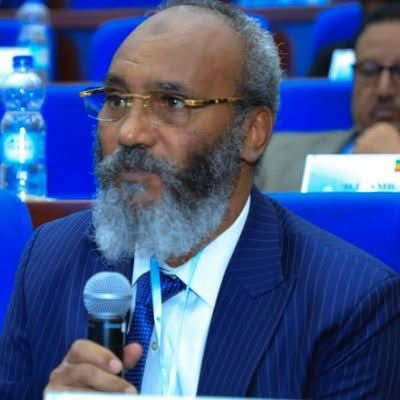
In the volatile landscape of the Horn of Africa, where alliances shift like desert sands and the embers of conflict never fully cool, a stark warning has been issued. Ambassador Suleiman Dedefo, Ethiopia’s top diplomat, has leveled a serious accusation against Eritrea: that it has committed a “grave violation” of Ethiopia’s sovereignty by sending an armed military delegation across their internationally recognized border into the Tigray region—without the consent of the Ethiopian government.
A Breach of Sovereign Borders
According to Ambassador Dedefo, Eritrea’s military delegation did not merely cross into Ethiopian territory; it was received by forces engaged in active military confrontation with the Ethiopian government—a “gang group” aligned with the Tigray People’s Liberation Front (TPLF). This, he argues, constitutes a direct and reckless act of alliance with a group waging war against Ethiopia.
“It is highly unusual and contrary to established principles of international law for an armed military delegation to cross the internationally recognized border of another sovereign state without the consent of its government,” Ambassador Dedefo stated, framing the incursion not as a diplomatic misstep but as a fundamental breach of the rules that govern relations between sovereign nations.
The Legal Framework: A Violation of the UN Charter
The Ambassador’s words carry the weight of international jurisprudence. Under the United Nations Charter and customary international law, the territorial integrity and political independence of sovereign states are inviolable. An armed incursion by one state into another, particularly to support an armed group hostile to the host government, is widely recognized as an act of aggression.
By receiving Eritrea’s military delegation in territory it does not control, the TPLF-aligned forces have, in Ambassador Dedefo’s view, effectively made Eritrea a party to the conflict. “This amounts to joining the war that TPLF is waging on Ethiopia,” he declared. Such an action erases any pretense of Eritrea acting as a neutral observer or a humanitarian partner—it positions Asmara as a belligerent.
A Reckless Alliance
The implications extend far beyond the battlefield. Ambassador Dedefo characterized Eritrea’s move as a “reckless act of alliance with a mercenary group” that jeopardizes not only Ethiopia’s sovereignty but also the stability of the entire region. In the Horn of Africa, where borders remain contested and historical grievances run deep, an act of this nature threatens to unravel the fragile peace.
By aligning with a group that the Ethiopian government has designated as hostile, Eritrea is gambling with regional security. The message sent to other nations in the region is deeply troubling: that borders can be crossed with impunity, and that external actors may choose sides in a neighbor’s internal conflict without consequence.
The Right to Self-Defense
Perhaps the most significant portion of Ambassador Dedefo’s statement is his assertion regarding Ethiopia’s legal recourse. “Such actions may give rise to Ethiopia’s rights under international law, including those recognized by the UN Charter,” he noted. He went further, stating unequivocally that “Eritrea becomes a legitimate target for any action that Ethiopia could take in self defense”.
This is not merely diplomatic rhetoric. Article 51 of the UN Charter enshrines the “inherent right of individual or collective self-defence if an armed attack occurs.” By framing Eritrea’s actions as an armed incursion in support of a hostile force, Ambassador Dedefo has laid the groundwork for a potential Ethiopian military response—one that would be legally justified under international law.
The Broader Context
Ambassador Suleiman Dedefo is no stranger to the complexities of Ethiopian diplomacy. Having served as Ethiopia’s ambassador to the United Arab Emirates and later as its top envoy to Somalia, he has been at the center of some of the region’s most sensitive negotiations. He has previously warned of external forces creating “political and strategic challenges” to Ethiopian interests and has been a vocal critic of those who threaten the nation’s sovereignty.
His latest warning comes at a time of heightened tensions in the Horn of Africa. Ethiopian Prime Minister Abiy Ahmed has spoken of “correcting” the historic loss of Red Sea access, a statement that has drawn sharp criticism from Eritrea. Meanwhile, Egypt has deployed troops to Somalia, further complicating an already fraught regional dynamic. Into this cauldron of competing interests, Eritrea’s alleged military incursion adds a volatile new element.
A Line That Cannot Be Uncrosed
Ambassador Dedefo’s words are a clear signal: Ethiopia views Eritrea’s actions as an act of war. Whether this leads to direct military confrontation between the two neighbors remains to be seen. What is certain is that the diplomatic landscape of the Horn of Africa has shifted.
The international community now faces a critical test. Will it condemn Eritrea’s violation of Ethiopian sovereignty and call for de-escalation? Or will it remain silent, allowing the precedent of armed incursion to take root? Ambassador Dedefo has drawn a line in the sand—a line that, once crossed, may prove impossible to uncross.
As the region holds its breath, one thing is clear: the principle of sovereign borders, hard-won over centuries of international law and diplomacy, hangs in the balance. And Ethiopia, through the voice of its ambassador, has made it known that it will not stand idly by while that principle is trampled.

The Macha-Tulama Self-Help Association Speaks: Finfinne, Dirree Dhawaa, and the Unfinished Struggle for Oromo Justice

A Historic Statement on the National Dialogue, Colonial Atrocities, and the Demand for Recognition
By Daandii Ragabaa
In a powerful and historic statement, the Waldaan Walgargaarsa Misoomaa fi Hawaasummaa Maccaa Tuulamaa (Macha-Tulama Self-Help and Development Association) has declared that the issue of Finfinne and Dirree Dhawaa has been brought before the national dialogue not as a genuine attempt at resolution, but as a deliberate effort to undermine and weaken the Oromo people.
The Association has asserted that the old wounds of the past—the wounds inflicted by the Menelik era—remain unhealed. And today, the same forces of dispossession and denial continue to operate, refusing to recognize Oromo rights and refusing to step back from the land that was stolen.
“The wound of Oromo is still not healed,” the Association declared. “Even today, we are witnessing the theft of our ancestral land.”
The Historical Atrocity: Menelik’s Genocide Against the Oromo
The Association’s statement took the Oromo people and the wider world back to a dark chapter in Ethiopian history—the era of Emperor Menelik, when the Oromo people were systematically dispossessed of their land, their dignity, and their lives.
“Menelik committed a great crime against the Oromo people when he separated Finfinne from its Oromo owners,” the Association stated.
The atrocities of that era are well-documented, but the Association has brought them into stark relief by naming specific victims and families who suffered under Menelik’s expansionist campaign:
- Abbaa Gadaa Guraaraa Lataa was executed by hanging.
- His father, mother, and three children were killed in a brutal and inhumane manner.
- Qajeelaa Dooyyoo and Guraaraa Dooyyoo were also executed, along with their mother, in a similarly horrific fashion.
- Shubbuu Ejersoo had his hands and feet severed before being killed.
- Aaxalee Jaatanii was starved to death in detention—denied food until life was extinguished.
These were not random acts of violence. They were part of a systematic campaign to break the spirit of the Oromo people, to erase their presence from Finfinne, and to establish a new political order built on Oromo suffering.
The Association’s statement serves as a reminder that these crimes were not isolated incidents—they were part of a broader pattern of atrocity committed against the Oromo people who lived on the land now known as Finfinne.
The Legacy of Suffering: Three Generations of Pain
The Association declared that the suffering of the Oromo people over Finfinne has now spanned three generations. From the initial dispossession under Menelik, to the brutal repression under the Derg regime, and now to the present day—the Oromo people have paid a heavy price.
“During the Derg era, many Oromo paid a great price for Finfinne,” the Association stated. “Even today, the wound is still not healed.”
The Association raised a pointed and urgent question:
“As long as this truth exists on this earth, the question of ‘Whose Finfinne is it?’ will always be asked. What has brought us to this point?”
The answer, according to the Association, lies in the persistent refusal of successive Ethiopian regimes to acknowledge Oromo rights. The Association posed a direct challenge to the architects of this injustice:
“Oromo people are struggling to reclaim their land and their rights. How can you govern on someone else’s land? What right do you have to claim authority over people who do not belong to you? It would have been better for you to struggle for your own land rather than occupy ours.”
The National Dialogue: A Tool of Deception?
The Association expressed deep concern about the ongoing national dialogue and how the issues of Finfinne and Dirree Dhawaa are being treated within it.
According to the Association, the dialogue is not being used as a genuine mechanism for reconciliation and justice. Instead, it is being manipulated to further marginalize the Oromo people and to legitimize the ongoing dispossession of Oromo land.
“The agenda of Finfinne and Dirree Dhawaa has been brought to the national dialogue to weaken the Oromo people,” the Association declared. “The old politics of the Abyssinian elite continues, refusing to step back from the land that rightfully belongs to Oromo.”
The Association emphasized that the ongoing process is not just disrespectful—it is a violation of basic rights and dignity. The Association described the current situation as “an insult that crosses all boundaries” and declared that “something that did not exist before has now arrived” —a reference to the unprecedented nature of the current assault on Oromo rights.
A Call to Resistance and Unity
In the face of these challenges, the Macha-Tulama Self-Help and Development Association issued a clear and urgent call to the Oromo people:
“The Oromo people have not yet paid the price that is required. We must fight.”
The Association’s call to action is not a call to violence—it is a call to resistance, to unity, and to the defense of Oromo rights through every legitimate means available. It is a call to refuse subjugation, to refuse silence, and to refuse to accept the theft of Oromo land as a settled fact.
The Association also addressed the issue of Dirree Dhawaa—the area that has become a symbol of Oromo resistance and a flashpoint of conflict. The Association’s declaration that Finfinne and Dirree Dhawaa are inseparable from the broader Oromo struggle serves as a reminder that these are not isolated issues—they are part of a continuous thread of resistance that stretches back over a century.
The Symbolism of Dirree Dhawaa
Dirree Dhawaa is more than just a piece of land—it is a symbol of Oromo resilience and a monument to the struggle for justice. It is the site where Oromo people have gathered to demand their rights, where they have faced brutal repression, and where they have continued to return in defiance of all efforts to silence them.
The Association’s statement linking Finfinne and Dirree Dhawaa in the same breath is significant. It sends a clear message: the Oromo people will not accept piecemeal solutions. They will not accept partial recognition. They will not accept the suggestion that one part of their historical homeland can be compromised while another is defended.
Both Finfinne and Dirree Dhawaa are Oromo.
A Historical Challenge to the Ethiopian State
The Association’s statement is not just a declaration of grievance—it is a fundamental challenge to the legitimacy of the Ethiopian state as it currently exists.
By raising the question “Whose Finfinne is it?” —and by insisting that Oromo people have the right to live on their own land with dignity, self-respect, and self-determination—the Association is questioning the foundational narrative upon which the Ethiopian state was built.
The Association’s demand is not for charity or concessions. It is for recognition of historical truth, for justice for past crimes, and for a future in which Oromo people are treated as equals in their own homeland.
The Path Forward: Recognition, Justice, and Peace
The Association’s statement concludes with a clear vision for what must happen:
The wounds of the past must be acknowledged. The atrocities committed against the Oromo people—from the Menelik era to the present—cannot be ignored or forgotten. They must be named, documented, and taught.
Justice must be pursued. Those who committed crimes against the Oromo people must be held accountable. This is not revenge—it is the foundation of lasting peace.
Oromo rights must be recognized. The Oromo people have the right to their land, their language, their culture, and their self-determination. This is not negotiable.
The national dialogue must be genuine. If the dialogue is to be meaningful, it must include a full and honest discussion of Finfinne, Dirree Dhawaa, and all the historical injustices suffered by the Oromo people.
Conclusion: The Struggle Continues
The statement of the Macha-Tulama Self-Help and Development Association is a powerful reminder that the struggle for Oromo justice is far from over. The wounds of the past remain open. The injustices of the present continue. And the future remains uncertain.
But one thing is clear: the Oromo people will not give up their land, their rights, or their dignity. They will continue to resist. They will continue to demand justice. And they will continue to remember the sacrifices of those who came before—from Abbaa Gadaa Guraaraa Lataa to the thousands of unnamed Oromo who have given their lives for Finfinne and for Oromia.
As the Association stated:
“Oromo people are struggling to reclaim their land. This struggle has not ended—it continues. And it will continue until justice is done.”
Finfinne is Oromo.
Dirree Dhawaa is Oromo.
Oromia is Oromo.
The struggle continues.
For the memory of Abbaa Gadaa Guraaraa Lataa, Qajeelaa Dooyyoo, Guraaraa Dooyyoo, Shubbuu Ejersoo, Aaxalee Jaatanii, and all the Oromo martyrs who gave their lives for the land.
Injifannoon Ummata Oromoo!
Finfinne haa jabaattu!
Dirree Dhawaa haa jabaattu!
End.

The Unbroken Backbone: The Role of Oromo Women in the Struggle for Liberation

For decades, the story of the Oromo liberation struggle has been told as a chronicle of resistance against a sprawling empire. But within that narrative, there is a deeper, more powerful current—one that has flowed quietly yet inexorably beneath the surface. This is the story of Oromo women, who have not merely supported the movement, but have stood as its very backbone: its fighters, its strategists, its memory keepers, and its soul.
A Struggle on Three Fronts
The Oromo people have been engaged in a struggle for liberation since their colonization by the Abyssinian Empire, which evolved into modern-day Ethiopia. However, Oromo women face a unique and intersecting burden. They are not only fighting against what scholar Madeline Bass describes as the “settler colonial state rulers of Ethiopia” and “global anti-Blackness,” but they must also contend with “cisheteropatriarchy”—a struggle against patriarchal oppression that is uniquely Oromo in its application.
This triple oppression means that Oromo women have always had to fight for the liberation of their nation while simultaneously battling for their own dignity and rights within their own communities. As one source notes, “the Abyssinian system oppresses Oromo people, and women in particular.” The state of oppression is deep in general, but Oromo women face even greater difficulty.
Pillars of the Movement: From the Battlefield to the Ballot
Within the Oromo Liberation Front (OLF/ABO), Oromo women have served as “utubaa cimaa”—strong pillars—whose contributions have shaped every facet of the liberation movement. Their involvement has been both visible and behind-the-scenes.
· On the Battlefield: Many Oromo women have joined the Oromo Liberation Army (OLA), the armed wing of the OLF, taking up arms to defend their people and land. Women like Aradoolaa Abdalla, who joined the OLA in 1985 and participated in ten major battles in western Oromia, rose through the ranks to become a platoon commander because of her bravery. Women have participated in every sector—military, medical, and communication—as combatants and supporters.
· In Political Organizing: Beyond the battlefield, Oromo women have been active in political movements for decades, serving as leaders, organizers, and advocates within the OLF and other nationalist groups. They have organized protests and worked tirelessly to inform other women of their rights.
The Unbreakable Spirit of Siinqee
One cannot speak of Oromo women’s resistance without understanding Siinqee. It is not merely a wooden stick; it is a profound cultural and spiritual institution. A Siinqee is a ritual stick given to an Oromo woman by her mother on her wedding day. Once a woman holds this stick, she commands respect from everyone in the community.
More than a symbol, Siinqee is a lived practice of mutual protection, a “covenant of resistance against all forms of oppression.” Women use the power of Siinqee to exercise their rights, control their own economy, and participate in solidarity activities. This tradition, which predates Western feminist thought, represents an Oromo philosophy of womanhood and solidarity that has been passed down through generations.
Martyrs and Heroes: The Price of Freedom
The contribution of Oromo women has come at a devastating cost. The liberation struggle has demanded sacrifices that extend far beyond the battlefield, imposing a heavy burden on the families left behind.
One of the most iconic figures in this struggle is Martha Kuwee Kumsa, an Oromo journalist and scholar whose story embodies the spirit of resistance. In 1980, during the Ethiopian Red Terror, she was arrested and detained without charges for nine years after writing an article that called for Oromo women to defy power structures and reclaim their cultural heritage. She was tortured and held until 1989, after which she escaped to Kenya and later Canada. Her activism is deeply rooted in Siinqee feminism—an Oromo philosophy that predates Western feminist thought and is a lived practice of mutual protection and solidarity. Today, she is a professor in Canada and continues to write and advocate on feminist and political issues.
Countless other women have paid the ultimate price—some were killed in battle, others were publicly executed. The story of Agarii Tulluu, who was hanged alongside her two brothers in a market, is just one of many tragic tales. The mothers, wives, and sisters of fallen fighters carry a grief that “does not fade from their minds,” enduring a wound that cannot be measured.
The Hiriira: A Modern Cry for Recognition
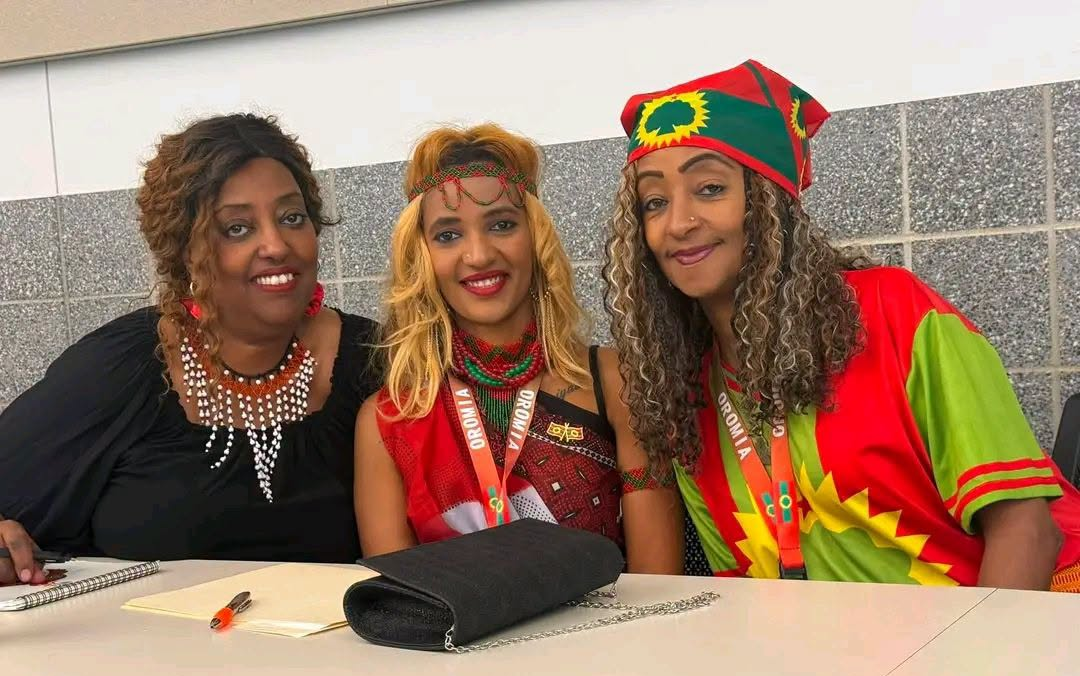
The struggle of Oromo women is not confined to the hills of Oromia; it has gone global. In September 2020, Oromo women marched through the streets of Berlin, Germany, in a protest march called a Hiriira—an Oromo word for a parade, demonstration, or queue. They were demanding recognition for their struggle.
This march was more than a protest; it was a powerful act of spatial and historical reckoning. It served as a case study into the entanglements between settler colonial Ethiopia, Germany’s post-empire, and the forces of oppression that link them. By marching through Berlin, Oromo women were mapping their liberation across borders, using a “Black and Blackened way of knowing space with a particularly Oromo perspective” known as geography guraacha. The women wore Oromo cultural garb, distinct to different regions of Oromia, turning the streets of a European capital into a living map of their homeland and their resistance.
Architects of a New Nation
The role of Oromo women extends beyond the struggle for liberation into the vision for what comes after. There is a growing consensus within the movement that the liberation of Oromia cannot be separated from the liberation of Oromo women. Any future Oromo state must be built with women’s full and equal participation from the ground up.
As one advocate powerfully stated, the aim is to ensure that Oromo women are “not just participants but architects of the next chapter.” From the battlefield to the political arena, from the cultural institution of Siinqee to the global stage of the Hiriira, Oromo women have proven that they are not waiting for liberation to be given to them—they are building it with their own hands, one courageous step at a time.
—
This feature article draws on academic research, historical accounts, and journalistic reports to highlight the indispensable role of Oromo women in their people’s long struggle for freedom and dignity.

Jaallan Utubaa Qabsoo: The Pillars of Oromo Liberation and Their Global Reach
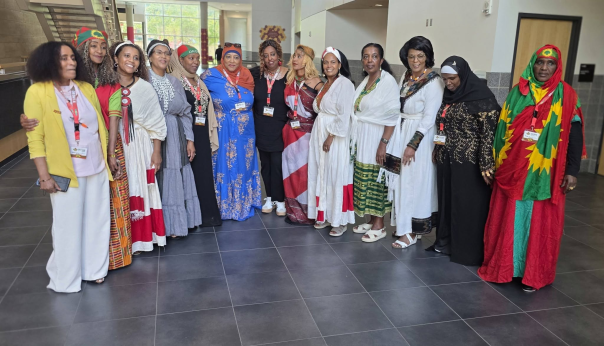
Honouring the Builders and Champions of the Oromo Struggle, and the Global Structure of the ABO
By Dhabessa Wakjira
In every liberation movement, there are those who carry the torch not for personal glory, but for the collective destiny of their people. They are the architects of consciousness, the builders of institutions, and the guardians of memory. They are Jaallan Utubaa Qabsoo—the beloved pillars of the struggle—and Jaallan Qabsoo—the beloved champions who have emerged from every corner of Oromia and the diaspora to advance the cause of Oromo liberation.
This is a tribute to them. And this is an exploration of the structure that unites them: the Adda Bilisummaa Oromoo (ABO) —the Oromo Liberation Front—and its global reach across nations.
The Pillars: Who Are the Utubaa Qabsoo?
The term Utubaa Qabsoo—pillars of the struggle—is not a title given lightly. It is earned through sacrifice, through decades of commitment, and through an unwavering dedication to the Oromo people’s right to self-determination . These are the individuals who, in the darkest hours, refused to let the flame of liberation die.
One such pillar was Cawwaaqaa Yaaddessaa, a renowned Oromo singer and artist whose music became the soundtrack of the resistance. Through his songs, he chronicled the pain and the hope of the Oromo people, composing works that stirred the hearts of a generation . His compositions—such as “Eemmoo yaa guraale hoo dangashe”—became anthems of defiance, performed even when political gatherings were banned . He served as a pillar of the struggle through his art, demonstrating that cultural expression is a weapon of resistance as powerful as any gun .
Another pillar is Ustaaz Raayyaa Abbaa Maccaa, who transitioned from the armed struggle within the ABO to become a teacher of Islamic faith and a composer of spiritual songs (manzuumaa) that reinforced Oromo identity and resilience . He was part of the ABO in its early years, receiving military training at the 24th training camp in Harawaacaa, and fought in numerous battles . Even after being captured and imprisoned for a long time, he never abandoned the struggle; he continued to strengthen the Oromo people through his teachings and songs . His story is a testament to the fact that the pillars of the struggle exist not only on the battlefield but also in the realms of faith, culture, and education .
Baaroo Tumsaa stands as another foundational pillar. He is remembered as a key figure in building the Oromo movement in the 1970s, working to organize youth and establish the infrastructure that would eventually lead to the formal founding of the ABO . He played a crucial role in the Macha-Tulama Self-Help Association and was instrumental in consolidating Oromo nationalism into a political force . His legacy is one of organization and vision, reminding us that liberation is built not just on passion but on structure.
The Champions: Jaallan Qabsoo and the Spirit of Resistance
Beyond the foundational pillars, there are the Jaallan Qabsoo—the beloved champions of the struggle. These are the fighters, the activists, the community organizers, and the everyday people who have taken up the mantle of resistance in their own ways .
The Qeerroo youth movement is perhaps the most powerful contemporary embodiment of this spirit. In traditional Oromo culture, the term means “bachelor” or “youth,” but within the political movement, it symbolizes the Oromo struggle for increased political freedom and greater ethnic representation . The Qeerroo have emerged as a dynamic and fearless force, challenging the state and demanding justice .
The champions are also found in the Oromo Liberation Army (OLA) —known in Oromo as Waraana Bilisummaa Oromoo (WBO) —the armed wing of the struggle . The OLA was formed in 1974 and has continued its armed resistance against successive Ethiopian regimes . Under the leadership of figures like Jaal Marroo (Kumsa Diriba), the OLA remains active in the Oromia Region, representing those who refused to disarm following the 2018 peace deal, skeptical of the government’s intentions .
The champions are also found in the diaspora—in Washington, D.C., Berlin, and other cities around the world, where the ABO maintains offices and radio stations that broadcast in Oromo and Amharic, keeping the spirit of resistance alive far from the homeland .
The ABO: Structure and Global Reach
The Adda Bilisummaa Oromoo (ABO) —or the Oromo Liberation Front (OLF)—is the political organization that unites these pillars and champions. It was founded in 1973 with the goal of promoting self-determination and independence for the Oromo people . Its structure has evolved over the decades, but its core mission remains unchanged: the total liberation of Oromia from what it characterizes as Ethiopian colonialism .
The ABO’s structure extends far beyond the borders of Oromia and Ethiopia. It has a significant diaspora presence, with offices in Washington, D.C., and Berlin . These offices serve as hubs for organizing, advocacy, and communication . They also operate radio stations that broadcast in both Amharic and Oromo, ensuring that the organization’s message reaches Oromo communities worldwide .
This global reach is critical. The ABO’s international structure allows it to advocate for the Oromo cause on the world stage, to build solidarity with other movements, and to sustain the struggle even when political space is closed inside Ethiopia . In a November 2025 position statement, the OLF declared that “the current regime has deliberately closed the political arena and obstructed the lawful activities of the Oromo Liberation Front” . In the face of such obstacles, the diaspora structure becomes even more vital as a space for organizing and resistance.
The Legacy of the Western Front: A Day of Sacrifice
The pillars and champions of the ABO are not abstract figures. They are real people who have paid the ultimate price for their commitment. The Western Front of the armed struggle serves as a powerful reminder of this sacrifice.
On April 15, 1980, the ABO appointed a new chairman in Shinnigga, marking a strategic decision to expand the armed struggle into the Western Front . The organization sent 17 commanders to ignite the resistance in the West. Their names—Daawud Ibsaa, Abbaa Caalaa Lataa, Jaal Tottoobaa Waaqwayyaa, and others—are etched in Oromo memory .
Tragically, these commanders were betrayed and poisoned by collaborators of the Derg regime in December 1981. Their deaths were a devastating blow to the movement . But their memory did not die. In 1985, the ABO leadership formally designated April 15 as Oromo Martyrs’ Day—a day to commemorate all those who have fallen in the struggle for Oromo liberation .
Today, April 15 is observed in the forests of Oromia and in diaspora communities around the world. It is a day of remembrance, of reflection, and of renewed commitment to the cause for which these pillars and champions gave their lives .
Unity, Truth, and the Path Forward
The struggle of the ABO has always been a struggle of self-reliance and truth. As senior ABO leader Jaal Abdii Raggaasaa emphasized in a recent consultative meeting with members: “If we are people of truth, our people will never abandon us under any circumstances. But if we are people of falsehood, even if we hold something, we will lose it” .
The leadership has also stressed that the work of building Oromia extends beyond Ethiopia’s borders . It is a task that belongs to Oromo people everywhere—in the villages of Oromia, in the refugee camps of Kenya, in the community centers of Europe and North America, and in the offices of the ABO in Washington and Berlin .
The unity of these diverse actors—the pillars, the champions, the diaspora, and the grassroots organizers—is the foundation of the Oromo liberation struggle. As another official, Jaal Yaasoo Kabbabaa Hordofa, declared: “OLF is the center of Oromo peace” . The organization calls on all Oromos to strengthen their resolve, to seize the opportunities that arise—such as the upcoming 7th round elections—and to never retreat into silence .
Conclusion: A Living Legacy
The story of the Oromo liberation struggle is not a history lesson; it is a living, breathing movement. It is embodied in the songs of Cawwaaqaa Yaaddessaa, the teachings of Ustaaz Raayyaa Abbaa Maccaa, the organizing of Baaroo Tumsaa, the sacrifice of the 17 commanders of the Western Front, and the tireless work of the ABO’s global network .
Jaallan Utubaa Qabsoo—the beloved pillars—have built the foundation. Jaallan Qabsoo—the beloved champions—continue to build upon it. And the ABO—in its structure, its global reach, and its unwavering commitment to the Oromo people—remains the vessel through which this struggle will achieve its destiny.
ABO haa waaru!
Injifannoon Ummata Oromoo!
This feature article is dedicated to all the pillars and champions of the Oromo liberation struggle—past, present, and future.

Beyond the Title: A Social Worker’s Journey of Service and Liberation

By Dhabessa Wakjira
Introduction: More Than a Profession
There are moments in life when a career becomes a calling—when the work you do ceases to be simply a job and transforms into an expression of who you are. For me, that moment came when I realised that being a Social Worker is not just about earning a degree or holding a title. It is a profound commitment to serve with compassion, to advocate for justice, and to stand beside those who need support the most.
I am Dhabessa Wakjira, and I am proud to be a Social Worker in the making.
The Heart of Social Work
What does it truly mean to be a Social Worker? It means waking up each day with a purpose that extends beyond personal gain. It means choosing to be a voice for the voiceless, a shield for the vulnerable, and a bridge for those who feel isolated from the world around them.
Social Work is rooted in the belief that every person matters—regardless of their background, their struggles, or their circumstances. It is a profession that:
- Gives hope to the vulnerable and marginalised
- Empowers individuals and families to find their strength
- Protects children’s rights and ensures their safety
- Strengthens communities from within
- Reminds people that they are seen, heard, and valued
Every life touched, every voice heard, every child protected, and every family empowered is a step toward a better society. These are not just words on a page—they are the daily realities of those who choose this path.
Who I Am
Allow me to reintroduce myself.
My name is Dhabessa Wakjira, and I carry my identity with pride. I am an Oromo, and I am a Social Worker. These two truths are not separate—they are woven together into the fabric of who I am and what I stand for.
In my work and in my life, I choose:
- Empathy over judgment — Understanding that every person carries a story I have not lived
- Service over status — Recognising that true worth lies not in titles but in impact
- Impact over recognition — Knowing that the change I help create matters more than the credit I receive
These are not abstract ideals. They are the compass that guides my daily actions.
What I Do
As a Social Worker, I am called to:
- Empower — Helping individuals and communities discover their own strength and capacity for change
- Protect — Safeguarding the rights and well-being of children, families, and vulnerable groups
- Support — Walking alongside people in their times of greatest need
- Educate — Sharing knowledge that equips others to advocate for themselves
- Mobilise — Bringing communities together to address shared challenges
- Care — Offering compassion and humanity in every interaction
- Organise — Creating systems and structures that uplift rather than oppress
- Collaborate — Building partnerships that amplify the impact of service
- Serve — Placing the needs of others at the centre of my work
Each of these actions is a deliberate choice—a commitment to creating positive change, one person, one family, and one community at a time.
The Intersection of Identity and Purpose
There is a phrase that I carry close to my heart: “Oromo Freedom Fighter isn’t just what I do—it’s who I am.”
For me, this is not a contradiction to my work as a Social Worker—it is an extension of it. The fight for Oromo liberation and the fight for social justice are intertwined. When I advocate for the rights of children, families, and communities, I am also contributing to the broader struggle for freedom, dignity, and self-determination.
Social Work is, at its core, about addressing the systems and structures that perpetuate inequality and suffering. It is about recognising that individual struggles are often rooted in larger historical and political realities. To be an Oromo Social Worker is to understand that the path to healing requires not only individual support but also collective liberation.
The Journey Ahead
I am still a Social Worker in the making—and that is a truth I embrace. Every day brings new lessons, new challenges, and new opportunities to grow. I am learning to hold space for the pain of others while also tending to my own. I am learning to navigate systems that are often broken while never losing sight of the humanity they are meant to serve.
I am learning that change is slow, and that patience is a form of strength. I am learning that even when progress feels invisible, every act of compassion plants a seed that will one day bloom.
A Call to the World
To anyone who reads this, I offer this reflection: Social Work is not a profession reserved for the few. It is a way of being that we can all embody—in our families, in our neighbourhoods, in our daily encounters with strangers. You do not need a degree to choose kindness. You do not need a title to stand up for what is right.
But for those who do choose this path—who answer the call to serve—know that you are part of something greater than yourself. You are part of a legacy of compassion, resistance, and hope that stretches across generations and continents.
Conclusion: Here’s to Change
Here’s to creating positive change, one person, one family, and one community at a time. 💜
Here’s to the vulnerable who teach us resilience. Here’s to the families who trust us with their stories. Here’s to the children whose futures we are fighting to protect. Here’s to the Oromo people and to all peoples who continue to struggle for freedom and dignity.
I am Dhabessa Wakjira. I am a Social Worker in the making. I am an Oromo Freedom Fighter. And I believe—with every fibre of my being—that a more just world is possible.
“The best way to find yourself is to lose yourself in the service of others.” — Mahatma Gandhi

“A Warning from the Grave”: Dr. Negasso Gidada’s 2014 Prophecy on the Addis Ababa Master Plan – and Why It Was Ignored

As Ethiopia reels from the aftermath of the 2014 Oromo protests, a newly surfaced document reveals that one of the Constitution’s architects had foreseen the catastrophe – and offered a roadmap to avoid it. His advice went unheeded.
By Our Staff Reporter
In May 2014, just weeks after violent protests erupted across Oromia over the “10th Addis Ababa Integrated Development Master Plan,” Dr. Negasso Gidada – a key intellectual and co-architect of Ethiopia’s 1995 Constitution – sat down to write a sobering analysis. He titled it: “A Tragic Consequence of the ‘10th Addis Ababa Integrated Development Master Plan’: A Warning for the Future.”
The document, now circulating widely, reads like a dispatch from a man who saw the storm coming. In it, Dr. Negasso dissects the historical grievances, constitutional failures, and political miscalculations that ignited the unrest – and warns that if the root causes were not addressed, the federal system itself could unravel.
Nearly a decade later, his words carry a haunting resonance. The protests that began in Adaamaa University on April 29, 2014, spread to dozens of towns, leaving dozens dead, property destroyed, and ethnic tensions inflamed. The government’s response – a mix of repression and belated appeasement – did little to quell the anger. And, as Dr. Negasso predicted, the underlying issues remain unresolved.
A City Built on Conquest, a Constitution Unfulfilled
Dr. Negasso begins by grounding the crisis in history. Addis Ababa, founded in 1887 by Emperor Menelik and Empress Taitu around the hot spring of Finfinnee, was established on land that belonged to the Oromo of Shawa. He cites British envoy Harris, who in 1844 witnessed King Sahle Sellasie’s forces – armed with European guns – “destroy the Oromo life and resources,” burning homes, capturing women, and slaughtering men. The Oromo of Gulalle, he notes, still remember leaders like Tufa Mona and Birraatuu Goolee who died in those wars.
This historical memory, he argues, is not ancient grievance – it is living pain. And it has been compounded by three modern failures:
1. The Constitution of 1995, which promised Oromia a “special interest” in Addis Ababa (Article 49/5) but never defined it in law.
2. The 2003/2004 decision to move Oromia’s capital to Adaamaa, which sparked student protests and led to mass expulsions and imprisonments.
3. The broken promises of 2005, when OPDO, after losing the election, re-declared Finfinnee as the capital and vowed to build Oromo cultural centres and language schools in the city’s ten districts – none of which materialised.
“Nine years have passed,” Dr. Negasso wrote, “and nothing from the decisions and promises were implemented.”
The Master Plan: A Spark on Dry Tinder
When the “Integrated Master Plan” – which proposed integrating surrounding Oromo towns into Addis Ababa – was publicly announced in March 2014, it struck at this accumulated trauma. The plan was presented as a development initiative, but for Oromo farmers on the city’s fringes, it meant eviction. For Oromo intellectuals, it meant the erasure of their territorial rights. For the youth, it was the final straw.
“Here lies the root cause of the current incident and the tragic consequence,” Dr. Negasso wrote.
The protests were swift and fierce. They began at Adaamaa University, then spread to Haroo Maayaa, Dire Dawa, Bale, Guji, and beyond. By the time Dr. Negasso penned his note, the death toll was mounting – two students killed in a TV room explosion at Haroo Maayaa, others thrown into rivers, and reports of mutilation and ethnic violence. Security forces responded with live fire, and the government issued statements defending the plan while blaming “outside forces.”
A Constitutional Crisis in Plain Sight
Dr. Negasso’s most incisive contribution is his legal analysis. He walks through the Constitution article by article, showing how both the ruling party and nationalist forces were undermining it.
He quotes Article 49/5: “The special interest of the State of Oromia in Addis Ababa… shall be respected. Particulars shall be determined by law.” That law, he notes, has never been enacted.
He cites Article 40/4, which guarantees peasants the right to land and protection from eviction – a right routinely violated in the suburbs of Addis.
And he warns that if the Constitution is not respected, the federal system could collapse into ethnic conflict. “The end result could also mean the disintegration of Ethiopia which no one of us wants to see.”
What He Prescribed – and What Was Ignored
Dr. Negasso did not merely diagnose; he offered a cure. His recommendations were clear:
· Apologise for the failures: the unfulfilled constitutional provision, the broken promises, the violence by security forces.
· Investigate human rights violations by both state and individual actors, and bring perpetrators to justice.
· Immediately implement Article 49/5 – define Oromia’s special interest, demarcate the boundary, and affirm the jurisdiction of surrounding towns.
· Stop hate propaganda from both “Ethiopianist” and “Oromummaa” camps.
· Launch a national dialogue on the Constitution, the national question, land policy, federalism, and the role of the media.
“We can only try to mend the damage by taking corrective measures based on what we have learnt from the mistakes done,” he wrote.
The Unheeded Warning
Dr. Negasso concluded his note with a plea: “If we want to live together and save our people and country, we should either respect the Constitution as it is or create a situation in which it could be amended and ratified by the people through a referendum.”
The TPLF-led government did neither. The master plan was shelved – but the underlying issues were never resolved. The protests of 2014 would echo in the 2015 elections, and again in the 2016–2018 Oromo uprisings that ultimately reshaped the country’s political landscape.
Dr. Negasso Gidada passed away in 2019. But his note from May 2014 remains a haunting artifact – a warning written in ink, delivered from the grave, and largely ignored by those who had the power to act.
Today, as Ethiopia navigates yet another national dialogue, his words serve as a stark reminder: tragedy is not inevitable, but it is the price of constitutional neglect.
—
This feature is based on Dr. Negasso Gidada’s unpublished note dated May 2014, titled “A Tragic Consequence of the ‘10th Addis Ababa Integrated Development Master Plan’: A Warning for the Future.”

Finfinnee in the Heart of Oromia*: The Founding of Addis Ababa as a Colonial Project
How Menelik II’s garrison towns and the establishment of Ethiopia’s capital city reshaped Oromia, displacing the Oromo people and cementing a system of political and economic control that endures today
FINFINNEE, OROMIA — The bustling streets of Addis Ababa, known to the Oromo as Finfinnee, tell a story of power, conquest, and displacement that remains largely hidden beneath the city’s modern veneer. This is not merely the capital of Ethiopia; it is the heart of a colonial project that began in the late 19th century and continues to shape the lives of millions.
The founding of Finfinnee was not an act of urban planning in the conventional sense. It was the culmination of a deliberate strategy of conquest and control, a military project disguised as a city, designed to secure the domination of the Ethiopian Empire over the Oromo people, the largest ethnic group in the Horn of Africa. As one historical account describes, the city was originally a katama – a military encampment or royal camp, with its neighborhoods laid out “mirroring an army on the march” . This military logic was not accidental; it was the foundation upon which the entire colonial structure was built.
The Strategy of the Katama
The establishment of garrison towns, or katamas, was a central feature of Emperor Menelik II’s colonial expansion. Convinced that more could be gained from the permanent exploitation of the Oromo, Menelik began to occupy conquered districts with permanent garrisons of his troops, providing for their administration under a hierarchy of his own officials. As one historical account notes, the creation of these towns was based on a desire to exercise “more effective control over the Oromo” and to escape interference from rival powers . These were strategically and politically secured regions, designed to serve as nerve centres for the Ethiopian colonial system .
From the mid-19th century, Menelik developed garrison towns such as Ankobar, Dabra Berhan, and Angolala. The last of these was burned by the Oromo in 1868, but was recovered by Menelik. He also developed Leche, Feqre Gimb, Enaware, Tamo, and Warra Illu, where he installed 40,000 soldiers in 1870. The Wallo Oromo attacked and destroyed Warra Illu that same year, but it was rebuilt. This pattern of Oromo resistance and Ethiopian colonial reassertion continued as northern Oromia gradually fell into Ethiopian hands .
Following the submission of northern Oromia, Menelik turned his attention to the Tulama Oromo, who were the residents of Finfinnee and its surroundings. The desire to exercise more effective control led him, in the latter part of 1878, to move to the mountain of Wacaca, where he dug the foundation for a new town, which he named Entoto (later called Old Entoto). In 1882, he transferred his settlement to a place called Dildila, later named New Entoto. These settlements were created by evacuating or enslaving the Oromo living there. After strengthening his army and accumulating massive firearms, Menelik built Addis Ababa on the place known by the Oromo name Finfinnee, between 1886 and 1887 .
The Founding of Finfinnee
The site of Finfinnee was originally chosen by Empress Taytu Betul in 1886, who was attracted by the hot springs in the area . The local Oromo tribes had their lands confiscated, and many were displaced . In its first years, the city was more like a military encampment than a town, with the emperor’s palace surrounded by the dwellings of his troops and retainers . As historian Getahun Benti argues, “From its earliest days, Addis Ababa was the staging station for the economic exploitation and political control of the conquered provinces of which Oromia was the largest” .
The major portion of the Oromo land on which the capital city was founded was divided among thirty-one Ethiopian officials . Army commanders were given large plots of land on which they established their respective camps for their relatives, followers, and war captives. While most Oromos were evicted and forced to migrate to far places, others were permanently marginalised and turned into servants and labourers . Through the proclamation of October 27, 1907, Oromo land became a commodity to be sold and bought, giving Ethiopian and European landlords a great deal more security of tenure .
Making Addis Ababa the centre of commerce, bureaucracy, and employment, the Ethiopian government attracted people from different parts of the world and Abyssinia proper to this city, while the Oromo people were marginalised, segregated, and dehumanised in rural and urban areas alike. The people in the city mainly obtained their food and income from the surrounding Oromos; military commanders, soldiers, and followers depended on the tribute and tax mainly collected from the Oromo people .
Consolidating the Colonial System
The garrison towns gradually evolved into the major geopolitical centres for practising political domination, wealth and capital accumulation, and religious and cultural dissemination . From these garrison centres, Ethiopian soldiers and colonial administrators were dispatched to impose colonial rule on Oromos through subjugation, enslavement, and expropriation of the basic means of production such as land, cattle, and other valuable resources .
Several non-garrison towns emerged in eastern and western Oromia with the development of trade and communication networks. As rail service was introduced, the towns of Aqaqi, Bishoftu, Mojo, Adama, Walanchiti, Metahara, Awash, Mieso, Afdem, Gota, Munesa, and Dire Dhawa flourished. While Oromos were evicted from their urban lands and forced to migrate to rural areas, Abyssinians were encouraged to migrate to cities and towns in Oromia .
The colonisation of Oromia, the development of transportation and communication systems, and the establishment of Addis Ababa and garrison towns facilitated the development of the Ethiopian institutional milieu and created “the integrating nucleus of the colonial economic system” in Oromia, with the collusion of the capitalist world economy. Commodities and food products produced by Oromo labour flowed to and were concentrated in Addis Ababa and other urban centres for local consumption and international markets .
A Legacy of Dispossession
The consequences of this colonial urbanisation are profound. The Ethiopian colonial structure has limited the access of Oromo urban residents, who are a minority in their own cities and towns, to institutions and opportunities such as employment, education, health, mass media, and other public services. The Oromo have been prevented from developing autonomous institutions, organisations, culture, and language, and have been subordinated to the institutions and organisations of the Habasha colonial settlers in their own cities, towns, and homeland .
The Ethiopian state elites and urban communities in Oromia remain determined to maintain the existing political and economic order, investing meagre available resources in building unproductive institutions, such as the army, security infrastructure, and colonial bureaucracy. The Abiy monologue, which he calls a national dialogue, is seen by many as an integral part of the Ethiopian colonial project .
Today, millions of Oromos are exposed to fatal diseases, famine, and massive poverty in Oromia cities and urban centres. Since state-terrorism, poverty, famine, and ethnonational challenges are increasing, and since the major world powers have a role in shaping these problems, they have a moral and political responsibility to become capable of mediating these processes and developing procedures and criteria by which these conflicts must be solved fairly and democratically before it is too late .
Finfinnee’s founding is etched in Oromo collective memory as a site of violent conquest. The legacy of Finfinnee is therefore inseparable from trauma, subjugation, and displacement.
*From Asafa Jalata “Oromian Urban Centers: Consequences of Spatial Concentration of Pinational Ethiopia,” Journal of Oromos Studies, Vol. 17, No. 2, January 2011, pp. 39-74.

The Gumaa Reconciliation Process
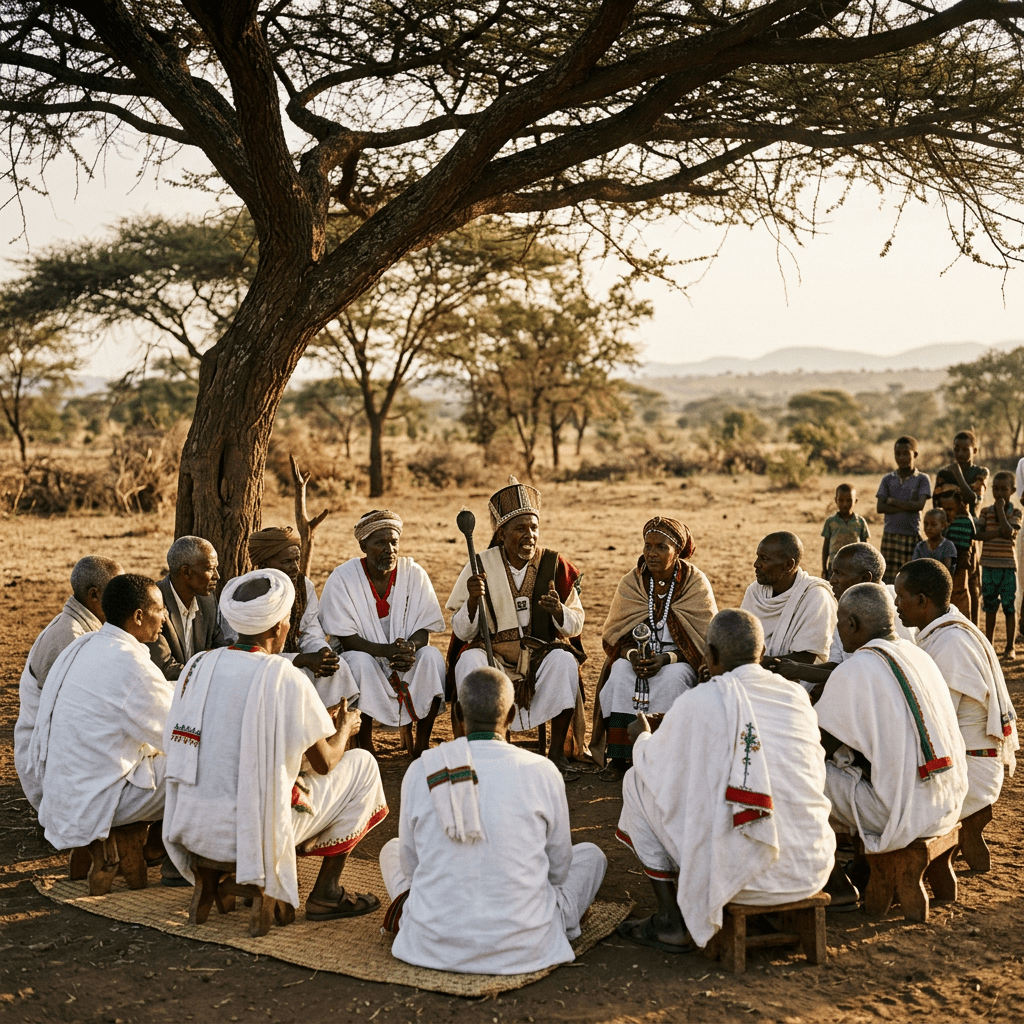
Gumaa is a sophisticated indigenous institution for resolving blood feuds, aiming to restore social harmony and reintegrate an offender back into the community. The process follows several key stages:
1. Collective Responsibility: The killer’s entire lineage is held corporately liable for the act. The group, not just the individual, is responsible for compensation and initiating the purification ritual. The goal is to restore social ties, not just punish an individual.
2. Negotiation & Compensation: Elders from both sides negotiate a “blood price” (gumaa), traditionally paid in cattle. The amount is determined by the nature of the offense (intentional vs. unintentional) and the severity of the injury, but does not vary based on the age or sex of the victim.
3. The Purification Ritual: This highly symbolic ceremony serves to cleanse the offender and the community.
· Preparation: The offender arrives with face covered, wearing the clothes from the day of the murder, symbolizing their unclean state.
· The Sacrifice: A lamb is sacrificed. The parties stand facing each other, signifying readiness to forgive and be forgiven.
· Symbolic Acts: Elders guide the parties to place their hands inside the sacrificed animal’s stomach to shake hands, symbolizing the “washing away” of the sin. The offender’s face is then uncovered, old clothes are removed, and new ones are put on, marking full reintegration.
4. Covenant & Reintegration: The process often concludes with a waadaa (covenant). The ritual concludes with a shared meal, publicly signifying the end of the feud and the offender’s full return to the community.
—
 The Irreecha Thanksgiving Festival
Irreecha is a vibrant bi-annual festival of thanksgiving, renewal, and unity, deeply rooted in the Oromo worldview.
· Timing and Types: It is celebrated twice a year:
· Irreecha Malkaa: Celebrated in September/October at lakesides or rivers to thank Waaqa for the end of the rainy season and the coming harvest.
· Irreecha Tulluu: Celebrated in Spring (around March) on hilltops to pray for rain and blessings for the upcoming planting season.
· Key Rituals and Symbols:
· Fresh Grass and Flowers: Participants carry freshly cut green grass and flowers to the sacred site, symbolizing fertility, life, and renewal.
· Water: Rituals are performed near bodies of water considered holy and pure. The grass is dipped in the water, and participants may sprinkle themselves with it as a blessing.
· Prayers and Songs: The festival features communal prayers, songs, and dances led by Qaalluu elders or Abba Gadaa leaders. It is a time to thank Waaqa for blessings and ask for peace (nagaa) and prosperity for the year ahead.
· Prohibitions: Participants are forbidden from attending with resentment or hatred in their hearts.
· Social and Cultural Significance: Beyond its religious roots, Irreecha is a powerful symbol of Oromo identity, unity, and cultural pride. It fosters social bonds and reinforces collective identity. While rooted in Waaqeffannaa, it is now celebrated by many Oromo people regardless of their religion.

The 8th Conference of Judicial Officers of the South-West Shewa Zone
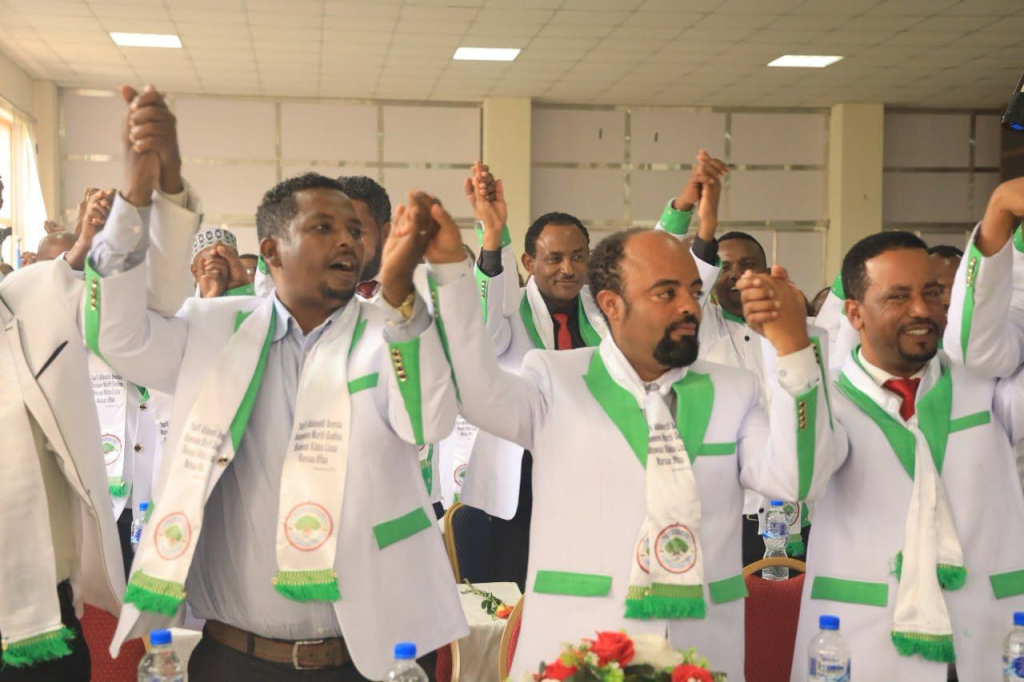
Strengthening the Judiciary through Service, Integrity and Professional Excellence
Waliso, Oromia — The 8th Conference of Judicial Officers of the South-West Shewa Zone was officially held in the town of Waliso, under the theme: “We Will Work with a High Spirit of Service to Provide the Public with Pure, Efficient and Acceptable Judicial Services!”
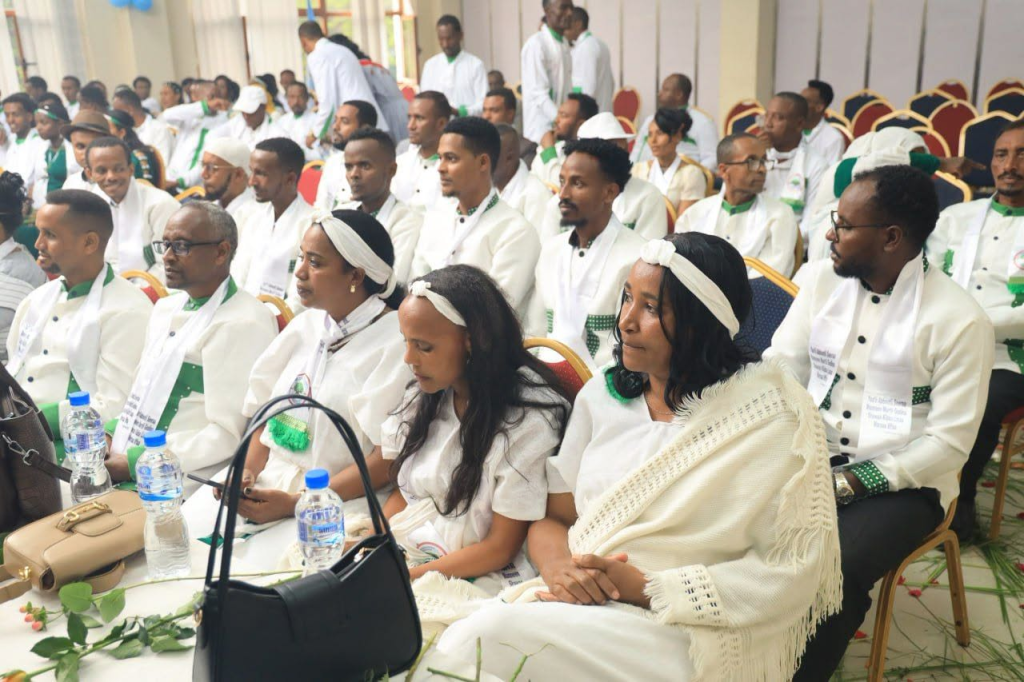
The conference, which brought together judges and legal professionals from across the zone, served as an important platform to evaluate court performance, discuss challenges, and chart a path toward improved service delivery. It concluded with a recognition ceremony honouring judicial officers who had recorded outstanding achievements .
Focus on Quality and Efficiency
During the conference, a key presentation was delivered under the title “Causes for the Cancellation and Improvement of Cases: The Reality of the Courts of the South-West Shewa Zone and the Direction of Solutions” . This session sparked in-depth discussions among the participants, highlighting the commitment of the judiciary to learning from past shortcomings and enhancing the quality of its rulings .
The theme of the conference reflects a broader reform effort to ensure that the judiciary is not only independent but also responsive to the needs of the public. As noted in previous judicial gatherings in Oromia, the primary goal is to improve access to justice and strengthen public trust in the legal system .
Participants and Attendance
The event was attended by a wide range of judicial and administrative officials, including:
- Judges of the Zonal Courts ;
- Representatives from the Oromia Supreme Court ;
- Judicial officers from neighbouring zones and city courts;
- Heads of sector offices from the zone and the town of Walisoo;
- Court administrators and other legal professionals .
The broad representation underscores the coordinated efforts across different levels of the judiciary to align practices and share experiences. Previous zonal conferences, such as those in Jimma and other parts of Oromia, have similarly focused on utilising technology and improving the quality of judicial services .
Recognition of Excellence
One of the highlights of the conference was the presentation of certificates of recognition to judges and court officials who had demonstrated exemplary performance. This practice is common in Oromia’s judicial sector reforms and aims to motivate legal professionals to uphold the highest standards of integrity and service.
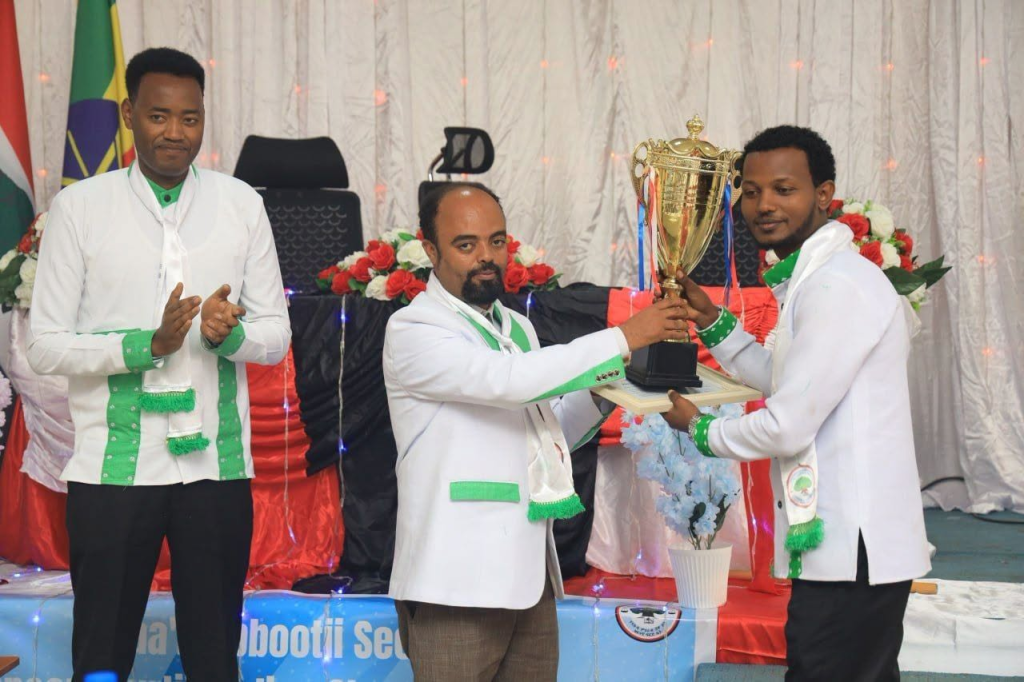
The recognition was part of a broader effort to strengthen the rule of law and ensure that the judiciary remains a pillar of justice in the region. Recent reports, however, have also highlighted the difficulties facing the judiciary, including incidents of judges being unlawfully arrested and intimidated, underscoring the importance of such gatherings to reaffirm judicial independence.
Conclusion
The successful conclusion of the 8th Conference of the Judicial Officers of the South-West Sheba Zone reflects a renewed commitment to a judiciary that is accessible, transparent and accountable. In the face of security and administrative challenges, the spirit of service and integrity shown by judicial officers is a beacon of hope for a just and fair legal system .