Category Archives: Grief Support

Beyond the Direct Translation: Asebe Regassa’s Reflection on the True Meaning of Gabrummaa

By Maatii Sabaa
—
In the wake of a recent interview with Biqilaa Amanuu, a storm of interpretation has swept through Oromo intellectual circles. The subject? A word that carries the weight of centuries: gabrummaa.
To the casual observer, the translation seems straightforward. “Slavery.” “Enslavement.” A direct, uncomplicated rendering into English that fits neatly into Western frameworks of oppression. But as Asebe Regassa provocatively argues, this superficial translation does profound violence to the concept’s true meaning—and, more critically, misdirects our understanding of what the Oromo struggle has always been about.
The Misinterpretation That Misses the Mark
Following the interview, many commentators rushed to frame the discussion within a familiar narrative: Oromos were sold as slaves under Menelik’s system. They wrote it boldly, confidently, reducing a complex historical reality to a single, devastating equation. And while the historical record does indeed document the exploitation of Oromo peoples during that period, Regassa insists that this framing fundamentally misunderstands both the nature of the system and the nature of the resistance.
“The history is true,” Regassa acknowledges, “but the struggle against gabrummaa and the system of gabrummaa is not that.”
What Regassa identifies is a dangerous reductionism—the tendency of both scholars and activists to reach for the most emotionally resonant translation without interrogating whether that translation captures the full scope of what gabrummaa actually represents. The result, as he notes, has been confusion and controversy among those who engaged with the interview.
Unpacking the Concept: More Than Chains and Whips
So what does gabrummaa truly mean?
Regassa is unequivocal: “Gabrummaa does not mean enslavement/slavery. Enslavement is only a rough and direct translation.”
Instead, gabrummaa encompasses something far more systematic and insidious—”subjugation, servitude, and being kept under the yoke of oppression.” This is not merely a semantic distinction. It is a fundamental reorientation of how we understand both historical injustice and contemporary struggle.
Slavery implies a particular legal and social status—the ownership of one human being by another. It conjures images of chains, auctions, and plantations. But gabrummaa speaks to an entire architecture of domination: political, economic, cultural, and psychological. It is a system designed not merely to exploit but to subjugate, to render entire peoples subordinate through structures that penetrate every aspect of existence.
The General’s Vision: Dismantling the System
General Waaqoo Guutuu’s powerful declaration illuminates this distinction: “Gabrummaa iddaan buqqifna yoo dadhabne ilmaan itti guddifna”—”We shall dismantle gabrummaa at its place; if we fail, we shall raise our children upon it.”
When Regassa interprets this statement, he insists: the General was not speaking of ending slavery in the narrow sense. He was speaking of dismantling an oppressive system—a comprehensive project that requires nothing less than decolonizing the entire structure of power to emancipate the people from such subjugation.
This is a revolutionary vision, not a reformist one. It recognizes that gabrummaa is not a historical aberration or a set of discrete injustices that can be addressed piecemeal. It is a total system that demands total transformation. To merely end chattel slavery while leaving the underlying structures of subjugation intact would be to mistake the symptom for the disease.
The Intellectual Burden
Regassa’s reflection carries a pointed challenge for those who study Oromo history and society: “Warri ogbarruu Oromoo qorattanimmoo yaada itti kennaa, ulfaadhaa!”—”For those who study Oromo affairs, pay attention to this: it is weighty!”
The weight he speaks of is both intellectual and ethical. It is the burden of getting it right—of refusing the easy translation that flattens complexity, of resisting the temptation to map Oromo experience onto Western categories of oppression that may not fully apply. It is the responsibility of scholars and commentators to engage with the full richness of Oromo concepts rather than reducing them to the most convenient English equivalent.
This is not academic navel-gazing. The distinction between slavery and subjugation has real-world implications for how movements organize, how demands are articulated, and how the ultimate goals of liberation are conceived. A movement that aims only to end slavery might fight for legal reforms. A movement that aims to dismantle gabrummaa must fight to transform everything.
A Call for Deeper Engagement
Regassa’s intervention is ultimately a call for deeper engagement—with language, with history, and with the lived experience of Oromo people across generations. It is a reminder that the most powerful concepts resist easy translation, that the struggle for liberation is not served by reaching for the most familiar vocabulary but by insisting on the specificity and integrity of Oromo thought.
The controversy sparked by the interview was, in Regassa’s analysis, born of this very failure—the attempt by both interviewer and subject to explain gabrummaa through its most superficial rendering, generating confusion among audiences who deserved better.
As Oromo intellectual traditions continue to develop and engage with global conversations about justice, liberation, and decolonization, Regassa’s reflection stands as a crucial reminder: the words we use matter. The translations we choose shape the struggles we imagine. And the most profound acts of resistance may begin not with protests or declarations, but with the patient, painstaking work of getting the meaning right.
Gabrummaa is not slavery. It is something more fundamental, more encompassing, and more challenging to uproot. And recognizing that distinction may be the first step toward the genuine emancipation that General Waaqoo Guutuu envisioned—the dismantling of the entire oppressive system, at its very place.
—
This article draws from Asebe Regassa’s reflections on the meaning of gabrummaa and its implications for Oromo historical understanding and contemporary struggle.

Beyond the Title: A Social Worker’s Journey of Service and Liberation

By Dhabessa Wakjira
Introduction: More Than a Profession
There are moments in life when a career becomes a calling—when the work you do ceases to be simply a job and transforms into an expression of who you are. For me, that moment came when I realised that being a Social Worker is not just about earning a degree or holding a title. It is a profound commitment to serve with compassion, to advocate for justice, and to stand beside those who need support the most.
I am Dhabessa Wakjira, and I am proud to be a Social Worker in the making.
The Heart of Social Work
What does it truly mean to be a Social Worker? It means waking up each day with a purpose that extends beyond personal gain. It means choosing to be a voice for the voiceless, a shield for the vulnerable, and a bridge for those who feel isolated from the world around them.
Social Work is rooted in the belief that every person matters—regardless of their background, their struggles, or their circumstances. It is a profession that:
- Gives hope to the vulnerable and marginalised
- Empowers individuals and families to find their strength
- Protects children’s rights and ensures their safety
- Strengthens communities from within
- Reminds people that they are seen, heard, and valued
Every life touched, every voice heard, every child protected, and every family empowered is a step toward a better society. These are not just words on a page—they are the daily realities of those who choose this path.
Who I Am
Allow me to reintroduce myself.
My name is Dhabessa Wakjira, and I carry my identity with pride. I am an Oromo, and I am a Social Worker. These two truths are not separate—they are woven together into the fabric of who I am and what I stand for.
In my work and in my life, I choose:
- Empathy over judgment — Understanding that every person carries a story I have not lived
- Service over status — Recognising that true worth lies not in titles but in impact
- Impact over recognition — Knowing that the change I help create matters more than the credit I receive
These are not abstract ideals. They are the compass that guides my daily actions.
What I Do
As a Social Worker, I am called to:
- Empower — Helping individuals and communities discover their own strength and capacity for change
- Protect — Safeguarding the rights and well-being of children, families, and vulnerable groups
- Support — Walking alongside people in their times of greatest need
- Educate — Sharing knowledge that equips others to advocate for themselves
- Mobilise — Bringing communities together to address shared challenges
- Care — Offering compassion and humanity in every interaction
- Organise — Creating systems and structures that uplift rather than oppress
- Collaborate — Building partnerships that amplify the impact of service
- Serve — Placing the needs of others at the centre of my work
Each of these actions is a deliberate choice—a commitment to creating positive change, one person, one family, and one community at a time.
The Intersection of Identity and Purpose
There is a phrase that I carry close to my heart: “Oromo Freedom Fighter isn’t just what I do—it’s who I am.”
For me, this is not a contradiction to my work as a Social Worker—it is an extension of it. The fight for Oromo liberation and the fight for social justice are intertwined. When I advocate for the rights of children, families, and communities, I am also contributing to the broader struggle for freedom, dignity, and self-determination.
Social Work is, at its core, about addressing the systems and structures that perpetuate inequality and suffering. It is about recognising that individual struggles are often rooted in larger historical and political realities. To be an Oromo Social Worker is to understand that the path to healing requires not only individual support but also collective liberation.
The Journey Ahead
I am still a Social Worker in the making—and that is a truth I embrace. Every day brings new lessons, new challenges, and new opportunities to grow. I am learning to hold space for the pain of others while also tending to my own. I am learning to navigate systems that are often broken while never losing sight of the humanity they are meant to serve.
I am learning that change is slow, and that patience is a form of strength. I am learning that even when progress feels invisible, every act of compassion plants a seed that will one day bloom.
A Call to the World
To anyone who reads this, I offer this reflection: Social Work is not a profession reserved for the few. It is a way of being that we can all embody—in our families, in our neighbourhoods, in our daily encounters with strangers. You do not need a degree to choose kindness. You do not need a title to stand up for what is right.
But for those who do choose this path—who answer the call to serve—know that you are part of something greater than yourself. You are part of a legacy of compassion, resistance, and hope that stretches across generations and continents.
Conclusion: Here’s to Change
Here’s to creating positive change, one person, one family, and one community at a time. 💜
Here’s to the vulnerable who teach us resilience. Here’s to the families who trust us with their stories. Here’s to the children whose futures we are fighting to protect. Here’s to the Oromo people and to all peoples who continue to struggle for freedom and dignity.
I am Dhabessa Wakjira. I am a Social Worker in the making. I am an Oromo Freedom Fighter. And I believe—with every fibre of my being—that a more just world is possible.
“The best way to find yourself is to lose yourself in the service of others.” — Mahatma Gandhi

A Response from Within: Correcting the Narrative on Ethiopia’s National Dialogue

A four-year participant challenges the critique that the National Dialogue began with the “wrong first question,” offering a detailed defence of the process and an invitation for critics to join the table.
ADDIS ABABA, ETHIOPIA — In the ongoing public debate over Ethiopia’s National Dialogue, one critique has stood out: that the process began with the wrong question, focusing on divisions rather than shared aspirations. Mr Kebour Ghenna articulated this view in a widely discussed reflection, arguing that the Dialogue should have begun by asking, “What future do Ethiopians wish to build together?” rather than “What divides Ethiopians?”
Now, a direct participant in the Dialogue has responded. Mr Zenayeneh Girma, who has served for four years as a representative of Civil Society Organisations (CSOs) in the National Dialogue process, has offered a corrective perspective—one grounded in direct participation rather than external observation.
“The evidence contradicts your central claim that the Dialogue began with the ‘wrong first question,'” Zenayeneh wrote, respectfully challenging Kebour’s thesis.
A Painstaking Process
Zenayeneh begins by correcting what he describes as a factual error. The National Dialogue did not begin by collecting grievances alone. It began by collecting issues from across the country—over 10,000 specific concerns raised in consultations across all woredas .
These were systematically aggregated into 2,000 themes, then distilled into 8 major national agenda pillars . These pillars cover nation-building and identity; state structure and form of government; the status of federal cities; religious affairs; institution building and the rule of law; social and economic issues; corruption and good governance; and peacebuilding and national reconciliation .
“This was not a hurried exercise but a painstaking process designed to ensure every voice—no matter how remote or marginalised—was heard,” Zenayeneh states.
He challenges Kebour’s suggestion that only divisions were documented. “In every consultation, participants were asked what future they desired for their communities and Ethiopia collectively. The 8 pillars emerged not from ‘what divides us’ but from what Ethiopians chose to discuss as urgent national questions—including the most difficult and deadlocked ones.”
Unprecedented Inclusivity
Zenayeneh argues that the Ethiopian process is unprecedented in its inclusivity. For the first time in the country’s history, Ethiopians from all regions, ethnicities, religions, and political affiliations—including diaspora communities—were brought together to question issues once considered “untouchable”: the flag, federalism, the status of Addis Ababa, the constitutional order, corruption, and institutional reform .
“This is not ‘organising disagreement.’ This is building a foundation for consensus,” he writes.
A Call for Participation, Not Observation
One of Zenayeneh’s most pointed observations is directed at the role of intellectuals who critique the process from outside. “You critique from outside while refusing to enter,” he writes, directly addressing Kebour.
As a prominent intellectual, Zenayeneh notes, Kebour could have contributed expertise to advisory panels. Instead, he has consistently critiqued from a distance. “Observing by ‘sitting outside’ and then writing based on hearsay is an easy task. Building a process that engages 4,000+ communities across a vast, diverse country is not.”
Zenayeneh acknowledges that some opposition figures remain outside the process—some by choice, others by circumstance. But the Commission has extended invitations repeatedly. “A dialogue that waits for everyone to agree to participate may wait forever. The process must move forward while continuing outreach.”
What History Will Remember
Zenayeneh concludes with a prediction about what history will actually remember: a moment when Ethiopians—for the first time—sat together across all divides and spoke honestly about their deepest political questions. It will remember a Commission that organised not just grievances but aspirations, not just complaints but solutions.
“The Dialogue is not perfect. But perfection is not the standard—participation is. And by that measure, Ethiopia has achieved something unprecedented.”
His message to intellectuals and critics is clear: “Instead of theorising from outside, consider contributing your expertise. The nation needs thinkers like you inside the room—not just observers outside it.”
Conclusion
Zenayeneh’s response offers a powerful counter-narrative to critiques of Ethiopia’s National Dialogue. It defends the process as painstaking, inclusive, and historic. It acknowledges imperfections while arguing that participation—not perfection—is the standard by which the Dialogue should be judged.
“Thank you for keeping the debate alive,” Zenayeneh writes. “But please, let us not allow perfect to become the enemy of progress.”
This feature news is based on the response of Mr Zenayeneh Girma to Kebour Ghenna, published on July 31, 2026.

The Wrong First Question: A Reflection on Ethiopia’s National Dialogue

In the search for national unity, beginning with grievances may have been the fundamental error
By Kebour Ghenna*
ADDIS ABABA, ETHIOPIA — After three years of consultations across Ethiopia and among the diaspora, the National Dialogue has finally reached the stage of discussing the country’s most difficult political questions. The national flag. Its symbols. The future constitutional order. Whether Ethiopia should retain a parliamentary system or adopt a presidential one. Who should exercise authority over Addis Ababa. Federalism. Identity. History. Power.
These are undoubtedly important questions. They are also precisely the questions on which Ethiopians disagree most profoundly. That is why one cannot help wondering whether the Dialogue began with the wrong first question.
Instead of asking, “What future do Ethiopians wish to build together?” the process appears to have begun by asking, “What divides Ethiopians?”
The Philosophy of Disagreement
There is an old observation in political philosophy that nations are not held together by constitutions, flags, or institutions alone. They survive because people continue choosing a common future despite their disagreements. That choice must come before constitutional design—not after it. Unfortunately, the Dialogue appears to have reversed that order.
The philosophy behind the Dialogue seems straightforward: identify every important national dispute, bring representatives together, discuss each issue, and eventually consensus will emerge.
It is an attractive theory. History, however, is less optimistic. People rarely discover unity by beginning with their deepest disagreements. More often, they become better at defending them. A discussion that begins with competing historical narratives usually ends with more refined historical narratives. A discussion that begins with competing constitutional visions usually ends with better-articulated constitutional disagreements. The participants leave having understood one another better—but they do not necessarily trust one another more. Listening is not the same as nation-building.
The Missing Conversation
Perhaps the first phase of the Dialogue should not have collected grievances. Perhaps it should have collected aspirations.
Imagine asking every Ethiopian, regardless of ethnicity, political affiliation, or ideology, only three questions:
- Why should Ethiopia continue to exist as one country?
- What future can we build together that none of us can build separately?
- What am I prepared to sacrifice—not demand—for that common future?
Notice what disappears. The flag disappears. Addis Ababa disappears. Federalism disappears. Not because they are unimportant—but because they become second-order questions. The conversation shifts from ownership to purpose, from rights to responsibilities, from yesterday to tomorrow. Only after establishing a shared destination should a nation begin arguing about the road that leads there.
The Problem of Absence
There is another difficulty. A dialogue derives legitimacy not simply from those who participate but also from those whose participation is indispensable. Many prominent opposition figures remain outside the process. Some are imprisoned. Some are in exile. Others are engaged in armed insurgency. Many influential intellectuals and political actors who advocate fundamentally different visions of Ethiopia’s future do not regard the Dialogue as their own.
Whether one agrees with their positions is almost beside the point. A national dialogue cannot ultimately become national if significant sections of the political nation remain unconvinced by it. Peace is rarely negotiated among those who already agree. It is negotiated among those who fundamentally distrust one another. The harder the conversation, the more important it becomes that every consequential voice sees itself inside the room rather than outside it.
A Nation Is More Than an Agenda
One sometimes has the impression that the Dialogue is attempting to build a nation by assembling an agenda. But nations are not built that way. An agenda is a list of problems. A nation is a shared act of imagination. People do not remain together because every disagreement has been resolved. No nation has ever achieved that. They remain together because they eventually conclude that their common future is more valuable than their separate grievances. That is a political decision before it is a constitutional one.
What History Will Remember
History will not remember how many consultations were conducted, nor how many agenda items were collected, nor how many reports were produced. It will remember only one thing: Did the Dialogue strengthen Ethiopia’s sense of common nationhood? Or did it simply organise Ethiopia’s disagreements more effectively?
There is a profound difference. If Ethiopians leave the Dialogue asking, “Which of our disputes remain unresolved?” the Commission will have organised an impressive national debate. If they leave asking, “What future can we now build together?” it will have done something infinitely more important. It will have begun rebuilding a nation.
That, perhaps, was the question with which the Dialogue should have begun.
“Nations are not held together by constitutions, flags or institutions alone. They survive because people continue choosing a common future despite their disagreements. That choice must come before constitutional design. Not after it.”
*The above feature is based on the reflection of Kebour Ghenna who continued to contribute to Ethiopia’s public discourse.

Irreechaa as a Model for Community Mental Health Interventions
Irreechaa as Ritual Repair: How an Ancient Thanksgiving Festival Became a Blueprint for Collective Mental Health Intervention
Far more than a seasonal celebration, the Oromo festival’s water blessings, songs, and communal rituals function as a sophisticated, community-driven therapy for generations of historical trauma
In an era where mental health professionals increasingly recognise the limitations of individual therapeutic models for addressing collective trauma, an ancient festival offers an unexpected but profoundly effective blueprint. For the Oromo people, the Irreechaa celebration—held at sacred water bodies like Hora Arsadii (Bishoftu) and Hora Finfinnee—operates as what scholars describe as “cultural therapy”: a cyclical, collective practice that restores dignity, cohesion, and hope after generations of political marginalisation .
For a people whose late-19th-century imperial incorporation, linguistic suppression, and systematic cultural erasure represent textbook “cumulative, collective wounding,” Irreechaa has become far more than a seasonal celebration . It is a sophisticated, community-based mental health intervention that has sustained Oromo resilience for centuries. By examining the Irreechaa protocol—its structure, its symbols, and its therapeutic mechanisms—we may find a model for collective healing that transcends cultural boundaries.
The Foundation of Collective Trauma
The Oromo experience of historical trauma is severe and systematic. Late-19th-century imperial expansion violently incorporated Oromo homelands into the Ethiopian Empire, followed by over a century of political and cultural subordination . Oromo institutions, including aspects of the Gadaa governance system, were constrained or suppressed, and the public status of Afaan Oromoo was systematically diminished.
This represents what scholars term “cumulative, collective wounding”—mass harms that echo across generations through families and institutions . The result is not merely individual psychological distress but a community-wide experience of internalised devaluation, social fragmentation, and disconnection.
Conventional mental health approaches—individual therapy, medication, and cognitive interventions—can address symptoms but often fail to heal the underlying collective wounds. Irreechaa offers an alternative: a community-based intervention designed to restore what was broken collectively.
The Therapeutic Structure of Irreechaa
Irreechaa’s choreography follows a remarkably consistent pattern: pilgrimage to sacred water, symbolic washing, public prayer, group singing and dancing, and the leadership of elders . This structure aligns precisely with what anthropologists identify as the key elements of “ritual repair” .
Recognition: Countering Internalised Devaluation
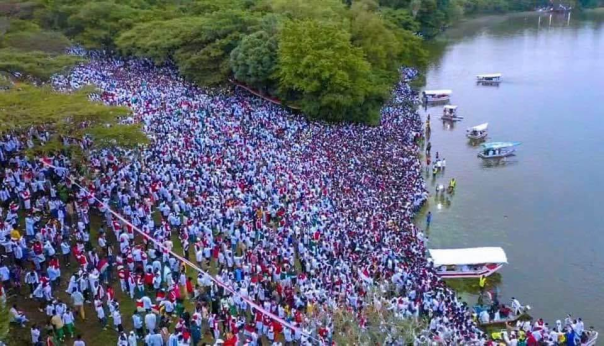
One of the most insidious effects of historical oppression is internalised inferiority—members of marginalised groups absorb the dominant society’s negative messages about their identity. Irreechaa counters this through public, mass affirmation . When millions gather in traditional white attire, singing and performing traditional dances, they are not just celebrating; they are visibly, collectively reclaiming dignity .
The festival’s impact on psychological well-being is significant. Scholars document that the joyful atmosphere counters trauma from oppression, displacement, or recent conflicts, while youth see their culture celebrated, combating marginalisation and fostering confidence . The sense of pride and self-worth cultivated at Irreechaa is particularly important for younger generations, who carry the Oromo legacy forward .
Regulation: Choreographing Healing through Music and Movement
The physical elements of Irreechaa serve a regulatory function that echoes evidence-based trauma interventions. Structured songs, rhythmic movement, and shared timing “calm bodies and synchronise emotion” . This mirrors approaches like EMDR (Eye Movement Desensitization and Reprocessing), where bilateral stimulation helps process traumatic material.
Traditional Oromo songs, known as geerarsa, have a particularly powerful healing function. One form of folksong is designed to “divert the thought of the distressed individual by persuading him through the intricate terminologies” and has “strong power of meeting the requirements or to draw attention of the listener” . Even individuals with mental illness can be drawn into the healing experience through these songs .
Scientifically, the combination of water and sound creates immersive ritual environments. Chanting reduces stress hormones and triggers dopamine, promoting transcendence . When tens of thousands move, sing, and splash in sacred waters together, the result is a form of community-wide emotional regulation that no individual therapist could replicate.
Reconnection: Rebuilding Social Bonds
Historical trauma isolates; ritual reconnects. Anthropologists have long described how public rituals generate what they call “communitas”—an intense sense of togetherness that suspends everyday hierarchies . At Irreechaa, this communitas creates “prosocial bonds that reduce isolation and renew civic agency” .
The festival’s intergenerational participation reinforces this reconnection. Elders demonstrate rituals like eebba (blessings) and traditional dances, while children and youth participate actively, creating a continuity of social bonds that bridges generations . This is not simply a pleasant experience; it is a vital antidote to the social fragmentation that oppression produces.
Irreechaa’s role in fostering inclusivity and national healing has been widely recognised, with the festival described as “a catalyst for inclusivity in Ethiopia” that “promotes a sense of togetherness and fosters a spirit of inclusivity, reminding us that despite our differences, we are all part of the same human family” .
The Water Blessing: Symbolic Washing Away
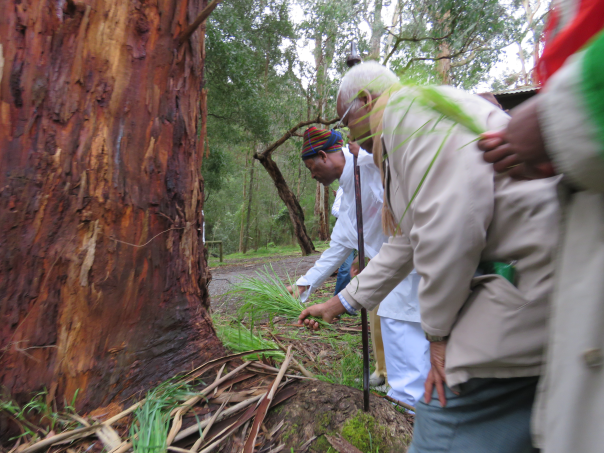
The most iconic Irreechaa ritual involves participants entering sacred water and symbolically washing away hardship, or performing libation rituals using water and fresh grass (Birraa) . This act operates on multiple levels:
- Symbolically, it represents cleansing from past trauma and preparation for renewal .
- Psychologically, it provides a physical mechanism for emotional release.
- Communally, it creates a shared experience that binds participants together.
For diaspora Oromo communities, adaptations of these water rituals in park settings or hilltops serve similar functions, connecting a community separated by geography to the healing practices of their ancestors . The Melbourne community, for example, transformed Dandenong Hill into a sacred gathering point when a traditional water body was unavailable . Planting trees alongside these symbolic rituals extends the theme of renewal to ecological consciousness .
The Shadow: When Healing Attracts Threat
The very power that makes Irreechaa therapeutic also makes it threatening to forces seeking to maintain dominance . The 2016 Bishoftu tragedy—where security forces’ crowd control triggered a stampede that killed scores—etched a deep collective trauma into Oromo memory . This event reinforced fears that peaceful cultural gatherings can be violently disrupted.
Subsequent Irreechaa celebrations have often featured heavy policing, preemptive arrests, and restrictions that rights groups criticise as disproportionate . The “securitisation” of Irreechaa reflects a fundamental reality: visible, unified collective identity threatens projects that rely on minimising that group’s visibility and power .
The festival’s security challenges are well-documented. As one analysis notes, “this pattern sustains a feedback loop: securitisation communicates distrust of Oromo mass assembly; participants experience retraumatisation; organisers double down on the festival’s identity-affirming message, which authorities then read as political mobilisation” .
A Blueprint for Collective Intervention
What can the Irreechaa protocol teach mental health practitioners, community organisers, and policymakers?
1. Collective Healing Requires Collective Ritual
Individual therapy cannot fully address historical trauma because the wound is communal. Interventions must create spaces where communities can heal together .
2. Symbolism Matters
Water, music, movement, and traditional attire are not superficial decorations; they are therapeutic vehicles that engage the whole person .
3. Intergenerational Participation Is Essential
Children and elders healing together creates continuity that individual approaches cannot achieve .
4. Regularity Builds Resilience
Irreechaa’s cyclical nature—held annually, marking seasonal change—provides ongoing, predictable support that communities can rely on .
5. Cultural Grounding Is Strength
Cultural practices adapted to trauma healing are not barriers to evidence-based approaches; they are themselves evidence-based approaches refined over generations .
Conclusion: Ritual as Quiet Repair
Irreechaa demonstrates that collective healing is not only possible but has been practised for centuries. Its protocol—recognition, regulation, and reconnection through public ritual—provides a template that could be adapted across cultures and contexts .
As scholars of historical trauma note, healing requires “shared remembrance, mourning, and culturally grounded practices that rebuild meaning and agency” . The Irreechaa protocol provides exactly that: a culturally grounded practice that rebuilds meaning and agency for millions.
The path forward, as one analysis concludes, is “not to shrink Irreechaa but to secure it: treat it as a national asset, protect rights equally, and let ritual do its quiet work of repair” . For mental health professionals, the lesson is clear: the best interventions may not be found in clinical manuals but in the living traditions of communities that have survived and thrived despite centuries of attempted erasure.
Irreechaa’s power is double-edged: the very practices that heal—public recognition, shared emotion, embodied solidarity—also unsettle projects that rely on minimising Oromo visibility. The path forward is not to shrink Irreechaa but to secure it.

The Irreechaa Protocol: How an Ancient Festival Provides a Blueprint for Collective Mental Health Intervention
What if healing from trauma is not meant to be a solitary journey but a communal ritual—one that has been practised for centuries?
In an era where mental health professionals increasingly recognise the limitations of individual therapeutic models for addressing collective trauma, a centuries-old festival offers an unexpected but profoundly effective blueprint. The Oromo people’s Irreechaa—an annual thanksgiving celebration held at sacred water bodies like Hora Arsadii (Bishoftu) and Hora Finfinnee—functions as what scholars describe as “cultural therapy”: a cyclical, collective practice that restores dignity, cohesion, and hope after generations of political marginalisation .
For a people who have endured conquest, linguistic suppression, and systematic cultural erasure, Irreechaa is far more than a seasonal celebration. It is a sophisticated, community-based mental health intervention that has sustained Oromo resilience for centuries. By examining the Irreechaa protocol—its structure, its symbols, and its therapeutic mechanisms—we may find a model for collective healing that transcends cultural boundaries.
The Foundation of Collective Trauma
The Oromo experience of historical trauma is textbook in its severity. Late-19th-century imperial expansion violently incorporated Oromo homelands into the Ethiopian Empire, followed by over a century of political and cultural subordination . Oromo institutions, including aspects of the Gadaa governance system, were constrained or suppressed, and the public status of Afaan Oromoo was systematically diminished .
This represents what scholars term “cumulative, collective wounding”—mass harms that echo across generations through families and institutions . The result is not merely individual psychological distress but a community-wide experience of internalised devaluation, social fragmentation, and disconnection.
Conventional mental health approaches—individual therapy, medication, and cognitive interventions—can address symptoms but often fail to heal the underlying collective wounds. The Irreechaa protocol offers an alternative: a community-based intervention designed to restore what was broken collectively.
The Therapeutic Structure of Irreechaa
Irreechaa’s choreography follows a remarkably consistent pattern: pilgrimage to sacred water, symbolic washing, public prayer, group singing and dancing, and the leadership of elders . This structure is not accidental; it aligns precisely with what anthropologists identify as the key elements of “ritual repair.”
Recognition: Countering Internalised Devaluation
One of the most insidious effects of historical oppression is internalised inferiority—members of marginalised groups absorb the dominant society’s negative messages about their identity. Irreechaa counters this through public, mass affirmation . When millions gather in traditional white attire, singing Dhaanto, and performing the Shaggooyee dance, they are not just celebrating; they are visibly, collectively reclaiming dignity .
For Oromo youth—particularly those in the diaspora—this public celebration of their culture combats marginalisation and fosters confidence . It tells them that their identity is not something to hide but something to celebrate with pride.
Regulation: Choreographing Healing
The physical elements of Irreechaa serve a regulatory function that echoes evidence-based trauma interventions. Structured songs, rhythmic movement, and shared timing “calm bodies and synchronise emotion” . This mirrors approaches like EMDR (Eye Movement Desensitization and Reprocessing), where bilateral stimulation helps process traumatic material.
Psychologically, this is “psycho-bio-social regulation” . The body and mind work together to process emotional material, with collective synchrony amplifying the therapeutic effect. When tens of thousands move and sing together, the result is a form of community-wide emotional regulation that no individual therapist could replicate.
Reconnection: Rebuilding Social Bonds
Historical trauma isolates; ritual reconnects. Anthropologists have long described how public rituals generate what they call “communitas”—an intense sense of togetherness that suspends everyday hierarchies . At Irreechaa, this communitas creates “prosocial bonds that reduce isolation and renew civic agency” .
The festival’s multi-generational participation reinforces this reconnection . Elders demonstrate rituals like the Eebba (blessings) and traditional dances , while children and youth participate actively, creating a continuity of social bonds that bridges generations. This is not simply a pleasant experience; it is a vital antidote to the social fragmentation that oppression produces.
The Water Blessing: Symbolic Washing Away
The most iconic Irreechaa ritual involves participants entering sacred water and symbolically washing away hardship . This act operates on multiple levels simultaneously:
Symbolically, it represents cleansing from past trauma and preparation for renewal. Psychologically, it provides a physical mechanism for emotional release. Communally, it creates a shared experience that binds participants together.
For diaspora Oromo, adaptations of this water ritual in park settings serve similar functions, connecting a community separated by geography to the healing practices of their ancestors . Planting trees alongside these symbolic water rituals extends the theme of renewal to ecological consciousness .
The Shadow: When Healing Attracts Threat
The very power that makes Irreechaa therapeutic also makes it threatening to forces seeking to maintain dominance. The 2016 Bishoftu tragedy—where security forces’ crowd control triggered a stampede that killed scores—etched a deep collective trauma into Oromo memory . This event reinforced fears that peaceful cultural gatherings can be violently disrupted.
Subsequent Irreechaa celebrations have often featured heavy policing, preemptive arrests, and restrictions that rights groups criticise as disproportionate . The “securitisation” of Irreechaa reflects a fundamental reality: visible, unified collective identity threatens projects that rely on minimising that group’s visibility and power .
Yet the festival continues to grow. In 2025, tens of thousands gathered in Addis Ababa and Bishoftu, with Prime Minister Abiy Ahmed addressing the crowd . The celebration has become a complex space where cultural resurgence, political symbolism, and community grievance intersect .
A Blueprint for Collective Intervention
What can the Irreechaa protocol teach mental health practitioners, community organisers, and policymakers?
1. Collective Healing Requires Collective Ritual
Individual therapy cannot fully address historical trauma because the wound is communal. Interventions must create spaces where communities can heal together.
2. Symbolism Matters
Water, music, movement, and traditional attire are not superficial decorations; they are therapeutic vehicles that engage the whole person.
3. Intergenerational Participation Is Essential
Children and elders healing together creates continuity that individual approaches cannot achieve.
4. Regularity Builds Resilience
Irreechaa’s cyclical nature—held annually, marking seasonal change—provides ongoing, predictable support.
5. Cultural Grounding Is Strength
Cultural practices adapted to trauma healing are not barriers to evidence-based approaches; they are themselves evidence-based approaches refined over generations.
Conclusion
Irreechaa demonstrates that collective healing is not only possible but has been practised for centuries. Its protocol—recognition, regulation, and reconnection through public ritual—provides a template that could be adapted across cultures and contexts.
As scholars of historical trauma note, healing requires “shared remembrance, mourning, and culturally grounded practices that rebuild meaning and agency” . The Irreechaa protocol provides exactly that: a culturally grounded practice that rebuilds meaning and agency for millions.
For mental health professionals, the lesson is clear: the best interventions may not be found in clinical manuals but in the living traditions of communities that have survived and thrived despite centuries of attempted erasure. The Irreechaa protocol is not just a festival; it is a toolkit for collective mental health, refined over generations and proven effective by the very survival of the Oromo people.
“Irreechaa’s power is double-edged: the very practices that heal—public recognition, shared emotion, embodied solidarity—also unsettle projects that rely on minimising Oromo visibility. The path forward is not to shrink Irreechaa but to secure it: treat it as a national asset, protect rights equally, and let ritual do its quiet work of repair” .

The Two Humiliations of TPLF: A Reflection on Power, Pride, and the Oromo Awakening
In the shifting sands of Ethiopian politics, the Tigrayan People’s Liberation Front has suffered wounds that time has not healed—and the Oromo people remain the central characters in this unfolding drama
In the annals of Ethiopian political history, few organizations have risen as high or fallen as dramatically as the Tigrayan People’s Liberation Front (TPLF). For nearly three decades, it dominated the political landscape of the Ethiopian Empire, ruling with an iron fist while projecting an image of revolutionary legitimacy. Yet today, the TPLF finds itself nursing wounds that history will not allow it to forget—wounds inflicted not by foreign enemies but by the very people it sought to subjugate.
The reflection of Abba Ebba offers a searing analysis of what he calls the “two humiliations” of the TPLF—humiliations that, in his view, are inextricably linked to the Oromo people and their awakening. These are not merely military defeats but moral and political reckonings that the TPLF has been unable to accept or process.
The First Humiliation: The Fall of Mekelle
“For 27 years, like the saying ‘the hare’s skin cannot cover the elephant,’ the TPLF tried to stretch its hide over an empire too vast for its frame. In the final hour, it was the sons and daughters of Oromo—the Qeerroo and Qarree—who stood before tanks with empty hands and brought down the regime. They made the TPLF retreat to Mekelle, dragging its ill-gotten wealth behind it. This is the first humiliation that remains unhealed to this day.”
The 2018 Oromo protests were not merely a political uprising—they were a seismic shift in the Ethiopian political landscape. The Oromo youth, known as the Qeerroo and Qarree, rose in a wave of popular resistance that the TPLF could not contain. The protests were decentralized, leaderless, and yet remarkably unified in their demands for justice, equality, and an end to the TPLF’s domination .
The TPLF, which had ruled Ethiopia for 27 years, was forced to abandon power and retreat to its northern stronghold of Mekelle. This was not a defeat by a rival military force but a collapse in the face of unarmed civilian resistance. The humiliation was profound and, according to Abba Ebba, has never been truly accepted by the TPLF leadership.
“The TPLF was defeated by the popular wave that ignited from one end of Oromia to the other—a wave that was part of the Oromo liberation struggle. This is an undeniable truth. The Oromo is an elephant; when it tramples, it crushes. The TPLF was forced to swallow this reality, whether it liked it or not.”
The Second Humiliation: The Retreat to Mekelle
The second humiliation followed the first. After initially retreating to Mekelle, the TPLF sought to reassert its influence on the national stage. It formed alliances with various forces—including some within the Amhara political spectrum—and attempted to challenge the Prosperity Party government.
However, this effort ended in another defeat. The TPLF was forced to retreat once again to Mekelle, leaving behind its ambitions and its allies, having consumed itself in the fires it had ignited. This second retreat, Abba Ebba argues, is the other humiliation that remains raw and unprocessed .
“When the TPLF was about to return to Addis Ababa, it found itself burned by the fire it had started. It was forced to retreat to Mekelle—another humiliation that has not faded.”
The Unlearned Lesson
Despite these humiliations, the TPLF has not learned its lesson. Instead, it continues to prepare for a new war, this time under the cover of the Prosperity Party government’s own challenges. After four years of uninterrupted military preparation, the TPLF is once again positioning itself for conflict .
Abba Ebba warns that this preparation is driven by a desire for revenge—a desire to settle scores with the Oromo people who, in the TPLF’s view, are responsible for its humiliations. “Under the cover of the Prosperity Party government, the TPLF is seeking to take revenge on our people for its past humiliations.”
The Unnecessary Price
Abba Ebba poses a pointed question: why must the Oromo people pay the price for the TPLF’s ambitions? Why must Oromia become a battlefield for conflicts that are not of its making?
“The TPLF did not need to travel 600 kilometres into the heart of the country, into the breadbasket of Ethiopia—Oromia. It could have declared Eritrea-style independence when the Derg fell, and it could do so today. All it needs is to settle its accounts and secure the consent of its people.”
The TPLF’s refusal to accept defeat has left the Oromo people caught between multiple threats. On one hand, there is the TPLF’s continued military preparations and its desire for revenge. On the other, there are forces like Fano and other armed groups that have also targeted Oromo communities.
The Oromo Elite’s Responsibility
Abba Ebba also points a finger at the Oromo elite, accusing them of failing to fulfill their responsibilities. The Oromo people, who have paid the heaviest price in the struggle against the Ethiopian Empire, now face a dual threat: the TPLF’s revanchism and the Oromo elite’s failure to protect the gains of the struggle.
“The Oromo elite has failed to protect the historic victory achieved by the Oromo popular struggle. It has also failed to protect the constitutional right to self-determination—the right to democracy, justice, and self-rule—from being undermined.”
This failure, Abba Ebba argues, has allowed the Oromo people to be marginalized and treated with suspicion by their neighbours. The Oromo elite’s failure to step up has left the people vulnerable to manipulation and exclusion.
A Call to Vigilance
Abba Ebba concludes with a call to the Oromo people:
“Our people must prepare themselves for the danger of the approaching war and actively monitor the situation. The war that is being prepared—whether by TPLF or by the Fano forces—poses a threat to the next generation of Oromo. Decisive action must be taken to find a lasting solution.”
He insists that Oromia must not become a doormat for the ambitions of others. “Oromia will not be a doormat for Fano or the TPLF! With its determined sons and daughters, it will stand, honoured and respected, and it will endure forever.”
A Historical Warning
The reflection of Abba Ebba is not merely a commentary on contemporary politics—it is a historical warning. It reminds the Oromo people that the TPLF, despite its humiliations, has not abandoned its ambitions. The two humiliations remain unhealed, and the TPLF continues to seek revenge.
But the reflection also carries a message of hope and resolve. The Oromo people, having risen once, can rise again. The elephant has crushed its enemies before, and it can do so again.
Conclusion
The two humiliations of the TPLF are more than military or political defeats—they are symbolic wounds that the organization has not been able to accept. The TPLF’s refusal to learn from its past has left the Oromo people facing a renewed threat. But the Oromo people, having already demonstrated their power, are not powerless.
As Abba Ebba declares: “Oromia will not be a doormat for Fano or the TPLF! With its determined sons and daughters, it will stand, honoured and respected, and it will endure forever.”
The elephant has crushed its enemies before, and it can do so again.

The Root of Seven Generations: Marriage, Bloodlines, and the Oromo Law of Continuity

By Dhabessa Wakjira
—
The fire crackled low in the center of the mana (homestead). Outside, the night wind carried the scent of wild sage and distant rain. Inside, a circle of elders sat in contemplative silence, their white turbans glowing faintly in the ember-light. Before them stood a young man—tall, strong, and visibly nervous. He had come to ask for a bride.
But before any blessing could be spoken, before any milk could be shared, the elders would ask the question that has governed Oromo marriage since time immemorial:
“Sanyiin kee eenyu? Hiddi kee eessa taa’e?” — “Who is your lineage? Where does your root lie?”
For in Oromo culture, marriage is not merely the joining of two hearts. It is the grafting of two ancestral trees. And if those trees are too closely related, the fruit will be weak. If they are too distant, the bond will lack the warmth of shared blood. The balance is found in a sacred number: seven.
—
The Mature Son and the Ripened Daughter
The ancient decree, passed from grandfather to grandson, begins with a command of readiness:
“Ilmi gahe haa fuudhu; intalli geesses haa heerumtu.”
“Let the son who has matured take a wife; let the daughter who has ripened be given in marriage.”
In the highlands of Oromia, these words are not mere suggestions. They are biological and social imperatives. Gahe—maturity—signifies a young man who has passed through the crucible of the Gadaa grades, who has proven his courage and earned the calluses of hard labour. Geesse—ripeness—speaks of a daughter who has completed her rites of passage, who understands the weight of motherhood and the dignity of homemaking.
This is not about arbitrary age. It is about readiness of body, mind, and spirit. The Oromo understand that strong families begin with strong individuals. A boy who marries before he can defend a homestead invites disaster. A girl who bears children before her hips have widened risks her life. The elders watch, and they wait. They do not rush the river, and they do not rush the harvest.
—
The Sacred Distance: Seven Generations
Then comes the law that sets Oromo marriage apart—a precept so deeply embedded in the culture that it rivals the Gadaa itself in its authority:
“Dhalooti walfuudhan, sanyii dhaloota torba booda haa ta’u.”
“Let the lineages intermarry only after [the separation of] seven generations.”
This is the exogamy rule—the absolute prohibition against marrying anyone within seven paternal generations of one’s own clan. The Oromo do not trace this to modern genetics; they arrived at it through centuries of observation. They saw that when cousins married, children were often sickly. When distant clans intermarried, children were robust. The earth taught them what science would later confirm: genetic diversity creates strength.
But this rule is not merely biological—it is deeply social. Seven generations represent a clean break. By the time seven fathers have passed, the ancestral spirits of the two families have “forgotten” their closeness. The bloodlines have cooled. The sanyii (seed) can be safely mixed without angering the ancestors or weakening the clan.
To violate this law is to commit akka hin taane—the unforgivable. It brings drought, stillbirth, and the displeasure of Waaqa (God). The Oromo elders are the gatekeepers of this sacred distance, reciting genealogies that stretch back two hundred years to ensure that the young couple stands on opposite branches of the family tree.
—
The Root That Must Not Be Severed
But the Oromo do not marry merely to create healthy children. They marry to continue the root itself:
“Gaa’elli karaa itti hiddi dhalootaa itti fufu.”
“Marriage is the path by which the root of the generations continues.”
Imagine an ancient sycamore. Its branches reach for the sky, but its strength lies beneath the earth. Each child born is a new branch; each generation is a new layer of rings. If the tree stops producing new shoots, it dies. Similarly, the Oromo believe that a family line that ceases to reproduce ceases to exist—not just physically, but spiritually. The ancestors who came before, the hundreds who tilled the soil and fought the wars and sang the songs, rely on the living to keep their names alive.
Marriage, therefore, is not a romantic luxury. It is a sacred debt. The young man who takes a wife is not just seeking companionship—he is paying back the ancestors who gave him life. The young woman who bears children is not just fulfilling a social role—she is threading the needle of time, sewing the past to the future.
When an Oromo couple stands before the elders, they are not just looking at each other. They are looking backward at the seven generations who made them, and forward at the seven generations who will come from them.
—
The Final Seal: Blessings and Abundance
And so, when all the genealogies are recited, when the seven-generation gap is confirmed, when the bride-price is negotiated and the Qaallu (spiritual leader) has offered the libation of milk to Waaqa, the elders rise. They lift their right hands to the sky. They speak the final, triumphant words:
“Eebbaa fi marabbaan haa raawwatu.”
“Let it be completed with blessings and abundance.”
Eebbaa—blessing. The approval of God, the smile of the ancestors, the goodwill of the community.
Marabbaa—abundance. Not just wealth, but fertility of the womb, richness of the soil, fatness of the cattle, and joy in the household.
These are not empty wishes. In the days that follow the wedding, the community will bring gifts of butter, honey, and grain. The couple will eat together from a single gibira (wooden platter), symbolising their shared fate. The elders will return to their homesteads, satisfied that the lineage is safe for another generation.
—
A Living Law
Today, as globalisation and urbanisation reshape Oromo society, some young people question the old rules. “Seven generations is too long,” some say. “We are modern now. We follow our hearts, not a counting cord.”
But the elders smile. They have heard this before. And they know that a river may change its course, but it never forgets its source. The rule of seven generations is not a chain that binds—it is a shield that protects. It ensures that the Oromo people remain strong, healthy, and connected to their roots.
In the diaspora, too, the Oromo carry this law. They trace their lineages through apps and family elders, seeking out potential partners from clans far removed from their own. They understand that marrying within the bloodline invites not just genetic risk, but spiritual fragmentation. They know that their strength lies in diversity, their continuity lies in discipline, and their future lies in their past.
—
The Eternal Cycle
As the fire dies down and the young man departs with the elders’ blessing, he carries more than a wife’s name on his lips. He carries the weight of a thousand years. He carries the hope of his ancestors that he will not fail. He carries the DNA of seven generations—and the responsibility to ensure that the seventh generation after him will carry his.
Because in Oromo tradition, a person is never truly an individual. They are a living link in an endless chain. And marriage is the forge where that chain is reforged, stronger with every generation.
“Dhaloonni jajjaboo akka dhalataniif…” — “So that strong offspring may be born…”
The words echo across the valley, carried by the wind, whispered by the grass, repeated by the elders. They are a prayer. They are a law. They are the heartbeat of a people who understand that love is beautiful, but lineage is sacred; that romance is sweet, but the root is eternal.
And so, generation upon generation, the Oromo marry—not just for today, but for the seven tomorrows yet to come.

The Unseen Work and the Unyielding Bloom: How the Oromo Struggle Flourishes Beyond the Enemy’s Gaze

By Daandii Ragabaa
While the enemies of Oromia may have closed their eyes and convinced themselves that the OLF/ABO had faded into irrelevance, the ground beneath their feet has been shifting all along. The struggle for Oromo liberation has never been a spectacle performed for the approval of adversaries; it is a quiet, relentless tide that reshapes the landscape even when the world is not watching. Today, as the movement reflects on its journey, one truth stands undeniable: the work has continued, the fruits have multiplied, and the foundation of Oromo nationhood has never been stronger.
The Myth of Stagnation
There is a dangerous assumption that silence equals surrender. For years, the detractors of Oromo freedom have pointed to periods of tactical recalibration and claimed that the cause was dead. They were wrong. As the reflection reminds us, “Diinonni Oromoo otuu hin beekiin hojiilee ABO hojjataa ture”—the enemies were unaware of the work being done. The OLF/ABO did not vanish; it adapted. It built. It planted seeds that are now breaking through the concrete of oppression.
The struggle is not a straight line; it is a winding river that carves canyons over time. There have been moments of setback, times when the fighters themselves stumbled into unfamiliar terrain. “Yeroo garii qabsaa’oti waan muuxannoo itti hin qabneef danqamuun ifaa dha.” To be hindered, to face the unknown, is a natural and illuminating part of any liberation journey. But the reflection makes a critical distinction: “Danqamuun garuu qabsoo irraa yeroof duubatti deebi’uu malee qabsoo dhiisuu jechuu miti.”
Setbacks are not stop signs; they are detours. Retreating for a moment to assess, regroup, and strike with greater intelligence is not defeat—it is the hallmark of a movement that intends to win, not just to survive.
The Tangible Fruits of an Unyielding Will
While critics focused on imagined weaknesses, the Oromo struggle was quietly accumulating victories that cannot be erased. The reflection catalogs these achievements with a quiet, earned pride:
Oromia has risen. No longer can the oppressor pretend that Oromia is an abstraction. It is a recognized entity, a homeland with a name that commands respect and a history that demands justice. “Oromiyaan bobaa diinaa jalaa bahee beekamee jira.” The nation has emerged from under the shadow of denial into the light of international and domestic recognition.
The language has taken its rightful place. Afaan Oromoo, once relegated to the margins of private life, now stands tall as a language of instruction and government work. “Afaan Oromoo afaan barnootaa fi hojii mootummaa ta’eera.” This is not a small concession; it is a revolutionary shift. When a people’s tongue becomes the language of the classroom and the office, the soul of that people is officially acknowledged.
The script lives. “Qubeen Afaan Oromoo kan Afaan Oromoo ittiin barsiisan ta’eera.” The Oromo alphabet—once banned, once erased—is now actively used to teach children the beauty of their own heritage. Alphabetization is liberation. To read in one’s mother tongue is to reclaim the mind from colonial subjugation.
The flag waves undefeated. “Alaabaan Oromoo mallattoo diddaa fi bilisummaa qabsoo Oromoo ta’ee beekamee jira.” The Oromo flag is no longer a secret symbol of insurgency; it is a recognized emblem of resistance and freedom. It flies at gatherings, in diaspora halls, and in the hearts of millions. It is the colors of a nation that refuses to be renamed.
The Bloom of the Seed
The reflection speaks of a beautiful and profound transformation: “Akkanaan sanyiin bilisummaa facaafamee daraaree hundee sabboonummaa Oromoo fi Oromummaa ta’aa jira.”
The seeds of freedom, scattered across the difficult soil of the struggle, are now blossoming. They are taking root in the very foundations of Oromo identity and nationhood. This is not a fleeting victory; it is a generational shift. The Oromo people are witnessing the flowering of what their ancestors sacrificed for. The identity is no longer just a memory—it is a living, breathing reality that grows stronger with each passing day.
The Sacred Duty of Continuation
Yet, the reflection is not a song of complacency. It carries a sobering and determined promise: “Kun haga hireen murteeffannaa ummata Oromoo dhugoomutti jabaatee kan itti fufu ta’a.”
This journey will continue—vigorously, unapologetically, and with increasing momentum—until the fundamental rights of the Oromo people are fully realized. Until self-determination is not a demand but a fact. Until the land of Oromia is governed by the will of its own children.
The current chapter of the struggle is not an anomaly; it is the direct product of that unyielding resolve. “Waanti amna qabsoo keessatti argaa jirrus dhugaadhuma kana.” What we see today is the pure, unadulterated truth of a people who refused to kneel.
A Legacy of Resistance, A Future of Justice
“Qabsoon Bilisummaa fi haqa Oromoo kabachiisuuf yoomiyyuu jabatee itti fufa; hireen murteeffannaa ummata Oromoof godhamus kan wareegama keenyaan dhugoomuu dha.”
The struggle to honor the freedom and justice of Oromia will continue with unwavering strength—forever and always. The rights that the Oromo people are fighting for are not gifts to be begged for; they are inherent truths to be realized. And the fulfillment of those rights is not merely a political ambition; it is a sacred trust, a responsibility that falls upon the shoulders of every Oromo, whether in the homeland or in the far reaches of the diaspora.
The enemies may have looked away. They may have assumed the work had stopped. But the Oromo people are digging deeper than ever, planting seeds that will outlast the oppressors, and building a nation that will stand for millennia.
The unseen work is now visible. The planted seeds are blooming. And the struggle, tested by fire and tempered by patience, marches ever forward—determined, consistent, and invincible.
IUOf!
The Political Boat Called “Tsimdo”: Where Are the Far-Right and Far-Left Extremists Steering It?

In the strange theater of modern politics, strange bedfellows emerge—temporary alliances born not of shared vision but of shared hatred
By Ibsaa Nagawoo
In the annals of modern political history, few phenomena are as remarkable—and as dangerous—as the spectacle of ideological opposites joining forces against a common enemy. The far-right and far-left, whose philosophies on economics, governance, and the role of the state stand in irreconcilable opposition, sometimes find themselves on the same side of a political struggle. Their alliance, however, is not built on shared principles or a common vision for the future. It is built on a single, fragile foundation: shared enmity.
This is the political boat called “Tsimdo” (or Cimdii)—a vessel that carries strange passengers, navigates treacherous waters, and ultimately leads nowhere good for anyone aboard.
The Strange Alliance
“One of the surprising phenomena in modern world politics is the emergence of forces that fundamentally oppose each other in their political philosophy, economic policies, and views on the role of government, yet temporarily unite against a common enemy.”
This is not a new phenomenon, but it is one that has become increasingly visible in recent years. The left and right, traditionally locked in ideological struggle, discover that their hatred for a particular leader, government, or political direction outweighs their differences. They form a temporary alliance—an “unholy coalition” that promises to overthrow the common enemy but offers no coherent vision for what should come after.
“However, such alliances are often short-lived because they are based not on shared vision and common political principles, but on shared animosity.”
This is the fatal flaw of these coalitions. They are unions of convenience, not conviction. They can tear down, but they cannot build. They can oppose, but they cannot propose. They can unite in hatred, but they cannot govern in peace.
Ethiopia’s Own Experience
“Both world history and Ethiopia’s political history provide many examples that confirm this.”
In recent years, Ethiopia has witnessed this phenomenon in stark relief. The conflict between the federal government and the TPLF, and the alliances that formed around it, created some of the most improbable political marriages in the country’s history.
“In Ethiopia, this trend has been clearly seen in recent years. One can observe and analyze the strange political alliances formed during the TPLF provocation, the war between the Federal Government of Ethiopia and the TPLF, and the resulting unconventional political marriages.”
Groups that had spent decades opposing each other—ideologically, politically, and sometimes militarily—found themselves on the same side of a conflict. The shared goal of removing the TPLF from power created a temporary unity that papered over fundamental disagreements about Ethiopia’s political future.
The Unholy Alliance Against Oromo Gains
“The far-right and far-left extremist forces that shed crocodile tears in the name of the Oromo people, the Amhara, the Tigray, and the Ethiopian people—no matter how strong their unholy alliance becomes—the Oromo people will not easily surrender the political, economic, and legal rights they have won through long struggle and years of sacrifice.”
This is the central warning of the reflection: the Oromo people, who have fought for generations to secure their rights, are not about to hand them over to an alliance of convenience—whether that alliance claims to speak for the Oromo or not.
“The matter has become one of survival. And the victory achieved is not something that can be stolen through temporary political pressure or false propaganda.”
The Oromo struggle is not a passing phase or a fleeting moment of political mobilization. It is a deep, sustained, and principled movement that has survived decades of repression, co-optation, and marginalization. It will not be undone by an alliance whose only common ground is opposition to Oromo self-determination.
The Blindness of Some Oromo
“As the struggle of the Oromo people within Ethiopia has been strengthening and registering some victories, some Oromo individuals and groups who could not see—or refused to believe—that organized anti-Oromo sentiment had been building for a long time, have failed to understand that the exaggerated political hatred, character assassination, and coordinated propaganda campaign against the reformist Prime Minister Dr. Abiy Ahmed is ultimately not just about Dr. Abiy but about the Oromo as a whole.”
This is a painful truth that some Oromo have been reluctant to face. The campaign against Prime Minister Abiy Ahmed is not merely a personal vendetta against one individual. It is an attack on Oromo leadership, Oromo gains, and Oromo aspirations. The fact that some Oromo have joined in this campaign, or remained silent in the face of it, is a betrayal of the Oromo cause.
“Only they themselves can answer why this happened.”
The reflection leaves this question hanging in the air, inviting self-examination. Why have some Oromo joined forces with those who fundamentally oppose Oromo rights? Why have some remained silent when anti-Oromo rhetoric has reached dangerous levels? Why have some failed to see that the attack on one Oromo leader is an attack on all Oromo?
The Washington Statement and Its Aftermath
“There is one thing we all cannot forget. The statement by the international Fano ‘intellectuals’ that was read in Washington contained dangerous rhetoric: ‘We will return the Gallas to Madagascar.’ This is still being echoed by Mahayimannu Fano. This hate speech did not remain merely words—many believe it has found expression in acts of violence against innocent Oromo in various places, especially today in East Wollega and Dera.”
This is a chilling reminder of the stakes involved. The anti-Oromo rhetoric that has been circulating is not harmless—it has real-world consequences. Innocent Oromo people have been targeted, attacked, and killed. The words of hate have become acts of violence.
“The sad part is that some forces who call themselves ‘freedom fighters’ have silently covered up or overlooked this issue. This silence itself carries a major political message.”
The silence of those who claim to fight for freedom is deafening. When the self-proclaimed champions of liberation refuse to condemn violence against Oromo, they reveal their true priorities. Their silence is not neutrality—it is complicity.
The Poisoned Boat
“Some Oromo politicians and activists, having lost their own political direction, have found themselves unwittingly in the same political boat (Tsimbo) as Amhara extremist unitarist far-right extremists. Since this act conflicts with the common interest and political will of the Oromo people, it should be remembered as a political lesson and historical warning for generations.”
This is perhaps the most pointed criticism in the reflection: some Oromo have lost their way. They have abandoned the principles of Oromo liberation and joined forces with those who have historically opposed—and continue to oppose—Oromo rights.
“Any individual or political organization that organizes in the name of Oromo must distance itself from political ideologies, philosophies, and economic policies that divide the Oromo people. Any idea presented as a ‘political reality’ that weakens Oromo unity, if it conflicts with the interests of Oromia, Ethiopia, and the Oromo nation, should not be accepted.”
This is a clear call to Oromo political actors: know who you are, know what you stand for, and know who your true allies and enemies are. The lines must be drawn clearly. There is no room for ambiguity when the survival of the Oromo people is at stake.
A Call to Abandon the Boat
“Therefore, if you find yourself in this propaganda of organized anti-Oromo hatred, you should distance yourself from this destructive political boat (Tsimbo). This boat does not benefit the Oromo people—it represents hatred, division, and destructive ideologies. It is not too late to distance yourself from this extremist political direction; the beneficial thing is to stop it.”
This is a call to choose. A call to abandon the alliance of hatred and return to the principles of justice, self-determination, and unity. A call to recognize that the path of extremism leads nowhere good.
“It is not too late to distance yourself from this extremist political direction; the beneficial thing is to stop it.”
There is still time to turn back. There is still time to choose the path of dialogue, mutual respect, and peaceful political competition. There is still time to build rather than destroy.
The Role of External Forces
“Finally, this extremist political and war ‘Tsimbo’ is not just an internal problem—it can also be a tool for the interests and proxy wars of external forces, and it is targeted as such. Therefore, it does not bring lasting benefit to the Oromo, the Amhara, the Tigray, or other nations and nationalities, nor to the Ethiopian people in general.”
The reflection recognizes that the forces driving the “Tsimbo” are not purely domestic. External actors have their own interests in Ethiopia’s political landscape. They seek to exploit divisions, weaken the country, and advance their own agendas. The Tsimbo serves their purposes, not the purposes of the Ethiopian people.
“Therefore, I believe that abandoning this politics of hatred, division, and extremism and returning to dialogue, trust, and peaceful political competition is the beneficial path for everyone.”
This is a vision of hope: a return to politics as a means of resolving differences, not a weapon for destroying enemies. A return to the belief that dialogue and trust are possible. A return to the conviction that Ethiopia’s future will be built, not destroyed.
The Way Forward
“Ethiopia’s future destiny will not be found in an alliance based on hatred. The country’s lasting peace, stability, and democratic progress can only be ensured when they are based on constitutional supremacy, the rule of law, mutual respect, genuine democratic dialogue, and a shared national vision.”
This is the heart of the message: the future belongs not to those who hate, but to those who build. Not to those who divide, but to those who unite. Not to those who destroy, but to those who create.
“One truth, however, is clear: an alliance based on hatred may change a government, but it cannot build a country.”
This is a profound insight. The Tsimbo may succeed in its immediate objective—the removal of a particular leader or the overthrow of a particular government. But what then? What vision does it offer for the future? What principles will guide it? What foundation will it build upon?
The answer is: none. An alliance based solely on hatred can only destroy; it cannot create. It can tear down; it cannot build. It can oppose; it cannot govern.
Conclusion: A Choice to Make
The political boat called Tsimbo is a dangerous vessel. It carries those who have lost their way, those who have confused hatred for principle, those who have abandoned the struggle for justice in favor of the easier path of revenge.
But there is another path. The path of dialogue, trust, and peaceful political competition. The path that builds rather than destroys. The path that unites rather than divides. The path that leads to lasting peace, stability, and democracy.
The choice is clear. The time for choosing is now.
“An alliance based on hatred may change a government, but it cannot build a country.”
Let us choose to build. Let us choose to unite. Let us choose the path of peace, justice, and shared national vision.
May we all make the right choice.
====
*The above feature article is based on the reflection of Ibsaa Nagawoo






