Category Archives: Grief Support

Navigating Loss: A Guide to Grief Support for Oromo Families in Victoria
By Staff Reporter
MELBOURNE, VICTORIA – The loss of a loved one is always difficult. For members of the Oromo community living in Victoria, that difficulty is often deepened by a profound sense of isolation. Families may feel far from their homeland, uncertain of the local systems, and unsure where to turn for help .
Yet, no one needs to navigate this time alone. Whether it is practical assistance with funeral arrangements, financial support, or emotional comfort, there are organisations and services ready to help.
Finding Community: The Australian Oromo Community Association in Victoria (AOCAV)
One of the most vital resources for the Oromo community in Victoria is the Australian Oromo Community Association in Victoria Inc. (AOCAV) . Founded in 1984 by the first Oromo pioneers who migrated to Australia as refugees, the association has served as a cornerstone of support for the Oromo community .
The association understands the significance of traditional rituals and rites of passage, including those surrounding death . When a family member passes, reaching out to AOCAV can provide:
- Cultural guidance – assistance in ensuring that funeral arrangements respect Oromo customs and traditions
- Community support – mobilising the local community to offer practical help and emotional comfort
- Referrals – directing families to funeral directors and other relevant services
Practical Steps: Organising a Funeral in Victoria
When a death occurs, one of the first practical steps is to contact a funeral director . Several funeral directors in Melbourne have experience serving Victoria’s diverse communities.
One prominent provider is Le Pine Funerals, with over 130 years of service in Victoria. They are committed to serving the state’s “diverse and harmonious community, catering to all cultures, religions and traditions” and have a multilingual team ready to assist in arranging funerals in over 140 languages . For families seeking services that specifically cater to multicultural communities, Le Pine Asian offers personalised funeral services with experienced multilingual staff who can accommodate individual wishes and cultural requirements .
Other trusted funeral providers in Victoria include Tobin Brothers Funerals, White Lady Funerals, and Simplicity Funerals .
When choosing a funeral director, it is helpful to discuss cultural or religious obligations. For Oromo families, this might include the desire for a burial as opposed to a cremation, specific rituals, or the need for a service conducted in the Oromo language or with an interpreter .
Financial Assistance and Practical Support
Funerals can be expensive . However, there are avenues for financial support.
Centrelink Payments – Services Australia provides several payments to help people after the death of a loved one . Depending on your situation, you may be eligible for a Bereavement Payment, a Pension Bonus Bereavement Payment, or bereavement assistance for carers .
If a person passes away without family or the means to pay for a funeral, the Victorian State Government has arrangements in place, with the Department of Health and Human Services potentially contributing .
Grief and Emotional Support
Beyond the practicalities, the emotional toll of losing a loved one is immense. Several national and state-based organisations offer free grief counselling and support.
- Lifeline – 24-hour crisis support: 13 11 14
- Australian Centre for Grief and Bereavement – Provides information on grief support and offers counselling services: 1800 642 066
- Grief Australia – Offers free bereavement counselling and support groups for all Victorians at their Mulgrave office and various locations, as well as telehealth services
- Grief Line – Telephone or online counselling: 1300 845 745
- Mensline Australia – Telephone support specifically for men: 1300 78 99 78
For those who have experienced the loss of a baby or child, Red Nose Australia provides specialist bereavement counselling and support free of charge, 24 hours a day, 7 days a week .
Wombat’s Wish is a grassroots not-for-profit organisation based in Clifton Springs that offers free therapeutic weekend grief programs and one-to-one counselling for children and young people who have lost a parent or carer .
Real Path Health and Wellbeing in Werribee specialises in trauma-informed counselling and grief and loss support for individuals and families, including multicultural communities .
Additionally, spiritual and pastoral support from faith communities is often a vital source of comfort for many in the Oromo community .
Specialised Support for CALD Communities
The Victorian Foundation for Survivors of Torture Inc. (Foundation House) has received substantial funding to provide the Program of Assistance for Survivors of Torture and Trauma, which supports people from CALD backgrounds who have experienced trauma, including grief related to displacement and loss .
A Step-by-Step Guide: What to Do
If you are an Oromo family member in Victoria, here are the steps to take :
- Connect with your community – Reach out to the Australian Oromo Community Association in Victoria (AOCAV). They can provide cultural and practical support.
- Contact a funeral director – Choose a funeral director that respects your culture, such as Le Pine Funerals, which has experience with diverse communities. Discuss your needs: burial, specific rituals, and the need for an interpreter.
- Inform Centrelink and seek financial assistance – Notify Services Australia by calling 132 300 and ask about the Bereavement Payment and other benefits.
- Seek emotional support – Call a grief support line. Services like Lifeline (13 11 14) and the Australian Centre for Grief and Bereavement (1800 642 066) are available and confidential.
Key Contacts
| Service | Contact | Description |
|---|---|---|
| Australian Oromo Community Association in Victoria | P.O. Box 2123, Footscray, VIC 3011 | Cultural and community support network |
| Centrelink Bereavement Line | 132 300 | Financial assistance and payments after a death |
| Lifeline | 13 11 14 | 24-hour crisis support |
| Australian Centre for Grief and Bereavement | 1800 642 066 | Grief counselling and information |
| Grief Australia | Free bereavement counselling and support groups | |
| Red Nose Australia | 24/7 Bereavement Support Line | Specialist support for loss of a baby or child |
| Wombat’s Wish | Free grief programs for children who have lost a parent | |
| Real Path Health and Wellbeing | Werribee | Trauma-informed grief counselling |
| Le Pine Funerals | (03) 8587 5700 | Funeral services for diverse communities |
Sources: Advocacy for Oromia, Australian Oromo Community Association in Victoria, Grief Australia, Lifeline, Red Nose Australia, Australian Centre for Grief and Bereavement.
Disclaimer: This article provides a general guide only. Readers should seek professional advice for their own particular situations.
#Oromo #GriefSupport #Victoria #Bereavement #CommunitySupport #FuneralServices

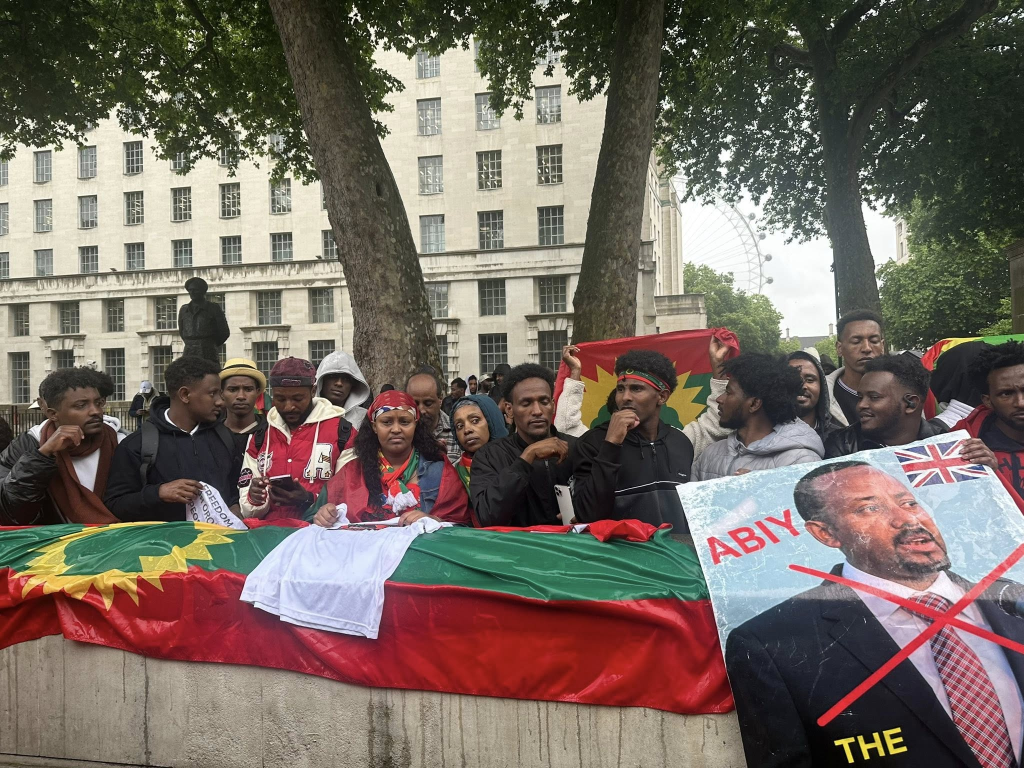
Oromo Diaspora in the UK Protests Against Human Rights Abuses in Oromia
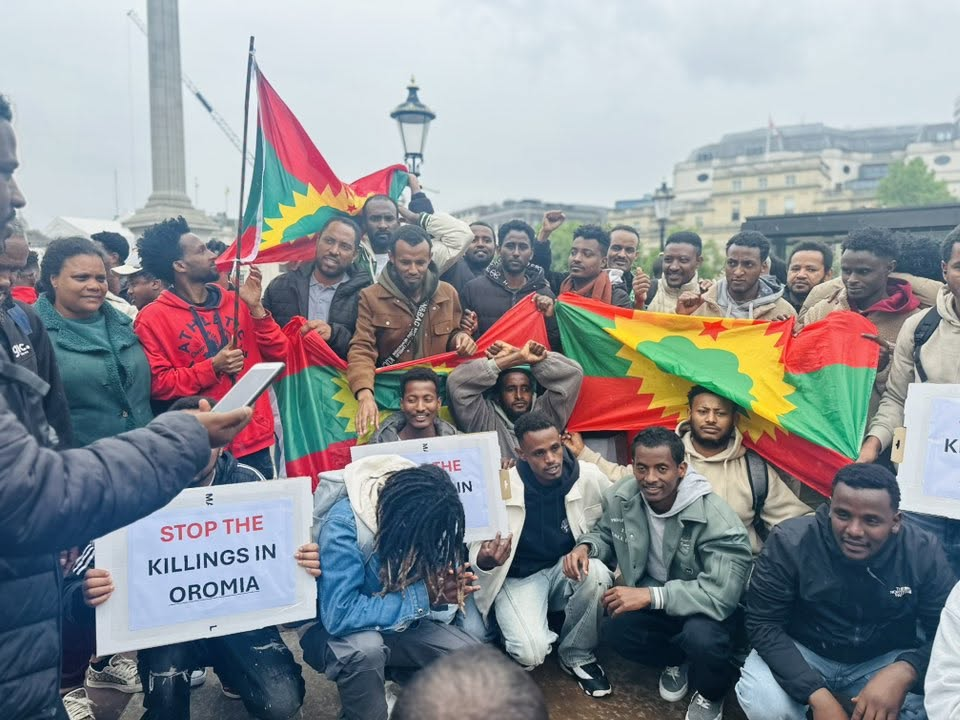
Thousands gather in London to denounce the Prosperity Party government’s actions and demand international intervention
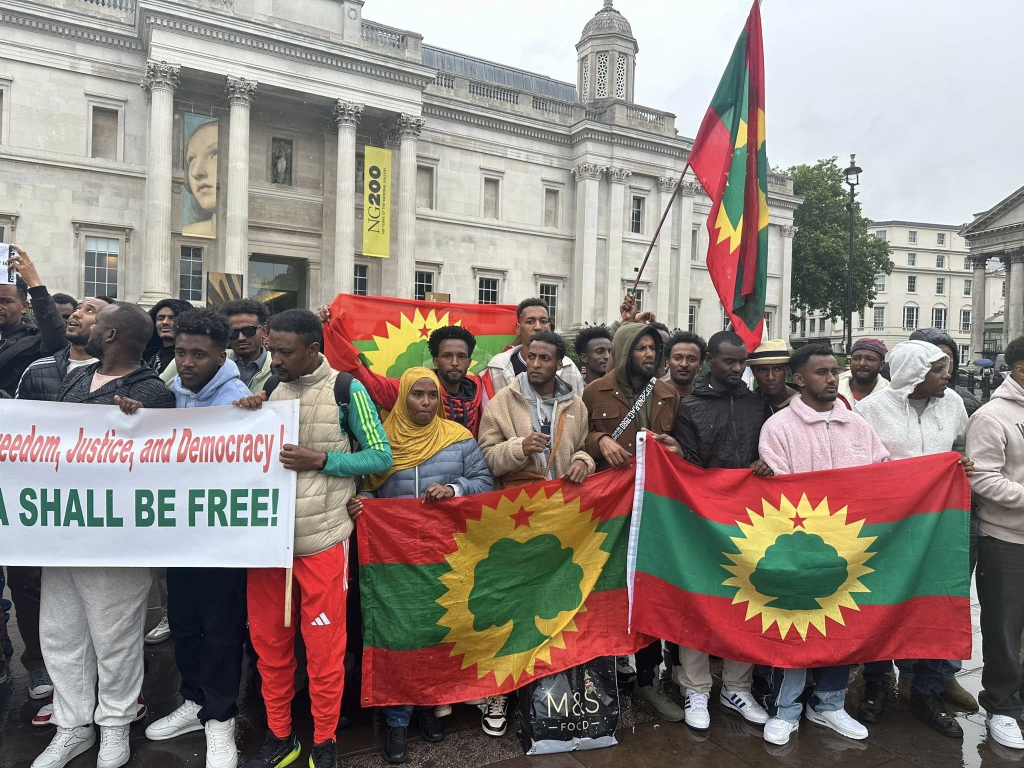
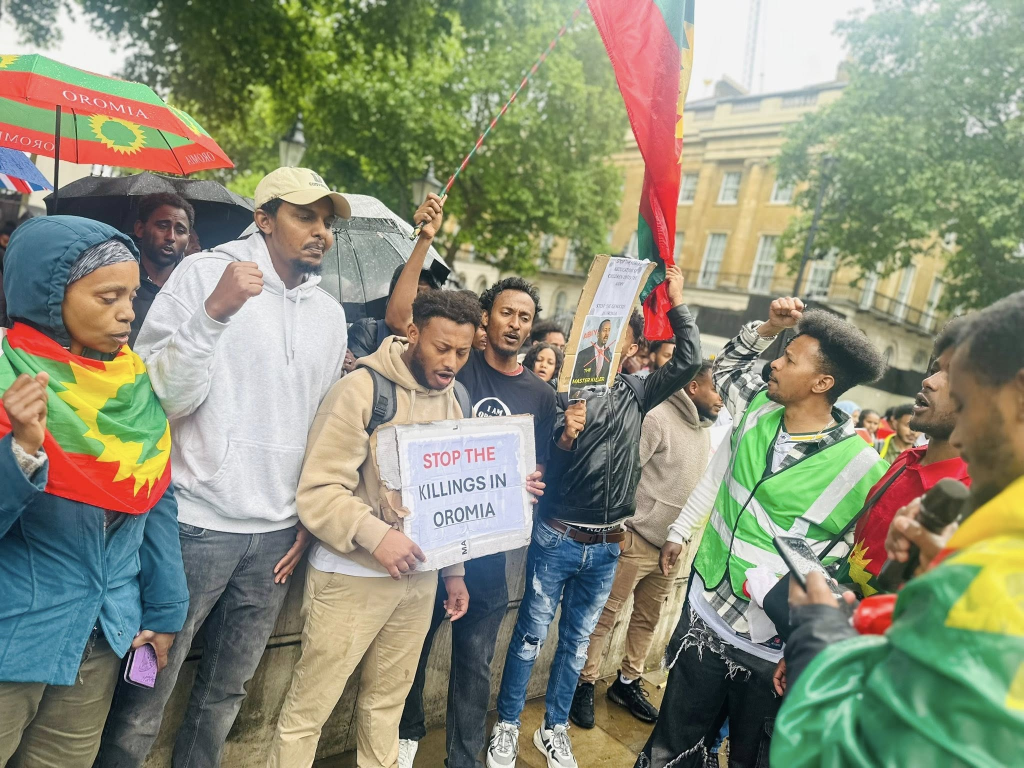
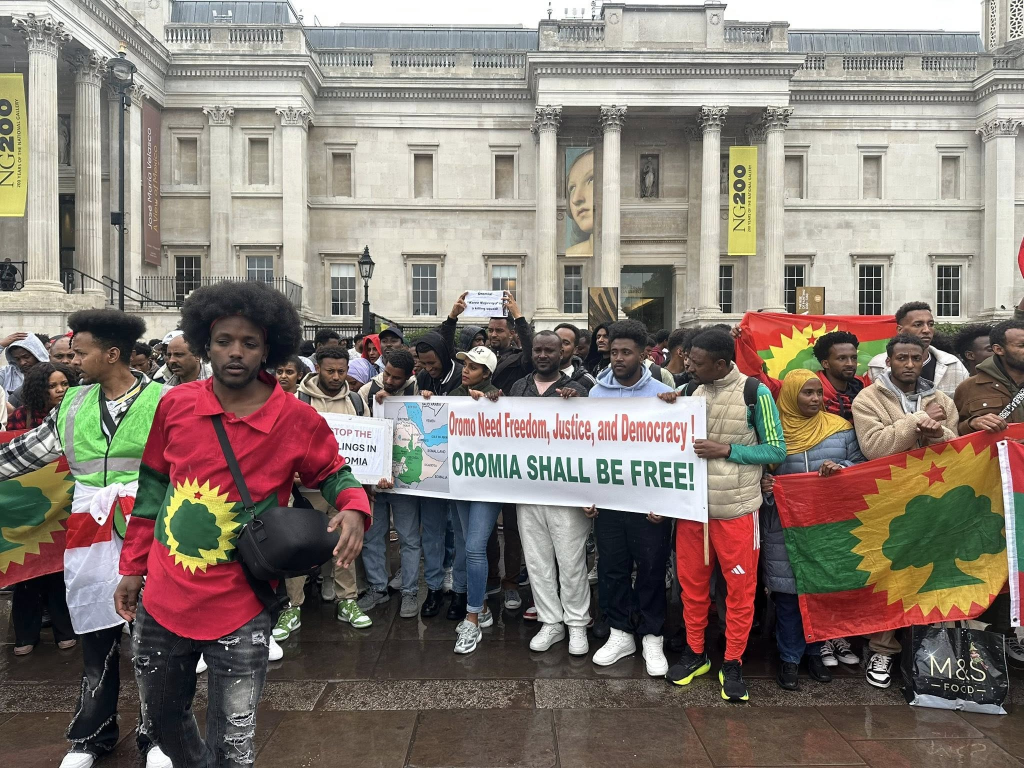
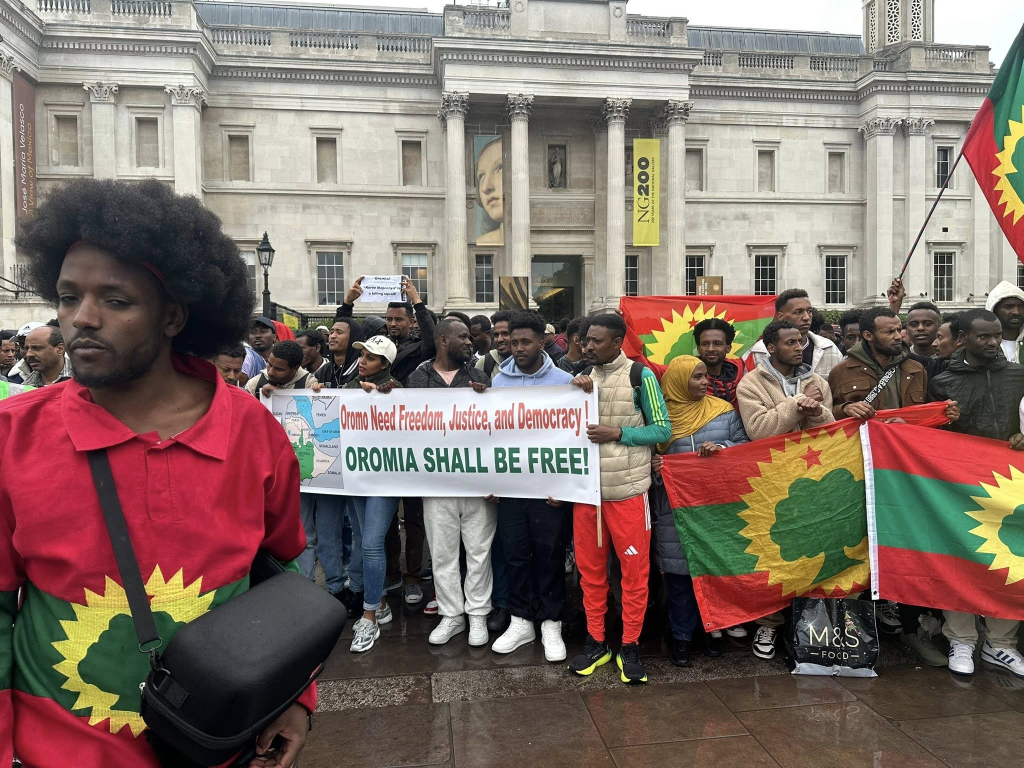
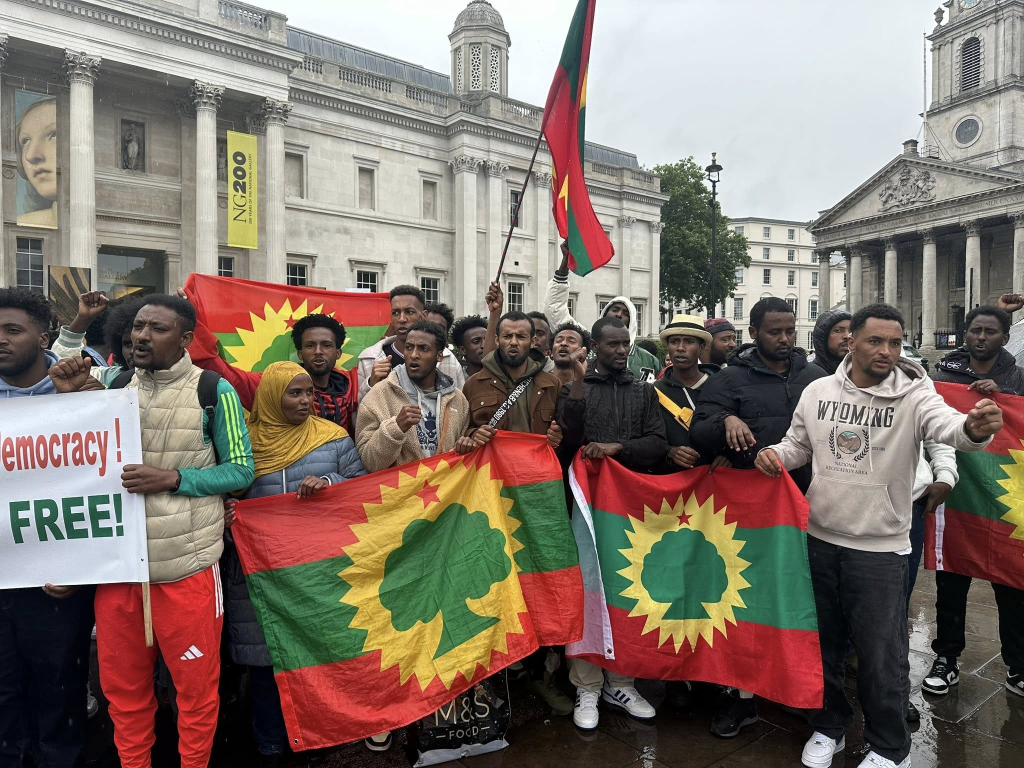
LONDON, UNITED KINGDOM — The Oromo diaspora community in the United Kingdom took to the streets of London on May 27, 2025, in a powerful demonstration against what they described as escalating human rights violations and systematic oppression in Oromia under the Prosperity Party government led by Prime Minister Abiy Ahmed .
Organizers described the protest as an urgent response to conditions in Oromia that have reached a critical threshold, drawing participants from across the UK. The rally demanded immediate international action to halt the violence and protect Oromo civilians.
A Crisis at the Breaking Point
Protest leaders emphasized that human rights abuses in Oromia and across Ethiopia have surpassed acceptable boundaries. They warned that the situation has become so alarming that it can no longer be ignored or dismissed.
The Oromo people, who constitute approximately 35 percent of Ethiopia’s population, have long voiced grievances over political marginalization, economic exploitation, and cultural suppression. The recent escalation of military operations in Oromia has deepened these concerns, with protesters pointing to a deliberate campaign of displacement and violence.
Echoes of the Derg Era
Demonstrators drew stark parallels between the current Prosperity Party government and the Derg regime of Mengistu Hailemariam (1974-1991). They accused the current administration of employing similar tactics: forcibly conscripting youth into the military, deploying them to war zones, and using them as cannon fodder in conflicts across the country .
The comparison resonated deeply with participants, many of whom have personal or family memories of the Derg’s brutal crackdown on Oromo communities. The Red Terror period, which saw systematic killings and disappearances of political opponents, remains seared into the collective memory of the Oromo people.
The Human Toll
Demonstrators painted a stark picture of life under the current government: the Oromo people have no peace and live each day like leaves falling to the ground. The constant state of insecurity has made movement between places “almost impossible” .
Reports from human rights organizations have documented extrajudicial killings, torture, abductions, and rape committed by both government forces and the Oromo Liberation Army (OLA). A joint investigation by Reuters uncovered the operations of a clandestine Security Committee in Oromia that has allegedly ordered extra-judicial killings and illegal detentions .
The impact on civilians has been devastating: over 3.2 million children are reportedly out of school due to the fighting, and aid groups have struggled to distribute supplies, contributing to high malnutrition rates.
A Call to Action
The protesters presented a series of demands to both the Ethiopian government and the international community :
- An immediate halt to what they described as genocide and military operations across Ethiopia
- The cessation of forced conscription of children into the military
- The withdrawal of all forces from Oromia
- An end to the unlawful seizure of Oromo land and property
- The unconditional release of all political prisoners
- Justice for murdered artists and activists, including Haacaaluu Hundeessaa and Battee Urgeessaa
The demonstrators specifically called on the UK government and international financial institutions to suspend all financial and diplomatic support to the Ethiopian government. A formal petition detailing these grievances was submitted to the UK Foreign Office.
The Role of the International Community
Protest leaders emphasized that international actors have a moral and legal obligation to intervene. The Ethiopian government, they argued, has repeatedly failed to protect its citizens and has weaponized state institutions against the Oromo people .
The call for the UK government to exert “necessary pressure” on the Prosperity Party reflects growing frustration among the Oromo diaspora with the international community’s perceived inaction. Despite widespread documentation of human rights abuses, Ethiopia has continued to receive diplomatic and financial support from Western nations.
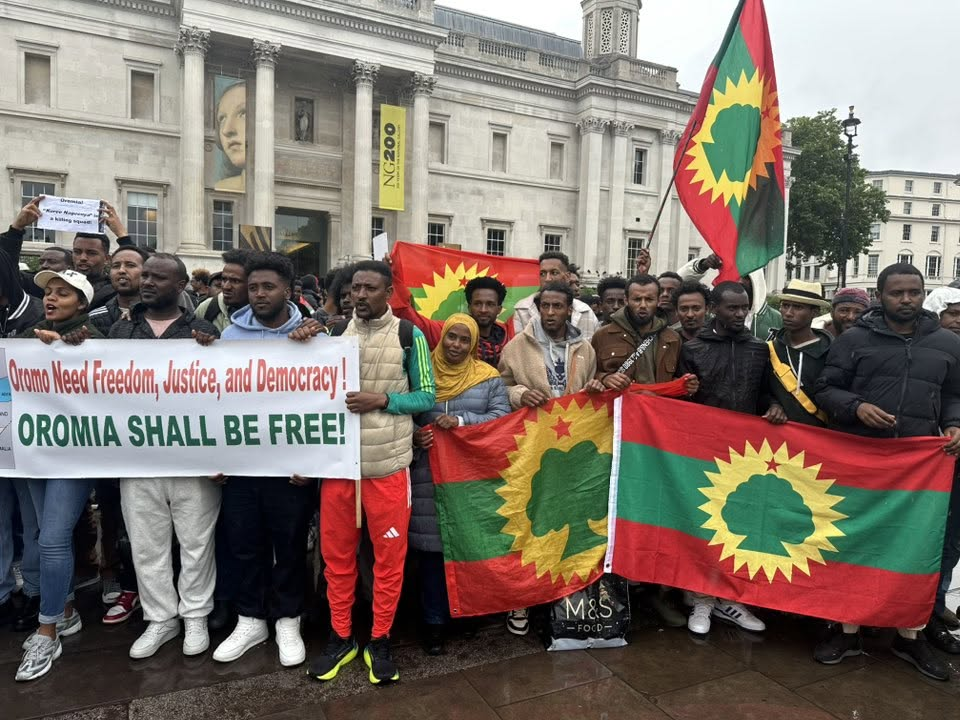
The London protest on May 27, 2025, was part of an ongoing global campaign by the Oromo diaspora to bring attention to systematic human rights abuses in their homeland . The demonstrators’ demands reflect a deep sense of urgency: they have called for an end to the killings, the withdrawal of forces, and international intervention .
The Oromo people continue to live without peace, and the situation in Oromia remains deeply insecure. The international community faces a critical test: whether it will respond with concrete action or allow another chapter of suffering to unfold largely unseen.