Category Archives: Information

Addis Standard Wins NED Democracy Award 2026

WASHINGTON — The National Endowment for Democracy (NED) honored the Addis Standard, Ethiopia’s leading independent news outlet, with its 2026 Democracy Award for Freedom of the Press at a ceremony held Wednesday evening at George Washington’s Mount Vernon estate.
The award, presented as part of NED’s commemoration of America’s 250th anniversary, recognized the publication’s founder and editor-in-chief, Tsedale Lemma, for a career defined by telling the stories of overlooked communities, reporting on abuses others would prefer hidden, and preserving evidence of crimes that could one day lead to accountability.
“When conflict and repression made independent reporting both dangerous and difficult, Addis Standard continued to pursue the truth—bringing vital coverage from Ethiopia to readers at home and around the world,” NED said in its citation .
National Democratic Institute Board Member Alice Albright presented the award to Lemma on behalf of the newsroom, honoring journalists who, in NED’s words, “give citizens the trusted information they need to understand their country and help shape its future” .
The recognition comes after a year of intensifying pressure on the outlet. In April 2025, Ethiopian police raided its office and the home of a senior staff member, briefly detaining three managers and confiscating electronic equipment. In February 2026, the Ethiopian Media Authority revoked the publication’s online media registration certificate, citing “repeated violations” of media laws. The publisher, JAKENN Publishing PLC, has contested the decision as unlawful, and the case remains before the Federal High Court.

Lemma founded Addis Standard in February 2011 as a monthly magazine, building it into one of the most influential independent voices in Ethiopian media history . She began her journalism career in 2000, working as a senior reporter at the now-defunct Addis Tribune before leaving the field in 2005 amid post-election turmoil to serve as a communications and political advisor at the Israeli Embassy in Addis Ababa. She returned to journalism in 2011 with the launch of Addis Standard .
In 2014, The Africa Report named her one of the continent’s 50 Rising Stars .
NED’s Democracy Award is presented annually to individuals and organizations advancing democratic freedoms in the face of repression. Other 2026 recipients included the Syrian Center for Media and Freedom of Expression, Russian anti-war clergy initiative Friede Allen, Burma’s Spring Revolution organizers, and imprisoned Cuban dissidents Félix Navarro, Luis Manuel Otero Alcántara, and Maykel Castillo Pérez .
“The yearning for freedom that launched our nation 250 years ago remains one of the most powerful forces in the world today,” said NED Board Chairman Peter Roskam. “This year’s honorees embody the courage and persistence required to defend those rights in their own communities” .

Birraa: The Oromo Season of Hope, Renewal, and Prosperity

In Oromo culture, Birraa is more than a season—it is a symbol of hope, renewal, and prosperity. It is a time when the land awakens, communities gather, and hearts are filled with optimism for what lies ahead.
As the rains ease and the fields turn green, Oromos across the homeland and the diaspora are welcoming Birraa — the season of renewal and abundance. It is a time deeply rooted in Oromo tradition, culture, and spirituality, marking the transition from the rainy season to a period of growth, flowering, and new beginnings.
A Season Rooted in Tradition
For generations, Birraa has held a special place in Oromo life. It is the season when the land is at its most fertile, when crops begin to flourish, and when communities come together in celebration of nature’s bounty. It is a time of hope—a reminder that after every rainy season, the sun returns, and with it, new life.
In Oromo culture, Birraa represents:
Hope – The promise of a brighter tomorrow and renewed possibilities.
Renewal – The awakening of nature and the human spirit alike.
Prosperity – The abundance that follows patience, hard work, and faith.
“Baga Birraan Isiniif Barihe!”
This beautiful Oromo greeting captures the essence of the season:
“Baga Birraan isiniif barihe!”
It is a wish that the Birraa season may dawn brightly upon you—bringing hope, blessings, and prosperity. It is a phrase exchanged among family, friends, and neighbours, carrying with it the warmth and generosity that define Oromo culture.
A Time of Community and Connection
Birraa is not only a celebration of nature—it is a celebration of community. Families gather, stories are shared, and traditions are passed down from generation to generation. It is a time to strengthen bonds, express gratitude, and look forward together.
For Oromos in the diaspora, Birraa is also a moment of connection to the homeland—a reminder of the land, the people, and the culture that shaped them, no matter how far they may be from home.
Celebrating Birraa Around the World
From the highlands of Oromia to cities across Australia and beyond, Oromos are marking the season with joy and pride. Whether through gatherings, cultural performances, or simple acts of sharing, the spirit of Birraa transcends borders and unites Oromos wherever they are.
A Message of Hope for All
In a world often marked by challenges and uncertainty, Birraa offers a powerful message: that hope endures, that renewal is always possible, and that prosperity follows those who persevere.
May this Birraa season bring blessings to all Oromos and to all who celebrate the beauty of nature’s cycles.
Happy Birraa season!
Baga Birraan isiniif barihe!

A Rare Convergence: Ethiopian, Jewish, and Coptic New Year Festivals Coincide in Australia

AMES Australia highlights an extraordinary moment of cultural and religious convergence as three major festivals—Enkutatash, Rosh Hashanah, and Nayrouz—fall on the same day, offering a powerful reflection of Australia’s shared humanity.
In a remarkable alignment of faith and culture, today marks the celebration of three significant festivals from three distinct traditions: Enkutatash, the Ethiopian New Year; Rosh Hashanah, the Jewish New Year; and Nayrouz, a festival of the Coptic Orthodox Church.
AMES Australia, a leading provider of settlement services and multicultural advocacy, has drawn attention to this rare coincidence, noting that the three events are governed by different calendars—making their convergence an extraordinary occurrence.
Three Festivals, Three Traditions
Enkutatash — the Ethiopian New Year — falls at the end of the rainy season and is celebrated with family gatherings, the blooming of the yellow adey abeba flower, and wishes of peace and prosperity. Melkam Addis Amet!
Rosh Hashanah — the Jewish New Year — is a time of reflection, renewal, and hope. Families gather to hear the shofar, dip apples in honey, and pray for a sweet year ahead. Shana Tova U’Metuka!
Nayrouz — a festival of the Coptic Orthodox Church — marks the beginning of the Coptic New Year and is a time of spiritual renewal and remembrance of the faithful. Nayrouz Mubarak!
A Season of Many Celebrations
Around this same period, millions of people around the world are also observing Mawlid al-Nabi, the birthday of the Prophet Muhammad, and the Christian festival of the Holy Cross — further enriching this season of diverse religious and cultural observance.
The convergence of so many significant dates speaks to the profound diversity of faith and culture that exists in Australia and around the world.
Australia: An Experiment in Cultural Convergence
AMES Australia reflected on the deeper meaning of this moment:
“Just like the conjunction of these cultural and religious celebrations, Australia is an experiment in cultural convergence; a nation that has welcomed people from different cultures while valuing its first peoples and fostering exchanges of ideas.”
This observation captures the essence of Australia’s multicultural identity — a nation built on migration, shaped by diversity, and strengthened by the exchange of traditions, beliefs, and ideas.
Valuing First Peoples and Fostering Exchange
AMES Australia’s statement also acknowledges the importance of honouring Australia’s First Peoples while embracing the contributions of all communities. True multiculturalism is not merely about coexistence—it is about active exchange, mutual respect, and a shared commitment to building a harmonious society.
The rare alignment of these festivals serves as a reminder that while our calendars, languages, and traditions may differ, our hopes for peace, renewal, and a better year ahead are profoundly shared.
A Shared Humanity
At a time when divisions can seem deep, the coincidence of these celebrations offers a powerful counter-narrative—one of unity, mutual recognition, and shared humanity.
Whether lighting candles for Rosh Hashanah, gathering with family for Enkutatash, or observing Nayrouz, millions of people today are united by a common desire: to welcome a new year with hope, gratitude, and peace.
Warm Wishes to All
To all those celebrating today:
Melkam Addis Amet! — Happy Ethiopian New Year!
Shana Tova U’Metuka! — Have a good and sweet year!
Nayrouz Mubarak! — Blessed Nayrouz!
May this rare convergence of faith and culture inspire all Australians to celebrate our diversity and strengthen the bonds that unite us.
Read more from AMES Australia:
Convergence of religious and cultural festivals reflect our shared humanity
#AMES #AMESAustralia #Enkutatash #RoshHashanah #Neyrouz #NewYear #Holidays #MulticulturalAustralia #SharedHumanity

Oromo Community in Melbourne to Hold Memorial for Artist Ilfinash Qannoo in Dandenong

The Oromo Community in Melbourne has announced it will host a special memorial event to honour the life and legacy of the beloved artist and freedom fighter, Ilfinash Qannoo, on September 12, 2026.
The Oromo Community in Melbourne (OCM) has organised a commemorative gathering to celebrate the life and enduring legacy of Artist Ilfinash Qannoo, who passed away recently in Oromia.
The memorial program will take place on September 12, 2026, at Dandenong Harmony Square, beginning at 5:00 PM.
A Celebration of Life and Legacy
Artist Ilfinash Qannoo was more than a performer—she was a symbol of Oromo resilience, unity, and the enduring struggle for freedom. Throughout her life, she dedicated herself to advocating for Oromo liberation, justice, human rights, and gender equality, using her art as a powerful tool for change.
Her passing has been deeply felt by Oromos in Victoria, across Australia, and around the world. The memorial event organised by the OCM offers the community an opportunity to come together, share their grief, and—most importantly—celebrate her remarkable contributions.
A Call to the Community
The Oromo Community in Melbourne has extended a warm invitation to all members of the community and friends of Oromia to attend the memorial gathering:
“Come to Dandenong Harmony Square at 5:00 PM and let us express the love and respect we hold for our artist!”
The event will feature a program of tribute, reflection, and cultural celebration, honouring the life of a woman who gave everything to the Oromo cause.
Event Details
📍 Location: Dandenong Harmony Square, Victoria, Australia
📅 Date: September 12, 2026
⏰ Time: 5:00 PM
Honouring a Heroine
Ilfinash Qannoo’s legacy is one of courage, dedication, and unwavering commitment to her people. Her music and advocacy inspired millions, and her memory continues to unite Oromos across the globe.
The OCM’s memorial event is not only a tribute to her life but a reaffirmation of the values she stood for—unity, justice, and the unyielding pursuit of freedom for Oromia.
A Community United in Remembrance
As Oromos in Victoria gather at Dandenong Harmony Square, they will do so with heavy hearts but also with pride—pride in a woman who represented the very best of Oromo culture, resilience, and hope.
The event promises to be a powerful moment of community solidarity, cultural expression, and collective remembrance.
Join Us
All members of the Oromo community, friends of Oromia, and supporters of justice and human rights are warmly invited to attend.
Let us come together to honour a true heroine of Oromia. Let us celebrate her life, her art, and her enduring legacy. Let us show the world that Ilfinash Qannoo will never be forgotten.
Galatoomaa! — Thank you!
Event Summary:
| Detail | Information |
|---|---|
| Event | Memorial for Artist Ilfinash Qannoo |
| Organiser | Oromo Community in Melbourne |
| Location | Dandenong Harmony Square, Victoria |
| Date | September 12, 2026 |
| Time | 5:00 PM |
Bilisummaan Oromoof!

Rosh Hashanah: Victorian Multicultural Commission Extends Warm Wishes to Jewish Community

As Jewish families across Victoria prepare to gather tonight, the Victorian Multicultural Commission has extended its warmest wishes to the community, recognising Rosh Hashanah as a time of reflection, renewal, and hope for the year ahead.
The Victorian Multicultural Commission (VMC) has issued a heartfelt message to Jewish communities across the state as they prepare to welcome Rosh Hashanah, the Jewish New Year.
In its statement, the Commission acknowledged the sacred significance of the occasion while celebrating the enduring contributions the Jewish community has made—and continues to make—to the cultural, social, and economic life of Victoria.
A Time of Reflection, Renewal, and Hope
Rosh Hashanah, which begins at sunset tonight, marks the start of the Jewish year 5787. It is a period of deep spiritual significance—a time when Jewish families come together to reflect on the past year, seek forgiveness, and look forward with hope and renewed commitment to their faith and community.
The traditions of Rosh Hashanah are rich with meaning. The sounding of the shofar—a ram’s horn—calls worshippers to awaken their souls. Apples dipped in honey symbolize the wish for a sweet year ahead. Family meals, prayers, and acts of charity mark the ten days of repentance that follow, culminating in Yom Kippur, the Day of Atonement.
Recognising an Enduring Contribution
The Victorian Multicultural Commission’s statement also highlighted the profound and lasting impact of the Jewish community on Victoria:
“We recognise and celebrate the enduring contribution that the Jewish community makes to Victoria.”
From the arts and education to business, medicine, philanthropy, and public service, Jewish Victorians have helped shape the state’s identity for generations. Their resilience, creativity, and commitment to community have enriched Victorian society in countless ways.
A Message of Warmth and Solidarity
The Commission’s message reflects the spirit of inclusivity and respect that defines Victoria’s multicultural ethos:
“We extend our warm wishes at this special time.”
As Jewish families gather tonight—around dinner tables, in synagogues, and in community centres across the state—they do so knowing that their traditions, faith, and contributions are recognised and valued by the broader Victorian community.
Shana Tova U’Metuka
The Commission concluded its message with the traditional Hebrew greeting:
“Shana Tova U’Metuka! Have a good and sweet year.”
These simple words carry profound meaning—a wish for sweetness, blessing, and peace in the year ahead.
A Celebration of Victoria’s Diversity
Rosh Hashanah is not only a time for the Jewish community to reflect and celebrate; it is also an opportunity for all Victorians to appreciate the richness of the state’s cultural and religious diversity.
The Victorian Multicultural Commission’s statement serves as a reminder that Victoria’s strength lies in its diversity—and that by honouring one another’s traditions, we build a more inclusive, harmonious, and united society.
Warm Wishes to All Celebrating
To all Jewish families and individuals across Victoria welcoming the new year:
Shana Tova U’Metuka!
May the year ahead be filled with health, happiness, and peace. May it be a year of sweet moments, meaningful connections, and abundant blessings.

A Rare Calendar Alignment: Victoria’s Jewish and Ethiopian Communities Welcome the New Year Together

In a remarkable moment of cultural convergence, two of Victoria’s vibrant communities are celebrating their respective new years on the same day—a rare calendar alignment that speaks to the rich tapestry of faith and culture that defines the state.
The Ethnic Communities’ Council of Victoria (ECCV) has marked the occasion with a message of unity and celebration, extending warm wishes to Jewish communities observing Rosh Hashanah and Ethiopian communities celebrating Enkutatash.
The alignment of these two significant cultural and religious milestones is a rare occurrence—one that offers a powerful reminder of the diversity that makes Victoria one of the most multicultural places in the world.
Rosh Hashanah: A Time of Reflection and Renewal
For Jewish communities, Rosh Hashanah—the Jewish New Year—began at sunset and is a sacred time of reflection, repentance, and hope. Families gather to hear the sounding of the shofar, share festive meals, and dip apples in honey to symbolize the wish for a sweet year ahead.
“Shana Tova U’Metuka” — Have a good and sweet year — is the traditional greeting exchanged among Jewish families and friends during this holy period.
Enkutatash: A Celebration of Renewal and Hope
For Ethiopian communities, today marks Enkutatash, the Ethiopian New Year. Falling at the end of the rainy season, Enkutatash—which means “gift of jewels”—is a time of joy, family gatherings, and the vibrant blooming of the yellow daisy, adey abeba, which carpets the Ethiopian highlands.
“Melkam Addis Amet” — Happy New Year — is the greeting shared among Ethiopian families as they welcome a new year with hope, unity, and celebration.
A Victoria of Many Cultures and Faiths
The ECCV’s statement captures the spirit of the moment:
“We are proud to live in a Victoria that is home to so many diverse cultures and faiths, and wish everyone celebrating a happy, healthy and peaceful new year.”
This rare calendar alignment is a testament to the strength of Victoria’s multicultural society—a place where diverse communities not only coexist but celebrate together, enriching one another’s lives and the life of the state as a whole.
Celebrating Together
As Jewish and Ethiopian families across Victoria gather with loved ones tonight, they do so not only as separate communities but as part of a shared Victorian story—one of migration, resilience, faith, and the enduring power of culture.
The ECCV’s message serves as a reminder that in celebrating our differences, we strengthen our common bonds. In honouring each other’s traditions, we build a more inclusive and harmonious society.
Warm Wishes to All
To all those celebrating today:
Shana Tova U’Metuka — May your year be good and sweet.
Melkam Addis Amet — May your new year be filled with joy and peace.
May this rare moment of alignment bring blessings to all Victorians, regardless of faith or background. And may the year ahead be one of health, happiness, and harmony for everyone.

Rosh Hashanah: Victorian Jewish Families Gather to Welcome a Sweet New Year

As the sun sets this evening, Jewish families across Victoria will gather around their tables to celebrate Rosh Hashanah, the Jewish New Year—a sacred time of reflection, renewal, and hope for the year ahead.
The sounding of the shofar, the dipping of apples in honey, and the sharing of festive meals will mark the beginning of the Jewish year 5787, a period of deep spiritual significance for Jewish communities in Victoria and around the world.
Rosh Hashanah, which literally means “head of the year,” is a time when Jewish families come together to reflect on the past year, seek forgiveness, and commit to renewal in the year to come. It is a celebration that blends joy with introspection—a moment to consider one’s actions, strengthen bonds with community and faith, and look forward with hope.
A Time of Reflection and Renewal
The traditions of Rosh Hashanah are rich with symbolism. The shofar—a ram’s horn—is blown in synagogues, its haunting sound calling worshippers to awaken their souls and return to what matters most. Sweet foods, particularly apples dipped in honey and round challah bread, symbolize the wish for a sweet and complete year ahead. The pomegranate, with its many seeds, represents the hope for a year filled with good deeds and blessings.
For Jewish families in Victoria, this is also a time of community—a moment to gather with loved ones, welcome guests, and reaffirm the values that have sustained the Jewish people for millennia.
Celebrating the Jewish Community’s Enduring Contribution
Victoria has long been enriched by the presence and contributions of its Jewish community. From business and the arts to education, medicine, philanthropy, and public service, Jewish Victorians have helped shape the state’s cultural, economic, and social fabric for generations.
Their enduring contributions—built on a foundation of faith, resilience, and a deep commitment to community—deserve recognition and celebration, not only during Rosh Hashanah but throughout the year.
Wishing the Community a Sweet New Year
As Jewish families across Victoria prepare to usher in the new year, we extend our warmest wishes to the entire Jewish community.
May this Rosh Hashanah be a time of peace, health, and joy. May the year ahead bring blessings, success, and sweet moments shared with family and friends.
Shana Tova U’Metuka! — Have a good and sweet year!

The Unbroken Ode: Elfinesh Keno’s Life of Resistance and the Legacy She Left in Ambo
By Daandii Ragabaa
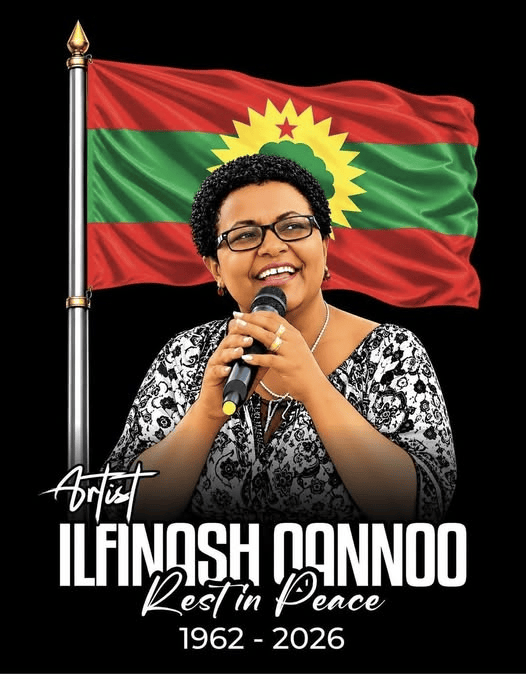
In a world where countless souls bend, break, or sell their dignity for comfort or personal gain, Elfinesh Keno walked through fire and emerged with her value intact. Even in death, her respect stands untouched—a monument to a life lived not for fame, but for freedom. Her art was never mere entertainment; it was resistance. It was a shield. It was a call to conscience.
She was an Oromo singer and cultural icon whose voice rose not for applause but for the rights, equality, and dignity of her people.
The Child of a Legacy
Born into the shadows of a struggle far larger than herself, Elfinesh Keno—known to many as Ilfinash Qannoo—was the daughter of Daraaraa Kafanii. Her lineage traced directly to Obboo Argaw Dinqaa, a towering Oromo patriot, lawyer, and founding father of cultural and political organizations such as Jibatii, Maccaa, and the Waldaa Walgargaarsaa Maccaafi Tuulamaa (WMT). Obboo Argaw was no ordinary man. Imprisoned for his opposition to the H/S government, he emerged from confinement to organize the Grand Oromo Cultural Festival of 1977 in Finfinne. He used culture as a weapon to resurrect Oromo identity and unity.
It was on that stage that young Elfinesh Keno first stepped into the light of history, performing alongside artists like Obboo Tasammaa Nagarii and Aaddee Kuulanii Guddinaa. Her art was a product of that great cultural renaissance—a movement that toured towns such as Asallaa, Waliso, and Naqamtee, where elders like Jaal Nadhii Gammadaa and Jaal Magarsaa Barii worked alongside Obboo Argaw to reinstate the sacred Gadaa system through performance.
A Heroine Forged in the Crucible of Conflict
But the road was never easy. When the Oromo liberation movement intensified, the Derg regime came for its leaders. Obboo Argaw was arrested on October 19, 1978, and later executed. Yet the flame he lit was passed to the next generation—to artists like Daraaraa Kafanii and his daughter, Elfinesh.
In the turbulent years that followed, Elfinesh found herself on the frontline. During a ferocious battle in Burree, Jalduu, in July 1992, between W3O fighters and the Wayyaanee (EPRDF) regime, she and fellow artist Zaruhuun Wadaajoo were captured. They were imprisoned in Ambo’s Karchallee detention center. There, Elfinesh faced the possibility of execution.
Her story at that point offers a stunning glimpse into her character. When the Wayyaanee regime’s OPDO operatives debated executing her, she was saved—not by bending her principles, but by her unwavering association with the Oromo people. Some of those who held her file, knowing the depth of her devotion, feared the wrath of the people so much that they altered her records to avoid carrying out the sentence.
Meanwhile, the people of Ambo acted. They pooled their money and bribed the prison commander, ensuring Elfinesh would not be killed behind bars. When she was finally released, the community welcomed her like a returning queen—taking her to the Daraaraa Kafanii Hotel, where she reunited with elders and fellow fighters. Even in the face of death, she did not run. She chose duty.
Ambo’s Daughter by Choice
One of the most defining moments of Elfinesh Keno’s life came near the end. When she could have chosen to return to her birthplace, to the comfort and familiarity of her early years, she did not. Instead, she chose Ambo—the city whose people once chose to face bullets for her.
Ambo’s masses had refused to let her die. They had stood by her during her darkest hour, chanting for her survival and promising to keep the fight for true freedom alive. In return, Elfinesh honored their bravery with her final resting place. That decision alone speaks volumes about her character.
Her choice reminds us that heroism is not loud; it is consistent. It is not boastful; it is principled. And it is not convenient; it is costly. But Elfinesh Keno paid that cost willingly.
A Lesson for the Wavering
Elfinesh Keno’s life offers a powerful lesson to all who waver, compromise, or forget the weight of responsibility. While many ran for safety, she ran toward duty. While others hid, she stood in the field. While some betrayed their own, she remained truthful to her core.
Her integrity was so complete that she could recognize goodness even in those standing on the opposite side of history—a mark of a true heroine. She taught the cowards and the “gantuus” that she would rather be covered with the flag of resistance, a symbol of freedom, than to live under the shadow of betrayal.
The Eternal Thread
Elfinesh Keno’s story is not an isolated one. It is a thread in a larger tapestry of Oromo resistance and cultural preservation. In her, we see the face of Obboo Argaw Dinqaa. Through her, we hear the voices of Jaal Nadhii Gammadaa, Jaal Magarsaa Barii, Jaal Abboomaa Mitikkuu, and countless unnamed heroes who gave their lives for Oromummaa.
Her passing is a heartbreak—”Bool’akee bookni haa guutu,” as the Oromo poet wrote. Yet she did not die in vain. She passed away with her value intact, her respect untouched, and her legacy eternal.
May her memory continue to guide her people.
May her courage continue to inspire future generations.
May her integrity remain a mirror for all who claim to serve the truth.
Stand for Something
Elfinesh Keno’s final chapter reflects her deepest values: the pursuit of truth, the protection of dignity, and the unwavering commitment to her people. In the end, she was not just an artist or a performer—she was a symbol of what it means to live with purpose and die with honor.
Her voice may be silent now, but the melody of her resistance will echo forever.
Stand for something.
Live truthfully.
Protect your dignity.
Let your final chapter reflect your deepest values.
Elfinesh Keno—Ilfinash Qannoo—passed away with her value intact.
Her respect untouched.
Her legacy eternal.

A Life Worth Celebrating—A4O Calls for Honor, Not Grief, for Artist Ilfinash Qannoo
By Our Correspondent
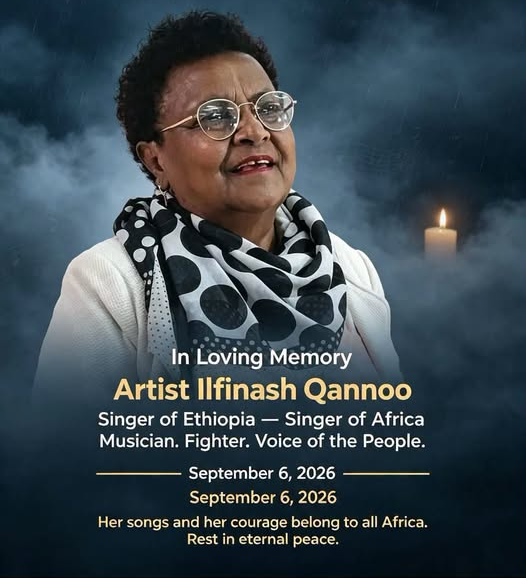
(Melbourne, Australia – 8 September 2026)-In a poignant and powerful statement released today, Advocacy for Oromia (A4O) has called on Oromos and friends of the struggle worldwide to transform mourning into celebration for the late artist and freedom fighter, Ilfinash Qannoo.
The Melbourne-based advocacy group, speaking from their Australian headquarters, emphasized that while the loss of the beloved artist is deeply felt, her life, legacy, and unwavering commitment to the Oromo cause demand a response of honor rather than sorrow.
A Life Dedicated to Liberation
Ilfinash Qannoo was no ordinary artist. According to A4O, she was a steadfast pillar of the Oromo liberation movement, dedicating her entire life to the struggle for Oromo self-determination. Her artistry was not merely entertainment—it was resistance. Her voice was not just melody—it was a clarion call for justice.
“Artist Ilfinash Qannoo spent her whole life supporting and advancing the Oromo struggle for freedom,” the statement reads, positioning her among the most committed cultural warriors of her generation.
More Than an Artist—A Symbol
A4O’s statement highlights ten compelling reasons why Ilfinash Qannoo’s legacy must be celebrated:
A Symbol of Oromo Identity: She embodied the pride, dignity, and cultural richness of the Oromo nation. Her very presence was a testament to Oromo resilience and identity.
Champion of Justice: She was a fearless defender of Oromo rights, human rights, and gender equality. She challenged oppression in all its forms and stood against discrimination, including gender-based injustice.
Unifier of the Oromo People: At a time when division threatens the struggle, Ilfinash Qannoo stood as a powerful symbol of Oromo unity, reminding her people that solidarity is the foundation of victory.
Teacher and Inspiration: Through her life and work, she taught Oromos to resist subjugation with dignity, while also respecting the rights of other nations—a rare and powerful example of principled advocacy.
Martyr for the Cause: Her final resting place in Ambo is now etched into the historical landscape of the Oromo struggle. Her grave, like her life, has become a site of memory and honor.
A Legacy That Transcends Death
Perhaps the most striking aspect of A4O’s tribute is the assertion that Ilfinash Qannoo’s impact extends far beyond her lifetime. She did not simply live for Oromia; she ensured that even in death, she would remain a rallying figure for the movement.
“She left us not with despair, but with a glorious legacy,” the statement declared. “We are called to take strength from what she and our forebears have left us, and to rededicate ourselves to the struggle with renewed vigor.”
A Call to Action, Not Lamentation
In what can be described as a clarion call to the Oromo diaspora and the wider movement, A4O urged supporters to channel their grief into action. The organization stressed that the most fitting tribute to Ilfinash Qannoo is not tears, but a renewed commitment to the goals she championed.
“We must celebrate her life, her work, her history, and her enduring symbol of resilience,” the statement emphasized. “Let us march forward in her honor, advancing the struggle for Oromo liberation with determination and unity.”
Global Reach of the Statement
Issued from Melbourne, Australia, on 8 September 2026, the statement reflects the global nature of the Oromo struggle and the far-reaching influence of cultural icons like Ilfinash Qannoo. A4O’s message transcends geographic boundaries, speaking directly to Oromos in the homeland and across the diaspora.
The advocacy group concluded with an unwavering declaration: “Victory to Oromia!” —a fitting epitaph for a woman whose life was dedicated to that very cause.
Historical Context
Ilfinash Qannoo’s passing marks the end of an era in Oromo cultural and political history. She was among a generation of artists who used their craft as a weapon of resistance, challenging the status quo and inspiring millions. Her death is not just a loss of talent, but the departure of a moral compass for a movement in constant pursuit of justice.
As Oromos around the world reflect on her legacy, A4O’s message is clear: Grieve, yes—but more importantly, celebrate. Honor her by carrying the torch she has passed on.
About Advocacy for Oromia (A4O): Based in Melbourne, Australia, A4O is a diaspora advocacy organization committed to advancing the rights, justice, and self-determination of the Oromo people through awareness, advocacy, and solidarity initiatives.
“We mourn her loss, but we celebrate her life—for in her, Oromia found a voice that will never be silenced.”

A Voice Silenced, A Legacy Eternal – Oromo Community in Melbourne Mourns Artist Elfinesh Keno
By OCM Media & Communications
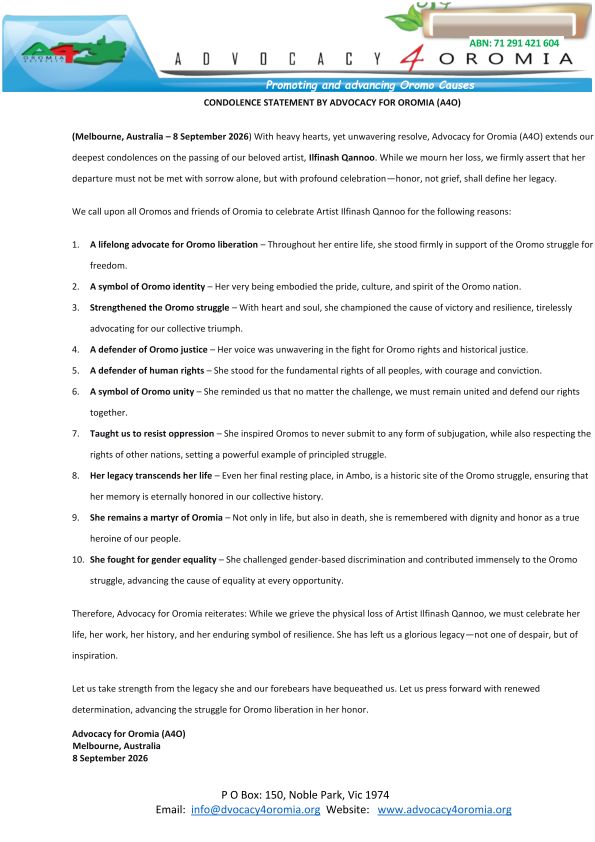
(MELBOURNE, Victoria – 7 September 2026)-A profound stillness has fallen over the Oromo community in Australia and beyond. The melodious voice that once gave life to Oromo heritage, that carried the hopes, joys, and struggles of a proud nation across generations, has fallen silent.
Artist Elfinesh Keno, a beloved cultural icon whose artistry became the heartbeat of Oromo identity, passed away recently, leaving behind a legacy that transcends time and geography. The Oromo Community in Melbourne (OCM), on behalf of its members and the wider Oromo diaspora across Victoria and Australia, has issued an official letter of condolence, mourning the loss of a woman who was far more than an entertainer—she was a guardian of culture, a storyteller of the people, and a beacon of inspiration.
A Life Dedicated to Oromo Culture
Born into a world where Oromo culture, language, and traditions faced immense pressures, Elfinesh Keno rose as a defiant yet graceful voice of resilience. Through her music, she celebrated the beauty of Oromo heritage—its poetry, its rhythms, and its profound connection to identity. Her songs were not mere performances; they were living archives of a people’s history, a mirror reflecting their collective aspirations and an anthem of their enduring spirit.
From the vibrant stages of Ethiopia to the community halls of the diaspora, Elfinesh’s artistry resonated with Oromos everywhere. Her voice became a bridge—connecting the homeland with the scattered children of Oromo, reminding them that no matter how far they travelled, their roots remained strong and their culture unbroken.
More Than Music: A Cultural Pillar
The OCM’s condolence letter describes Elfinesh Keno as a “revered cultural figure” whose work “transcended entertainment.” Indeed, her contributions went far beyond the recording studio or the concert stage. She was a mentor to young artists, a symbol of pride for Oromo women, and a tireless advocate for the preservation of Oromo language and traditions.
Through her lyrics, she wove together the threads of history—celebrating heroes, lamenting injustices, and envisioning a future where Oromo identity flourishes without fear. Her music became a source of strength during times of hardship and a soundtrack for moments of celebration.
A Global Outpouring of Grief
In the days following her passing, tributes have poured in from Oromo communities across the globe. From Melbourne to Minneapolis, from London to Addis Ababa, fans, fellow artists, and cultural leaders have expressed their sorrow and gratitude for the gifts she left behind.
The Oromo Community in Melbourne, standing in solidarity with Oromo communities worldwide, has reaffirmed its commitment to preserving the cultural legacy that Elfinesh Keno so passionately championed. In their condolence message, the OCM honoured her “life, achievements, and service to Oromo culture,” vowing to carry forward the torch she so brightly lit.
A Legacy for Future Generations
Elfinesh Keno’s enduring contributions will continue to echo through the songs she sang, the stories she told, and the values she embodied. Her legacy is not merely one of artistic excellence but of cultural stewardship. She reminded the Oromo people that their identity is a treasure worth protecting, their language a gift worth speaking, and their history a story worth telling.
As the OCM noted in their letter, the role of artists like Elfinesh Keno “in preserving and promoting our cultural heritage” is vital. Her life’s work has laid a foundation upon which future generations can build, dream, and create.
Farewell to a Beloved Daughter
To her family, friends, and fellow artists, the Oromo community extends its deepest sympathy and prayers. Words cannot fill the void her passing has left, but the memories she created—and the impact of her life’s work—will provide comfort and strength in the days ahead.
The Oromo Community in Melbourne, in its letter of condolence, expressed a hope that her family “may find strength, comfort, and peace in the cherished memories they shared and in the lasting impact of her life’s work.”
Eternal Peace, Enduring Inspiration
As the sun sets on the life of Artist Elfinesh Keno, a new dawn rises in her honour. Her voice may have fallen silent, but its echoes will never fade. Her songs will continue to be sung, her legacy will continue to inspire, and her spirit will forever remain woven into the fabric of Oromo identity.
May Artist Elfinesh Keno rest in eternal peace, and may her memory continue to inspire generations to come.
Oromo Community in Melbourne (OCM)
1/18 Matter Rd, Noble Park, VIC 3174
Melbourne, Victoria, Australia
7 September 2026
For media inquiries or further information, please contact the Oromo Community in Melbourne oromocentre@gmail.com