A New Chapter for Multicultural Victoria: VMC Bids Farewell as MMV Begins
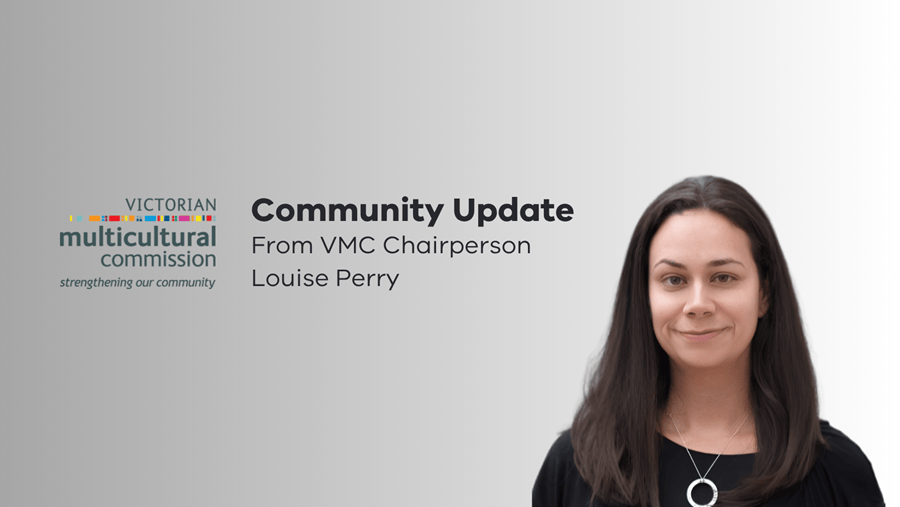
Melbourne, Victoria — After four decades of championing inclusion, belonging, and community voice, the Victorian Multicultural Commission (VMC) has issued its final Community Update, marking the end of an era and the beginning of a new chapter for multicultural and multifaith Victoria.
As of 1 October 2026, Multicultural and Multifaith Victoria (MMV) will formally commence, taking over the VMC’s legacy of community engagement, advocacy, and partnership with government.
A Legacy Built on People, Not Policies
In her farewell message, VMC Chairperson Louise Perry reflected not on programs or policies, but on the people who made the Commission’s work possible.
“The community leaders, volunteers, faith representatives, young people, elders, advocates and families who have shared their stories, welcomed us into their communities and worked alongside us,” she wrote. “It is neither the programs nor the policies that come to mind, but the people.”
That people-centered reflection captures the essence of the VMC’s four-decade journey. Since its establishment, the Commission has worked through moments of both celebration and challenge, championing inclusion and belonging, responding to crises, and ensuring that community voices are heard in the decisions that shape Victoria.
Standing Together in Times of Crisis
The VMC’s work during the COVID-19 pandemic stands as a defining example of what can be achieved when government and communities work together. At a time of great uncertainty, multicultural and multifaith organisations, community leaders, and volunteers played a vital role in sharing trusted information, supporting vulnerable people, and helping keep communities connected.
That same spirit of community was evident recently when Louise Perry joined Victoria’s Nepalese community to celebrate Hartalika Teej, a significant Hindu festival observed by women. The VMC also expressed solidarity with the Nepalese community following the devastating monsoon floods in Nepal — a reminder that the bonds between Victoria’s communities and their homelands remain strong and deeply felt.
A Legacy of Trust and Candour
As the VMC closes this chapter, Louise Perry extended her gratitude to former commissioners, staff, partners, and countless community leaders who contributed to the Commission’s legacy.
“Most importantly, I thank the communities who placed their trust in the VMC and who, to this day, continue to engage with us with candour and generosity,” she said.
That trust, built over forty years, represents the true measure of the VMC’s success. It is a legacy not of institutions, but of relationships — of communities that felt seen, heard, and valued.
Looking Ahead: MMV and the Future
Multicultural and Multifaith Victoria now represents an opportunity to deepen engagement with communities, strengthen partnership with government, and ensure that community voices continue to help shape Victoria’s future.
“I am excited for what lies ahead,” Perry said. “The story of multicultural and multifaith Victoria continues to evolve in our neighbourhoods, places of worship, businesses, community organisations and homes.”
The transition from VMC to MMV is not an ending but a renewal — a recognition that the work of building an inclusive, harmonious, and vibrant multicultural society is never complete. Each generation must take up the task anew, adapting to changing circumstances while holding fast to the values of respect, belonging, and shared humanity.
A Story That Continues
As Multicultural and Multifaith Victoria begins its work, it inherits not only the structures and responsibilities of the VMC but also its spirit — a spirit of partnership, trust, and unwavering commitment to the communities it serves.
The story of multicultural and multifaith Victoria is a story still being written — in the neighbourhoods where neighbours of different backgrounds share meals, in the places of worship where faiths coexist in mutual respect, in the businesses that bridge cultures, and in the homes where traditions are passed to the next generation.
It is a story that belongs to all Victorians. And it is a story that continues.
Source: Victorian Multicultural Commission

Posted on September 23, 2026, in Aadaa, Afaan, AMES, Events, gadaa, Information, Language, Media, News, VMC. Bookmark the permalink. Leave a comment.






Leave a comment
Comments 0