Category Archives: Information

Inclusive Dialogue: A Path to Stability in Oromia
Dialogue for peace in Oromia is urgently necessary and important now due to the escalation of conflict, human suffering, political fragmentation, and the need for a sustainable solution that addresses the root causes of instability. Inclusive, genuine dialogue is widely regarded by local stakeholders and observers as the only viable path out of the region’s armed stalemate, offering practical hope for peace, stability, and a just social order in Oromia and how it impacts Ethiopia as a whole.
Ongoing Conflict and Humanitarian Crisis
Oromia has experienced years of sustained violence and insecurity, leading to widespread deaths, displacement, and destruction of livelihoods. The continuing armed conflict between government forces and various Oromo groups—including the Oromo Liberation Army (OLA), Oromo Liberation Front (OLF), and others—has created humanitarian emergencies that cannot be solved militarily. Dialogue is the best hope to stop violence, protect civilians, and facilitate humanitarian access.
Failure of Military Solutions
Attempts by both government and rebel groups to win militarily have failed, resulting in a costly stalemate. Neither side is able to impose full control, and the persistence of conflict only prolongs instability and lawlessness. This situation leaves ordinary people vulnerable to violence, displacement, economic hardship, and rights abuses—further underscoring the need for dialogue as the only realistic solution.
Addressing Root Causes for Lasting Peace
Dialogue allows stakeholders to negotiate on the fundamental grievances underlying the conflict, such as political marginalization, land and cultural rights, governance, and access to resources. Unlike purely military approaches or ad-hoc deals, a principled, inclusive dialogue can result in structured frameworks for ceasefire, demobilization, political inclusion, and justice—laying the groundwork for sustainable peace.
Building Oromo Political Unity and Legitimacy
The recent joint call for dialogue from major Oromo political actors (such as the OLF and OFC) signals rare unity and demonstrates political maturity. It strengthens the Oromo bargaining position, fosters legitimacy among communities, and creates credible partners for both national and international peace initiatives. Joint action also reassures the public that elites are willing to move beyond division for the common good.
Centrality to Ethiopia’s Stability and Development
With Oromia being Ethiopia’s most populous and politically strategic region, instability here has direct consequences for the country’s overall peace, governance, and development. Inclusively resolving issues in Oromia through dialogue helps promote national unity, prevent spillover to other regions, and address longstanding injustices that, if left unresolved, threaten wider state collapse or fragmentation.
Responding to Public and International Pressures
There is increasing demand from Oromo communities, civil society, and the international community for dialogue and peace. Public support for dialogue puts pressure on political leaders to prioritize negotiation over violence, further legitimizing peace efforts and expanding opportunities for accountability, truth-telling, and healing.
Conclusion
The necessity for dialogue in Oromia today is dictated by the urgent need to save lives, restore social trust, enable humanitarian relief, and build credible structures for democracy, justice, and lasting peace. Only through principled, inclusive discussions that address core grievances can Oromia—and by extension, Ethiopia—move beyond cyclical violence toward a future of stability and shared development.

Promoting Peace Through Dialogue: OLF and OFC’s Efforts in Oromia
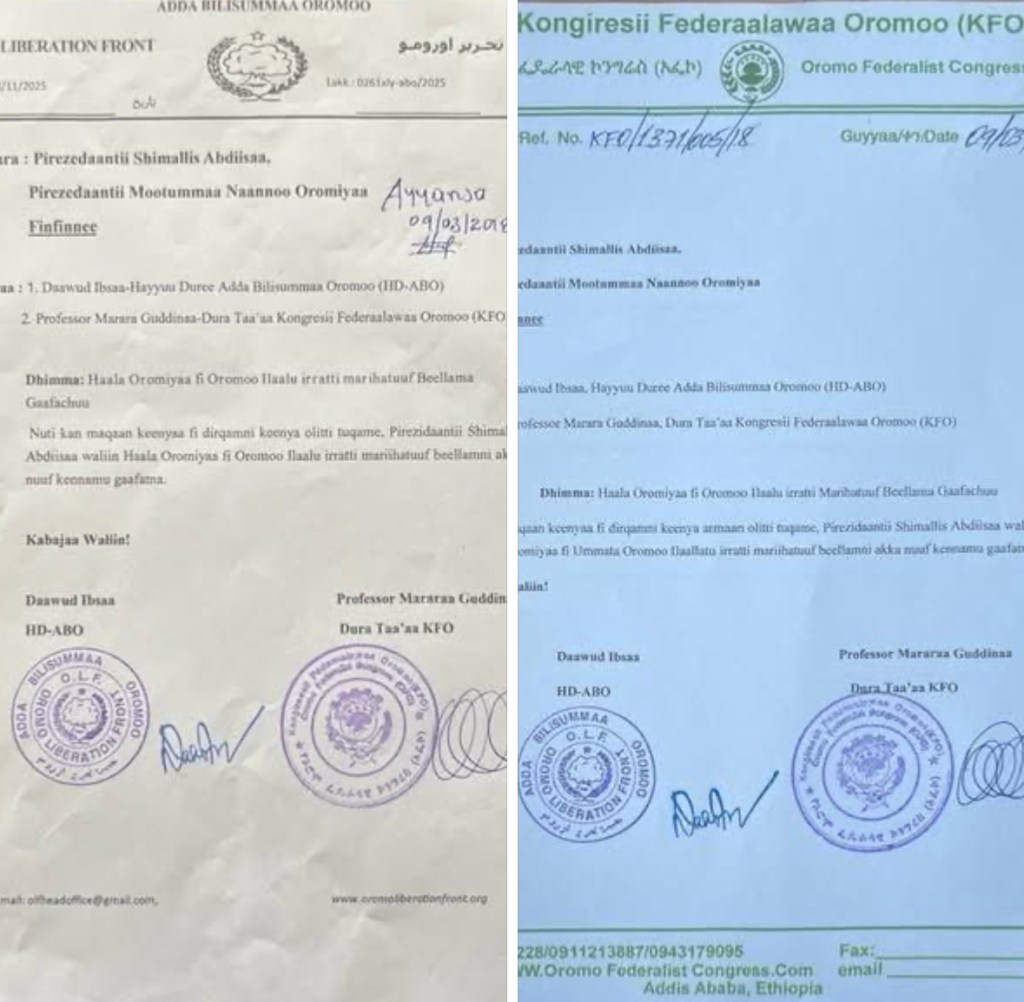
The joint call for dialogue by the OLF and OFC is a commendable and necessary move for peace in Oromia. We believe that inclusive discussion is the only viable solution to the insecurity that has plagued our region. We are hopeful that the Oromia Regional Government will respond positively and collaborate to make these critical talks a success.
Why the joint call for dialogue by the OLF and OFC is a commendable and necessary move for peace in Oromia?
The joint call for dialogue by the ABO (OLF) and KFO (OFC) is commendable and necessary because it signals rare strategic unity among major Oromo forces and opens a realistic path away from a worsening armed stalemate toward an inclusive political process in Oromia. It also answers long‑standing demands from communities and observers that only broad, principled dialogue can address structural grievances, fragmented armed actors, and cycles of repression and revenge.
Overcoming a history of failed peace efforts
Previous attempts to resolve the conflict between the Ethiopian government and Oromo armed actors, including OLF-related factions, failed largely due to the absence of a clear, formal framework, internal divisions, and weak political will on all sides. Jointly calling for dialogue starts to correct these deficits by making a public, political commitment to a negotiated path, rather than ad‑hoc, personality‑driven deals. This shift matters because sustainable peace in Oromia requires transparent agreements, monitoring, and institutions—not informal understandings that quickly unravel.
Building Oromo political unity and legitimacy
The OLF and OFC/ KFO have often represented different strands of Oromo political strategy—armed liberation versus federalist electoral politics—which has historically weakened the Oromo bargaining position and confused the wider public. A common call for dialogue shows a convergence around peaceful, negotiated solutions and reduces the perception that Oromo elites are permanently fragmented and unable to agree on a roadmap. This joint stance increases their legitimacy in the eyes of Oromo communities, other Ethiopian actors, and international partners looking for credible interlocutors for a peace process in Oromia.
Centering inclusive, people‑driven dialogue
Reports indicate the envisioned joint conference aims to involve “all sections of the community” to discuss the current situation with the people, rather than limiting talks to elites. This aligns with OFC/KFO’s broader advocacy for inclusive political dialogue and transition mechanisms in response to nationwide crises. Such an approach is crucial in Oromia, where civilians have borne the brunt of violence and displacement, and where any peace process that excludes victims, elders, women, youth, and local leaders risks reproducing the same injustices that fuelled the conflict.
Creating a framework for demilitarisation and rights
Comparative experience from other peace processes in Ethiopia shows that ceasefires and hostilities agreements need clear, institutional follow‑up—demobilisation, reintegration, restoration of services, and guarantees for rights and political participation. A unified OLF–OFC call for dialogue makes it more feasible to negotiate such concrete arrangements for Oromia: cessation of hostilities, safe humanitarian access, release of political prisoners, and credible pathways to participate in future elections or transitional mechanisms. This is essential if armed actors are to shift from a guerrilla logic to a constitutional, rules‑based political contest.
Opening space for a wider national settlement
Oromia’s instability is central to Ethiopia’s broader crisis, and both domestic and international analyses now stress the need for a comprehensive political dialogue that does not exclude key constituencies like the Oromo. By publicly embracing dialogue together, ABO and KFO signal that Oromo forces are ready to be constructive partners in any wider national process of reform, federal re‑balancing, or transitional justice. In this sense, their joint call is not only a step toward peace in Oromia, but also a necessary building block for any credible, all‑inclusive settlement for Ethiopia as a whole.

Honoring Hussein Badaso: A Pioneer of Afan Oromo Radio
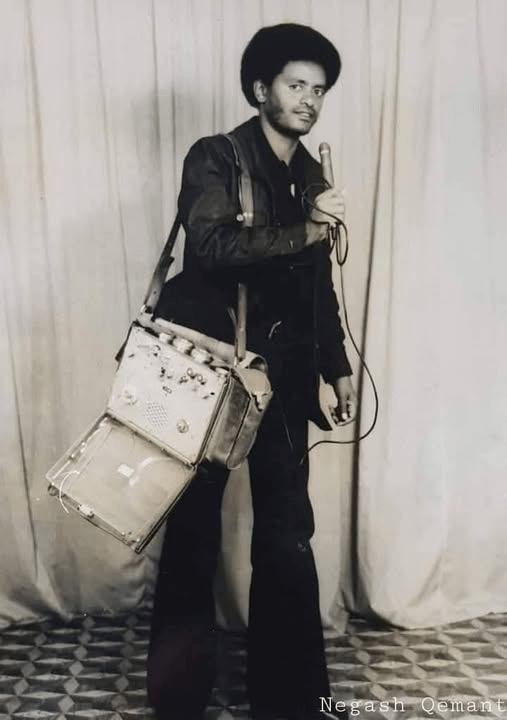
A Tribute to Hussein Badaso: A Pioneer of Afan Oromo Radio and a Guardian of Oromo Heritage
The individual in the photograph is Hussein Badaso, a veteran program journalist for the Afan Oromo service of Ethiopian Radio. His career represents a foundational chapter in Ethiopian broadcasting and the cultural history of the Oromo people.
A Trailblazer in the Face of Adversity
Following the fall of the imperial regime on Meskerem 2, 1967 (Ethiopian Calendar), the Ethiopian Radio Services launched national broadcasts in Afan Oromo for the first time. Hussein Badaso was among the first cohort of university graduates recruited and rapidly trained in journalism to lead this historic initiative.
He served with courage and dedication during an era of widespread ignorance and prejudice against the language, bravely breaking down barriers to ensure Afan Oromo radio programming could begin. Alongside other pioneers like journalist Temesgen Gemeda, he helped shatter the culture of exclusion and narrow-mindedness that had previously dominated the airwaves.
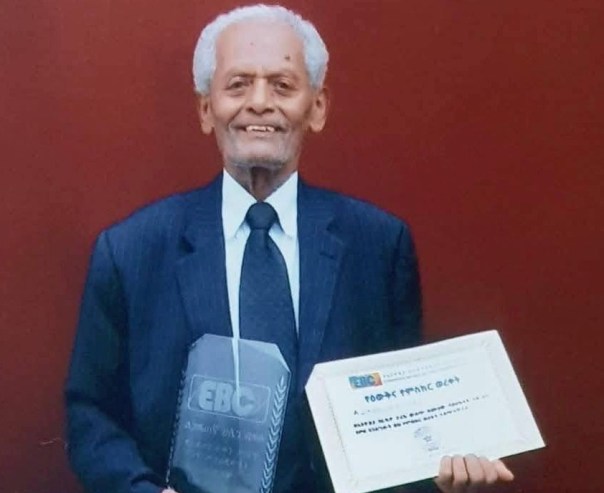
More Than a Journalist: A Scholar and a Mentor
Hussein Badaso is a living archive of Oromo history, culture, identity, and language. He was not only the first journalist to present a full-hour national program in Afan Oromo but also a master teacher of Oromo art, history, philosophy, and culture through the radio.
His contributions extend beyond broadcasting. When mother-tongue education was introduced after the Derg regime took power, he worked alongside Professor Mahdi Hamid Mude, then editor of the “Beresa” newspaper, to develop foundational Afan Oromo curriculum modules. He is also a published author, having written four books to date and currently preparing two more. His research into Oromo folk music, conducted in collaboration with legendary artists like the late Ali Shabo, has been invaluable.
A Legacy of Resilience and an Urgent Call for Support
Despite facing immense political pressure, moral attacks, and professional sidelining for his perceived affiliations and unwavering stance, Hussein Badaso persevered. Today, in his old age, he survives on a meager pension.
The Oromo people, the Oromia Regional Government, philanthropic foundations, and civic organizations have a profound debt of gratitude towards this hero. Failing to honor his monumental contributions while he is still with us would be a historical injustice, akin to erasing a vital chapter of the struggle for justice and freedom.
A Concrete Opportunity to Help
Among his works is the prepared manuscript for “Afaan Oromoo Raadiyorraa, Volume 2,” a continuation of his educational radio programs. Due to a lack of financial support from either individuals or institutions, it remains unpublished. Volume 3 is also in progress.
We have an obligation to support this generation-bridging champion. Let us ensure his knowledge is preserved and shared. We can help by supporting the publication costs of his invaluable books, particularly his Afan Oromo radio educational series.
Let us not just offer words of thanks, but tangible support. Let us help ensure that the light of knowledge he lit continues to shine for future generations.
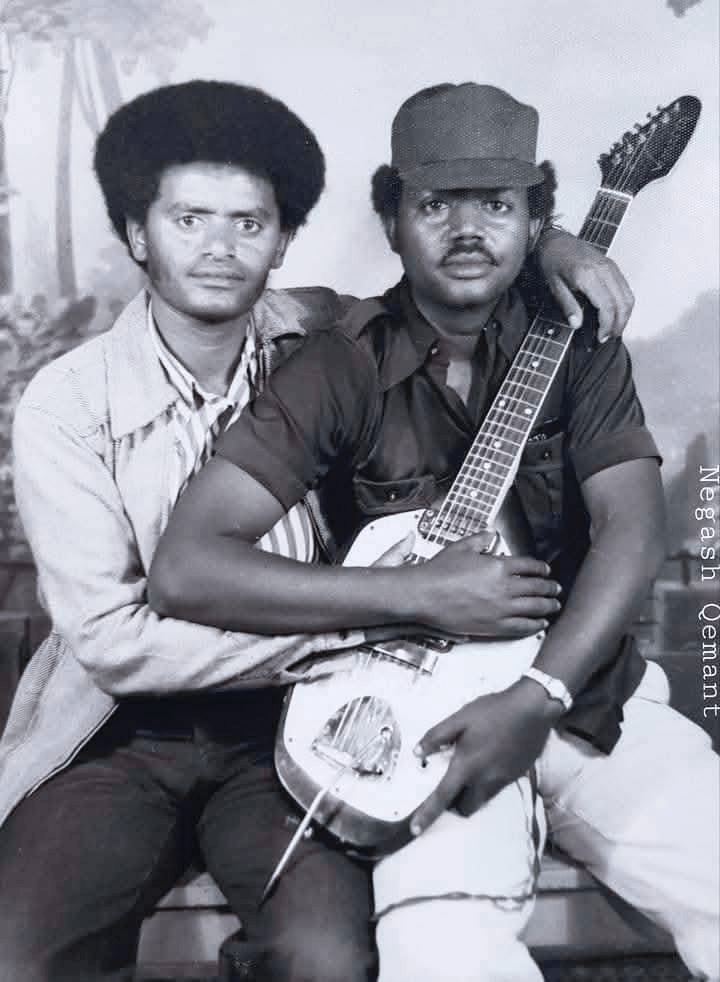

Benefits of the Shanan Celebration for Mothers Abroad
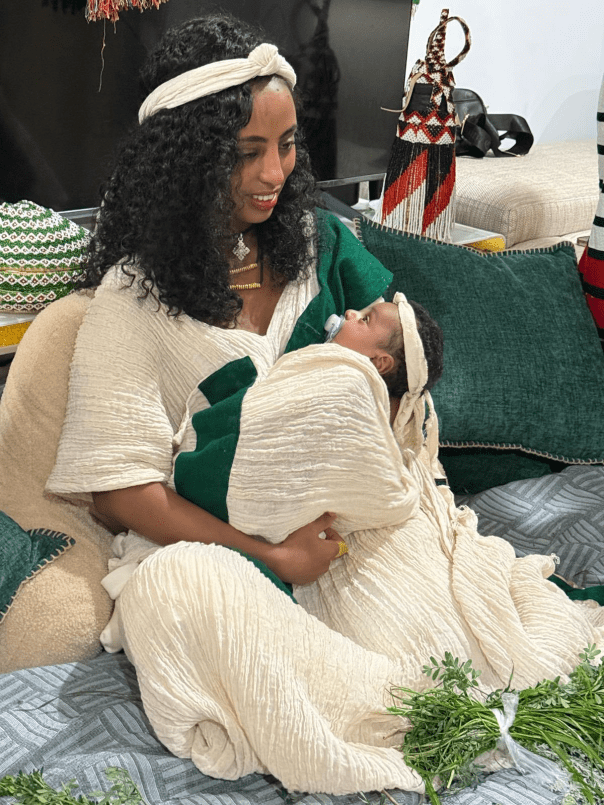
What are the benefits of the fifth day of the birthday celebration for a mother who is away from family and relatives and lives abroad?
This is a poignant question that touches on the heart of maintaining cultural identity and emotional well-being while living abroad.
The benefits of celebrating the fifth-day ceremony (often called Shanan in Oromo tradition) for a mother living far from her family and relatives are profound, albeit in a different way than if she were at home.
Here are the key benefits, framed for her unique situation:
1. Psychological and Emotional Benefits
- Combating Isolation and Loneliness: New motherhood in a foreign country can be intensely isolating. Actively observing this ritual creates a powerful psychological tether to her support system. It is a deliberate act that says, “Even though I am far, I am still connected to my people and their traditions.”
- Creating a Sense of Control and Agency: In a time when much feels new and outside of her control (new baby, new environment), performing a familiar ritual is an act of empowerment. It allows her to reclaim a piece of her identity and actively shape her experience of motherhood according to her own values.
- Marking the Sacred Transition: The fifth-day ceremony formally welcomes the newborn into the world and acknowledges the mother’s journey. By celebrating it, she honors her own strength and validates the monumental transition she is undergoing, preventing it from passing as just another day.
2. Cultural and Identity Benefits
- Instilling Cultural Identity from the Start: This is one of the most powerful benefits. By performing this ceremony, she begins the process of passing on her Oromo heritage to her child from its very first days. It is the child’s first cultural lesson and a foundational brick in building their identity.
- Being a Cultural Bridge: The celebration can be an opportunity to educate her non-Oromo friends and community about the beauty and depth of her culture. It transforms her home into a small cultural embassy, fostering understanding and pride.
- Preserving Personal and Collective Heritage: For diaspora communities, these rituals are a vital act of preservation. By keeping the tradition alive, she ensures it will be passed down, contributing to the cultural continuity of the Oromo people abroad.
3. Social and Relational Benefits
- Building a “Chosen Family”: While she cannot be with biological family, the ceremony can be adapted to include her support network abroad—close friends, neighbors, or other diaspora families. This helps forge a new, meaningful community around her and her child.
- Facilitating Long-Distance Connection: Technology can bridge the distance. She can schedule a video call with family back home during the ceremony, allowing them to participate virtually, offer blessings, and guide the rituals. This creates a shared experience despite the geography.
- Honoring the Grandparents and Ancestors: Performing the ritual is a profound act of respect for her parents and elders. It shows them that their teachings and traditions are valued and being continued, which can be a great comfort to them and strengthen those long-distance bonds.
How to Adapt the Celebration Meaningfully:
The benefit isn’t diminished by adapting the ceremony; it’s often enhanced. She can:
- Simplify the Rituals: Focus on the core elements that are most meaningful to her, such as saying the traditional prayers or blessings, preparing a significant symbolic meal, or dressing herself and the baby in traditional clothes.
- Incorporate New Elements: Blend the Oromo tradition with elements from her new environment in a way that feels respectful.
- Make it Personal: The most important benefit is the intentionality behind the act. The mere act of pausing, reflecting, and honoring this tradition infuses her journey as a new mother abroad with purpose, meaning, and a deep sense of connection.
In essence, the benefit is transforming a moment of potential loneliness into an act of profound cultural strength and personal affirmation. It is a way for her to nurture both her child and her own spirit.
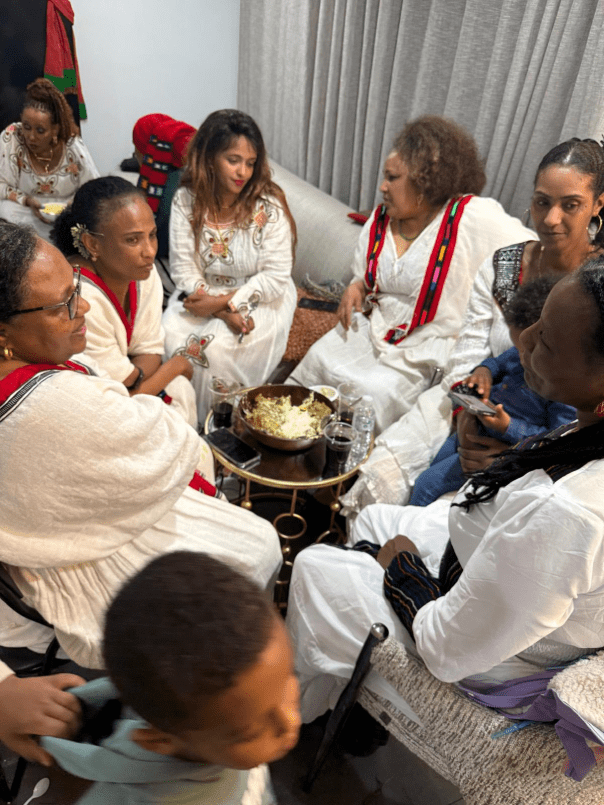

Why Sadaasa 9 (November 9) holds a place of supreme importance in the history of the Oromo struggle for freedom?
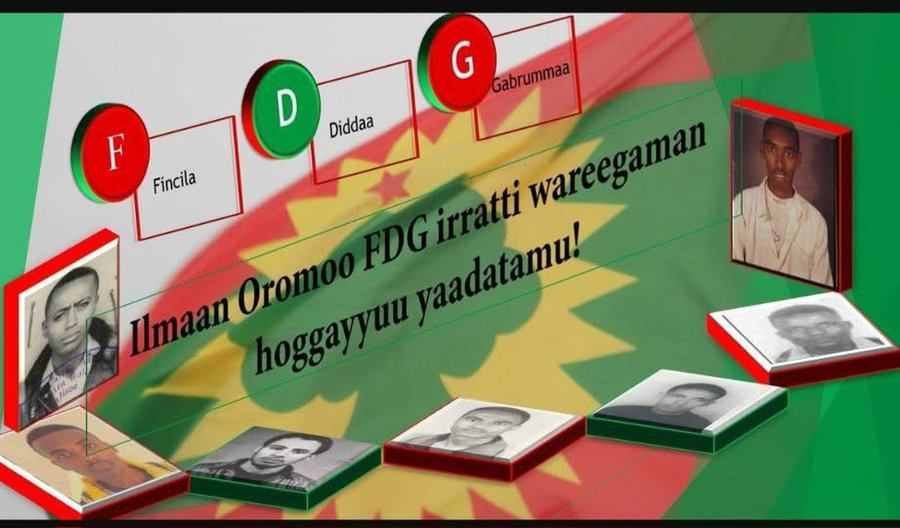
Sadaasa 9 (November 9) holds a place of supreme importance in the modern Oromo struggle for freedom because it marks the beginning of a watershed protest movement that fundamentally transformed the nature of the resistance against the Ethiopian government.
Here is a detailed breakdown of why this date is so significant and is commemorated annually.
1. The Trigger: The “Master Plan” for Addis Ababa
The immediate catalyst was the **2006 Master Plan**, a massive urban expansion scheme by the government that aimed to annex large swathes of Oromia farmland surrounding the capital, Finfinne (Addis Ababa). For the Oromo people, this was not merely a municipal boundary adjustment; it was an **existential threat**. It meant:
* Mass Dispossession: The forced eviction of Oromo farmers from their ancestral land with little to no compensation.
* Cultural Erasure: The further erosion of Oromo identity, sovereignty, and their historical connection to Finfinne.
* Economic Marginalization: The loss of livelihood for millions, turning self-sufficient farmers into a displaced underclass.
The Master Plan was seen as the ultimate symbol of garbummaa (systemic exploitation, subjugation, and denial of Oromo rights) under the Ethiopian state.
2. The Outbreak of the Oromo Protests (Fincila Diddaa Garbummaa – FDG)
In response to this plan, widespread protests erupted spontaneously, primarily led by **Oromo youth (the Qeerroo)**. While discontent had been simmering for decades, **Sadaasa 9, 2015**, marks a pivotal moment when these protests exploded into a coordinated, mass movement.
The protests that began on and around this date were characterized by:
* Mass Mobilization: It was not led by a single political party but was a genuine grassroots uprising involving students, farmers, professionals, and elders across virtually all of Oromia.
* Strategic Non-Violence: Initially, the protests were largely peaceful, involving marches, sit-ins, and the symbolic raising of the Oromo flag.
* A Clear, Unified Message: The protests unified various Oromo grievances—political marginalization, economic exploitation, cultural suppression—under the central demand to cancel the Master Plan and secure Oromo self-rule.
3. The Government’s Brutal Crackdown and Martyrdom
The Ethiopian government’s response was swift and extremely violent. Security forces used live ammunition, mass arrests, torture, and intimidation to crush the protests.
This crackdown had a profound effect:
* Creation of Martyrs: Hundreds, and eventually thousands, of unarmed protesters were killed. Sadaasa 9 became a day to remember these wareegamtoota (martyrs) who gave their lives for the cause.
* International Spotlight: The brutal suppression drew unprecedented international attention from human rights organizations like Amnesty International and Human Rights Watch, global media, and diplomats, putting the Ethiopian government under intense scrutiny.
* Radicalization of the Movement: The violence convinced many Oromos that peaceful protest was futile, further cementing their resolve and transforming the **Qeerroo** into a formidable, disciplined force for change.
4. A Historic Turning Point
The protests that began on Sadaasa 9, 2015, ignited a fire that could not be extinguished. They:
* Shattered the Climate of Fear: For the first time in a generation, the Oromo public massively and openly defied the state.
* Forged a New Generation of Leaders: The **Qeerroo** movement demonstrated immense organizational skill and strategic patience.
* Laid the Groundwork for Political Change: The sustained pressure from these protests over the next three years critically weakened the ruling party and was the primary force that led to the resignation of Prime Minister Hailemariam Desalegn and the rise of Abiy Ahmed in 2018. The **Master Plan was officially canceled** in January 2016 as a direct result of the protests.
—
Summary: Why Sadaasa 9 is Commemorated
In essence, Sadaasa 9 is commemorated because it marks the birth of the Oromo Protest Movement—a decisive, transformative moment in the struggle.
* It is a Day of Remembrance: To honor the courage and sacrifice of the wareegamtootaa (martyrs) who were killed.
* It is a Day of Resistance: It symbolizes the collective rejection of garbummaa and the reclaiming of Oromo identity and agency.
* It is a Day of Resilience: It celebrates the power of a united people to challenge a repressive state and force historic political concessions.
* It is a Foundational Date for Modern Oromo Nationalism: For the Oromo youth and the diaspora, it represents their “1776” or “Sharpeville”—a defining date where their generation took center stage in the fight for their people’s future.
Therefore, Sadaasa 9 is not just a date on the calendar; it is a powerful symbol of sacrifice, unity, and the unyielding pursuit of freedom in the face of overwhelming odds.
Irreecha: The Foundation of Oromo Nationalism
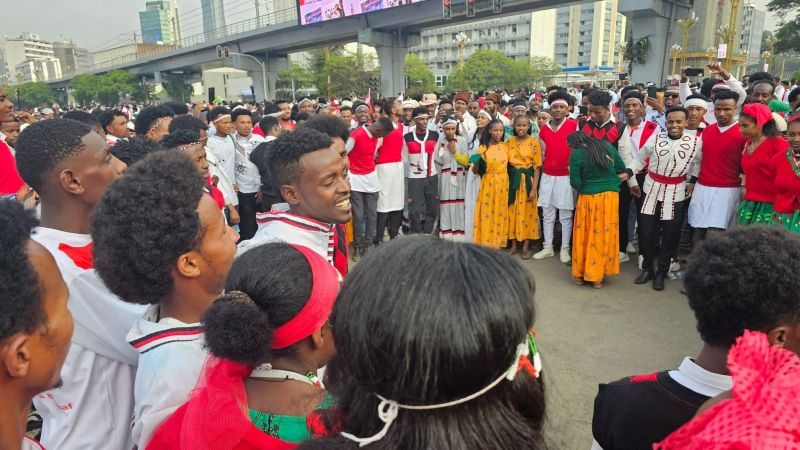
The Irreecha festival stands as a powerful foundation of Oromo nationalism. It is a vibrant testament to the Oromo people’s enduring commitment to preserving their identity, language, and culture against all odds. This commitment fuels a continuous struggle to reclaim and restore their dignity, a cause for which they are willing to make any sacrifice.
Among these celebrations, Irreecha Hora Finfinnee holds particular significance as a massive and profound demonstration of cultural pride.
The success of this cultural revival has been supported by the current government’s policy of cultural reform. This enabling environment has allowed the Oromo people, through events like Irreecha, to showcase their heritage and contribute to their collective social and cultural development.
During Irreecha, especially at the Malka site, the spirit of Oromo nationalism is palpable. Participants adorn themselves in traditional clothing and jewelry, creating a stunning visual representation of their culture. The sense of unity is boundless, as millions gather at Malka for a shared purpose.
This immense gathering does more than unite the Oromo people; it also creates a captivating spectacle for the wider world. The powerful display of unity and the convergence of diverse nations and nationalities have made Irreecha a significant attraction, drawing fascinated visitors from across the globe.
Significance of the Gaammee Gurguddaa in Oromo Culture
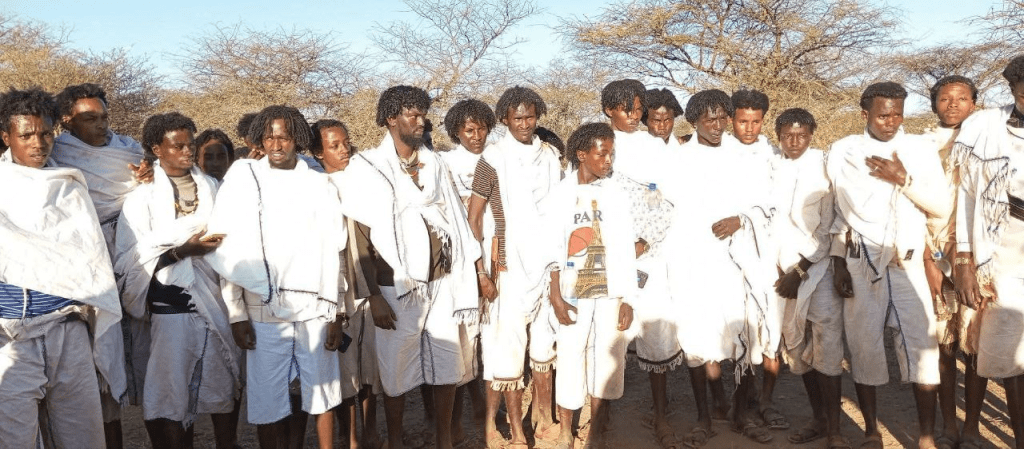
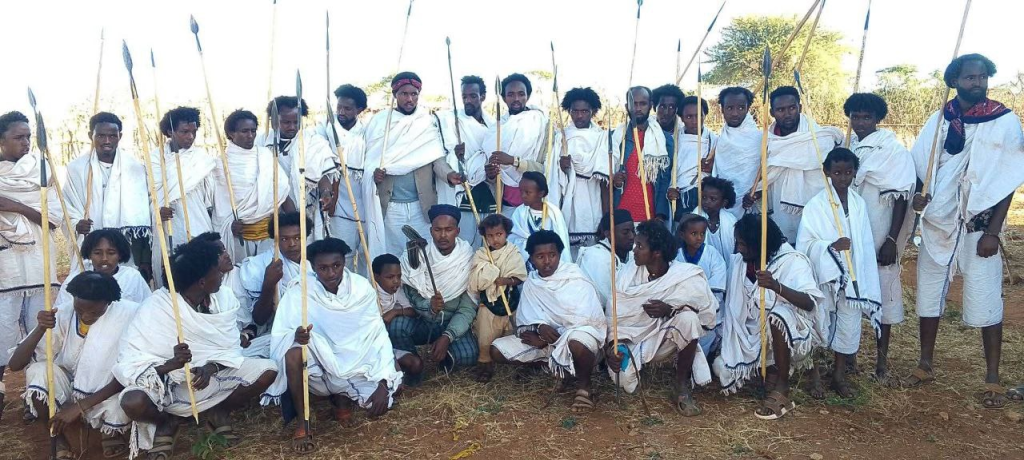
Borana Gaammee Gurguddaa Gather in Gayo Village for Traditional Rite of Passage
The Gadaa system, the foundation of Oromo culture, traditions, and governance, guides every Oromo child through distinct stages of development. This long-term process, known as Gadaa, is dedicated to acquiring, nurturing, and preparing successive generations for leadership.
A significant transition within the Borana Gadaa system is the progression from the Gaammee Gurguddaa stage to the Kuusaa. Before this advancement, children in the Gaammee Gurguddaa grade from various regions convene in a ceremony known as Walargii.
Bonayaa Diidoo, leader of the traditional Sona group at the Oromia Bureau of Culture and Tourism, explained to Fana Digital that Borana children of this age group, including those from Kenya, gather at Gumii Gaayyoo with their fathers’ support.
The primary purpose of the Walargii is for the Gaammee Gurguddaa of the same gogeessaa to meet, learn from one another, and build relationships. A further objective is to instill respect for the people’s laws, customs, and ethics, thereby strengthening communal unity. This gathering occurs once every eight years.
During the three-to-four-day ceremony, the community hosts and feeds the Gaammee Gurguddaa from the moment they begin their journey. At the Gayo Gumii, the Abbootii Gadaa and Abbootii Seeraa formally identify the children as being in the same leadership cohort and introduce them. The meeting takes place at the ancestral home of the former Abba Gadaa Guyyoo Gobba, where a ritual blessing is performed.
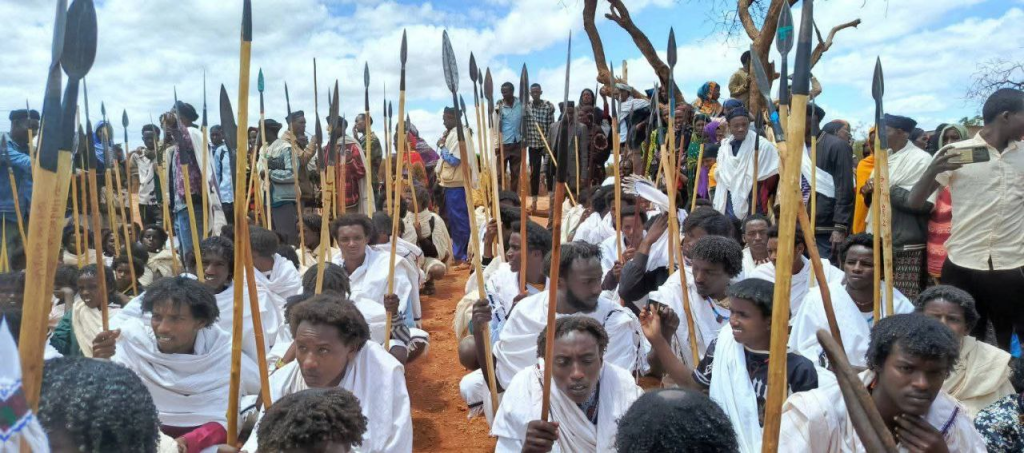
The Walargii ceremony serves as the first chapter in a major program, culminating in a second stage known as the “Feeding Ceremony” approximately ten months later.
For about five months following the Walargii, the Gaammee Gurguddaa undergo intensive training, refusing to return home. They immerse themselves in the people’s customs, traditions, and ethics. During this period, they sustain themselves solely on the meat and blood of animals, do not enter houses, and abstain from washing their bodies or clothes. They go barefoot, enduring these challenges to practice the rigors of traditional life.
When the time arrives according to the traditional calendar, the Gaammee Gurguddaa reunite with the Abbootii Gadaa, Luboota, and jaarrolee for the grand “Feeding” ceremony. While a feast is central to the event, it is also a forum for significant challenges and evaluations.
The trainees compete and are rigorously assessed on their physical strength, understanding of Gadaa rule, and public speaking skills. The most successful individual among the Gaammee Gurguddaa is selected by the elders and the public to be groomed as a future Adula Council Scholar. They are blessed and gains recognition throughout the tribe, and when he comes of age, he will become a Gadaa leader and receive the baallii (sceptre).
Recently, the Gaammee Gurguddaa of Borana Gayo convened for their Walargii in the Dhas District of the Eastern Borana Zone.

Commissioner Lelise Dhugaa: A Catalyst for Oromia’s Tourism
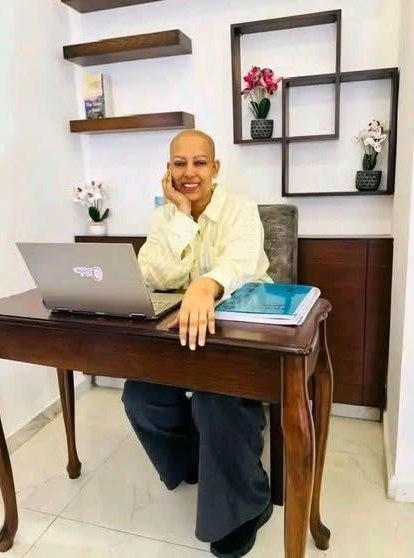
Commissioner Lelise Dhugaa is more than a leader; she is a transformative force. Her legacy in establishing and advancing Oromia’s tourism sector is a testament to her vision, intellect, and unwavering dedication.
Her Key Achievements Include:
- Founding a New Sector: She was the first to prepare and submit the proposal for the establishment of the Oromia Tourism Commission. Her idea was not only accepted but successfully realized.
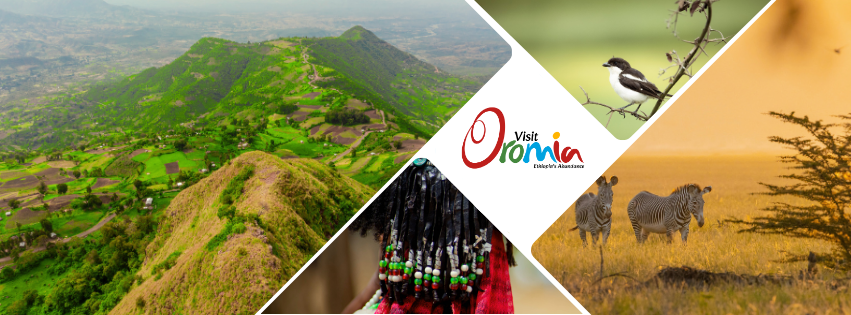
- Launching “Visit Oromia”: Under the new commission, she launched the “Visit Oromia” initiative. This platform brought unprecedented attention to natural wonders like the mountains of Bale, Salale, Arsi, and Iluu Abbaa Boor, as well as the Suba Forest.
- Unifying Professionals: She successfully mobilized a wide range of experienced professionals—including cameramen, media experts, artists, and models—from both public and private sectors to collectively promote Oromia.
- Creating a Cultural Symbol: She institutionalized “Oromia Tourism Week” to precede the annual festival, featuring panel discussions and promotional events. This initiative created new opportunities, encouraging Oromo girls to develop skills in beauty and modeling through a celebrated annual competition that promoted Oromia’s culture.
- Promoting Hidden Gems: Countless previously unknown natural and artificial parks across Oromia were identified and promoted to a wider audience.
- Recognizing Contributors: She ensured that the camera professionals, park guards, tour guides, drivers, and artists who played a crucial role in showcasing Oromia’s image and beauty were recognized and celebrated, setting a precedent for future generations.
- Elevating Oromia Globally: Through her work, the God-given heritage, tourist attractions, culture, and identity of the Oromo people have gained recognition on the world stage. The resulting tourism income has directly benefited our region.
- Driving Development: Her office identified, researched, and promoted hidden tourist attractions, linking tourism directly to infrastructure development.
- Securing UNESCO Recognition: She played a major, indispensable role in the UNESCO listings for the Bale Mountains, Irreecha, and the Gada System over the past five to six years.
Commissioner Lelise is not only a skilled leader but also a woman of profound wisdom. Academically, she is a formidable intellectual. In a country where establishing a new commission is a monumental challenge, she not only created a new sector but achieved 101% success.
Overall, Commissioner Lelise Dhugaa has firmly established Oromia as a center of tourism. She successfully redirected tourist traffic that once flocked only to the north, ensuring our region received its rightful share of attention. For this, this generation praises and thanks her.
She is a strong woman whose discipline and honor reflect the dignity of all Oromo mothers. Though I do not know her personally, she carries the grace and strength of my own mother—a person whom Allah has adorned with every virtue.
I was profoundly shocked to learn of her illness. Mom… we need you. You are more valuable to Oromo and Oromia than gold. We pray for your swift and complete recovery, so you may finish the vital work you have started. May no evil befall you. May God restore you to perfect health.
For further info visit: https://www.facebook.com/visitoromia

Oromo Forces: New Democratic Strategies After 2018
How did 2018 peace deal alter ODF political goals?
The 2018 peace deal fundamentally shifted the political goals of the Oromian Defense Force (ODF) and its allied groups, most notably the Oromo Liberation Front (OLF) and Oromo Liberation Army (OLA), from an emphasis on armed struggle and potential secession toward renewed engagement with federal politics, negotiation, and peaceful transformation within Ethiopia.[11][12]
Emphasis on Negotiation and Peaceful Participation
Following the 2018 peace deal—brokered as part of a broader national reconciliation—the ODF and OLF renounced armed resistance, returned to Ethiopia from exile, and announced a willingness to pursue Oromo objectives through legal, peaceful, and democratic means. This marked a crucial shift from decades of armed opposition to dialogue and electoral participation.[12]
Commitment to Justice and Democratic Reform
The ODF and its political allies reoriented their platform around justice and democratization rather than outright independence. They advocated for dialogue aimed at ending repression, safeguarding human rights, and building an inclusive federal system. The peace deal made negotiation over Oromo grievances, state autonomy, and fair power-sharing a central feature of their demands.[13][12]
Internal Divisions and New Strategies
The peace process also brought internal tensions—some factions supported disarmament and rapprochement with the government, while others (notably the OLA) argued the federal government failed to meet peace commitments, thus resuming armed resistance. Nevertheless, the declared political track for mainstream ODF/OLF post-2018 prioritized peaceful reform and legal advocacy within Ethiopia’s system.[14][15]
Dialogue on Self-Determination
Post-deal, political demands have been reframed around a self-determination process via constitutional and democratic mechanisms, rather than unilateral secession. The goals moved toward ensuring meaningful autonomy for Oromia and broad democratic reforms to benefit all Ethiopians, as opposed to exclusive focus on armed struggle for independence.[11][12]
In summary, the 2018 peace agreement redefined ODF political goals—shifting them from militant separatism to a platform emphasizing peaceful negotiation, democratic participation, and structural reform of the Ethiopian state.[15][12][14][11]
Sources
[1] Is South Sudan’s Peace Deal Falling Apart Again? https://www.internationalaffairs.org.au/australianoutlook/is-south-sudans-peace-deal-falling-apart-again/
[2] Death by Peace: How South Sudan’s Peace Agreement … https://africanarguments.org/2022/01/death-by-peace-how-south-sudans-peace-agreement-ate-the-grassroots/
[3] BRIEFING: All you need to know about South Sudan’s … https://www.thenewhumanitarian.org/analysis/2018/08/14/briefing-all-you-need-know-about-south-sudan-s-new-power-sharing-accord
[4] Why South Sudan’s attempts at peace continue to fail https://theconversation.com/why-south-sudans-attempts-at-peace-continue-to-fail-126846
[5] The last peace deal for South Sudan? https://issafrica.org/iss-today/the-last-peace-deal-for-south-sudan
[6] South Sudan’s peace deal at risk of collapse without … https://www.ohchr.org/en/press-releases/2025/06/south-sudans-peace-deal-risk-collapse-without-stronger-regional-action-warns
[7] South Sudan’s shaky peace is at risk of collapse. Can it be … https://www.chathamhouse.org/2025/04/south-sudans-shaky-peace-risk-collapse-can-it-be-saved
[8] South Sudan president signs peace deal with rebel leader https://www.aljazeera.com/news/2018/9/12/south-sudan-president-signs-peace-deal-with-rebel-leader
[9] The shaky peace deal in South Sudan https://www.freiheit.org/sub-saharan-africa/shaky-peace-deal-south-sudan
[10] Landmark South Sudan deal offers hope, but trust ‘still … https://news.un.org/en/story/2018/09/1019242
[11] Mission – Oromo Liberation Front https://oromoliberationfront.org/english/mission/
[12] Country policy and information note: Oromos, the … https://www.gov.uk/government/publications/ethiopia-country-policy-and-information-notes/country-policy-and-information-note-oromos-the-oromo-liberation-front-and-the-oromo-liberation-army-ethiopia-march-2022-accessible
[13] Peace—and justice—remain elusive in Oromia https://www.ethiopia-insight.com/2024/10/17/peace-and-justice-remain-elusive-in-oromia/
[14] Oromo Liberation Front – Wikipediaen.wikipedia.org › wiki › Oromo_Liberation_Front https://en.wikipedia.org/wiki/Oromo_Liberation_Front
[15] About the Oromo Liberation Army | OLF-OLA https://www.olf-olahq.org/about

Oromo Diaspora in the UK Protests Against Human Rights Abuses in Oromia
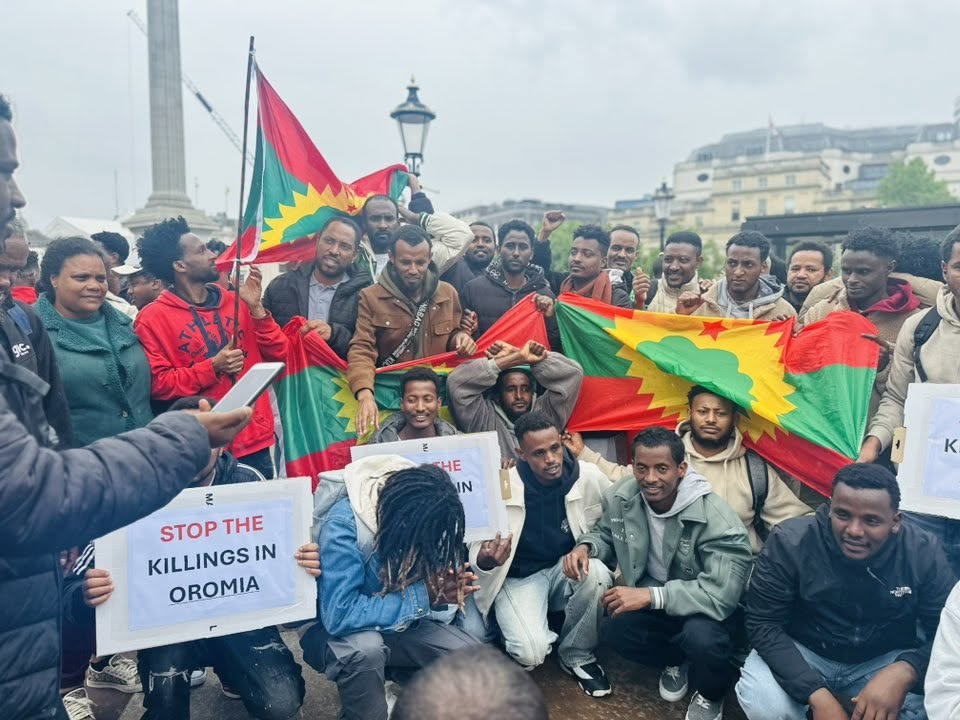
Thousands gather in London to denounce the Prosperity Party government’s actions and demand international intervention
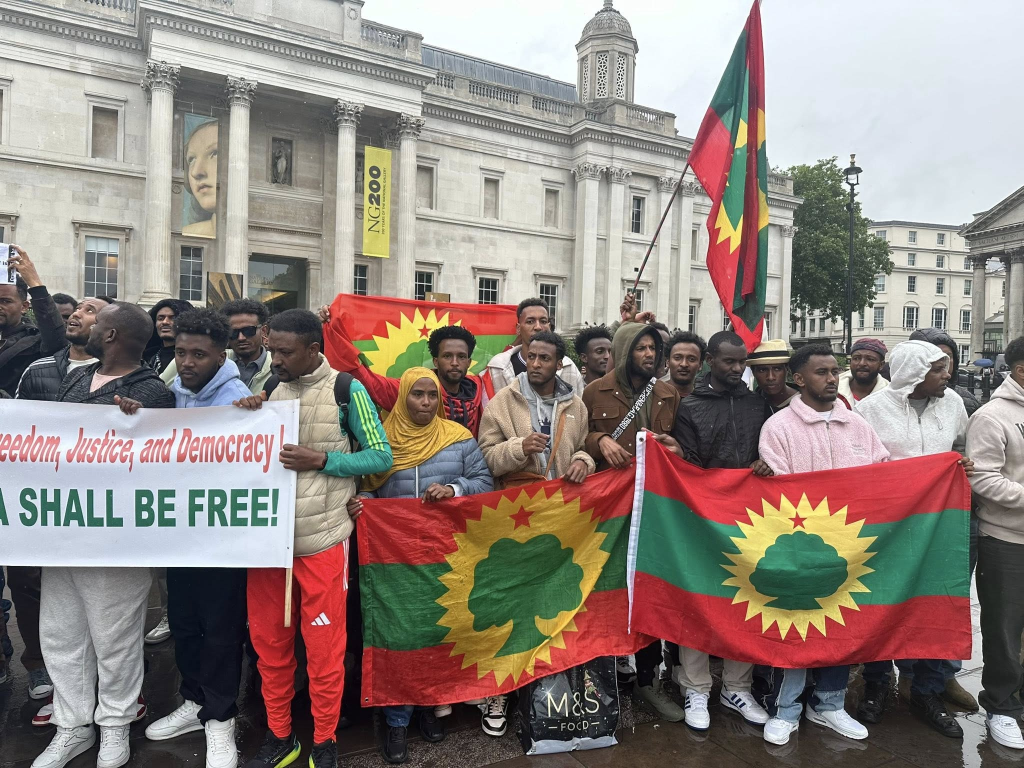
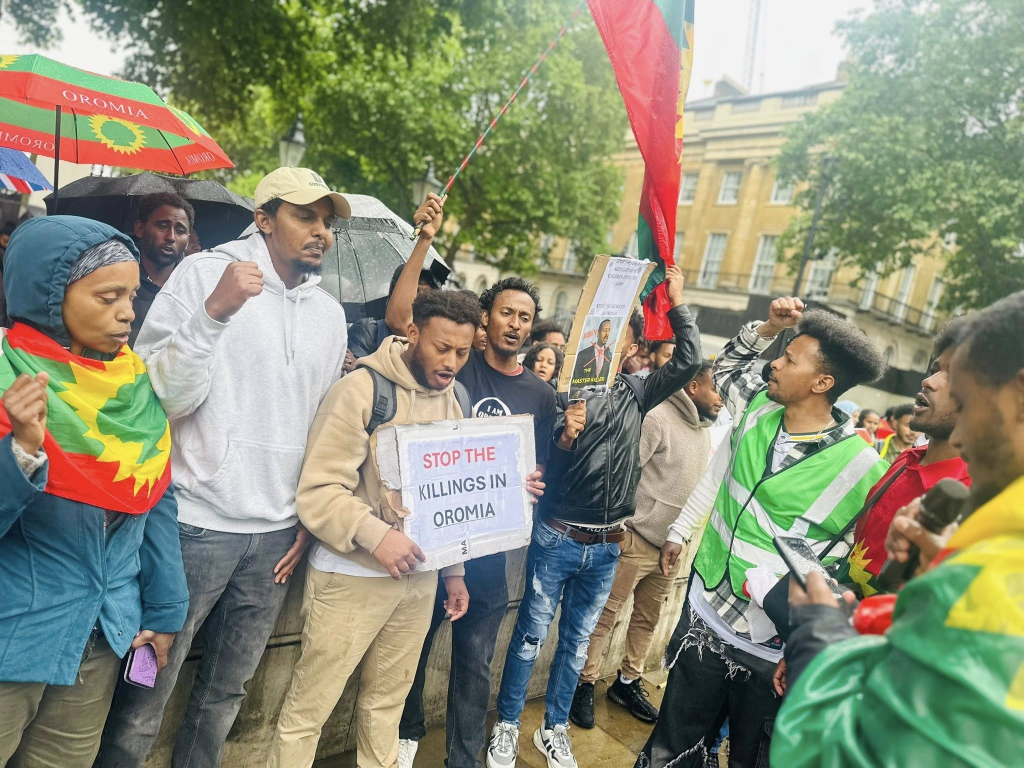
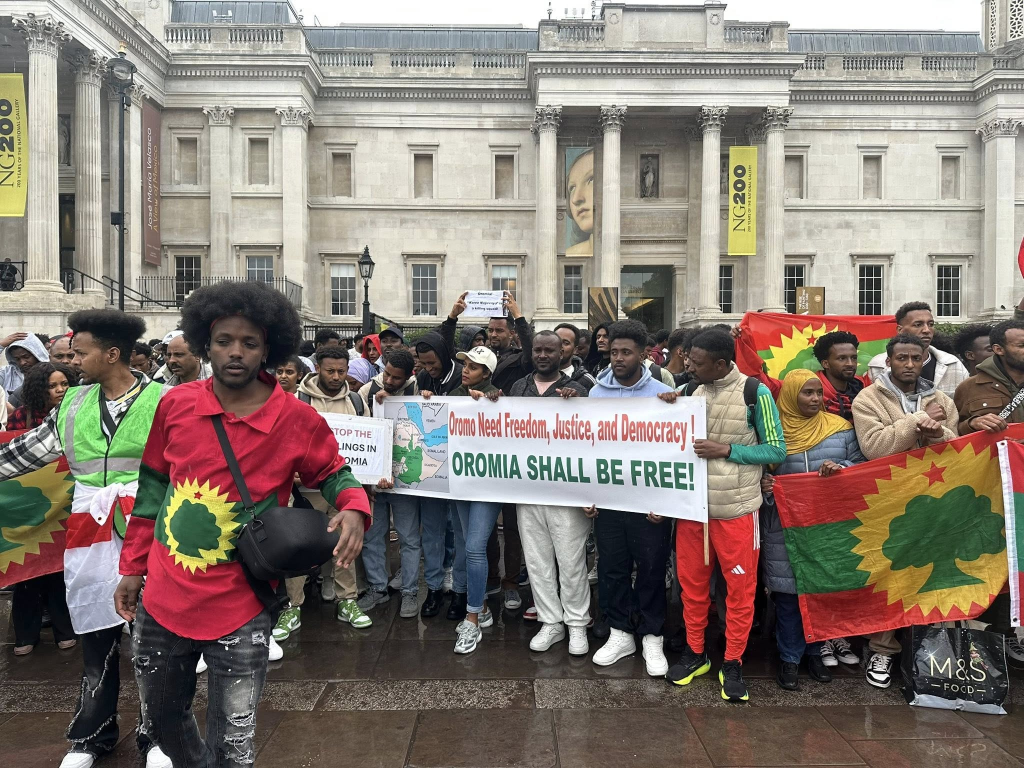
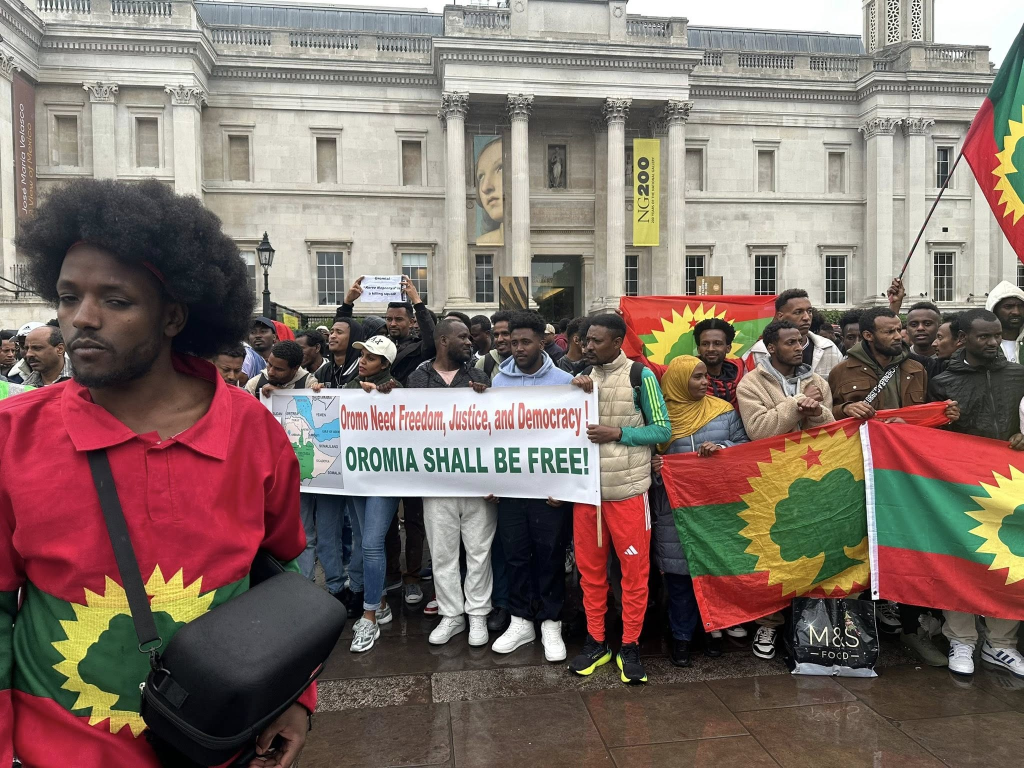
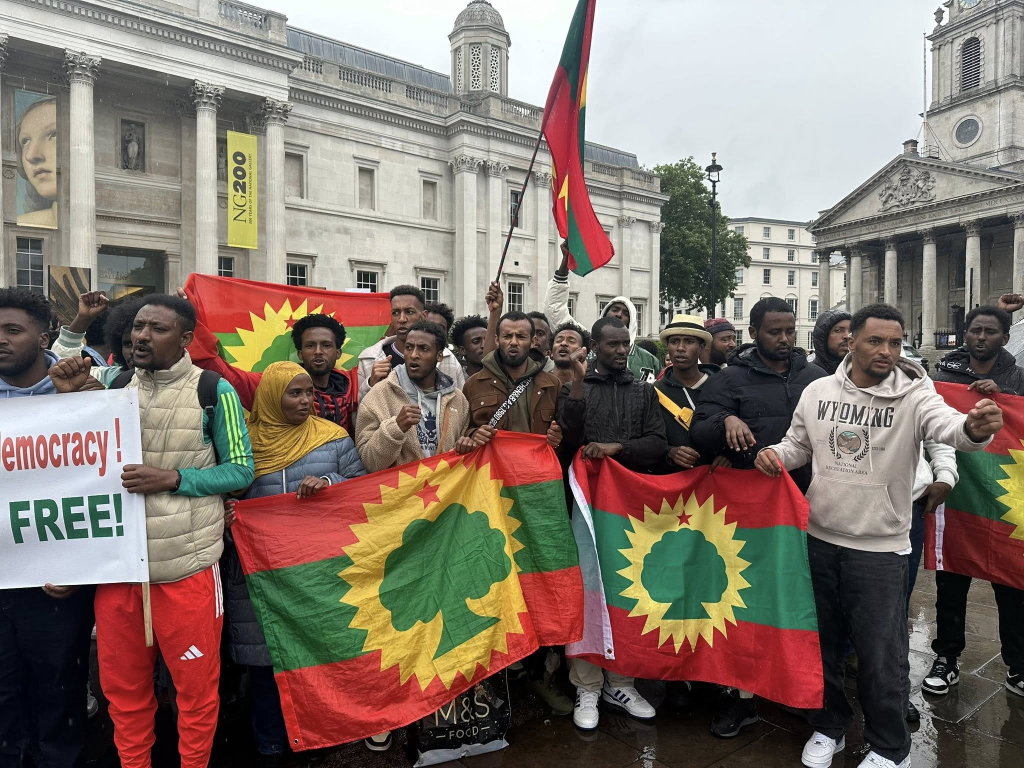
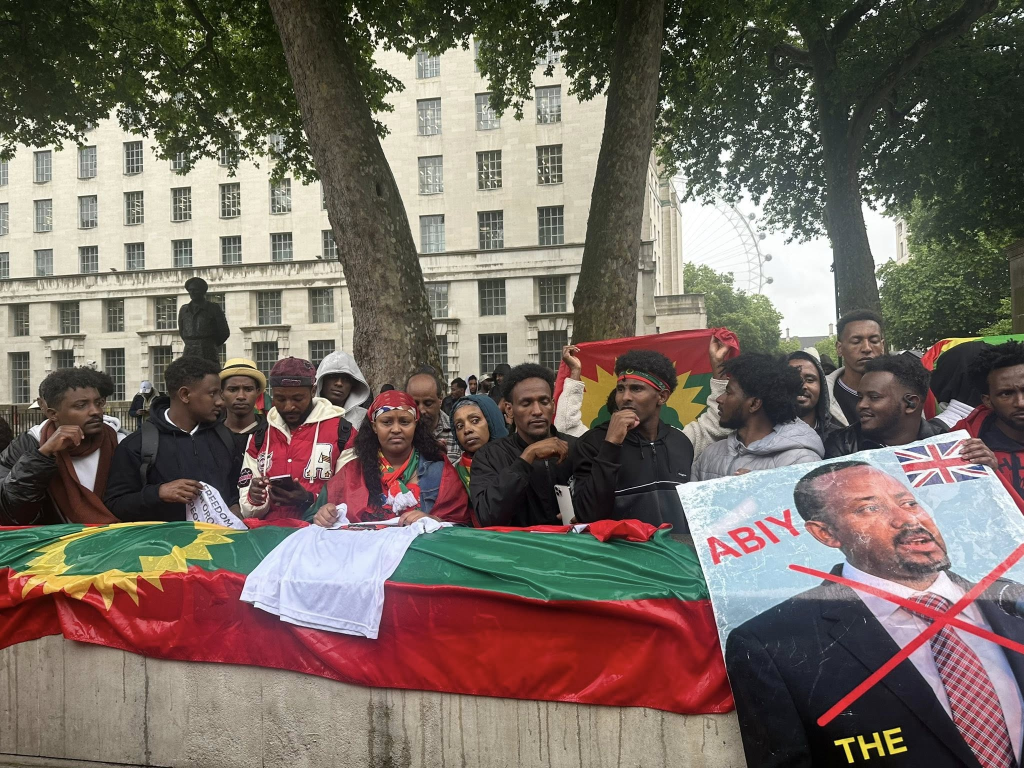
LONDON, UNITED KINGDOM — The Oromo diaspora community in the United Kingdom took to the streets of London on May 27, 2025, in a powerful demonstration against what they described as escalating human rights violations and systematic oppression in Oromia under the Prosperity Party government led by Prime Minister Abiy Ahmed .
Organizers described the protest as an urgent response to conditions in Oromia that have reached a critical threshold, drawing participants from across the UK. The rally demanded immediate international action to halt the violence and protect Oromo civilians.
A Crisis at the Breaking Point
Protest leaders emphasized that human rights abuses in Oromia and across Ethiopia have surpassed acceptable boundaries. They warned that the situation has become so alarming that it can no longer be ignored or dismissed.
The Oromo people, who constitute approximately 35 percent of Ethiopia’s population, have long voiced grievances over political marginalization, economic exploitation, and cultural suppression. The recent escalation of military operations in Oromia has deepened these concerns, with protesters pointing to a deliberate campaign of displacement and violence.
Echoes of the Derg Era
Demonstrators drew stark parallels between the current Prosperity Party government and the Derg regime of Mengistu Hailemariam (1974-1991). They accused the current administration of employing similar tactics: forcibly conscripting youth into the military, deploying them to war zones, and using them as cannon fodder in conflicts across the country .
The comparison resonated deeply with participants, many of whom have personal or family memories of the Derg’s brutal crackdown on Oromo communities. The Red Terror period, which saw systematic killings and disappearances of political opponents, remains seared into the collective memory of the Oromo people.
The Human Toll
Demonstrators painted a stark picture of life under the current government: the Oromo people have no peace and live each day like leaves falling to the ground. The constant state of insecurity has made movement between places “almost impossible” .
Reports from human rights organizations have documented extrajudicial killings, torture, abductions, and rape committed by both government forces and the Oromo Liberation Army (OLA). A joint investigation by Reuters uncovered the operations of a clandestine Security Committee in Oromia that has allegedly ordered extra-judicial killings and illegal detentions .
The impact on civilians has been devastating: over 3.2 million children are reportedly out of school due to the fighting, and aid groups have struggled to distribute supplies, contributing to high malnutrition rates.
A Call to Action
The protesters presented a series of demands to both the Ethiopian government and the international community :
- An immediate halt to what they described as genocide and military operations across Ethiopia
- The cessation of forced conscription of children into the military
- The withdrawal of all forces from Oromia
- An end to the unlawful seizure of Oromo land and property
- The unconditional release of all political prisoners
- Justice for murdered artists and activists, including Haacaaluu Hundeessaa and Battee Urgeessaa
The demonstrators specifically called on the UK government and international financial institutions to suspend all financial and diplomatic support to the Ethiopian government. A formal petition detailing these grievances was submitted to the UK Foreign Office.
The Role of the International Community
Protest leaders emphasized that international actors have a moral and legal obligation to intervene. The Ethiopian government, they argued, has repeatedly failed to protect its citizens and has weaponized state institutions against the Oromo people .
The call for the UK government to exert “necessary pressure” on the Prosperity Party reflects growing frustration among the Oromo diaspora with the international community’s perceived inaction. Despite widespread documentation of human rights abuses, Ethiopia has continued to receive diplomatic and financial support from Western nations.
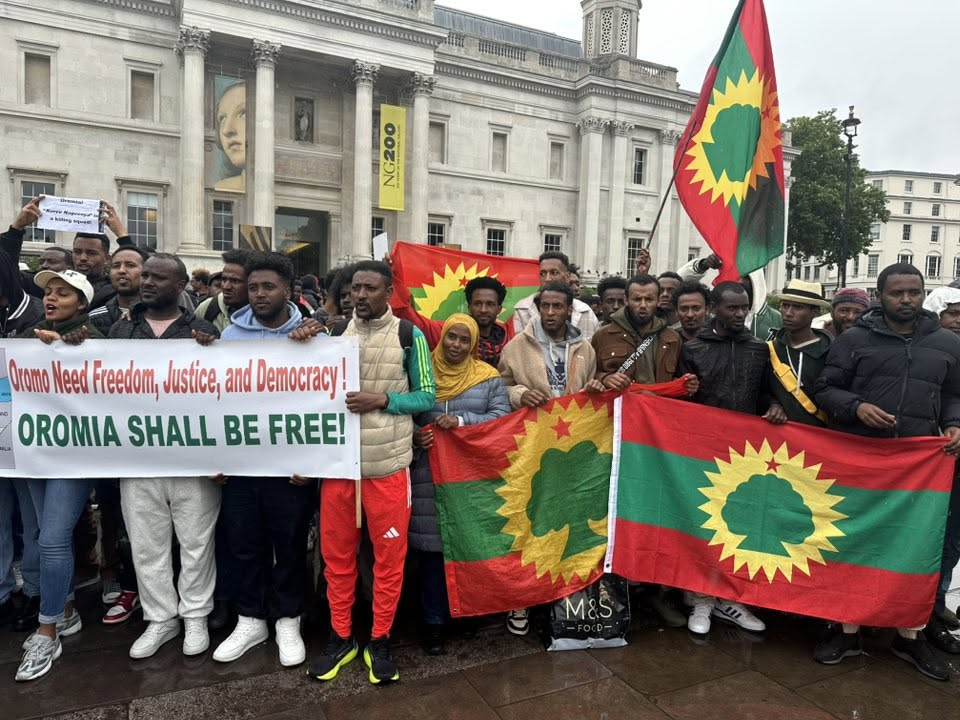
The London protest on May 27, 2025, was part of an ongoing global campaign by the Oromo diaspora to bring attention to systematic human rights abuses in their homeland . The demonstrators’ demands reflect a deep sense of urgency: they have called for an end to the killings, the withdrawal of forces, and international intervention .
The Oromo people continue to live without peace, and the situation in Oromia remains deeply insecure. The international community faces a critical test: whether it will respond with concrete action or allow another chapter of suffering to unfold largely unseen.





 Advocacy for Oromia