Category Archives: mental health

The Sacred Trust: Why Workplace Confidentiality Is a Duty Beyond Law

In every workplace, there are lines that should never be crossed—and confidentiality is one of them. It is not just a rule; it is a promise.
A colleague shares a private frustration over coffee. A manager casually discusses sensitive restructuring plans. A personnel file is left open on a shared screen. An email containing personal information is forwarded without a second thought.
In the moment, these seem like small slips—harmless, even human. But the consequences can ripple far beyond what anyone anticipates.
“Namni kamuu iccitii mana hojii eeguuf dirqama qaba.”
(Every person has a duty to protect workplace confidentiality.)
This is not merely a bureaucratic requirement tucked into employment contracts. It is a fundamental pillar of trust, professionalism, and ethical conduct. And when that trust is broken, the damage can be profound—not only to individuals but to entire organisations, communities, and lives.
What Is Workplace Confidentiality?
Workplace confidentiality refers to the obligation of employees to protect sensitive information they encounter in the course of their work. This includes:
- Personal information about colleagues, clients, and customers
- Financial data and business strategies
- Medical records and health information
- Performance reviews and disciplinary matters
- Trade secrets and proprietary knowledge
- Internal communications and decision-making processes
Whether it is spoken in a meeting, written in an email, or stored in a database, such information is entrusted to employees on the understanding that it will be handled with care and discretion.
The Line Between Sharing and Violating
We live in an age of oversharing. Social media encourages us to broadcast our thoughts, workplace chat platforms blur the boundaries between professional and personal, and the ease of forwarding an email can make us forget that some messages were never meant to be shared.
But there is a clear and important distinction.
“Namni tokko iccitiin namoota dhuunfaa baasee maxxansuu fi saaxiluun dhorkaa dha.”
(It is forbidden for a person to disclose and share private information with others.)
This is not merely a suggestion—it is a legal and ethical obligation. In Australia, privacy laws such as the Privacy Act 1988 (Cth) and the Australian Privacy Principles (APPs) regulate how personal information must be handled, and breaches can result in serious penalties. Beyond the legal consequences, there are reputational and relational costs that can take years to repair.
When Confidentiality Is Broken: Real-World Consequences
Consider the real-world impact of a breach:
A team leader casually mentions in a group meeting that a staff member is struggling with a health condition. The staff member feels exposed and humiliated, their trust shattered. Colleagues begin to treat them differently, and the workplace atmosphere becomes strained. The staff member may even leave the organisation, taking their talent and experience elsewhere.
A payroll officer accidentally emails salary details to the entire company. The fallout is immediate—resentment, comparisons, and a breakdown in morale that affects productivity for months. Trust in management evaporates, and the company’s culture is damaged for years.
An employee posts about a confidential client dispute on social media. The client discovers the post, files a complaint, and the company’s reputation is irreparably damaged. The employee is terminated, and the company loses a valuable contract—and potentially many more.
A healthcare worker shares a patient’s medical details with friends. The patient feels violated, their privacy destroyed. They may lose trust in the entire healthcare system, avoiding necessary care in the future. The worker faces disciplinary action, loss of registration, and potential legal consequences.
These are not hypothetical scenarios. They happen every day in workplaces across the world—in hospitals, schools, government offices, and corporate boardrooms.
Why Confidentiality Matters
Confidentiality is not about secrecy for its own sake. It is about:
1. Respect for Individuals
Every person has a right to privacy. When we respect that right, we affirm the dignity and worth of our colleagues, clients, and stakeholders. We acknowledge that their personal information belongs to them—not to us.
2. Building Trust
Trust is the currency of effective workplaces. Employees who feel their private information is safe are more likely to speak openly, seek help when needed, and contribute fully to their teams. Trust is hard-won and easily lost. Once broken, it is rarely fully restored.
3. Protecting the Organisation
A breach of confidentiality can expose an organisation to legal liability, financial loss, and reputational harm. In competitive industries, it can also hand advantages to rivals. The cost of a data breach—in fines, legal fees, and lost business—can run into the millions.
4. Maintaining Professional Standards
In professions such as healthcare, law, social work, and finance, confidentiality is not just expected—it is mandated by codes of conduct and professional ethics. Breaches can result in loss of professional registration, ending careers.
5. Protecting Vulnerable People
For clients and customers who are vulnerable—such as those seeking mental health support, financial advice, or legal assistance—confidentiality is essential. Without it, they may not seek help at all. The consequences can be devastating.
Striking a Balance
Of course, confidentiality does not mean silence in the face of wrongdoing. Whistleblower protections exist to allow employees to report illegal or unethical behaviour without fear of retaliation. The distinction lies in the purpose and intent of the disclosure.
Sharing information to expose corruption, protect public safety, or prevent harm is fundamentally different from gossiping about a colleague’s personal struggles or leaking sensitive data for personal gain.
The key questions to ask:
- Is there a legitimate public interest in this disclosure?
- Is the information being shared through proper channels?
- Is the motivation to protect, or to harm?
What Every Employee Should Remember
“Kun seeraanis ta’ee naamusaan kan eegamuu dha.”
(This is to be upheld both by law and by conscience.)
Workplace confidentiality is a dual obligation—it is written into contracts and legislation, but it is also a matter of personal integrity. The law can penalise breaches, but it is conscience that should guide us in the moment of decision.
Before sharing information, ask yourself:
- Does this person have a legitimate need to know?
- Am I authorised to share this?
- Could this cause harm or embarrassment to anyone?
- Would I be comfortable if this were shared about me?
- Is this information protected by law or professional ethics?
If the answer to any of these questions gives you pause, it is likely better to remain silent.
A Shared Responsibility
Confidentiality is not just the responsibility of managers, HR professionals, or legal teams. It belongs to every single person in the workplace.
It means:
- Locking your screen when you step away from your desk
- Not discussing sensitive matters in public spaces like elevators or cafeterias
- Thinking twice before forwarding an email or sharing a document
- Saying, “I’m sorry, I can’t discuss that,” even when pressed by curious colleagues
- Properly disposing of confidential documents (shredding, not just recycling)
- Using secure communication channels for sensitive information
In an era of information overload and digital permanence, discretion has become a rare and valuable quality. Those who practise it are trusted more, respected more, and ultimately succeed more in their careers.
The Cost of Silence—and the Cost of Speaking
Sometimes, the most difficult ethical decision is knowing when to speak and when to remain silent.
Speak when:
- You are reporting illegal activity or serious misconduct through proper channels
- You have a legal obligation to disclose (such as mandatory reporting of child abuse)
- There is an immediate risk of serious harm
Remain silent when:
- You are tempted to share gossip or personal information about colleagues
- You do not have authorisation to share the information
- The information could be used to harm or embarrass someone
The Bottom Line
Workplace confidentiality is not a constraint—it is a protection. It protects individuals from harm, organisations from liability, and workplaces from the corrosive effects of mistrust.
When we honour confidentiality, we send a clear message: We value you. We respect your privacy. And we will not betray your trust.
That is not just a legal requirement. It is a promise—one that every ethical professional should be proud to keep.
In the end, the question is not whether we can share something. The question is whether we should. And sometimes, the most powerful thing we can say is nothing at all.
Key Takeaways
| Principle | Action |
|---|---|
| Respect privacy | Only share information with those who have a legitimate need to know |
| Understand the law | Familiarise yourself with privacy legislation and your organisation’s policies |
| Think before sharing | Ask yourself: Is this authorised? Could it cause harm? |
| Use secure channels | Protect digital and physical information from unauthorised access |
| Speak up through proper channels | Report misconduct, but do so responsibly |
| Lead by example | Model confidentiality in your own behaviour |
Confidentiality is not about hiding problems—it is about protecting people. When we get that right, we build workplaces that are safer, more trusting, and more effective for everyone.

Breaking the Silence: The Cost of Complicity in the Face of Injustice

By Dhabessa Wakjira
In the annals of human history, some of the darkest chapters were not written by tyrants alone. They were co-authored by the silence of those who witnessed evil and chose to look away, who heard the cries of the oppressed and chose to hear nothing, who saw injustice unfolding and chose to remain still.
“Remaining silent like sheep is the source of our problems,” the saying goes. “Failing to respond to those who are oppressing people with falsehoods is turning many just people into victims.”
These words carry a weight that transcends any single community or era. They speak to a universal truth: silence is not neutrality. Silence is a choice, and in the face of oppression, it is a choice that sides with the oppressor.
The Anatomy of Silence
Throughout history, silence has been the soil in which tyranny flourishes. The Holocaust did not begin with gas chambers; it began with whispers, with the gradual dehumanisation of neighbours, with the silence of those who saw their Jewish friends being marginalised and said nothing. The Rwandan Genocide was not spontaneous; it was enabled by the silence of the international community, which refused to call what was happening by its name. The enslavement of millions was sustained not only by chains but by the silence of those who profited from human suffering and those who looked the other way.
In the Oromo context, this silence has taken many forms. Political persecution has often been met with a deafening quiet from those in positions of power. Human rights abuses have been documented yet ignored. Communities have been displaced, lives have been destroyed, and voices have been silenced.
The question is not whether oppression exists—it does, in many forms, in many places. The question is: what are we doing about it?
The False Comfort of Neutrality
There is a dangerous myth that silence is a form of neutrality. Many believe that by staying out of political or social struggles, they are remaining impartial, above the fray, wise in their restraint.
This is a delusion.
As the philosopher Edmund Burke famously observed, “The only thing necessary for the triumph of evil is for good men to do nothing.” When we fail to respond to falsehoods, we allow them to become accepted truths. When we fail to challenge oppression, we allow it to become normalised. When we fail to speak for the voiceless, we become complicit in their suffering.
Silence is not a safe harbour; it is a choice to abandon the moral high ground.
The Weaponisation of Lies
In today’s world, falsehoods are weaponised with unprecedented sophistication. Disinformation campaigns, propaganda, and the deliberate distortion of truth are tools used to divide communities, incite hatred, and justify atrocities.
Those who oppress rely on the silence of the masses. When a lie is repeated often enough and loudly enough, and when no one challenges it, it begins to wear the mask of truth. In this environment, even the most just individuals can find themselves victimised—not just by the direct violence of the oppressor but by the collective silence that allows the oppressor to act with impunity.
When a community is falsely accused of violence, and good people remain silent, that community suffers. When a political leader spreads hatred against a minority, and people of conscience say nothing, that minority is endangered. When human rights abuses are reported, and no one demands accountability, the abuses continue.
The Courage to Speak
To break this cycle, we must cultivate the courage to speak. This courage is not always easy—it often comes with a cost. Speaking truth to power can lead to persecution, ostracism, or worse. But the cost of silence is far greater.
Speaking out does not always mean taking to the streets or publishing manifestos. It can take many forms:
- Amplifying the voices of the oppressed: Sharing their stories, supporting their struggles, and ensuring their perspectives are heard
- Challenging falsehoods: When you hear a lie about a community or individual, correct it. Do not let hate speech go unchallenged
- Using your privilege: If you have access to platforms that others do not, use them to speak for those who cannot
- Educating yourself and others: Understanding the issues, the history, and the context of oppression is the first step to effective action
- Supporting organisations that fight for justice: Many organisations work tirelessly to document human rights abuses, provide legal aid to the oppressed, and advocate for political change. They need support
The Power of Solidarity
Throughout history, solidarity has been the antidote to silence. When communities stand together, they create a force that oppressors cannot ignore.
The civil rights movement in the United States succeeded not only because of the courage of African Americans but because of the solidarity of people from all backgrounds who refused to be silent. The anti-apartheid movement in South Africa was sustained by global solidarity that isolated the regime and demanded change. The struggle of the Oromo people is no different—it requires solidarity from within and beyond the community.
Solidarity means recognising that the oppression of any group is a threat to all groups. It means understanding that the forces that silence one voice will eventually silence all voices. It means refusing to be divided by the false narratives that oppressors use to fragment potential resistance.
A Call to Action
The time for silence is over. The time for speaking, for action, and for solidarity is now. Every voice that rises in defence of justice strengthens the collective resolve. Every hand that reaches out to support the oppressed builds a barrier against injustice. Every person who refuses to be complicit through silence transforms the landscape of possibility.
Those who oppress rely on division and fear. They rely on us remaining silent, on us being too afraid to speak, too comfortable to act, too indifferent to care.
Let us prove them wrong.
Let us break the silence.
Let us stand with the oppressed, not as passive bystanders but as active participants in the struggle for justice, truth, and humanity.
“The only thing necessary for the triumph of evil is for good people to do nothing.” – Edmund Burke
#BreakTheSilence #JusticeForAll #Oromo #Solidarity #SpeakTruth #NoMoreComplicity

Navigating Loss: A Guide to Grief Support for Oromo Families in Victoria

By Staff Reporter
MELBOURNE, VICTORIA – The loss of a loved one is always difficult. For members of the Oromo community living in Victoria, that difficulty is often deepened by a profound sense of isolation. Families may feel far from their homeland, uncertain of the local systems, and unsure where to turn for help .
Yet, no one needs to navigate this time alone. Whether it is practical assistance with funeral arrangements, financial support, or emotional comfort, there are organisations and services ready to help.
Finding Community: The Australian Oromo Community Association in Victoria (AOCAV)
One of the most vital resources for the Oromo community in Victoria is the Australian Oromo Community Association in Victoria Inc. (AOCAV) . Founded in 1984 by the first Oromo pioneers who migrated to Australia as refugees, the association has served as a cornerstone of support for the Oromo community .
The association understands the significance of traditional rituals and rites of passage, including those surrounding death . When a family member passes, reaching out to AOCAV can provide:
- Cultural guidance – assistance in ensuring that funeral arrangements respect Oromo customs and traditions
- Community support – mobilising the local community to offer practical help and emotional comfort
- Referrals – directing families to funeral directors and other relevant services
Practical Steps: Organising a Funeral in Victoria
When a death occurs, one of the first practical steps is to contact a funeral director . Several funeral directors in Melbourne have experience serving Victoria’s diverse communities.
One prominent provider is Le Pine Funerals, with over 130 years of service in Victoria. They are committed to serving the state’s “diverse and harmonious community, catering to all cultures, religions and traditions” and have a multilingual team ready to assist in arranging funerals in over 140 languages . For families seeking services that specifically cater to multicultural communities, Le Pine Asian offers personalised funeral services with experienced multilingual staff who can accommodate individual wishes and cultural requirements .
Other trusted funeral providers in Victoria include Tobin Brothers Funerals, White Lady Funerals, and Simplicity Funerals .
When choosing a funeral director, it is helpful to discuss cultural or religious obligations. For Oromo families, this might include the desire for a burial as opposed to a cremation, specific rituals, or the need for a service conducted in the Oromo language or with an interpreter .
Financial Assistance and Practical Support
Funerals can be expensive . However, there are avenues for financial support.
Centrelink Payments – Services Australia provides several payments to help people after the death of a loved one . Depending on your situation, you may be eligible for a Bereavement Payment, a Pension Bonus Bereavement Payment, or bereavement assistance for carers .
If a person passes away without family or the means to pay for a funeral, the Victorian State Government has arrangements in place, with the Department of Health and Human Services potentially contributing .
Grief and Emotional Support
Beyond the practicalities, the emotional toll of losing a loved one is immense. Several national and state-based organisations offer free grief counselling and support.
- Lifeline – 24-hour crisis support: 13 11 14
- Australian Centre for Grief and Bereavement – Provides information on grief support and offers counselling services: 1800 642 066
- Grief Australia – Offers free bereavement counselling and support groups for all Victorians at their Mulgrave office and various locations, as well as telehealth services
- Grief Line – Telephone or online counselling: 1300 845 745
- Mensline Australia – Telephone support specifically for men: 1300 78 99 78
For those who have experienced the loss of a baby or child, Red Nose Australia provides specialist bereavement counselling and support free of charge, 24 hours a day, 7 days a week .
Wombat’s Wish is a grassroots not-for-profit organisation based in Clifton Springs that offers free therapeutic weekend grief programs and one-to-one counselling for children and young people who have lost a parent or carer .
Real Path Health and Wellbeing in Werribee specialises in trauma-informed counselling and grief and loss support for individuals and families, including multicultural communities .
Additionally, spiritual and pastoral support from faith communities is often a vital source of comfort for many in the Oromo community .
Specialised Support for CALD Communities
The Victorian Foundation for Survivors of Torture Inc. (Foundation House) has received substantial funding to provide the Program of Assistance for Survivors of Torture and Trauma, which supports people from CALD backgrounds who have experienced trauma, including grief related to displacement and loss .
A Step-by-Step Guide: What to Do
If you are an Oromo family member in Victoria, here are the steps to take :
- Connect with your community – Reach out to the Australian Oromo Community Association in Victoria (AOCAV). They can provide cultural and practical support.
- Contact a funeral director – Choose a funeral director that respects your culture, such as Le Pine Funerals, which has experience with diverse communities. Discuss your needs: burial, specific rituals, and the need for an interpreter.
- Inform Centrelink and seek financial assistance – Notify Services Australia by calling 132 300 and ask about the Bereavement Payment and other benefits.
- Seek emotional support – Call a grief support line. Services like Lifeline (13 11 14) and the Australian Centre for Grief and Bereavement (1800 642 066) are available and confidential.
Key Contacts
| Service | Contact | Description |
|---|---|---|
| Australian Oromo Community Association in Victoria | P.O. Box 2123, Footscray, VIC 3011 | Cultural and community support network |
| Centrelink Bereavement Line | 132 300 | Financial assistance and payments after a death |
| Lifeline | 13 11 14 | 24-hour crisis support |
| Australian Centre for Grief and Bereavement | 1800 642 066 | Grief counselling and information |
| Grief Australia | Free bereavement counselling and support groups | |
| Red Nose Australia | 24/7 Bereavement Support Line | Specialist support for loss of a baby or child |
| Wombat’s Wish | Free grief programs for children who have lost a parent | |
| Real Path Health and Wellbeing | Werribee | Trauma-informed grief counselling |
| Le Pine Funerals | (03) 8587 5700 | Funeral services for diverse communities |
Sources: Advocacy for Oromia, Australian Oromo Community Association in Victoria, Grief Australia, Lifeline, Red Nose Australia, Australian Centre for Grief and Bereavement.
Disclaimer: This article provides a general guide only. Readers should seek professional advice for their own particular situations.
#Oromo #GriefSupport #Victoria #Bereavement #CommunitySupport #FuneralServices

Honouring Our Elders: A Guide to Aged Care Support for Oromo Seniors in Victoria
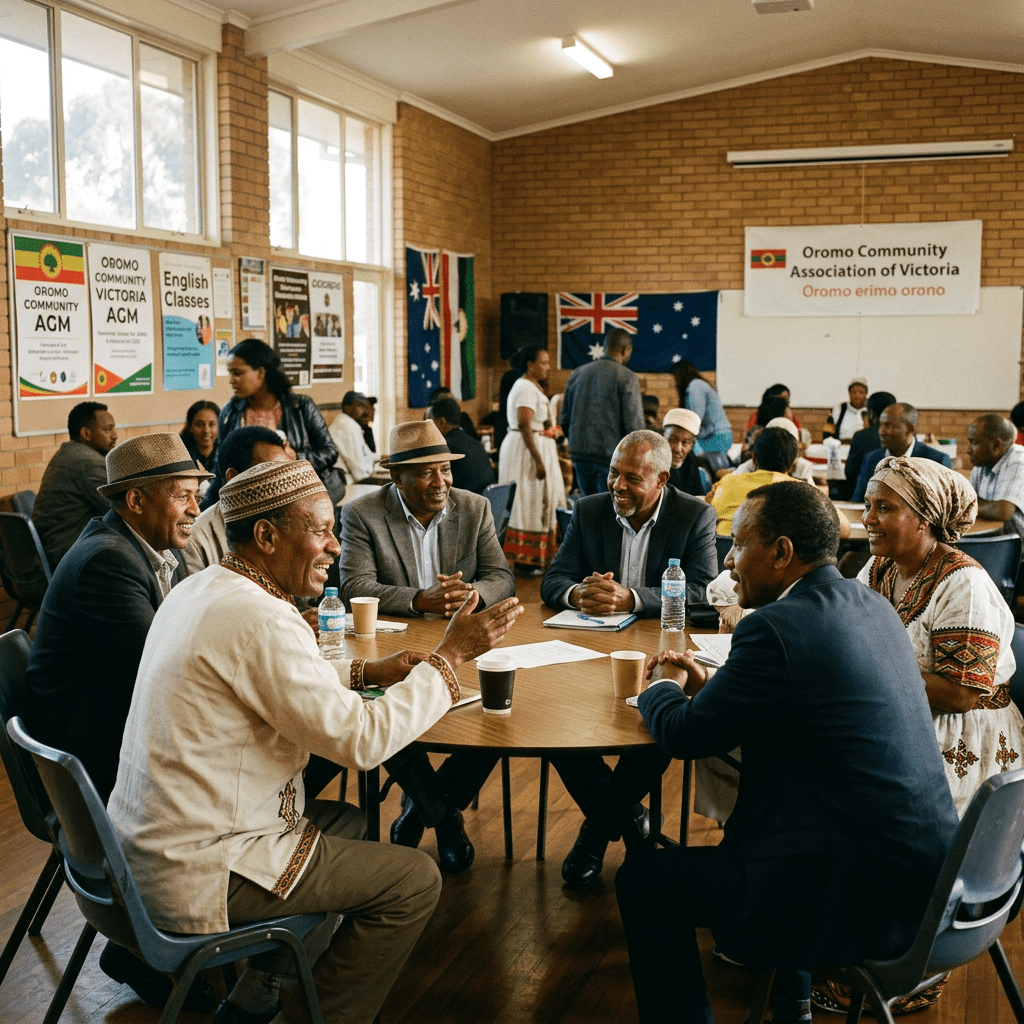
By Daandii Oromia
MELBOURNE, VICTORIA – For the Oromo community in Victoria, elders are more than just family members; they are the keepers of history, the carriers of language and tradition, and the living roots of a culture that stretches across continents. They endured hardship, made the courageous journey to Australia, and built new lives for their children and grandchildren.
Now, as they enter their golden years, these pioneers deserve care, respect, and dignity.
But for many Oromo families, navigating the aged care system can feel overwhelming. Language barriers, cultural differences, and unfamiliar government processes often make it difficult to find the right support . However, a growing network of community and government organisations is dedicated to ensuring that Oromo elders receive the care they need—in a way that honours who they are .
The Growing Need: Supporting an Ageing Community
The Oromo community in Victoria has been establishing itself since the 1980s, when the first Oromo pioneers arrived as refugees . Today, approximately 5,000 Oromo people call Victoria home, and many are now reaching an age where they need support .
In recent years, community organisations have become increasingly active in supporting Oromo seniors. The Federation of Oromo Civic Organizations in Australia and the Oromo Seniors Welfare and Benevolent Association in Victoria regularly hold events to bring elders together, combat isolation, and share important information about available services .
These gatherings are more than social occasions—they are vital lifelines. As one community reflection noted, “For many in the diaspora, especially seniors, such gatherings provide a sense of connection and reduce feelings of loneliness or alienation” .
Where to Find Help: Key Organisations for Oromo Seniors
Oromo Community Organisations
The Australian Oromo Community Association in Victoria Inc. (AOCAV) is a vital first point of contact for Oromo families. Founded in 1984, the association serves as a “cornerstone of support” for the Oromo community, helping members navigate life in Australia while preserving cultural heritage . They offer vital resources for new arrivals, assistance with settlement, education, and employment, and are dedicated to uniting and empowering Oromo people residing in Australia . They can connect families with aged care services and other resources .
Advocacy for Oromia Association in Victoria is another key resource. Based at offices in Dandenong and Melbourne, this nonprofit organisation works to empower the Oromo community through advocacy, education, and information services . They can help seniors and their families understand available support and navigate the system .
Multicultural Aged Care Specialists
Australian Multicultural Community Services (AMCS) is one of Victoria’s leading providers of culturally appropriate aged care. With over 40 years of experience, AMCS specialises in supporting seniors from culturally and linguistically diverse backgrounds . They employ over 200 bilingual staff who speak more than 50 languages and provide home care and support packages, social and group activities, referrals and information services, and free consultations on home care support. AMCS operates across metropolitan Melbourne and Geelong .
Benetas, a not-for-profit aged care provider, has also been recognised as a specialist provider for CALD communities. They offer home care services across Victoria and have staff who speak Arabic, Vietnamese, Mandarin, Turkish, and many other languages . Their care planning includes asking every client about their cultural and linguistic needs to ensure services are tailored appropriately .
Access and Support: Navigating the System
The Access and Support program, coordinated by the Ethnic Communities Council of Victoria (ECCV), is a free service designed to help older people from diverse backgrounds navigate the aged care system. With 80 workers across Victoria, the program helps identify individuals in need, explains available services, supports clients through the My Aged Care assessment process, and connects them to providers . This service is particularly valuable because it is impartial and builds trust over time—essential when working with communities who may be wary of government services .
Centre for Cultural Diversity in Ageing
This Victorian organisation, funded by the Australian Government, helps aged care providers deliver culturally appropriate care. They provide policy advice, training, and resources for providers—meaning that more mainstream services are becoming better equipped to serve Oromo elders .
Practical Steps for Oromo Families
If you or a family member are an Oromo elder in Victoria needing support, here is a path forward :
- Start with your community: Reach out to the Australian Oromo Community Association in Victoria Inc. or Advocacy for Oromia Association. They understand your culture and language and can guide you.
- Contact a multicultural aged care specialist: Organisations like AMCS or Benetas offer culturally appropriate home care. Call them for a free consultation.
- Access the Access and Support program: If you are unsure where to start, call ECCV or ask your doctor or community worker to connect you with an Access and Support worker.
- Call My Aged Care: The government’s central aged care information line can help you understand your options. Ask for an interpreter if needed.
- Consider social groups: Many organisations run social and activity groups for seniors from diverse backgrounds. These are a wonderful way to stay connected, combat loneliness, and maintain cultural traditions.
- Know your rights: Everyone receiving government-funded aged care is entitled to be treated with dignity and respect, and to have their identity, culture, and diversity valued. The new Aged Care Act, effective from November 2025, explicitly states that aged care service providers must respect an individual’s preferences, needs, and rights, including their cultural identity . If you are a carer for an older family member, you may also be eligible for support through the Victorian Government’s Support for Carers Program, which provides counselling, respite, and other practical supports, with specific programs for carers from CALD backgrounds .
The Importance of Culturally Safe Care
For many Oromo elders, the transition to aged care is not just about medical needs—it is about maintaining identity. Research shows that older people from diverse communities often enter aged care with higher needs for daily function, behavioural support, and complex care . When dementia sets in, the ability to communicate in one’s own language becomes even more critical; for those with dementia, “if they cannot communicate in their language, they suffer even more” .
There is also a real stigma around aged care in some CALD communities, with institutional care being an unfamiliar concept to many migrants . This is why community-led support and culturally safe services are so important. When residents encounter familiar cultural references, whether through language, music, or shared traditions, it can spark powerful moments of recognition and connection . A familiar dish might evoke family gatherings from decades earlier, helping residents feel understood and grounded in environments that are often new and unfamiliar .
Key Contacts for Oromo Elders in Victoria
| Service | Contact | Description |
|---|---|---|
| Australian Oromo Community Association in Victoria (AOCAV) | 25 Mt Alexander Rd, Flemington VIC 3031 | Support, settlement, cultural preservation |
| Advocacy for Oromia | 39 Clow St, Dandenong VIC 3175; 247-251 Flinders Lane, Melbourne VIC 3000; 0432 057 473 | Advocacy, information, community support |
| Australian Multicultural Community Services (AMCS) | (03) 9689 9170; http://www.amcservices.org.au | Culturally appropriate home care |
| My Aged Care | 1800 200 422; http://www.myagedcare.gov.au | Government aged care information and access |
| Carers Victoria | Carer support, counselling, respite | |
| Ethnic Communities Council of Victoria (ECCV) | Access and Support program coordination | |
| Senior Rights Victoria | 1300 368 821 | Support for elder abuse issues |
Sources: Advocacy for Oromia, Australian Oromo Community Association in Victoria, Australian Multicultural Community Services, My Aged Care, Victorian Government, ABC News.
Disclaimer: This article provides a general guide only. Readers should seek professional advice for their own particular situations.
#Oromo #Seniors #AgedCare #Victoria #CommunitySupport #CulturalSafety

Finding Strength and Support: A Guide to Mental Health Services for Oromo Families in Victoria

By Daandii Oromia
MELBOURNE, VICTORIA – For many in the Oromo community, the journey to Australia has been marked by resilience, hope, and the promise of a safer future. Yet, this path often carries invisible burdens. The trauma of displacement, the challenges of resettlement, and the weight of cultural expectations can all take a profound toll on mental health and wellbeing .
In Victoria, help is available. While many from migrant and refugee backgrounds face barriers in accessing services, a growing number of organisations and programs are working to provide culturally safe, accessible, and understanding support for Oromo families .
The Hidden Struggles: Why Mental Health Matters
Mental health challenges—depression, anxiety, trauma, and isolation—are often worsened by the experience of migration . For many Oromo families, these struggles are compounded by language barriers, the pressure to appear strong, and the stigma that can surround mental health in many cultures .
Research confirms that people from Culturally and Linguistically Diverse (CALD) backgrounds face significant barriers in accessing mental health care. These include stigma, mental health illiteracy, distrust of mainstream services, and a lack of familiarity with the system . Speaking about mental health is not always common practice in many communities, which makes culturally appropriate support all the more vital .
Where to Start: Community Organisations That Understand You
The Oromo community in Victoria is fortunate to have dedicated organisations that understand your culture, language, and the unique challenges you face.
Advocacy for Oromia
Based in Melbourne, Advocacy for Oromia has been at the forefront of mental health support for the Oromo community for over a decade . Their Mental Health Program focuses on improving mental health literacy, building protective factors, and reducing stigma . They organise culturally adapted conversations during Oromo Coffee Drinking ceremonies (Caffee), a familiar cultural practice that helps make mental health discussions more approachable . They also provide information sessions, radio programs, and community education .
From 2017 to 2018 alone, their community education programs supported 600 Oromos to address depression, anxiety, low self-confidence, and isolation, including perinatal mental health issues .
- Contact: 247-251 Flinders Lane, Melbourne VIC 3000 | http://www.advocacy4oromia.org .
The Oromo Association in Victoria Australia (OAVA)
Established in 2002, OAVA is a non-political, community-focused organisation dedicated to supporting Oromo refugees and migrants . They offer a range of vital services, including:
- Settlement assistance for new arrivals
- Access to healthcare and mental health support
- Counselling to address the trauma of displacement
- Job training and employment support, which helps build independence and reduces stress
The Australian Oromo Community Association in Victoria Inc.
This community hub in Melbourne provides a wide range of services, including counselling, family support, and community outreach programmes . They collaborate with local organisations to deliver workshops on mental health, nutrition, and financial literacy .
The Power of Community Connection
One of the most effective forms of mental health support is simply coming together . In February 2025, the Federation of Oromo Civic Organizations in Australia and the Oromo Seniors Welfare and Benevolent Association held a dinner event in Melbourne that brought together seniors, youth, and families .
The benefits of such gatherings are profound:
- Reducing isolation, especially for seniors who may feel lonely in the diaspora
- Cultural affirmation that boosts self-esteem and mental wellbeing
- Open dialogue about community challenges and resources
- Intergenerational connection that allows elders to share cultural knowledge
Broader Support: Services for CALD Communities
Beyond community-specific organisations, Victoria has a growing network of services for culturally diverse communities.
Mental Health and Wellbeing Hubs
Funded by the Victorian Government, these hubs act as a ‘front door’ to the mental health system, providing free, short-term psychosocial support without a waitlist . They are delivered in locations including Abbotsford, Coburg North, Footscray, and Werribee . Staff work with interpreters to support service users who do not speak English as their first language .
Contact: 1300 286 463 to access a Hub .
Mental Health and Wellbeing Locals
Also funded by the Victorian Government, these Locals make it easier for people aged 26 and over to get free, voluntary mental health care closer to home . You do not need a referral or a Medicare card. The Dandenong team collectively speaks more than 40 languages, and bicultural workers have been a great success in overcoming mental health stigma in their communities . Top nationalities among service users include Afghanistan, India, Sri Lanka, Pakistan, and Sudan .
Contact: 1800 332 501 to find your nearest Local .
Afri-Aus Care
Based in Springvale South, Afri-Aus Care was founded in 2015 to provide culturally appropriate support to African Australian and CALD communities . They offer psychosocial assessment, casework, counselling, and mental health support . In 2024, they received a $235,000 grant from the Victorian Government to run a specialist mental health program focusing on removing stigma and cultural taboos .
The Diverse Communities Mental Health and Wellbeing Grants Program
The Victorian Government has invested $4.2 million in supporting diverse communities’ mental health . This program recognises that Victorians from diverse backgrounds often face greater mental health challenges and difficulty accessing inclusive, culturally safe services .
Organisations benefiting from this funding include the Ethnic Communities Council of Victoria, Muslim Mental Health Professionals, and the Victorian Refugee Health Network .
Practical Steps for Oromo Families
If you or a family member is struggling, here is a path forward:
- Start with your community organisation: Reach out to Advocacy for Oromia, OAVA, or the Australian Oromo Community Association .
- Attend community events: Gatherings like the Federation of Oromo Civic Organizations events are more than social—they are lifelines that can connect you with resources .
- Access mainstream mental health services: Contact a Mental Health and Wellbeing Hub or Local for free, no-waitlist support .
- Call a crisis line if needed: National helplines like Lifeline (13 11 14) and Beyond Blue (1300 22 4636) offer confidential support. Ask for an interpreter if needed .
Breaking the Silence
Mental health challenges are not a sign of weakness. They are a human experience—one that can be addressed with the right support .
As Selba Gondoza Luka, founder of Afri-Aus Care, discovered, helping others can also be a path to healing. “When I started the organisation, I had depression and anxiety. But then I started helping others and I saw the healing. It was a speedy recovery,” she said .
You are not alone. There is support, there is understanding, and there is a community ready to help.
Key Contacts
| Service | Contact | Description |
|---|---|---|
| Advocacy for Oromia | http://www.advocacy4oromia.org | Community education, mental health support for Oromo families |
| The Oromo Association in Victoria (OAVA) | Established 2002 | Counselling, settlement support, mental health services |
| Afri-Aus Care | Springvale South | Culturally appropriate mental health support |
| Mental Health and Wellbeing Hubs | 1300 286 463 | Free, no-waitlist mental health support |
| Mental Health and Wellbeing Locals | 1800 332 501 | Free, no referral needed; Dandenong speaks 40+ languages |
| Lifeline (crisis support) | 13 11 14 | 24-hour crisis support, ask for an interpreter |
| Beyond Blue | 1300 22 4636 | Mental health support and resources |
Sources: Advocacy for Oromia, The Oromo Association in Victoria, Mind Australia, National Institutes of Health.
Disclaimer: This article provides a general guide only. Readers should seek professional advice for their own particular situations.




 Advocacy for Oromia