Who Speaks for the Oromo? A Scholar’s Challenge to the Single Story of Liberation
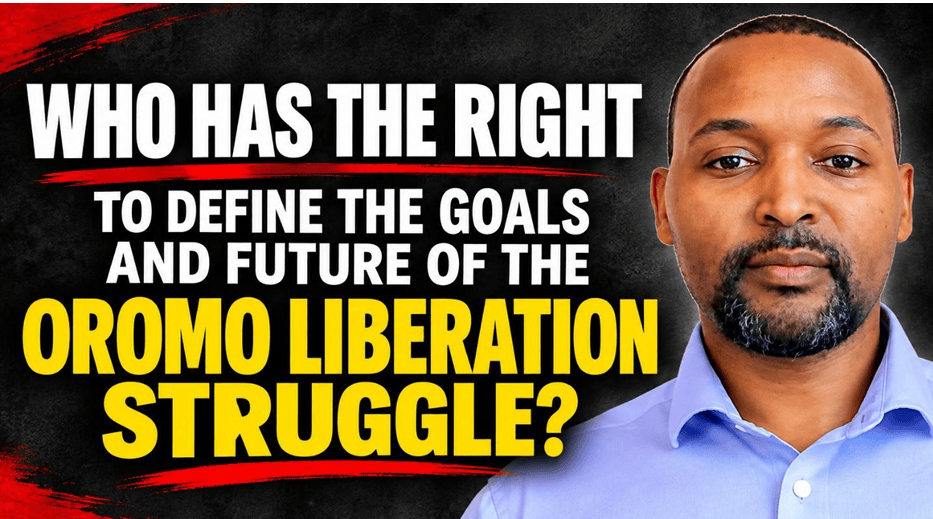
In a provocative new essay, Dr. Sultan Abda Neja argues that no party, army, or intellectual owns the Oromo struggle — and that true liberation may be measured by whether those who disagree with it are still free to speak
By Dhabessa Wakjira
It is a question that cuts to the heart of one of Africa’s most consequential political debates — and one that, until recently, was rarely asked so directly in public.
Who has the right to define the goals and future of the Oromo liberation struggle?
In a new essay by Dr. Sultan Abda Neja, published under that very title, the scholar and commentator does not simply answer the question. He dismantles the premise that it has a single answer at all.
His thesis is as simple as it is contentious: the Oromo people are not politically homogeneous, and no organization — not the Oromo Liberation Front, not the Oromo Federalist Congress, not the Prosperity Party, not the armed Oromo Liberation Army — holds an exclusive mandate to speak for them. The right to define the destination of a people’s struggle, he argues, belongs to the people themselves.
The Argument at Its Core
Dr. Neja’s essay opens by acknowledging what is beyond dispute: the Oromo have endured political domination, land dispossession, cultural marginalization, and unequal representation. These historical injustices, he writes, “laid the foundations of modern Oromo nationalism and the demand for self-determination.”
But he draws a careful distinction. Recognizing historical injustice, he argues, “does not automatically establish that dismantling Ethiopia is the only possible solution.” Nor does it prescribe a single political destination.
The essay takes direct aim at a tendency among some scholars, commentators, and activists to equate the political program of the OLF — independence for Oromia — with the aspirations of the entire Oromo nation. While acknowledging the OLF’s historic contribution, Dr. Neja insists that the struggle’s history is far more plural than its most vocal interpreters allow.
He traces that plurality through a gallery of figures and movements: Haile Fida of MEISON, who advocated socialist transformation and the resolution of the nationalities question; Hussein Suura of the Ethiopian National Liberation Front, which sought liberation for all Ethiopian peoples on the basis of equality regardless of ethnicity, religion, or class; and General Tadesse Birru and Mamo Mezemir of the Mecha-Tulema Self-Help Association, who pursued Oromo empowerment and education within Ethiopia before state repression radicalized their politics.
These figures, he argues, prove that “Oromo political aspirations were not exclusively associated with the pursuit of an independent Oromia.” They also included efforts to democratize and transform Ethiopia while defending Oromo identity and rights.
A Question of Mandate
The essay’s most pointed intervention concerns the relationship between armed struggle and democratic legitimacy.
The existence of the Oromo Liberation Army, Dr. Neja writes, “may reflect genuine grievances, political exclusion, insecurity, or the failure of democratic institutions.” These conditions deserve serious examination. But military strength, he argues, “does not automatically establish a democratic mandate to determine the political future of an entire population.”
Any movement claiming to fight for liberation, he insists, must explain what political order it intends to establish, how it will protect civilians, accommodate political disagreement, safeguard minority communities, and ensure accountability.
“A movement that claims to fight for the people’s freedom,” he writes, “must also defend their freedom to disagree with the movement itself.”
It is a standard he applies consistently — to the OLF and OLA, to the Prosperity Party, and to federalist organizations alike. The PP, he argues, “must be judged by its actual record in protecting Oromo rights and regional autonomy, not merely by the presence of Oromo politicians in government.” Federalists must demonstrate how their proposals can prevent renewed centralization while protecting the rights of all citizens.
Self-Determination Is Not a Synonym for Independence
At the heart of the essay lies a conceptual clarification that carries significant political weight.
Self-determination, Dr. Neja reminds readers, is a broad principle concerning the right of peoples to determine their political status and pursue their economic, social, and cultural development. It is enshrined in Article 1 of the International Covenant on Civil and Political Rights and recognized in Ethiopia’s 1995 Constitution, including the right to secession under Article 39.
Independence, he argues, is one expression of that right — but not the only conceivable outcome. Meaningful autonomy, democratic federalism, and constitutional reform may also realize collective political rights.
He also raises a practical warning. Secession from a multinational country in which Oromia itself is home to multiple Ethiopian nations and nationalities, he notes, carries “complex security and economic consequences.” The post-independence crises of Eritrea and South Sudan, he suggests, offer cautionary lessons.
The burden of argument, he insists, applies to everyone. Advocates of independence must explain how an independent state would guarantee democracy, security, economic opportunity, minority protection, and accountability. Advocates of federalism must show how federal institutions can protect genuine regional autonomy and prevent renewed centralization.
“You cannot defend the people’s right to self-determination,” he writes, “while denying them the freedom to reject your preferred political destination.”
Has Liberation Already Been Achieved?
The essay does not shy away from the question that divides Oromo politics most sharply today: whether the Oromo have already been substantially liberated, or whether liberation remains incomplete until a referendum decides between independence and continued membership in a democratic Ethiopian federation.
From the OLF’s traditional perspective, full liberation requires the freedom to determine political status, including the option of independence. Prime Minister Abiy Ahmed, by contrast, has argued that the central historical questions — recognition of Afaan Oromo, cultural identity, and regional self-administration — have been substantially addressed, leaving governance, democracy, security, and development as the unfinished challenges.
Dr. Neja does not declare a winner. He notes that the question of majority preference “would require credible public consultation.” But he observes that many Oromo political actors, including federalist advocates and some within the OLF and PP constituencies, increasingly emphasize democratizing the federation and strengthening Oromia’s constitutional autonomy rather than pursuing independence as an inevitable destination.
This, he writes, presents “a serious challenge to the traditional OLF narrative, particularly among younger generations who have grown up experiencing Afaan Oromo in education and regional administration.”
The Boundaries of Oromummaa
Perhaps the essay’s most delicate argument concerns identity itself.
Oromummaa, Dr. Neja writes, represents a shared sense of Oromo identity, historical experience, cultural belonging, and collective consciousness. It should not be transformed into an ideological instrument through which one organization determines who qualifies as a legitimate Oromo.
He surveys the diversity of Oromo thought on nationalism itself — from scholars who treat it as fuel for struggle to those skeptical of ethnic nationalism, and to the Prime Minister’s own criticism that Oromo nationalism “belittled the Oromo.” These differences, he suggests, are not evidence of authenticity or betrayal. They are evidence of intellectual life.
“Political disagreement is not betrayal,” he writes. “Supporting a different constitutional arrangement does not make someone less Oromo.”
An Oromo who supports independence is entitled to that preference. An Oromo who supports democratic multinational federalism is equally entitled. An Oromo who participates in the Prosperity Party “does not lose their Oromo identity because of that political choice.”
“Organizational loyalty is not the measure of national identity,” he writes, “and historical contribution is not an unlimited democratic mandate.”
From Resistance to Governance
The essay builds on Dr. Neja’s earlier work, From Resistance to Governance: Jawar Mohammed’s Progressive Patriotism and the Oromo’s Role in Redefining Ethiopian Nationalism, in which he explored the shift of Oromo political agency from resistance toward institution-building.
That shift, he argues, demands more than opposition. It requires demonstrating the capacity to build and sustain democratic institutions — accountable government, public security, economic opportunity, and democratic participation.
And it requires a willingness to answer hard questions. He poses two to those who present independence as the only legitimate solution: Would an independent Oromia permit its citizens to advocate a different constitutional arrangement, including a renewed relationship with Ethiopia? Would opposition parties compete freely, and would political opponents enjoy equal protection under the law?
He poses the mirror-image questions to those who defend the federal status quo: Would the federal government genuinely respect Oromia’s constitutional autonomy, even when regional leaders disagree with federal policies? Would citizens be free to criticize the government without being accused of undermining national unity?
“The democratic legitimacy of a state,” he concludes, “cannot be determined solely by whether it is independent, federal, or unitary. It must also be measured by whether citizens can participate freely in political life, challenge those in power, exercise their rights, and change their leaders peacefully.”
A Conclusion That Returns the Question
The essay ends where it began — with the people, not the organizations.
“The Oromo people need neither an imposed union nor an imposed independence,” Dr. Neja writes. “They need the freedom to choose their own political future.”
No intellectual, political party, or armed movement, he insists, has the exclusive right to make that choice on their behalf.
“That right belongs to the Oromo people themselves.”
It is a conclusion that will satisfy neither the movement’s staunchest partisans nor the government’s firmest defenders. But it is one that insists on something increasingly rare in polarized political debates: that the most radical act of liberation may be the willingness to let people disagree.
Dr. Sultan Abda Neja’s essay, “Who Has the Right to Define the Goals and Future of the Oromo Liberation Struggle?” is available in full through the author’s publication channels.
The full article can be viewed as follow:

Posted on November 3, 2026, in Aadaa, Afaan, Biography, Diaspora, Election, Events, Finfinne, freedom, gadaa, gender, Grief Support, Gumaa, health, Information, Kindness, Language, Media, mental health, News, Oromia, Oromo diaspora, OSFANA, Press Release, Promotion. Bookmark the permalink. Leave a comment.






Leave a comment
Comments 0