Category Archives: Promotion
Two journalists and a driver arrested, held without charge in Ethiopia
(Nairobi, March 18, 2020) Authorities in Ethiopia should immediately and unconditionally release journalists Dessu Dulla and Wako Nole and media worker Ismael Abdulrzaq, and let them work freely, the Committee to Protect Journalists said today.

ONN Journalist Dessu Dulla
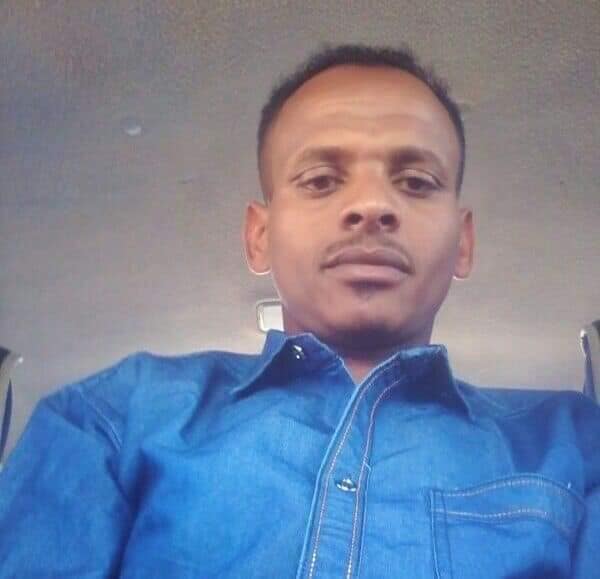
ONN Journalist Wako Nole
On March 7, police arrested Dessu, deputy director of the privately owned Oromia News Network broadcaster, Ismael, a driver for the station, and Wako, a reporter with the Sagalee Bilisummaa Oromoo radio broadcaster, in Burayu, a town in the Oromia region, according to Muhammed Regassa and Betie Urgessa, two Oromia News Network employees who spoke to CPJ via messaging app, and an eyewitness to the arrests who spoke to CPJ on the condition of anonymity, citing safety concerns.
Betie told CPJ that the three appeared in court on March 10, and that police were granted 14 days to hold them in custody, but said they were not charged with any crime.
“Holding journalists for weeks without charge is a violation of their basic rights and a clear effort to intimidate the press; Ethiopia must release Dessu Dulla, Wako Nole, and Ismael Abdulrzaq immediately,” said CPJ Sub-Saharan Africa representative Muthoki Mumo. “Journalists must be allowed to cover regional politics without official interference or fear that they will be arbitrarily arrested.”
Police arrested the journalists and driver shortly after they left the Burayu police station, where they had traveled to speak with Abdi Regassa, a senior member of the opposition Oromo Liberation Front political party, who was detained there, according to Muhammed, Betie, and the eyewitness. Two Oromo Liberation Front party members who were visiting Abdi were also arrested, those sources said.
The eyewitness told CPJ that he heard a police officer shouting that the journalists had taken pictures on their phones before they arrested them and added that officers were likely uncomfortable with the journalists visiting Abdi Regassa. Prior to 2018, Abdi was a commander in the liberation front’s armed wing while it operated from exile and was designated a terror organization; police initially denied having him in custody, according to a report by the privately owned news site Addis Standard.
The Oromia News Network vehicle was involved in a minor road accident at the scene, but those sources told CPJ that it was unrelated to the arrests. Police are still holding the vehicle, Betie told CPJ.
The Oromia News Network, which operated in exile until 2018, primarily covers politics and is targeted at an Afaan Oromo-speaking audience; Sagalee Bilisummaa Oromoo, which broadcasts some of its programming on the news network, hosts programming that is supportive of the Oromo Liberation Front and also covers regional news, according to Muhammed and Betie, as well as CPJ’s review of the broadcasters’ content.
In a phone interview on March 10, Oromia regional government spokesperson Getachew Balcha told CPJ that he did not know anything about the journalists’ arrests. Getachew later acknowledged their detention in an interview with the U.S. Congress-funded Voice of America broadcaster, but said that they were arrested due to prior offenses.
Getachew referred CPJ to the head of the Oromia Peace and Security Bureau, identified as “Mr. Jibril,” for comment. Jibril told CPJ in a phone interview yesterday that he did not know about the journalists’ cases.
Open Appeal Letter Regarding the Missing Oromo Political Leader
(A4O, Appeal Letter, 29 March 2020) Advocacy for Oromia is deeply concerned by reports of the diappreance of Mr. Abdi Regassa, the leader of Oromo Liberation Front who disappeared from Burrayyu Police station, Oromia, since 20 March 2020.
The letter sent to Ethiopian Prime Minster today by Advocacy for Oromia expresses its deep concern regarding Mr Abdi Regassa’s current state: detained without charges and with out access to the outside world, his colleagues and his family, since 29 February 2020.
The letter demands PM administration to ensures Mr Abdi Regassa has immediate access to a lawyer of his choosing and can communicate with his family.
For full appeal letter: Appeal Letter Abdi Regassa 29 March 2020
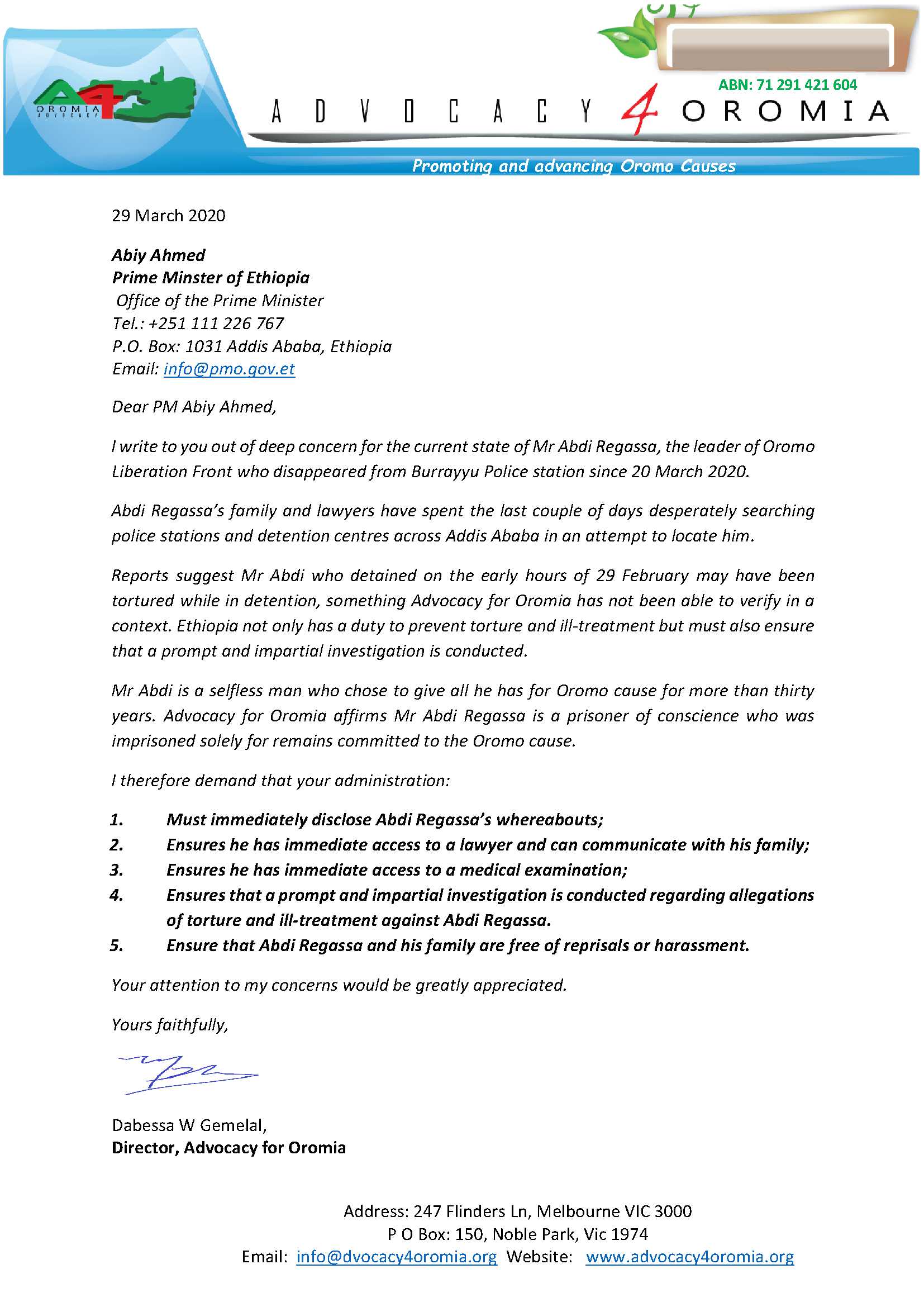
Blocking information during this critical time is a violation of human rights.
We condemn the internet and phone service shutdown by Ethiopia gov’t in Western and Southern Oromia. To prevent the spread of Corona Virus information is very crucial.
Blocking information during this critical time is a violation of human rights. The Ethiopian government should unblock the internet and phone service shut down before it is too late. The people should not be left in the dark for death.
#ReconnectTheWestETH
#COVID19
#Ethiopia

The Oromian Story: Preserving Voices, Empowering Communities, and Celebrating Culture

Through the voices of elders and the vitality of community, the Oromian Story program ensures that Oromo culture remains a living, breathing force for generations to come
FINFINNE, OROMIA — In the heart of every culture lies a story—a narrative passed down through generations, carried in the voices of elders, and woven into the fabric of daily life. For the Oromo people, this story is not merely a record of the past; it is a dynamic, living force that shapes identity, builds community, and points toward the future.
The Oromian Story program stands as a testament to this truth. By centering the voices of Oromo elders and engaging communities at the grassroots level, the program ensures that Oromo culture remains vibrant, resilient, and relevant in a rapidly changing world.
“The Oromian elders’ voices is a dynamic part of Oromian culture and identity.”
This recognition lies at the heart of the Oromian Story program. Elders are not simply repositories of ancient wisdom—they are active participants in the ongoing creation of culture. Their voices, their memories, and their insights are essential to understanding who the Oromo people are and who they are becoming.
The Power of Elders’ Voices
In Oromo society, elders occupy a position of profound respect and responsibility. They are the keepers of history, the guardians of tradition, and the guides for the younger generation. The Gadaa system, which has governed Oromo society for centuries, is built on a foundation of elder wisdom and intergenerational transmission.
The Oromian Story program recognizes that the preservation of culture depends on the active engagement of elders. When elders share their stories, they are not merely recounting the past—they are shaping the future. They are teaching younger generations about their identity, their values, and their responsibilities.
Maintaining Culture Through Community Involvement
“The Oromian story program presents the maintenance and continued development of Oromo culture at the community level.”
Culture is not something that can be preserved in museums or archives alone. It lives in the daily practices, rituals, and relationships of communities. The Oromian Story program understands this, focusing on community-level activities that keep culture alive and dynamic.
Through community gatherings, storytelling sessions, and cultural events, the program ensures that Oromo culture is not a relic of the past but a living presence in the present. It engages people of all ages in the ongoing work of cultural preservation and innovation.
Supporting New Forms of Cultural Expression
The program supports activities that support new forms of Oromo cultural expression.
Culture is not static—it evolves, adapts, and grows. The Oromian Story program recognizes this, supporting new forms of cultural expression that reflect the creativity and dynamism of the Oromo people.
This might include:
– Contemporary art and music that draws on traditional themes
– Digital storytelling that reaches new audiences
– Literary works that explore Oromo identity in new ways
– Cultural festivals that bring together diverse communities
– Intergenerational projects that bridge the gap between elders and youth
By supporting new forms of cultural expression, the program ensures that Oromo culture remains relevant and vibrant in the modern world.
Increasing Public Awareness of Oromo Culture
The program supports activities that increase public awareness of Oromo culture, including through the presentation and exchange of culture.
One of the greatest challenges facing Oromo culture is the lack of public awareness—both within Ethiopia and internationally. The Oromian Story program addresses this challenge by promoting the presentation and exchange of culture.
Through public events, cultural exchanges, and educational initiatives, the program helps to:
– Educate the broader public about Oromo culture and history
– Foster cross-cultural understanding and dialogue
– Challenge stereotypes and misconceptions
– Celebrate the richness and diversity of Oromo traditions
– Build bridges between Oromo communities and others
Sustainable Development of Community Organisations
The program supports the sustainable development of community organisations involved in cultural activities.
Cultural preservation cannot be achieved without strong, sustainable community organisations. The Oromian Story program invests in the capacity of these organisations, helping them to:
– Develop effective governance and management structures
– Build financial sustainability
– Train staff and volunteers
– Expand their reach and impact
– Collaborate with other organisations and institutions
The Broader Impact
“The program promotes activities that encourage culturally vibrant communities and contribute to the cultural wellbeing of Oromia.”
The impact of the Oromian Story program extends far beyond the preservation of culture. By strengthening cultural identity and community cohesion, the program contributes to:
Social Cohesion: When communities share a strong cultural identity, they are more resilient, more united, and better able to address common challenges.
Youth Engagement: By involving young people in cultural activities, the program helps to build their sense of identity and purpose.
Community Pride: Cultural activities foster a sense of pride and belonging, strengthening communities from within.
Economic Development: Cultural tourism, arts, and crafts can contribute to local economic development.
Peacebuilding: Cultural exchange and dialogue can help to build trust and understanding between communities.
A Vision for the Future
“The Oromian Story program presents the maintenance and continued development of Oromo culture at the community level.”
The vision of the Oromian Story program is a future in which Oromo culture is not merely preserved but is a vibrant, dynamic force in the lives of Oromo people. It is a future in which elders are honored and their wisdom is valued; in which young people are engaged and empowered; in which communities are united and resilient; and in which Oromo culture is celebrated and shared with the world.
Conclusion
The Oromian Story program is a vital initiative for the preservation and development of Oromo culture. By centering the voices of elders, engaging communities, supporting new forms of cultural expression, and investing in community organisations, the program ensures that Oromo culture remains a living, breathing force for generations to come.
“The Oromian elders’ voices is a dynamic part of Oromian culture and identity.”
As the Oromo people continue their journey of cultural revival and self-determination, programs like the Oromian Story will play an essential role in ensuring that the voices of elders are heard, the stories of the past are remembered, and the culture of the Oromo people continues to thrive.
—
In the voices of Oromo elders lies the story of a people—a story of resilience, resistance, and hope. Through the Oromian Story program, that story will continue to be told.






