Category Archives: Uncategorized

Oromia Consolidates 21 Zonal Administrations into Six Powerful Regional Clusters
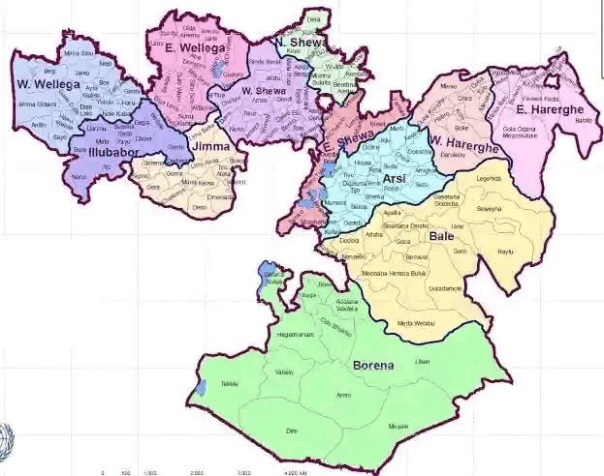
A historic restructuring aims to streamline governance, strengthen service delivery, and bring the state closer to its people
FINFINNE — In a decision described as historic and far-reaching, the Government of Oromia Regional State has approved a major restructuring of its administrative architecture, reducing the region’s 21 zonal administrations to six powerful regional clusters. The reform is designed to build a stronger, more efficient government and to ensure that public services genuinely reach the people they are meant to serve.
The decision, ratified through a draft proclamation by the Oromia Regional State Council during its first-year, seventh-term regular session, consolidates related administrative functions into unified structures. At its core, the reform emphasizes coordination, complementarity, and the effective delivery of services to the public.
With the new structure now in force, the senior leadership of each of the six clusters has been officially assigned.
East Oromia Cluster
Headquarters: Harar
- Abdurrahman Abdalla — Cluster Chief, rank of Deputy President. Office: Harar.
- Miski Muhammad — Deputy Cluster Chief for Development, rank of Bureau Head. Office: Chiro.
- Anas Aliyi — Deputy Cluster Chief for Peace and Justice, rank of Bureau Head. Office: Galamso.
- Jaarso Boru — Senior Advisor to the Cluster Chief, rank of Bureau Head. Office: Gurawa.
- Fiqadu Miliyoon — Advisor to the Cluster Chief, rank of Bureau Head.
- Samia Abdalla — Advisor to the Cluster Chief, rank of Bureau Head.
Central Oromia Cluster
Headquarters: Shaggar and Adama
- Dr. Mengistu Bekele — Cluster Chief, rank of Deputy President. Office: Shaggar and Adama.
- Abbabu Waqo — Deputy Cluster Chief for Development, rank of Bureau Head. Office: Waliso.
- Kifalaw Adare — Deputy Cluster Chief for Peace and Justice, rank of Bureau Head. Office: Fitche.
- Makonnen Bayisa — Senior Advisor to the Cluster Chief, rank of Bureau Head. Office: Ambo.
- Ashannafi Ajjama — Advisor to the Cluster Chief, rank of Bureau Head.
- Taddasa Dirriba — Advisor to the Cluster Chief, rank of Bureau Head.
Southwest Oromia Cluster
Headquarters: Jimma
- Dr. Rashad Kamal — Cluster Chief, rank of Deputy President. Office: Jimma.
- Indalkachaw Tafari — Deputy Cluster Chief for Development, rank of Bureau Head. Office: Bedele.
- Aman Danu — Deputy Cluster Chief for Peace and Justice, rank of Bureau Head. Office: Limu Gannat.
- Didha Guddata — Senior Advisor to the Cluster Chief, rank of Bureau Head. Office: Mattu.
- Muhammadxahaa Abba Fixaa — Advisor to the Cluster Chief, rank of Bureau Head.
- Mosisa Lammessa — Advisor to the Cluster Chief, rank of Bureau Head.
South Oromia Cluster
Headquarters: Yabelo
- Ahmad Haji — Cluster Chief, rank of Deputy President. Office: Yabelo.
- Adula Hirbayye — Deputy Cluster Chief for Development, rank of Bureau Head. Office: Adola.
- Liban Areero — Deputy Cluster Chief for Peace and Justice, rank of Bureau Head. Office: Nageelle Borana.
- Wandimmu Robe — Senior Advisor to the Cluster Chief, rank of Bureau Head. Office: Bule Hora.
- Ibrahim Abdi — Advisor to the Cluster Chief, rank of Bureau Head.
- Isaaq Xaachoo — Advisor to the Cluster Chief, rank of Bureau Head.
West Oromia Cluster
Headquarters: Nekemte
- Masfin Melaku — Cluster Chief, rank of Deputy President. Office: Nekemte.
- Mirressa Fixee — Deputy Cluster Chief for Development, rank of Bureau Head. Office: Gimbi.
- Gammachu Gurmeessa — Deputy Cluster Chief for Peace and Justice, rank of Bureau Head. Office: Shambu.
- Talila Tarrafa — Senior Advisor to the Cluster Chief, rank of Bureau Head. Office: Dambi Dollo.
- Badhasa Dhaba — Advisor to the Cluster Chief, rank of Bureau Head.
- Dassu Lammi — Advisor to the Cluster Chief, rank of Bureau Head.
Southeast Oromia Cluster
Headquarters: Robe
- Ahimad Idris — Cluster Chief, rank of Deputy President. Office: Robe.
- Asaffa Tolasa — Deputy Cluster Chief for Development, rank of Bureau Head. Office: Ginir.
- Abdurrazaq Huseen — Deputy Cluster Chief for Peace and Justice, rank of Bureau Head. Office: Asella.
- Ibrahim Kadir — Senior Advisor to the Cluster Chief, rank of Bureau Head. Office: Shashemene.
- Izzaddin Abuubakar — Advisor to the Cluster Chief, rank of Bureau Head.
- Birhanu Arfasa — Advisor to the Cluster Chief, rank of Bureau Head.
What the Reform Means
The restructuring reduces Oromia’s sprawling 21-zonal system to six consolidated clusters, each led by a chief holding the rank of deputy president. Each cluster also has dedicated deputies for development and for peace and justice, along with senior advisors — a structure that mirrors the executive architecture of the regional government itself.
Officials say the reform is rooted in a simple principle: government should not be distant or fragmented. By grouping similar functions under one coordinated structure, the new system aims to eliminate duplication, improve efficiency, and make public services more accessible to ordinary citizens.
Oromia is Ethiopia’s largest regional state, spanning more than 350,000 square kilometers with a population estimated at over 27 million. For years, analysts and citizens alike have questioned whether a 21-zone structure could effectively serve such a vast and diverse population. The new six-cluster model is presented as the answer.
A Historic Decision With High Stakes
The proclamation was approved during the Council’s first regular session of its seventh term — a detail that underscores the political weight of the decision. The reform is not merely administrative; it is a reimagining of how Oromia governs itself.
Supporters see it as a bold step toward a stronger, more responsive state. Critics, however, have raised questions about political motivations, wondering whether consolidation could weaken the influence of individual zones or shift power in ways that are not immediately visible.
What is certain is that the six clusters are now operational, their leaders appointed, and their headquarters designated. For the people of Oromia, the real test will be felt in the everyday: faster permits, closer services, and a government that listens.
As the region embarks on this new chapter, one thing is clear — Oromia has chosen to reorganize not by dismantling its diversity, but by uniting it under a stronger, more coordinated whole.
#OromiaPresidentOffice2026
Irreechaa: Core Values
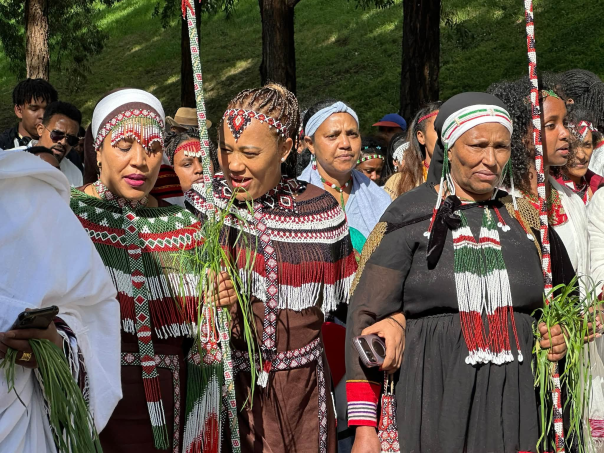
Core Values at a Glance: At its heart, Irreechaa is built on gratitude to Waaqa (God), which flows into four enduring pillars: peace, forgiveness and reconciliation, unity and inclusivity, and connection with nature.
Irreechaa is more than a harvest celebration in Oromo culture — it is a complete moral and spiritual framework. Here is a closer look at its core values.
🙏 Gratitude and Thanksgiving
This is the foundation of Irreechaa. The Oromo people gather to thank Waaqa (the Creator) for the blessings of the past year — life, peace, rain, harvest, health, family, and the fertility of livestock. It is not merely a celebration but a humble recognition that all life depends on the Creator’s generosity. Gratitude, in this sense, is not just spoken; it is felt and lived.
🤝 Forgiveness, Reconciliation, and Peace
Irreechaa carries a transformative power. Before taking part in the ceremony, participants are expected to let go of grudges, release anger, and seek reconciliation with others. Traditional belief holds that prayers offered with a pure and forgiving heart are the ones through which true peace can descend. Former Prime Minister Abiy Ahmed has repeatedly described Irreechaa as an occasion for reconciliation, forgiveness, and unity.
🕊️ Unity and Inclusivity
Irreechaa is radically inclusive. People of all ages, genders, religions, political views, and ethnic backgrounds are welcome to join. Scholars note that it unites not only Oromo people but also transcends language and territorial boundaries, bringing diverse communities together under the principles of peace, mutual respect, and coexistence. Participants dressed in white are themselves a symbol of that peace.
🌿 Connection with Nature
Irreechaa expresses a deep bond between humanity and the natural world. Ceremonies are held along riverbanks and lakeshores, where participants carry fresh green grass and flowers, dip them in water, and sprinkle the water as a blessing of renewal, hope, and purification. This ritual is not only an act of gratitude toward nature but also reflects the Oromo ethical principle of Safuu — the understanding that human beings are stewards of the earth, responsible for protecting water, soil, and the balance of life.
Together, these values form the spiritual core of Irreechaa, making it far more than a festival. It is a living heritage that continues to shape Oromo identity, moral life, and community bonds across generations.

Irreechaa in Edmonton: How One Diaspora Community Turned a Sacred Tradition into a Recognized Civic Celebration
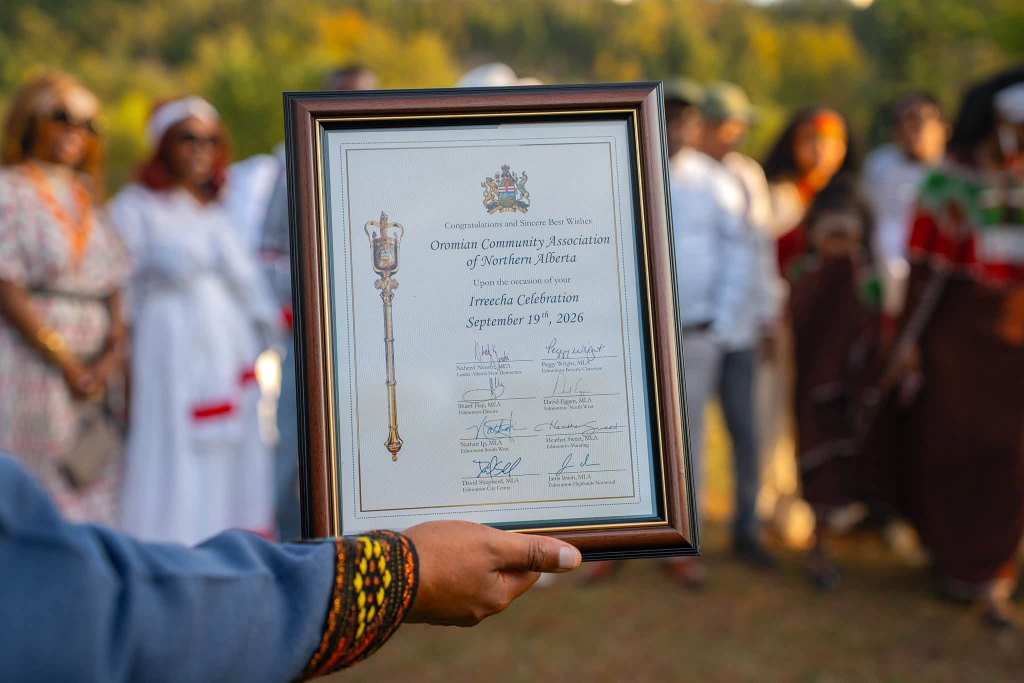
By Daandii Ragabaa
EDMONTON, Alberta — When the Oromo community of Edmonton gathered for Irreechaa Malkaa this year, they were not simply marking a religious holiday. They were making a statement — to themselves, to their children, and to the wider Canadian society — that Oromo culture, identity, and heritage deserve to be seen, respected, and celebrated at the highest levels of public life.
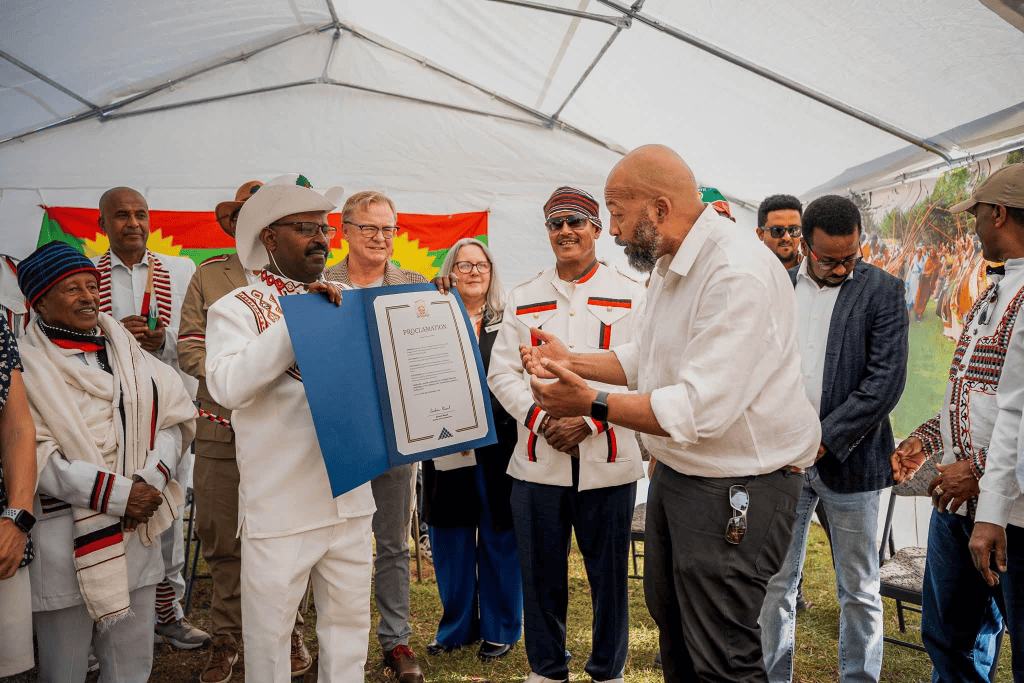
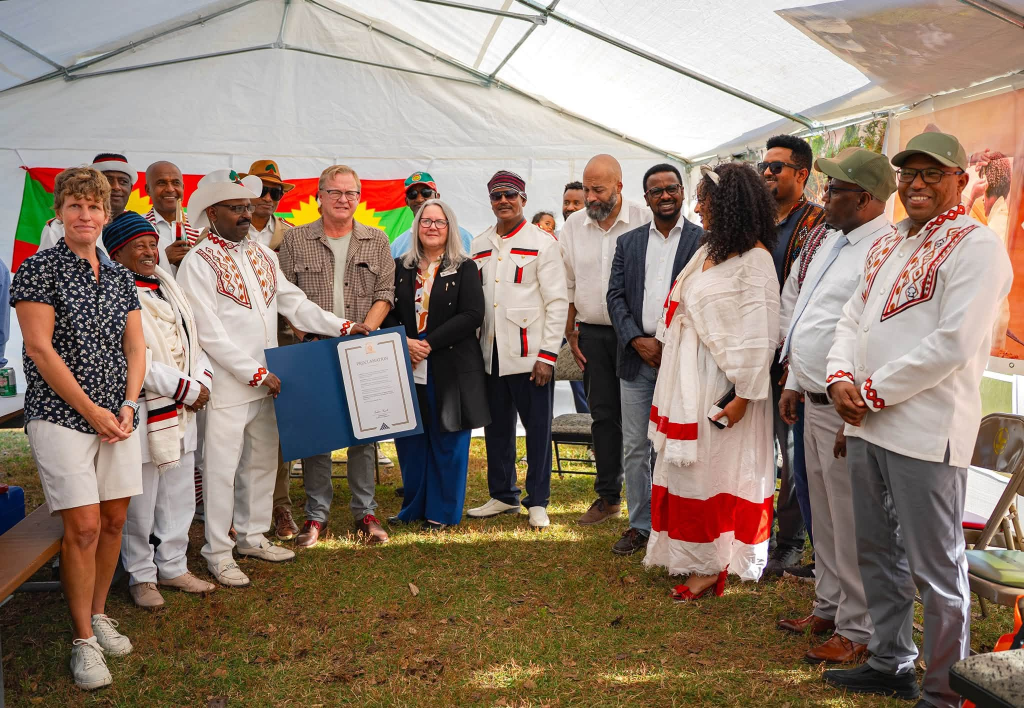
The celebration, held a week ago, was honored with an official Certificate of Recognition from the Government of Alberta, presented by representatives of the city and the provincial and federal governments who stood alongside the Oromo community in celebration. The recognition was not a casual gesture. As the community noted, this acknowledgment did not come easily or by accident. It was the result of years of persistent advocacy and grassroots organizing.
A Celebration That Speaks for Itself
The symbolism of Irreechaa is powerful, and the Edmonton community was intentional about ensuring it was understood. Irreechaa is not simply a “Thanksgiving” festival. It is rooted in Waaqeffannaa, the traditional Oromo belief in one God, and in the Gadaa system — the ancient democratic governance structure that UNESCO has recognized as Intangible Cultural Heritage.
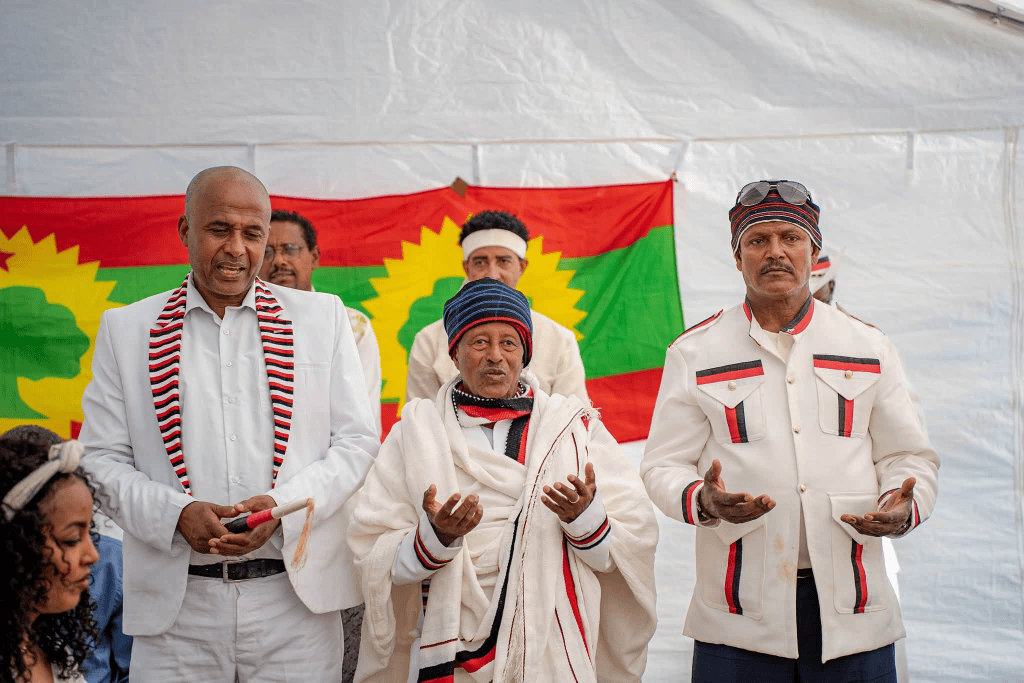
For Oromos in the diaspora, Irreechaa is a spiritual act of gratitude to Waaqa for the blessings of the past year, a moment of reconciliation, and a prayer for peace in the year ahead. It is also a public declaration of identity — a refusal to be invisible.
As the community statement put it, the presence of elected officials and the presentation of the certificate of recognition was not simply an act of kindness by those in power. It was the product of sustained effort and organized advocacy by OCANA (the Oromo Community Association of Northern Alberta) and the broader Oromo community of the region.
The Leadership Behind the Recognition
The statement is clear that this achievement belongs to the community’s leadership and its collective will. “For our culture to flourish, for Oromos to be honored, and for Oromia to be viewed as a nation, the leadership of the Oromo Community Association of Northern Alberta played a lion’s share — and this is where it came from.”
That acknowledgment matters. In diaspora communities, recognition rarely arrives on its own. It must be cultivated — through relationship-building with local governments, through participation in multicultural events, through education, and through the persistence of community organizations.
A Model for Others
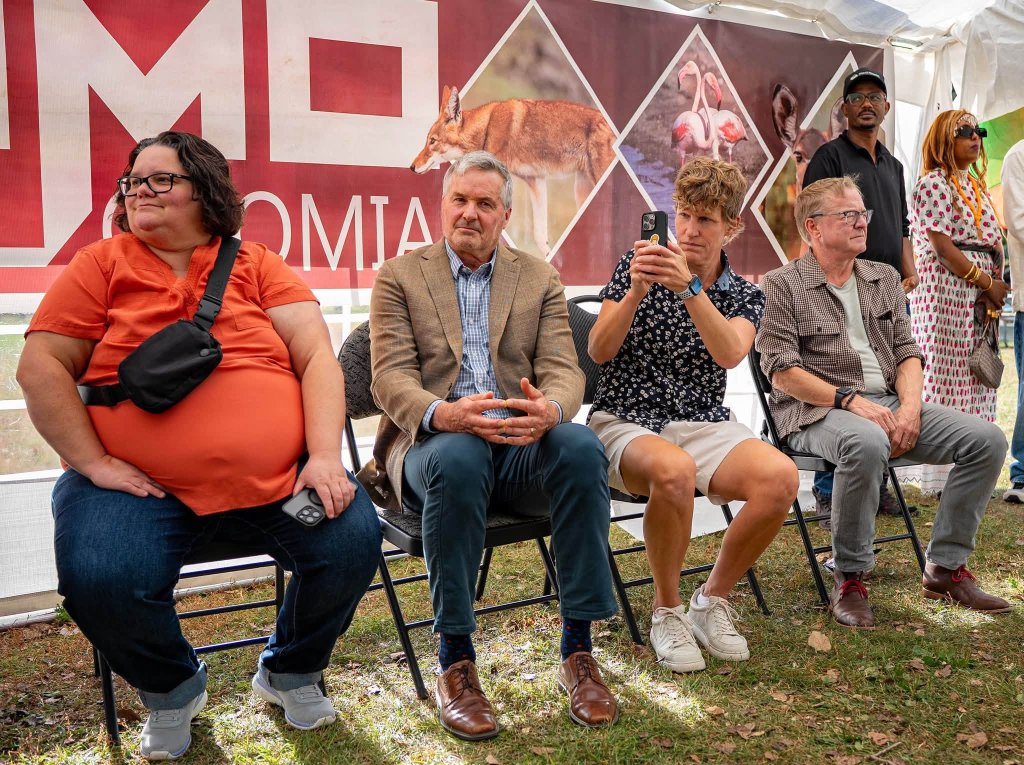
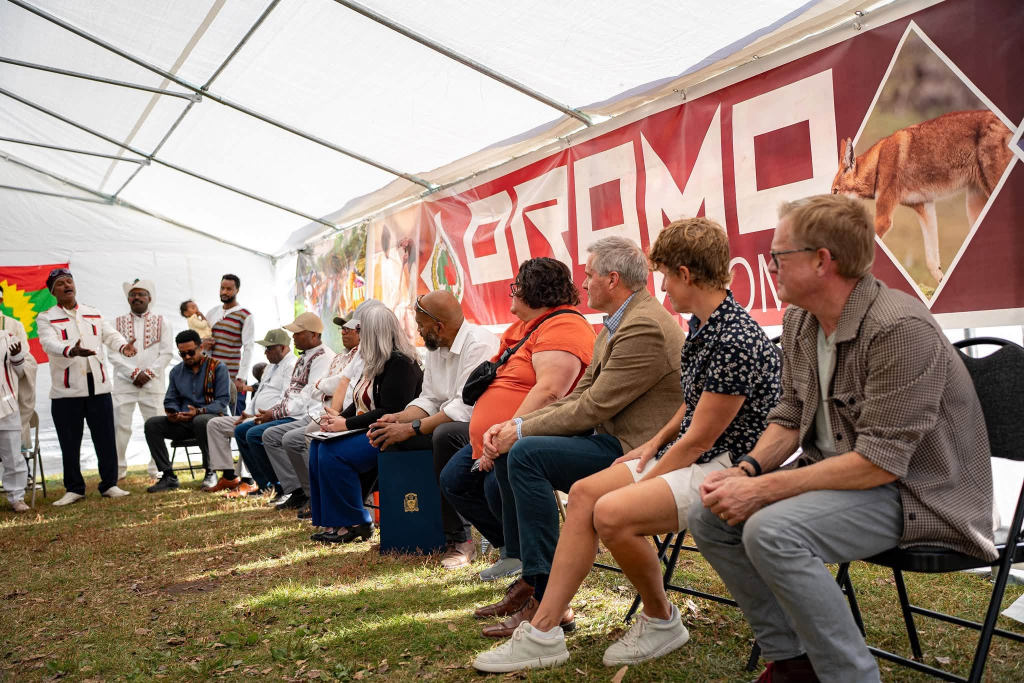
The Edmonton community also highlighted a striking achievement: at God-Hambaalee Edmonton, one of the city’s major multicultural festivals featuring over 90 countries, Oromia participated as a nation in its own right — complete with its own displays and presentations, which finished among the top ranks of participants.
For a community whose homeland has often been marginalized, denied recognition, and subjected to systemic oppression, this is no small thing. It is a reversal of the invisibility that has too often been imposed on Oromo people.
The statement also noted that many multicultural associations exist across Canada, but none has demonstrated the same strength, diplomatic skill, and ability to articulate the Oromo experience as this one. The community did not celebrate in isolation — it celebrated in public, with recognition, and with dignity.
Gratitude and Looking Forward
The message closes with gratitude — to the Oromo community of the region, to OCANA’s leadership, and to everyone who contributed to making Irreechaa 2026 a success. It also issues a challenge to other Oromo communities: learn from this example. The community intends to build on this momentum, and future plans are already taking shape.
To those who are honoring their country and culture, the community offers its blessing: Irreecha milkii — may your Irreechaa be fruitful and blessed.
Why This Matters
Irreechaa in Edmonton is not just a local story. It is a template for how diaspora communities can transform sacred traditions into civic recognition — without compromising the spiritual essence of the festival. It shows that cultural preservation and public engagement are not mutually exclusive. And it demonstrates that when a community organizes, advocates, and speaks with one voice, governments listen.
For Oromos across Australia, North America, Europe, and beyond, the Edmonton example offers both inspiration and a challenge: celebrate proudly, organize strategically, and ensure that Irreechaa is not only a memory carried from home, but a living tradition recognized by the nations in which it is celebrated.
Baga Irreecha milkiin geessan!
#Irreecha_Edmonton #Irreechaa #Oromo #Oromia #OCANA #Edmonton #Alberta #Diaspora #CulturalHeritage #Waaqeffannaa #Oromummaa

My Favourite Festival: Irreechaa
By Dhabessa Wakjira
—
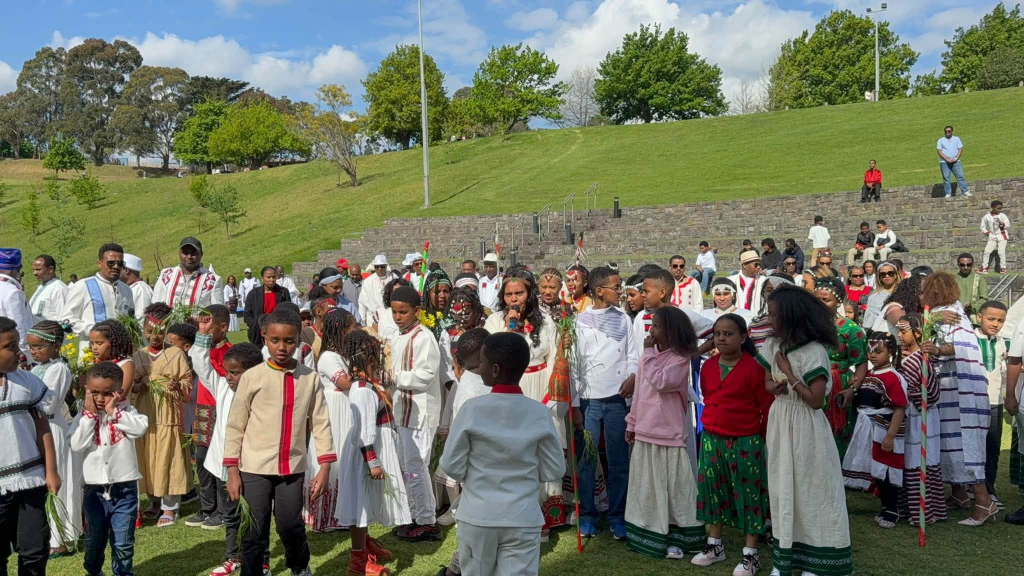
There are festivals that entertain, and there are festivals that transform. Irreechaa belongs to the second category. For me, it is not simply my favourite festival — it is the most meaningful celebration I have ever known.
A Festival That Belongs to Everyone
What I love most about Irreechaa is its radical inclusivity. It does not matter who you are, where you come from, or what faith you follow. The festival is described as a “culture of inclusivity” where people of all backgrounds, languages, and religions are welcomed . When you stand at the water’s edge, surrounded by thousands of people carrying fresh green grass and yellow daisies, you realise you are part of something far bigger than yourself.
Gratitude at Its Purest
Irreechaa is, at its heart, an act of thanksgiving. It is a time to give thanks to Waaqa (God) for the rains, the harvest, the gift of life itself. In a world that often rushes past moments of gratitude, Irreechaa forces us to pause. To look back at the year that has passed. To acknowledge the blessings we have received. To welcome the new season with hope.
There is something profoundly grounding about this. The festival reminds us that we are part of nature, not separate from it — that the changing seasons, the flowing water, and the blooming flowers are all gifts worth celebrating.
A Time for Reconciliation
One of the most beautiful aspects of Irreechaa is its emphasis on reconciliation. You cannot fully participate if you are holding resentment or conflict in your heart. Disputes must be settled. Forgiveness must be offered. The festival creates a powerful, community-enforced deadline for healing broken relationships.
In a world so often divided by conflict, Irreechaa offers a different path — one rooted in peace, understanding, and the courage to let go of grievances.
A Living Link to My Heritage
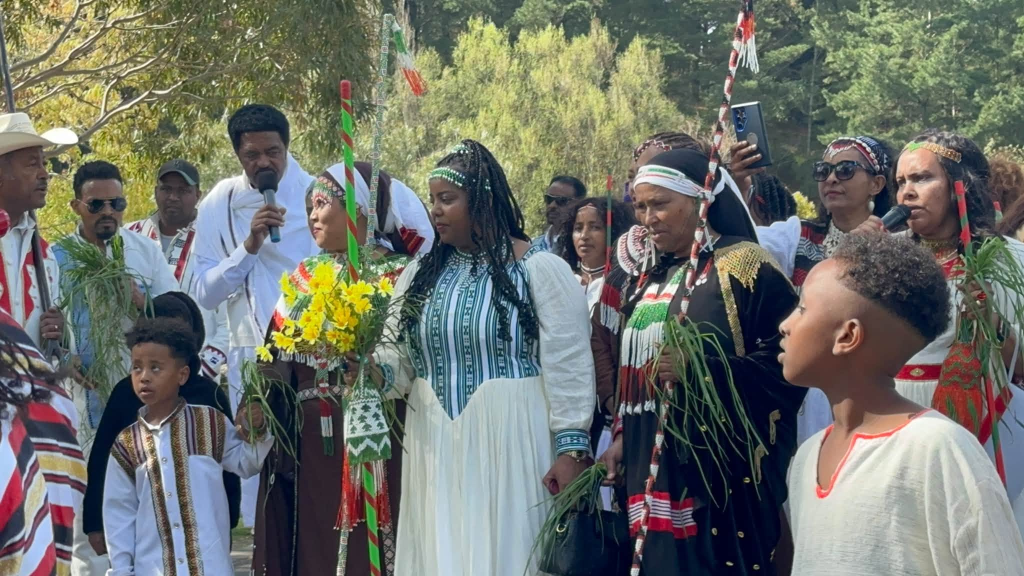
For those of us in the diaspora, Irreechaa is more than a festival. It is a lifeline to our homeland. It connects us to our ancestors, our language, and our traditions. When I celebrate Irreechaa in Australia, I am not just remembering Oromia — I am keeping it alive within me.
The songs, the prayers, the procession, the grass, the flowers, the water — every element carries the weight of generations. And by participating, I become part of that unbroken chain.
A Festival That Survived
Irreechaa has been celebrated for generations, preserved through years of oppression and systemic subjugation . That it survives today — and thrives — is a testament to the resilience of the Oromo people. Every celebration is a quiet victory. Every song is an act of defiance. Every gathering is a statement that our culture cannot be erased.
The Feeling You Can’t Explain
Ask me to describe what Irreechaa feels like, and I will struggle. It is the sound of thousands of voices singing together. It is the sight of elders leading prayers and children watching with wide eyes. It is the smell of fresh grass and flowers. It is the feeling of belonging — of being part of something ancient, sacred, and unbreakable.
It is joy. It is peace. It is home.
Why It’s My Favourite
Irreechaa is my favourite festival because it is not just a celebration. It is a spiritual homecoming. It is a time to give thanks, to reconcile, to reconnect, and to remember who I am.
In a world that moves too fast, Irreechaa invites us to slow down. To be present. To be grateful. To be together.
And that, to me, is the most beautiful thing a festival can offer.
Baga Irreechaa nagaan geessan! 



Oromo Community in Melbourne Celebrates Irreechaa with Color and Tradition at Botanical Gardens
By Dhabessa Wakjira
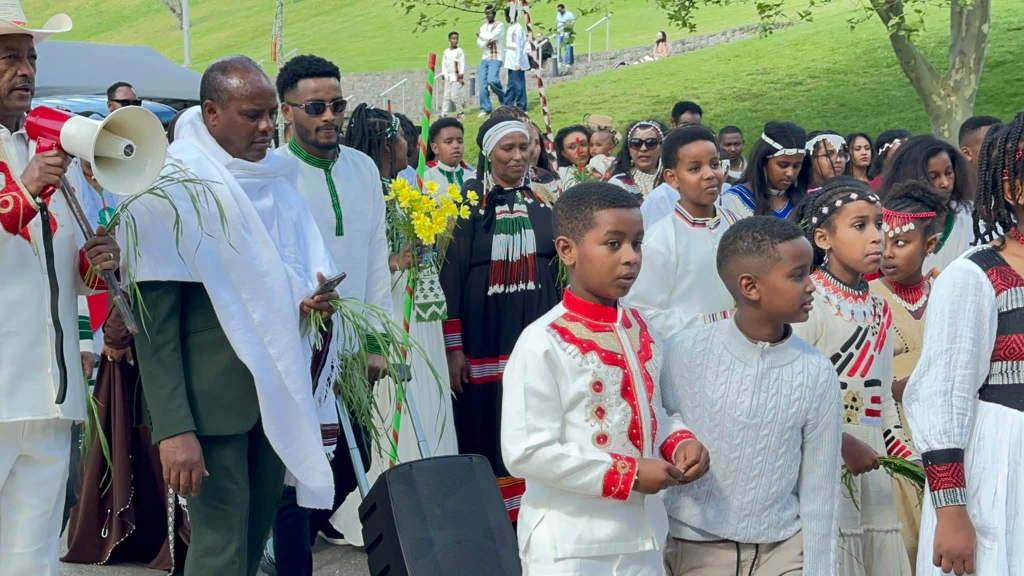
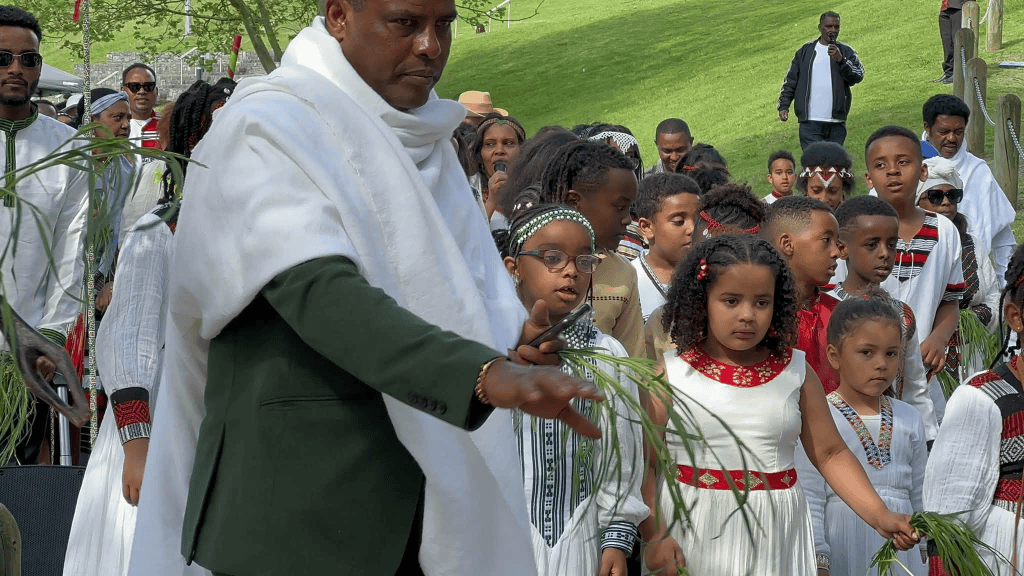
MELBOURNE, 27 September 2026 — The Oromo community in Melbourne today celebrated Irreechaa, the traditional Oromo thanksgiving festival, in a vibrant and beautiful ceremony at the Botanical Gardens, bringing together hundreds of community members in a powerful display of culture, faith, and unity.
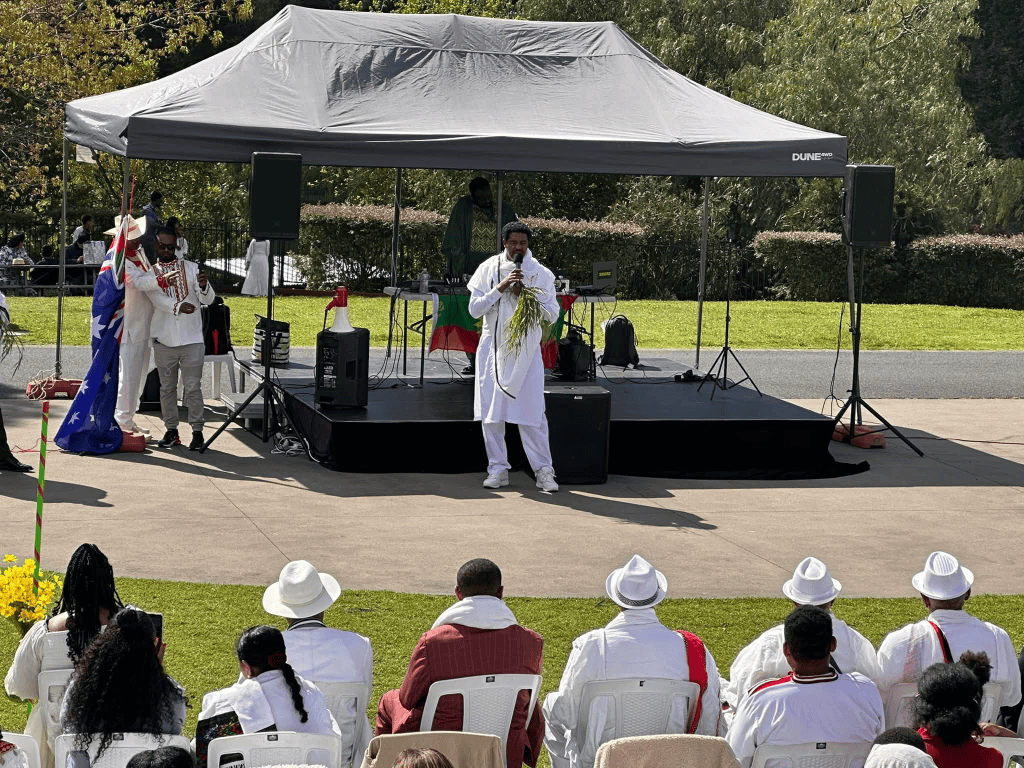
The celebration began with traditional blessings, and members of the community participated in the event in large numbers, dressed in beautiful cultural attire. Mr. Abdeta Homaa, Chairman of the Irreechaa Festival Committee, welcomed the gathered community with a speech of welcome, saying “Baga nagaan dhuftan” — welcome, and may you have arrived in peace.
A Sea of Color and Tradition
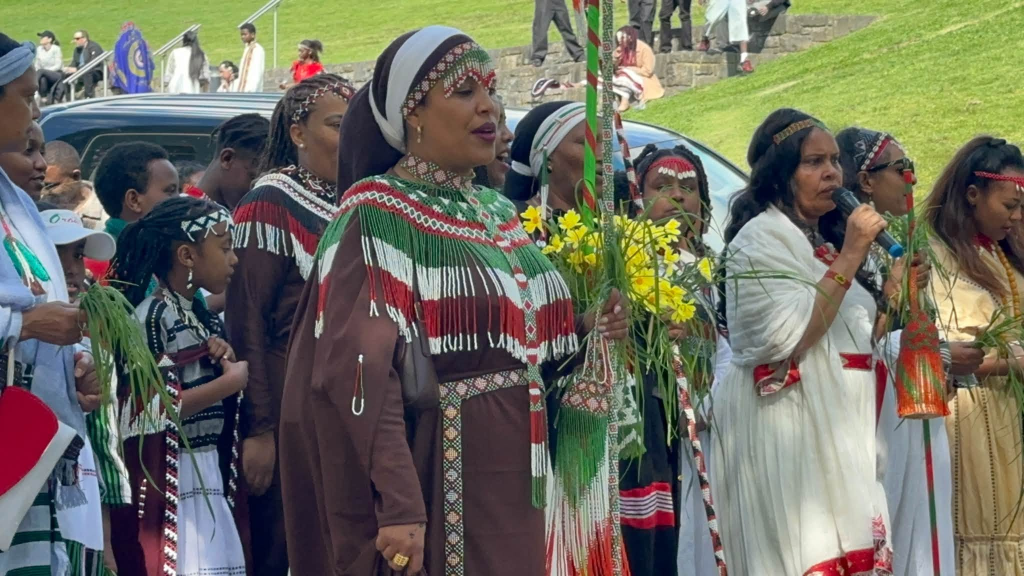
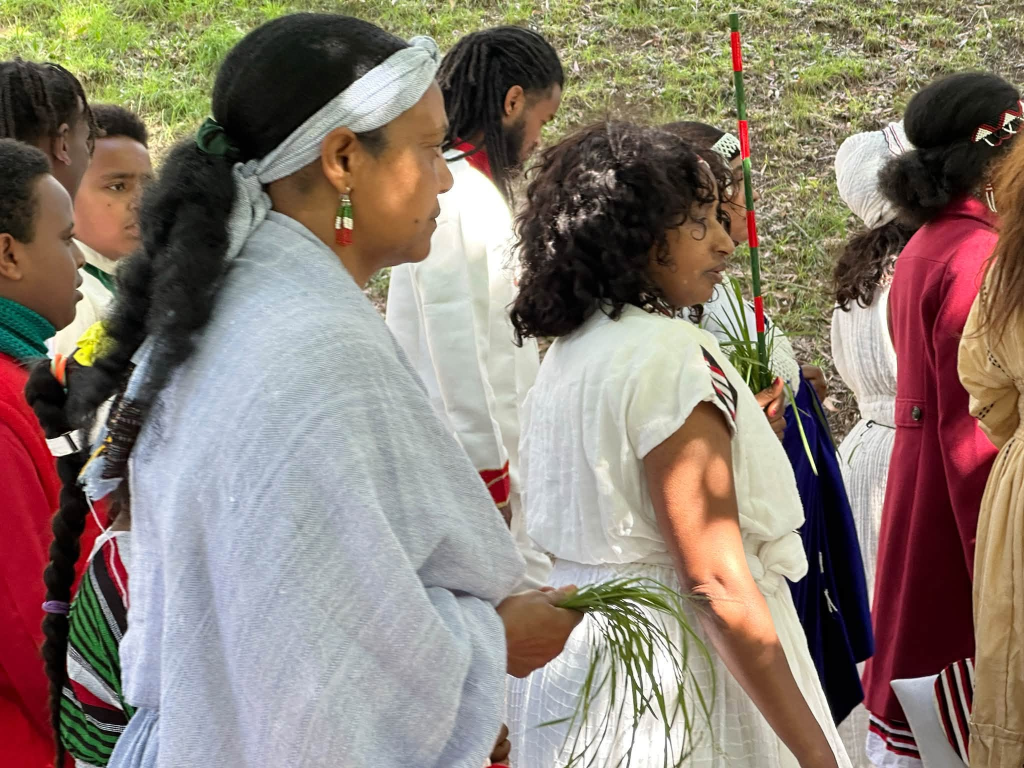
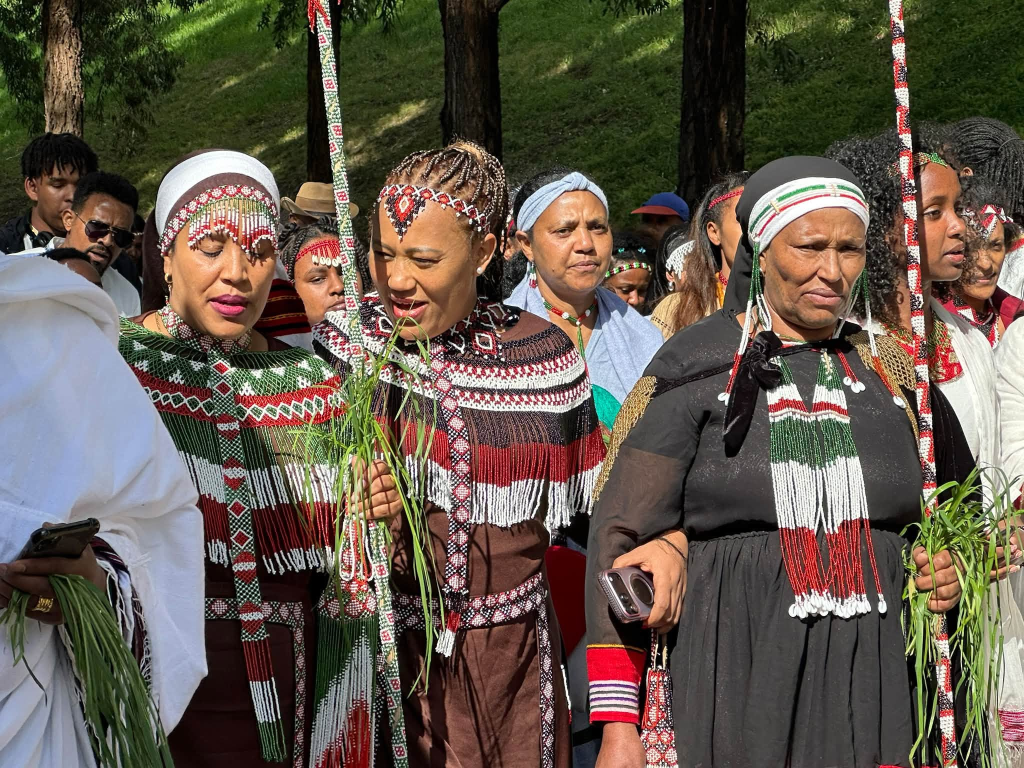
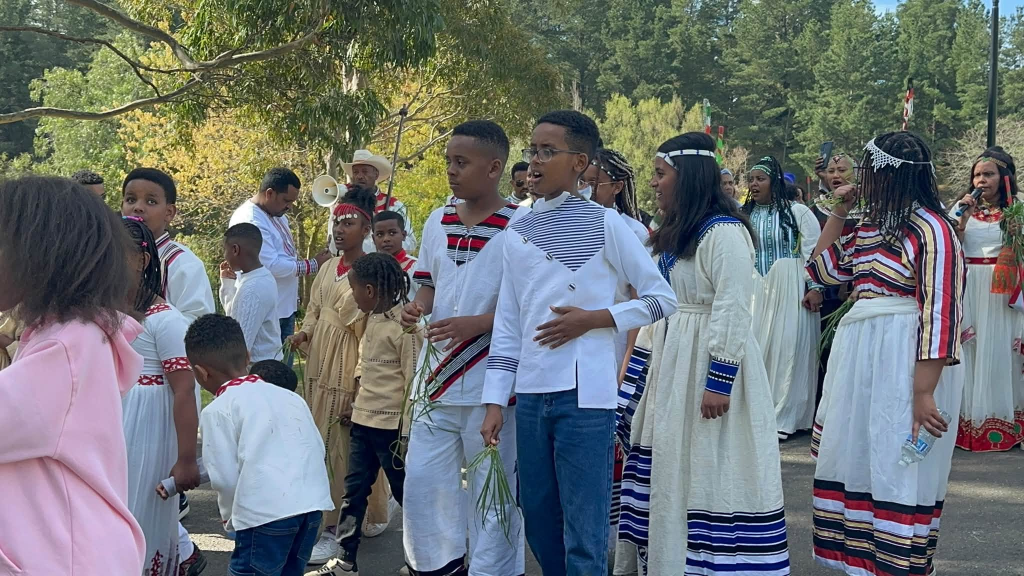
From children to elders, attendees were resplendent in traditional Oromo clothing, the colors and scents of the festival filling the air. Carrying fresh green grass and flowers — the symbols of Irreechaa — community members walked to the water’s edge, dipping the grass into the water in the traditional manner, giving thanks that they had passed through the past year safely and reached the spring season.
The sight of families in their finest cultural dress, the sound of traditional songs, and the shared prayers created an atmosphere of joy and reverence that echoed celebrations back home in Oromia.
A Time for Gratitude and Prayer
Irreechaa is not only a time to give thanks for what has passed, but also a moment to pray to Waaqa (God) for a peaceful passage through what lies ahead. The Oromo people, found across the world, are known for celebrating Irreechaa together in a shared and unified manner.
The festival has been celebrated by the Oromo for generations, preserved through years of oppression and systemic subjugation, and passed down to the present generation. Irreechaa is celebrated as the festival that marks the transition from the rainy season to the spring — from Ganna to Birraa.
Resilience in the Diaspora
The Melbourne celebration stands as a testament to the resilience of Oromo culture and the community’s determination to keep its traditions alive far from home.
Despite the distance from their ancestral homeland, Oromos in Australia have ensured that Irreechaa remains a living, breathing tradition — not merely a memory. The Botanical Gardens became a sacred space where gratitude met hope, and where tradition triumphed over distance.
A Community United
As the Melbourne celebration drew to a close, the message was unmistakable: Irreechaa is more than a festival — it is an expression of identity, a bond of unity, and a living link between generations.
For the Oromo community in Melbourne, the Botanical Gardens became a place where the past and present met — where children learned the songs their grandparents sang, where elders saw their traditions carried forward, and where a people far from home remembered, together, who they are.
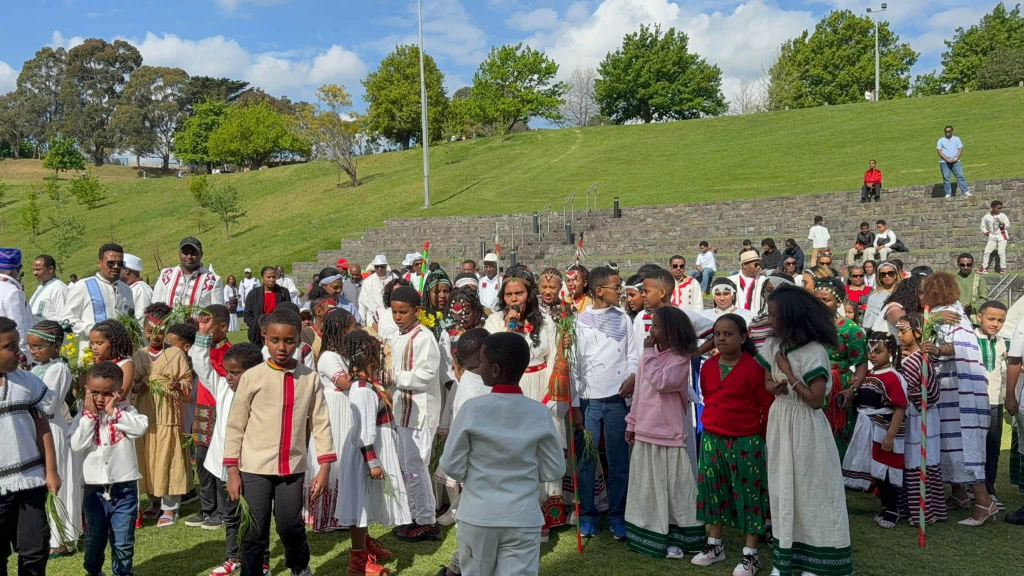
Baga Irreechaa nagaan geessan! — May the Irreechaa have arrived in peace.
The Oromo community in Melbourne celebrates Irreechaa annually, welcoming all who wish to share in its traditions of gratitude, reconciliation, and unity.
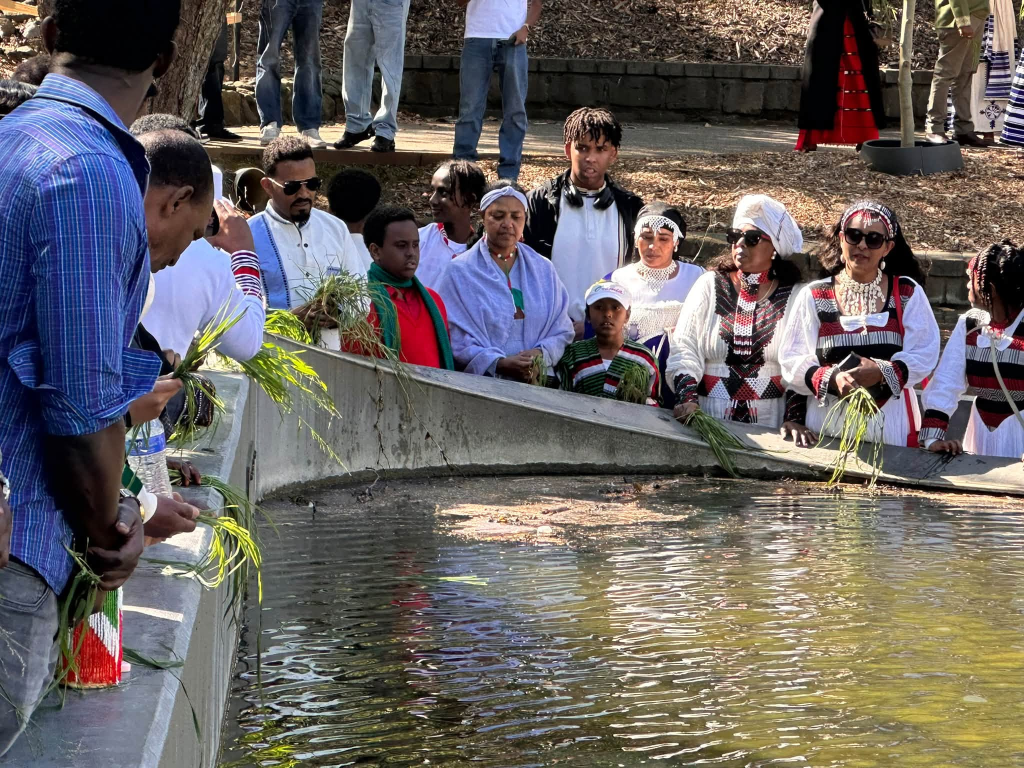

What is the significance of Irreechaa Celebrations in the global cultural event?
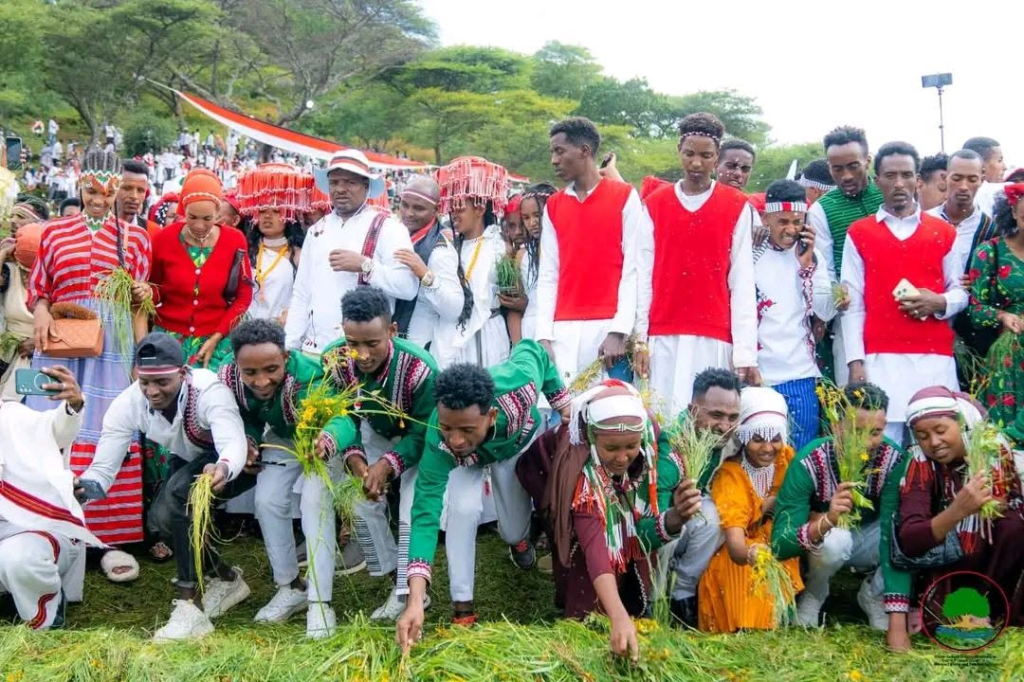
Irreechaa has grown far beyond its origins as a local Oromo thanksgiving festival. It is now a significant global cultural event that serves as a powerful symbol of unity, a major driver of tourism, and a living expression of a heritage recognized by UNESCO.
🕊️ A Global Symbol of Unity and Peace
Irreechaa’s core values of gratitude, reconciliation, and forgiveness resonate universally. It is described as a “culture of inclusivity” where people of all backgrounds, languages, and religions are welcomed. The festival is celebrated as a national treasure that strengthens brotherhood and solidarity, not just for the Oromo people but for all Ethiopians. Its message of peace and harmony has made it a platform for fostering understanding between diverse communities.
🌍 A Growing International Diaspora Tradition
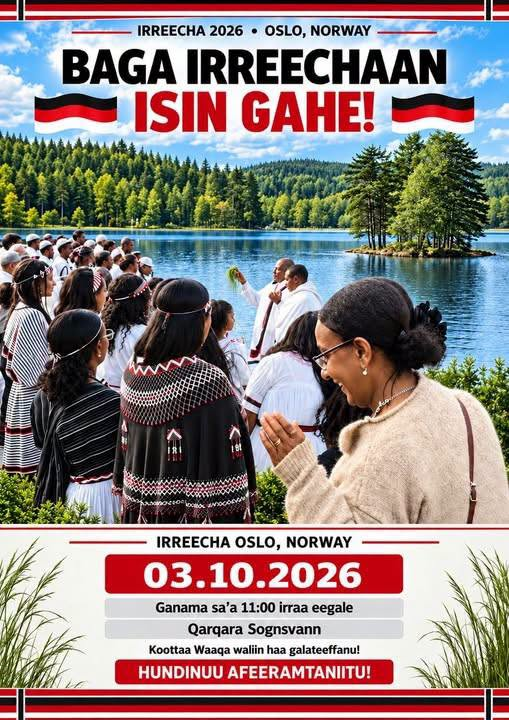
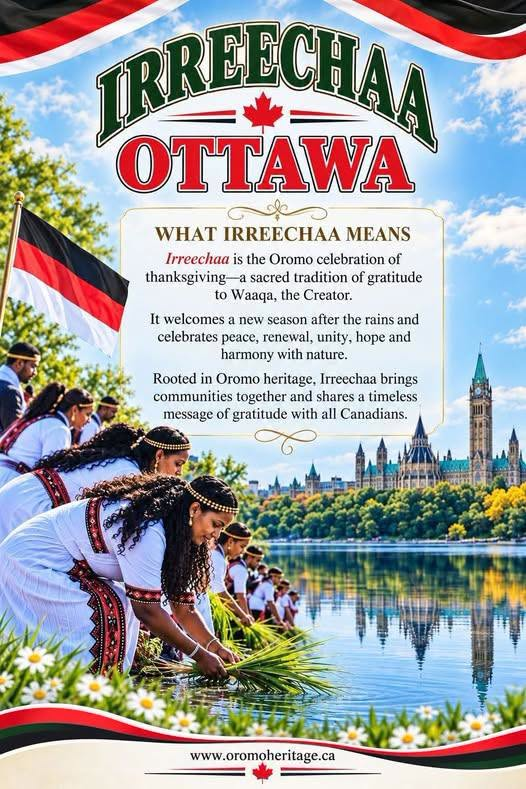
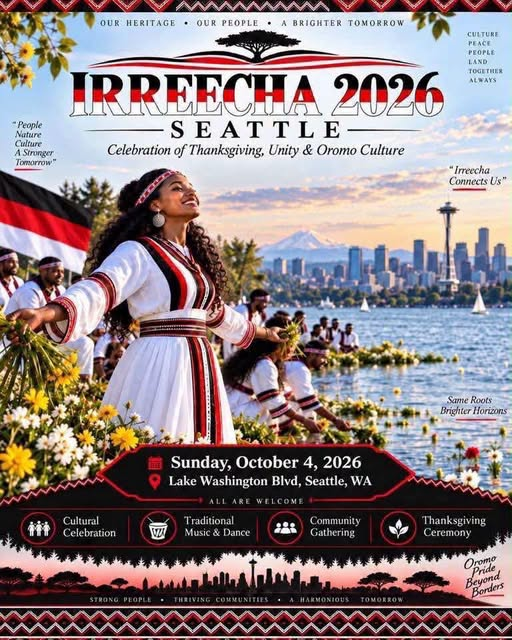
The celebration has firmly taken root across the globe. Oromo communities in countries like the United States, Canada, Germany, the United Arab Emirates, and Australia organize their own Irreechaa events. These gatherings, held in cities like Washington, D.C., Toronto, and Berlin, bring together the diaspora and curious locals to preserve their heritage and pass it on to younger generations. The festival’s international appeal was highlighted in 2024 when visitors from the US and Canada described their experience in Ethiopia as “transformative,” praising the warmth and spiritual depth of the celebration.
🏛️ UNESCO-Recognized Heritage and Tourism Driver
Irreechaa is not just a cultural festival; it is a recognized part of world heritage. It is celebrated as part of the Gada system, which was inscribed by UNESCO as an Intangible Cultural Heritage. This status, combined with its massive scale—gatherings in Bishoftu can attract over 4 million people, making it one of the largest annual gatherings in Africa —has turned Irreechaa into a significant tourism draw. The Ethiopian government actively promotes the festival to attract international visitors, boosting the local economy.
✨ A Global Reminder of Shared Values
Ultimately, Irreechaa’s global significance lies in its universal message. It serves as a reminder of humanity’s connection to nature, the importance of expressing gratitude, and the power of community to heal and unite. Whether celebrated on the shores of Lake Hora in Ethiopia or in a park in Melbourne, Irreechaa embodies values that resonate far beyond Oromia.

Advocacy for Oromia Rejects Northern Forces Alliance, Demands Genuine Security and Respect for Oromo Gains

FOR IMMEDIATE RELEASE
September 21, 2026 — Advocacy for Oromia has issued a formal statement rejecting the alliance recently concluded with northern forces, condemning it as a political maneuver that fails to address the fundamental grievances of the Oromo people. In its statement, the organization outlined four key demands:
- The government must engage in dialogue with armed groups operating within Oromia in order to establish genuine and sustainable security for the region.
- Armed groups operating within Oromia must refrain from any actions that harm Oromo interests, and must cease all activities that undermine the wellbeing of the Oromo people.
- Armed groups operating within Oromia must work together in coordination to ensure the security of Oromia, placing unity of purpose above division.
- All parties must firmly safeguard and uphold the victories achieved by the Oromo people, ensuring that no agreement or political arrangement dishonors or diminishes those hard-won gains.
Advocacy for Oromia emphasized that any political framework that fails to recognize the historical suffering of the Oromo people — spanning the imperial era, the Derg regime, the EPRDF government, and the current administration — cannot serve as a legitimate basis for peace or justice. The organization warned that alliances built on the omission of past wrongs risk perpetuating the same structural injustices that have long afflicted Oromia.
The statement further criticized the recent alliance for portraying the current crisis as an aberration rather than the inevitable consequence of centuries of Oromo subjugation, insisting that genuine transformative justice — not symbolic recognition — is the only path forward.
Advocacy for Oromia reaffirmed its commitment to the liberation, justice, and systemic change sought by the Oromo people, declaring that mere survival is not enough.
###

Oromo Youth and Elders Rally in The Hague, Protest Killings and Rights Abuses in Ethiopia
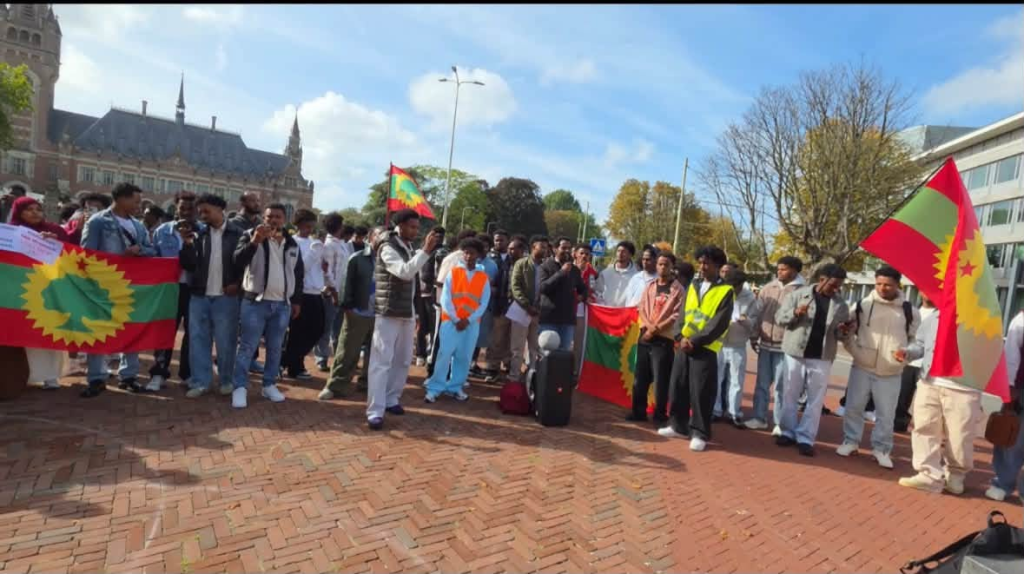
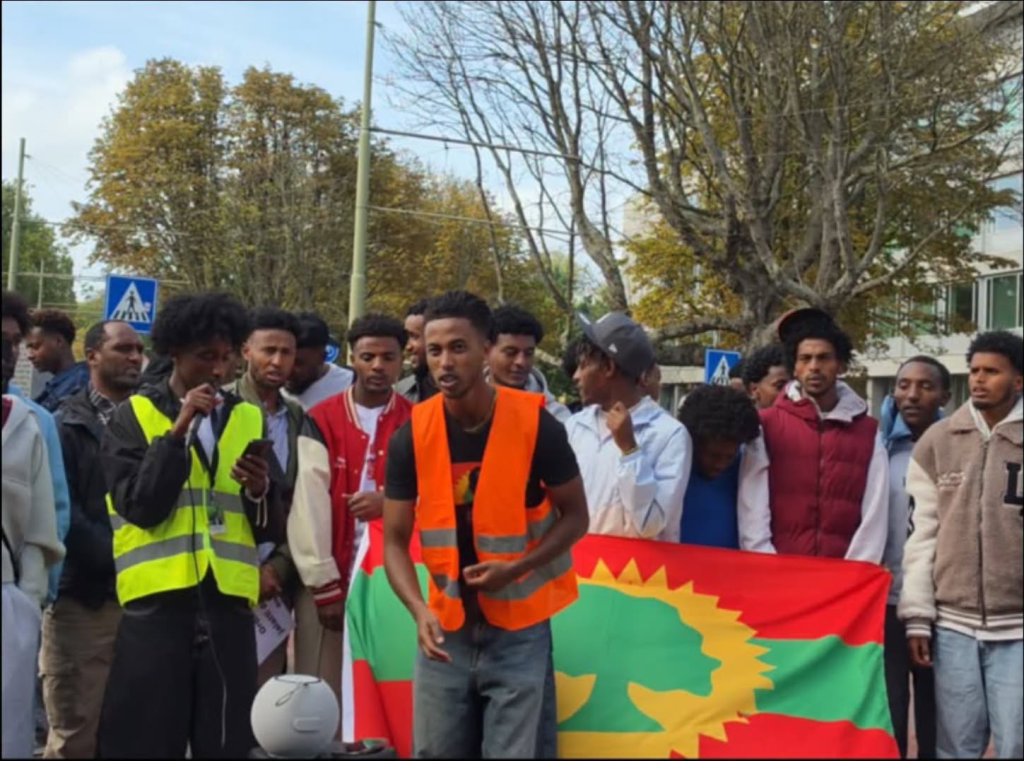
The Hague, Netherlands — Oromo youth and many members of the older generation living in the Netherlands took to the streets yesterday in a powerful demonstration, raising their voices in support of the Oromo people in Ethiopia and protesting against the killings and human rights violations being committed against innocent civilians.
The demonstration, held on 18 September 2026 in The Hague (Den Haag), brought together generations of the Oromo diaspora — young activists standing shoulder to shoulder with elders — united in their demand for justice and an end to the suffering of their people.
A Government Accused
Protesters directed sharp criticism at the government of Prime Minister Abiy Ahmed, accusing it of using the name of the Oromo people while Oromos are being killed and left to suffer. The demonstrators voiced their rejection of what they described as a government that claims to represent the Oromo while failing to protect them.
Among the slogans and demands raised during the demonstration were urgent calls for the government to stop forcing young people into military service and to halt the killing of innocent civilians.
Targeted for Politics
The demonstrators also protested against what they described as the targeting and killing of people for political reasons — a practice they say has claimed the lives of countless innocent Oromos.
The rally was marked by the presence of both the youth and the older generation, a visible sign of the unity and shared commitment of the Oromo diaspora across generations. Their message was clear: the killings must stop, human rights must be respected, and the voices of the Oromo people must be heard.
A Diaspora’s Voice
The Hague demonstration is the latest in a series of protests by the Oromo diaspora across Europe and beyond, as communities abroad continue to speak out against the violence and repression they say their people face at home.
For those who gathered in The Hague, the protest was more than a political statement — it was an act of solidarity with families and communities in Ethiopia, and a declaration that the Oromo people’s struggle for justice, dignity, and freedom will not be silenced.

Oromo Literacy Day: Celebrating the Power of Stories Held in Oromia
By Maatii Sabaa
—
Every year, Oromo Literacy Day is more than a date on a calendar—it’s a living tribute to the resilience of a people and their language. It celebrates Afaan Oromoo, a language that carries the weight of history, the songs of ancestors, and the dreams of a nation. But how did the Oromo people arrive at this moment, where their stories can finally be written, read, and shared with the world? The answer lies in a long and courageous journey toward literacy.
A Written History of Resistance and Revival
The story of Oromo literacy is one of relentless struggle. The Oromo people have long possessed a rich oral tradition, but for much of Ethiopia’s modern history, their language was marginalized. It was a household language—spoken, sung, and whispered—but rarely seen on paper . The first major push to change this came in the late 19th and early 20th centuries.
A pivotal figure was Onesimos Nasib, an Oromo freed from slavery who trained as a teacher in Sweden. Upon his return, he and his colleague Aster Ganno worked with an almost missionary zeal to promote literacy in Afaan Oromoo. Onesimos created the Oromo Reader, a book filled with stories that were “short and funny” and designed to be both accessible and engaging. His aim was not just religious instruction but to cultivate a love for reading itself . He would famously ask young people he met, “Can you read and write?” and persuade them of its immense value .
However, their work met fierce opposition from the imperial government. In the mid-1940s, the Haile Selassie regime placed a total ban on Oromo literature . The language was effectively erased from public life, becoming a symbol of defiance.
The Quest for the Perfect Script
The suppression only intensified the desire for a written Oromo. The question of how to write the language became a central point of debate. Early works, like those of Onesimos, used the Ge’ez alphabet. But many activists and intellectuals believed this script was inadequate for Oromo sounds, failing to represent vowel length and consonant gemination—features that change a word’s meaning .
In the 1960s, the movement for a new script gained momentum. At Addis Ababa University, Oromo students began printing the first newspaper in Afaan Oromoo, Kana Beektaa? (“Do you know this?”), in 1968. The paper was a bold act of cultural preservation, collecting “Oromo songs, proverbs, war and grievance chants, Oromo prophecies, nuptials, baby lullabies, and others” . This was more than journalism—it was a declaration of identity. The paper was short-lived, forced to cease publication in 1971 .
Simultaneously, Oromo students in Europe were rigorously debating the script question. In 1968, a study group led by figures like Haile Fidaa concluded that a modified Latin alphabet was the most practical and linguistically sound choice for Oromo . This decision was not just technical; it was a political act of resistance, rejecting a script associated with the establishment.
A New Dawn: The Adoption of Qubee
After years of struggle, the fall of the military Derg regime in 1991 brought a turning point. The new Ethiopian constitution granted greater autonomy to regional states. Oromo was finally made the official language of the Oromia Regional State .
The Latin-based alphabet, known as Qubee, was officially adopted for writing Oromo . This was a victory decades in the making. The script’s simplicity and adaptability to modern technology made it a practical choice for a language finally stepping into the digital age. As one study noted, Qubee “enabled the language to grow faster as the script can be learned easily” .
However, the adoption was not without controversy. For some, the Ethiopic script held deep cultural significance, and the switch to a Latin alphabet was seen as an emotional and political break . Yet for the majority, Qubee represented liberation.
The Stories That Endure
The adoption of Qubee unlocked a literary explosion. Oromo youth and intellectuals began producing “newspapers, magazines, novels, translations and plays that describe their nation and their state in Afaan Oromoo” . Stories once confined to memory were now printed, preserved, and shared.
The journey has also involved recovering alternative scripts. A fascinating chapter is the story of Sheek Bakrii Saphaloo, a scholar who created a unique indigenous Oromo script. He developed an abugida, a writing system where each base glyph has multiple vocalic components, making it distinct from both the Ge’ez and Latin alphabets . This script has been used for over 70 years and is now being considered for digital preservation and inclusion in Unicode, highlighting the deep connection between literacy and cultural identity .
Why Oromo Literacy Day Matters
Oromo Literacy Day is a celebration of this entire journey. It honors the tenacity of Onesimos Nasib, the courage of student activists, and the vision of scholars who fought to give their language a written form. It is a day to recognize that literacy is not just about reading and writing; it is about power, identity, and survival.
The stories held in Oromia are now written down for the world to see. This day celebrates their liberation and their enduring power.
—
“The stories, with the exception of a couple of martyr stories, are short and funny, and the subjects vary in order to attract.” — Onesimos Nasib on the Oromo Reader
—
 Maatii Sabaa is a writer and advocate of the Oromo stories.

Irreecha: A Day of Thanksgiving and Renewal for the Oromo People

By Dhabessa Wakjira
Introduction: A Celebration Like No Other
As the golden hues of the Ethiopian spring—known as Birraa—begin to blanket the landscape, a profound spiritual and cultural awakening stirs across Oromia. This year, the 2018 Irreecha festival, celebrated on September 24th at Hora Finfinne and September 25th at Hora Arsadee-Bishooftuu, carries a particularly resonant theme: “Irreecha: Olka’iinsa Biyyaatiif” (Irreecha: For the Elevation of the Nation). Following a sacred itinerary, the Council of Oromo Gadaa Elders has announced the events will be observed consecutively, beginning with morning rituals.
This year’s Irreecha stands apart, marking a triumphant return to tradition after a long night of cultural suppression. The proclamation of the Oromo Cultural Renaissance, coinciding with the blessing of the Great Ethiopian Renaissance Dam (GERD), adds a layer of double joy and profound national significance. The very air hums with the promise of renewal.
The Soul of a Nation: Culture as Identity
Culture is the radiant mirror of a people’s soul. It is through their customs, rituals, and traditions that a community reveals its unique character to the world. For the Oromo people, one of the largest nations in the Horn of Africa, culture is not merely a collection of artifacts but the living fabric of daily existence.
The Oromo possess a rich cultural tapestry, interwoven with the rhythms of their environment. Their traditions—from the sacred union of marriage and the art of traditional attire to the intricate wisdom of the Gadaa system—all reflect a deep, symbiotic relationship with the land and the cosmos. Central to this worldview is a profound reverence for Waaqa (God), the Creator.
For centuries, Oromo life was guided by a seamless integration of work, social structure, governance, and spirituality. This harmony was, however, violently disrupted from the era of Emperor Menelik II through the oppressive Derg regime. The Oromo people endured systematic marginalization, their identity and cultural practices suppressed. Their language, customs, and even their names were targets of state-sanctioned denigration.
Yet, like the resilient birbirsaa plant that thrives after the rains, the Oromo spirit endured. The fall of the Derg in 1991 and the subsequent constitutional recognition of the Oromo language and culture heralded a new dawn. A people once forced into the shadows of history could now reclaim their heritage in the full light of day.
Waaqeffanna: The Oromo Spiritual Tradition
At the heart of Oromo identity lies Waaqeffanna, the indigenous belief system. The Oromo have been custodians of a monotheistic faith since time immemorial, believing in a single, omnipotent Waaqa who is the sole Creator of the universe.
Unlike other systems, Waaqeffanna does not worship idols or intermediary deities. It is a direct, personal connection between the worshipper and the Creator. The Oromo believe that Waaqa is the source of all life and power, and that this power manifests through the natural world. The rivers, mountains, trees, and lakes are not gods themselves but sacred creations through which Waaqa’s majesty is revealed.
This philosophy is elegantly expressed through Irreecha, the ultimate act of thanksgiving and spiritual communion. The elders teach that Irreecha is simply “giving thanks to the one God.” It is the pinnacle of Oromo religious and cultural expression, a testament to the enduring faith of a people in the face of adversity.
The Seasons of Life: Why Irreecha is Celebrated
To understand Irreecha, one must understand the Oromo calendar and the life-giving cycle of the seasons. Following the long, harsh rains of the Ganna (winter) season, the landscape transforms. Mighty rivers swell, roads turn to impassable mud, and communities are often separated. Nature, in its raw power, hibernates.
Then comes Birraa, the spring season. The rains recede. The sky clears to a brilliant blue. The mud dries, opening pathways. The once-dormant earth erupts in a spectacular bloom of yellow, white, and purple flowers. The oyiruu (crops) transform from green foliage to golden, life-sustaining grain. This is the season of hope, rebirth, and abundance.
It is in this moment of transition, from the darkness of winter to the light of spring, that the Oromo offer Irreecha. It is a heartfelt “thank you” to Waaqa for guiding them through the difficult months and for bestowing the first fruits of the harvest. It is a powerful acknowledgment of the divine order that governs existence.
“Baga Booqa Birraa geessan!” — “Welcome, the freshness of spring!” is the joyful greeting of the season.
Two Hallowed Places: Irreecha Tulluu and Irreecha Malkaa
The Irreecha rituals are held in two distinct settings, each reflecting a different phase of the spiritual and agricultural cycle.
Irreecha Tulluu (Irreecha of the Mountain)
As the dry season (Bona) takes hold, the land becomes parched, and water sources dwindle. The elderly of the community, acting on ancient knowledge, would gather at a designated highland—a Tulluu—believed to be closer to the divine. Here, they would raise their hands to the sky, beseeching Waaqa for rain. Their prayers, steeped in the wisdom of the Cushitic cosmological tradition, seek to restore the balance of nature and ensure the renewal of life.
Irreecha Malkaa (Irreecha of the River)
This is the main event. Held at the outset of Birraa around mid-September, Irreecha Malkaa is a vibrant, joyous, and public festival. The Oromo gather at the banks of rivers, lakes, or springs—places where the life-giving water is most tangible.
For this occasion, the community dresses in their finest traditional attire. The men wear colorful Wandaboo (shoulder cloths) and carry traditional weapons or staffs, while the women don elegant, flowing gowns and adorn themselves with intricate hairstyles and beaded jewelry, known as Calallee. The youth, particularly the Kormoomsaa (young warriors), move through the crowd, sprinkling people with fresh water, a gesture of cleansing and blessing.
At the appointed time, the Abbaa Gadaa (the Gadaa leader) and elders lead the procession. They carry the sacred Bokkuu (staff of office), Margaa (leaves of peace), and Callacha (ceremonial container). Chanting the sacred mantra “Maareewoo, Maareewoo!”—a powerful invocation of the divine—the throng moves toward the water’s edge.
Water is dipped from the river and touched to the forehead. This act signifies purification and a prayer for longevity and prosperity. The air fills with the sound of devotional songs and prayers.
“Obiin, kunni, malkaa nu gaha, ya Waaqa, nu eebbisi!” (Leader, take us to the river, O God, bless us!)
Irreecha Finfinne and Bishooftuu: The Heartbeat of the Festival
While Irreecha is celebrated across Oromia, the largest and most significant gatherings take place in two locations.
Hora Finfinne (Lake Finfinne), in the heart of the capital, is a site of profound historical significance. For decades, under oppressive regimes, public celebrations were banned. Holding Irreecha in Finfinne is a powerful act of reclaiming space and identity.
Hora Arsadee-Bishooftuu in the city of Bishooftuu is another major center. This location is famed for its beautiful, natural landscape. The specific gathering spot is near a sacred body of water believed to be a site of ancient Oromo worship. The historical figure Harsadi, of the Liiban clan, is associated with this lake.
In recent years, the scale of these gatherings has been staggering. It is estimated that over four million people attend the main Irreecha in Bishooftuu, making it one of the largest annual gatherings of people on the African continent. International media, including the BBC, Al Jazeera, and CNN, have taken note, broadcasting the awe-inspiring images of hundreds of thousands of people dressed in a vibrant sea of colors, moving with purpose and joy.
The day is a total immersion in culture and community. After the prayers and rituals, families and friends return home to share a meal of traditional dishes and freshly brewed Bunaa (coffee). The atmosphere is one of profound peace and unity.
A Culture Reborn
This year’s Irreecha is more than a religious ceremony; it is a powerful statement of cultural resilience. The revival of Irreecha after years of suppression represents a people reconnecting with their spiritual roots, reclaiming their heritage, and looking towards the future with hope.
The Oromo are announcing to the world that their culture, with its deep-rooted values of democracy, community, and spirituality, is not a relic of the past but a vibrant force for the present and future. Irreecha stands as a testament to the enduring spirit of a nation that has overcome immense challenges and continues to celebrate life, faith, and unity with unparalleled passion and dignity.
Deebi’uu: As the sun sets on the banks of Hora Arsadee, the echoes of “Maareewoo” fade into the cool evening air. The Oromo people have once again fulfilled their covenant of thanksgiving, carrying in their hearts the promise of a bright and prosperous future.








