Press Release on the Assassination of Haacaaluu Hundeessaa and the Current Situation in Oromia, Ethiopia
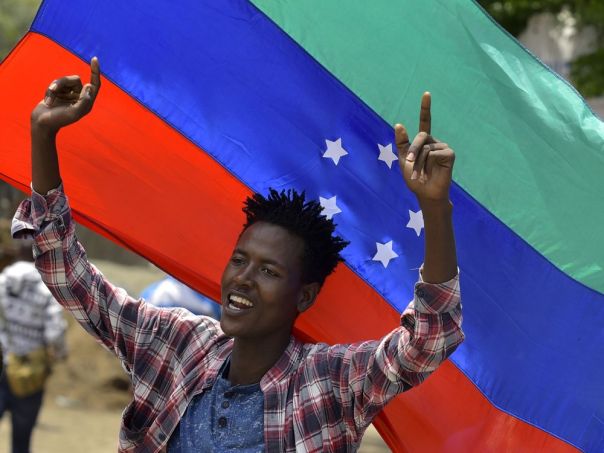
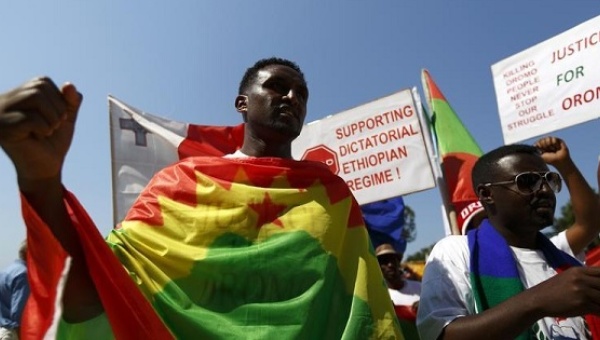
The Oromo Studies Association (OSA) joins millions of Oromos and allies of Oromos in strongly condemning the senseless assassination of the famous artist and political activist Haacaaluu Hundeesaa. Through his music, oratory, and activism, Haacaaluu played a vital role in articulating and communicating the essence of Oromummaa and the objectives of Oromo struggle for liberation and social justice. Consequently, as an Oromo cultural hero, he has captured the hearts and minds of millions of Oromos as the demonstrations of Oromos in Oromia and in the different parts of the world revealed.
The Oromo Studies Association denounces the brutal killings, imprisoning of thousands of Oromos for protesting against the assassination and government policies of labelling, attacking, and destroying the Oromo movement for self-determination, freedom, and democracy. Th Association finds the steps the Ethiopian government has taken to investigate Haacaaluu’s death unsettling. OSA also finds the government’s violent suppression of the peaceful protesters undemocratic and lacks legal credibility. Instead of carrying out a thorough investigation to find out the the killers of Haacaaluu, the investigating team is focusing on the political opponents of the regime and publizing unconfirmed conspiracy theories to deflect the attention from the real assassins.
Furthermore, instead of addressing genuine Oromo demands, the regime of Prime Minister Abiy Ahmed has collaborated with the forces that are subjugating the Oromo, and has taken ideological, political, and military measures that are intended to delegitimize, discredit and destroy democratic Oromo leadership and institutions. We believe that these anti-Oromo forces are after all responsible for the current violence and crisis in Oromia.
The day after Haacaaluu’s assassination, the Ethiopian government blocked the Internet and telephone services, and independent Oromo media in the state of Oromia to restrict the flow of information. This was followed by a violent crackdown on thousands of civilians who wanted to give Haacaaluu a hero’s send off. It is disheartening that government security forces summarily executed members of Haacaaluu’s family as if the assassination of the artist was not enough. On the very same day, prominent political activists and opposition leaders like Jawar Mohammed, Bekele Gerba, Hamza Borana and thirty-five other Oromo leaders were arrested.
Later Dr. Shigux Galata, Michael Booran, Kennesaa Ayaanaa and several others were arbitrarily arrested. These actions were the continuation of imprisoning prominent OLF leaders such as Yasoo Kabada, Lammii Beenyae, Kaayyo Fufaa, Professor Bayana Ruudaa, Gadaa Bulti, and Abdii Raggaasa. They also imprisoned several members of the Oromo Federalist Congress including Dajanee Taafaa. Interestingly, some of those detained hold foreign passports. For example, Dr. Shigux Galata is a citizen of Germany, while Redwaan Amaan, Yuusuf Bashir, and Micah Chiri are United Stated citizens. A Kenyan journalist, Yasin Juma was also arrested while covering the protests and government crackdown in Ethiopia. Trusting the prime minister’s initial promise to lead the reform process, Jawar Mohammed renounced his US citizenship only to fall into the prime minister’s trap and find himself in the notorious Ethiopian prison.
The Oromo Studies Association finds these arbitrary arrests and extra judicial killings extremely concerning. Such violent actions by the government illustrates a complete disregard for freedom of speech and human rights, which are the corner stone of a free and democratic society. It is a breach to the prime minister’s promises to the nation in his inaugural speech. It is contrary to the core principles of the Nobel Peace Prize which was given to him in 2019.
OSA strongly and resoundingly condemns violence perpetuated by the state against political opposition and civilians alike. Therefore, we demand the government of Ethiopia to:
Establish without delay, an independent commission (including members from international forensic experts) to investigate the assassination of Haacaaluu Hundeessaa;
Refrain from acts of violence and release all political prisoners without precondition immediately;
End the illegal military Command Posts in Borana, Guji, Wallagga and Western Shewa immediately and return the army to its barracks, and stop the indiscriminate killing of Oromos;
Address the fundamental demands of the Oromo people for justice, equality and democracy that propelled the prime minister to power in 2018 promising that he would address the demands but turned against it once in power;
Stop harassing, jailing and killing Oromos and members of opposition parties, and immediately start making peace with all including with those who are engaged in armed struggle;
Compensate the Oromo people for the destructions caused by the violence and by the notorious Command Post; and
Ensure the democratic transition that was initiated by the Qerroo and Qarree movement within a few months in order to avoid further political crisis and bloodshed.
Finally, OSA expresses its utter disappointment with hostile media outlets who, in their broadcasts, portray the Oromo people as hatemongers and killers. We are particularly concerned by the way tax-payer funded and government-supported media outlets such as VOA, Deutsche Welle, and BBC Amharic programs are presenting news stories and analyses about the current violence in Oromia. We believe that the interviews are staged, the sources are unbalanced and unverified; and contrary to journalistic professional ethnics their questions are leading to draw a desired conclusion.
In so doing, the journalists at these media outlets are not only propagating baseless and hostile propaganda against the Oromo people, but they are also complicating Ethiopia’s already too complicated problems. We demand that the journalists covering the Amharic program at of VOA, DW and BBC adhere to true professional principles of journalism by being fair and balanced. We plead to the respective boards of directors of these outlets to take all necessary measures to restrain their journalists from targeting the Oromo people.
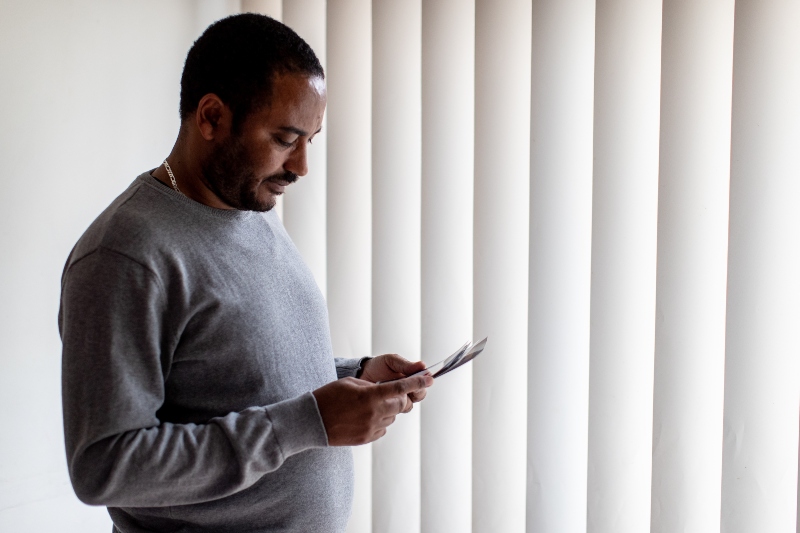
Melbourne, Australia: Dabessa, who came to Australia from Ethiopia seeking refuge, at their home in Melbourne. Photo: Kim Landy/Oxfam Australia
Dabessa Gemelal is one of many refugees in Australia who have been working in their communities to tackle COVID-19.
Through community education and information program and other initiatives he has been providing valuable community education and information about COVID-19 in Oromo language to make sure people know about and understand government measures and support services.
Dabessa is director of Advocacy for Oromia, which started the community education and information program to share verified information with refugee communities, especially Oromo community, about the coronavirus.
Dabessa believes we will get through these times because we are working together.
“A4O community education and information program showcases the positive contribution of our community and how they have come together in this unprecedented time to help everyone,” he said.
In addition to the community education and information program Dabessa has been organising online conversations with various Oromo community organisations and members to give information in Oromo language.
“I am working with the various Oromo Community associations, running online workshops to build the capacity of our people from refugee backgrounds in accessing timely and accurate information during COVID-19.”
Dabessa has experienced more in his life than most people can say from a lifetime of experiences. Dabessa fled Oromia in fear of political persecution.
He landed in Kenya as refugee, with no rights or access to work, education, health care or housing.
“I was always under threat of being arrested. I never felt safe in Kenya,” Dabessa said.
While Dabessa was in Nairobi, applying for refugee status, his worst fears were confirmed: “I got the news my wife was arrested.”
Just like her husband, Lelisse was falsely imprisoned for three years. In that time, Dabessa arranged for their children to be brought to Nairobi, and the family made their way to Australia — without Lelisse — as refugees.
After registering with the UNHCR and after three years, Dabessa’s family received a humanitarian visa for Australia and resettled in Adelaide in September 2009.
“I had mixed feelings the first few months after my arrival, however, I was very relieved that I was finally safe from harm and be an active citizen and get an education.”
Dabessa was thankful for the safety and freedom his new home afforded him. But his continued separation from Lelisse made it hard to settle in or get ahead.
“Until Lelisse arrived, I never think about a job because I’m caring [for the] children,” he explains. “I need to be home when the children come home. I’m going shopping, cooking, and making them to be stronger.”
Dabessa believes Australia has given him so many chances to succeed with challenges.
“The biggest success for me was that Australia gave me the opportunity to further my education. Within the 10 years, I hold Diploma of Community Services Work, Diploma of Case Management and recently hold a Bachelor of Social Work.”
Through his own personal experiences, Dabessa is determined to contribute in influencing change where people with lived experience are part of the decision-making process so that we better address the needs of refugees and people seeking asylum in Australia and around the world.
Oromia Global Forum 6909 Laurel Ave, Suite 5219 Tacoma Park, MD20913 Email: oromiaglobalforum@gmail.com Phone: 612-483-0161
To All Oromos Around The Globe,
Dear respected sisters and brothers,
We, the Oromia Global Forum (OGF), a global alliance of Oromo Civic, Professional and Faith-Based Organizations and individual proponents of Human Rights, residing in North America, Europe, Australia, Asia and Africa are writing this letter to you out of grave concern and fear for the future of the Oromo Nation. Our mission is to enhance Oromo unity, discuss, analyze and deliberate on man-made and natural disasters as well as human rights abuses plaguing the Oromo nation, and design strategies to mitigate the plights of our people.
OGF’s values are based on the egalitarian Gadaa System of the Oromo nation, in which the dignity of all human beings is equally respected and defended, irrespective of their color, culture and creed. OGF advocates for the protection and promotion of all human rights in Oromia and beyond. OGF upholds and defends the moral and ethical values of the Oromo nation, in which all human beings are equally treated, truth is defended and justice is served without discrimination. Furthermore, Oromia Global Forum (OGF) stands for, and defends Oromo national unity, integrity of Oromia, equality of its citizens, freedom of expression, social justice, self-determination and respect all forms of diversity in our society. We would like to kindly inform you that this letter of ours is based on these social, moral, ethical and human values of our Organization.
Dear respected sisters and brothers,
As you know, the Oromo nation has been impoverished and victimized since the occupation of Oromia by Abyssinian warlords. Despite uninterrupted resistance of the Oromo people to regain its liberty and dignity, the end goal has not yet been achieved. Thousands of Oromo youth paid heavy sacrifices to topple the TPLF government in a peaceful resistance between 2014-18. However, even though the resistance succeeded in removing the oppressive TPLF-led EPRDF regime, the group that took over did not make matters any better for the Oromo people. Conditions have become worse for the Oromo people. The Oromo people continued to be exploited, incarcerated, tortured, dehumanized and killed by the Abyssinian clique camouflaged as Oromo Government. Thousands are languishing in the prison chambers. West and South Oromia are under military rule for more than two years. The government has cut off communications: land lines, cell phones, the internet and other basic services to allow its soldiers free hand to torture and kill our people at will, and hide the crimes perpetrated.
Oromo students in colleges and universities are harassed, beaten and killed. Unspecified number of Oromo students are jailed in Amhara zones. More than 35,000 Oromo students are dismissed from colleges and universities around the country and languishing in cities and towns without any support. These students cannot even go back to their villages because of the war. Some of the villages are burnt down to the ground. Their parents are forcefully displaced and running away from their homes.
The Oromia Global Forum(OGF) is undertaking campaigns to expose the crimes committed by Ethiopian government, telling the international community the true Oromo stories, the sufferings of our people by writing letters to the heads of governments, parliamentarians, governmental and non-governmental officials, and by organizing media campaigns, public rallies (demonstrations) and issuing press releases from time to time.
Dear respected sisters and brothers,
As you know, the challenges facing our nation are intensifying daily. Daughters and mothers are raped. Young people are killed. Mothers are killed. Fathers are killed. Elders are killed. The dead bodies of our people are disposed into the bushes and eaten by hyena. To make the matters worse, the government of Ethiopia has illegally and forcefully extended its term in office for unlimited period to continue killing our people for unlimited time.
If we don’t not act collectively and promptly against these crimes, our nation is facing existential threat. The Oromia Global Forum believes, to avert the looming danger, all Oromos around the globe need to streamline and consolidate our efforts and resources; and act collectively and effectively.
To this effect, we respectfully and humbly invite you, the Oromo people: farmers, students, teachers, business women and men, pastors, pastoralists, sheks, activists, intellectuals, religious scholars and leaders, the media, Oromo youth (Qeerroo fi Qarree – the engine of Oromo national movement), etc. to join our hands and act together, so that we can collectively defend our nation, enhance our voices for our people and contribute to the creation of free, peaceful, and prosperous Oromia. Moreover, you are cordially invited to join us on the launching conference of Oromia Global Forum, on July 18, 2020.
We value your commitment, your cooperation and contribution, sacrificing your time, energy and other resources.
Respectfully,
Oromia Global Forum: a global alliance of Oromo Civic, Professional and Faith-Based Organizations
Signatories
Advocacy4Oromia
Bilal Oromo Dawa Center
Canaan Oromo Evangelical Church
Charismatic International Fellowship Church
Gaadisa Sabboontottaa KP
Global Gumii Oromia
Global Oromo Advocacy Group
Global Waaqeffannaa Council
Horn of Africa Genocide Watch
Human Rights League of the Horn of Africa
International Oromo Women’s Organization
International Qeerroo Support Group
Mana Kiristaanaa Fayyisaa Addunyaa
Oromo Christ Evangelical Lutheran Church
Oromo Communities’ Association of North America
Oromo Evangelical Lutheran Church of Washington DC Metropolitan Area
At the threshold of the historic moment when the official transfer of power was conducted, on behalf of the Advocacy for Oromia (A4O), I take this opportunity to convey our congratulations and profound good wishes to the Sidama nation who have been struggling for freedom and equality over the past several decades. Indeed, it is a matter of great joy that at last the great day has come, the day of freedom for which the Sidama nation has yearned.
In 2002, our heart bled with you when the late dictator, Meles Zenawi, unleashed his local surrogate on you who indiscriminately mowed you down with machine guns at Loqe. In July 2019, our heart bled with you when government forces mowed you down simply to deny you what you earned today. Your peaceful resistance, endurance and finally your success is an exemplary model for other peoples in Ethiopia who struggle to freely exercise the rights granted to them by the constitution but denied by the very government that claims to protect its people. At this moment of your freedom, the A4O is thankful for all those who have paid heavy sacrifice and is proud to stand with all those who have supported the struggle of Sidama nation.
As Sidama state is entering into the first years of National Self-Rule, we are aware that the new nation will be confronted with the daunting problems of painful political oppression and economic exploitation, healing of people traumatized by conflict, reconstructing a battered infrastructure, restoring its economy, ensuring respect for human rights and the rule of law and improving the people’s standard of living. While the new Regional State of Sidama will have to face enormous challenges as it seeks to find its place as a free nation, it is also imperative that the people of Sidama who struggled for freedom and equality should not be denied the historic opportunity to start a new chapter in their nation’s history, marked by peace with justice. It is our hope that the leaders and people of Sidama will make every effort to ensure peace and stability in the new era.
Advocacy for Oromia is aware that the continuing role of the camaraderie movement is to accompany the people of Sidama in solidarity as they take up the many challenges and tasks of nation-building. It is also our sincere hope that the Sidama nation, with the support of the regional and international community, will take immediate steps to resolve the outstanding issues and to lay the foundation for a viable Sidama Regional state at peace.
Please accept our very best wishes for the bright and peaceful future of your state and nation.
Oromia Global Forum 6909 Laurel Ave, Suite 5219 Tacoma Park, MD20913 Email: oromiaglobalforum@gmail.com Phone: 612-483-0161
Congratulations: To Our Sidama Brothers and Sisters
Friday, June 19, 2020
We, the Global Oromia Forum, a global alliance of Oromo Civic, Professional and Faith-Based Organizations and individual proponents of Human Rights, residing in North America, Europe, Australia, Asia and Africa extend our heartfelt congratulations to our brothers and sisters of the Sidama nation.
For millennia, the Sidama and the Oromo peoples share common border, history, culture, religious world views and mutually intelligible languages. We shared a long history of living together and learned the benefits of peaceful coexistence. We developed a strong sense of brotherhood and stood shoulder to shoulder during our happiest and saddest moments. In the last quarter of the nineteenth century, we both bled together when a brutal conqueror struck us and took our lands, enslaved our people and subjected survivors to painful political oppression and economic exploitation that continued unabated under successive Ethiopian regimes. You have staged peaceful resistance since the very first day of the conquest but Ethiopian rulers responded brutally at every instance.
In 2002, our heart bled with you when the late dictator, Meles Zenawi, unleashed his local surrogate on you who indiscriminately mowed you down with machine guns at Loqe. In July 2019, our heart bled with you when government forces mowed you down simply to deny you what your earned today. Your peaceful resistance, endurance and finally your success is an exemplary model for other peoples in Ethiopia who struggle to freely exercise the rights granted to them by the constitution but denied by the very government that claims to protect its people.
Once again we congratulate you in your success and we are confident that you will convert your political victory into an economic one by tapping into your resources and raise your people from poverty to which they were subjected for over one hundred years. You are now in control of your fate that espouses greater responsibility and now is your opportunity to develop your brand new state, lay democratic institutions and become a model democracy in the region engulfed with conflicts. We at the Global Oromia Forum are strongly confident that with this remarkable victory you will prove the doubters wrong and become a role model for the rest of us.
Once again, Congratulations for the hard-won victory.
Oromia Global Forum: a global alliance of Oromo Civic, Professional and Faith-Based Organizations
Signatories
1. Advocacy4Oromia
2. Bilal Oromo Dawa Center
3. Canaan Oromo Evangelical Church
4. Charismatic International Fellowship Church
5. Gaadisa Sabboontottaa KP
6. Global Gumii Oromia
7. Global Oromo Advocacy Group
8. Global Waaqeffannaa Council
9. Horn of Africa Genocide Watch
10. Human Rights League of the Horn of Africa
11. International Oromo Women’s Organization
12. International Qeerroo Support Group
13. Mana Kiristaanaa Fayyisaa Addunyaa
14. Oromo Christ Evangelical Lutheran Church
15. Oromo Communities’ Association of North America
16. Oromo Evangelical Lutheran Church of Washington DC Metropolitan Area
17. Oromo Evangelical Lutheran Mission Society
18. Oromo Human Rights and Relief Organization
19. Oromo Legacy, Leadership and Advocacy Association
We, the undersigned Oromo Scholars and Professionals, have been carefully monitoring the COVID-19 situation and associated government activities to combat the spread of the disease in Ethiopia. We recognize fighting this pandemic is extremely challenging everywhere. Ethiopia declared a state of emergency on April 10, 2020, following the official acknowledgement of the spread of the disease to that country. While the initial reluctance of the government to start taking preventive actions (for example, allowing the country’s national carrier, the Ethiopian Airlines, maintain regular flights to global COVID 19 hotspots) was deplorable, we support every effort to contain the pandemic and prevent its potentially devastating impact. At the same time, we are also deeply concerned with the simultaneous war that the government of Prime Minister Abiy Ahmed has been waging on the Oromo people along the COVID-19 pandemic.
At the time when all efforts and resources ought to be devoted to controlling the spread of this disease, the Prime Minister is deploying the federal defense forces and the Oromia State special police force to several parts of Oromia under the pretext of flushing out “shifta” (bandits/insurgents). Until mid-March, 2020, areas where the government alleges the insurgent group is operating—all four zones in Wallaga, and Gujii and Borana zones—are closed off and placed under unofficial and illegal military Command Posts.
The Command Posts were later extended to other areas in Oromia, including Western Shawa zone. At a time when citizens are terrified by the potentially devastating impact of the COVID-19 pandemic, the government has intensified arbitrary arrests and extra judicial killings. Even after some detained individuals were released in mid-March 2020, there are still thousands of political prisoners throughout Oromia’s overcrowded jails. For example, pictures recently taken by concerned citizens and released on social media show that the notorious Jaatoo state prison in Nekemte city, Eastern Wallaga, is holding extremely large number of inmates, including many unjustly detained youth, teachers, mothers and civil servants suspected to be supporters of the Oromo Liberation Front (OLF) and other opposition Oromo political parties. Under the cover of the COVID-19 State of Emergency, the Ethiopian Federal Government and the Regional State of Oromia are engaged in widespread arrests further bulging the already crowded prison population, an act that defeats the very purpose of fighting the COVID-19 pandemic.
Since the government does not allow independent journalists to freely report on human rights violations and COVID-19 cases, it is difficult to collect and disseminate information to the public in a timely manner. For instance, until mid-March, the government severed all basic communication services, such as telephone and internet, in all four zones of Wallaga and in Gujii zone, condemning the citizens to information blackout and, under its cover, unleashing its brutal army to terrorize ordinary citizens and leaders and members/supporters of opposition political parties away from the eyes and ears of national and international communities. According to the latest report by the Human Rights League of the Horn of Africa (HRLHA), “gross human rights violations, and government sponsored killings, forced disappearances, rapes, detentions, property destructions” are taking place daily in Oromia regional state both during and after the communication blackout (HRLHA, May 2, 2020). This report indicates at least the detention of 264, and death of 169 persons since January 2020. Many more have been imprisoned and/or killed since the release of the KRLHA report.
The Ethiopian regime has never provided a shred of evidence to establish these victims are indeed members of any illegal group or committed any crime. Most of these victims are ordinary citizens caught up in government’s hysterical political campaign of weakening opposition parties that are considered to be a threat to its stay in power. Members of legally registered opposition political parties were not spared from the indiscriminate acts of harassments and intimidations by government military and security apparatus. For example, on February 29, 2020, the regime’s security forces raided the homes of the Oromo Liberation Front (OLF) leaders and illegally arrested and detained five senior party officials and four supporters. While most were released after public humiliation and mistreatment for 24 hours, Mr. Abdi Regassa, a senior OLF official, still remains in detention (Amnesty International, March 3, 2020). On March 7, 2020, government police arrested two journalists, Dessu Dula and Waqo Nole. According to the statement by Committee to Protest Journalists released on March 18, 2010, these journalists also remain in jail. Earlier, Col, Gemechu Ayana, a high-ranking member of the OLF, who was arrested on January 17, 2019 spent almost a year in prison on bogus charges of terrorism and was released on December 24, 2019.
All these arrests, detentions, and intimidations are taking place under the watch of the Prime Minister, whose promises following his accession to power on the back of Oromo People’s bitter struggle for freedom and democracy some two years ago was hailed as the mark of the dawn of democracy in Ethiopia. However, that optimism was short lived and the prospect of political freedom and the rule of law in the country is squashed once again. During his early weeks and months in power, the Prime Minster had repeatedly condemned the gross violations of human rights perpetrated by the Ethiopian Peoples’ Revolutionary Democratic Front (EPRDF) government, which he served as a high ranking official (e.g. as a security and military officer, a federal agency head, a minister, to name a few). He also confessed that the EPRDF government itself was a terrorist when it detained thousands of people on fake charges and went on to promise a thorough reform and transition to genuine democracy. Such pronouncements and promises, and the normalization of relations with the neighboring Eritrea quickly earned him credit from near and a far including the 2019 Noble Peace Prize. The Prime Minster continues to present himself to the outside world as a reformist, and his government as democratic. But the true color of Abiy Ahmed and his government has become crystal clear to millions of people, at least to thousands of innocent victims and families of the victims who were made to disappear, openly killed or remanded on trumped up charges and thus languishing in overcrowded prisons.
Nothing can be more disappointing than learning that a government that is supposed to protect the wellbeing of its citizens from emergencies such as COVID-19 is using it as a weapon to eliminate its political adversaries. The recently declared COVID-19 State of Emergency, for example, is being implemented illegally and without accountability. Article 93 of the Ethiopian constitution that allows the government to declare state of emergency also requires the House of Peoples’ Representatives (Parliament) to establish the State of Emergency Inquiry Board consisting of seven persons representing the house and legal experts. This inquiry body is supposed to have legal power to obtain identity of people detained under the terms of the state of emergency and announce their names and reasons for their detentions. The law also authorizes the investigation of any inhumane treatment and recommend corrective actions to the Prime Minister to ensure prosecution of violators. Ironically, the Prime Minister himself recently brushed aside concerns raised by opposition party leaders about gross human rights violations by his military in a public setting and justified that the alleged measures were taken to prevent the spread of COVID-19. The fact of the matter, however, is that the vast majority of people detained or killed are members and supporters of opposition parties, and it is hard to believe that only opposition party members break the state of emergency.
At the time of this writing, it is not clear if the State of Emergency Inquiry Board has been created when the state of emergency was declared, and no announcement of the identities of people detained and the state of their wellbeing while in detention have been made. But we have credible information that hundreds of people have been rounded since the declaration of the state of emergency suffering in various detention centers. The declaration of a state of emergency without the creation of the constitutionally mandated inquiry body and the glairing absence of transparency in the implementation of the state of emergency is colossal violation of the law and the rights of citizens.
We end this piece by calling upon:
The Ethiopian government to refrain from using the state of emergency as a disguise to harass, intimidate, imprison, and kill innocent Oromo people, and to unconditionally release all political prisoners.
International community to use their political and financial leverage to pressure the Ethiopian government into respecting basic human rights of its citizens.
The Oromo people to be cognizant of the fact that the struggle you sustained for over a century and the sacrifices you made along the way has been hijacked before it reached its final destination. You have no other choice but to rise up in unison, once again, and push it across the goal line.
The Ethiopian people to understand that Oromo people’s struggle is not against any specific group but against the oppressive system that marginalizes some sectors of the Ethiopian population. As such, all peace-loving Ethiopians should support the Oromo people’s struggle for freedom, justice, and democracy.
The OLF had many leaders who are noble, brave and worthy of praise. All of them gave up opportunities almost every Oromo had for the sake of their own people. Many of the OLF leaders, dead or still alive, are adored for that. However, only very few of them possess the moral authority that makes them stand tall.
Dawud Ibsa, the current leader of the OLF, is an exception in that he proved himself as a leader with moral authority – a quality very few other OLF leaders can claim.
You may ask why? And how? First, let me define moral authority – having the weight, a sense of wisdom and experience that encourages other people to put their trust in you.
A leader with a moral authority is someone who has turned time into an ally— proved to be consistently competent, maintained a consistent character, and showed consistent courage. Note that there is a common theme here—Consistency.
Consistency is key to leadership and success. In fact, it’s the sign qua non of leadership. If you do the right things the right way for the right reasons when you are young, it often goes unnoticed by the world at large. But do that over decades (40 years in the case of Dawud Ibsa), more credit, love and respect than you think you deserve will flow your way.
Are you bracing for evidence? Look no further than the date more than 5 million Oromos gathered in Finfinne ( September28, 2018) to welcome Dawud Ibsa and the OLF leadership back to Oromia.
Back to my point on consistency! Dawud Ibsa have been consistent in his personal growth, political position, character, thinking, and interactions with his colleagues and the Oromo people—and because of that, he has been able to stay in the game for over forty years. Call that a layered living—the benefits and gains of the sufferings he endured to produce a life of leadership that others may want to learn from and emulate.
Fast forward that to moral authority. In a world filled with daily changes and continuous disruptions, people look for a leader who can provide stability. A leader with moral authority is flexible enough to accept changes while steadfastly trustworthy and providing hope. Spend an hour with Dawud Ibsa, you will come across with the conclusion that his consistency exudes trust and hope even in the face of adversity.
Dawud Ibsa also excells in three critical areas that earn him the moral authority:
Competence—the ability to lead well. Making smart decisions, knowing your people, understanding your field, and committing to personal growth. Dawud Ibsa demonstrates that he knows what he is doing—and that he learns from his mistakes. To me this is what enabled him to establish himself as a leader worth following.
Courage—moving forward in the face of fear. Courage is not the absence of fear, but the presence of mind to act when afraid. Dawud Ibsa has the courage to make hard decisions, needed changes, and cast vision.
Character—being bigger on the inside than the outside. Leaders of character know who they are is more than what they achieve. Dawud Ibsa has unparalleled commitment integrity, authenticity, humility, and love.
He always puts people first; lives to make a difference, not to make money; he is always himself; expressed gratitude, rejects entitlement; has the will to be misunderstood and lonely for the right reasons.
I assume that he had made the commitment to live out those things, not because he saw them as a means to an end, but because he felt they were simply the right things to do.
Finally, I feel that Dawud Ibsa is a leader with moral authority, because he never granted himself the authority, but allowed the rest of us to see it, deny or grant him.
Summing up, in a shifting world, leaders with moral authority provide the foundation for others to build upon. Dawud Ibsa’s leadership, whether you agree with me or not, is a leadership worth its making and I am very proud to say it.
Advocacy for Oromia was established in 2010 with the purpose of enabling and empowering Oromo people by providing accurate and timely information that will help to make better choices to create the kind of future in which they wish to live.
It also provides information focus on the major issues facing us in the 21st century and it is going to try and bring a balanced approach with factual information that is positive and solution based.
The website has been in operation for the last nine years with the mission of promoting and advancing causes of Oromo people through advocacy, community education, information service, capacity building, awareness raising and promotion.
The website is also the official site of Advocacy for Oromia Association in Victoria Australia Inc., a non-profit organisation, registered under the Associations Incorporation Reform Act 2012 in Victoria as April 2014.
Our team already had considerable community development experience and expertise. Our various projects helped to develop our confidence and the capacity of our agency. Our team used every gained knowledge, skills and experiences as an opportunity to design and develop new approaches, to documenting progress, supporting positive employment outcomes, liaising with community stakeholders, and conduct evaluation.
Advocacy for Oromia is devoted to establishing Advocacy for Oromia organisation to close the gaps where we can stand for people who are disadvantaged and speaking out on their behalf in a way that represents the best interests of them. We are committed to supporting positive settlement and employment outcomes for Victoria’s Oromo community.
Advocacy for Oromia Office
Addresses:
39 Clow St,
Dandenong VIC 3175
=====================
247-251 Flinders Lane
Melbourne VIC 3000
Activities Address
Springvale Neighbourhood House Inc
Address: 46-50 Queens Ave, Springvale VIC 3171
Postal Address:
P. O. Box 150
Noble Park, Vic 3174
With your support, we can continue to help community build a better future.
Advocacy for Oromia Mental Health Program
The aim of the program is to improving the mental health and well-being of Oromo community in Victoria. It aims to assist those experiencing, mental ill-health, their families and carers of all ages within this community to address the social determinants of mental health for Oromo community. It helps:
Identify and build protective factors,
Reduce stigma and discrimination
Build capacity for self-determination
Better understand mental wellbeing, mental ill-health and the impacts of trauma
The goal of the project is to increase mental health literacy of Oromo community that aims:
To assist people with mental health issues
To increase the capacity of mental health worker
To better understand mental wellbeing
To provide mental health education and information
To address the social and cultural causes of mental health issues
Advocacy for Oromia will organise information session, women performance, radio programs, culturally adopted conversations on Oromo Coffee Drinking ceremony, providing training for mental health guides and forum and producing educational materials on the selected groups and geographical area.
Human Rights Education Program
The Human Rights Education Program is a community based human rights program designed to develop an understanding of everyone’s common responsibility to make human rights a reality in each community.
Human rights can only be achieved through an informed and continued demand by people for their protection. Human rights education promotes values, beliefs and attitudes that encourage all individuals to uphold their own rights and those of others.
The aim of the program is to build an understanding and appreciation for human rights through learning about rights and learning through rights. We aimed at building a universal culture of human rights. Thus, we aimed:
To build an understanding and appreciation for human rights through learning about rights and learning through rights.
To build capacities and sharing good practice in the area of human rights education and training
To develop human rights education and training materials and resources
The goal of the project is to increase human rights literacy of Oromo community that aims:
To better understand human rights
To increase the capacity of human rights worker
To analyse situations in human rights terms
To provide human rights education and information
To develop solidarity
To strategize and implement appropriate responses to injustice.
The ultimate goal of education for human rights is empowerment, giving people the knowledge and skills to take control of their own lives and the decisions that affect them.
Human rights education constitutes an essential contribution to the long-term prevention of human rights abuses and represents an important investment in the endeavour to achieve a just society in which all human rights of all persons are valued and respected.
Advocacy for Oromia will organise information session, performance, radio programs, culturally adopted conversations on Oromo Coffee Drinking ceremony, providing training for Human Rights guides and forum and producing educational materials on the selected groups and geographical area.
Community Safety Program
The program aims to strengthen existing collaborations and identify opportunities for the development of partnerships aimed at community safety and crime prevention activities. This approach seeks to improve the individual and collective quality of life by addressing concerns regarding the wider physical and social environment. Importantly, community safety means addressing fear of crime and perceptions of safety as without this any actions to address the occurrence of crime and anti-social behaviour are of less value.