Category Archives: VMC

A Line Crossed: Ambassador Suleiman Dedefo Warns of Eritrea’s Grave Violation of Ethiopian Sovereignty
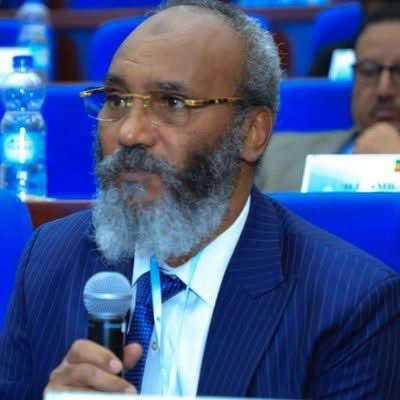
In the volatile landscape of the Horn of Africa, where alliances shift like desert sands and the embers of conflict never fully cool, a stark warning has been issued. Ambassador Suleiman Dedefo, Ethiopia’s top diplomat, has leveled a serious accusation against Eritrea: that it has committed a “grave violation” of Ethiopia’s sovereignty by sending an armed military delegation across their internationally recognized border into the Tigray region—without the consent of the Ethiopian government.
A Breach of Sovereign Borders
According to Ambassador Dedefo, Eritrea’s military delegation did not merely cross into Ethiopian territory; it was received by forces engaged in active military confrontation with the Ethiopian government—a “gang group” aligned with the Tigray People’s Liberation Front (TPLF). This, he argues, constitutes a direct and reckless act of alliance with a group waging war against Ethiopia.
“It is highly unusual and contrary to established principles of international law for an armed military delegation to cross the internationally recognized border of another sovereign state without the consent of its government,” Ambassador Dedefo stated, framing the incursion not as a diplomatic misstep but as a fundamental breach of the rules that govern relations between sovereign nations.
The Legal Framework: A Violation of the UN Charter
The Ambassador’s words carry the weight of international jurisprudence. Under the United Nations Charter and customary international law, the territorial integrity and political independence of sovereign states are inviolable. An armed incursion by one state into another, particularly to support an armed group hostile to the host government, is widely recognized as an act of aggression.
By receiving Eritrea’s military delegation in territory it does not control, the TPLF-aligned forces have, in Ambassador Dedefo’s view, effectively made Eritrea a party to the conflict. “This amounts to joining the war that TPLF is waging on Ethiopia,” he declared. Such an action erases any pretense of Eritrea acting as a neutral observer or a humanitarian partner—it positions Asmara as a belligerent.
A Reckless Alliance
The implications extend far beyond the battlefield. Ambassador Dedefo characterized Eritrea’s move as a “reckless act of alliance with a mercenary group” that jeopardizes not only Ethiopia’s sovereignty but also the stability of the entire region. In the Horn of Africa, where borders remain contested and historical grievances run deep, an act of this nature threatens to unravel the fragile peace.
By aligning with a group that the Ethiopian government has designated as hostile, Eritrea is gambling with regional security. The message sent to other nations in the region is deeply troubling: that borders can be crossed with impunity, and that external actors may choose sides in a neighbor’s internal conflict without consequence.
The Right to Self-Defense
Perhaps the most significant portion of Ambassador Dedefo’s statement is his assertion regarding Ethiopia’s legal recourse. “Such actions may give rise to Ethiopia’s rights under international law, including those recognized by the UN Charter,” he noted. He went further, stating unequivocally that “Eritrea becomes a legitimate target for any action that Ethiopia could take in self defense”.
This is not merely diplomatic rhetoric. Article 51 of the UN Charter enshrines the “inherent right of individual or collective self-defence if an armed attack occurs.” By framing Eritrea’s actions as an armed incursion in support of a hostile force, Ambassador Dedefo has laid the groundwork for a potential Ethiopian military response—one that would be legally justified under international law.
The Broader Context
Ambassador Suleiman Dedefo is no stranger to the complexities of Ethiopian diplomacy. Having served as Ethiopia’s ambassador to the United Arab Emirates and later as its top envoy to Somalia, he has been at the center of some of the region’s most sensitive negotiations. He has previously warned of external forces creating “political and strategic challenges” to Ethiopian interests and has been a vocal critic of those who threaten the nation’s sovereignty.
His latest warning comes at a time of heightened tensions in the Horn of Africa. Ethiopian Prime Minister Abiy Ahmed has spoken of “correcting” the historic loss of Red Sea access, a statement that has drawn sharp criticism from Eritrea. Meanwhile, Egypt has deployed troops to Somalia, further complicating an already fraught regional dynamic. Into this cauldron of competing interests, Eritrea’s alleged military incursion adds a volatile new element.
A Line That Cannot Be Uncrosed
Ambassador Dedefo’s words are a clear signal: Ethiopia views Eritrea’s actions as an act of war. Whether this leads to direct military confrontation between the two neighbors remains to be seen. What is certain is that the diplomatic landscape of the Horn of Africa has shifted.
The international community now faces a critical test. Will it condemn Eritrea’s violation of Ethiopian sovereignty and call for de-escalation? Or will it remain silent, allowing the precedent of armed incursion to take root? Ambassador Dedefo has drawn a line in the sand—a line that, once crossed, may prove impossible to uncross.
As the region holds its breath, one thing is clear: the principle of sovereign borders, hard-won over centuries of international law and diplomacy, hangs in the balance. And Ethiopia, through the voice of its ambassador, has made it known that it will not stand idly by while that principle is trampled.

A Grateful Farewell: The End of an Era at the Victorian Multicultural Commission
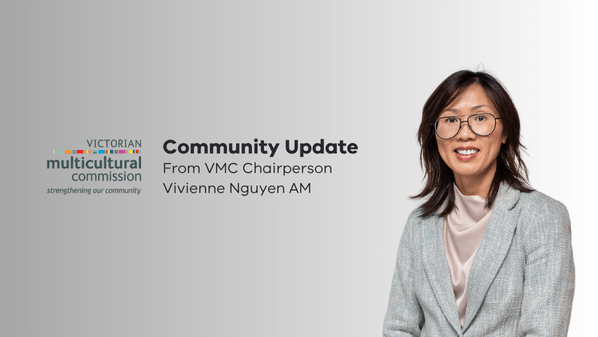
After seven years of dedicated service, Chairperson Vivienne Nguyen AM reflects on a journey of connection, resilience, and hope for a multicultural Victoria
MELBOURNE, VICTORIA — There are moments in public life that transcend the ordinary—moments when service becomes more than a duty and transforms into a calling. For Vivienne Nguyen AM, her seven-year tenure as Chairperson of the Victorian Multicultural Commission (VMC) has been precisely such a moment.
In a heartfelt farewell, Ms Nguyen announced her final day as Chairperson, closing a chapter that has seen Victoria’s multicultural communities navigate unprecedented challenges and celebrate remarkable triumphs.
A Journey of Service
“Today marks my final day as Chairperson of the Victorian Multicultural Commission, and I wanted to take this opportunity to simply say thank you.”
For seven years, Vivienne Nguyen has stood at the intersection of government and community, serving as a bridge between Victoria’s culturally, linguistically, and religiously diverse populations and the institutions that serve them. Her journey to this role began long before her appointment—it started when she arrived in Australia as a 12-year-old refugee from Vietnam, a young girl who would grow into one of Victoria’s most passionate advocates for genuine community engagement and cultural diversity .
Her path has been extraordinary: from refugee to corporate leader, from community volunteer to Member of the Order of Australia . In 2021, she was appointed a Member of the Order of Australia for “significant service to the multicultural community of Victoria” . This recognition was not the culmination of her work but rather a milestone along a continuing journey of service.
Standing Together Through Crisis and Celebration
“It has been a privilege to stand alongside Victoria’s multicultural and multifaith communities through moments of crisis and celebration, joy and pain, laughter and tears, agreement and robust (and respectful) discussions, and indeed for that matter the disagreements we accepted of each other.”
Nguyen’s tenure was marked by extraordinary challenges. Just months into her role, the COVID-19 pandemic swept across the world, disproportionately affecting multicultural communities who faced language barriers, misinformation, and economic hardship. Under her leadership, the VMC became an essential link between government and community .
“The voices of [multicultural] communities are far more amplified, noticeable, involved and engaged now than we have ever seen,” she reflected on the pandemic experience .
Her leadership through those difficult times was lauded by many, earning her a second four-year term . She worked tirelessly to ensure that government programs and restrictions were communicated effectively to diverse communities, partnering with community leaders and peak bodies to deliver unique resources for those who needed them most .
The Quiet Work That Builds a Community
“Throughout this journey, I have been constantly inspired by the generosity of community leaders, volunteers, faith leaders, young people and organisations who quietly give their time and talents in service of others. Much of this work happens behind the scenes and without recognition, yet it is these everyday acts of kindness, leadership and service that make Victoria the welcoming and inclusive place we are proud to call home.”
Nguyen’s farewell speech was as much a tribute to others as it was a reflection on her own work. She acknowledged the unsung heroes of Victoria’s multicultural communities—those who work without fanfare, who give without seeking recognition, who serve without expecting reward .
Indeed, throughout her tenure, Nguyen consistently highlighted the work of others. In farewell messages to outgoing commissioners, she noted that their “inspirational and unwavering leadership, dedication and advocacy has been instrumental in promoting understanding, connection and collaboration among Victoria’s diverse communities” . She praised her Deputy Chairperson, Bwe Thay, as having been “by my side, providing steadfast support and strongly advocating for Victoria’s culturally, religiously and linguistically diverse communities” .
Looking Forward with Hope
“While my time as Chair comes to an end, my belief in the future of multicultural Victoria has never been stronger.”
Nguyen’s farewell is not one of resignation but of optimism. She leaves the role at a moment of significant transformation for multicultural affairs in Victoria. The establishment of Multicultural Victoria as a fit-for-purpose organisation, elevating multicultural affairs across the whole of the Victorian government, presents what she calls “an exciting opportunity to shape the future” .
The new statutory body will combine the engagement role of the VMC with the policy role of the Department, with new responsibilities including developing safety plans for communities affected by serious events . A new Multicultural Coordinator General will lead it, supported by two deputies and a five-member advisory council of commissioners .
Nguyen has welcomed these changes, stating that she welcomes “the Multicultural Review report and its proposed structural changes to ensure government policies are fit-for-purpose” and “the decision to review the Multicultural Act Victoria 2011, which must focus on strengthening cohesion and creating a richer, more inclusive, fairer and better Victoria” .
Gratitude and Continuity
“I leave this role with immense gratitude for the friendships formed, the conversations shared and the many lessons I have learned from individuals and communities across Victoria. Thank you for your trust, your wisdom and your unwavering commitment to building a stronger, fairer and more connected Victoria.”
In her farewell, Nguyen expressed deep gratitude for the relationships she has built across Victoria—the friendships, the conversations, the lessons learned. Her words reflect a genuine appreciation for the communities she has served and the people who have walked alongside her.
“Although this chapter closes, my commitment to our multicultural communities does not.”
Nguyen has made clear that her departure from the Chairperson role does not signal an end to her advocacy. She looks forward to remaining involved and continuing to attend community events across Victoria in the months and years ahead .
A Lasting Legacy
The legacy of Vivienne Nguyen’s tenure is visible in the strengthened connections between government and multicultural communities, the amplified voices of diverse Victorians, and the foundations laid for the future of multicultural affairs in Victoria.
Her journey—from 12-year-old refugee to Chairperson of the Victorian Multicultural Commission—is itself a testament to the opportunities that a multicultural society can offer . Her story is a reminder that diversity is not merely something to be tolerated but something to be celebrated and embraced.
“Together, we have celebrated our diversity, navigated difficult times with compassion and resilience, and continued to strengthen the foundations of our multicultural state.”
Conclusion
As Vivienne Nguyen AM steps down from her role as Chairperson of the Victorian Multicultural Commission, she leaves behind a legacy of service, advocacy, and hope. Her seven-year tenure has seen Victoria’s multicultural communities through a pandemic, through celebration, through crisis, and through transformation.
Her final message is one of gratitude and optimism—gratitude for the privilege of service, and optimism for the future of multicultural Victoria. The establishment of Multicultural Victoria, with its expanded mandate and renewed focus, represents an exciting new chapter in the story of Victoria’s diverse communities.
And while Nguyen’s role as Chairperson has come to an end, her commitment to multicultural Victoria has not. As she herself has said, “this chapter closes, my commitment to our multicultural communities does not.”
“Thank you for allowing me the privilege of serving alongside you.”
— Vivienne Nguyen AM, Chairperson (for the last time), Victorian Multicultural Commission






