Daily Archives: October 23, 2026

Celebrating Oromia Media: The Unyielding Voice of a People
By Dhabessa Wakjira
In a country where the state maintains a near-monopoly on the levers of national and international media, the existence of independent Oromia media is nothing short of an act of defiance. To celebrate Oromia media today is to celebrate the resilience of a people who, for over a century, have seen their history distorted, their language suppressed, and their struggles silenced.
While the government in Finfinnee projects a façade of progress to the international community, the reality on the ground—as documented by human rights organizations—is a landscape scarred by violence, displacement, and systemic marginalization. In this environment, Oromia media serves as the vital, beating heart of the Oromo nation’s quest for truth and self-determination.
The Battle Against Erasure
The importance of an independent Oromo press cannot be understood without acknowledging the historical context. As the Oromia Support Group (OSG) notes in its submissions to the UN Human Rights Council, the Oromo people were subjected to the neftenya-gabbar system of subjugation, and while formal slavery was abolished, the culture of supremacy continued. Even today, the OSG warns that the gains in autonomy and the adoption of the Oromo language within the 1995 constitution are in danger of being lost as power is centralized.
For decades, mainstream Ethiopian media has been complicit in this erasure. It has often served as a mouthpiece for the state, demonizing Oromo organizations, masking state-sponsored atrocities, and amplifying biased narratives. When international human rights organizations are sometimes duped into publishing poorly researched reports that wrongly attribute massacres to the Oromo Liberation Army (OLA), independent Oromia media becomes the essential corrective mechanism. It is the platform that documents the drone strikes in East Wallega, the mass displacements in West Showa, and the forced conscription of children.
Oromia media does not just report the news; it archives the truth. It ensures that the 7,862 civilian killings documented since 2018 are not reduced to mere statistics, but are remembered as the mothers, fathers, and children lost to a brutal conflict.
Amplifying the Culture of Gadaa
To view Oromia media solely through the lens of conflict is to miss its profound cultural significance. The Oromo people possess a rich, vibrant heritage rooted in the ancient Gadaa system—a democratic, egalitarian, and consensus-based governance model recognized by UNESCO as a World Heritage treasure.
Oromia media is the guardian of this heritage. Through music, poetry, literature, and broadcasting in Afaan Oromoo, it nourishes a language that was once forbidden in schools and public life. It carries the voices of the Borana elders reciting the blessings of the Tuula Saglan Booranaa (the Nine Sacred Water Wells) across the diaspora. It celebrates the resilience of the Qerroo youth, who have stood at the forefront of demanding justice.
In a world where the government and its allies abuse their influence in global media and institutions to demonize Oromo people, these independent platforms offer a counter-narrative of dignity. They remind the world that the Oromo are not merely victims of a geopolitical crisis, but a proud nation with a sophisticated history of compromise, power-sharing, and democracy.
The Courage of the Diaspora
Much of this vital work is shouldered by the Oromo diaspora. Fleeing the violence that has created a global refugee crisis—with Oromos facing xenophobia in South Africa, detention in Egypt, and extortion in Yemen—the diaspora has weaponized media as a tool for survival.
Organizations like the Oromia Support Group (OSG) and various independent Oromo media outlets operate under immense pressure. They face digital surveillance, smear campaigns, and the constant threat of being discredited by state-aligned actors. Yet, they persist. They bridge the gap between the isolated villages of Oromia and the halls of the United Nations in Geneva.
A Voice for the Future
As the Horn of Africa faces increasing instability, the role of Oromia media will only grow in importance. It is the vehicle through which the Oromo people can demand accountability for the crimes committed against them, and it is the medium through which they articulate their vision for the future—a future built on self-determination, human rights, and the revival of their indigenous democratic values.
The existence of a free Oromia media is a testament to the fact that no amount of state repression, drone strikes, or media manipulation can extinguish the spirit of a people. To celebrate Oromia media is to celebrate the journalists, the poets, the citizen reporters, and the diaspora activists who refuse to let the world look away.
It is the sound of a nation reclaiming its own story. And it is a sound that will not be silenced.
Dhabessa Wakjira is a commentator on Horn of Africa affairs and human rights.

A Nation Behind the Façade: Inside the Oromo Crisis Ahead of the UN Human Rights Council
By Dhabessa Wakjira
When the 63rd Session of the UN Human Rights Council convenes in Geneva from 7 September to 9 October 2026, diplomats will debate frameworks, resolutions, and language. But beneath the procedural veneer lies a brutal reality documented by the Oromia Support Group (OSG) in its submission to the Council: a nation where the state’s monopoly on violence has been turned against its own people, and where the international community’s attention remains dangerously fragmented.
The OSG’s submission, drawing on Reports 73 and 74, paints a portrait of Ethiopia that stands in stark contrast to the narrative of progress and development promoted by the government in Finfinnee. It is a portrait of a country where at least 7,862 civilians have been killed since September 2018—a figure the OSG acknowledges is only a fraction of the total. Since April 2026 alone, at least 245 civilians have been killed, 38 of them by Amhara Fano militants.
The Anatomy of a Massacre
The numbers, however staggering, cannot capture the human cost. In early March 2026, 32 villagers—including women and children—were slaughtered in a single attack by Fano in Abee Dongoroo district, Horo Guduru. On 30 June and 1 July, at least 12 were killed in Agamsa, Horo Guduru. On 24 July, 11 or more were killed in Hanger Gutin, East Wallega, where they had gathered for a football tournament.
These are not isolated incidents. They are part of a systematic campaign of violence that has engulfed Oromia, driven by a confluence of forces: government security forces, Amhara Fano militants, and government operatives masquerading as Fano or as the Oromo Liberation Army (OLA) to sow hatred between communities.
The OSG submission is explicit: “Government forces masquerading as Fano and OLA are deployed against Amhara, Oromo and Gumuz communities with the sole purpose of fomenting hatred between them.” This is not a byproduct of war; it is a strategy of division, a modern iteration of the zero-sum, supremacist culture that has haunted Ethiopia for over a century.
Displacement, Destruction, and the Vanity of Development
Beyond the killings, the OSG documents a systematic campaign of displacement and destruction. Since March 2026, artillery barrages and drone strikes have killed people and animals in East Wallega, North Showa, and East Showa. Homes have been burned and villagers displaced across North, West, and Southwest Showa, Wollo, Hararge, Bale, Arsi, Qellem, West Wallega, and Buno Bedele zones.
This violence is not merely a security operation; it is deeply intertwined with economic interests. The OSG notes that displacement continues for “corridor and vanity projects and clearing of land for foreign investors.” The government’s vision of modernization, it seems, is built on the ruins of Oromo homes and the graves of Oromo farmers.
The submission also highlights the lawlessness and extortion by government militias, the forced conscription of youngsters—often under 17 years of age—into national defense forces, and more recently, into the Sudanese Rapid Support Forces (RSF) based in Asosa zone. Older and infirm men are press-ganged into local militia. Refusal of conscription leads to detention, torture, and killing.
The Weaponization of Rape and the Corruption of Aid
The OSG submission reiterates previous findings: the rape and murder of young girls and women continue with impunity. But it also raises a troubling new dimension: the weaponization of these crimes in the international media.
“Even Amnesty International has been duped into biased and inflammatory propaganda against OLA,” the submission states, “singling it out as almost the sole perpetrator of sexual violence against women in West Wallega, despite this being the opposite of the conclusions drawn by the UN Independent Commission of Human Rights Experts in Ethiopia.”
This is a damning indictment of the international human rights community’s ability to be manipulated by state actors. Massacres committed by government forces masquerading as OLA have been attributed to OLA itself in poorly researched and biased reports. The result is a global narrative that legitimizes state violence while demonizing those who resist it.
Meanwhile, behind the façade of progress in Finfinnee and other major cities, the OSG paints a picture of a destitute and hungry population, heavily dependent on foreign aid—aid whose distribution is “once again rife with corruption and discrimination.” The government and its allies, the submission notes, abuse their connections in national and international media, NGOs, and institutions to demonize Oromo people and their organizations.
The Refugee Crisis: From Bad to Worse
The violence has created a refugee crisis of staggering proportions. Oromo civilians, displaced by government and Fano forces, constitute the bulk of Ethiopian refugees fleeing to neighboring countries and beyond—to Egypt, Yemen, South Africa, and further afield.
But the world is not welcoming them. The OSG documents a global shift away from treating refugees with dignity and compassion. In Egypt, hundreds of Oromo and Sudanese refugees have been detained, and many, including registered asylum-seekers, have been returned against their will. At least one Oromo died in detention in Cairo on 22 July 2026. In Cape Town, South Africa, at least two Oromo registered asylum-seekers were killed by xenophobic mobs in early July. Thousands are trapped in Sana’a, Yemen, unable to escape because of forced conscription by Houthi militia and violence and extortion by traffickers. UNHCR offices are closed and unable to help. Migrants who survive lethal violence by border guards are liable to summary justice and execution for minor offenses in Saudi Arabia.
The Historical Roots of the Crisis
The OSG submission does not shy away from history. It traces the roots of the current crisis to the 19th and early 20th centuries, when the Oromo—the majority people of Ethiopia—were overrun by Amhara and Tigrayan tyrants. Although slavery was abolished by Italian invaders in 1936, serfdom within the neftenya-gabbar system continued until 1974. Amhara racist and supremacist culture, the submission argues, continues to exert itself under the Prosperity Party government.
“Although nominal Oromo are part of that government, all the gains in autonomy and the adoption of the Oromo language within the 1995 federal constitution are in danger of being lost as the incumbent Prime Minister attempts to monopolise control within a presidential system,” the OSG warns.
This is the crux of the matter: the fear that the hard-won gains of federalism, however imperfect, are being rolled back in favor of a centralized, authoritarian state that serves the interests of a narrow elite.
The Gadaa Alternative
Against this bleak backdrop, the OSG offers a vision of hope rooted in indigenous knowledge. The Oromo culture of compromise, power-sharing, consensus decision-making, and checks and balances to avoid the monopoly of power by individuals and small groups is evidenced in the ancient Gadaa system, recognized by UNESCO as of World Heritage significance.
“By enabling the emancipation and self-determination of the Oromo, it would be possible to experience again the benefits of this culture,” the submission states. “This could be the only way to restore peace, stability, and respect for human rights in Ethiopia for all its peoples.”
A Call to the International Community
As the UN Human Rights Council convenes in Geneva, the OSG submission is a stark reminder that the international community cannot afford to look away. The crisis in Ethiopia is not a distant, intractable conflict; it is a manufactured catastrophe, sustained by a government that has weaponized ethnicity, manipulated international institutions, and deployed its security forces against its own citizens.
The submission’s conclusion is unambiguous: “Without self-determination for the Oromo and other oppressed peoples of Ethiopia, there will be no stability in Ethiopia. A peaceful and prosperous Ethiopia would allow stability and peace to develop in the Horn of Africa.”
The choice before the international community is clear. It can continue to reward a government that has turned its guns on its own people, or it can stand with those who seek a different path—one rooted in the ancient wisdom of the Gadaa system, where power is shared, dissent is tolerated, and every voice is heard.
For the people of Oromia, the stakes could not be higher. They have endured over a century of subjugation, and they are now facing a government that seems determined to erase their gains and silence their demands. The world must decide whether it will stand with them—or stand aside as the slaughter continues.
The Oromia Support Group’s full submission is available at oromiasupport.org.

Dr. Taaddasaa Eebbaa (Gadaa Meelbaa): The Visionary Who Breathed Life into Ethiopia’s Biodiversity Legacy
By Dhabessa Wakjira
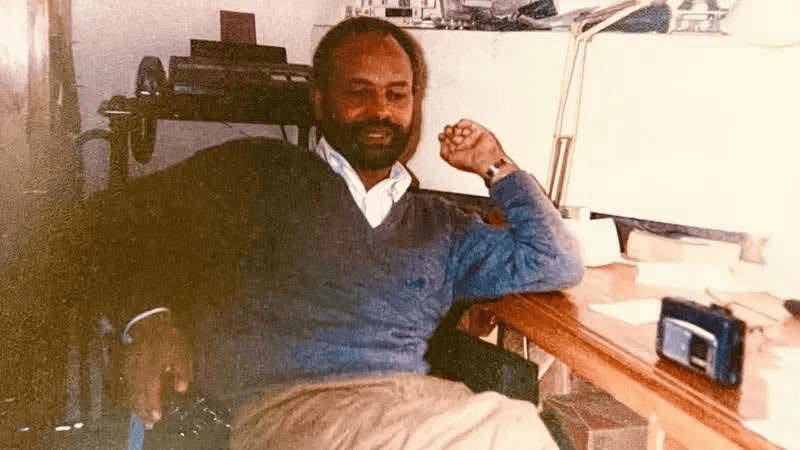
In the annals of Ethiopian and Oromo history, few figures embody the rare combination of scientific brilliance, political conviction, and unwavering sacrifice as profoundly as Dr. Taaddasaa Eebbaa. Known affectionately by many names—Dr. Fidoo, Doktoree, and most famously in literary circles as Gadaa Meelbaa—this remarkable scholar, freedom fighter, and author left an indelible mark on his nation’s scientific and political landscape before his passing on May 1, 2022, in Washington, D.C.
Humble Beginnings, Extraordinary Vision
Born in Najjoo, in the West Wallagga region, Dr. Taaddasaa’s journey from a young student in his hometown to an internationally recognized geneticist reads like a testament to the power of determination. He completed his primary education in Najjoo before pursuing his secondary studies in Jimma—a journey that would set the stage for an extraordinary academic career.
His first degree in agriculture from Alemaya College (now Haramaya University) marked the beginning of a lifelong dedication to understanding and preserving Ethiopia’s natural wealth. Not content with domestic excellence, Dr. Taaddasaa pursued his master’s and doctoral degrees at universities in the United States and the United Kingdom, specializing in genetics—a field that would become central to his life’s work.
The Architect of Ethiopia’s Biodiversity Conservation
The 1970s found Dr. Taaddasaa teaching at Haramaya University before joining the Ministry of Agriculture as a researcher. It was during this period that his visionary leadership would leave an enduring legacy on Ethiopian science.
As the director of a groundbreaking research project dedicated to studying Ethiopia’s plant genetic resources, Dr. Taaddasaa didn’t merely participate in scientific inquiry—he fundamentally shaped it. The institution that would eventually become the Ethiopian Biodiversity Institute (EBI) stands as a monument to his foresight and dedication.
According to historical accounts, Dr. Taaddasaa was not just a founding member but the intellectual force behind the establishment of this crucial institution in 1978, initially named the Plant Genetic Resource Centre of Ethiopia. Professor Endashaw, a former colleague, emphasizes this point with conviction: “Everything was initiated by Taaddasaa. Nothing was added. They removed him from the institution’s history. From all of us, they bought it from there.”
The institution’s original location near present-day Embasi, Kenya, was selected under Dr. Taaddasaa’s guidance—a decision that reflected his deep understanding of Ethiopia’s ecological diversity and its importance for global food security.
When Science Met Politics
Dr. Taaddasaa’s brilliance extended beyond the laboratory. His passion for Oromo culture and identity led him to help organize the first Oromo cultural showcase at the National Theatre in the 1970s—an act of cultural preservation that foreshadowed his later political engagement.
The political repression of the Derg regime did not spare this distinguished scientist. Historical accounts document that he was imprisoned twice in 1979 for his activities. The political pressure became unbearable, forcing Dr. Taaddasaa to make the heart-wrenching decision to leave his work and family behind in Finfinne, escaping through Assosa to Sudan at the end of 1979. From there, he joined the Oromo Liberation Front (OLF), beginning a new chapter in his life of service.
Dr. Shuggux Galataa Qondaalaa, a former OLF leader who knew Dr. Taaddasaa intimately, recalls his political journey: “He was among those who participated in founding the OLF. He took part in the secret meeting held in Finfinne on June 11, 1976. Everyone who participated in that meeting continued as members of the central committee, and Dr. Taaddasaa continued the struggle from then on.”
Sacrifices Beyond Measure
The personal cost of Dr. Taaddasaa’s commitment to freedom was staggering. His wife, Aadde Addisaalem Gannat, was imprisoned for over ten years during the Derg regime, finally released in 1988. His young son, barely two years old, died from neglect—a tragedy that haunts the pages of his life story. His daughter Urjii remains as a testament to a family that paid dearly for their convictions.
“Taaddasaa is not just someone with a good mind, but someone who thinks of others. Someone who thinks of his country,” reflects Professor Endashaw. “If he had stayed in science, he would have been a star researcher. What is past cannot be returned.”
Within the OLF, Dr. Taaddasaa’s contributions were equally significant. He served as a member of the Political Bureau after the 1988 leadership transition and contributed to the Biree Diplomaasii—a foundational document for the organization’s diplomatic strategy. His journey of exile took him through Khartoum, Germany, and finally to the United States, where he lived until his death.
The Pen That Awakened a Nation
Perhaps Dr. Taaddasaa’s most enduring contribution to Oromo consciousness came not through politics or science, but through literature. In 1988, while in Khartoum, he published “Oromia”—a book that would become a cornerstone of Oromo national awakening.
Published under the pseudonym Gadaa Meelbaa, the book’s authorship remained a mystery to many for years. The text, later translated into both Afaan Oromoo and Amharic, comprehensively addressed Oromia’s resources, culture, traditions, historical oppression, and the challenges facing the Oromo people.
Bulii Ejjetaa, who was a university student when the book was published, recalls its transformative impact: “We saw that book as a ‘pill of freedom.’ It asked us clearly: What is Oromia? Where is it located? What does it have? What has it been through? We shared it and discussed it at university. After joining the struggle, we used it to educate our people.”
The book served as a consciousness-raising tool for countless young Oromos, many of whom had been disconnected from their cultural identity. “For students who didn’t know their Oromummaa, we would say, ‘Give this child that pill,'” Bulii remembers. “That book was a pill for strengthening Oromummaa and nationalism.”
Years after its publication, when Dr. Taaddasaa’s authorship became known, he transferred the book’s rights to the Oromo people and the OLF—a final act of generosity from a man who had given everything.
An Unacknowledged Legacy
Despite his monumental contributions, Dr. Taaddasaa’s role in founding the Ethiopian Biodiversity Institute has been systematically erased from official narratives. Five years after he established the institution, records began crediting someone else with its founding.
This erasure of his legacy represents a broader pattern of historical amnesia that has obscured the contributions of Oromo intellectuals to Ethiopian national development. Yet those who knew him and benefited from his work ensure his memory endures.
A Life of Purpose, A Legacy of Inspiration
Dr. Taaddasaa Eebbaa’s life represents the intersection of scientific excellence and political conviction—a rare combination that produced lasting change in multiple spheres. He was a geneticist who understood that preserving Ethiopia’s biodiversity was essential for the nation’s future. He was a freedom fighter who believed that the Oromo people deserved dignity, self-determination, and cultural recognition. And he was an author whose words awakened a generation.
In his final years, Dr. Taaddasaa returned to Ethiopia briefly when the OLF transitioned to peaceful political participation, serving as an advisor to the organization. His journey had come full circle—from a young student in Najjoo to an internationally recognized scientist, from a political prisoner to a freedom fighter, from an exiled author to a respected elder statesman.
He passed away on May 1, 2022, in Washington, D.C., after a long illness, leaving behind his daughter Urjii and a legacy that transcends the boundaries of science, politics, and literature.
Dr. Taaddasaa Eebbaa—Gadaa Meelbaa—reminds us that true greatness lies not in what we accumulate but in what we give. He gave his scientific genius to Ethiopia’s biodiversity, his political passion to Oromo liberation, and his literary gift to a people hungry for self-knowledge. In doing so, he became more than a scholar or a revolutionary—he became a pillar of Oromo memory, a testament to what one person can accomplish when guided by love for people and country.
His story deserves to be told, retold, and never forgotten—not merely as a historical record, but as an inspiration for generations yet to come. For in remembering Dr. Taaddasaa Eebbaa, we remember what it means to live with purpose, to sacrifice with dignity, and to leave the world better than we found it.
—
This feature article honors the life and legacy of Dr. Taaddasaa Eebbaa (Gadaa Meelbaa), whose contributions to Ethiopian science, Oromo liberation, and literature continue to inspire.






