The Man Who Would Redefine Ethiopia
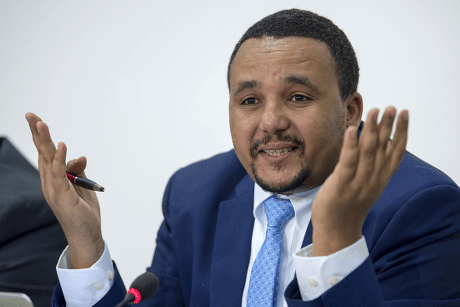
Jawar Mohammed’s “Progressive Patriotism” and the Oromo Question: A New Chapter in Ethiopia’s National Story
By Sultan Abda Neja, Ph.D.
—
For much of modern Ethiopian history, the question of who owns the nation has been answered in blood, in policy, and in silence. It is a question that has haunted the Oromo people—Ethiopia’s largest ethnolinguistic community—for generations. Their relationship with the modern Ethiopian state has been shaped by conquest, land dispossession, political exclusion, and cultural marginalization. Yet something is shifting. The old binary of Oromo resistance versus Ethiopian state nationalism is being challenged—not by a soldier, not by a separatist, but by a media-savvy activist-turned-thinker named Jawar Mohammed.
At the heart of this shift is a deceptively simple concept: Progressive Patriotism. It is Jawar’s attempt to articulate a political framework in which Oromo identity and Ethiopian national belonging are not mutually exclusive. It asks a new question: Can Oromo nationalism help redefine Ethiopian nationalism from within?
—
The Long Road from Resistance
To understand the weight of Jawar’s proposition, one must first understand the weight of history. Oromo nationalism did not emerge in a vacuum. It grew out of the expansion and consolidation of the modern Ethiopian state, the incorporation of Oromo territories, and subsequent struggles over land, language, religion, and political representation.
The Ethiopian state-building project, for much of its history, was associated with centralized authority, cultural homogenization, and the marginalization of groups whose languages and political identities differed from those of the ruling elite. The Oromo Liberation Front (OLF), founded in 1973, became the most prominent expression of Oromo resistance. But even then, Oromo nationalism was never monolithic. Some advocated independence; others supported multinational federalism, stronger regional autonomy, or a democratic Ethiopian state.
The 1995 Constitution, which formally recognized the rights of nations, nationalities, and peoples—including the right to self-determination up to secession—represented a significant shift. Yet constitutional recognition did not automatically produce democratic governance. The political crisis that culminated in the 2014–2018 protests exposed the limits of the existing order. Oromo protesters mobilized against political exclusion, human rights abuses, and the proposed expansion of Addis Ababa into surrounding Oromia.
Then came 2018. Abiy Ahmed, an Oromo politician, became prime minister. It was a moment of symbolic triumph—an Oromo had reached the highest office in the land. But symbolism, as Jawar would later argue, is not transformation.
—
Jawar’s Intervention: From Resistance to Governance
Jawar Mohammed’s political trajectory—from a fiery activist and media owner to a prominent voice in the debate over Ethiopia’s future—mirrors the broader evolution of Oromo political consciousness. His call for a transition from resistance politics to governance politics, and from ethnonationalism to broader nation-building, represents a significant shift.
In his writings and interviews, Jawar argues that Oromo politics must evolve beyond its traditional oppositional orientation. A movement that has historically defined itself through resistance must now demonstrate its capacity to govern, build institutions, deliver public services, and contribute to national stability. Political legitimacy cannot be sustained indefinitely through historical grievances alone.
This is not to suggest that Jawar asks Oromos to abandon their identity or their legitimate demands. Rather, he challenges the assumption that protecting Oromo interests and building a common Ethiopian political future are mutually exclusive. Given the Oromo people’s demographic significance, geographical position, cultural influence, and historical role in Ethiopia, their political participation is essential to any sustainable project of national reconstruction.
In a recent interview on Kallatti Media, Jawar explained that Ethiopian nationalism should not be understood as an identity or political project owned exclusively by historically dominant groups. Oromos, like other peoples of Ethiopia, have an equal right to define, shape, and participate in the national project. An Oromo can embrace Ethiopian citizenship, contribute to national unity, and take pride in a shared political identity without surrendering Oromo cultural identity or constitutional rights.
From this standpoint, Progressive Patriotism challenges the historical tendency to associate Ethiopian nationalism with cultural assimilation, political centralization, or the dominance of one group. It opens the possibility of an inclusive nationalism in which belonging to Ethiopia does not require becoming less Oromo.
—
The Goobana Question: Heroes, Traitors, and the Politics of Memory
Jawar’s concept of Progressive Patriotism extends beyond constitutional arrangements. It also engages with the politics of memory—specifically, the way political movements construct historical narratives that distinguish heroes from traitors.
In his text, Goobana: The Hero-Traitor Narrative in the Oromo Struggle, Jawar examines how the figure of Goobana Daacee—a historical Oromo figure remembered as a collaborator with Emperor Menelik II and, consequently, a traitor—has been used within the Oromo national movement. The narrative of betrayal, Jawar argues, can serve important political purposes: it mobilizes communities, establishes collective memory, and defines political loyalties.
But when a movement moves from resistance to governance, such narratives become liabilities. A movement operating in opposition can organize its political identity around a clear distinction between the oppressed and the oppressor, resistance and collaboration, liberation and betrayal. A political movement that enters government, however, must negotiate competing interests, govern citizens with different identities, and build institutions that extend beyond its original constituency.
Jawar suggests that political movements may need to move from a resistance narrative toward a governing narrative. Figures previously condemned may be reassessed; figures celebrated may be subjected to new scrutiny. The task, he argues, is not to replace every hero with a traitor, but to create a political culture in which historical disagreements can be examined without becoming grounds for denying citizenship, identity, or political legitimacy.
—
The Abiy Paradox: An Oromo Leader, but an Oromo-Empowering Government?
The question of Oromo ownership of Ethiopian nationalism cannot be separated from the political trajectory of Abiy Ahmed. His rise to power in 2018 symbolized the opportunity to translate Oromo political mobilization into democratic transformation at the national level.
His early reform agenda generated expectations of political liberalization, reconciliation, and greater openness. His government’s peace initiative with Eritrea further strengthened the image of a leader seeking to move beyond longstanding regional hostility. But the subsequent political project—associated with the formation of the Prosperity Party in 2019 and the language of Medemer—proved contentious.
Supporters interpreted Medemer as an attempt to overcome political fragmentation and the limitations of ethnic-based party organization. Critics, including Oromo nationalists, argued that it weakened the political and institutional protections established under multinational federalism. The war in Tigray, the subsequent armed conflicts in other regions, political polarization, and serious allegations of abuses by state and non-state actors exposed the limitations of a political transition that did not produce a broadly accepted democratic settlement.
The broader lesson is that an Oromo’s accession to the center of Ethiopian power does not automatically mean that Oromo nationalism has achieved its democratic objectives. An Oromo-led government is not necessarily an Oromo-empowering government, just as an Ethiopian national identity is not necessarily an exclusionary identity. The decisive issue is the character of the institutions and policies through which political power is exercised.
—
The Critics Speak: Progressive Patriotism Under the Microscope
Jawar’s Progressive Patriotism has not gone unchallenged. Critics from across the political spectrum have raised important questions about its conceptual clarity, its practical implications, and its relationship to the status quo.
Moges Zewdu Teshome argues that Jawar conflates multinational federalism, multicultural federalism, and a multicultural unitary state—distinct institutional arrangements that cannot be resolved simply by democratizing an allegedly flawed constitutional structure. He advocates revisiting the constitutional order, strengthening an inclusive civic identity, and building a political community in which citizenship is not subordinated to ethnic affiliation.
Professor Messay Kebede challenges Jawar’s claim that ethnonationalism has become effectively irreversible, reasoning that political identities and institutions are historically constructed and can therefore change. He proposes democratic or civic nationalism as a more coherent alternative, arguing that inclusive democratic institutions can protect cultural diversity without making ethnic political sovereignty the organizing principle of the state.
Benti Geleta Buli, through a sentiment analysis of Jawar’s proposal, notes that the term “progressive” remains inadequately defined and could become a rhetorical framework that preserves the status quo rather than resolving Ethiopia’s political divisions. He presents constitutional patriotism as a more constructive alternative grounded in shared constitutional values, democratic participation, and inclusive citizenship.
And in my own earlier critique, I argued that Jawar’s distinction between “centripetal” and “centrifugal” political forces unfairly portrays ethnonationalist movements while underemphasizing the historical injustices, assimilationist policies, and authoritarian practices that gave rise to them. Appealing to right-wing Ethiopian nationalists by equating their historical responsibilities with those of ethnonationalist movements risks undermining the legitimate struggles and sacrifices of nations and nationalities, including the Oromo people.
These critiques are not dismissive. They are, in fact, a sign of the seriousness with which Jawar’s intervention is being taken. They demand that Progressive Patriotism move beyond slogan and toward institutional specificity.
—
Toward a Constitutional Patriotism: The Roadmap
If Progressive Patriotism is to become more than a rhetorical compromise, it must be grounded in concrete institutional commitments. One possible way to clarify it is to connect it to constitutional patriotism—attachment to a political community based on shared constitutional principles, democratic institutions, equal citizenship, and fundamental rights rather than ethnic or cultural uniformity.
For Ethiopia, such a framework would require at least five commitments:
1. Meaningful regional self-government and the rights of nations, nationalities, and peoples must be constitutionally protected.
2. Federal and regional governments must be accountable through genuinely competitive political processes and an independent judiciary.
3. Minorities within regional states must enjoy equal citizenship, cultural rights, security, and political participation.
4. National institutions must be accessible to citizens regardless of language, ethnicity, religion, or political affiliation.
5. Disputes over federal authority, regional boundaries, resources, and political representation must be resolved through credible constitutional procedures rather than coercion.
Beyond these constitutional commitments, a pragmatic roadmap for Oromo ownership of Ethiopian nationalism requires several practical steps: protecting political pluralism within Oromo society, democratizing multinational federalism, establishing credible national dialogue, creating effective mechanisms for accountability, promoting an inclusive national historical narrative, and defining Progressive Patriotism institutionally.
It also requires a crucial conceptual separation: national unity must be separated from unconditional support for a government. Citizens should be able to oppose a prime minister, criticize the federal government, or demand constitutional change without being branded enemies of Ethiopia. Likewise, support for Oromo rights should not require unconditional loyalty to an Oromo political organization.
—
The Future of Ethiopian Nationalism: A Shared Project
The most important question, ultimately, is not whether Oromo nationalism should disappear into Ethiopian nationalism or remain permanently opposed to it. It is whether both can be transformed through democratic institutions so that neither requires the political subordination of the other.
Jawar Mohammed’s Progressive Patriotism is an attempt to articulate a framework in which ethnic identity and shared national belonging can coexist. Its credibility depends on democratic institutions, constitutional protections, political pluralism, and an explicit rejection of coercive assimilation. Abiy Ahmed’s experience illustrates the dangers of attempting to build national cohesion by weakening the political forces and constitutional guarantees through which historically marginalized communities sought recognition.
The future of Ethiopian nationalism will depend on whether the country can build a political community in which unity is freely sustained rather than coercively imposed, ethnic identities are protected rather than demonized, and national citizenship is shared rather than monopolized.
Oromo nationalism’s most consequential contribution to Ethiopia may ultimately be its capacity to help transform Ethiopian nationalism from an inherited claim of state authority into a genuinely shared project of democratic citizenship. That is the promise of Progressive Patriotism. Whether it becomes a reality depends not on the eloquence of its advocates, but on the institutions through which it is enacted—and on the willingness of all Ethiopians, Oromo and non-Oromo alike, to engage in the difficult, patient work of democratic negotiation.
The question is no longer whether the Oromo belong to Ethiopia. The question is what kind of Ethiopia can belong equally to Oromos and all other citizens. The answer, if it comes, will not be found in slogans or in the shadow of a single leader. It will be found in the constitution, in the ballot box, and in the everyday practice of citizenship.
—
Sultan Abda Neja, Ph.D., is a political analyst and author specializing in Ethiopian politics, federalism, and ethnonationalism. His work has appeared in Borkena and other outlets.
The full article can be accessed:

Posted on October 31, 2026, in Aadaa, Afaan, Biography, Diaspora, Election, Events, Face of Injustice, Finfinne, freedom, gadaa, Grief Support, Gumaa, health, Information, Irreechaa, Kindness, Language, Media, mental health, Moyale, News, Obituary, Oromia, Oromo diaspora, Press Release, Promotion. Bookmark the permalink. Leave a comment.






Leave a comment
Comments 0