From Political Prisoner to Community Pillar: The Remarkable Journey of Dabessa Wakjira
By Bona Oromia
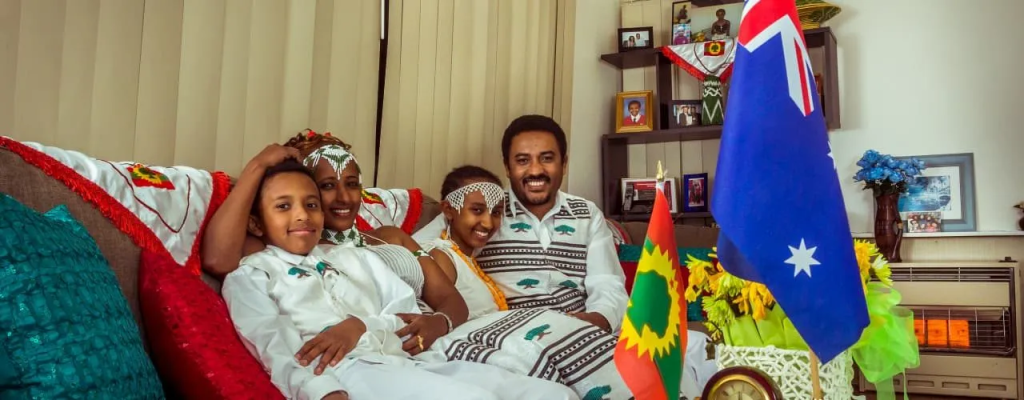
MELBOURNE, Australia — In the story of the Oromo people’s long struggle for freedom, dignity, and cultural survival, there are individuals whose lives embody the very resilience they champion. Dabessa Wakjira—also known in Oromo history and literature as Dhabessa Wakjira or Dabessa Gemelal—is one such figure. A prominent Oromo journalist, author, human rights advocate, and social worker, his journey from political prisoner in Ethiopia to influential community leader and humanitarian in Australia is a testament to the unbreakable spirit of a people and the power of one individual to transform suffering into service.
Early Journalism and the Fight for Oromo Voices
In 1994, Dabessa began working as a reporter and editor for the Afaan Oromoo desk at Ethiopian Television (ETV). He was part of a pioneering group of broadcasters who fought to secure a rightful place for the Oromo language, history, and culture on national airwaves—a struggle that carried profound significance for a community long marginalized in Ethiopian media.
However, his efforts to report on humanitarian issues—such as the devastating famines in Eastern and Southern Oromia and widespread human rights violations—faced severe state censorship. Because his journalism defied government narratives, he was targeted by state authorities. In 2004, he was abducted and falsely imprisoned for three years (2004–2007) under the pretext of sympathizing with the Oromo Liberation Front (OLF).
During his grueling imprisonment, Dabessa did not surrender to despair. Instead, he covertly authored the foundational books Daaniyaa (2006) and Jaarraa Oromummaa, which preserved crucial aspects of Oromo knowledge, identity, and cultural struggle. These works, written under the most difficult circumstances imaginable, stand as monuments to intellectual resistance—proof that even behind bars, the Oromo spirit could not be caged.
Exile and Flight: Continuing the Struggle Abroad
Upon his release from prison in 2007, the threat of re-arrest forced Dabessa to flee Ethiopia to Nairobi, Kenya. Even in exile, he continued his advocacy. He managed to relocate his three children to Nairobi and dedicated his time to managing Oromo refugee support systems, training human rights activists, editing cultural magazines (such as Dungoo and Xirroo), and co-founding the Global Waaqeffannaa Council.
His activism came at a steep personal cost. Back in Ethiopia, his wife was arrested and imprisoned for three years in retaliation for his flight—a cruel reminder that the struggle for freedom is not borne by individuals alone, but by entire families. The separation from his children and the imprisonment of his wife were wounds that no amount of dedication could fully heal.
Resettlement and Community Leadership in Australia
Dabessa was resettled in Australia as a UNHCR refugee in September 2009. After facing agonizing bureaucratic and visa delays, his wife was finally able to join him and reunite the family in August 2013—a moment of profound relief after years of separation and uncertainty.
Once in Australia, Dabessa redirected his trauma into community empowerment. Rather than allowing the scars of imprisonment and exile to define him, he chose to transform his pain into purpose:
Academic Achievements: He went on to secure formal Australian qualifications in interpreting, community services, and social work—equipping himself with the professional tools to serve others effectively.
Professional Roles: He now works as a Senior Settlement Case Manager for AMES Australia, helping newly arrived refugees navigate the complexities of resettlement, find safety, and rebuild their lives. In this role, he draws on his own lived experience of displacement and resettlement to support others on their journeys.
Advocacy & Media: He remains a foundational voice for the diaspora, actively contributing to Oromo Voice Radio, the Oromo Support Group Australia, and the Refugee Council of Australia. His commitment to amplifying Oromo voices and advocating for refugee rights has made him a respected leader in the Australian multicultural landscape.
A Life Transformed, A Community Uplifted
Dabessa Wakjira’s story is one of extraordinary resilience. He has been a journalist silenced by censorship, a prisoner tortured for his beliefs, a refugee separated from his family, and a community leader in a new land. Through it all, he has remained steadfast in his commitment to Oromummaa—Oromo identity, culture, and freedom.
His life serves as an inspiration to the Oromo diaspora and to all who believe in the power of the human spirit to overcome adversity. From the dark cells of Ethiopian prisons to the welcoming shores of Australia, Dabessa has carried with him the hopes and dreams of his people—and he has not stopped fighting.
Today, as a Senior Settlement Case Manager at AMES Australia, he helps refugees from all backgrounds to navigate the challenges of their first decade in Australia—to establish secure livelihoods, participate in their communities, and build futures for themselves and their families. It is work that he is uniquely qualified to do, having walked that path himself.
A Legacy of Service
Dabessa Wakjira’s legacy is not measured in awards or titles, but in the lives he has touched—the refugees he has helped to resettle, the activists he has trained, the books he has written, the radio programs he has contributed to, and the community he has helped to build in Australia. His journey from political prisoner to community pillar is a reminder that even in the darkest of times, there is hope. Even in the face of oppression, the human spirit can prevail.
As the Oromo people continue their long walk toward freedom and justice, they can take strength from the example of Dabessa Wakjira—a man who refused to be broken, who refused to be silenced, and who continues to serve his community with dedication, dignity, and unwavering hope.
This feature article is dedicated to Dabessa Wakjira and to all Oromo political prisoners, refugees, and diaspora community leaders whose sacrifices and service continue to inspire us all.

Posted on November 9, 2026, in Aadaa, Afaan, Events, Finfinne, freedom, health, Information, Kindness, Language, Media, News, Oromia, Oromo diaspora, Press Release, Promotion. Bookmark the permalink. Leave a comment.






Leave a comment
Comments 0