Category Archives: Diaspora

PM Albanese Reaffirms Australia’s Humanitarian Commitment Amid Global Crises

By Dhabessa Wakjira
In a decisive move underscoring Australia’s enduring compassion, Prime Minister Anthony Albanese has confirmed the nation will maintain its annual humanitarian intake of 20,000 refugees – a decision widely hailed by settlement leaders as a beacon of hope in a world grappling with unprecedented displacement.
Addressing media this afternoon, the Prime Minister reaffirmed Australia’s pledge to offer safe haven to those fleeing conflict and persecution, pushing back against any notion that generosity must yield to insecurity.
“In maintaining Australia’s humanitarian intake, Prime Minister Albanese has responded with both compassion and confidence in the Australian people,” said Violet Roumeliotis, CEO of national refugee resettlement provider SSI. “He has recognised that Australia can remain both secure and generous, and that our response to the world’s most vulnerable people is a reflection of our national character.”
A Legacy of Welcome
From the shattered aftermath of World War II to the present day, Australia has built one of the globe’s most respected refugee resettlement programs. More than one million refugees and humanitarian entrants have since made Australia their home – enriching communities, strengthening the economy, and becoming integral threads in the nation’s evolving story.
“There is much to be proud of and much to be grateful for,” Ms Roumeliotis added. “Today’s decision builds on that legacy and reaffirms a vision of Australia as a country that welcomes people seeking safety, creates opportunities for them to belong and contribute, and plays its part in responding to global humanitarian need.”
A Tradition That Endures
With conflict zones multiplying and record numbers of people uprooted worldwide, the Prime Minister’s announcement sends a clear signal: Australia’s humanitarian tradition is not a relic of the past, but a living promise.
“The best of Australia has always been found in our willingness to extend a hand to those seeking safety,” Ms Roumeliotis concluded. “Today’s decision ensures that tradition continues.”
For refugee advocates and communities across the nation, the confirmation offers reassurance – and a reminder that in times of global turmoil, Australia chooses humanity.

A New Chapter for Multicultural Victoria: Building Bridges, Counting Voices, and Taking Action
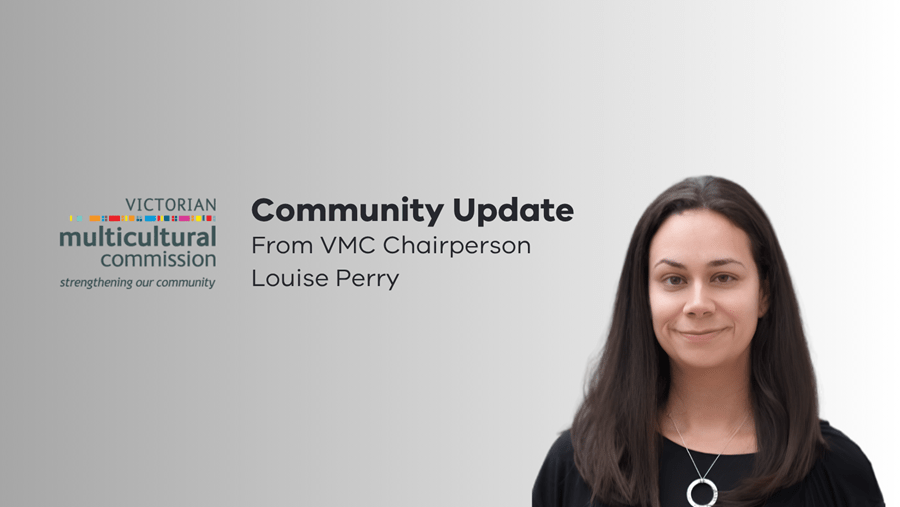
VMC Chairperson Louise Perry Reflects on a Weekend of Celebration and a Future of Collaboration
By Dhabessa Wakjira
The Premier’s Multicultural Gala Dinner, held over the weekend, was more than just a glittering event on the social calendar. It was a powerful affirmation of Victoria’s identity—a “Stories of Us” celebration that brought together over 1,200 guests from across the state to honour the unique journeys and contributions of its diverse communities.
Victorian Multicultural Commission (VMC) Chairperson Louise Perry, in a heartfelt message to the community, described the evening as a fitting tribute to the people, cultures, and experiences that together tell the story of multicultural Victoria. The event featured dynamic performances from across the globe, a bustling bazaar showcasing cultural traditions, and invaluable conversations between community leaders and government representatives.
A Future of Institutional Strength and Collaboration
Perry highlighted that the conversations from the Gala are particularly important as Victoria looks to the future of its multiculturalism. A landmark shift is currently progressing through Parliament: the Multicultural Victoria Amendment Bill 2026 .
Subject to its passage, this bill will establish Multicultural Victoria, a new government entity designed to reset how government listens to, collaborates with, and supports multicultural and multifaith communities. The new body will merge the policy, grants, and community engagement functions currently delivered by the VMC and the Department of Premier and Cabinet. This integration aims to ensure community voices have a stronger influence on government policy.
“The Victorian Multicultural Commission was established in 1983 to advise the government on issues affecting people from culturally and linguistically diverse backgrounds,” notes the importance of this legacy. The new entity, led by a Multicultural Coordinator General and supported by an advisory group, will build upon this history, using new powers to drive change and publish an annual State of Multicultural Victoria report to measure progress. While the Bill is subject to parliamentary debate, its passage would represent a significant step in strengthening the institutional architecture for cohesion.
Ensuring Our Communities Are Counted
Perry also stressed the importance of participation in the 2026 Census, encouraging anyone who has not yet completed it to do so . “Every response helps build a clearer picture of who we are and the communities that make up Australia,” she said.
The Census is a critical tool for representation and advocacy. It helps governments, service providers, and community organisations understand where multicultural communities are growing, allowing them to plan essential services like healthcare, education, and language support. As community leaders note, accurate data is essential for ensuring communities are visible in official statistics and can “demand their fair share”.
Funding Opportunities for Community Action
Looking ahead, Perry highlighted two current funding opportunities for community organisations to turn their visions into action:
- Local Anti-Racism Initiatives Grants Program: This program provides grants of up to $40,000 for community-led responses to racism. The applications are closing soon, at midday on 27 August 2026. This program is part of the Victorian Government’s anti-racism strategy, supporting activities that build community capacity, promote First Peoples’ history and culture, and improve reporting of racist incidents.
- Multicultural Festivals and Events Program: This program supports multicultural communities to celebrate and share their culture through festivals and events. With over $5 million available for 2026-27, including an extra $1 million for regional events, this program helps Victorians celebrate and preserve their cultures while building understanding and respect. The current round of applications closes on 31 August 2026.
A Message of Connection and Future Collaboration
In her closing remarks, Perry looked forward to continuing to meet many more community members, hearing their stories, and learning about the work happening across Victoria. Her message is clear: Victoria’s diversity is its strength, and the path forward lies in listening, counting, and acting together.
For more information on the Multicultural Victoria Amendment Bill, the 2026 Census, or the current grants programs, please visit the Victorian Government’s official websites.

We Must Not Remain Silent: The Unfolding Horror in Western Oromia

As violence escalates and thousands are displaced, the Oromo Sisterhood Institute issues a desperate plea: silence is complicity, and action cannot wait.
—
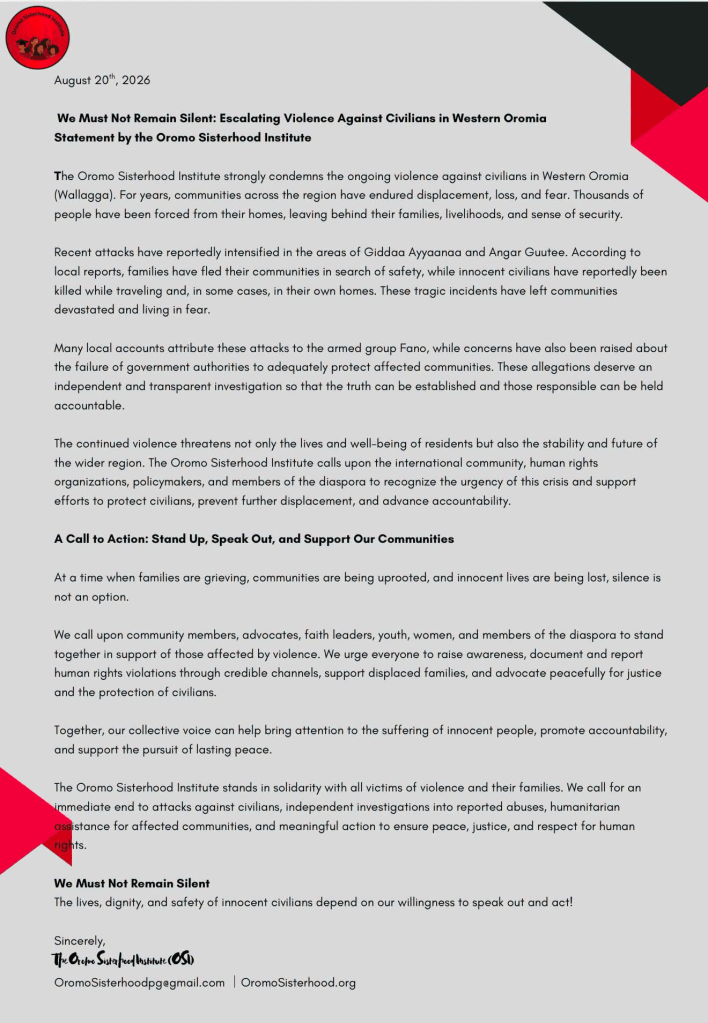
In the quiet villages of Western Oromia, a crisis of staggering proportions has been unfolding for years. But in recent weeks, the violence has reached a terrifying crescendo. The Oromo Sisterhood Institute (OSI) has issued an urgent condemnation of the escalating attacks against civilians in the Wallagga region—a humanitarian catastrophe that has displaced thousands, claimed countless lives, and left communities living in a state of paralyzing fear.
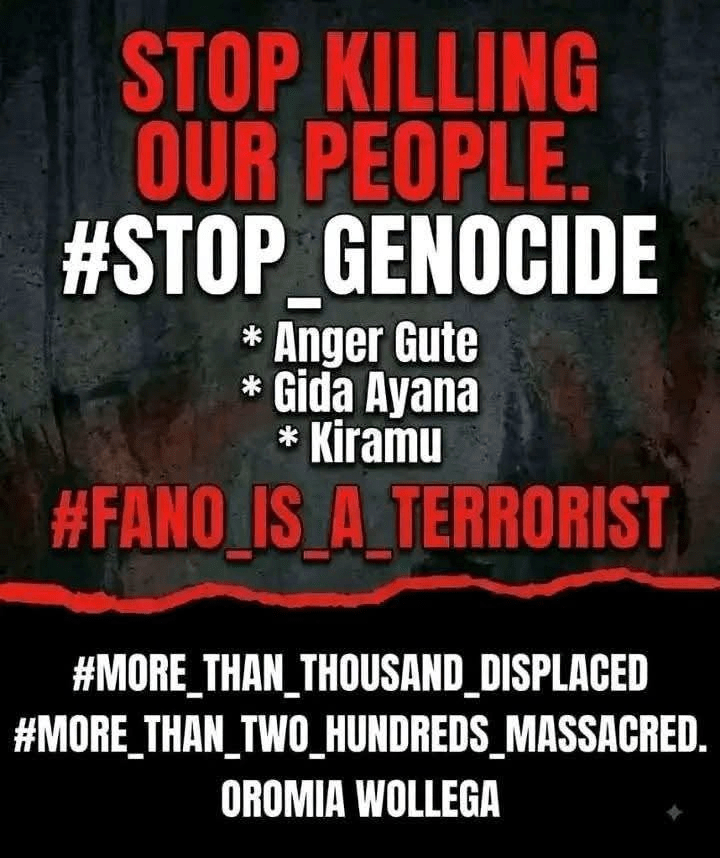
The areas of Giddaa Ayyaanaa and Angar Guutee have borne the brunt of the violence. According to local reports, families have been forced to flee their homes, leaving behind everything they have ever known. Civilians have reportedly been killed while simply traveling, while others have been murdered in their own homes—a brutal reminder that no place is safe.
The Oromo Sisterhood Institute, a leading voice for women’s rights and community protection, is sounding the alarm: the international community cannot afford to look away.
A Crisis of Accountability
While many attacks have been attributed to the Fano armed group, serious concerns have also been raised regarding the role of state actors and the Ethiopian government’s failure to adequately protect affected communities. The government’s apparent inaction raises deeply troubling questions about the protection of civilians and the rule of law.
OSI insists that these serious allegations warrant independent investigations to establish the facts, ensure accountability, and bring those responsible for abuses against civilians to justice.
“Western Oromia is widely recognized as an area of significant political and social importance,” the Institute states. “The continued violence threatens not only the security and well-being of local residents but also the stability of the broader region.”
The ongoing displacement of civilians and destruction of communities have both immediate and long-term humanitarian consequences. Families are being torn apart, children are being denied their futures, and an entire region is being pushed to the brink.
A Call to Action: Silence Is Not an Option
In the face of such unimaginable suffering, the Oromo Sisterhood Institute is issuing a powerful call to action. The message is clear and uncompromising: silence is not an option.
“We urge community members, advocates, civil society organizations, faith leaders, youth, women, and members of the diaspora to stand up for civilian protection, speak out against human rights violations, and support affected families and communities.”
The Institute is calling for:
· Strengthened advocacy and documentation of human rights violations through credible channels.
· Immediate humanitarian assistance for displaced families, whose basic needs remain unmet.
· Local, national, and international awareness campaigns to shine a spotlight on this unfolding tragedy.
· Unity and collective action to amplify the voices of victims, advance accountability, and contribute to the pursuit of justice and lasting peace.
Every Community Deserves Safety
The Oromo Sisterhood Institute’s message is rooted in a fundamental belief: every community has the right to live in safety, dignity, and freedom from violence. This is not a partisan issue; it is a human issue.
The Institute is calling upon international institutions, humanitarian organizations, and global human rights bodies to closely monitor the situation in Western Oromia and take meaningful action to ensure the protection of civilians and the prevention of further atrocities.
“We stand in solidarity with all victims of violence and their families,” OSI declares. “We call for an immediate end to attacks against civilians, independent and transparent investigations into reported abuses, humanitarian assistance for affected communities, and concrete measures to ensure lasting peace, justice, accountability, and respect for human rights in the region.”
The Cost of Inaction
As the violence continues to escalate, the world faces a choice: to act or to remain silent. The Oromo Sisterhood Institute has made its position unequivocally clear.
“We must not remain silent,” the statement concludes. “The lives, dignity, and security of innocent civilians depend on immediate attention and action.”
The people of Western Oromia are not just statistics; they are mothers, fathers, children, and communities whose lives hang in the balance. Their cries for help must not go unanswered. The time for action is now—before more lives are lost, more families are displaced, and more communities are destroyed.
The Oromo Sisterhood Institute calls upon the international community, human rights organizations, policymakers, and members of the diaspora to recognize the seriousness of the situation and to support efforts aimed at protecting civilians, preventing further displacement, and promoting accountability for human rights violations.
The world must not remain silent. The time to act is now.
—
The Oromo Sisterhood Institute (OSI) is a civil society organization dedicated to promoting the rights, dignity, and well-being of Oromo women and communities. Through advocacy, awareness, and collective action, OSI works to amplify the voices of the marginalized and advance justice and lasting peace.
#UNHumanRightsCouncil#Oromia#Wallagga#Justice#HumanRights

Advocacy for Oromia (A4O) Condemns Escalating Violence Against Civilians in Western Oromia, Calls for Urgent International Action

FOR IMMEDIATE RELEASE
Melbourne – 22 August 2026 – The Advocacy for Oromia (A4O) today issued a strong condemnation of the ongoing and escalating violence against civilians in Western Oromia (Wallagga), warning that the situation has reached an alarming level and demanding immediate action to protect vulnerable communities.
Recent attacks have reportedly intensified, with civilians in the Giddaa Ayyaanaa and Angar Guutee areas bearing the brunt of the violence. According to local accounts, families are being forcibly displaced from their homes, while others have lost their lives while traveling or in their own residences, creating a pervasive climate of fear and instability across the region.
While many attacks have been attributed to the Fano armed group, A4O also expressed grave concern over allegations implicating state actors. The organization highlighted the Ethiopian government’s apparent failure to adequately protect affected communities, stating that these serious allegations necessitate independent and transparent investigations to establish facts, ensure accountability, and bring perpetrators of abuses to justice.
“Western Oromia is a region of profound political and social significance, and this continued violence threatens not only the immediate security of residents but also the broader stability of the region,” a spokesperson for A4O stated. “The resulting displacement and destruction have severe humanitarian consequences that require an urgent global response.”
In response to the crisis, A4O is issuing a Call to Action, urging community members, advocates, civil society organizations, faith leaders, youth, women, and the diaspora to break their silence. The organization insists that “silence is not an option” in the face of such suffering and calls for:
- Strengthened advocacy and documentation of human rights violations.
- Immediate humanitarian assistance for displaced families.
- Local, national, and international awareness campaigns.
- Unity and collective action to amplify victims’ voices and advance justice.
Furthermore, A4O is calling on international institutions, humanitarian organizations, and global human rights bodies to closely monitor the situation in Western Oromia and take concrete steps to prevent further atrocities.
“We must not remain silent,” the statement concludes. “The lives, dignity, and security of innocent civilians depend on immediate attention and action. We stand in solidarity with all victims of violence and their families and demand lasting peace, justice, and respect for human rights in the region.”
About Advocacy for Oromia (A4O):
The Advocacy for Oromia is a civil society organization dedicated to promoting human rights, justice, and democratic governance for the people of Oromia. A4O works to amplify the voices of the Oromo people and advocate for peaceful solutions to conflicts affecting the region.
#UNHumanRightsCouncil #Oromia #Wallagga #Justice #HumanRights

Goobee and Shinooyyee: A Dual Model of Prevention and Intervention for Social Problems

How Ancient Oromo Festivals Build Peace, Unity, and Social Cohesion
By Dhabessa Gemelal
In an era of deepening social divisions, political polarisation, and youth disengagement, the Oromo people possess a powerful and ancient resource: their own cultural traditions. The festivals of Goobee and Shinooyyee—celebrations marking the transition from the rainy season to spring—are not merely expressions of cultural identity. They are sophisticated mechanisms for social cohesion, conflict prevention, and youth engagement that offer a model for addressing some of the most pressing social challenges of our time.
Understanding Goobee and Shinooyyee
Goobee: A Festival of Light and Freedom for Young Men
Goobee is a festival where young men welcome the light of Spring with joy, hope, and good wishes. It represents “the bliss of spring, the joy of the dawn of the earth”—a light that sprouts for youth with green hope and courage . It is a time when young men declare their freedom and independence, marking their transition toward adulthood.
Shinooyyee: A Festival of Freedom and Identity for Young Women
Shinooyyee is a unique festival celebrated by young unmarried girls . During this festival, girls “plait their hair in fantastic styles and dress up and decorate with ornaments of their choice. They chant, sing, and dance with friends and peers for up to 3 weeks” . They collect fragrant grass and give it to neighbours as a symbol of abundance and blessing, receiving food and butter in return. It provides “young girls with absolute freedom to enjoy outside of their family’s home” .
Both festivals are celebrated in the weeks leading up to Irreechaa, the grand Oromo thanksgiving festival, and are part of the wider Gadaa system recognised by UNESCO as an Intangible Cultural Heritage of Humanity .
Prevention: Addressing Root Causes of Social Problems
1. Preventing Conflict Through Reconciliation
The Gadaa system, of which Goobee and Shinooyyee are a part, is built on a fundamental principle: “as much as possible, conflict should be prevented from occurring” . Should conflict occur, “everything should be done to prevent it from escalating and all institutions should work together to manage the conflict” .
This preventive philosophy is embedded in the festivals. Irreechaa, the culminating festival, requires participants to resolve conflicts before attending. As one Abba Gadaa explained, “if anyone who attends the festival has a conflict even with a close person, he should first reconcile with himself or with the other persons” . This principle of pre-festival reconciliation prevents conflicts from festering and escalating.
2. Preventing Youth Disengagement Through Meaningful Participation
Shinooyyee and Goobee provide structured, meaningful activities that engage youth during a critical transition period. The festivals offer young people “absolute freedom” to express themselves, build social bonds, and develop confidence . This engagement prevents the alienation and disconnection that often lead to social problems.
Social Anthropologist Daniel Deressa noted that the festivals “promote love and unity to uphold peaceful coexistence in the society” . By providing positive outlets for youth energy and creativity, Goobee and Shinooyyee prevent the frustration and disengagement that can fuel social unrest.
3. Preventing Cultural Erosion Through Intergenerational Transmission
Goobee and Shinooyyee serve as mechanisms for transmitting cultural knowledge, values, and ethics from elders to youth. The festivals ensure that young people learn “the culture and morals of the people and teaching them the truth” . This intergenerational transmission prevents the loss of cultural identity that can leave communities vulnerable to social breakdown.
Intervention: Addressing Existing Social Problems
1. Healing Divisions Through Reconciliation
For those already in conflict, Goobee and Shinooyyee provide a structured pathway to reconciliation. The festivals are described as “a time for reconciliation,” where “hatred and revenge are removed and solidarity is strengthened” . The requirement of pre-festival reconciliation serves as a direct intervention for existing conflicts.
The festivals create an environment where “peace is preached and love is praised; disagreement, grievance and discontent are condemned” . This public affirmation of peace values directly counters the narratives that fuel conflict.
2. Building Social Bonds Across Communities
Goobee and Shinooyyee bring together young people from different communities, strengthening “their love and unity” . The festivals are not exclusive—they are inclusive gatherings that promote understanding and solidarity across diverse groups.
Irreechaa, the culminating festival, has become “an important ritual festival that attracts visitors” and “has been becoming a cultural nationalism not only for the people of Oromo but also the nations and nationalities of the country” . This inclusivity makes the festivals a direct intervention against ethnic division.
3. Strengthening Community Resilience
The festivals contribute to community resilience by reinforcing social bonds and shared values. As scholars have noted, “Irreechaa brings people closer to each other and strengthen social bonds” . This strengthening of social cohesion makes communities more resilient to the stresses that can lead to social problems.
The Dual Model in Action
Goobee and Shinooyyee operate through a dual model of prevention and intervention:
Prevention:
- Engaging youth through meaningful participation
- Transmitting cultural values and ethics
- Resolving conflicts before they escalate
- Building social cohesion through inclusive participation
Intervention:
- Healing existing conflicts through reconciliation rituals
- Strengthening social bonds across communities
- Reinforcing shared values of peace and unity
Conclusion: A Model for Our Times
In a world facing deepening social divisions, youth alienation, and conflict, Goobee and Shinooyyee offer a powerful model. They demonstrate that cultural traditions are not merely nostalgic artifacts—they are living resources for building peace, strengthening communities, and engaging youth.
By preserving and promoting these festivals, the Oromo people are not only celebrating their heritage—they are investing in a more peaceful, cohesive, and resilient society. As one young participant noted, Goobee and Shinooyyee are “a festival of success, history, restoration of lost culture and expression of the Oromo people” .
In a fractured world, this ancient tradition offers a blueprint for healing.
This feature article is dedicated to the youth of Oromia who carry these traditions forward, and to all communities seeking models of peace and unity.


More Than an Ancient Civilization: The Kingdom of Kush—A Powerful Empire of Land and Sea
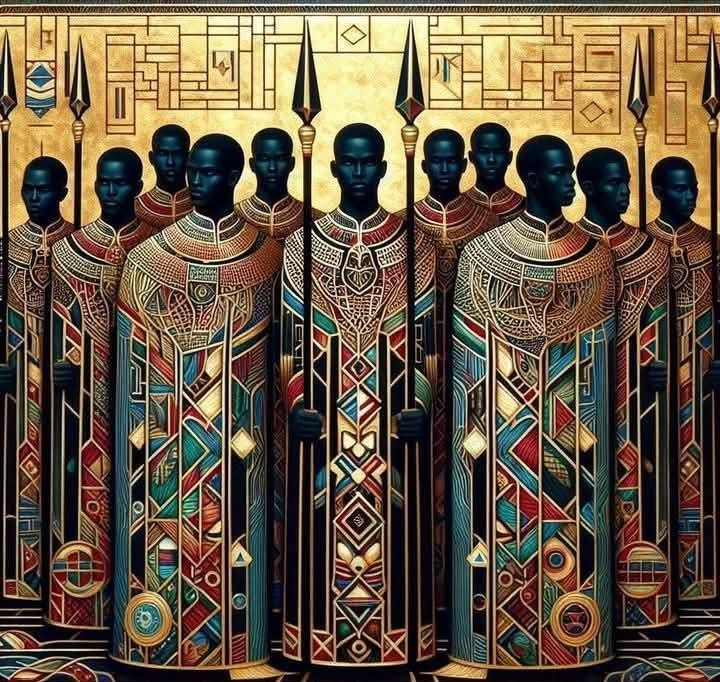
A people whose legacy challenges the very foundations of African history
When we speak of the great civilisations of antiquity, our minds often turn to Egypt, Greece, or Rome. But long before the Persian Empire rose to dominance, there existed in the heart of Africa a kingdom of extraordinary power, wealth, and sophistication—the Kingdom of Kush.
The Kingdom of Kush, with its three major cities of Meroe, Kerma, and Napata, emerged in the Nubian Desert south of Egypt along the Upper Nile River Valley from the 2nd millennium B.C. to the fourth century A.D. . For over a thousand years, Kush was a major power in the Nile valley, controlling an empire that at its height stretched from Central Sudan to the Mediterranean .
The achievements of this ancient civilisation challenge long-held beliefs that Egypt was the sole centre of advancement in the region. As renowned archaeologist Charles Bonnet’s excavations have revealed, Kush was not a mere vassal state of Egypt but a powerful and independent kingdom with its own distinctively indigenous culture . This sophisticated political state organised trade to the Mediterranean basin and built up a military strong enough to resist Egyptian forces .
The Black Pharaohs: A Legacy of Power
The Kushite rulers of Egypt’s 25th Dynasty, often referred to as the “Black Pharaohs,” represent a pivotal moment in the history of the Nile Valley. Emerging from the Kingdom of Kush at Napata in Nubia, these rulers not only unified Egypt after centuries of fragmentation but also reinvigorated pharaonic traditions .
The first major figure of this dynasty, King Piye, launched a campaign into Egypt during a period of political fragmentation known as the Third Intermediate Period. His Victory Stela records the subjugation of Delta rulers and proclaims his role as restorer of order . By 730 BCE, Piye had conquered Lower Egypt, establishing Kushite authority over both Upper and Lower Egypt .
The dynasty reached its zenith under Taharqa (690–664 BCE), whose reign is remembered for monumental building projects and ambitious foreign policy. Taharqa sponsored extensive temple construction at Karnak, Kawa, and Jebel Barkal, reinforcing his devotion to Amun and his claim to pharaonic legitimacy . He intervened in the Levant, supporting coalitions against Assyrian expansion, and is mentioned in both Biblical and Assyrian sources .
One of the most remarkable features of Meroitic civilisation was its powerful queens. The title “Candace,” meaning “sister,” was given to Kushite queens . Queens such as Amanirenas—who signed a peace treaty with the emperor Augustus—and Amanishakheto, whose treasure was looted in 1834, demonstrate the prominent role of women in Kushite society .
Kush: More Than a Footnote
The Kingdom of Kush was more than a civilisation; it was a power that commanded both land and sea. Kushite armies were formidable, and their military prowess allowed them to conquer and control Egypt itself . Kush also boasted a powerful navy, controlling trade routes along the Nile and beyond .
The economy of the ancient Kushites relied on trade in exotic African goods with Egypt and beyond. As middlemen, Kushite traders passed along ivory, ebony, incense, and other exotic goods from the South to the Egyptians, who then traded with other Mediterranean peoples . The city of Kerma, with its strategic location on the Nile River, controlled this crucial trade route .
Kush produced more gold than anywhere in the world at that time . Archaeologists have uncovered massive gold-processing operations at sites like Hosh el-Guruf, revealing the scale of Kush’s wealth . Minerals and high-quality stone were also mined for trade, and the Kushites introduced and developed iron metallurgy to the region .
A Sophisticated Society
The art and architecture of the Kushites reveal a sophisticated society of innovative craftsmen who constantly assimilated new artistic techniques from other lands . Notable architecture includes stone temple complexes such as the Lion Temple at Naqa and the steep-sided, solid pyramids found at Meroe and Jebel Barkal .
In fact, Sudan has more pyramids than all of Egypt—a testament to the grandeur of the Kushite civilisation . These tall, slender, graceful monuments bear witness to the lasting splendour of Kush .
Kushite art includes narrative tomb wall paintings and unique, eggshell-thin pottery with geometric patterns traded all over the Mediterranean . Stoic granite and bronze statues of gods and kings convey the religious beliefs of this ancient people .
The Question of Cush
The name “Kush” has been connected since at least the time of Josephus with the biblical character Cush, son of Ham (Genesis 10:6). Ham had four sons: Cush, Put, Canaan, and Mizraim (Egypt) . According to the Bible, Nimrod, a son of Cush, was the founder and king of Babylon, Erech, Akkad, and Calneh .
The Cushitic-speaking peoples, who are the ethnolinguistic groups speaking Cushitic languages natively, are today found primarily in the Horn of Africa, with minorities in Egypt, Sudan, Kenya, and Tanzania . Proto-Cushitic was spoken on the Ethiopian Highlands by 5000–4000 BC .
A Civilisation Worthy of Recognition
The Kingdom of Kush is not merely a footnote in the history of Africa—it is a testament to the power, ingenuity, and resilience of the peoples of the Nile Valley. As the American Journal of Archaeology notes in its review of The Nubian Pharaohs of Egypt, the term “Black Pharaohs” has sometimes been used to market exhibits, but the historical significance of Kush extends far beyond its interaction with Egypt . Sudanese colleagues and community members rightly resent the idea that the kings of ancient Sudan are only important because they ruled over Egypt . The Kingdom of Kush deserves to be remembered on its own terms.


The Price of Silence: A Reflection on Inaction and the Tragedy of Our People

We Knew This Was Coming — Yet We Chose to Stay Silent
By Koste Abdiisaa
If we had shown even 1% of the outrage we have expressed over the past two days three, four, or five years ago—when Fano killed hundreds of innocent Oromos in Kiramu, Hagamsa, Amuru, Alibo, Jardega-Jartee, and elsewhere—perhaps these killings would not have happened.
We knew this was coming. The signs were everywhere. The warnings were clear. Yet we chose to remain silent. We chose to look away. We chose to believe that the storm would pass us by.
But storms do not pass by those who refuse to prepare. They break over them.
The Warning Signs We Ignored
For years, the enemies of the Oromo people have been methodically preparing for this moment. While we argued among ourselves, they were opening training camps in our backyard. While we engaged in name-calling and petty divisions, they were building security structures and training hundreds of people to carry out their plans.
We saw it happening. We heard the reports. We knew that innocent farmers—our farmers—were being killed in Kiramu, Hagamsa, Amuru, Alibo, Jardega-Jartee, and countless other places. And what did we do?
We expressed outrage on social media. We posted our anger, shared our grief, and then went back to business as usual.
Our collective inaction allowed this to continue. Our silence gave them permission to proceed. Our failure to act was an invitation for more violence.
The Consequences of Inaction
This is not about hindsight. This is about foresight—and our failure to use it. We cannot pretend that these killings were unexpected. We knew what was coming. We had every warning. But we failed to act.
And now, the consequences are here.
The killing of our innocent farmers is not just a tragedy—it is a judgment on our collective failure to protect our own. It is the result of years of political naivety, misplaced priorities, and a refusal to confront the reality of the threat we faced.
We were good at crying after the fact. We were good at expressing outrage on social media after tragedies happened. But we were very poor at recognizing threats early on, listening to those who recognized them, and preparing ourselves to face them.
The Deeper Outrage
Like many of you, I am outraged by the killing of our innocent farmers. But I am even more outraged by our inaction—our lack of political awareness, our failure to recognize and respond to such cruelty for so long.
What is even more troubling is that some of our so-called political entities—those who claim to speak for us—continue to seek alignment with those responsible. They act as if there is still some humanity left in them to appeal to. They still hope for dialogue with those who have shown, time and again, that they have no interest in peace, only in domination.
This is not leadership. This is delusion.
And we, as a people, have allowed it. We have allowed ourselves to be led by those who refuse to see the enemy for what they are. We have allowed ourselves to be distracted by petty divisions while our people are being slaughtered.
The Beginning, Not the End
Let us not pretend that this is the end. This is the beginning. The attacks will continue. The killings will escalate. And if we do not act now—with unity, determination, and clarity—the tragedies we see today will seem small compared to what is coming.
I fear that we may still fail to act in a timely manner. I fear that we will continue to cry and express outrage for a week, and then return to normal life. I fear that we will continue to do what we seem to be good at: mourning after the fact, but never preparing for what lies ahead.
A Call to Look Within
If this senseless killing of our people does not make us angry enough to question our collective inaction, then perhaps we need to look within ourselves and ask: What kind of society have we become?
Have we become a people who only react after the damage is done? Have we become a people who prioritize social media outrage over real action? Have we become a people who are more concerned with who is right than with what is right?
We must ask ourselves these questions. And we must answer them honestly.
The Path Forward
We cannot change the past. The blood that has been spilled cannot be unspilled. But we can change the future. We can act now—today—to ensure that these tragedies do not continue.
This requires several things:
- Unity: We must put aside our petty divisions and unite as a people. Our enemies are united; we must be even more united.
- Awareness: We must wake up to the reality of the threat we face. We must recognize the signs and act before it is too late.
- Action: We must support those who are willing to sacrifice and risk their lives to defend our people. We must build the structures and institutions necessary to protect ourselves.
- Accountability: We must hold our political entities accountable. We must demand that they prioritize the defense of our people over their own political ambitions.
- Resilience: We must be prepared for the long fight ahead. This is not a battle that will be won in a day. It requires patience, courage, and an unwavering commitment to our people.
Conclusion: Enough Is Enough
The killing of our innocent farmers is a crime against humanity. But our collective inaction is a crime against ourselves.
We cannot afford to continue down this path. We cannot afford to remain silent while our people are being slaughtered. We cannot afford to wait until the next tragedy to express our outrage.
Enough is enough.
Let us honor the memory of those who have been killed by resolving to act—not just with words, but with deeds. Let us build a future where our people are safe, our land is protected, and our dignity is restored.
Injifannoon Ummata Oromoo!
Nagaan haa jabaatu!
This reflection is dedicated to the innocent Oromo farmers who have lost their lives, and to all those who are determined to build a future of peace, justice, and security for our people.

The Silence Over Wollega: A Cry for the Voiceless in Ethiopia’s Forgotten War
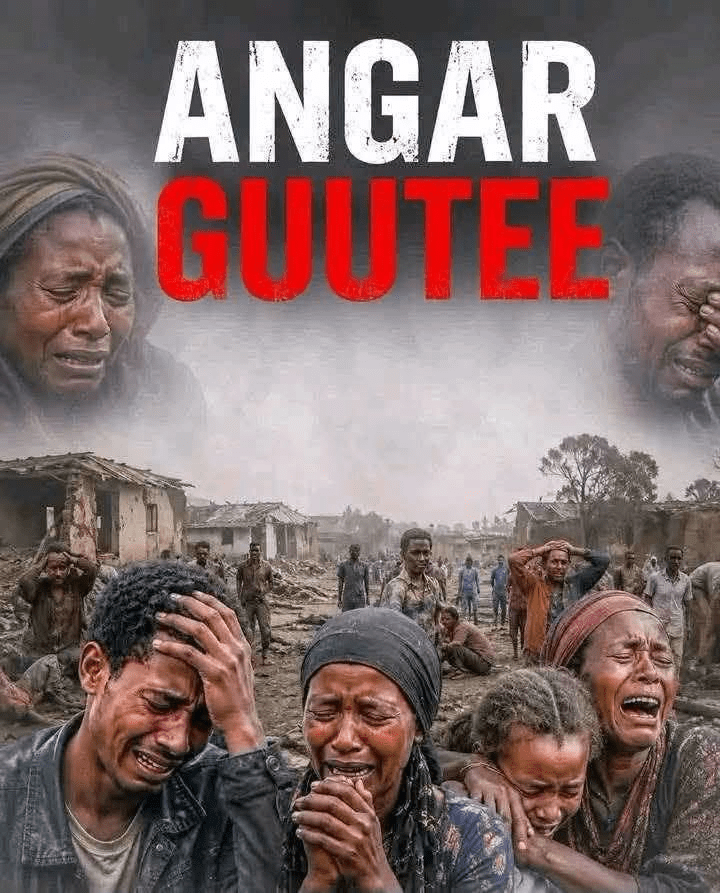
In the sprawling highlands of western Ethiopia, a humanitarian catastrophe is unfolding with alarming speed. The East Wollega Zone of the Oromia region has become a crucible of ethnic violence, where armed groups clash, and the conflict’s brutal arithmetic is calculated not in strategic gains, but in civilian bodies . As fighting intensifies, a dangerous fog of war has descended, making it nearly impossible to separate fact from propaganda. Yet, amid the chaos, one truth is devastatingly clear: it is the innocent civilians who are suffering the most.
The atrocities have been staggering, with conflicting reports creating a confusing narrative. The Oromo Media Network (OMN) and Oromia News Agency (ONA)report, citing eyewitnesses, that 30 Oromo civilians were killed in recent attacks. Meanwhile, sources aligned with Fano counter that the Oromia Special Forces (OSF) are responsible for the deaths of 30 Amhara civilians. This deadly blame game, where both sides accuse the other of systematic slaughter, obscures a grim reality: entire communities are being erased, with homes torched and livestock stolen.
A Storm of Violence
The situation in East Wollega is defined by a complex and deadly ecosystem of armed actors. The Ethiopian National Defense Force (ENDF) is engaged in operations against the Oromo Liberation Army (OLA), which the government labels a terrorist group. However, the violence is compounded by the presence of the Fano militia, an Amhara nationalist force that has expanded its operations from the Amhara region into Oromia. The ENDF has even claimed that Fano and the OLA have coordinated attacks against government forces in the zone, a claim that, if true, suggests a shifting of alliances in an increasingly chaotic conflict.
Residents on the ground paint a picture of indiscriminate brutality. They describe attacks by Fano militants, who they accuse of going “from house to house” to shoot civilians, killing even a district court judge in his own home . Other accounts detail horrific acts of violence against Amhara civilians. A report by the BBC Amharic service documented a massacre in Gida Ayana Woreda, where residents blamed the Oromia Special Forces for killing 19 people and burning hundreds of homes . One survivor, a pregnant woman whose husband was killed in front of her, described the attackers saying, “Your children are the ones fighting the federal government. You support Fano”. This statement reveals a terrifying logic: civilians are being targeted not as individuals, but as members of an ethnic group deemed to be supportive of the enemy.
The Weaponization of Identity and History
This conflict is deeply rooted in historical grievances and land disputes. Over the decades, waves of Amhara settlers moved into Western Oromia, leading to long-standing tensions over land and political power . This has created an environment where armed groups can exploit ethnic identity for support, framing the violence as a struggle for liberation or territorial expansion. Fano’s actions are reportedly driven by an ideology that seeks to reclaim parts of Wollega as historically Amhara land, an expansionist goal that, critics argue, echoes dangerous nationalist myths seen in other global conflicts .
A Humanitarian Catastrophe Ignored
The numbers of displaced are staggering. The Dorcas aid organization reported that conflict in the East Wollega border areas has displaced over 22,000 people in a single wave of violence . These displaced families are fleeing to relative safety in towns like Debre Birhan in the Amhara region, often finding themselves living in crowded, unsanitary conditions with little access to food, water, or healthcare . In 2021 alone, more than 88,000 civilians were forcibly displaced from Western Oromia, a figure that has certainly grown in the years since .
The international response has been conspicuously muted. As the cry for help echoes from the highlands—”Where is the UN? Where is Human Rights Watch?”—the calls for justice and protection from civilians are met with silence . The victims, caught between warring factions, are pleading for the bravest journalists and human rights advocates to become their voices.
As one desperate resident lamented, “Are we not citizens? Why do we suffer from hunger and thirst? We’ve reached a point where we regret being alive” . It is a tragic testament to the failure of the international community to protect the most vulnerable.
—
The call for help from East Wollega is urgent. The world must not look away.

Prime Minister Abiy Ahmed Ali Celebrates the Energy and Potential of Young Ethiopians

By Abdi Milkessa
(Finfinne, 12 August 2026) -Ethiopia’s youth are not just the leaders of tomorrow—they are the architects of today. With the country’s demographic composition showing that young people make up the largest segment of the population, this is not merely a statistic—it is a tremendous opportunity to secure prosperity and lasting development for the nation.
Prime Minister Abiy Ahmed Ali has called on the youth to be the engine of change, the driving force behind transformation, and the solid pillars of Ethiopia’s sovereignty.
The Youth: A Force for Positive Change
In a recent message, the Prime Minister emphasized that Ethiopian youth are guided by noble goals and a clear vision for the future. They are the primary motor of transformation in our society—the unshakable pillars upon which the nation’s sovereignty rests.
Today’s youth are writing a new chapter in the history of Ethiopia. They have turned away from harmful legacies of the past—unproductive traditions, unnecessary rivalries, and destructive conflicts. Instead, they are focusing on development, progress, and the fight against poverty.
A Government Committed to Youth Empowerment
The “Prosperity Party” government is working with dedication and commitment to strengthen the comprehensive participation of youth in all spheres of life. The role of youth in leadership and decision-making is being reinforced, recognizing that the future of Ethiopia depends on the active engagement of its young people.
Key priorities include ensuring equal opportunities for all young people, strengthening youth leadership roles in governance and society, promoting comprehensive participation in economic, social, and political life, and building a nation where young people can thrive and contribute fully.
A Call to Action: Building Our National Vision Together
The Prime Minister has called upon all youth to engage actively in the development of our nation, to work with love and dedication for the prosperity of Ethiopia, to reject division and conflict while embracing unity and progress, and to embrace innovation and creativity to build a brighter future.
Conclusion: The Youth Are Our Hope
Ethiopia’s youth are the heartbeat of the nation, the hope of the future, and the strength of the present. Their energy, creativity, and commitment will shape the destiny of our people for generations to come.
Ethiopia Prevails!
Youth is Power!
Change is Now!
This feature article is dedicated to all the youth of Ethiopia—the architects of a brighter future!

Oromia Cannot Be Imagined Without Its Youth!

The Driving Force of Our Nation’s Future
By Daandii Ragabaa
Oromia’s youth are not just the leaders of tomorrow—they are the builders of today. The demographic reality of our people reveals a powerful truth: the youth constitute the largest segment of our population. This is not merely a statistic—it is a tremendous opportunity to secure freedom, prosperity, and lasting sovereignty for our nation.
The Oromo youth are the engine of change, the architects of a new dawn, and the unshakable pillars of our sovereignty!
The Youth: A Force for Positive Change
The young people of Oromia are writing a new chapter in the history of our nation. They are:
- Purpose-driven — Guided by noble goals and a clear vision for the future.
- Change-makers — The primary motor of transformation in our society.
- Sovereignty defenders — The solid pillars upon which our nation’s independence rests.
Today’s youth have turned away from the harmful legacies of the past—unproductive traditions, unnecessary rivalries, and destructive conflicts. Instead, they are focusing on development, progress, and the fight against poverty.

A Government Committed to Youth Empowerment
The government is working with dedication and commitment to strengthen the comprehensive participation of youth in all spheres of life. The role of youth in leadership and decision-making is being reinforced, recognizing that the future of Oromia depends on the active engagement of its young people.
Key priorities include:
- Ensuring equal opportunities for all young people.
- Strengthening youth leadership roles in governance and society.
- Promoting comprehensive participation in economic, social, and political life.
- Building a nation where young people can thrive and contribute fully.
A Call to Action: Building Our National Vision Together
Our national vision cannot be realized without the active participation of every young person. We call upon all youth to:
- Engage actively in the development of our nation.
- Work with love and dedication for the prosperity of Oromia.
- Reject division and conflict — embrace unity and progress.
- Embrace innovation and creativity — build a brighter future.
Conclusion: The Youth Are Our Hope
Oromia’s youth are the heartbeat of the nation, the hope of the future, and the strength of the present. Their energy, creativity, and commitment will shape the destiny of our people for generations to come.

Injifannoon Ummata Oromoo!
Dargaggootni Oromoo haa jabaatan!
Oromia haa jabaattu!
This feature article is dedicated to the youth of Oromia—the architects of a brighter future!






