Category Archives: Finfinne

Edmonton Oromo Community Celebrates Irreecha Malkaa in Vibrant Cultural Splendor
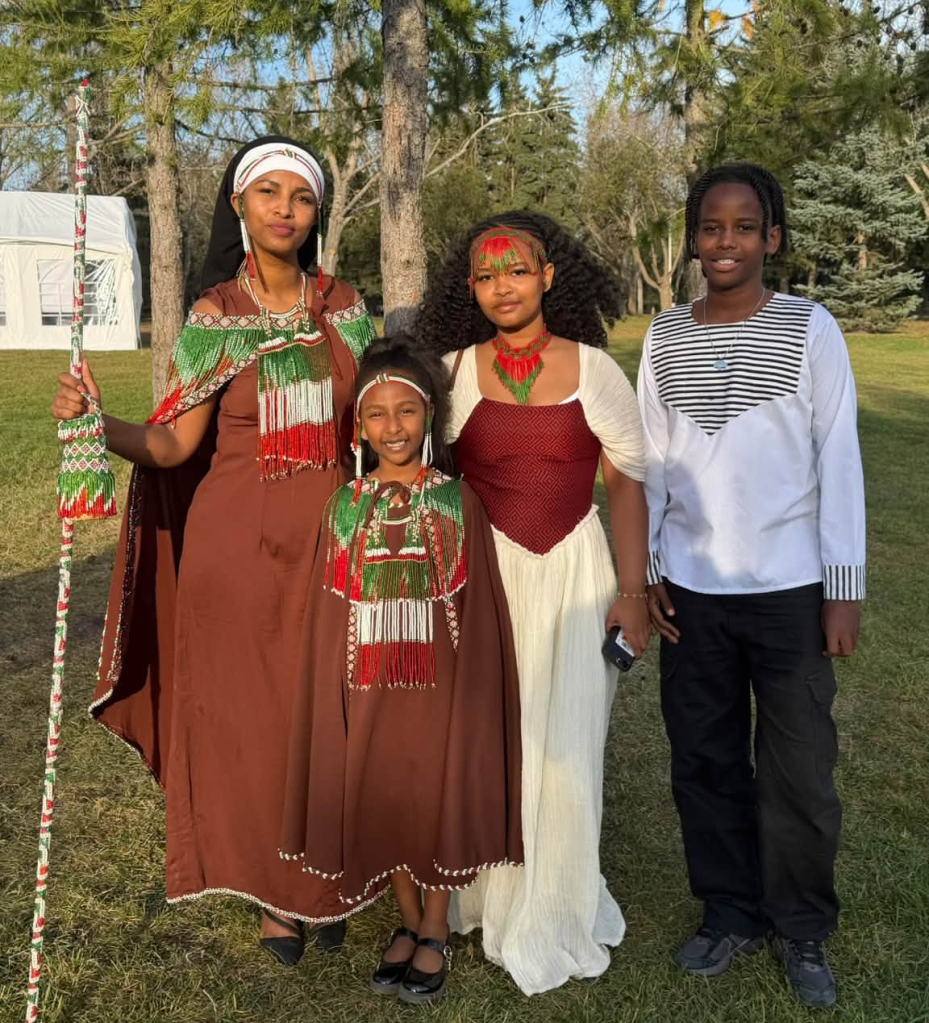
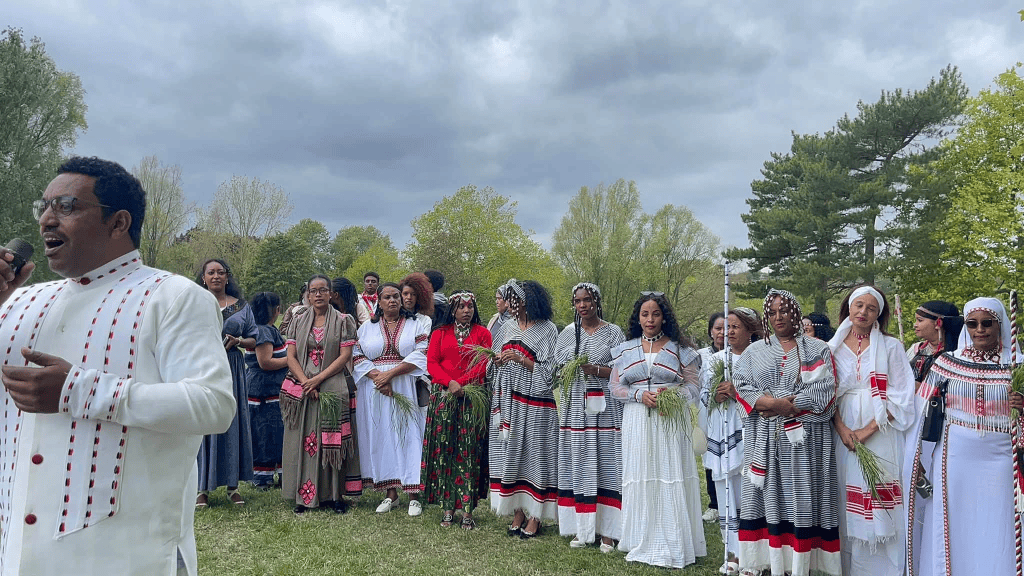
(ONA, Edmonton, 19 September 2026) The Oromo community in Edmonton, Canada, came together in joyous celebration of Irreecha Malkaa – Edmonton, honoring their cherished cultural festival with traditional attire, symbolic greenery, and messages of renewal, peace, and hope.
The celebration, held with great warmth and enthusiasm, saw community members adorned in beautifully decorated traditional Oromo clothing, proudly displaying the cultural heritage that binds them together across generations and continents. Participants carried fresh green grass and blooming flowers — the treasured symbols of Irreecha — bringing the essence of the ancestral festival to life in the heart of Canada.
A Message of Renewal and Growth
At the heart of the gathering was the exchange of heartfelt blessings marking the transition from the rainy season to spring. Community members greeted one another with the beloved Irreecha salutation:
“Baga bacaqii gannaa keessaa baatanii booqaa birraa geessan!” — congratulations on emerging from the rains and reaching the blossoming of spring — a message that carries profound meaning of renewal, resilience, and hope for growth and prosperity in the year ahead.
Prayers for Peace, Unity, and New Hope
Beyond the colorful attire and ceremonial symbols, participants shared prayers and good wishes for the community and the wider world:
“Irreechi nagaa, tokkummaa, galata, jaalalaafi abdii haaraa nuuf haa fidu,” they declared — may Irreecha bring us peace, unity, gratitude, love, and new hope.
The message resonated deeply among those gathered, reinforcing the festival’s enduring role as a source of spiritual strength and communal solidarity.
A Celebration of Oromo Identity in the Diaspora
The Edmonton celebration stands as part of a broader global observance of Irreecha by Oromo communities worldwide. Far from their homeland, diaspora communities continue to preserve and nurture their traditions, passing them to new generations and sharing the beauty of Oromo culture with the wider Canadian society.
The vibrant colors of the Oromo flag — green, red, and white — adorned the celebration, and the sounds of traditional songs and blessings echoed through the gathering, creating a space of belonging and pride for all who attended.
A Blessing for All Oromo People
As the celebration concluded, one message rang out clearly for Oromo people everywhere:
“Baga Ayyaana Irreechaa geessan! Happy Irreecha! May this season bring blessings and joy to all Oromo people.”
The Edmonton Irreecha Malkaa celebration was more than a festival — it was a reaffirmation of identity, a bridge between generations, and a testament to the enduring spirit of the Oromo people, united across borders by culture, faith, and hope.
Oromo Community in London Celebrates Irreecha with Joy, Reflection, and Hope
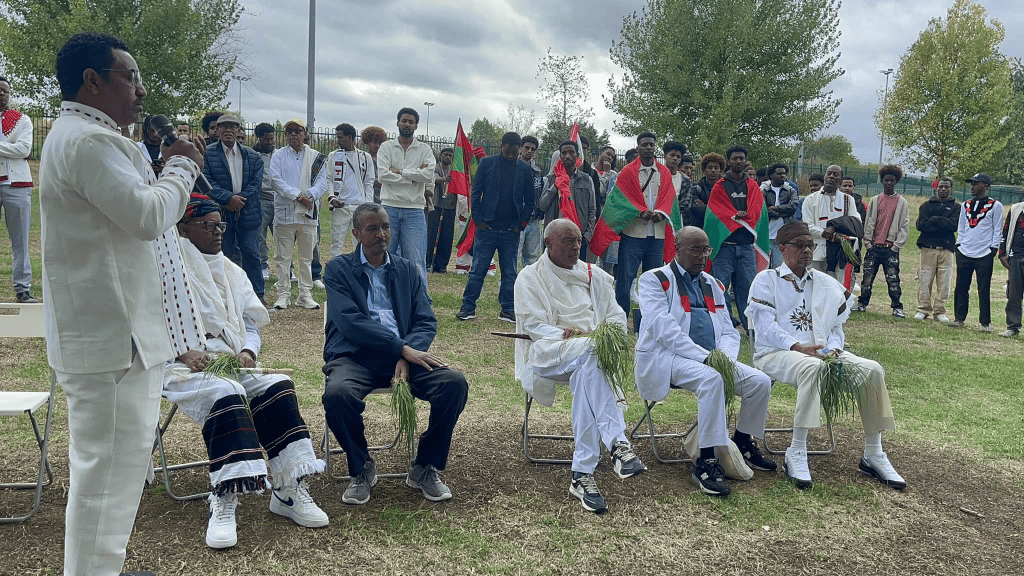
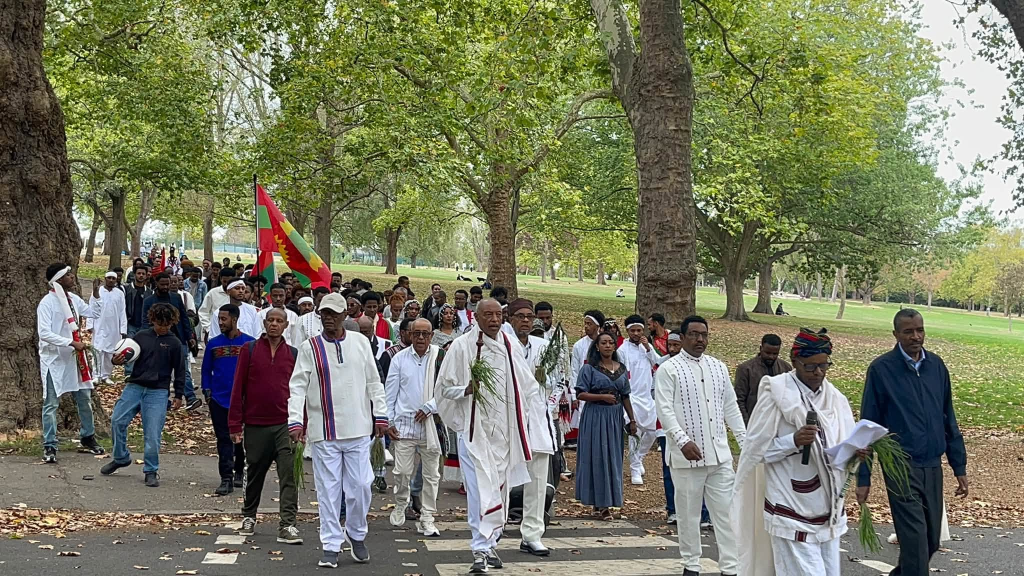
London, UK — The Oromo community in the United Kingdom gathered in London on 19 September 2026 to celebrate Irreecha, the sacred Oromo Thanksgiving festival, in a vibrant display of culture, faith, and unity.
The celebration, organised by Hawaasa Oromoo biyya UK – London, brought together Oromo families and friends from across the United Kingdom for a day of gratitude, reflection, and cultural pride.
A Celebration Rooted in Gratitude
Irreecha is one of the most beautiful and meaningful parts of Oromo culture. It is a time when the Oromo people come together to give thanks to Waaqa for life, peace, rain, harvest, family, and the blessings of the past season.
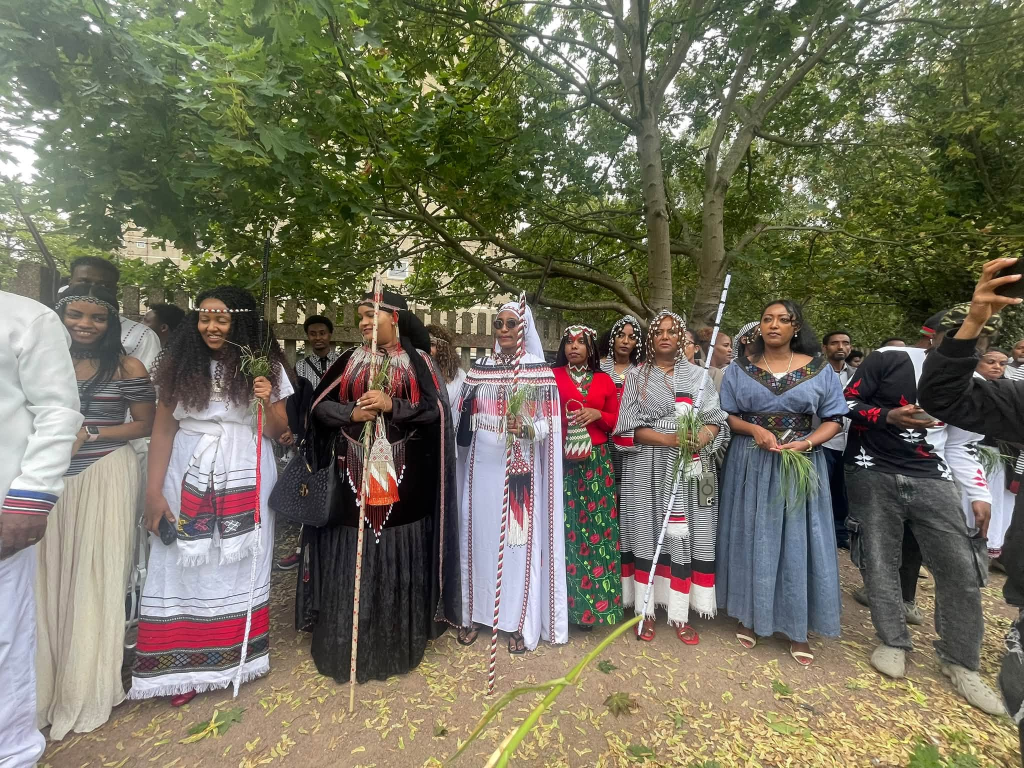
More than just a celebration, Irreecha is an expression of gratitude, unity, reconciliation, hope, and renewal. People gather in nature, often near rivers and lakes, carrying fresh green branches and flowers as symbols of life, abundance, and renewal.
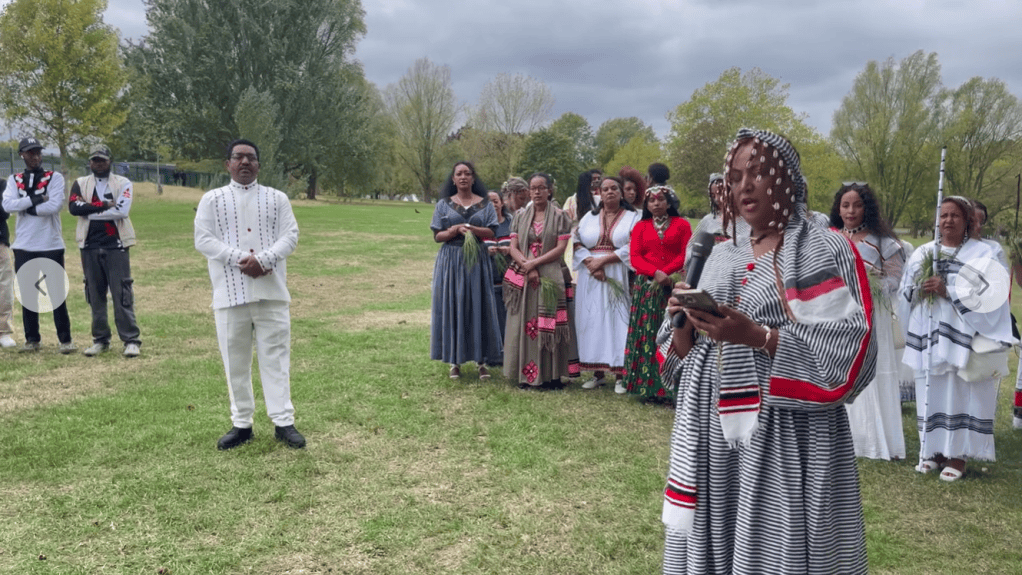
Through prayers, songs, traditional clothing, and cultural expressions, communities celebrate together and give thanks for the blessings of creation.
A Time for Reflection and Remembrance
During the London celebration, speakers reflected on the journey of Irreecha and the sacrifices made to elevate the festival to its current standing. It was noted that great effort and dedication were required to bring Irreecha to the level of recognition it enjoys today.
The community also paused to remember the tragic events of 2016 at Arsadi, where lives were lost during Irreecha celebrations. Those who gathered were reminded that the sacrifices made that day will never be forgotten — a solemn moment that underscored the resilience and determination of the Oromo people.
Strengthening Bonds and Building Unity
Irreecha is also a time to strengthen relationships, forgive one another, resolve differences, and look toward the future with hope. The celebration reflects the deep Oromo understanding that human beings are connected to one another, to the land, and to the natural world.
In London, this spirit of unity was on full display as community members came together in traditional attire, sharing prayers, songs, and fellowship. Elders, youth, and children alike participated in the festivities, ensuring that the traditions of their ancestors continue to thrive in the diaspora.
A Message of Peace and Hope
As the celebration drew to a close, heartfelt wishes were extended to Oromo communities around the world:
“May this Irreecha bring peace to our hearts, unity to our communities, prosperity to our families, and hope for the generations to come.”
The gathering concluded with the traditional blessings that echo across Oromo celebrations everywhere:
“Happy Irreecha! 🌿 🙏🏾 🌳”
“Irreecha nagaan! 🌳”
“Horaa bulaa, deebanaa! ❤️💚❤️”
Irreecha: A Tradition That Transcends Borders
Irreecha remains a powerful symbol of Oromo identity, connecting millions of people across Ethiopia and the global diaspora. From the shores of Lake Hora Arsadi in Bishoftu to community halls and parks in London, Melbourne, Minneapolis, and beyond, the festival continues to unite Oromo people in gratitude, hope, and shared heritage.
As the Oromo community in London demonstrated, Irreecha is not merely a tradition of the past — it is a living, breathing celebration of faith, resilience, and the enduring bonds of community.
Irreecha nagaan! 🌿

From Guerrilla Fighters to Election Contenders: Inside the OLF’s Historic Political Transition
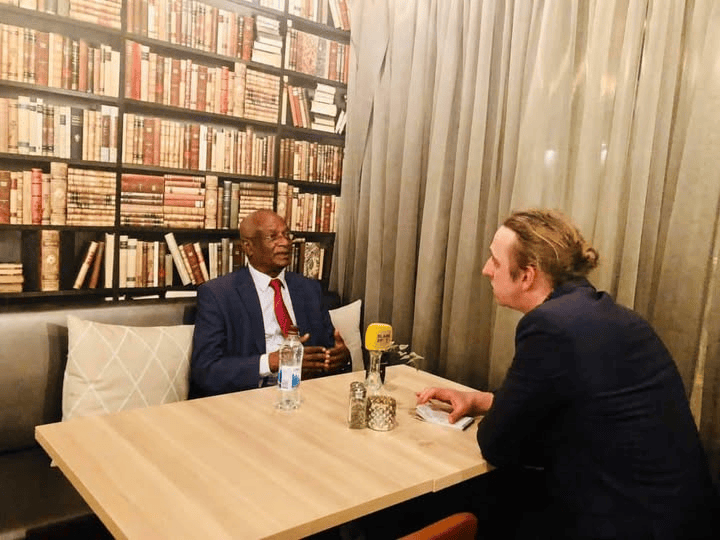
For over four decades, the Oromo Liberation Front (OLF) waged an armed struggle from the forests of southern Ethiopia. Today, its chairman Dawud Ibsa Ayana is preparing for a different kind of battle — one fought at polling stations rather than on frontlines. In a rare interview with Swedish journalist Martin Schibbye of The Blankspot, the OLF leader opens up about the challenges, compromises, and cautious hopes shaping his movement’s unprecedented entry into electoral politics.
A Movement Transformed
The guerrilla group was allowed to return to Ethiopia in 2018 as part of newly-appointed Prime Minister Abiy Ahmed’s sweeping reforms. After decades of operating as an underground liberation army, the OLF now finds itself navigating the complex terrain of formal politics — registering as a political party, forming alliances, and preparing to contest elections it believes it can win.
The interview takes place at Scandic Hotel in Skärholmen, Sweden, where a wedding party’s music competes with the conversation. Dawud Ibsa Ayana, settling into a room with bookish wallpaper, appears eager to speak. For years, journalists had to venture into guerrilla-controlled territories to understand OLF’s positions — a reality that meant the movement’s struggle was either misunderstood or entirely unknown to the outside world.
A Personal History Forged in Struggle
Dawud Ibsa Ayana’s story is inseparable from the organization he leads. He studied at Haile Selassie I University in the 1970s, where he became involved in the student movement and eventually rose to its leadership. In the late 1970s, he was elected to the OLF Central Committee and imprisoned shortly afterward by the Ethiopian regime.
After his release, he fled to Sudan, combining statistics studies with military training. Back in Ethiopia, he led the OLF platoon that initiated armed struggle in Welega province. Arrested again, he was poisoned, tortured, and imprisoned without trial until 1986, when he rejoined the rebel army and resumed his work on the Central Committee.
Throughout interviews from that era, he remained firmly convinced that once free elections were permitted, the OLF would win and form the backbone of Ethiopia’s next government.
From Armed Struggle to Political Arena
The path to electoral politics has not been straightforward. “A few years ago I had not thought that we would prepare for such a situation,” Dawud admits. “What a choice!”
The Berlin Wall fell. The Soviet Union collapsed. But in the wooded parts of southern Ethiopia, Dawud and his comrades fought a war that, for many rebels, was older than themselves.
The historical context is profound. The Ethiopian emperor of the 20th century, from the Amhara people group, had colonized the Oromo people’s wealthy home territories during the same era European powers colonized the rest of Africa. While other countries eventually gained independence, the Oromo people — one of the largest ethnic groups in Africa — did not.
The popular revolution that swept away the Mengistu dictatorship in 1991 also failed to resolve the region’s fundamental conflict with central power.
The Decision to “Play the Game”
When Ethiopian Prime Minister Abiy Ahmed received the Nobel Peace Prize in 2019, he was rewarded primarily for peace with Eritrea. More forgotten, but perhaps more important for Ethiopia’s future, was peace with local rebel groups — including the OLF.
Dawud believes the TPLF survived because the regime understood that growing protests were directed at their own party and that they had to “reform” the country to continue governing.
“I put ‘reforms’ in quotes because they were forced to release prisoners. It was nothing they wanted to do. There was no amnesty,” he says. “We are not completely happy about the situation, but we decided to ‘play the game.'”
Was it a difficult decision? “It was a tough decision absolutely, but we had no choice. The TPLF created confusion and the outside world thought this was a genuine change, so we were then forced to ‘play the game’ because the government said they would invite exile organizations and remove the stamp of terror. If we had not taken the chance, we would have been branded as those who ‘destroyed the peace’ or ‘nihilists.'”
The Unresolved Question of the Disappeared
When the OLF and Ethiopian government settled down after decades of armed conflict, one major stumbling block was the OLF members who had disappeared over the years.
“We presented a list of 300-400 names and wanted answers: are these people living or are they dead?”
They did not receive a straight answer, but they agreed that criminals responsible for human rights violations on both sides should be tried. The OLF suggested a commission be appointed. The idea was not rejected but was postponed until after the election.
“If the choice goes well, this will be a priority for us,” Dawud says. “Whether we agree on a South African reconciliation model or a personal arrangement remains to be seen.”
Obstacles and Harassment
The movement’s problematic relationship with state powers did not end when they laid down their weapons. Even registering their party was delayed — it took over a year after the peace agreement to formalize.
“Since we brought home our soldiers from Eritrea in September 2018, we have had a tough time. The government has obstructed and hampered our work, they have closed down our local offices which we have opened and over 20,000 of our members have been imprisoned for short or longer periods.”
The areas where the movement has encountered most difficulties are in Ambo and the southwestern parts of the Oromo region.
“Here are the large garrisons of the Ethiopian army and in these, several members have been detained for months without a trial, often under torture-like conditions. Not only former soldiers, but also farmers, young people and teachers have been taken from the entire Oromo region to these places.”
He believes the purpose is to weaken the party ahead of the August 2020 elections.
In mid-February 2020, Amnesty International issued a report showing that 75 members of OLF had been arrested at the beginning of the new year. The human rights organization noted it was “inadvertent that opposition politicians were so close to the impending election.” Amnesty warned that what was happening was a trend break that risked undermining both the newly won organization and freedom of expression in the country.
Amnesty also noted that several local offices opened by OLF were stormed by police, and several OLF members had been killed. Journalists working for the satellite TV channel Oromia News Network (OMN) had also had their vehicles and equipment broken.
The government itself believes it is fighting the Oromo Liberation Army (OLA), an splinter group from the OLF that did not accept the peace agreement but continued the armed struggle.
Electoral Hopes and Fears
Despite the difficulties, Dawud remains confident. The OLF has formed electoral alliances with other organizations such as the Oromo Federalist Congress and the Oromo National Party.
“We are confident that we will win a majority regionally and significantly with the seats in the national parliament,” he predicts.
But the party’s concern is now about the time leading up to the election, and it is not only the OLF that is worried about developments in the region.
Dawud is concerned about how local militias and “soldiers taking orders from political parties” will act during the upcoming election movement.
“Will they continue to harass and arrest our members or will the government discipline them?” he asks.
Another test is the upcoming staffing of polling stations and the question of voters’ sympathies. During the TPLF era, many organizations that called themselves “civil society” were in fact fronts for the ruling party.
“We will closely monitor the election authority’s staffing at village level so that they recruit independent administrators and volunteers.”
If the situation continues to escalate, the question arises as to whether it is possible to hold elections at all.
“No, today it is not possible to hold free elections in the areas that are under emergency conditions and are controlled by the military’s command post,” Dawud says.
The Question of Minority Rights
When asked about activist and journalist Eskinder Nega’s claims of ethnic cleansing in the Oromo region aimed at expelling non-Oromos, Dawud is dismissive.
“It is not surprising that Eskinder exploits this and travels around the world, warning the UN that Oromo’s youth, querroos, are terrorists, but it must stand for him. But if you are going to talk about the matter: the situation of Amharas in the Oromo region he is wrong, that they would be forced to flee is nonsense.”
According to him, recent reports of attacks on civilian students are not something for which his organization has responsibility.
“OLF operated in the region for 40 years while tens of thousands of civilians from the Amharic region lived in the area, but they were not attacked by OLF. We fought against the Ethiopian army, never against the Amharas people, their houses or homes.”
He points out that in several of the region’s largest cities there have always been 100,000 Amharas and that there are also officers and generals from the Amharan region within OLF’s ranks.
“Why would any of us attack innocent young students? To say that is an attack on us.”
So in a future Oromo region, where they own a majority of the seats, will the rights of minorities be guaranteed?
“Undoubtedly! It has been black and white in our political program since 1976: OLF respects the rights of minorities. They have the right to choose and to candidate and run their own affairs in Parliament. Why after 27 years would we have changed now? We are crystal clear in this regard.”
The Path Forward
Although OLF now faces a roadmap, its struggle has always been about two things: creating political consciousness among the population and pursuing independence.
When the OLF was formed, the aim was to fight against oppression in all its forms and to give the inhabitants of the region the political confidence to stand up for themselves. The main issues were also that the region and its inhabitants had the right to self-determination and to their own country.
When the Ethiopian Constitution was written after Mengistu was overthrown in 1991, a section on the right to self-determination was enrolled. The movement chose to participate in the transitional government with the goal of creating a democratic Ethiopia and not pushing the issue of independence.
But shortly thereafter, the transitional government collapsed and OLF chose — or was forced, depending on how one looks at it — into the forest again.
So how does OLF today view the demand for an independent state?
“It was OLF’s position previously to work for it. But at present we understand that it is not something we can demand from the Ethiopian state because it is not capable of giving it to us,” Dawud replies.
Just as in 1991-1992, people have been chosen to participate in the democratization process with the goal of seeing a democratic Ethiopia.
“We have chosen to play down our own historic demand for independence and prioritized the democratization of Ethiopia as a federation, a country with several states, several nations, living in peace. We wanted to and then we want to give this a chance again.”
According to him, it is a “pragmatic move” based on the analysis that today’s Ethiopian state formation would not respect a fully independent Oromo.
“What happens in the future, it lies in the future, there are of course several Eritrea-like opportunities to jump off, if they were so rigid that they do not accept self-determination, under this Ethiopian umbrella.”
Land Reform and Economic Vision
If everything goes the way of the election, a priority issue will be land reform in the region.
“Land ownership is the central political issue for us. Land that was formerly owned by feudal lords in the region is now owned by the government and because the people do not own the land they use, they also have no control over their lives.”
The goal is a land reform where users take over ownership. But Dawud emphasizes that previous owners should be compensated.
“Such a process is complex and in order for no one to be deceived by banks or investors, we also want to set up a control authority to monitor how land is sold and bought in the region.”
Areas that are now agricultural areas may also be considered for future industrial areas.
“Industrialization will be a ‘game changer’ for the area and mean that we are moving from an agrarian economy to a more mixed one. In this upcoming development, we welcome private companies and investors, but we have a social democratic view of society and want central functions such as communications, education, infrastructure, healthcare to be taken care of by the general public.”
A Question of Acceptance
Political self-confidence is high, and despite harassment and imprisoned party members, Dawud believes they will soon be the victors of the election.
But the question he ponders a lot is whether the ruling party will hand over power.
“Will the election be peaceful? Will the result be accepted? We don’t know that yet – but we want to show the outside world that we are for peace and for free elections. Then it becomes clear who is breaking this. We have our fears that the result will not be accepted.”
The Role of International Observers
In his work on the formal elections, Dawud believes countries such as Sweden have a big role to play — both with independent election observers and knowledge. He also points out that foreign states that have supported Abiy Ahmed’s reforms have a responsibility for the process and for pushing the government so that the military stays away during the electoral movement.
“We expect that Sweden does not accept that anyone abuses power, but ensures that it becomes a free, genuine choice in which the people can choose their representatives.”
Conclusion
The OLF’s journey from armed insurgency to electoral politics represents one of the most significant political transformations in contemporary Ethiopia. Whether that transformation succeeds — and whether the movement’s hopes for democratic change are realized — remains to be seen. What is clear is that the coming months will be decisive, not only for the OLF but for the future of Ethiopia’s fragile democratic experiment.
For a movement that fought for over 40 years, the ballot box may prove to be the most challenging battlefield of all.
This article is based on an interview by Martin Schibbye, originally published by The Blankspot on February 20, 2020.

Multicultural and Multifaith Victoria: A New Independent Voice for Diverse Communities
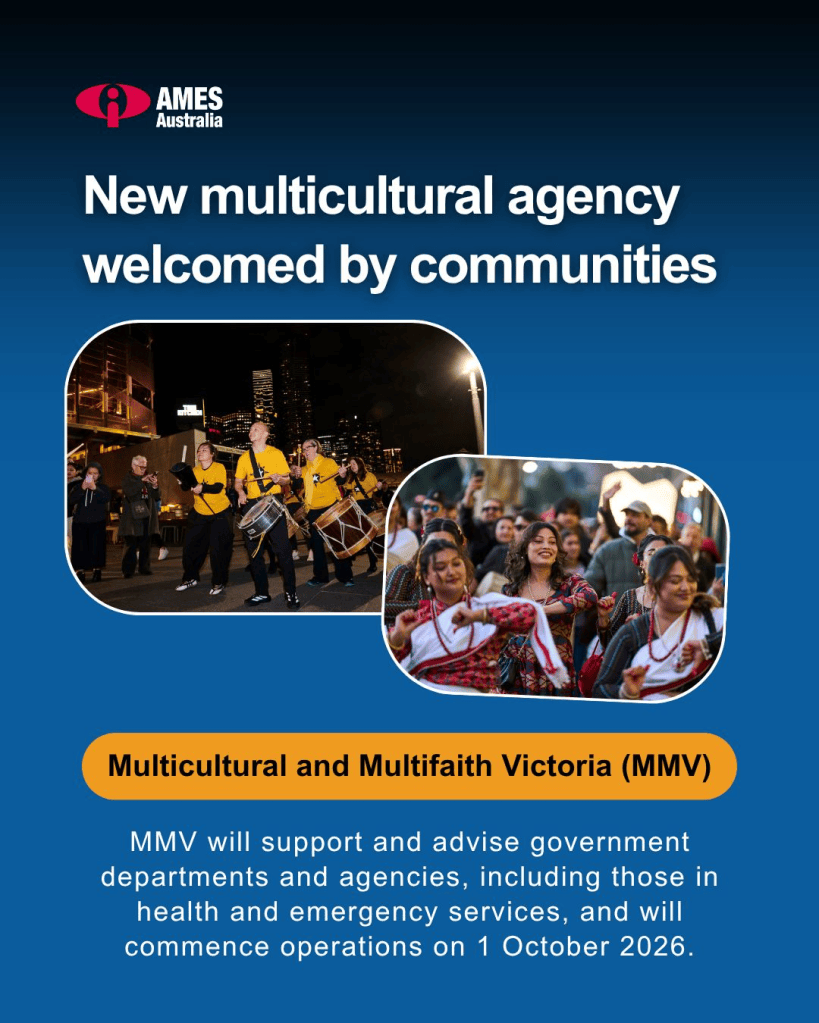
Victoria’s multicultural groups and communities have welcomed the creation of Multicultural and Multifaith Victoria, a new agency aimed at giving diverse communities a stronger voice in government, according to AMES Australia.
The government says the new agency will ensure diverse communities have an independent voice in government to influence policies and programs. Multicultural and Multifaith Victoria will support and advise government departments and agencies, including health and emergency services, and it will commence operations on 1 October 2026.
A Significant Step for Multicultural Victoria
The establishment of Multicultural and Multifaith Victoria marks a major development in how the Victorian Government engages with its diverse communities. For decades, multicultural communities have sought greater representation and a more direct channel to influence the decisions that affect their lives. This new agency is designed to be that channel.
The agency will serve as an independent body, providing advice and support to government departments and agencies across a range of portfolios. Its mandate includes ensuring that the needs and perspectives of multicultural and multifaith communities are considered in the development and delivery of policies and programs — particularly in critical areas such as health and emergency services.
What the Agency Will Do
Multicultural and Multifaith Victoria is expected to play a central role in:
- Advising government on policies and programs affecting diverse communities
- Ensuring independent representation for multicultural and multifaith voices within government
- Supporting government departments and agencies, including health and emergency services, to better serve diverse communities
- Strengthening community engagement and participation in civic life
By embedding these functions within a dedicated agency, the government aims to move beyond consultation toward genuine partnership with the communities it serves.
Commencing 1 October 2026
The agency will officially commence operations on 1 October 2026, a date that marks the beginning of a new chapter in Victoria’s approach to multicultural affairs. Communities and stakeholders are encouraged to stay informed as the agency takes shape and begins its work.
A Welcome Development
The creation of Multicultural and Multifaith Victoria has been welcomed by Victoria’s multicultural groups and communities, who see it as a positive step toward greater inclusion and representation. AMES Australia, a longstanding advocate for multicultural communities, has highlighted the significance of this development.
For communities that have long called for a stronger voice in government, the new agency represents both recognition and opportunity — a chance to shape the policies and programs that impact their daily lives.
Looking Ahead
As Victoria continues to grow as one of the world’s most diverse societies, the establishment of Multicultural and Multifaith Victoria signals a commitment to ensuring that diversity is not only celebrated but actively represented in the corridors of power.
The agency’s success will ultimately be measured by how well it amplifies community voices, influences meaningful change, and helps build a Victoria where every community feels seen, heard, and valued.
To read more about Multicultural and Multifaith Victoria, visit the link shared by AMES Australia.
#AMES #AMESAustralia #Victoria #MMV #VictorianGovernment

Birraa: The Oromo Season of Hope, Renewal, and Prosperity

In Oromo culture, Birraa is more than a season—it is a symbol of hope, renewal, and prosperity. It is a time when the land awakens, communities gather, and hearts are filled with optimism for what lies ahead.
As the rains ease and the fields turn green, Oromos across the homeland and the diaspora are welcoming Birraa — the season of renewal and abundance. It is a time deeply rooted in Oromo tradition, culture, and spirituality, marking the transition from the rainy season to a period of growth, flowering, and new beginnings.
A Season Rooted in Tradition
For generations, Birraa has held a special place in Oromo life. It is the season when the land is at its most fertile, when crops begin to flourish, and when communities come together in celebration of nature’s bounty. It is a time of hope—a reminder that after every rainy season, the sun returns, and with it, new life.
In Oromo culture, Birraa represents:
Hope – The promise of a brighter tomorrow and renewed possibilities.
Renewal – The awakening of nature and the human spirit alike.
Prosperity – The abundance that follows patience, hard work, and faith.
“Baga Birraan Isiniif Barihe!”
This beautiful Oromo greeting captures the essence of the season:
“Baga Birraan isiniif barihe!”
It is a wish that the Birraa season may dawn brightly upon you—bringing hope, blessings, and prosperity. It is a phrase exchanged among family, friends, and neighbours, carrying with it the warmth and generosity that define Oromo culture.
A Time of Community and Connection
Birraa is not only a celebration of nature—it is a celebration of community. Families gather, stories are shared, and traditions are passed down from generation to generation. It is a time to strengthen bonds, express gratitude, and look forward together.
For Oromos in the diaspora, Birraa is also a moment of connection to the homeland—a reminder of the land, the people, and the culture that shaped them, no matter how far they may be from home.
Celebrating Birraa Around the World
From the highlands of Oromia to cities across Australia and beyond, Oromos are marking the season with joy and pride. Whether through gatherings, cultural performances, or simple acts of sharing, the spirit of Birraa transcends borders and unites Oromos wherever they are.
A Message of Hope for All
In a world often marked by challenges and uncertainty, Birraa offers a powerful message: that hope endures, that renewal is always possible, and that prosperity follows those who persevere.
May this Birraa season bring blessings to all Oromos and to all who celebrate the beauty of nature’s cycles.
Happy Birraa season!
Baga Birraan isiniif barihe!

Oromo Community in Melbourne to Hold Memorial for Artist Ilfinash Qannoo in Dandenong

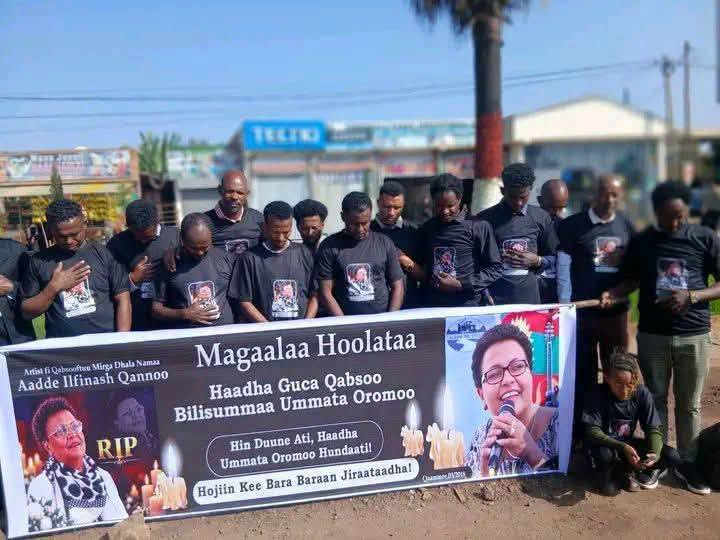
The Oromo Community in Melbourne has announced it will host a special memorial event to honour the life and legacy of the beloved artist and freedom fighter, Ilfinash Qannoo, on September 12, 2026.
The Oromo Community in Melbourne (OCM) has organised a commemorative gathering to celebrate the life and enduring legacy of Artist Ilfinash Qannoo, who passed away recently in Oromia.
The memorial program will take place on September 12, 2026, at Dandenong Harmony Square, beginning at 5:00 PM.
A Celebration of Life and Legacy
Artist Ilfinash Qannoo was more than a performer—she was a symbol of Oromo resilience, unity, and the enduring struggle for freedom. Throughout her life, she dedicated herself to advocating for Oromo liberation, justice, human rights, and gender equality, using her art as a powerful tool for change.
Her passing has been deeply felt by Oromos in Victoria, across Australia, and around the world. The memorial event organised by the OCM offers the community an opportunity to come together, share their grief, and—most importantly—celebrate her remarkable contributions.
A Call to the Community
The Oromo Community in Melbourne has extended a warm invitation to all members of the community and friends of Oromia to attend the memorial gathering:
“Come to Dandenong Harmony Square at 5:00 PM and let us express the love and respect we hold for our artist!”
The event will feature a program of tribute, reflection, and cultural celebration, honouring the life of a woman who gave everything to the Oromo cause.
Event Details
📍 Location: Dandenong Harmony Square, Victoria, Australia
📅 Date: September 12, 2026
⏰ Time: 5:00 PM
Honouring a Heroine
Ilfinash Qannoo’s legacy is one of courage, dedication, and unwavering commitment to her people. Her music and advocacy inspired millions, and her memory continues to unite Oromos across the globe.
The OCM’s memorial event is not only a tribute to her life but a reaffirmation of the values she stood for—unity, justice, and the unyielding pursuit of freedom for Oromia.
A Community United in Remembrance
As Oromos in Victoria gather at Dandenong Harmony Square, they will do so with heavy hearts but also with pride—pride in a woman who represented the very best of Oromo culture, resilience, and hope.
The event promises to be a powerful moment of community solidarity, cultural expression, and collective remembrance.
Join Us
All members of the Oromo community, friends of Oromia, and supporters of justice and human rights are warmly invited to attend.
Let us come together to honour a true heroine of Oromia. Let us celebrate her life, her art, and her enduring legacy. Let us show the world that Ilfinash Qannoo will never be forgotten.
Galatoomaa! — Thank you!
Event Summary:
| Detail | Information |
|---|---|
| Event | Memorial for Artist Ilfinash Qannoo |
| Organiser | Oromo Community in Melbourne |
| Location | Dandenong Harmony Square, Victoria |
| Date | September 12, 2026 |
| Time | 5:00 PM |
Bilisummaan Oromoof!

The Unbroken Ode: Elfinesh Keno’s Life of Resistance and the Legacy She Left in Ambo
By Daandii Ragabaa
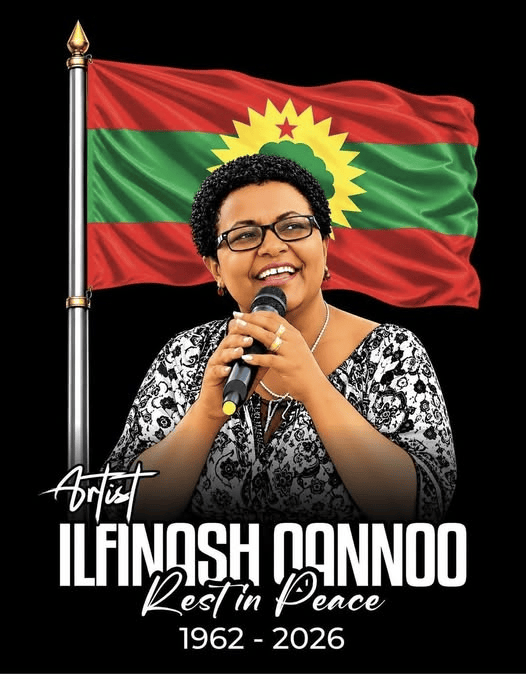
In a world where countless souls bend, break, or sell their dignity for comfort or personal gain, Elfinesh Keno walked through fire and emerged with her value intact. Even in death, her respect stands untouched—a monument to a life lived not for fame, but for freedom. Her art was never mere entertainment; it was resistance. It was a shield. It was a call to conscience.
She was an Oromo singer and cultural icon whose voice rose not for applause but for the rights, equality, and dignity of her people.
The Child of a Legacy
Born into the shadows of a struggle far larger than herself, Elfinesh Keno—known to many as Ilfinash Qannoo—was the daughter of Daraaraa Kafanii. Her lineage traced directly to Obboo Argaw Dinqaa, a towering Oromo patriot, lawyer, and founding father of cultural and political organizations such as Jibatii, Maccaa, and the Waldaa Walgargaarsaa Maccaafi Tuulamaa (WMT). Obboo Argaw was no ordinary man. Imprisoned for his opposition to the H/S government, he emerged from confinement to organize the Grand Oromo Cultural Festival of 1977 in Finfinne. He used culture as a weapon to resurrect Oromo identity and unity.
It was on that stage that young Elfinesh Keno first stepped into the light of history, performing alongside artists like Obboo Tasammaa Nagarii and Aaddee Kuulanii Guddinaa. Her art was a product of that great cultural renaissance—a movement that toured towns such as Asallaa, Waliso, and Naqamtee, where elders like Jaal Nadhii Gammadaa and Jaal Magarsaa Barii worked alongside Obboo Argaw to reinstate the sacred Gadaa system through performance.
A Heroine Forged in the Crucible of Conflict
But the road was never easy. When the Oromo liberation movement intensified, the Derg regime came for its leaders. Obboo Argaw was arrested on October 19, 1978, and later executed. Yet the flame he lit was passed to the next generation—to artists like Daraaraa Kafanii and his daughter, Elfinesh.
In the turbulent years that followed, Elfinesh found herself on the frontline. During a ferocious battle in Burree, Jalduu, in July 1992, between W3O fighters and the Wayyaanee (EPRDF) regime, she and fellow artist Zaruhuun Wadaajoo were captured. They were imprisoned in Ambo’s Karchallee detention center. There, Elfinesh faced the possibility of execution.
Her story at that point offers a stunning glimpse into her character. When the Wayyaanee regime’s OPDO operatives debated executing her, she was saved—not by bending her principles, but by her unwavering association with the Oromo people. Some of those who held her file, knowing the depth of her devotion, feared the wrath of the people so much that they altered her records to avoid carrying out the sentence.
Meanwhile, the people of Ambo acted. They pooled their money and bribed the prison commander, ensuring Elfinesh would not be killed behind bars. When she was finally released, the community welcomed her like a returning queen—taking her to the Daraaraa Kafanii Hotel, where she reunited with elders and fellow fighters. Even in the face of death, she did not run. She chose duty.
Ambo’s Daughter by Choice
One of the most defining moments of Elfinesh Keno’s life came near the end. When she could have chosen to return to her birthplace, to the comfort and familiarity of her early years, she did not. Instead, she chose Ambo—the city whose people once chose to face bullets for her.
Ambo’s masses had refused to let her die. They had stood by her during her darkest hour, chanting for her survival and promising to keep the fight for true freedom alive. In return, Elfinesh honored their bravery with her final resting place. That decision alone speaks volumes about her character.
Her choice reminds us that heroism is not loud; it is consistent. It is not boastful; it is principled. And it is not convenient; it is costly. But Elfinesh Keno paid that cost willingly.
A Lesson for the Wavering
Elfinesh Keno’s life offers a powerful lesson to all who waver, compromise, or forget the weight of responsibility. While many ran for safety, she ran toward duty. While others hid, she stood in the field. While some betrayed their own, she remained truthful to her core.
Her integrity was so complete that she could recognize goodness even in those standing on the opposite side of history—a mark of a true heroine. She taught the cowards and the “gantuus” that she would rather be covered with the flag of resistance, a symbol of freedom, than to live under the shadow of betrayal.
The Eternal Thread
Elfinesh Keno’s story is not an isolated one. It is a thread in a larger tapestry of Oromo resistance and cultural preservation. In her, we see the face of Obboo Argaw Dinqaa. Through her, we hear the voices of Jaal Nadhii Gammadaa, Jaal Magarsaa Barii, Jaal Abboomaa Mitikkuu, and countless unnamed heroes who gave their lives for Oromummaa.
Her passing is a heartbreak—”Bool’akee bookni haa guutu,” as the Oromo poet wrote. Yet she did not die in vain. She passed away with her value intact, her respect untouched, and her legacy eternal.
May her memory continue to guide her people.
May her courage continue to inspire future generations.
May her integrity remain a mirror for all who claim to serve the truth.
Stand for Something
Elfinesh Keno’s final chapter reflects her deepest values: the pursuit of truth, the protection of dignity, and the unwavering commitment to her people. In the end, she was not just an artist or a performer—she was a symbol of what it means to live with purpose and die with honor.
Her voice may be silent now, but the melody of her resistance will echo forever.
Stand for something.
Live truthfully.
Protect your dignity.
Let your final chapter reflect your deepest values.
Elfinesh Keno—Ilfinash Qannoo—passed away with her value intact.
Her respect untouched.
Her legacy eternal.

Veteran Oromo Artist and Freedom Fighter Ilfinesh Qannoo Honored with Grand Memorial Concert in Finfinne
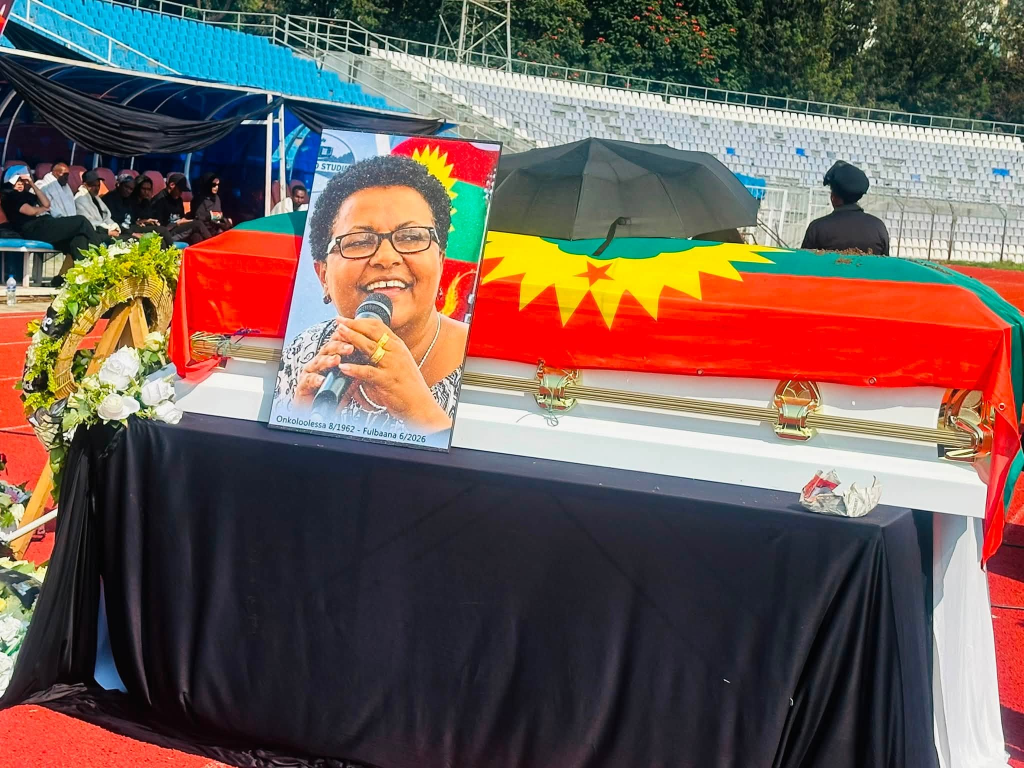
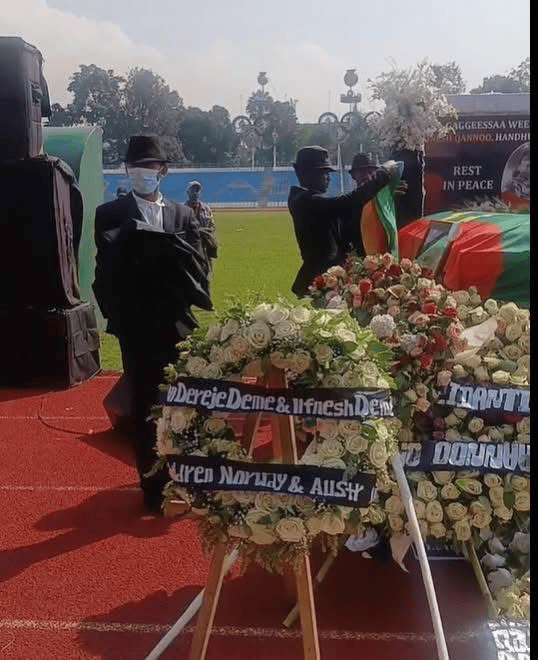
(FINFINNEE, Oromia, 8 September 2026) – In a powerful display of cultural pride and historical remembrance, a grand memorial concert was held today at Addis Ababa Stadium to honor the life and legacy of the legendary artist and freedom fighter, Ilfinesh Qannoo.
Born in 1962 in the Gutoo Giddaa district of East Wallagga, Ilfinesh Qannoo was a figure of immense courage from her earliest days. Her journey into the arts began in her childhood, but it was her unwavering commitment to the unity and identity of the Oromo people that would define her life’s work.
A Star Rises in Wallagga
Ilfinesh Qannoo first showcased her extraordinary talent by joining the Great Wallagga Cultural Troupe, where she quickly rose to prominence as a star. Her performances radiated bravery, talent, and a deep connection to her roots.
After relocating to the capital, Addis Ababa, she became a voice of resistance during a dark period in Ethiopian history. Her music, carried by Oromo Radio, became an anthem of unity and resilience for the Oromo people, a beacon of hope amid political repression. She used her art as a weapon of consciousness, never shying away from the struggle, even as she endured immense hardship, including imprisonment and torture.
A Legacy in Music and Struggle
Throughout her career, Ilfinesh Qannoo produced over ten albums, which continue to resonate widely. Her songs remain timeless anthems that advocate for Oromo unity and envision a progressive future for the Oromo people. Her voice was not just an instrument of entertainment, but a clarion call for political and social change.
Beyond the stage, she was a mother to four daughters—having given birth to two and raising two others—and was a matriarch whose life embodied the spirit of the Oromo woman. Her personal and professional journey reflected the broader narrative of her people’s struggle and perseverance.
Her Final Wish
Ilfinesh Qannoo passed away on September 6, 2026, at the age of 64. In a poignant farewell message, she left a powerful wish that continues to echo in the hearts of her followers:
“If my body can serve to unite the Oromo people, bury me in Ambo. If not, let my remains rest in the cold of Norway.”
Today, her funeral service is also being held in Ambo, fulfilling a portion of her solemn request.
Today’s Ceremony
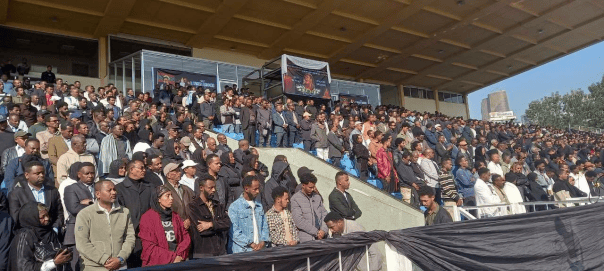
Today’s memorial event at Finfinne Stadium brought together a massive crowd, including federal and Oromia regional state officials, family members, relatives, admirers, and Oromo people from various parts of the region. The concert served as a final tribute to an icon whose art and activism left an indelible mark on the cultural and political fabric of the Oromo nation.
As the nation honors her legacy, Ilfinesh Qannoo remains a symbol of resilience—a voice that continues to inspire future generations through the power of her timeless art and defiant spirit.

A Life Worth Celebrating—A4O Calls for Honor, Not Grief, for Artist Ilfinash Qannoo
By Our Correspondent
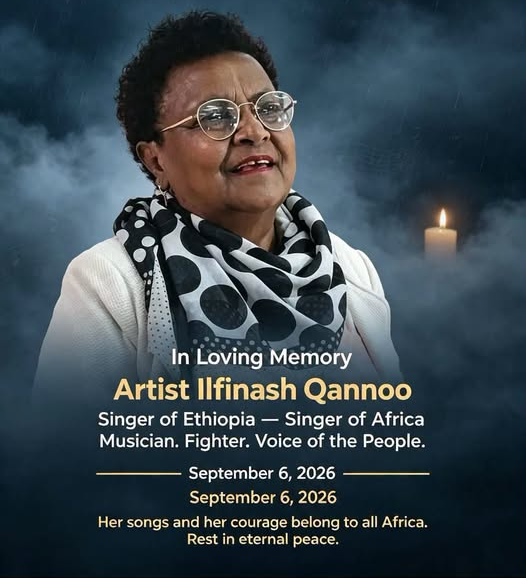
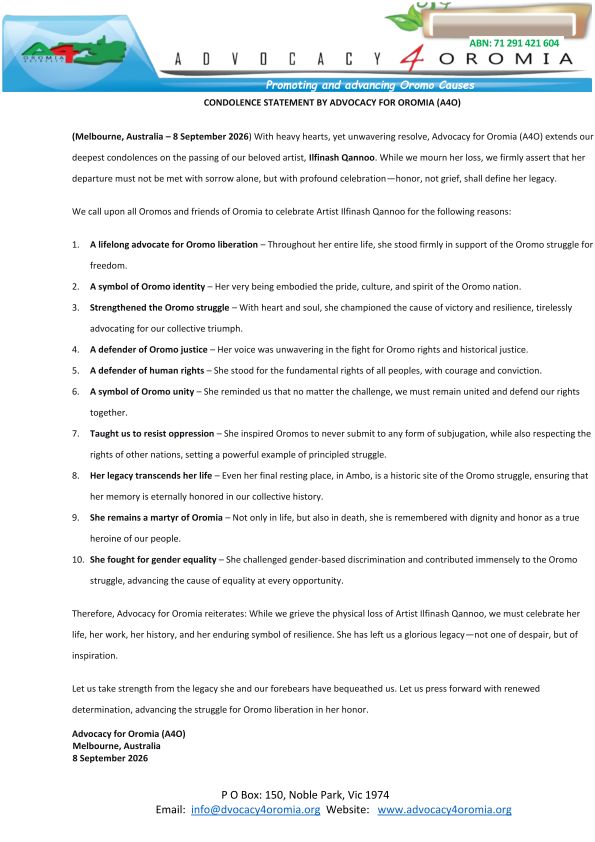
(Melbourne, Australia – 8 September 2026)-In a poignant and powerful statement released today, Advocacy for Oromia (A4O) has called on Oromos and friends of the struggle worldwide to transform mourning into celebration for the late artist and freedom fighter, Ilfinash Qannoo.
The Melbourne-based advocacy group, speaking from their Australian headquarters, emphasized that while the loss of the beloved artist is deeply felt, her life, legacy, and unwavering commitment to the Oromo cause demand a response of honor rather than sorrow.
A Life Dedicated to Liberation
Ilfinash Qannoo was no ordinary artist. According to A4O, she was a steadfast pillar of the Oromo liberation movement, dedicating her entire life to the struggle for Oromo self-determination. Her artistry was not merely entertainment—it was resistance. Her voice was not just melody—it was a clarion call for justice.
“Artist Ilfinash Qannoo spent her whole life supporting and advancing the Oromo struggle for freedom,” the statement reads, positioning her among the most committed cultural warriors of her generation.
More Than an Artist—A Symbol
A4O’s statement highlights ten compelling reasons why Ilfinash Qannoo’s legacy must be celebrated:
A Symbol of Oromo Identity: She embodied the pride, dignity, and cultural richness of the Oromo nation. Her very presence was a testament to Oromo resilience and identity.
Champion of Justice: She was a fearless defender of Oromo rights, human rights, and gender equality. She challenged oppression in all its forms and stood against discrimination, including gender-based injustice.
Unifier of the Oromo People: At a time when division threatens the struggle, Ilfinash Qannoo stood as a powerful symbol of Oromo unity, reminding her people that solidarity is the foundation of victory.
Teacher and Inspiration: Through her life and work, she taught Oromos to resist subjugation with dignity, while also respecting the rights of other nations—a rare and powerful example of principled advocacy.
Martyr for the Cause: Her final resting place in Ambo is now etched into the historical landscape of the Oromo struggle. Her grave, like her life, has become a site of memory and honor.
A Legacy That Transcends Death
Perhaps the most striking aspect of A4O’s tribute is the assertion that Ilfinash Qannoo’s impact extends far beyond her lifetime. She did not simply live for Oromia; she ensured that even in death, she would remain a rallying figure for the movement.
“She left us not with despair, but with a glorious legacy,” the statement declared. “We are called to take strength from what she and our forebears have left us, and to rededicate ourselves to the struggle with renewed vigor.”
A Call to Action, Not Lamentation
In what can be described as a clarion call to the Oromo diaspora and the wider movement, A4O urged supporters to channel their grief into action. The organization stressed that the most fitting tribute to Ilfinash Qannoo is not tears, but a renewed commitment to the goals she championed.
“We must celebrate her life, her work, her history, and her enduring symbol of resilience,” the statement emphasized. “Let us march forward in her honor, advancing the struggle for Oromo liberation with determination and unity.”
Global Reach of the Statement
Issued from Melbourne, Australia, on 8 September 2026, the statement reflects the global nature of the Oromo struggle and the far-reaching influence of cultural icons like Ilfinash Qannoo. A4O’s message transcends geographic boundaries, speaking directly to Oromos in the homeland and across the diaspora.
The advocacy group concluded with an unwavering declaration: “Victory to Oromia!” —a fitting epitaph for a woman whose life was dedicated to that very cause.
Historical Context
Ilfinash Qannoo’s passing marks the end of an era in Oromo cultural and political history. She was among a generation of artists who used their craft as a weapon of resistance, challenging the status quo and inspiring millions. Her death is not just a loss of talent, but the departure of a moral compass for a movement in constant pursuit of justice.
As Oromos around the world reflect on her legacy, A4O’s message is clear: Grieve, yes—but more importantly, celebrate. Honor her by carrying the torch she has passed on.
About Advocacy for Oromia (A4O): Based in Melbourne, Australia, A4O is a diaspora advocacy organization committed to advancing the rights, justice, and self-determination of the Oromo people through awareness, advocacy, and solidarity initiatives.
“We mourn her loss, but we celebrate her life—for in her, Oromia found a voice that will never be silenced.”

A Voice Silenced, A Legacy Eternal – Oromo Community in Melbourne Mourns Artist Elfinesh Keno
By OCM Media & Communications
(MELBOURNE, Victoria – 7 September 2026)-A profound stillness has fallen over the Oromo community in Australia and beyond. The melodious voice that once gave life to Oromo heritage, that carried the hopes, joys, and struggles of a proud nation across generations, has fallen silent.
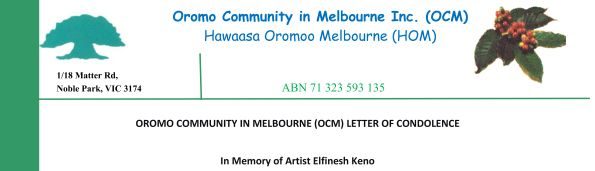
Artist Elfinesh Keno, a beloved cultural icon whose artistry became the heartbeat of Oromo identity, passed away recently, leaving behind a legacy that transcends time and geography. The Oromo Community in Melbourne (OCM), on behalf of its members and the wider Oromo diaspora across Victoria and Australia, has issued an official letter of condolence, mourning the loss of a woman who was far more than an entertainer—she was a guardian of culture, a storyteller of the people, and a beacon of inspiration.
A Life Dedicated to Oromo Culture
Born into a world where Oromo culture, language, and traditions faced immense pressures, Elfinesh Keno rose as a defiant yet graceful voice of resilience. Through her music, she celebrated the beauty of Oromo heritage—its poetry, its rhythms, and its profound connection to identity. Her songs were not mere performances; they were living archives of a people’s history, a mirror reflecting their collective aspirations and an anthem of their enduring spirit.
From the vibrant stages of Ethiopia to the community halls of the diaspora, Elfinesh’s artistry resonated with Oromos everywhere. Her voice became a bridge—connecting the homeland with the scattered children of Oromo, reminding them that no matter how far they travelled, their roots remained strong and their culture unbroken.
More Than Music: A Cultural Pillar
The OCM’s condolence letter describes Elfinesh Keno as a “revered cultural figure” whose work “transcended entertainment.” Indeed, her contributions went far beyond the recording studio or the concert stage. She was a mentor to young artists, a symbol of pride for Oromo women, and a tireless advocate for the preservation of Oromo language and traditions.
Through her lyrics, she wove together the threads of history—celebrating heroes, lamenting injustices, and envisioning a future where Oromo identity flourishes without fear. Her music became a source of strength during times of hardship and a soundtrack for moments of celebration.
A Global Outpouring of Grief
In the days following her passing, tributes have poured in from Oromo communities across the globe. From Melbourne to Minneapolis, from London to Addis Ababa, fans, fellow artists, and cultural leaders have expressed their sorrow and gratitude for the gifts she left behind.
The Oromo Community in Melbourne, standing in solidarity with Oromo communities worldwide, has reaffirmed its commitment to preserving the cultural legacy that Elfinesh Keno so passionately championed. In their condolence message, the OCM honoured her “life, achievements, and service to Oromo culture,” vowing to carry forward the torch she so brightly lit.
A Legacy for Future Generations
Elfinesh Keno’s enduring contributions will continue to echo through the songs she sang, the stories she told, and the values she embodied. Her legacy is not merely one of artistic excellence but of cultural stewardship. She reminded the Oromo people that their identity is a treasure worth protecting, their language a gift worth speaking, and their history a story worth telling.
As the OCM noted in their letter, the role of artists like Elfinesh Keno “in preserving and promoting our cultural heritage” is vital. Her life’s work has laid a foundation upon which future generations can build, dream, and create.
Farewell to a Beloved Daughter
To her family, friends, and fellow artists, the Oromo community extends its deepest sympathy and prayers. Words cannot fill the void her passing has left, but the memories she created—and the impact of her life’s work—will provide comfort and strength in the days ahead.
The Oromo Community in Melbourne, in its letter of condolence, expressed a hope that her family “may find strength, comfort, and peace in the cherished memories they shared and in the lasting impact of her life’s work.”
Eternal Peace, Enduring Inspiration
As the sun sets on the life of Artist Elfinesh Keno, a new dawn rises in her honour. Her voice may have fallen silent, but its echoes will never fade. Her songs will continue to be sung, her legacy will continue to inspire, and her spirit will forever remain woven into the fabric of Oromo identity.
May Artist Elfinesh Keno rest in eternal peace, and may her memory continue to inspire generations to come.
Oromo Community in Melbourne (OCM)
1/18 Matter Rd, Noble Park, VIC 3174
Melbourne, Victoria, Australia
7 September 2026
For media inquiries or further information, please contact the Oromo Community in Melbourne oromocentre@gmail.com