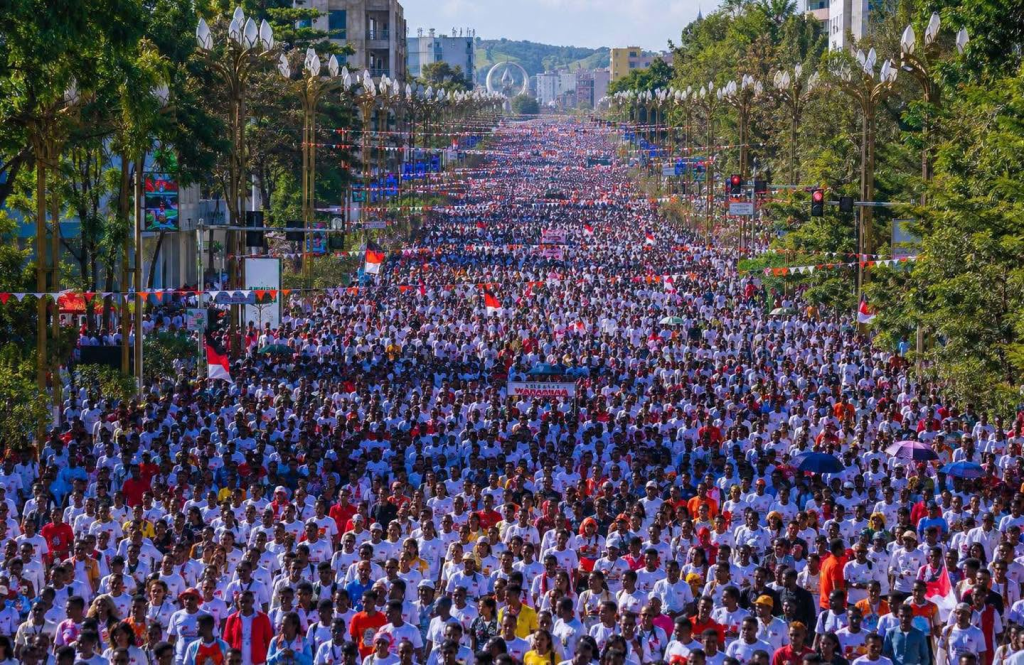
Category Archives: gadaa

Dr. Taaddasaa Eebbaa (Gadaa Meelbaa): The Visionary Who Breathed Life into Ethiopia’s Biodiversity Legacy
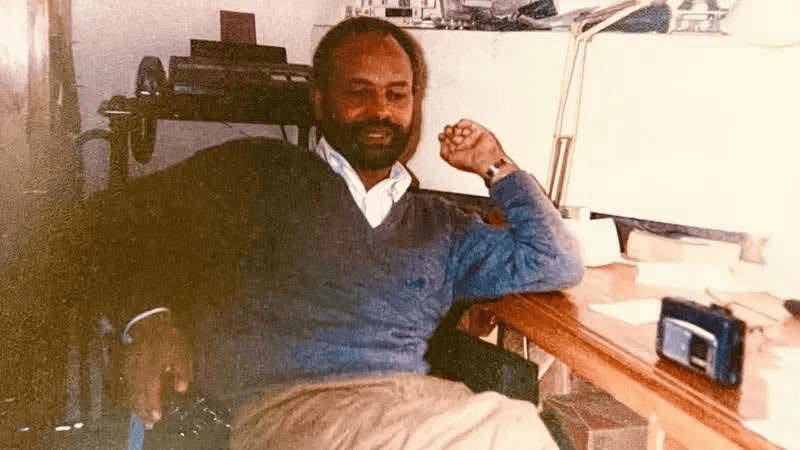
By Dhabessa Wakjira
In the annals of Ethiopian and Oromo history, few figures embody the rare combination of scientific brilliance, political conviction, and unwavering sacrifice as profoundly as Dr. Taaddasaa Eebbaa. Known affectionately by many names—Dr. Fidoo, Doktoree, and most famously in literary circles as Gadaa Meelbaa—this remarkable scholar, freedom fighter, and author left an indelible mark on his nation’s scientific and political landscape before his passing on May 1, 2022, in Washington, D.C.
Humble Beginnings, Extraordinary Vision
Born in Najjoo, in the West Wallagga region, Dr. Taaddasaa’s journey from a young student in his hometown to an internationally recognized geneticist reads like a testament to the power of determination. He completed his primary education in Najjoo before pursuing his secondary studies in Jimma—a journey that would set the stage for an extraordinary academic career.
His first degree in agriculture from Alemaya College (now Haramaya University) marked the beginning of a lifelong dedication to understanding and preserving Ethiopia’s natural wealth. Not content with domestic excellence, Dr. Taaddasaa pursued his master’s and doctoral degrees at universities in the United States and the United Kingdom, specializing in genetics—a field that would become central to his life’s work.
The Architect of Ethiopia’s Biodiversity Conservation
The 1970s found Dr. Taaddasaa teaching at Haramaya University before joining the Ministry of Agriculture as a researcher. It was during this period that his visionary leadership would leave an enduring legacy on Ethiopian science.
As the director of a groundbreaking research project dedicated to studying Ethiopia’s plant genetic resources, Dr. Taaddasaa didn’t merely participate in scientific inquiry—he fundamentally shaped it. The institution that would eventually become the Ethiopian Biodiversity Institute (EBI) stands as a monument to his foresight and dedication.
According to historical accounts, Dr. Taaddasaa was not just a founding member but the intellectual force behind the establishment of this crucial institution in 1978, initially named the Plant Genetic Resource Centre of Ethiopia. Professor Endashaw, a former colleague, emphasizes this point with conviction: “Everything was initiated by Taaddasaa. Nothing was added. They removed him from the institution’s history. From all of us, they bought it from there.”
The institution’s original location near present-day Embasi, Kenya, was selected under Dr. Taaddasaa’s guidance—a decision that reflected his deep understanding of Ethiopia’s ecological diversity and its importance for global food security.
When Science Met Politics
Dr. Taaddasaa’s brilliance extended beyond the laboratory. His passion for Oromo culture and identity led him to help organize the first Oromo cultural showcase at the National Theatre in the 1970s—an act of cultural preservation that foreshadowed his later political engagement.
The political repression of the Derg regime did not spare this distinguished scientist. Historical accounts document that he was imprisoned twice in 1979 for his activities. The political pressure became unbearable, forcing Dr. Taaddasaa to make the heart-wrenching decision to leave his work and family behind in Finfinne, escaping through Assosa to Sudan at the end of 1979. From there, he joined the Oromo Liberation Front (OLF), beginning a new chapter in his life of service.
Dr. Shuggux Galataa Qondaalaa, a former OLF leader who knew Dr. Taaddasaa intimately, recalls his political journey: “He was among those who participated in founding the OLF. He took part in the secret meeting held in Finfinne on June 11, 1976. Everyone who participated in that meeting continued as members of the central committee, and Dr. Taaddasaa continued the struggle from then on.”
Sacrifices Beyond Measure
The personal cost of Dr. Taaddasaa’s commitment to freedom was staggering. His wife, Aadde Addisaalem Gannat, was imprisoned for over ten years during the Derg regime, finally released in 1988. His young son, barely two years old, died from neglect—a tragedy that haunts the pages of his life story. His daughter Urjii remains as a testament to a family that paid dearly for their convictions.
“Taaddasaa is not just someone with a good mind, but someone who thinks of others. Someone who thinks of his country,” reflects Professor Endashaw. “If he had stayed in science, he would have been a star researcher. What is past cannot be returned.”
Within the OLF, Dr. Taaddasaa’s contributions were equally significant. He served as a member of the Political Bureau after the 1988 leadership transition and contributed to the Biree Diplomaasii—a foundational document for the organization’s diplomatic strategy. His journey of exile took him through Khartoum, Germany, and finally to the United States, where he lived until his death.
The Pen That Awakened a Nation
Perhaps Dr. Taaddasaa’s most enduring contribution to Oromo consciousness came not through politics or science, but through literature. In 1988, while in Khartoum, he published “Oromia”—a book that would become a cornerstone of Oromo national awakening.
Published under the pseudonym Gadaa Meelbaa, the book’s authorship remained a mystery to many for years. The text, later translated into both Afaan Oromoo and Amharic, comprehensively addressed Oromia’s resources, culture, traditions, historical oppression, and the challenges facing the Oromo people.
Bulii Ejjetaa, who was a university student when the book was published, recalls its transformative impact: “We saw that book as a ‘pill of freedom.’ It asked us clearly: What is Oromia? Where is it located? What does it have? What has it been through? We shared it and discussed it at university. After joining the struggle, we used it to educate our people.”
The book served as a consciousness-raising tool for countless young Oromos, many of whom had been disconnected from their cultural identity. “For students who didn’t know their Oromummaa, we would say, ‘Give this child that pill,'” Bulii remembers. “That book was a pill for strengthening Oromummaa and nationalism.”
Years after its publication, when Dr. Taaddasaa’s authorship became known, he transferred the book’s rights to the Oromo people and the OLF—a final act of generosity from a man who had given everything.
An Unacknowledged Legacy
Despite his monumental contributions, Dr. Taaddasaa’s role in founding the Ethiopian Biodiversity Institute has been systematically erased from official narratives. Five years after he established the institution, records began crediting someone else with its founding.
This erasure of his legacy represents a broader pattern of historical amnesia that has obscured the contributions of Oromo intellectuals to Ethiopian national development. Yet those who knew him and benefited from his work ensure his memory endures.
A Life of Purpose, A Legacy of Inspiration
Dr. Taaddasaa Eebbaa’s life represents the intersection of scientific excellence and political conviction—a rare combination that produced lasting change in multiple spheres. He was a geneticist who understood that preserving Ethiopia’s biodiversity was essential for the nation’s future. He was a freedom fighter who believed that the Oromo people deserved dignity, self-determination, and cultural recognition. And he was an author whose words awakened a generation.
In his final years, Dr. Taaddasaa returned to Ethiopia briefly when the OLF transitioned to peaceful political participation, serving as an advisor to the organization. His journey had come full circle—from a young student in Najjoo to an internationally recognized scientist, from a political prisoner to a freedom fighter, from an exiled author to a respected elder statesman.
He passed away on May 1, 2022, in Washington, D.C., after a long illness, leaving behind his daughter Urjii and a legacy that transcends the boundaries of science, politics, and literature.
Dr. Taaddasaa Eebbaa—Gadaa Meelbaa—reminds us that true greatness lies not in what we accumulate but in what we give. He gave his scientific genius to Ethiopia’s biodiversity, his political passion to Oromo liberation, and his literary gift to a people hungry for self-knowledge. In doing so, he became more than a scholar or a revolutionary—he became a pillar of Oromo memory, a testament to what one person can accomplish when guided by love for people and country.
His story deserves to be told, retold, and never forgotten—not merely as a historical record, but as an inspiration for generations yet to come. For in remembering Dr. Taaddasaa Eebbaa, we remember what it means to live with purpose, to sacrifice with dignity, and to leave the world better than we found it.
—
This feature article honors the life and legacy of Dr. Taaddasaa Eebbaa (Gadaa Meelbaa), whose contributions to Ethiopian science, Oromo liberation, and literature continue to inspire.

The Thirst of Moyale: How Politics and Power Threaten the Sacred Wells of the Borana

By Daandii Ragabaa*
In the dry, unforgiving expanse of the Ethiopia-Kenya borderlands, water is not just a resource; it is the architecture of existence. For the Borana Oromo people, water is life, identity, and law. It is enshrined in the Tuula Saglan Booranaa—the Nine Sacred Water Wells—whose sanctity is still invoked in public blessings and whose historical significance was meticulously archived by British colonial anthropologists as “vital for the survival of the Borena tribes.”
Yet today, these ancient lifelines are at the center of a bitter, decades-long geopolitical struggle. Through the lens of a book written two years before the fall of the EPRDF regime by Obboo Alaka Simbiru, a former Governor of the Borena Zone, a troubling narrative emerges. It is a story of how the manipulation of borders, the politics of identity, and the heavy hand of the military eroded Borana autonomy and facilitated the capture of sacred resources by immigrant Somali groups.
A Border Drawn in Sand and Blood
The origins of the current crisis in Moyale can be traced back to the arbitrary drawing of colonial borders. As the book documents, the 1907 Anglo-Ethiopian treaties artificially divided the Borana people, splitting their traditional grazing lands and water sources between Ethiopia and Kenya. Moyale, located exactly 770 kilometers from Addis Ababa, became a divided town—a “twin city” straddling two nations.
For decades, this division was navigated through traditional governance. According to historical records and oral traditions cited in the text, the Borana managed their water sources through a deeply democratic system, rooted in the Gadaa system and governed by councils of elders. Under Emperor Haile Selassie and later the Derg regime, special administrative arrangements (like the Dembi Dollo and Goba systems) allowed the Borana to maintain relative control over their wells and grazing lands.
But the ascension of the TPLF-led EPRDF regime brought a seismic shift. The new government reorganized the country into ethnic federalism, redrawing internal boundaries and creating a volatile administrative reality on the ground.
The Anatomy of Dispossession
In 1991 and 1992, Moyale found itself at the center of a regional power struggle. The TPLF, consolidating its control over the south, established new administrative boundaries that placed the Borana and Somali communities in fierce competition for resources.
According to Simbiru’s account, the TPLF government did not merely redraw maps; it altered the demographic and political reality through force. The text highlights how the government systematically disarmed the local Borana population—leaving them defenseless—while allegedly arming and supporting immigrant Somali tribes, including groups crossing from neighboring countries.
The result was catastrophic for the Borana. As the book explicitly outlines, under the watch of TPLF military generals who controlled the region, two of the nine sacred Tuula Saglan Booranaa wells fell into the hands of these immigrant groups. This was not a natural migration, but a politically engineered displacement.
A Well is Cattle. A Well is Wife. A Well is Family.
To an outsider, the loss of two wells might seem like a minor logistical setback. But in Borana cosmology, the wells are sacred. They are the physical manifestation of a covenant between the people, their cattle, and Waaqa (God). “The well is cattle. The well is wife. The well is family,” the Borana say.
Access to these wells is governed by nagaa Boran—the peace and moral order of the Borana—which demands that no one is denied water. However, the political capture of the wells by rival groups, backed by military force, shattered this order.
The text details how the TPLF’s “divide and rule” tactics weaponized water and land. Borana politicians and elders who attempted to advocate for their people were systematically marginalized. The text notes that the Ethiopian government of the time pursued a deliberate strategy of “population settlement” and administrative gerrymandering to weaken the Borana demographic majority, thereby ensuring that the region’s resources were controlled by groups aligned with the central government.
The Echoes of LAPSSET and the Fight for the Future
Today, Moyale is no longer just a pastoral backwater; it is a strategic geopolitical node. The town is slated to be a major hub in the LAPSSET (Lamu Port-South Sudan-Ethiopia Transport) corridor. The promise of oil pipelines, highways, and international trade has made control of Moyale and its surrounding lands immensely valuable.
The historical grievances documented by Simbiru provide the necessary context for the intermittent violence that continues to plague the region. When communities feel that their sacred sites have been stolen and their traditional governance dismantled by state-backed forces, peace becomes elusive.
The River of Blessings, an essay written in honor of the late British anthropologist Dr. Paul Baxter, documented the resilience of Borana culture. But resilience has limits.
The story of Moyale is a cautionary tale about what happens when state power ignores traditional sovereignty and tramples on sacred ecology. As the Borana elders continue to recite the blessings of the Nine Sacred Wells, two of those names are now spoken with a sense of mourning and dispossession. The water still flows, but for the Borana, the moral order of the land remains broken.
Until the grievances of the past—the arbitrary borders, the militarized disarmament, and the stolen wells—are addressed with historical honesty, Moyale will remain a powder keg on the edge of the Horn of Africa. The thirst of the Borana is not just for water; it is for justice.
Daandii Ragabaa is a journalist covering the Horn of Africa, with a focus on land, water, and conflict in borderland communities.

53 Years of Oromo Freedom Struggle, 53 Years of Impact
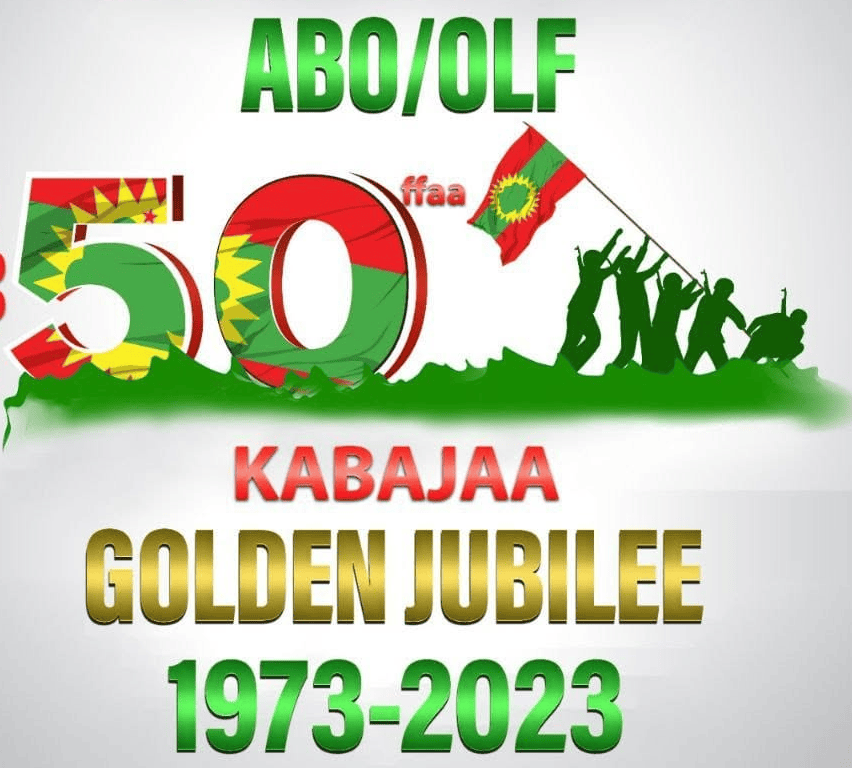
Half a century after a small band of nationalists took up the Oromo cause, the movement has transformed the political landscape of Ethiopia—even without achieving the independent state it once sought. Its deepest impact lies not in territorial control, but in the irreversible awakening of a people who can no longer be governed as before.
The Oromo Liberation Front was founded in 1973, emerging from the ferment of Oromo student activism and the memory of the banned Mecha-Tulama Self-Help Association . What began as a clandestine project among intellectuals would, over five decades, become the central axis of Ethiopian political contestation—not because it won, but because the questions it raised about identity, land, and power could never again be buried.
The early years were defined by armed insurgency and brutal repression. The OLF established itself as a guerrilla force operating across Wollega, Bale, and Hararghe, drawing recruits from peasants who had watched the imperial and then Derg regimes dispossess and marginalize them . The Derg’s response was predictable and catastrophic: mass arrests, executions, and a campaign of terror that killed thousands accused of harboring OLF sympathies. Yet repression produced what it so often does—martyrdom, recruitment, and an enduring sense of grievance that outlasted the gun.
The movement’s most significant impact, however, came not on the battlefield but in the realm of consciousness. The OLF’s founding vision articulated something that had been suppressed for generations: that the Oromo were a nation, not merely a labor force or a demographic majority to be managed. This idea, once planted, proved impossible to uproot. Even after the OLF was pushed out of the transitional government in 1992 and reduced to a marginal political actor, the seeds of Oromo nationalism continued to grow underground .
The eruption came in 2014, when the Qeerroo—Oromo youth—took to the streets over the Addis Ababa master plan, a policy they saw as another chapter in a long history of land dispossession. The protests spread, intensified, and by 2018 had forced the ruling coalition to install Abiy Ahmed, an Oromo, as prime minister . It was a remarkable inversion: a ruling party that had once sought to contain Oromo nationalism now depended on Oromo street power to survive.
The human cost of this struggle has never been abstract. In 2020, the assassination of Hachalu Hundessa, a musician whose lyrics had given voice to a generation’s anger and longing, triggered days of unrest that left at least 166 people dead, according to police figures . Hachalu’s music had become an instrument of the movement itself—his songs were sung at protests, his death a rallying cry. The violence that followed exposed how fragile the gains remained and how deeply the wounds of marginalization had festered.
Fifty-three years on, the struggle’s landscape is fractured. The OLF split in 2018, with its political wing entering legal politics and its armed wing—the Oromo Liberation Army—continuing an insurgency that the government has designated as terrorism . Peace talks between the government and the OLA have repeatedly collapsed, with Addis Ababa accusing the rebels of “unrealistic demands” and the OLA charging the government with seeking co-optation rather than addressing root causes . Meanwhile, the regional government in Oromia pursues a dual track: encouraging surrender through elders and Abba Gadas while waging military operations against those who refuse .
Yet the struggle’s most enduring legacy may lie elsewhere—in the cultural and intellectual infrastructure that no military campaign can dismantle. The Gada system, the indigenous Oromo governance structure that regulates political, social, and religious life through rotating eight-year cycles, was inscribed on UNESCO’s Representative List of the Intangible Cultural Heritage of Humanity in 2016 . What was once dismissed or ignored by the Ethiopian state is now recognized globally as a sophisticated democratic tradition. Oromummaa—the articulation of Oromo peoplehood and identity—has become a force in Ethiopian politics that no government can afford to ignore .
What, then, does 53 years of impact look like? It looks like a language once suppressed now spoken in parliament. It looks like a youth movement that toppled a prime minister and then grew disillusioned with his successor. It looks like a struggle that began as a separatist insurgency and became, instead, a permanent renegotiation of what Ethiopia means. The OLF’s founding dream of an independent Oromia has not been realized. But the conditions that made that dream thinkable—a people conscious of their history, their numbers, and their rights—have become irreversible.
The next chapter remains contested. The government insists the answer is peace and reintegration. The OLF’s political wing insists it is negotiation. The OLA insists it is continued resistance. The Qeerroo, who inherited a struggle they did not start, wait to see which vision will prevail. What is certain is that 53 years after a handful of nationalists took up the Oromo cause, the question they raised is no longer a question at all. It is a fact of Ethiopian life, and it will not be resolved by ignoring it.

16 Years of Advocacy for Oromia, 16 Years of Impact

Marking a Milestone of Dedication, Resilience and Progress
For 16 years, the cause of Oromia has been carried forward with unwavering commitment — through advocacy, community engagement and a steadfast belief in justice, dignity and development for the Oromo people. Today, we mark 16 years of advocacy and 16 years of impact.
What began as a shared vision among a dedicated few has grown into a sustained movement built on perseverance, solidarity and the collective voice of a community determined to be heard. Over these 16 years, advocacy for Oromia has taken many forms — raising awareness, amplifying community concerns, fostering dialogue, and championing the rights and aspirations of the Oromo people both at home and in the diaspora.
The impact of this work is reflected not only in the milestones achieved, but in the lives touched, the voices empowered and the awareness built across communities. Each year has brought new challenges, and each challenge has been met with renewed resolve. Through it all, the commitment to Oromia’s future has remained constant.
This milestone belongs to everyone who has contributed to the journey — the advocates, the community members, the partners and the supporters who have stood together over the years. Your dedication has made a difference, and your efforts continue to shape a brighter path forward.
As we celebrate 16 years of advocacy and 16 years of impact, we look ahead with hope and determination. The work continues, and so does the vision of a prosperous, peaceful and dignified Oromia.
Here’s to 16 years of dedication — and to the many years of impact still to come.
16 Years of Advocacy for Oromia. 16 Years of Impact.
World of Africa: Tens of Thousands Gather in Addis Ababa for Irreecha, Calls for Peace Ring Out
Africa’s largest indigenous thanksgiving festival brings a sea of white and color to the capital, as participants use the ancient celebration to demand an end to Ethiopia’s conflicts.

(WorldOfAfrica, Addis Ababa — October 3, 2026) Tens of thousands of Oromo people flooded the sacred grounds of Hora Finfinnee in Addis Ababa on Saturday morning, transforming the heart of the Ethiopian capital into a spectacular display of culture, tradition, and spiritual devotion.
The annual Irreecha thanksgiving festival, celebrated at the end of the rainy season and the beginning of the harvest, brought together participants from across Oromia, other regions of Ethiopia, and the diaspora. Dressed in vibrant traditional attire, they gathered at the water’s edge to offer prayers of gratitude to Waaqa, the Creator, through singing, dancing, and ancient rituals.
A Sea of Color and Tradition
From the early morning hours, hundreds of thousands of people converged on Hora Finfinnee, filling the celebration grounds with music, blessings, and a powerful sense of cultural pride. The festival’s sea of colors, traditional costumes, and synchronized dances created what observers described as a spectacular cultural scene in the heart of Addis Ababa.
Abbaa Gadaas — traditional Oromo leaders — elders, youth, and guests from diverse backgrounds joined the celebration, showcasing the richness and diversity of Oromo cultural heritage. The festival also reflects the enduring values of the Gadaa system, the traditional Oromo governance structure recognized by UNESCO as an Intangible Cultural Heritage of Humanity.
Participants carried fresh green grass and yellow Adey Abeba flowers to the water, dipping them into the sacred waters and sprinkling them as blessings for the land, cattle, and people — symbols of fertility, renewal, and hope.
Calls for Peace Amid Ongoing Conflict
But this year’s celebration carried a weightier message. As the festival unfolded, participants and elders used the occasion to call for an end to the conflicts plaguing various parts of Ethiopia.
The gathering took place amid reports that federal forces had entered Mekelle, the capital of the northern Tigray region, escalating fears of renewed conflict.
“Even though peace has been disturbed in the past years, the Oromo are now celebrating Irreecha beautifully, but there are wars in various places,” said student Simert Ababa. “I say that needs to be stabilised as much as possible, and this government has a role in that. Children should not miss their education, mothers should not be harmed, children should not be harmed.”
Bilise Mohammed, another student, echoed the sentiment: “For those in the north, create an agreement so the war stops. To the government and to those who are fighting, peace comes first. The people are the ones that are dying, this won’t take you anywhere.”
Oromo elders at the festival urged those involved in the conflict to resolve their differences through dialogue, warning that internal divisions could leave Ethiopia vulnerable to external threats. Police maintained a visible presence at Meskel Square and the festival grounds to ensure security.
A Festival Beyond Celebration
Irreecha is far more than a cultural gathering. For the Oromo people — Ethiopia’s largest ethnic group — it is a spiritual cornerstone, a time of gratitude, reconciliation, and community renewal. The festival marks the transition from Ganna, the dark rainy season, to Birraa, the bright spring season.
Prime Minister Abiy Ahmed, in his Irreecha message, drew a direct parallel between the natural seasons and Ethiopia’s political journey. He described how the Oromo people gather at the river for traditional thanksgiving rituals — fathers reciting “Marehoo” and mothers reciting “Araaroo” — offering gratitude to the Creator.
The Prime Minister also used the occasion to call for national unity and reconciliation, citing an Oromo proverb: “The house where one sleeps is better than the one where one merely spends the evening.” He reaffirmed his government’s commitment to peace and urged armed groups to choose dialogue over prolonged conflict.
A Celebration That Continues to Grow
What began as a traditional thanksgiving ceremony has become one of the largest cultural gatherings in Africa, drawing millions to sacred sites across Oromia and capturing growing international attention.
The return of Irreechaa to Hora Finfinnee — the original sacred site in the heart of Addis Ababa — is seen as a historic reclamation of cultural space. For decades, public celebrations were suppressed, and the Oromo people were denied the right to gather at their sacred sites.
As the sun set over the capital and the crowds began their journey home, the spirit of Irreechaa lingered. The green grass may wither, but the blessings sought and the bonds forged will endure until the waters rise again next year.
Irreecha for National Consensus! Irreecha for Peace and Unity!
For World of Africa, I’m Eric Njoka, Addis Ababa.

Irreechaa 2026: “For National Consensus” — A Festival Beyond Celebration
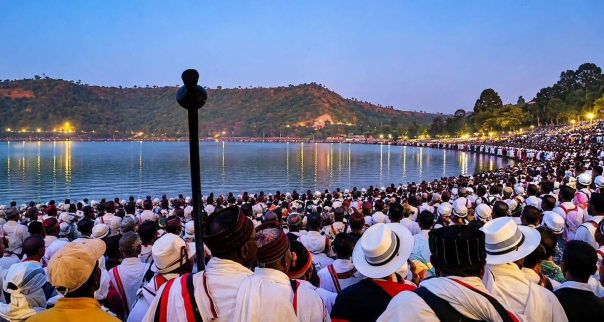
The ancient Oromo thanksgiving festival has become the unlikely centerpiece of Ethiopia’s most ambitious political project: building a nation where dialogue replaces division, and where the discipline of reconciliation practiced at the water’s edge becomes the model for governance itself.
FINFINNE — The theme says it all: “Irreechaa: For National Consensus!”
As hundreds of thousands gathered at Hora Finfinnee in Addis Ababa this weekend, dressed in white and carrying fresh green grass and yellow Adey Abeba flowers, the traditional rituals of thanksgiving took on a meaning that extends far beyond the Oromo community. In a nation that has spent years navigating deep political and ethnic divisions, the 2026 Irreechaa has become a powerful symbol of a broader national journey — one that seeks to transform conflict into consensus, and grievance into gratitude.
A Festival With a Mission
The Irreechaa Forum, held annually in Addis Ababa ahead of the main celebrations, set the tone for this year’s observance. Under the theme “Irreechaa: For National Consensus,” the forum highlighted the festival’s values of unity, togetherness, forgiveness, and reconciliation — and explicitly connected these values to the national conversation about Ethiopia’s future.
Addis Ababa Mayor Adanech Abiebie, speaking at the forum, emphasized that Irreechaa “promotes unity, togetherness, forgiveness, and reconciliation, and carries great value for national understanding”. The mayor’s words were not merely ceremonial. They reflected a deliberate effort to position Irreechaa not just as a cultural celebration for the Oromo people, but as a national resource — a living tradition whose spiritual disciplines might offer a model for how Ethiopians can learn to live together again.
The 2026 celebrations, held on October 3 and 4, brought together Abbaa Gadaas (traditional Oromo leaders), Haadha Sinqees (women entrusted with moral order), elders, youth, and guests from across Ethiopia and beyond. At Hora Finfinnee in the heart of the capital and Hora Arsadi in Bishoftu, the sea of white garments and the sound of traditional chants created what one observer described as a “spectacle of color, culture, and togetherness”.
The Prerequisite of Peace
What makes Irreechaa unusual — and what makes its 2026 theme so resonant — is that reconciliation is not merely a value the festival celebrates. It is a requirement for participation.
Before attending Irreechaa, participants are expected to reconcile with themselves and with others, setting aside grudges, anger, and resentment. The festival’s essence as a gathering of peace and reconciliation depends on this prior work of the spirit. You cannot approach the sacred waters carrying a grievance. You cannot give thanks while your heart remains at war.
This discipline — the deliberate, conscious setting aside of conflict before approaching the sacred — is precisely what Ethiopia’s National Dialogue process has sought to institutionalize at the national level. And the timing of this year’s Irreechaa is no coincidence.
A National Dialogue Concludes, a Festival Begins
Just weeks before millions gathered at Hora Finfinnee, Ethiopia reached a historic milestone: the conclusion of its National Dialogue Conference in Addis Ababa.
The dialogue, which formally opened on July 15, 2026, brought together more than 4,000 delegates from across the country — representatives of civil society, religious groups, youth, women, and historically marginalized communities. Over 46 days of deliberations, participants undertook extensive discussions on foundational pillars of state-building, national identity, social cohesion, and the structure and form of government.
The National Dialogue Commission had spent years conducting grassroots consultations, engaging Ethiopians at home and abroad, and identifying eight core agenda pillars that reflected priorities raised during these discussions. The process was built on a deliberate departure from past political gatherings dominated by urban elites — a grassroots approach that sought to give voice to communities that had long been excluded from national conversations.
At the closing ceremony, former Nigerian President Olusegun Obasanjo delivered a keynote address in which he described Ethiopia’s national dialogue as “a historic achievement and an example for the rest of Africa.” He stressed that peace must be “comprehensive, inclusive, and complete” if it is to be sustainable, and expressed confidence that a “peaceful, secure, stable, predictable, and united Ethiopia” could double its GDP within seven years and emerge as Africa’s largest economy.
The message was clear: Ethiopia has chosen dialogue over division, consensus over conflict. And now, Irreechaa 2026 arrives to reinforce that choice.
The Prime Minister’s Message
Prime Minister Abiy Ahmed, in his Irreechaa message, drew explicit parallels between the festival’s spiritual disciplines and the nation’s political journey.
Speaking under the theme “Irreechaa is Peace! Gada is Civilization! Ethiopia’s Civilization is Inevitable!”, the Prime Minister congratulated citizens on “safely passing through the difficult rainy season and entering a period of hope.” He described how, as the winter darkness clears, the Oromo people gather at the river for traditional thanksgiving rituals — fathers reciting “Marehoo” and mothers reciting “Araaroo” — offering gratitude to the Creator.
But Abiy went further. He drew a direct comparison between the heavy rains, floods, and restricted movement of the winter season and Ethiopia’s “long-standing economic, political, and administrative struggles.” Just as the rains must eventually end and the sun must eventually return, so too must Ethiopia’s period of difficulty give way to a season of renewal.
The Prime Minister also cited an Oromo proverb — “the house where one sleeps is better than the one where one merely spends the evening” — in a call for armed groups to choose stability over uncertainty and peace over prolonged conflict. He reaffirmed the government’s commitment to peace and national consensus, urging all Ethiopians to “embrace the core values of Irreechaa — peace, reconciliation, forgiveness, and brotherhood — with the aim of strengthening unity and advancing the nation’s path toward lasting prosperity”.
The Symbolism of Water and Grass
At the heart of Irreechaa are materials that carry profound meaning: water, grass, and flowers.
Participants arrive carrying fresh green grass and bright yellow Adey Abeba, the seasonal flower associated with the Ethiopian spring. They dip the grass into the sacred waters, sprinkle droplets over themselves and others, and place grass and flowers along the shoreline. Over the course of the celebration, thousands of individual offerings gather along the water’s edge, forming a temporary green-and-yellow border that transforms the landscape.
As one participant, Guddissa Geda, who traveled from Sululta to celebrate at Hora Finfinnee, explained: “The movement of grass to water creates a connection between community practice and the landscape, embodying reconciliation, love, unity, and the relationship between people and nature”.
This ritual act — the dipping of grass into water — is not decorative. It is the physical embodiment of the festival’s spiritual logic. Water is the source of purity and the foundation of creation in Oromo cosmology. Grass is the symbol of fertility and renewal. To dip the grass into the water is to enact, in miniature, the reconciliation between the human and the divine, between the community and the earth, between the past and the future.
At a moment when Ethiopia seeks to reconcile its own divisions, the symbolism is unmistakable.
The Gadaa System and National Renewal
Irreechaa is inseparable from the Gadaa system, the traditional Oromo socio-political system recognized by UNESCO as an Intangible Cultural Heritage of Humanity. The Gadaa system organizes society by age grades, each with defined responsibilities and transition periods, and encompasses customary law, environmental knowledge, and mechanisms for conflict resolution.
Prime Minister Abiy’s Irreechaa message emphasized the importance of the Gadaa system to Ethiopia’s national renewal. He cited “the restoration and institutionalization of Hora Finfinnee Irreechaa to its river site and the grand gatherings at Hora Harsadi in Bishoftu” as proof that “long-standing cultural questions regarding language and heritage have been fully answered”.
The return of Irreechaa to Hora Finfinnee — the sacred site in the heart of Addis Ababa from which the capital takes its Oromo name — is itself a powerful act of reclamation. For decades, public celebrations of Irreechaa at this site were suppressed. The Oromo people were denied the right to gather at their own sacred waters. The restoration of the festival to its ancestral site is, in the words of one analysis, “a powerful reclamation of space, identity, and dignity”.
But the Gadaa system offers more than historical symbolism. Its principles — Safuu (moral order), customary courts, community service, and environmental stewardship — represent an indigenous Ethiopian framework for governance and social organization that predates modern political structures. As Ethiopia seeks to build a system that draws on its own traditions while meeting contemporary challenges, the Gadaa system offers a model that is both authentically Ethiopian and profoundly relevant.
The Youth and the Future
One of the most striking features of this year’s Irreechaa was the prominent role of young people — not merely as participants but as organizers, protectors, and transmitters of tradition.
Nega Wodajo, deputy commissioner of the Oromia Tourism Bureau, explained that preparations for Irreechaa begin well before the main celebration days, with young people taking part in cultural performances, community projects, and activities marking the transition into the New Year. “The youth are taking responsibility by protecting their environment, promoting their culture and creating good relations among themselves,” Nega said. “The country belongs to the youth”.
This participation is not incidental. It is the mechanism by which tradition survives. Irreechaa is transmitted through participation — through the physical act of dipping grass into water, through the sound of chants rising at sunrise, through the experience of standing in a sea of white garments at the water’s edge. Young people who participate in Irreechaa today will carry its values into the future.
And those values — reconciliation, gratitude, unity, peace — are precisely what Ethiopia needs as it seeks to build a nation where consensus replaces conflict.
A Festival That Belongs to All
While deeply rooted in Oromo tradition, Irreechaa has increasingly become a national celebration embraced by Ethiopians of all backgrounds. This year’s gathering at Hora Finfinnee drew participants from across the country — from Oromia, from other regions, from the diaspora, and from the international community.
The festival has also attracted growing international attention. Visitors from across the globe come to witness its authenticity, the beauty of its traditions, and the collective joy of its people. Alongside iconic Ethiopian treasures such as Timket and Lalibela’s rock-hewn churches, Irreechaa showcases Ethiopia’s unique blend of cultural richness and natural wonder, offering the world an inspiring vision of harmony, heritage, and hope.
In a world that so often profits from division, Irreechaa offers a different model: a celebration that brings people together not despite their differences but because of the shared humanity that lies beneath them.
The Consensus That Begins at the Water
As the 2026 Irreechaa celebrations concluded peacefully at Hora Finfinnee, Mayor Adanech Abiebie offered a closing message that captured the spirit of the occasion: “Irreecha for National Consensus! Irreecha for Peace and Unity!”
The theme of this year’s festival is not just a slogan. It is a charge — a call to action that extends far beyond the shores of sacred waters.
The National Dialogue has concluded. Its recommendations have been presented. The hard work of implementation lies ahead. But the spiritual foundation for that work has been laid — not in conference halls or parliamentary chambers, but at the water’s edge, where millions of Ethiopians have practiced, for thousands of years, the disciplines of reconciliation, gratitude, and unity.
Irreechaa teaches that consensus is not merely a political outcome. It is a spiritual discipline. It is the deliberate act of setting aside grievance, of choosing relationship over righteousness, of approaching the sacred with open hands and a reconciled heart.
If Ethiopia can carry that discipline from the water’s edge into its institutions, its communities, and its politics, then the theme of Irreechaa 2026 will have been more than words.
It will have been a prophecy fulfilled.
Baga Irreechaa nagaan geessan.
May the Irreechaa arrive in peace. May the consensus it inspires endure.

Irreechaa: The Festival That Believes in the Beauty of the Human Soul
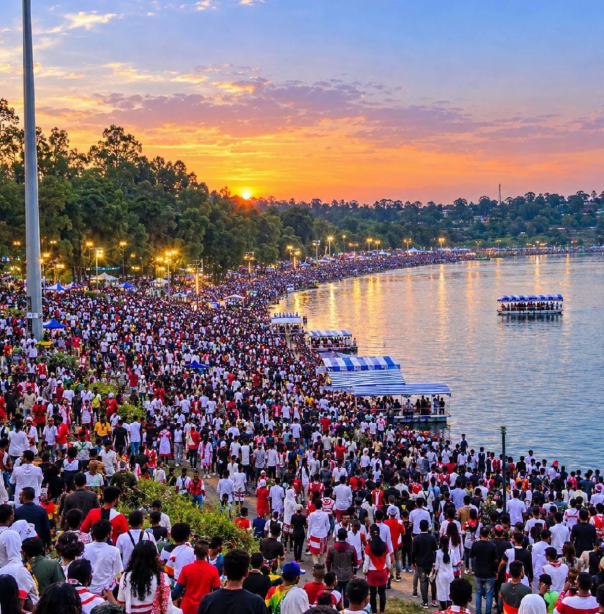
Every year, millions gather at the water’s edge to give thanks, seek forgiveness, and welcome a season of light. But the deeper story of Irreechaa is not only about a harvest or a river — it is about what humanity can become.
A Morning at the River
As the first light of Birraa — the Ethiopian spring — spills across the horizon, the banks of the Bishoftu lakes and the Awash River begin to fill. Elders in white näts’äla wraps arrive carrying bundles of fresh grass and yellow adey abeba flowers. Mothers lead daughters by the hand. Young men sing songs their grandfathers sang before them. The air smells of rain, wet earth, and gratitude.
This is Irreechaa, the great Thanksgiving festival of the Oromo people, celebrated at the end of the rainy season and the beginning of the harvest. To outsiders, it can look like a single day of celebration. To those who carry it in their blood, it is a whole philosophy of life — a yearly reminder of what it means to be human.
And at the heart of that philosophy lies a striking conviction: that the human soul is meant to be beautiful, and that beauty is not a luxury — it is a duty.
Thanksgiving as a Way of Seeing
Irreechaa begins with galata — thanksgiving. But this is not the polite gratitude of a hurried prayer. It is gratitude as a lens through which the entire world is viewed.
The Oromo elders say that the person who cannot give thanks cannot truly see. When you thank the earth for its harvest, you begin to notice the earth. When you thank the rain for falling, you begin to honor the rain. Thanksgiving, in this tradition, is the first act of a beautiful soul — the recognition that life is a gift received, not a possession earned.
At Irreechaa, gratitude is offered for the harvest, for health, for children, for peace, for the return of the rains. But it is also offered for things unseen: for forgiveness granted, for conflicts resolved, for another year of life. In a world addicted to complaint, Irreechaa stands as a radical act of remembering the good.
The Work of Restoration and Forgiveness
But Irreechaa is not naive. Its joy is not the joy of those who pretend nothing is broken. It is the joy of those who have done the harder work first.
Before the celebration comes reconciliation. In the weeks leading up to Irreechaa, families settle disputes. Neighbors ask forgiveness. Debts of the heart are repaid. The festival cannot be entered with a grudge in the chest; tradition holds that the one who carries bitterness to the riverbank carries it alone.
This is where Irreechaa’s belief in beautiful souls becomes most demanding. A beautiful soul is not a flawless soul — it is a soul willing to be restored. Forgiveness here flows in two directions: the courage to ask, and the generosity to grant. Restoration is not merely the repair of what was broken; it is the creation of something stronger than what existed before.
In a time when division is profitable and resentment is addictive, Irreechaa whispers another way: you do not have to stay wounded.
Love, Harmony, and the Living World
Standing at the water’s edge, the Oromo faithful do not see nature as a backdrop. They see a relative.
The river is not a resource; it is a mother. The tree is not timber; it is a witness. The land is not property; it is an ancestor. This is why Irreechaa is celebrated near water — because water is the clearest sign of life’s interdependence. What happens to the river happens to the people.
This harmony with nature is not sentimentality. It is a moral claim: you cannot love people while abusing the world they live in. The same soul that forgives a neighbor must also protect the forest. The same heart that gives thanks for the harvest must refuse to poison the soil that produced it.
Irreechaa thus offers a vision of humanity that is ecological at its core — not because it is fashionable, but because it is ancient. To respect nature is to respect the Creator, the ancestors, and the children not yet born. It is to understand that renewal and regeneration are not just human projects; they are the rhythm of the whole living world.
Remembering the Ancestors
No Irreechaa is complete without remembrance.
Elders speak the names of those who have passed. Libations are poured. The generations stand together in one long chain, and the living are reminded that they did not invent themselves. They are the continuation of a story.
Remembering ancestors is not nostalgia. It is accountability. It asks: What did they hand to us, and what will we hand forward? A beautiful soul, in this tradition, is one that knows it is a link, not an island.
This remembrance also gives Irreechaa its famous hope: the bright season over the dark. The rainy months of scarcity and confinement give way to harvest, color, and gathering. Darkness is not denied — it is acknowledged, survived, and then overcome. Every year, the festival reenacts the truth that winter does not have the final word.
Renewal and the Regeneration of Humanity
At its deepest level, Irreechaa is about renewal — not just of the fields, but of the person.
The waters of the lake are a symbol of cleansing. The green grass is a symbol of new life. The yellow flower that blooms at the season’s turn is a symbol of hope that appears precisely when the old season ends. The festival asks each participant: What in you needs to be renewed this year?
And the answer it offers is a whole program for the human family: a kind heart, a good spirit, right relationships with people and with nature, respect for life, love as practice, harmony as goal. These are not abstract virtues. They are the daily disciplines of a soul that has decided to be beautiful.
The regeneration of humanity, Irreechaa insists, does not begin in parliaments or palaces. It begins in the heart that chooses gratitude over greed, forgiveness over revenge, and harmony over domination.
A Festival That Believes in Us
In the end, Irreechaa is not merely a celebration of a harvest. It is a declaration of faith in the human soul.
It believes that people can be kind. It believes that old wounds can heal. It believes that the earth can be honored and the ancestors remembered. It believes that light follows dark, that love is stronger than hatred, and that a good spirit is not a weakness but the highest form of strength.
To stand at the river at Irreechaa is to be told, by a tradition older than any empire: You were made for beauty. Live like it.
And perhaps that is the festival’s greatest gift to a fractured world — not just a day of thanksgiving, but a lifelong invitation to become the beautiful soul that Irreechaa has always believed we could be.
Happy Irreechaa! May your season be bright.
Irreechaa Celebrated in Peace and Unity, Advocacy for Oromia Says, Pledging to Nurture the Festival’s Message of Reconciliation
Advocacy group praises security forces, community members, and government structures for ensuring a peaceful celebration of the Oromo thanksgiving festival amid a national climate of conflict and hatred
(October 4, 2026)-Advocacy for Oromia has expressed deep satisfaction with the peaceful and beautiful celebration of Irreechaa, the revered Oromo thanksgiving festival, praising all parties who contributed to its success and vowing to continue nurturing the ancient tradition as a source of peace, reconciliation, and prosperity.
In a statement released on October 4, 2026, the advocacy group said it was “greatly delighted that the Irreechaa festival has been celebrated in a beautiful and peaceful manner,” and extended its gratitude to all those who played a role in ensuring the festival unfolded peacefully.
Irreechaa, one of the most significant cultural and spiritual festivals of the Oromo people, is widely recognized as a celebration of thanksgiving, reconciliation, love, peace, and unity. The statement noted that millions of people gathered in unity in Finfinnee (Addis Ababa), Bishoftu, and across the world, reaffirming the festival’s enduring power to bring communities together.
Gratitude Amid a Challenging National Climate
The statement placed particular emphasis on the significance of the peaceful celebration given the current situation in the country. “Above all, at a time when the situation in our country is filled with conflict and hatred, we wish to express our heartfelt gratitude to the security organs and police who participated, and to our community who provided support and assistance, in ensuring that the Irreechaa festival, which began in peace, was also concluded in peace in Oromia,” the group stated.
Advocacy for Oromia also extended its appreciation to government structures, community organizations, and individual community members who played a major role in facilitating the celebration.
A Festival That Has Endured Through Hardship
The statement highlighted the resilience of Irreechaa, noting that the festival has continued over the years “despite oppression and pressure from systems.” The group expressed hope that Irreechaa will continue to proclaim and sustain reconciliation, peace, love, and unity into the future.
“Advocacy for Oromia wishes to declare that it will work in every possible way to nurture and expand this Irreechaa festival, which is a source of peace and reconciliation, and a means of well-being and prosperity,” the statement read.
The group concluded with a prayer for the nation: “May reconciliation, restitution, and peace be upon our country and our people!”
A Continuing Commitment
The statement underscores Advocacy for Oromia’s ongoing commitment to promoting the cultural heritage of the Oromo people and advocating for peace and reconciliation in the region. As Irreechaa continues to draw millions of celebrants each year, the group’s pledge to protect and expand the festival reflects its broader mission of fostering unity and well-being among Oromo communities at home and abroad.
— Advocacy for Oromia, October 4, 2026

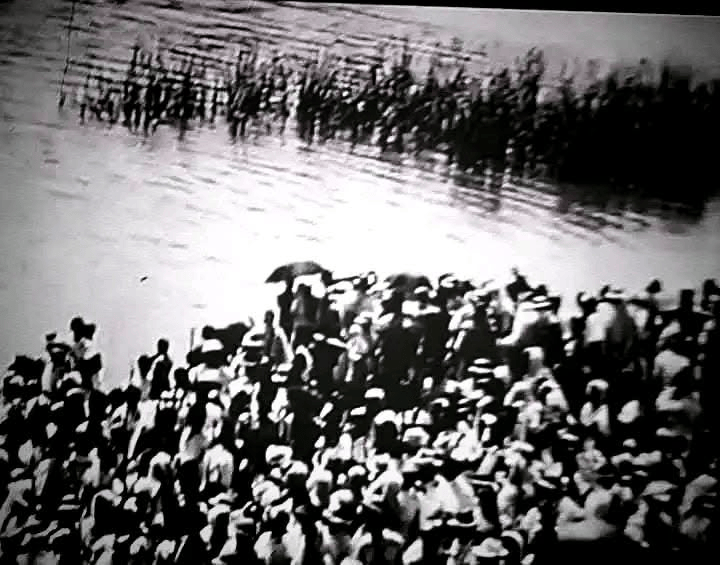
Rare Historical Photograph Surfaces: Irreecha Bishooftuu at Hora Harsadii, 1936
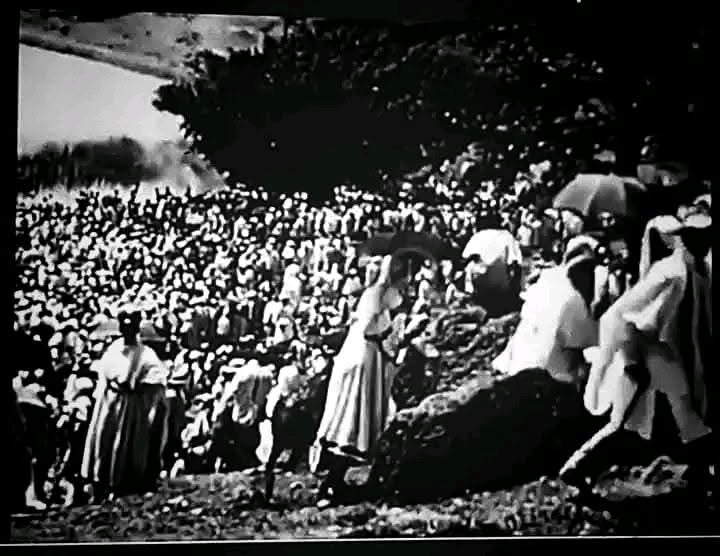
A glimpse into the past — a beautiful historical picture you may have never seen before.
A remarkable historical photograph has resurfaced, offering a rare window into one of the Oromo people’s most sacred traditions. The image, said to date back to 1936 G.C., captures the Irreecha Bishooftuu celebration at Hora Harsadii — the same shores where millions gather today.
The picture shows Oromo worshippers gathered at the water’s edge, dressed in traditional white garments, their hands raised in prayer and thanksgiving. Elders stand alongside young men, their faces turned toward the lake, carrying green grass and flowers — the timeless symbols of Irreecha. The scene is strikingly similar to the celebrations held nearly a century later.
A Tradition That Outlived Empires
1936 was a pivotal year in the region’s history. It was the year Italian forces occupied Ethiopia, beginning a five-year occupation that would bring immense suffering to the Oromo people and all Ethiopians. Yet even in the shadow of war and colonization, Irreecha continued.
The photograph is a testament to the resilience of Oromo culture. Empires rose and fell. Borders shifted. Governments changed. But the Oromo people never stopped gathering at the water to give thanks to Waaqa.
“This image reminds us who we are,” said one Oromo elder upon viewing the photograph. “Our ancestors stood at this same water, raised their hands to the same sky, and gave thanks for the same blessings. We are their children. Nothing has broken that chain.”
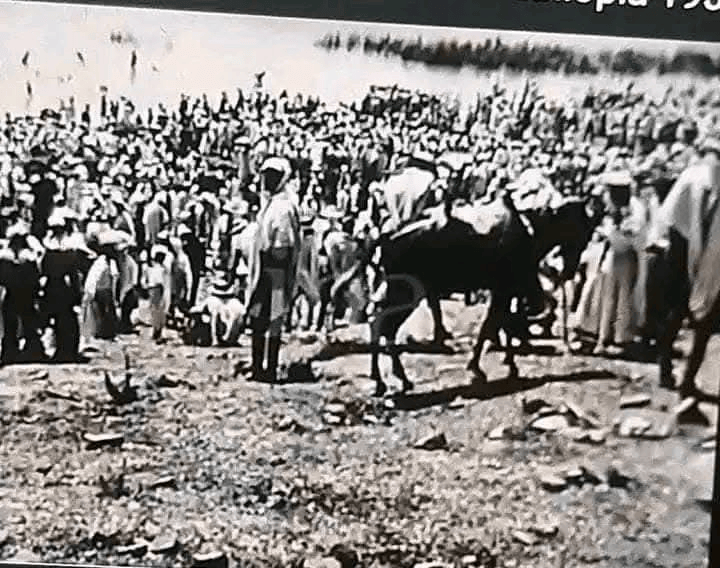
Hora Harsadii: A Sacred Place Across Generations
Hora Harsadii — Lake Harsadii — has been a site of Irreecha celebration for generations. Located in Oromia, the lake holds deep spiritual significance for the Oromo people. It is here that millions gather each year for Irreecha Bishooftuu, the great thanksgiving festival marking the end of the rainy season.
The 1936 photograph captures the festival in a simpler time — before the massive crowds, before the global attention, before the political significance that Irreecha carries today. What remains unchanged is the essence of the celebration: gratitude, community, and faith.
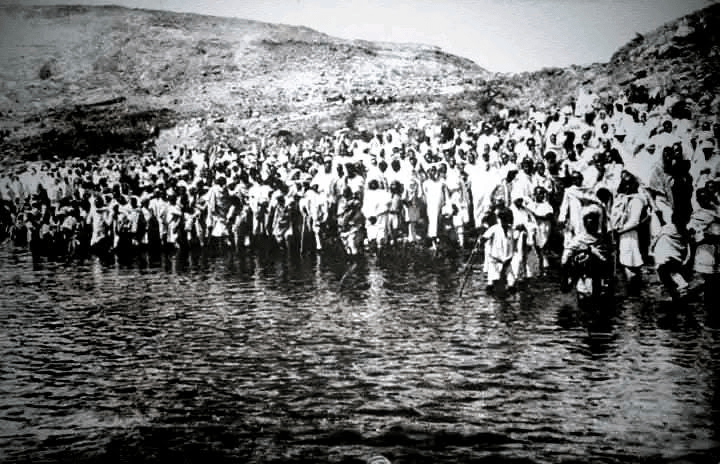
A Picture Worth a Thousand Years
Historical photographs of Irreecha are rare. For much of the 20th century, Oromo cultural and religious practices were suppressed, and documentation of traditional ceremonies was limited. Images like this one are precious — not only as historical records but as symbols of cultural survival.
For younger Oromo, both at home and in the diaspora, the photograph is a powerful connection to their heritage. Shared widely on social media with the hashtags #Oromia and #Bishooftu_Irreecha, it has sparked conversations about identity, resilience, and the importance of preserving cultural memory.
“Beautiful historical picture you may have never seen before ❤️” reads the caption accompanying the image — and for many, that is exactly what it is. A discovery. A reminder. A gift from the ancestors.
From 1936 to 2026: The Journey Continues
Ninety years after that photograph was taken, Irreecha Bishooftuu at Hora Harsadii has grown into Africa’s largest Oromo cultural festival, drawing millions from Ethiopia and around the world. The green grass still waves. The songs still rise. The hands still reach toward the sky.
The more things change, the more they stay the same.
As one commenter wrote beneath the photograph: “Our grandparents prayed here. Our parents prayed here. We pray here. And our children will pray here. Irreecha is forever.”
#Oromia #Bishooftu_Irreecha #HoraHarsadii #Irreecha2026 #OromoHeritage
Africa’s Largest Oromo Cultural Festival Underway: Irreecha Draws Millions in a Celebration of Identity, Peace, and Unity
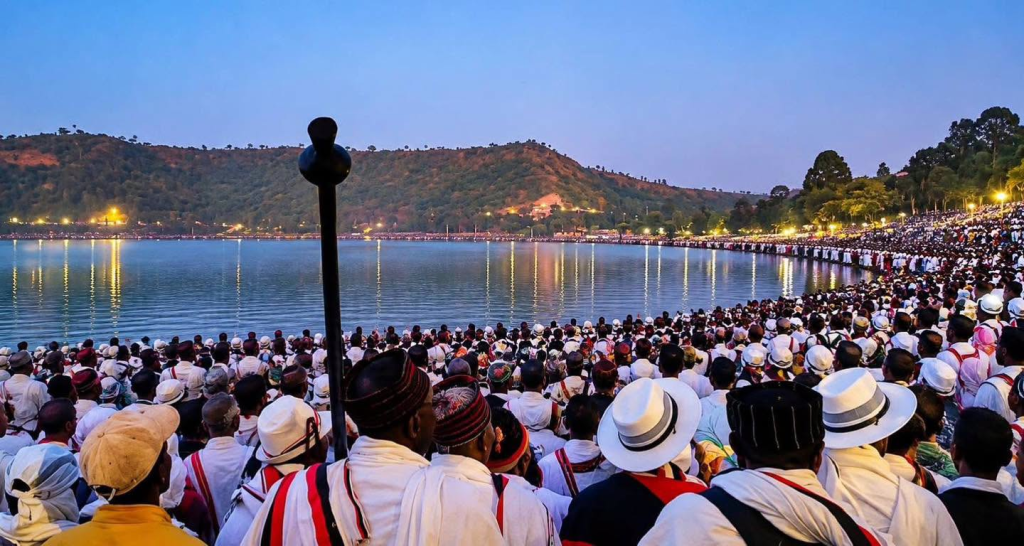
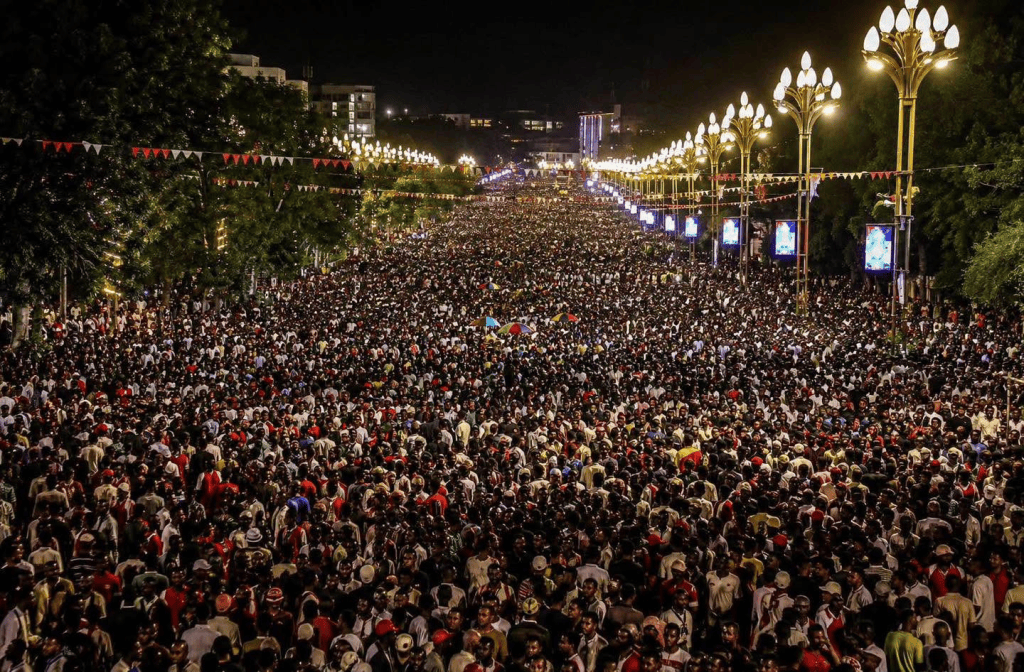
(ONA, HARSADII, OROMIA, 4 OCTOBER 2026) — The shores of Lake Harsadii have come alive once again. From the early hours of the morning, waves of people dressed in vibrant traditional attire have been converging on the celebration grounds, their voices rising in song, their hands lifted in gratitude. Africa’s largest Oromo cultural festival — Irreecha — is underway, and the scale of it is nothing short of breathtaking.
Millions have gathered for Irreecha Bishooftuu, the great thanksgiving festival that marks the end of the rainy season and the beginning of a new year in the Oromo calendar. The air is thick with the scent of fresh grass and flowers, the sound of drums, and the unmistakable energy of a people united in celebration.
More Than a Festival
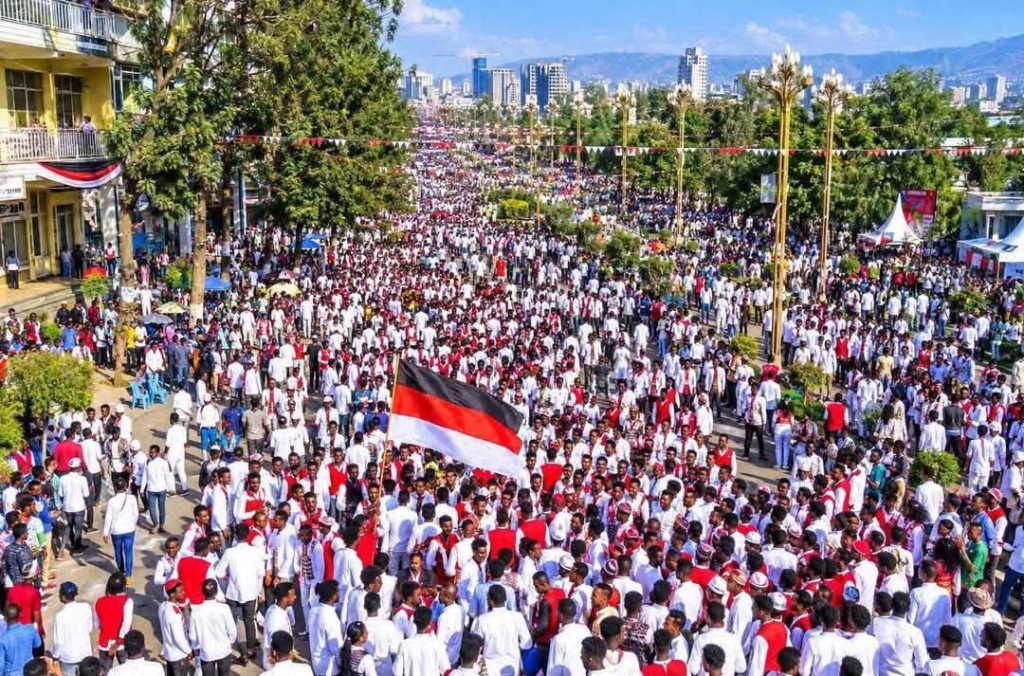
For the Oromo people, Irreecha carries a deeper meaning beyond celebration. It is a powerful symbol of peace, love, reconciliation and unity, bringing together people from different communities and generations.
It is a time to give thanks to Waaqa — God — for the blessings of the past year and to seek favour for the year ahead. It is a time to mend relationships, to forgive, and to renew the bonds that hold the community together. Old and young, rich and poor, from the cities and from the countryside — all stand side by side at the water’s edge, equal before their Creator.
Participants carry fresh green grass and flowers, traditional symbols associated with Irreecha, as they express gratitude and seek blessings for the year ahead. The green stems represent fertility, life, and the enduring hope of a people connected to the land of their ancestors. As they dip their offerings into the water and raise their hands to the sky, the collective prayer of millions rises as one voice.
A Living Heritage
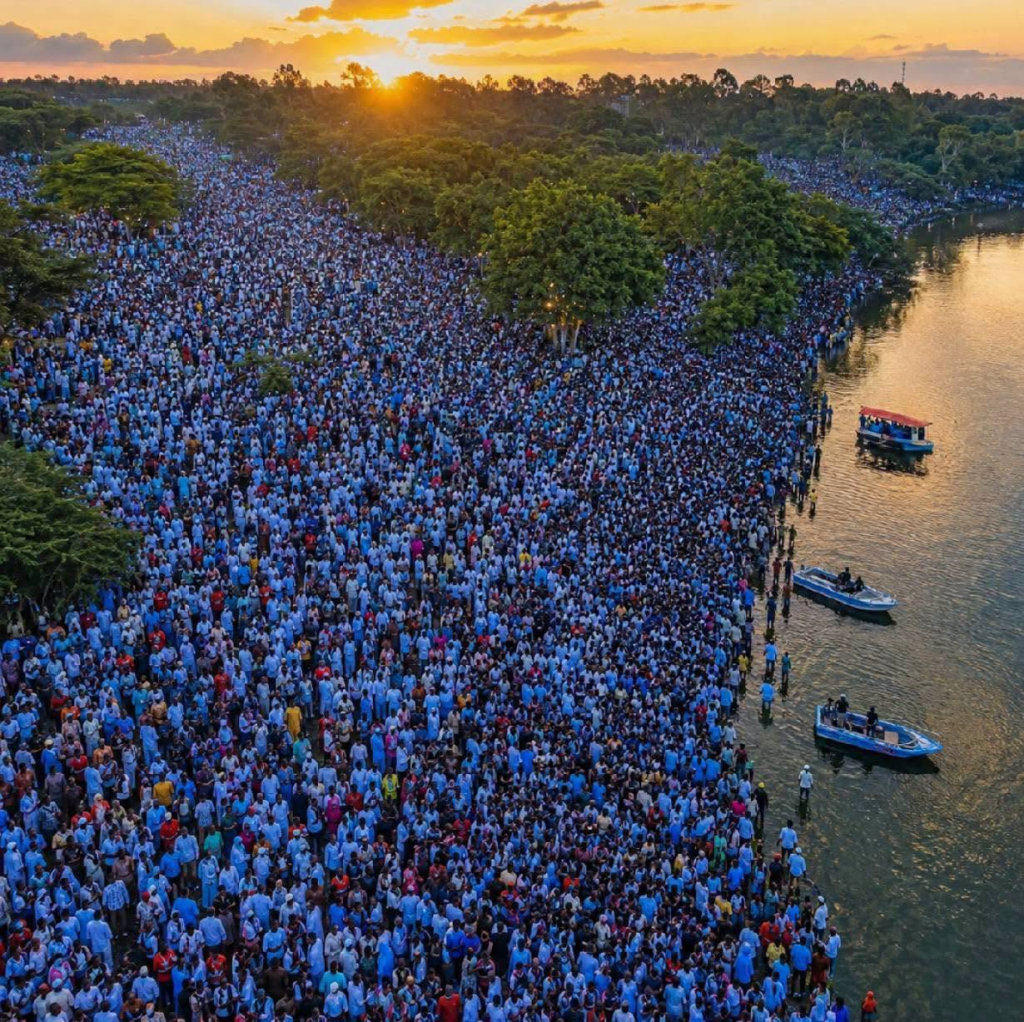
The festival also provides an important platform for preserving and showcasing Oromo language, traditions, music, clothing and cultural heritage.
Throughout the celebration grounds, the richness of Oromo culture is on full display. Women in handwoven garments of red, white, and black walk gracefully through the crowds. Men in traditional shirts and shawls beat drums and blow horns that echo across the water. Poets recite verses in Afaan Oromo, singers perform songs passed down through generations, and elders share stories and wisdom with the young.
For many in the diaspora, Irreecha is a lifeline — a way to stay connected to their roots, to teach their children the language and customs of their people, and to feel part of something larger than themselves. This year, delegations have traveled from across Ethiopia and from countries around the world, including Kenya, the United States, Canada, Australia, and the Middle East, to take part in the celebration.
A Message of Peace
As colourful crowds fill the celebration grounds, Irreecha continues to stand as a powerful expression of Oromo identity and cultural pride, while promoting the values of peace, unity and togetherness.
In a region that has known its share of hardship, the message of Irreecha resonates more deeply than ever. The festival is a reminder that peace is not merely the absence of conflict, but the presence of justice and mutual respect. It is a call to reconciliation — between individuals, between communities, and between generations.
“We come here to give thanks, but also to recommit ourselves to peace,” said one elder, standing near the water’s edge. “Irreecha teaches us that we are one people. If we stand together, no force can divide us.”
Organizers emphasized that Irreecha belongs to all Oromo, regardless of where they live or their station in life. The festival’s message, they said, is one that the whole world can learn from: that gratitude, unity, and respect for one’s heritage are the foundations of a strong and peaceful society.
A Celebration That Continues to Grow
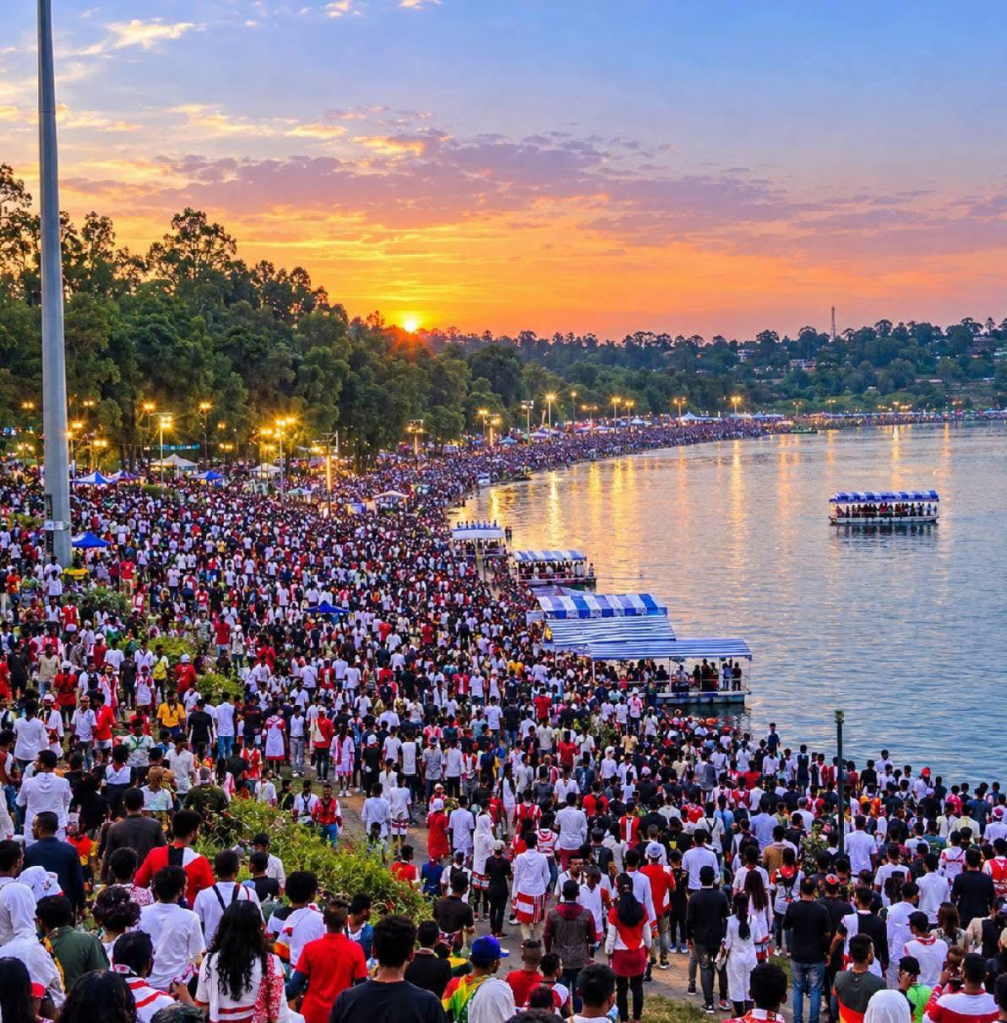
Each year, Irreecha grows larger. What began as a traditional thanksgiving ceremony has become a global symbol of Oromo identity and resilience. It is now recognized as one of the largest cultural gatherings in Africa, drawing millions to its shores and capturing the attention of the world.
Yet at its heart, Irreecha remains what it has always been — a simple act of gratitude. A people gathered by the water. Hands raised to the heavens. A prayer for peace.
As the sun sets over Lake Harsadii and the crowds begin their journey home, the spirit of Irreecha goes with them. The green grass may wither, but the blessings sought and the bonds forged will endure until the waters rise again next year.
Happy Irreecha Bishooftuu. May peace, unity, and blessings be upon us all.