Category Archives: Promotion

Under the Odaa Tree: The Living Legacy of the Ituu Oromo
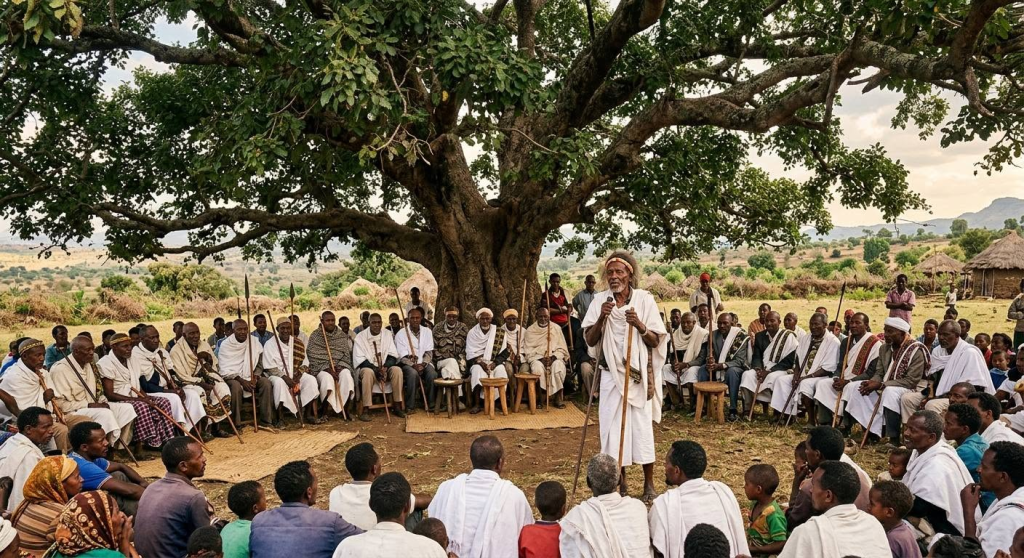
In the highlands of eastern Oromia, the roots of the Odaa tree (sycamore fig) stretch deep into the earth, just as the traditions of the Oromo people extend into the fabric of history. Among the most storied branches of the Oromo nation is the Ituu, a community whose identity is woven from the threads of ancient lineage, a sophisticated socio-political system, and a resilient spirit of justice. To understand the Ituu is to journey into the heart of the Oromo civilization, where the past is not merely remembered but lived.
The Ancestral Tree: From Murawwaa to Ituu
The Ituu are not a people without a past; they are a clear and significant branch on the vast Oromo genealogical tree. According to both oral tradition and contemporary scholarship, the lineage flows from Oromoo to Bareentuu (or Bareentuma), then to Murawwaa, and from Murawwaa springs the Ituu. A 2026 study by Jimma University confirms this ancestral link, placing Ituu firmly within the Murawwaa Barentuu family.
The Ituu themselves are divided into two primary clans, forming the backbone of their social structure:
- Galaan, with sub-clans such as Baabboo, Gaadullaa, and Elelle.
- Kurraa (Kuraa), with sub-clans such as Baayee, Addaayyo, Arroojjii, and Waayyee.
This is just one layer of a complex organizational system. Under the Gulantaa Odaa or Tumaa Heeraa (customary law), the Ituu are further organized into two major houses: Mana-Ituu (the House of Ituu) and Mana-Baabboo (the House of Baabboo). This dual structure underscores that for the Ituu, identity is a multi-faceted concept, governed by both bloodline and law.
Gadaa: The Soul of Oromo Governance
For the Ituu, as for all Oromo, the Gadaa system is the lifeblood of their society. It is far more than a political structure; it is a comprehensive philosophy that governs every aspect of life. It provides a framework for:
- Political Leadership: A system of elected officials with fixed terms, ensuring a democratic transfer of power.
- Justice (Heera): A legal system that predates modern courts, offering a way to resolve disputes and maintain order.
- Peace (Araara): A defined process for reconciliation and conflict resolution.
- Social Organization: A structure that defines the roles and responsibilities of individuals within the community.
- Spiritual Life: A connection to the divine and the natural world through rituals.
Odaa Bultum: The Parliament of the People
Central to the Ituu and wider Barentuu Oromo history is Odaa Bultum. This site in Hararghe served as a colossal Gadaa assembly center, a place where the community would gather to make laws, elect leaders, and settle disputes. It was the “parliament” under the shade of the Odaa tree, where the echoes of debate and the spirit of democracy were cultivated for generations.
Here, the voices of the people were heard through the Caffee (assembly), and the foundation of their society—Heera (law)—was debated and set. It was a place where the spiritual and the political converged to build a cohesive society.
Gumaa: A Path from Bloodshed to Brotherhood
Perhaps the most profound expression of Ituu culture is the institution of Gumaa. Often translated simply as “blood compensation,” Gumaa is actually a complex, restorative justice system. A 2026 Jimma University study highlights its true purpose: it is not solely about retribution but about reconciliation.
Gumaa is a process that transforms conflict, seeking to stop the cycle of violence and reintegrate offenders back into the community. It is a testament to the Ituu belief that even in the face of grave wrongs, the ultimate goal is peace and social harmony. The system includes specific legal frameworks such as Heera Diinoo, Heera Amboo, and Heera Danuu.
The Rituals and the Voices of the People
The cultural life of the Ituu is rich with ceremony. The Korbeessaa–Goromtii ritual, for instance, involved the sacrifice of goats to invoke peace, seek victory in conflict, and predict social and natural outcomes. It was a way of seeking divine guidance for the community’s journey.
Importantly, the Ituu social structure also features a powerful institution for women: Siiqqee. This is not merely a tradition but a social force that gave women a formal voice in matters of justice, peace, and reconciliation. It stands as a powerful testament to the Oromo society’s recognition of the vital role of women in maintaining social order and integrity.
A Living Tradition
Today, the Ituu Oromo stand at a crossroads of history. Their traditional systems—the Gadaa, the Heera, and the Gumaa—are not relics of a bygone era. They are living institutions that continue to provide a framework for justice and identity in a rapidly changing world. The genealogy from Murawwaa to Ituu is not just a list of names but a testament to a civilization that built a sophisticated society rooted in democracy, justice, and a profound respect for community.
The story of the Ituu is a story of resilience—a reminder that the roots of the Odaa tree, and the culture it represents, are deep and enduring.
Sources:
- Boru Musa Burka & Jira Mekonnen Choroke, “Gumaa beyond Compensation,” Gadaa Journal, 2026.
- Boru Musa Burqa & Dejene Gemechu Chala, “Korbeessaa-Goromtii Ritual,” Gadaa Journal, 2022.
- Admasu Feleke & Deressa Debu, “Oromo Historical Heritage: Historical Significance of Odaa Bultum Gadaa Assembly,” Jimma University.

A New Chapter in Storytelling: African Australians Take the Mic
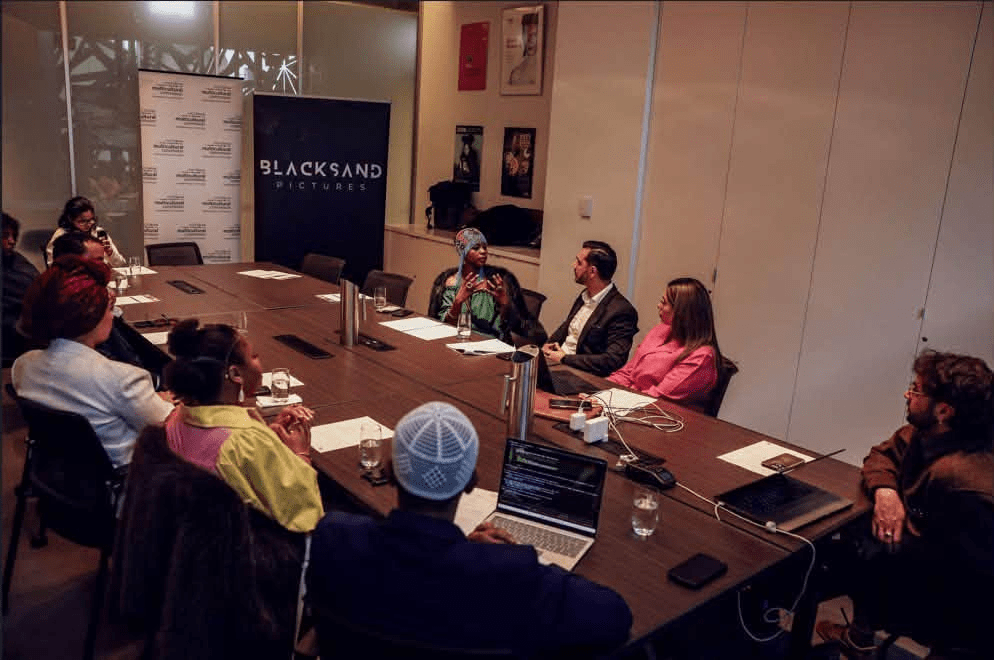
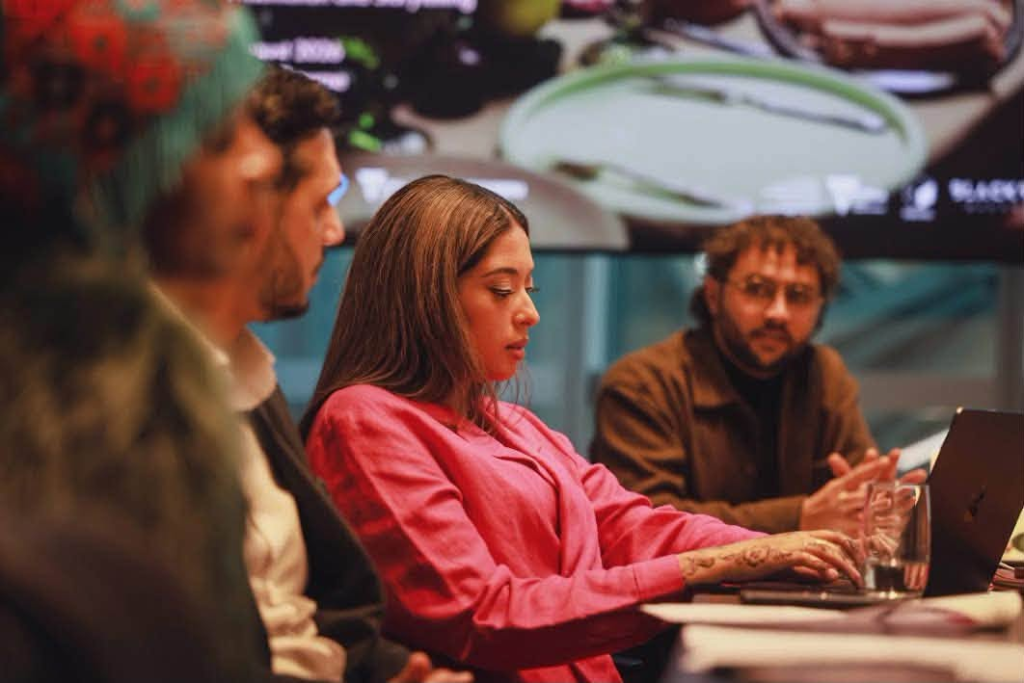
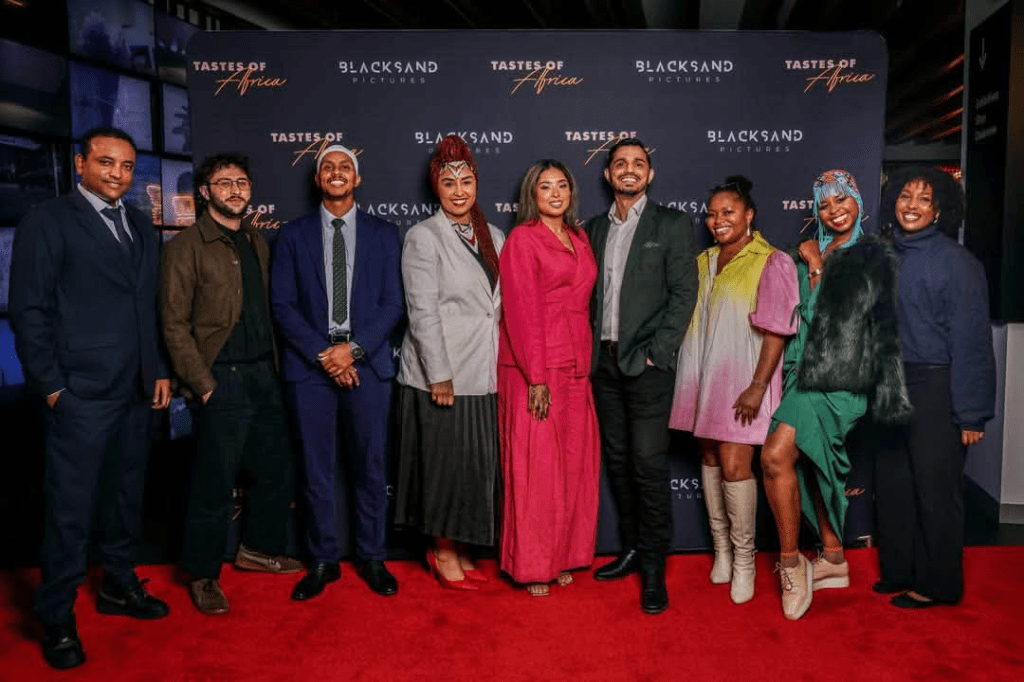
(ONA, 1 September 2026)-In a powerful step towards reshaping Australia’s cultural landscape, the Victorian Multicultural Commission, in partnership with Blacksand Pictures, recently hosted a community consultation with Victoria’s African Australian community. The focus? Media representation, authentic storytelling, and the urgent need for African Australians to control their own narratives.
The message was clear: the time for passive representation is over. Australian media must create meaningful opportunities for African Australians to tell their own stories, in their own voices. This isn’t just about checking diversity boxes—it’s about building a media landscape where lived experiences are portrayed with depth, nuance, and authenticity .
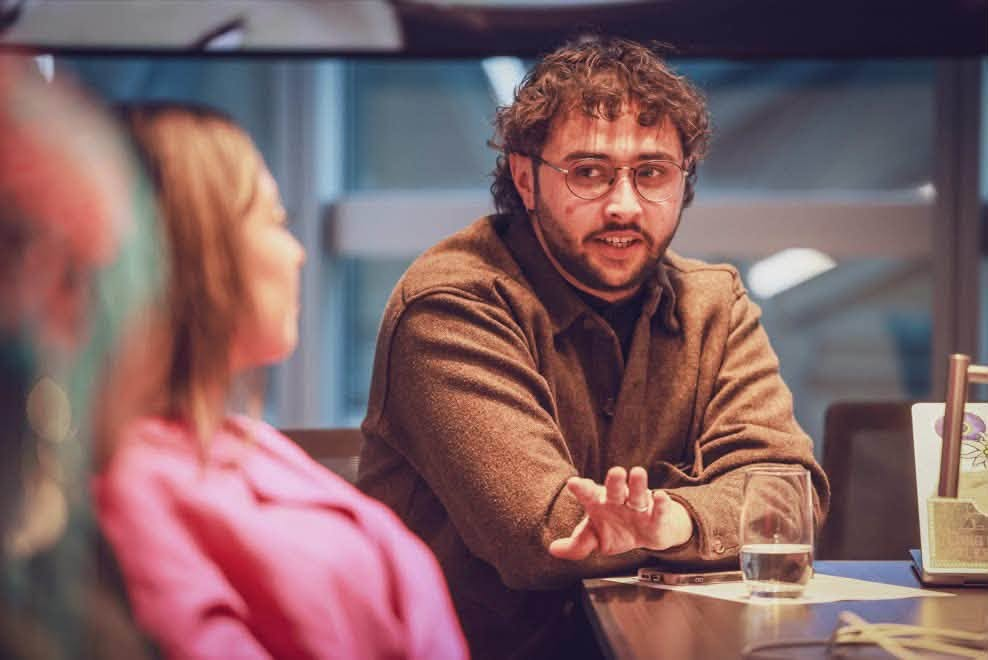
This need for self-representation is not new. Mimo Mukii, an emerging producer and filmmaker, began their filmmaking journey researching the necessity of African Australian self-representation in media. As Mukii observes, “It is getting better. But there are still barriers for people to get into the industry. Big companies, broadcasters, governments, whatever—taking a risk on emerging storytellers is—I think—what’s going to change that” .
The community consultation set the stage for exactly that kind of risk-taking.
A Feast of Stories
Following the discussion, attendees were treated to the premiere of Tastes of Africa, a three-part documentary series that celebrates the rich cultural heritage of African cuisine and its diaspora in Melbourne.
Produced by Blacksand Pictures’ Kauthar Abdulalim and written and directed by Rendah Haj, the series takes viewers on a sensory journey through Melbourne’s kitchens, community cook-ups, and hidden eateries . Hosted by Zambian-born filmmaker, historian, and author Santilla Chingaipe—recognised by the United Nations as one of the most influential people of African descent in the world in 2019—the series weaves together observational documentary and intimate first-person narration .
Viewers are guided by the traditional wisdom of African aunties, while also seeing younger African Australians boldly reinterpreting recipes for a new generation. As Kauthar Abdulalim explains, “Tastes of Africa reflects the kind of storytelling Blacksand Pictures is committed to culturally grounded, audience-facing, and globally resonant. This series celebrates African Australian communities with intimacy and joy, while creating space for stories that have long been underrepresented in Australia’s factual landscape”.
Supported by principal production funding from Screen Australia, in association with VicScreen, the series marks a significant investment in African Australian storytelling. Distribution partner African Australian will make the series available to audiences on YouTube, with plans for an international screening tour across Africa later in the year.
Building Momentum
The community consultation and Tastes of Africa premiere are part of a broader movement to amplify African Australian voices. Initiatives like the African Australian Creative Media Grants, administered by Ubuntu Project, provide $10,000 grants to support platform development and content creation by African Australian creatives. These grants are helping to build a sustainable storytelling ecosystem, enabling individuals and organisations to create, distribute, and market their work.
As African Professionals of Australia noted upon being named among grant recipients, this support is “critical” for “amplifying the voices, stories, and innovation of African Australians across media and the arts”.
What’s Next
A summary report from the community consultation, prepared by @cinespace_inc, will be released soon. In the meantime, audiences can watch the first episode of Tastes of Africa on YouTube now by following @blacksandpictures and @africanaustralian.
As Mimo Mukii reflects, creating authentic representation requires institutional support and a willingness to take risks on emerging storytellers. With projects like Tastes of Africa and growing community-led initiatives, Victoria is proving that when African Australians tell their own stories, everyone benefits. The future of Australian storytelling is more diverse, more authentic, and more delicious than ever.
—
Stay tuned: Follow @cinespace_inc for the upcoming summary report from the community consultation. Watch Tastes of Africa on YouTube via @blacksandpictures and @africanaustralian.

Candlelight vigil for Nepal flood victims
VICTORIA UNITES FOR NEPAL
Candlelight vigil for Nepal flood victims
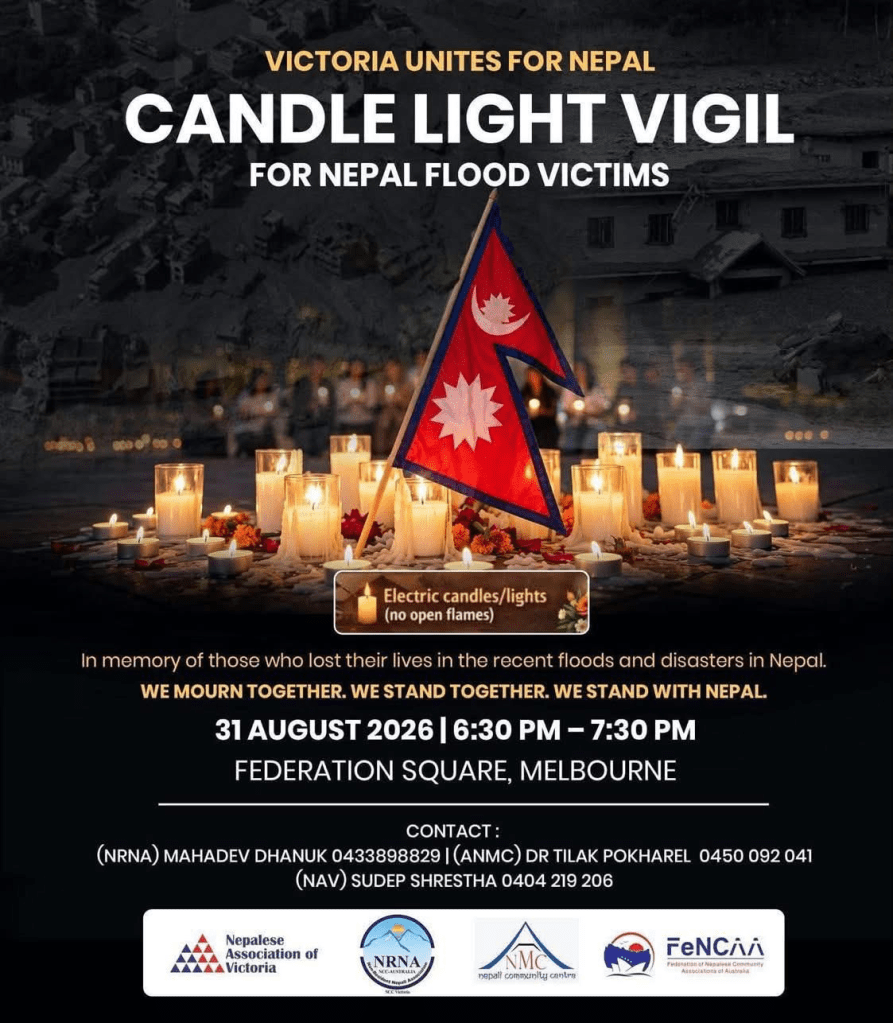
(ONA, 31 August 2026)-Melbourne will tonight open its heart to the people of Nepal as the city hosts a candlelight vigil at Federation Square, honouring the hundreds of lives lost in the catastrophic floods that have devastated the Himalayan nation.
The vigil, organised with the support of the Victorian Multicultural Commission, will see Victorians of all backgrounds gather to remember those who have perished, pray for the missing, and stand in solidarity with the grieving Nepali community.
“WE MOURN TOGETHER. WE STAND TOGETHER.”
The recent flooding in Nepal and surrounding regions has unleashed an unimaginable tragedy. Flash floods and landslides tore through the Bhotekoshi and Trishuli river basins, sweeping away entire communities along the Nepal-China border . The death toll continues to mount—now exceeding 547 confirmed fatalities—with more than 1,473 injured and over 900 still unaccounted for .
For Victoria’s growing Nepali community, this is not a distant disaster. It is personal. It is family. It is home.
A COMMUNITY IN MOURNING
The Victorian Multicultural Commission, standing in solidarity with Victoria’s Nepali community and the people of Nepal, has encouraged all Victorians to join tonight’s vigil.
“Let’s work together, let’s pray together, and let’s go through this pain together,” said Dr Tilak Pokhrel, president of the Australian Nepalese Multicultural Centre, in a heartfelt appeal to the community .
For many in the diaspora, the anguish is compounded by the agonising wait for news. Community members are checking the news every hour, desperately hoping for word from missing relatives and friends . The Australian government has confirmed that 39 Australians remain unaccounted for, including trekkers and tourists caught in remote valleys .
THE TRAGEDY UNFOLDS
The scale of the disaster is staggering. Many of the missing were on a pilgrimage to Mount Kailash in Tibet—a sacred site for Hindus, Buddhists, and followers of other faiths—when the flash floods struck without warning . Survivors have described walls of black water, 60 to 70 feet high, rushing toward them like a tsunami .
One Indian-American couple who narrowly escaped described watching the water approach their tour bus—”It was not water, it looked like a forest fire,” they recalled. They jumped from the bus moments before it was swept away, spending the night in a goat shed before being rescued by helicopter the next day .
Rescue operations continue, with emergency services working tirelessly in extremely difficult conditions. The Caritas Nepal relief organisation has reported that many main bridges and roads have been destroyed, making access to survivors extraordinarily challenging . Even relief teams have been ordered to retreat to safety as the threat of further flash floods persists .
GLOBAL OUTPOURING OF SOLIDARITY
The tragedy has touched hearts around the world. From candlelight vigils in Boston to prayer gatherings in India’s border towns, communities everywhere are standing with Nepal .
Here in Melbourne, tonight’s vigil at Federation Square will be a powerful testament to that global solidarity. Members of the public are invited to gather from 6:30pm to 7:30pm, bringing candles and open hearts to remember those lost and pray for those affected .
“TOGETHER WE ARE STRONGER”
The emotional toll on the diaspora is immeasurable. “We can’t go through this alone,” said Aloonee Adhikari, a Nepali community member in the United States. “When we get to get together like this, it gives us a sense of empowerment that at least we can sit there and pray for them, even if we’re not there” .
Her words resonate across oceans. Tonight, they will echo in Melbourne.
As the Victorian Multicultural Commission reminds us: We mourn together. We stand together.
EVENT DETAILS
Date: Monday 31 August 2026
Time: 6:30pm–7:30pm
Venue: Federation Square, Melbourne
The vigil is a chance for all Victorians—regardless of background or faith—to show the Nepali community they are not alone. It is a moment to transform grief into action, compassion into solidarity.
In the words of one community leader: “One candle, one community, one Nepal. For those we lost, for those who are suffering, for those who are still hoping—together we are stronger, for Nepal and for humanity” .
Come. Light a candle. Stand with Nepal.

A Cry for Justice: The Unfolding Crisis in Oromia
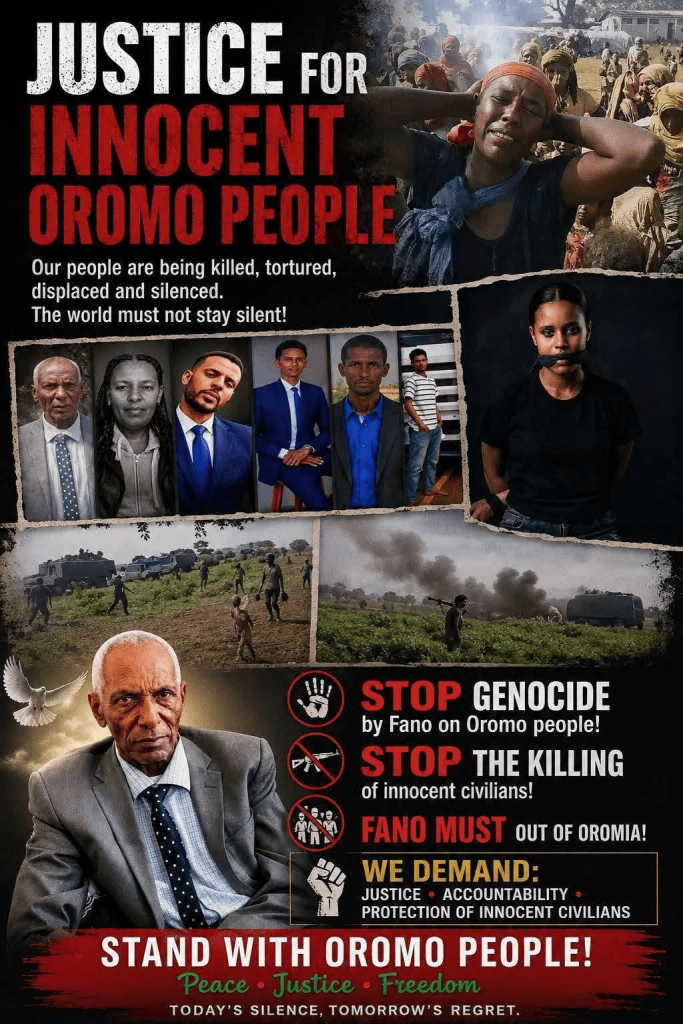
As violence escalates in Ethiopia’s most populous region, a growing chorus of voices is demanding accountability, protection, and peace for the Oromo people.
The plea is urgent and uncompromising: “Stop the killing of Oromo civilians! Stop violence against the Oromo people! Fano must leave Oromia!” These calls reflect a deep-seated crisis that has gripped the Oromia region, where civilians find themselves caught in the crossfire of multiple armed conflicts.
The Human Toll of Conflict
Recent reports paint a harrowing picture of the violence unfolding across Oromia. The Ethiopian Human Rights Commission (EHRC) has documented atrocities including killings, bodily injuries, abductions, displacement, and destruction of property in the Arsi Zone of Oromia . The violence is not isolated—it reflects a broader pattern of human rights abuses across multiple regions, including Amhara and Tigray .
In one particularly devastating incident, armed men killed more than 20 civilians in Oromia. Local civil servants reported that Fano militants attacked civilians “with swords and guns” in the Nono district, approximately 110 kilometers southwest of Addis Ababa, resulting in 25 deaths including women and children, with four more later dying in hospital . A regional security official confirmed that Fano militants had been active in the region for four years, “taking advantage of opportunist moments to launch attacks against civilians and loot property”.
The Humanitarian Crisis
The violence has created a severe humanitarian crisis. The United Nations reports that 3.2 million children are out of school due to the conflict . Hospitals and clinics have been attacked—in 2023, the International Committee of the Red Cross reported that “almost all” of 42 health posts in Oromia’s Beji area had been looted or destroyed . Aid organizations have struggled to distribute supplies, leading to severe malnutrition .
Civilians describe a terrifying reality. One woman from Oromia’s Shewa region told of her family facing constant harassment and extortion from armed groups, with her uncle detained until a 100,000 Ethiopian birr ransom was paid . A coffee farmer from Wollega has been unable to return home for three years due to the security situation, with his harvest stolen by armed fighters .
A Call for Justice and Peace
The demands for justice and protection are clear. As one civil servant noted, the situation “has worsened in recent years” . The Red Cross has warned that the current clashes have “devastating consequences” for civilians, particularly in remote areas, noting that “Oromia doesn’t make the headlines, yet civilians continue to be deeply affected by violence” .
The call for Fano to leave Oromia reflects the reality that multiple armed groups are active in the region, each contributing to the suffering of civilians. For the Oromo people, the demand is simple but profound: protection, justice, and accountability for those who have committed atrocities.
Without decisive action, the cycle of impunity and violence will continue to erode Ethiopia’s stability and legitimacy . The international community, regional bodies, and Ethiopian authorities face a critical choice: allow the violence to continue, or take meaningful steps to protect civilians and bring perpetrators to justice.

OLF Leadership Engages in High-Stakes Consultations Amid Oromo Unity Push
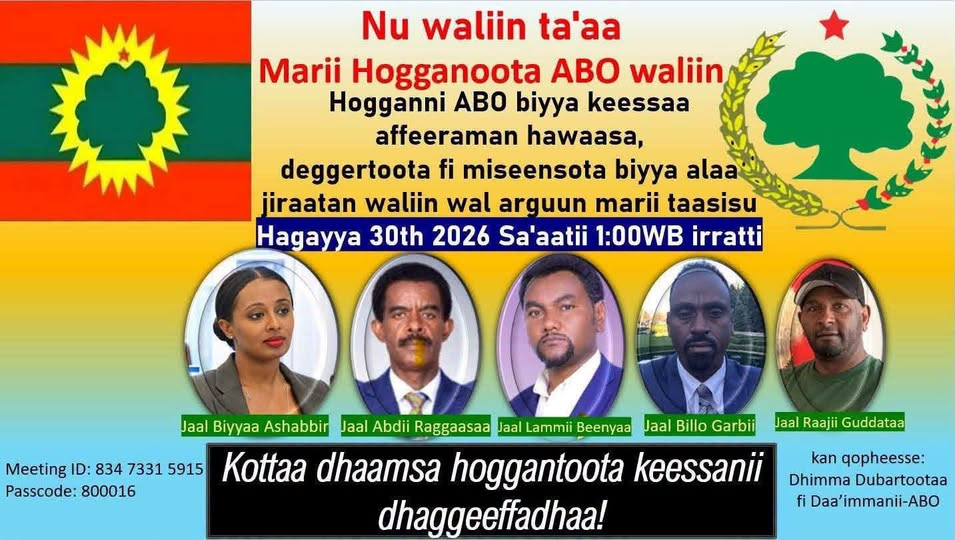
(Finfinne, Oromia)– As Ethiopia’s political landscape grows increasingly volatile, the Oromo Liberation Front (OLF) has convened a series of high-level meetings with its leadership cadres, grassroots members, and traditional institutions—a strategic push to consolidate Oromo unity in the face of mounting security threats and political uncertainty.
A Call for Unity and Vigilance
The most recent consultations, held at the party’s headquarters in Gullalle, brought together Qondaaltota (junior leaders), Dabballoota (cadres), and the general membership for extensive deliberations. Senior OLF leader Jaal Abdii Raggaasaa—who also serves as Member Secretary-General—addressed members with a stark message on the nature of the struggle: that commitment, not temporary strength, determines victory .
“Some individuals enter the organization (Irbuu) but then exploit it—seeking personal benefit rather than serving the people’s cause. When such people exist, it is they themselves who suffer the consequences, not ABO and not others.”
— Jaal Abdii Raggaasaa, OLF Senior Leader
Abdii emphasized that the work of building the Oromo nation extends beyond Ethiopia’s borders—stretching into the diaspora wherever Oromos reside . He stressed that grassroots organizing, beginning “from the village level,” remains essential to lasting political change .
Leadership’s Resolve: “We Must Speak as ABO”
Reflecting on the inevitable challenges facing liberation movements, Abdii offered a sobering reflection:
“In the struggle ABO is waging, even if we face extinction—if we are reduced to just one person—we must speak as ABO. We must not hide ourselves. We may face extinction, but we must not retreat into silence.”
Jaal Yaasoo Kabbabaa Hordofa, another OLF official, reinforced this determination, declaring that “OLF is the center of Oromo peace.” He noted that if OLF participates in elections this year, it will mark the first and largest chapter in Oromo electoral history—an opportunity that must be seized, not as a preference but as an obligation for all members .
Political Prisoners and the Demand for Justice
The OLF has consistently demanded the immediate release of political prisoners who continue to suffer in detention without due process, calling upon both Abbaa Gadaas and religious authorities to actively work toward restoring security in Oromia .
Following the announcement of the 7th General Election results—which saw the ruling Prosperity Party secure a parliamentary majority and OLF fail to win any seats despite fielding 163 candidates—the party issued a pointed critique .
“The OLF once again firmly reiterates that the situation in Oromia and across Ethiopia cannot be resolved merely by declaring an election victory; rather, to prevent worse outcomes, an inclusive, genuine, and transparent dialogue must be conducted without wasting further time.”
The front noted that while it had filed formal grievances with the National Election Board regarding electoral infractions, it does not believe the board investigated these appeals “with the necessary depth, fairness, and justice” .
A Call for Oromo Political Unity
The OLF’s leadership has also renewed its call for all Oromo political organizations to work together to shorten the path to liberation, stating that this is “the most important time” for coordinated action . The executive committee has emphasized that while some previously allied groups have disrupted cooperation due to shifting political dynamics, they must realize that their moves should serve the broader Oromo interest .
The OLF also reiterated its support for the People’s Alliance for Freedom and Democracy (PAFD) and the transitional roadmap presented at the February 2018 London conference. The party calls on all stakeholders—including political elites, academics, and the international community—to contribute to an all-inclusive transitional process that offers a long-term political solution .
The Broader Context: Conflict and Fragility
The leadership’s renewed unity push comes as violence escalates in western Oromia. ACLED data shows that Fano militias—linked to the Amhara Fano National Movement—have increased their activities in Oromia’s Horo Guduru, Kellem, East, and West Wollega zones by 80% since January 2026 . This follows the establishment of the Wollega Fano Bizamo Command in December 2024, which has since fallen under the broader Tsimdo movement—a coalition reportedly aligned with the Tigray People’s Liberation Front (TPLF) and Eritrea, aiming to remove the Ethiopian government.
Amnesty International released a report in August 2026 titled “Because I am Oromo,” alleging that Ethiopia’s government has “ruthlessly targeted” its largest ethnic group—subjecting thousands of Oromos to unlawful killings, torture, and enforced disappearance . The government has denied the allegations.
Looking Forward
The OLF’s consultations reflect a movement at a crossroads—seeking to navigate electoral rejection, internal cohesion, and external threats while maintaining its decades-long commitment to self-determination. As one participant at the February meeting put it: “An awakened nation is built, and the built is united.”
Whether that unity can withstand the mounting pressures—from state security forces, inter-ethnic violence, and international geopolitical maneuvering—remains the central question facing the Oromo struggle today.

Oromia: our history, our struggle and our future
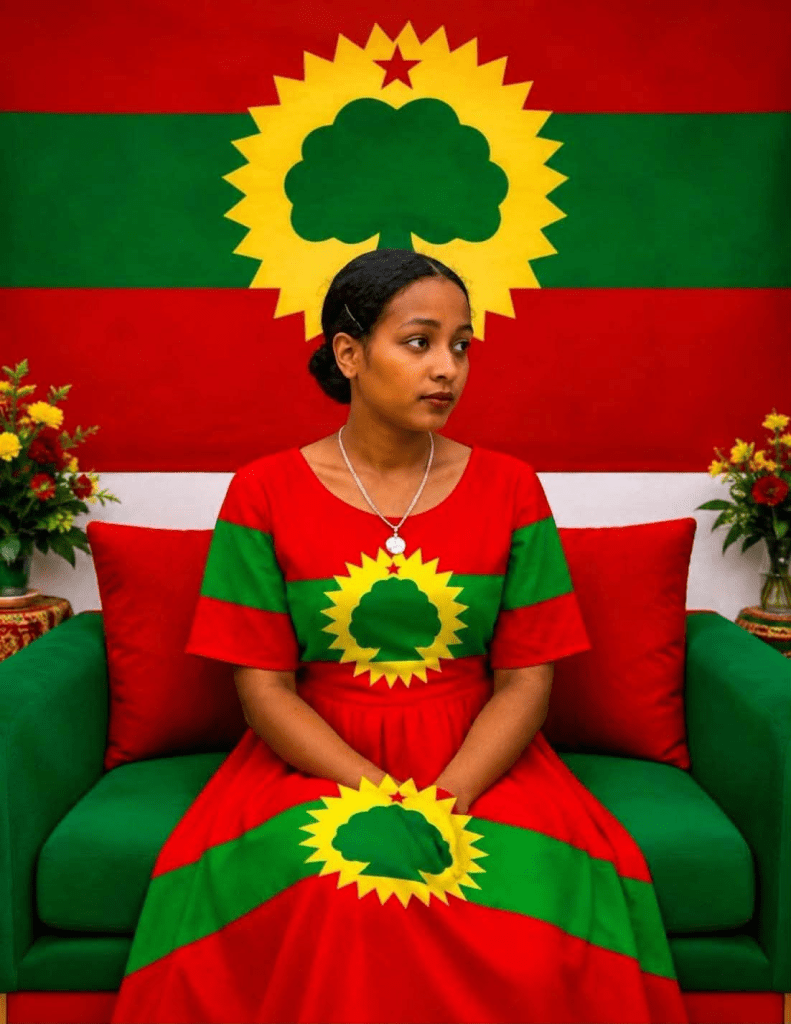
The history of the Oromo people is a profound narrative of resistance, resilience, and a continuing struggle for self-determination. This journey is marked by a distinct cultural identity, a long history of political marginalization, and an ongoing effort to shape a prosperous future.
 Our History: Identity, Conquest, and Resistance
The Oromo have a distinct cultural and political identity, traditionally organized under the Gadaa system, an indigenous egalitarian and democratic governance model . However, this autonomy faced a major turning point in the late 19th century during the “Ethiopian imperial conquest,” when Oromo territories were incorporated into the Ethiopian Empire through a process that many Oromo scholars characterize as colonization and subjugation .
This political domination continued through subsequent regimes, creating a deep-seated grievance centered on marginalization and exploitation by successive central governments .
 Our Struggle: Liberation, Protest, and Political Action
The struggle for liberation is multifaceted, taking political and social forms:
· Political Movements: The Oromo Liberation Front (OLF) has been the primary political vehicle, fighting for nearly half a century to liberate Oromo society from what it describes as “Abyssinian/Ethiopian settler colonialism” .
· Mass Protests: In 2014, a wave of protests erupted, driven by a generational “distributive crisis” and articulated through demands for ethnic self-determination against perceived domination by the Tigray People’s Liberation Front (TPLF). These protests were significantly coordinated by the diaspora via social media and satellite TV .
· Fragile State Relations: The current federal system, while recognizing ethnic regions, has often seen the Oromo regional government as lacking legitimacy, making the state’s control more contested here than in other areas . A tangible symbol of this tension is the ongoing dispute over land and expansion around Addis Ababa, which is geographically an enclave within Oromia .
 Our Future: Development, Autonomy, and Uncertainty
The future is a delicate mix of economic potential and political uncertainty:
· Economic Aspiration: The development of the Gada Special Economic Zone near Addis Ababa, inspired by Chinese economic models, signals an economic future based on industry, trade, and job creation .
· Persistent Conflict: The reality of current instability is stark. The Chinese Embassy warns its citizens against traveling to many parts of Oromia, particularly the western zones and areas north of the A4 and A3 highways, due to “extremely high” or “high” risk .
· Uncertain Path: The struggle for autonomy continues through both political and armed movements like the Oromo Liberation Army (OLA) . While significant economic development is planned, the path forward remains deeply insecure for many within the region.
The Oromo journey is one of leveraging a proud heritage to build a future of self-determination and prosperity, yet it navigates the deeply complex and often violent currents of Ethiopian state politics.
I hope this overview provides a balanced perspective. If you are interested in a specific aspect—such as the Gadaa system, the role of the diaspora, or the details of the current conflict—please let me know, and I can explore it further.

OBITUARY: Liiban Jaldeessaa Liiban, Respected 69th Abbaa Gadaa of the Borana, Passes Away in Finfinne
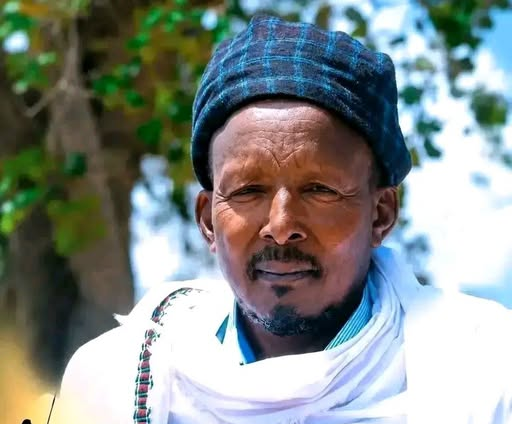
A Pillar of Oromo Heritage and Custodian of the Gadaa Tradition Has Left Us
By Dhabessa Wakjira
(ONA, Finfinne, Oromia) – The Oromo nation is mourning the loss of a distinguished elder and leader. Liiban Jaldeessaa Liiban, the 69th Abbaa Gadaa of the Borana, has passed away in Finfinne while receiving medical treatment. He was a revered figure who led his community from 2000 to 2008.
His leadership was defined by the principles of the Gadaa system, an indigenous institution recognized by UNESCO as a masterpiece of intangible cultural heritage . As Abbaa Gadaa, he was a central figure in a system that regulates not only the political and social life of the Oromo but also its religious and judicial matters. The role is one of immense responsibility, characterized by democratic principles, checks and balances, and a commitment to restorative justice.
A Legacy Rooted in Tradition and Resilience
The Abbaa Gadaa is the elected traditional leader within the Borana Oromo Gadaa system, a governance structure where authority is transferred through established eight-year cycles . The Gadaa system is more than a political institution; it is a way of life. It organizes the community into age grades, manages natural resources, resolves conflicts, and ensures the preservation of cultural values.
The role of an Abbaa Gadaa is complex. They are expected to be competent orators, skilled in the comprehension of laws and customs, and must demonstrate exceptional leadership qualities throughout their lives before assuming the role . As an ethical leader, an Abbaa Gadaa is tasked with ensuring peace, mobilizing the community for development projects like digging wells, and showing sympathy for the poor .
During his tenure, Liiban Jaldeessaa Liiban navigated a period in which a significant majority of respondents perceived substantial challenges, including changes in average rainfall and an increase in soil erosion . His leadership was a steady hand during difficult times, guiding his community with wisdom and resilience.
The Gadaa System: A Democratic Tradition
The Gadaa system, which Liiban Jaldeessaa Liiban so ably represented, is one of the most sophisticated indigenous governance systems in the world . It operates on principles of democracy, accountability, and the peaceful transfer of power. The system is structured around five classes (Gadaa grades) that succeed each other every eight years, ensuring that leadership is never concentrated in one individual or group for too long .
As the 69th Abbaa Gadaa, Liiban Jaldeessaa Liiban was a living embodiment of this ancient tradition. His leadership was not merely a position but a sacred duty—a responsibility to uphold the laws, customs, and values of his people.
A Nation Mourns
His passing is a significant loss for the Borana community and the wider Oromo nation. The Oromian News Agency extends its deepest condolences to his family and all who were touched by his leadership. His legacy as a keeper of the Gadaa tradition and a leader of his people will be remembered.
As is the custom during times of passing, the Oromo community reflects on the words of solace: “Waaqi lubbuu isaa nagaan haa boqochiisu” (May God rest his soul in peace).
The Oromo nation has lost a pillar of its heritage, but the principles of the Gadaa system—democracy, community, and resilience—that he represented, continue to guide the struggle and shape the future of the Oromo people.
Injifannoon Ummata Oromoo!
Waaqi lubbuu isaa nagaan haa boqochiisu!
This obituary is dedicated to the memory of Liiban Jaldeessaa Liiban, a leader, elder, and custodian of Oromo tradition.

Preserving the Sacred: Gadaa Elders Call for Authentic Celebration of Goobee and Shinooyyee
A Timeless Tradition at Risk of Losing Its Cultural Soul
By Dhabessa Wakjira
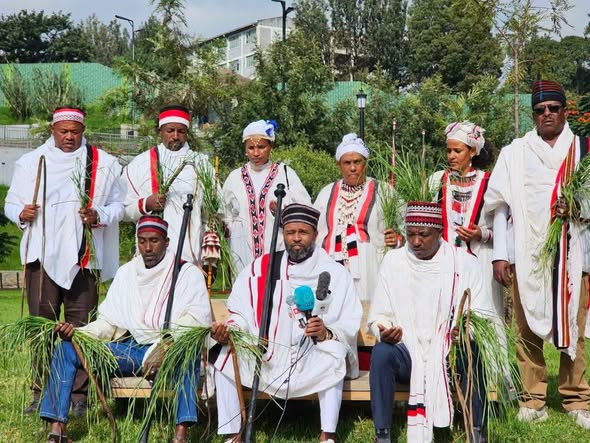
In the lush landscapes of Oromia, as the dark, rainy season gives way to the bright days of spring, a sacred celebration stirs. Goobee and Shinooyyee—the traditional games of young men and women—are more than a cultural event. They are a profound expression of Oromo identity, a living connection to the Gadaa system, and a thanksgiving to Waaqa (God) for the renewal of life.
But as these festivals have grown in popularity, the elders of the Gadaa system are raising a critical concern: the celebrations must remain rooted in their ancient customs and traditions.
The Voice of the Elders
The Abbootii Gadaa Tuulamaa—the Gadaa leaders of the Tulama Oromo—have issued a clear and urgent message. The Goobee and Shinooyyee festivities must be conducted “without abandoning the original culture and traditions.” This is not a mere suggestion; it is a call to protect the very soul of the tradition.
According to the elders, the primary purpose of these celebrations is to welcome the season of Birraa (spring). The games are not simply for entertainment; they are a heartfelt expression of love, a plea for blessings, and a prayer for hope, peace, and unity among the Oromo people. The specific rituals and protocols of Goobee and Shinooyyee are designed to channel the community’s collective spirit toward these goals.
The Rituals and Their Purpose
The Gadaa leaders described the Goobee and Shinooyyee celebrations as a structured, age-specific rite. The games are considered an act of love and blessing, involving prayers to God and expressions of good hope.
Goobee is the festival for young men, while Shinooyyee is for young women. Both are celebrations of spring’s arrival and the feelings of hope and love it brings, but they follow distinct traditional paths:
- Shinooyyee: The night before the main celebration, unmarried girls traditionally prepare the qunnii (grass) in their homes and sleep with it overnight. On the festival day, they carry it to the home of a respected elder, where they receive blessings. They then go from house to house, passing on the qunnii and spreading blessings throughout the community.
- Goobee: Similarly, the young men’s games are governed by specific cultural protocols designed to honor the community’s elders and the traditional order.
A Tradition Under Pressure
The concern voiced by the Abootii Gadaa is that the festival’s deep meaning is being diluted. They observe that “from time to time, individuals are performing un-cultural acts,” a practice that threatens to corrupt the sacred nature of the celebration. By emphasizing the traditional roles—requiring that participants be unmarried and adhere to the age-old customs—the elders are seeking to preserve the festival’s core purpose.
They have also clarified that the games are open to everyone, including married couples and older community members, but the central ritual is the purview of the youth, who are at the specific life stage for this rite of passage.
A Celebration of Unity and Identity
Despite these concerns, the Abootii Gadaa affirmed that Goobee and Shinooyyee are central pillars of Oromo cultural identity. The elders explained that while the festivities may have different names in different parts of Oromia, they are “a common culture for all Oromo people.” This shared heritage serves as a powerful unifier, strengthening social bonds and ensuring the continuity of Oromo history for future generations.
Conclusion: A Call to Protect the Heritage
The message from the Abbootii Gadaa Tuulamaa is a resounding call to action. As the Oromo people continue to revive and celebrate their cultural heritage, the essence of these traditions must not be lost. The authenticity of Goobee and Shinooyyee must be protected, ensuring that they remain a “game of love, blessing, prayer to God, and good hope.”
The elders are not simply guarding a memory; they are nurturing a living tradition that defines the identity of a people.

The Unrelenting Struggle: Oromo Resistance and the Brutal Reality of Fano Atrocities
A Reflection on the Ongoing Crisis in East Wallagga and Horro Guduru
By Maatii Sabaa
To this day, the Oromo people have been subjected to the brutal force of the Fano militia. According to a report compiled by the United Oromo Evangelical Church and the Oromia Support Group, the atrocities are widespread—executions, torture, arbitrary detentions, destruction of property, and other acts of violence allegedly committed against Oromo civilians by both Ethiopian government forces and the Fano Amhara militia .
The deaths of fathers, mothers, and children—Oromo lives lost—are met with a chilling refrain: “It is nothing, be patient.” Behind every statistic is a family destroyed, a child orphaned, or a community traumatized. Silence in the face of such suffering only deepens the crisis .
But patience has its limits. When Oromo people are killed and their oppressors dance, those who call themselves “Fano heroes” celebrate. Yet when the Oromo rise to defend themselves, the same voices cry out: “The civilians are finished!” But the truth is simple: self-defense is a natural right. It is not a crime; it is an instinct for survival.
The Conspiracy Against Oromo Self-Defense
There is a deliberate campaign to deny the Oromo people their fundamental right to self-defense. The situation in the East Wallagga and Horro Guduru zones is particularly alarming.
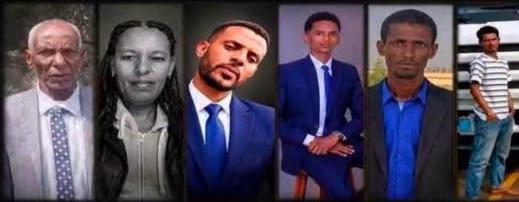
In the Gida Ayana district of East Wallagga, a brutal attack on August 19, 2026, targeted innocent civilians. A bank manager traveling with cash from Gida Ayana to Nekemte was killed in an ambush at Tulu Lencha . Kaffaloo Nagasaa Dayyaas, a farmer beloved in his community, was also among the victims . According to residents, Fano forces attacked ambulances, killing patients and a midwife, in addition to the bank managers and passengers . More than 60 people were killed in the attack, over 70 were wounded, homes were looted, and the violence displaced 20,000 people .
This is not a spontaneous development; it is a calculated plan that has been in motion since at least 2019. A UN document recorded that since 2018, Fano militia has been responsible for a substantial number of killings in East Wollega and Horo Guduru zones . The campaign includes the burning of 200 homes in Homa Galesa village, the killing of 21 villagers in Tullu Moti village, and the brutal beheading of a teenager in Darra district .
As the Oromo people face relentless attacks, their attempts to organize and defend themselves are sabotaged from within. The message is clear: while Oromo fighters are disarmed and disbanded, their enemies are being armed and empowered.
The Cost of Betrayal
The Oromo people have been subjected to a decades-long campaign of marginalization, dispossession, and violence. The current wave of attacks in East Wallagga and Horro Guduru is not an isolated tragedy—it is the latest chapter in a long history of brutality.
But what makes this moment particularly devastating is the silence—and complicity—of those who should be protecting the Oromo people. When Oromo civilians are killed, the world is told to look away. When Oromo resistance is met with disproportionate force, the narrative is twisted to blame the victims.
This is not just a failure of governance; it is a betrayal of the most basic principles of justice and humanity. The Oromo Global Forum has called upon the United Nations Human Rights Council to initiate an independent international investigation into the documented allegations .
A Call to Action
The Oromo people have waited too long for justice. They have been told to be patient while their children are killed, their villages burned, and their land stolen. But patience is not a virtue when it is used as a tool of oppression.
Self-defense is not aggression. It is the right of every people to protect their lives, their families, and their communities. To deny the Oromo this right is to condemn them to perpetual victimhood.
The international community must look beyond the carefully constructed narratives and see the truth: the Oromo people are under attack, and they are fighting for their survival.
Conclusion: The Truth Will Prevail
The conspiracy to silence the Oromo people will ultimately fail. The truth of what is happening in East Wallagga and Horro Guduru—and across Oromia—will not be hidden forever. The blood of the innocent cries out for justice, and it will be heard.
As the Oromo people continue to resist, they do so not out of hatred, but out of love for their children, their land, and their future. They fight for the right to live in peace, free from fear and oppression.
Oromoon of-ittisuu qaba. Of-ittisuun seera uumamaa ti. (The Oromo people have the right to self-defense. Self-defense is a natural law.)

The Unrelenting Struggle: Oromo Resistance and the Brutal Reality of Fano Atrocities
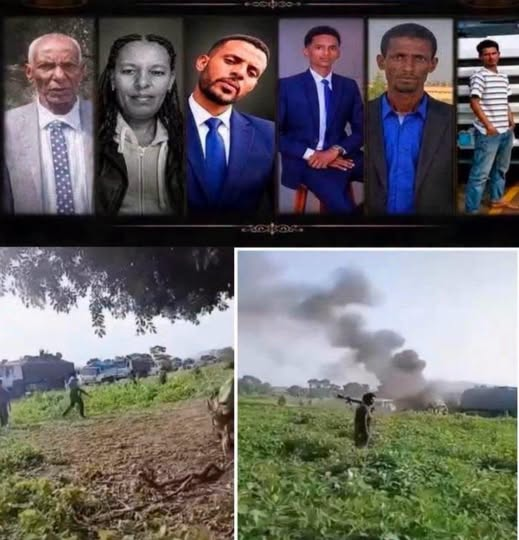
A Reflection on the Ongoing Crisis in East Wallagga and Horro Guduru
By Daandii Ragabaa
To this day, the Oromo people have been subjected to the brutal force of the Fano militia. The deaths of fathers, mothers, and children—Oromo lives lost—are met with a chilling refrain: “It is nothing, be patient.”
But patience has its limits. When Oromo people are killed and their oppressors dance, those who call themselves “Fano heroes” celebrate. Yet when the Oromo rise to defend themselves, the same voices cry out: “The civilians are finished!” But the truth is simple: self-defense is a natural right. It is not a crime; it is an instinct for survival.
The Conspiracy Against Oromo Self-Defense
There is a deliberate campaign to deny the Oromo people their fundamental right to self-defense. Behind the scenes, a web of actors—some in government, others in the media, and still more in diplomatic circles—works tirelessly to conceal the truth.
The situation in the East Wallagga and Horro Guduru zones is particularly alarming. Here, a strategic ploy is unfolding. Armed groups are being systematically dismantled within the regional state of Oromia (RSO) and reconstituted under the banner of Fano. This is not a spontaneous development; it is a calculated plan that has been in motion since at least 2019.
As the Oromo people face relentless attacks, their attempts to organize and defend themselves are sabotaged from within. The message is clear: while Oromo fighters are disarmed and disbanded, their enemies are being armed and empowered.
The Cost of Betrayal
The Oromo people have been subjected to a decades-long campaign of marginalization, dispossession, and violence. The current wave of attacks in East Wallagga and Horro Guduru is not an isolated tragedy—it is the latest chapter in a long history of brutality.
But what makes this moment particularly devastating is the silence—and complicity—of those who should be protecting the Oromo people. When Oromo civilians are killed, the world is told to look away. When Oromo resistance is met with disproportionate force, the narrative is twisted to blame the victims.
This is not just a failure of governance; it is a betrayal of the most basic principles of justice and humanity.
A Call to Action
The Oromo people have waited too long for justice. They have been told to be patient while their children are killed, their villages burned, and their land stolen. But patience is not a virtue when it is used as a tool of oppression.
Self-defense is not aggression. It is the right of every people to protect their lives, their families, and their communities. To deny the Oromo this right is to condemn them to perpetual victimhood.
The international community must look beyond the carefully constructed narratives and see the truth: the Oromo people are under attack, and they are fighting for their survival.
Conclusion: The Truth Will Prevail
The conspiracy to silence the Oromo people will ultimately fail. The truth of what is happening in East Wallagga and Horro Guduru—and across Oromia—will not be hidden forever. The blood of the innocent cries out for justice, and it will be heard.
As the Oromo people continue to resist, they do so not out of hatred, but out of love for their children, their land, and their future. They fight for the right to live in peace, free from fear and oppression.
Oromoon of-ittisuu qaba. Of-ittisuun seera uumamaa ti.
The Oromo people have the right to self-defense. Self-defense is a natural law.






