Oromia Restructures: Six New Administrative Clusters and Their Administrators
Ethiopia’s largest federal state moves to a clustered governance model, appointing six vice presidents to oversee regional zones
(ONA, Finfinne — Oromia)– Ethiopia’s largest and most populous federal state, is undergoing a significant administrative restructuring. Under a newly approved arrangement, the state will be organized into six administrative “clusters,” each led by a vice president responsible for coordinating the zones within their region.
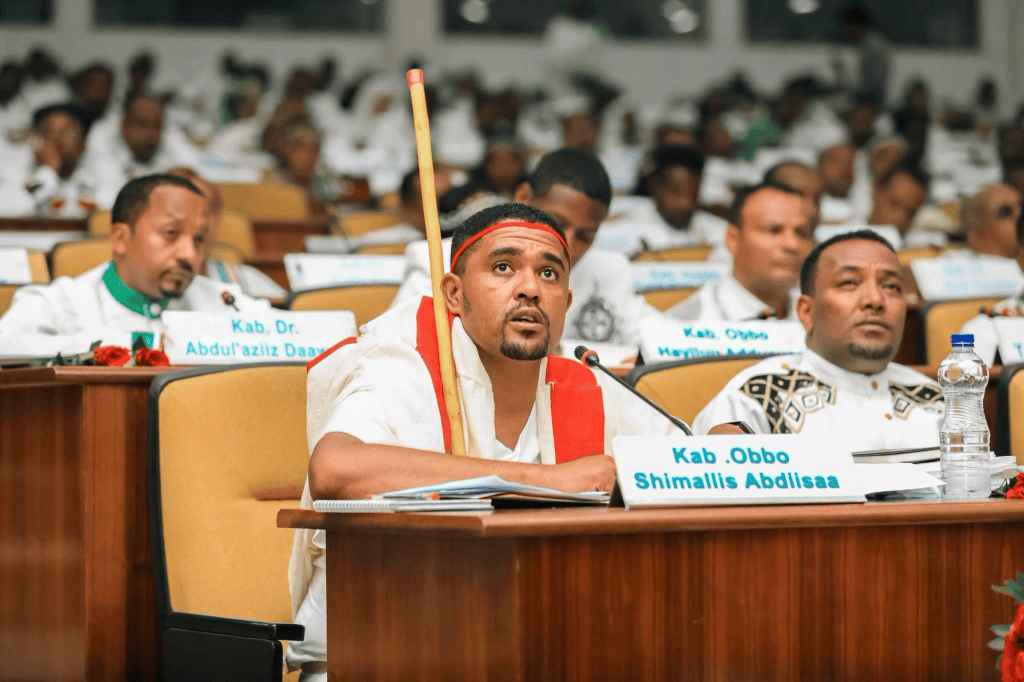
The plan was approved during the first session of the Oromia Regional Council (Caffee Oromia) held in Adama. Governor Shimelis Abdisa was successfully reelected, and he subsequently nominated six vice presidents, all of whom were confirmed by the council.
The Six Clusters and Their Administrators
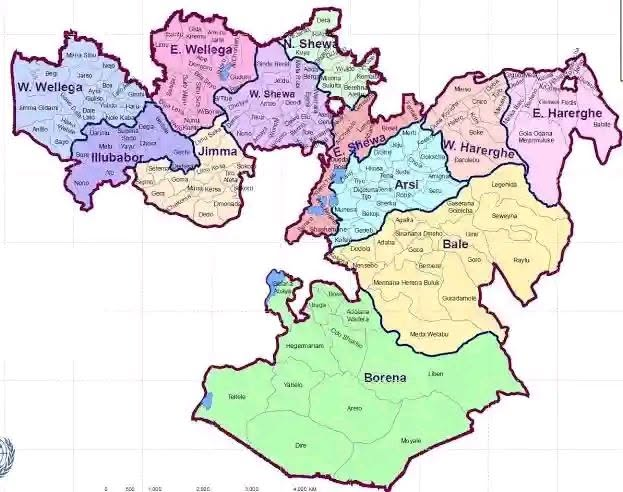
According to the approved plan, Oromia will be divided into the following six administrative regions:
1. East Oromia (2 Zones) — Administrator Ato Abdurahman Abdela
Oversees West Hararghe and East Hararghe. These zones are located in eastern Oromia, bordering the Somali Region and the Harari region.
2. Southeast Oromia (4 Zones) — Administrator Ato Ahmed Idris
Oversees Arsi, Bale, West Arsi, and East Bale. This cluster spans the Rift Valley area and includes important ecological resources such as Bale Mountains National Park.
3. South Oromia (4 Zones) — Administrator Ato Ahmed Haji
Oversees Guji, West Guji, Borena, and East Borena. These areas border Kenya and are primarily characterized by pastoralism and cross-border trade.
4. West Oromia (4 Zones) — Administrator Ato Melaku Melaku
Oversees East Wollega, West Wollega, Kellem Wollega, and Horro Guduru Wollega. This region is one of Ethiopia’s important coffee-producing areas.
5. Southwest Oromia (3 Zones) — Administrator Dr. Reshad Kemal
Oversees Iluababor, Buno Bedele, and Jimma. Jimma is known as Ethiopia’s coffee capital, and the region is rich in agricultural and forestry resources.
6. Central Oromia (4 Zones) — Administrator Dr. Mengistu Bekele
Oversees East Shewa, North Shewa, Southwest Shewa, and West Shewa. This cluster surrounds the capital, Addis Ababa, and includes important cities such as Adama.
Background and Controversy
This administrative restructuring comes at a time of profound change in Ethiopia’s political landscape. Reports suggest that the ruling Prosperity Party is considering a broader “clusterization” reform of the federal system nationwide, and Oromia’s six-cluster plan may be part of that larger blueprint.
Supporters argue that dividing a vast administrative region into smaller management units can bring government closer to the people, improve administrative efficiency, and enhance public service delivery. Oromia covers an area of 353,600 square kilometers with a population of over 27 million, and single-tier management indeed faces enormous challenges.
However, criticism is equally strong. Some analysts suggest the restructuring may carry political motives — weakening Oromia’s cohesion and negotiating power as a single political entity by dividing it. Some commentators have described it as “a systematic weakening of Oromo political power.”
Human rights observers also worry that pushing through such a major administrative reform while security conditions in parts of Oromia remain unstable could exacerbate tensions at the local level.
What Comes Next
With the six vice presidents now in place, they are expected to begin forming coordination bodies for each cluster. However, the specific division of powers, financial arrangements, and relationships with existing zonal administrative units remain to be clarified.
In his address to the council, Governor Shimelis stated that the new term would “consolidate development gains and advance reforms,” but did not elaborate on the controversial aspects of the administrative reorganization.
For Oromia — a central player in Ethiopia’s political landscape — this quiet administrative revolution may have implications far beyond a single list of appointments.

Posted on September 29, 2026, in Aadaa, Afaan, AMES, Bokkkuu, Diaspora, Election, Events, family violence, Finfinne, freedom, gender, Grief Support, health, Information, Irreechaa, Kindness, Language, Media, mental health, News, Oromia, Oromo diaspora, Press Release, Promotion, SBO, SBS, Siinqee, Sirna Oromo, VMC. Bookmark the permalink. Leave a comment.






Leave a comment
Comments 0