Historic Milestone: The First Diaspora Structure Council of the ABO Concludes with Resolute Decisions
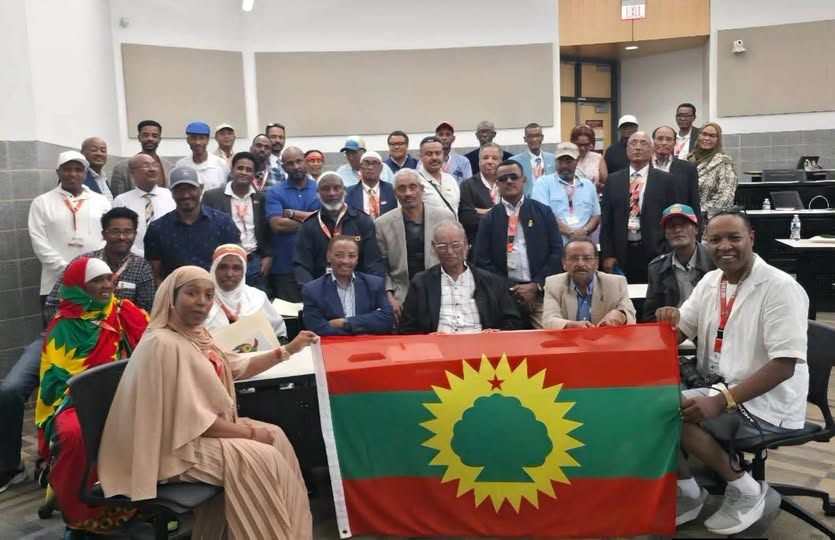
Minneapolis Hosts Landmark Gathering as Oromo Diaspora Leaders Forge a Unified Path Forward
By Dhabessa Wakjira
(Minneapolis, Minnesota — Hagayya 5, 2026) In a historic display of organizational unity and democratic resolve, the Kora 1ffaa Caasaa ABO Biyyoota Ambaa —the First Diaspora Structure Council of the Oromo Liberation Front (ABO)—successfully concluded its proceedings in Minneapolis, Minnesota. Convened over two days, Hagayya 4–5, 2026, the gathering brought together a broad cross-section of the Oromo diaspora community, including representatives from the ABO Diaspora Structure, transitional leaders, families of fallen fighters, elders, scholars, artists, youth, women, and community organizations. Dignitaries from the Caayaa Utubaa ABO and Caayaa Biiftuu Ganamaa were also in attendance, lending their wisdom and authority to the proceedings.
The participation was overwhelming—with over eighty-seven percent (87%) of invited representatives in attendance, ensuring that the gathering met the necessary quorum for legitimacy and decision-making. As the Preparatory Committee Chair, Jaal Yaddii Abdulshakuuri, had confirmed prior to the event, the conditions for a successful council were met, and the assembly proceeded with confidence and purpose.
A Ceremonial Opening: Tradition and Blessings
In keeping with Oromo cultural tradition, the council opened with the recitation of the Eebba Manguddoo—the Great Blessing—led by elders and religious figures, alongside the ceremonial contributions of the Haadholii Siiqqee (Siinqee women). The opening ceremony, which featured the singing of the Faaruu Alaabaa (national anthem), set a tone of reverence and unity, connecting the political work of the council to the cultural and spiritual foundations of the Oromo people.
Jaal Shuggux Galataa, the Coordinator of the Diaspora Structure Council, formally opened the proceedings. Following the opening, he presented a comprehensive report on the work accomplished over the past years. The report assessed the progress, achievements, and challenges encountered within the movement, offering a candid reflection on both victories and shortcomings. After extensive discussion and deliberation, the report was approved by the assembly.
Eighteen Resolute Decisions: A Blueprint for Action
Following thorough deliberations on various foundational issues, the First Diaspora Structure Council passed a series of 18 landmark decisions, establishing a clear path for the diaspora’s role in the Oromo liberation struggle. These decisions are as follows:
1. Approval of the By-Laws
The Council reviewed, debated in depth, and approved the By-Laws of the ABO Diaspora Structure, incorporating necessary amendments before ratification.
2. Election of the Leadership Council
The Council democratically elected a 39-member Leadership Council (Mana Marii Caasaa ABO Biyyoota Alaa) to lead the Diaspora Structure for the next three years, entrusting them with the mandate to guide the diaspora’s organizational work.
3. Commitment to the Struggle
The newly elected leadership members pledged their commitment, taking an oath to fulfill their responsibilities with integrity and dedication, ensuring that the ABO’s struggle achieves its objectives.
4. Institutional Strengthening
The Council resolved that the diaspora’s contribution to the Oromo liberation struggle is not to be seen as a supplementary effort. Recognizing institutional strengthening as a priority, it decided to fortify existing structures and establish new ones where absent, across all diaspora chapters and communities.
5. Engagement with Civic Organizations
The Council committed to engaging with and strengthening civic organizations and community groups, ensuring they contribute effectively to the struggle and amplify the Oromo voice.
6. International Advocacy and Diplomacy
The Council resolved to work with various governments and non-governmental institutions to establish international relations and alliances for the Oromo cause. This includes raising awareness of the oppression faced by Oromo people under the Ethiopian government and advocating for international support for the ABO’s struggle.
7. Support for Internal Struggles
The Council pledged to continue providing necessary support for the work of the ABO’s structures inside Oromia.
8. Supporting the ABO Inside Oromia
The Council committed to supporting the legal and political work of the ABO within Ethiopia, in accordance with national laws and electoral board regulations, ensuring the continuation of the struggle through all available means.
9. Confronting Atrocities
The Council resolved to expose and demand accountability for all atrocities committed by the Ethiopian government against the Oromo people, calling for an end to these acts and for those responsible to be held accountable.
10. Finfinne and the National Dialogue
The Council demanded that the ongoing “National Dialogue” process, which has been used to further divide Oromo land and undermine Oromo rights, be subjected to deep scrutiny. It called for a genuine, inclusive dialogue involving all parties, including opposition groups, that would serve the interest of all peoples of Ethiopia, not just narrow political agendas.
11. Opposition to the Extension of Term
The Council condemned the Ethiopian government’s actions to extend its term in office through military operations across Oromia under various pretexts, declaring its opposition to these maneuvers.
12. The Return of Finfinne and Dirree Dhawaa
Reaffirming that Finfinne and Dirree Dhawaa were illegally separated from Oromia in the past and have not been returned, the Council demanded their immediate return to Oromia.
13. Opposing Excessive Taxation
The Council called for an end to the excessive taxes imposed on Oromo farmers, merchants, and pastoralists, which are impoverishing communities, and demanded that these taxes be revised and reduced.
14. Adherence to the By-Laws
The Council affirmed that all its members are bound by the By-Laws ratified at this gathering and that they will support and work within the structures established by this Council.
15. Call for Ceasefire and Peace
Expressing grave concern over the ongoing armed conflict between the Oromo Liberation Army (WBO) and the Ethiopian government, which is causing immense loss of life and property, the Council called for an immediate cessation of hostilities. It urged the government to lift restrictions and engage in dialogue with the WBO to reach a lasting and just resolution.
16. Addressing Generational Injustices
The Council declared that Oromia and the Oromo people have endured over a century and a half of oppression and denial of their rights. At this critical juncture, when Oromo leadership is expected to govern, the people are experiencing unprecedented hardship. The Council demanded that the current system provide justice, dignity, and a peaceful existence for Oromo people in their own land.
17. Protection of the ABO’s Rights
While affirming that the ABO operates legally within Ethiopia to pursue the rights of the Oromo people, the Council condemned the government’s actions against the party—including the imprisonment of its leaders, the closure of its offices, the seizure of its property, and the restriction of its political activities. The Council demanded that the government respect the legal and political rights of the ABO to operate freely within the country.
18. Release of Political Prisoners
The Council called for the immediate release of all political prisoners who have been detained without due process, held in prisons, police stations, military camps, and other detention facilities across the country, demanding that they either be brought to court or released without delay.
A New Chapter in the Diaspora Struggle
The successful conclusion of the First Diaspora Structure Council marks a watershed moment in the Oromo liberation movement. For the first time, the diaspora’s role in the struggle has been codified through a comprehensive structure and set of mandates, ensuring that the community’s resources, voices, and efforts are directed with cohesion and purpose.
The gathering brought together the full spectrum of Oromo society in the diaspora—from elders and scholars to youth and artists—united in their determination to see the liberation of Oromia achieved. The presence of the families of fallen fighters served as a powerful reminder of the sacrifices upon which the movement is built.
Conclusion: The Struggle Continues, In Unity
As the council concluded its historic session, the spirit of “Injifannoon Ummata Oromoo” —Victory to the Oromo People—resounded through the halls of Minneapolis. The decisions made, the leadership elected, and the commitments sealed represent a renewed pledge to the cause of freedom, justice, and self-determination.
The work of the diaspora is now more organized, more strategic, and more impactful than ever before. The First Diaspora Structure Council has laid the foundation for a new phase in the struggle—one that harnesses the full potential of the Oromo diaspora while remaining firmly connected to the aspirations of the people in the homeland.
Injifannoon Ummata Oromoo!
ABO haa waaru!
Caasaa ABO Biyyoota Alaa haa jabaattu!
Hagayya 5, 2026
Minneapolis, Minnesota, USA
This feature article is dedicated to all who participated in this historic council, to the leadership of the ABO, and to the Oromo people everywhere who continue to strive for freedom, justice, and dignity.

Posted on August 8, 2026, in Aadaa, Afaan, Biography, Bokkkuu, Census, Diaspora, Election, Events, Face of Injustice, family violence, Finfinne, freedom, gadaa, gender, Grief Support, Gumaa, health, Information, Kindness, Language, Media, mental health, News, Oromia, Oromo diaspora, Oromo truth telling, Press Release, Promotion, SBO, Siinqee, Sirna Oromo. Bookmark the permalink. Leave a comment.






Leave a comment
Comments 0