Feature News: Death of 13-Year-Old Oromo Girl in Moyale Exposes the Human Cost of a Frozen Border Conflict
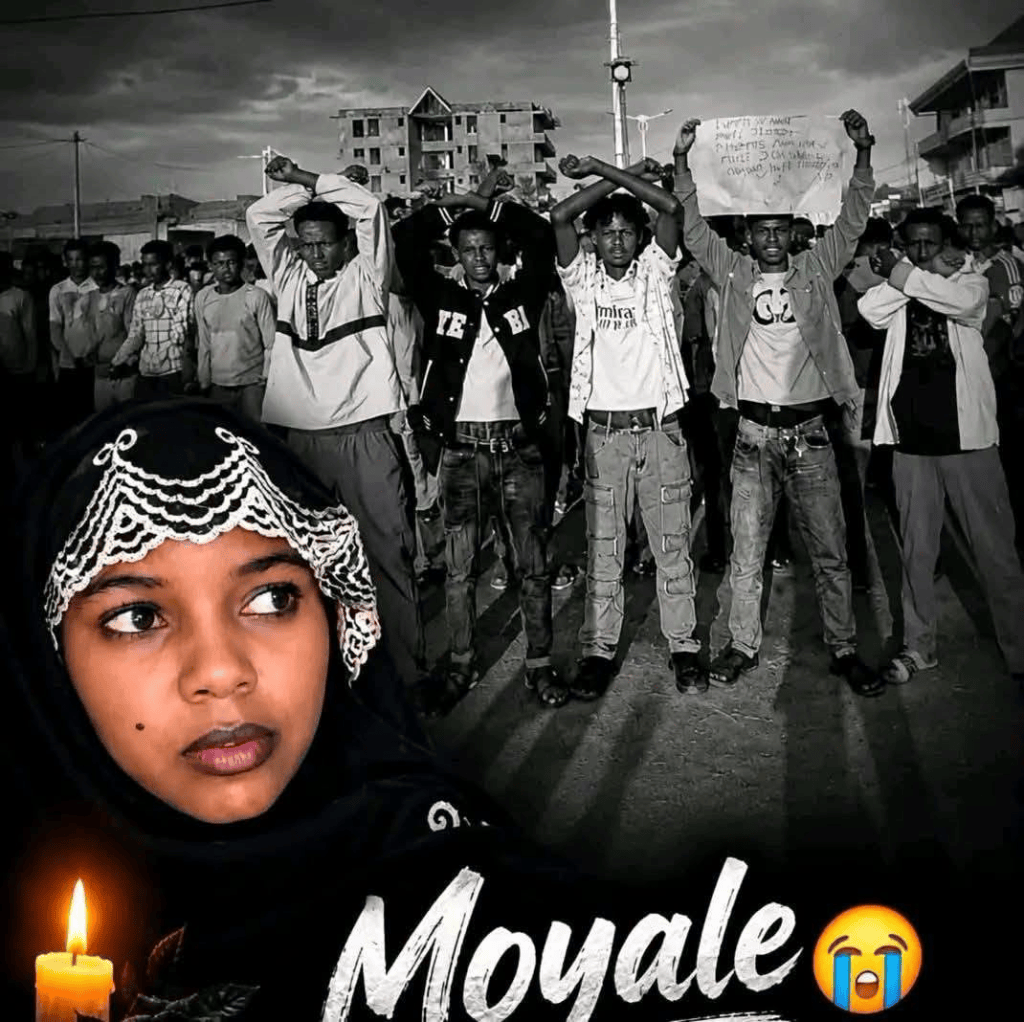
The killing of a teenage girl during a flag dispute in Moyale has reignited protests and grief in Borana, laying bare a decades-old territorial fracture between Oromia and Somali Region that neither federal intervention nor peace conferences have managed to heal.
By the time the gunfire stopped on 18 October, Diqqoo Jaataan Aagaa was dead. She was 13 years old.
According to residents who spoke to Addis Standard, the violence began when authorities from the Somali Region opened a new administration office in Moyale town, located in the Borana zone of Oromia regional state, and raised the Somali regional flag . Oromia local militia members and Somali Region police exchanged fire. The Ethiopian National Defense Force intervened to halt the shooting, but not before the girl was struck.
The accounts diverge sharply. Residents on the Oromo side accuse Somali Region police of shooting the child directly, with one resident describing the act as “cruelty and lawlessness” and claiming officers accused her of throwing stones . Residents from the Somali side insist she was caught in crossfire and that Somali forces did not target her. A security official who spoke to Addis Standard sided with the Oromo account, saying Somali Region security forces killed the girl in connection with the flag dispute .
Shuraa Waariyoo, the girl’s uncle, told Addis Standard that her body had not been buried as of Tuesday. He alleged that Somali Region forces had taken the body, and the family was still negotiating for its return .
The killing triggered immediate protests. Transport services were disrupted, businesses shuttered, and bus stations closed as security fears gripped the town . Elders and security officials reportedly agreed on Monday to remove the Somali Region flag, but that decision itself prompted counter-demonstrations from Somali residents, particularly in Kebele 02, deepening the standoff .
For the people of Moyale, the pattern is agonizingly familiar. Mallicha Diida, a resident of Kebele 02, told Addis Standard: “In Moyale, human blood has been spilled year after year” .
The roots of the recurrent violence lie in a border dispute that has never been fully resolved. Moyale sits at the frontier between the traditional territories of Somali and Oromo communities, both with vested interests in the area’s pastoral resources . A 2004 referendum was meant to settle the boundary between Oromia and Somali Region, but its implementation remains contested, and the underlying competition over land, pasture, and water continues to fuel clashes .
The scale of the suffering is staggering. Tensions intensified in July and August 2025 after the Somali Regional State approved an administrative restructuring plan creating new woredas and zonal administrations in contested territories. Subsequent clashes along the Oromia-Somali border displaced more than 288,000 people .
The death of a 13-year-old girl in a dispute over a flag is, in one sense, a singular tragedy. In another, it is the inevitable arithmetic of a conflict that has been allowed to fester for generations—where the symbols of administrative control carry life-and-death weight, and where the bodies of children become the price of unresolved boundaries.
The funeral arrangements for Diqqoo Jaataan Aagaa remain incomplete. Her family is still waiting for her body. In Moyale, the flags still fly, the militias still watch, and the question of whose land this is remains as unanswered as ever.

Posted on October 22, 2026, in Aadaa, Afaan, Election, Events, Face of Injustice, Finfinne, freedom, gender, Grief Support, health, Information, Kindness, Language, Media, mental health, News, Oromia. Bookmark the permalink. Leave a comment.






Leave a comment
Comments 0