The Thirst of Moyale: How Politics and Power Threaten the Sacred Wells of the Borana
By Daandii Ragabaa
In the dry, unforgiving expanse of the Ethiopia-Kenya borderlands, water is not just a resource; it is the architecture of existence. For the Borana Oromo people, water is life, identity, and law. It is enshrined in the Tuula Saglan Booranaa—the Nine Sacred Water Wells—whose sanctity is still invoked in public blessings and whose historical significance was meticulously archived by British colonial anthropologists as “vital for the survival of the Borena tribes.”
Yet today, these ancient lifelines are at the center of a bitter, decades-long geopolitical struggle. Through the lens of a book written two years before the fall of the EPRDF regime by Obboo Alaka Simbiru, a former Governor of the Borena Zone, a troubling narrative emerges. It is a story of how the manipulation of borders, the politics of identity, and the heavy hand of the military eroded Borana autonomy and facilitated the capture of sacred resources by immigrant Somali groups.
A Border Drawn in Sand and Blood
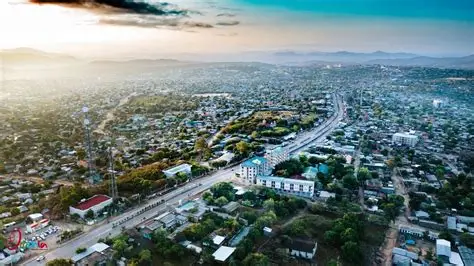
The origins of the current crisis in Moyale can be traced back to the arbitrary drawing of colonial borders. As the book documents, the 1907 Anglo-Ethiopian treaties artificially divided the Borana people, splitting their traditional grazing lands and water sources between Ethiopia and Kenya. Moyale, located exactly 770 kilometers from Addis Ababa, became a divided town—a “twin city” straddling two nations.
For decades, this division was navigated through traditional governance. According to historical records and oral traditions cited in the text, the Borana managed their water sources through a deeply democratic system, rooted in the Gadaa system and governed by councils of elders. Under Emperor Haile Selassie and later the Derg regime, special administrative arrangements allowed the Borana to maintain relative control over their wells and grazing lands.
But the ascension of the TPLF-led EPRDF regime brought a seismic shift. The new government reorganized the country into ethnic federalism, redrawing internal boundaries and creating a volatile administrative reality on the ground.
The Anatomy of Dispossession
In 1991 and 1992, Moyale found itself at the center of a regional power struggle. The TPLF, consolidating its control over the south, established new administrative boundaries that placed the Borana and Somali communities in fierce competition for resources.
According to Simbiru’s account, the TPLF government did not merely redraw maps; it altered the demographic and political reality through force. The text highlights how the government systematically disarmed the local Borana population—leaving them defenseless—while allegedly arming and supporting immigrant Somali tribes, including groups crossing from neighboring countries.
The result was catastrophic for the Borana. As the book explicitly outlines, under the watch of TPLF military generals who controlled the region, two of the nine sacred Tuula Saglan Booranaa wells fell into the hands of these immigrant groups. This was not a natural migration, but a politically engineered displacement.
A Well is Cattle. A Well is Wife. A Well is Family.
To an outsider, the loss of two wells might seem like a minor logistical setback. But in Borana cosmology, the wells are sacred. They are the physical manifestation of a covenant between the people, their cattle, and Waaqa (God). “The well is cattle. The well is wife. The well is family,” the Borana say.
Access to these wells is governed by nagaa Boran—the peace and moral order of the Borana—which demands that no one is denied water. However, the political capture of the wells by rival groups, backed by military force, shattered this order.
The text details how the TPLF’s “divide and rule” tactics weaponized water and land. Borana politicians and elders who attempted to advocate for their people were systematically marginalized. The text notes that the Ethiopian government of the time pursued a deliberate strategy of “population settlement” and administrative gerrymandering to weaken the Borana demographic majority, thereby ensuring that the region’s resources were controlled by groups aligned with the central government.
The Echoes of LAPSSET and the Fight for the Future
Today, Moyale is no longer just a pastoral backwater; it is a strategic geopolitical node. The town is slated to be a major hub in the LAPSSET (Lamu Port-South Sudan-Ethiopia Transport) corridor. The promise of oil pipelines, highways, and international trade has made control of Moyale and its surrounding lands immensely valuable.
The historical grievances documented by Simbiru provide the necessary context for the intermittent violence that continues to plague the region. When communities feel that their sacred sites have been stolen and their traditional governance dismantled by state-backed forces, peace becomes elusive.
A River of Blessings, an essay collection published in honor of the late British anthropologist Dr. Paul Baxter, documented the resilience of Borana culture. But resilience has limits. Climate variability has forced pastoralists to dig deeper and modify use rules, abandoning less productive wells. Land use changes, settlement in dry-season grazing areas, and the expansion of cultivation have shrunk the grazing lands that sustain the well system. And now, the political capture of wells themselves—if Simbiru’s account is accurate—adds a dimension of dispossession that no amount of rainfall can remedy.
The Blessing That Endures
In the verses of Borana blessing ceremonies, the nine wells still live. They are recited in public gatherings, their names carried across generations like a covenant. The Tuula Saglan Booranaa are not merely infrastructure. They are kinship, cattle, family, and peace itself.
The Borana blessing verses still name the nine wells. They still recite their sanctity. But a blessing recited over water one no longer controls is a haunting thing. It is the sound of memory contending with loss.
For the Borana, the nine wells are not negotiable. They are the physical manifestation of a covenant between people, cattle, and the divine. To lose two is to lose a part of the whole. To recite the blessing while another holds the water is to live inside a contradiction that no peace agreement has yet resolved.
What Comes Next
Moyale’s future hinges on whether the deeper issues—who controls water, who belongs to the land, and whose history is written into the landscape—can be addressed before the next round of violence. The Gadaa system, with its customary laws for managing water and pasture, once worked efficiently across these borderlands. Elders from both sides have mediated conflicts before. But as one field monitor observed after the 2014 clashes, “I don’t think things will change in Moyale as long as the same community leaders who are warlords are also the peacemakers.”
The story of Moyale is a cautionary tale about what happens when state power ignores traditional sovereignty and tramples on sacred ecology. As the Borana elders continue to recite the blessings of the Nine Sacred Wells, two of those names are now spoken with a sense of mourning and dispossession. The water still flows, but for the Borana, the moral order of the land remains broken.
Until the grievances of the past—the arbitrary borders, the militarized disarmament, and the stolen wells—are addressed with historical honesty, Moyale will remain a powder keg on the edge of the Horn of Africa. The thirst of the Borana is not just for water; it is for justice.
The River of Blessings flows still—in verses, in memory, in the stubborn hope that what was sacred will be restored. But rivers can be diverted. And wells, once captured, are not easily returned.
Daandii Ragabaa is a journalist covering the Horn of Africa, with a focus on land, water, and conflict in borderland communities.

Posted on October 22, 2026, in Aadaa, Afaan, Election, Events, Face of Injustice, Finfinne, freedom, Grief Support, Information, Language, Media, News, Oromia. Bookmark the permalink. Leave a comment.






Leave a comment
Comments 0