The Lion of Borana: Remembering Guyyoo Boruu Galmaa, the Abbaa Gadaa Who Defied Empires
By Dhabessa Wakjira
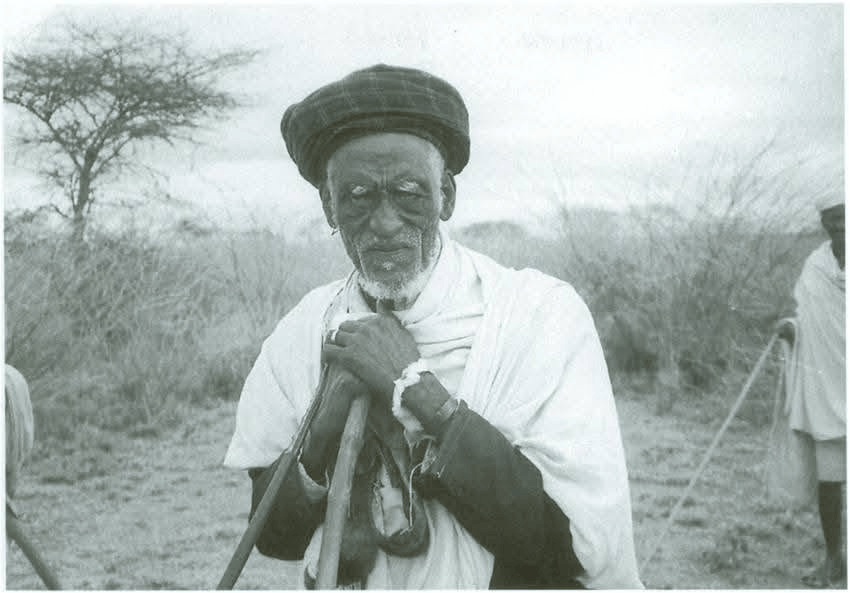
In the annals of Oromo history, there are leaders who govern, and then there are those who become the embodiment of a people’s resistance. Guyyoo Boruu Galmaa, who served as the Abbaa Gadaa of the Borana Oromo from 1944 to 1952, belongs unequivocally to the latter. He was not merely a custodian of the ancient Gadaa system; he was a shield against the encroaching empires of the 20th century—a man whose defiance of both Italian invaders and the Ethiopian imperial state preserved the soul of the Borana people.
His story, deeply intertwined with the fate of the sacred wells and the contested borders of Moyale, offers a masterclass in indigenous diplomacy and unyielding sovereignty.
A Legacy Born in the Shadow of Partition
The roots of Guyyoo Boruu’s leadership stretch back to a defining tragedy for the Borana nation. In 1907, the British and Ethiopian empires signed the Anglo-Ethiopian Boundary Agreement, a colonial decree that arbitrarily carved the Borana homeland in two, dividing the people of Moyale.
At that time, it was Boruu Galmaa Dooyyoo—the father of Guyyoo—who served as the Abbaa Gadaa. He was among the first to openly reject the treaty, recognizing it not as a legal boundary, but as an existential threat to the unity and sovereignty of the Borana. The son inherited the father’s fire.
In 1944, when Guyyoo Boruu Galmaa took the Baallii (the ritual transfer of power) and assumed the mantle of Abbaa Gadaa, he stepped into a region rife with external pressure. The Borana were not only facing the legacy of the 1907 partition but were also navigating the chaotic fallout of global wars and shifting imperial ambitions in the Horn of Africa.
Defying the Italian War Machine
Historical records reveal that Guyyoo Boruu’s leadership did not begin in 1944; his journey as a freedom fighter started much earlier. Between 1936 and 1945, he was actively leading the Borana Oromo in resistance against the Italian occupation.
When the Italians invaded, they brought not just armies, but a strategy of land seizure. As the historical account notes, the Italian forces attempted to annex vast tracts of Handaraa land, claiming everything except the sacred Arddaa and Tula (water wells). Guyyoo Boruu responded by building the Borana Gadaa structures and waging a relentless war against the Italians.
His struggle was not just about repelling a foreign army; it was about defending the sacred ecology of Borana life. The Tula wells were the lifeblood of the cattle and the people. Guyyoo Boruu understood that to lose the land was to lose the wells, and to lose the wells was to lose the Borana identity itself.
Standing Against the Imperial Crown
Following the defeat of the Italians, the Borana faced a new, more insidious threat: the expanding centralization of Emperor Haile Selassie’s government. Between 1947 and 1950, the imperial regime sought to impose its administrative and cultural dominance on the southern frontiers.
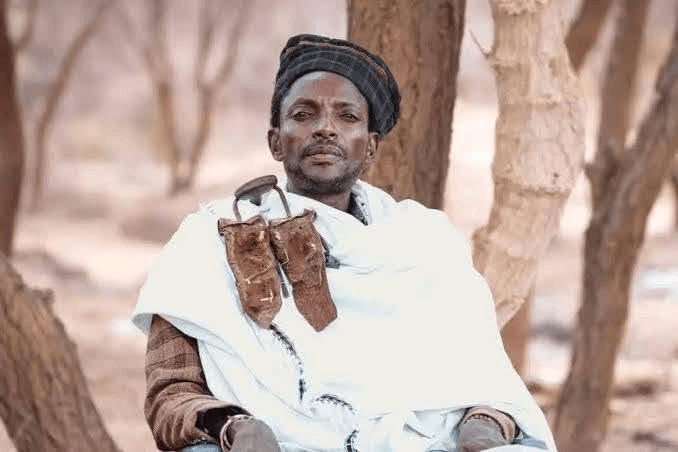
Guyyoo Boruu Galmaa became the primary obstacle to this encroachment. He did not merely resist the political pressures of the imperial state; he actively protected the Gadaa system, ensuring that traditional laws, democratic consensus, and indigenous governance continued to thrive despite the centralizing forces of Addis Ababa.
His defiance culminated in a moment of profound historical significance. In 1950, the Haile Selassie government, seeking to co-opt local leaders, offered Guyyoo Boruu the title of “Giraazmach”—a high-ranking imperial military and administrative honor.
He refused.
In rejecting the title, Guyyoo Boruu Galmaa made a definitive statement of Oromo autonomy. He rejected the legitimacy of an empire that had partitioned his people and threatened their customs. By turning his back on imperial honors, he affirmed that his authority came not from a distant emperor, but from the Gadaa, the Borana people, and the land itself.
The Enduring Wisdom of the Elders
The legacy of Guyyoo Boruu Galmaa is not confined to the history books; it is a living, breathing testament to the resilience of Oromo culture.
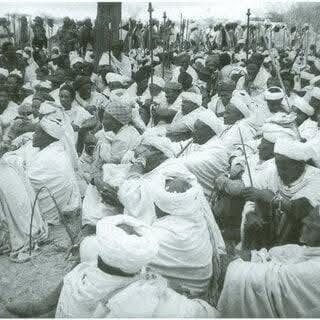
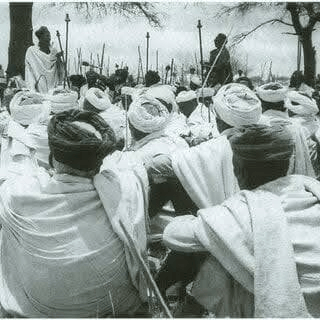
His life was meticulously documented by Western anthropologists who recognized the profound nature of the Borana political system. The renowned scholar Eike Haberland photographed him in 1952—the year he completed his term as Abbaa Gadaa. Decades later, in 1986, anthropologist Günther Schlee captured another historic moment: Guyyoo Boruu, then approximately 95 years old, was photographed at the Gumii Gaayyoo (the great assembly) as his son, Boruu Guyyoo Boruu, took the Baallii and assumed the leadership of the Gadaa.
That photograph, showing the aged father watching his son take the reins of power, is a powerful visual metaphor. It represents the unbroken chain of the Gadaa system—a system that Guyyoo Boruu fought to protect with weapons, diplomacy, and sheer moral courage.
A Beacon for the Present
As the Oromo people today face a renewed crisis of state violence, displacement, and the ongoing political capture of their sacred resources—including the Tuula Saglan Booranaa—the legacy of Guyyoo Boruu Galmaa serves as a vital beacon.
He stands as a reminder that Oromo sovereignty is ancient, sophisticated, and deeply rooted in a democratic culture that predates modern statehood. He proved that true leadership is not measured by the titles bestowed by empires, but by the courage to defend one’s people against them.
Nearly a century after he began his resistance, the spirit of Guyyoo Boruu Galmaa still echoes across the plains of Borana, flowing like the waters of the sacred wells he fought to protect: undivided, unbroken, and eternally free.
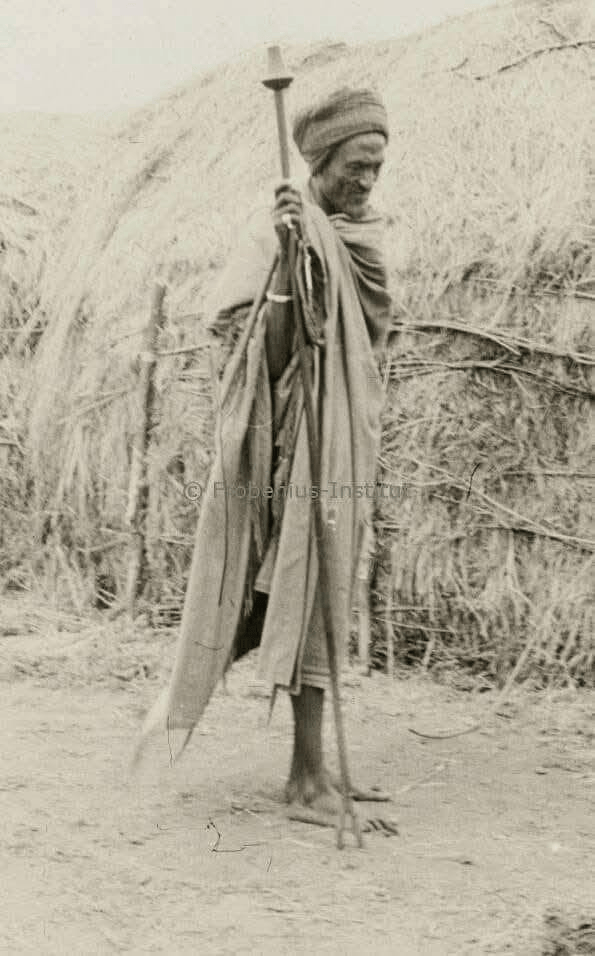
Photos: Guyyoo Boruu Galmaa, photographed by Eike Haberland (1952) and Günther Schlee (1986).

Posted on October 24, 2026, in Aadaa, Afaan, Bokkkuu, Diaspora, Election, Events, Face of Injustice, Finfinne, freedom, gadaa, Gumaa, health, Irreechaa, Language, Media, mental health, News, Oromia, Oromo diaspora, Oromo truth telling, Press Release, Promotion, Uncategorized. Bookmark the permalink. Leave a comment.






Leave a comment
Comments 0