Category Archives: Grief Support

Feature News: Death of 13-Year-Old Oromo Girl in Moyale Exposes the Human Cost of a Frozen Border Conflict
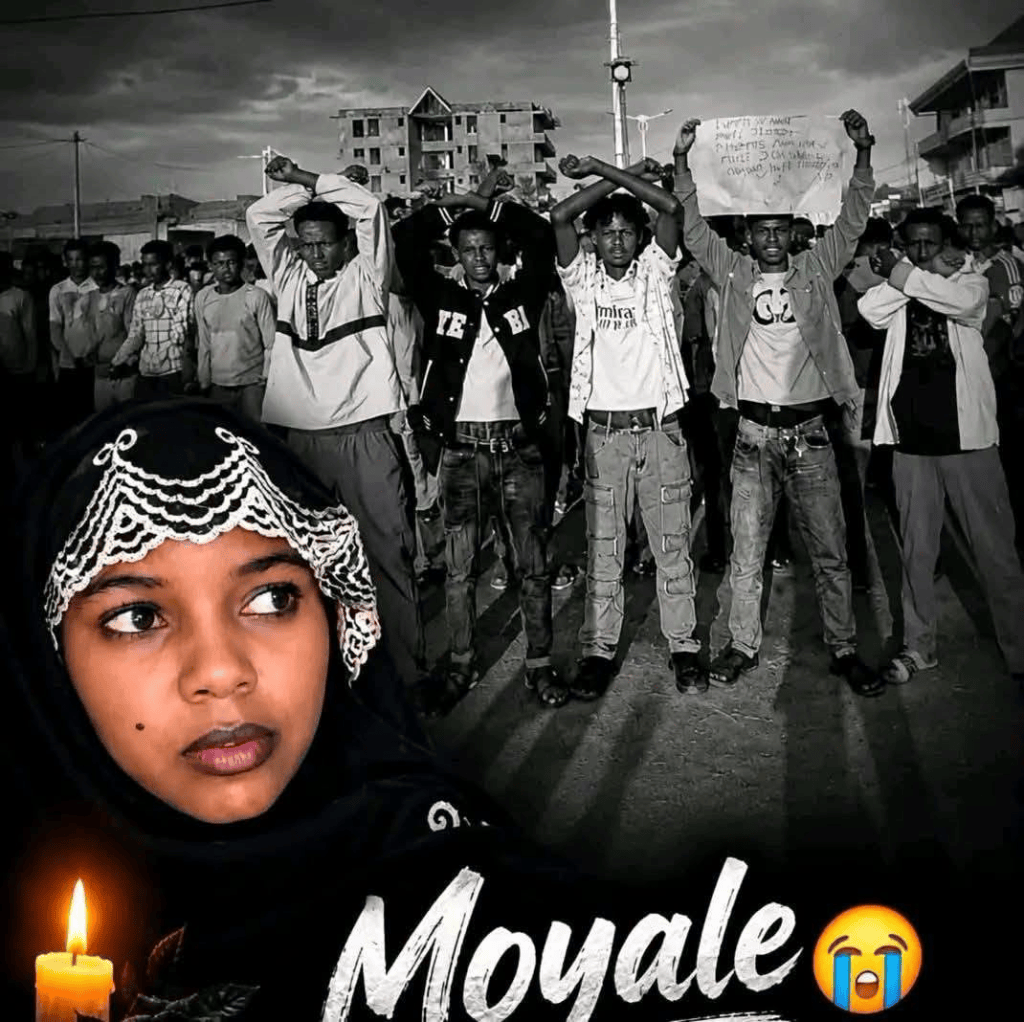
The killing of a teenage girl during a flag dispute in Moyale has reignited protests and grief in Borana, laying bare a decades-old territorial fracture between Oromia and Somali Region that neither federal intervention nor peace conferences have managed to heal.
By the time the gunfire stopped on 18 October, Diqqoo Jaataan Aagaa was dead. She was 13 years old.
According to residents who spoke to Addis Standard, the violence began when authorities from the Somali Region opened a new administration office in Moyale town, located in the Borana zone of Oromia regional state, and raised the Somali regional flag . Oromia local militia members and Somali Region police exchanged fire. The Ethiopian National Defense Force intervened to halt the shooting, but not before the girl was struck.
The accounts diverge sharply. Residents on the Oromo side accuse Somali Region police of shooting the child directly, with one resident describing the act as “cruelty and lawlessness” and claiming officers accused her of throwing stones . Residents from the Somali side insist she was caught in crossfire and that Somali forces did not target her. A security official who spoke to Addis Standard sided with the Oromo account, saying Somali Region security forces killed the girl in connection with the flag dispute .
Shuraa Waariyoo, the girl’s uncle, told Addis Standard that her body had not been buried as of Tuesday. He alleged that Somali Region forces had taken the body, and the family was still negotiating for its return .
The killing triggered immediate protests. Transport services were disrupted, businesses shuttered, and bus stations closed as security fears gripped the town . Elders and security officials reportedly agreed on Monday to remove the Somali Region flag, but that decision itself prompted counter-demonstrations from Somali residents, particularly in Kebele 02, deepening the standoff .
For the people of Moyale, the pattern is agonizingly familiar. Mallicha Diida, a resident of Kebele 02, told Addis Standard: “In Moyale, human blood has been spilled year after year” .
The roots of the recurrent violence lie in a border dispute that has never been fully resolved. Moyale sits at the frontier between the traditional territories of Somali and Oromo communities, both with vested interests in the area’s pastoral resources . A 2004 referendum was meant to settle the boundary between Oromia and Somali Region, but its implementation remains contested, and the underlying competition over land, pasture, and water continues to fuel clashes .
The scale of the suffering is staggering. Tensions intensified in July and August 2025 after the Somali Regional State approved an administrative restructuring plan creating new woredas and zonal administrations in contested territories. Subsequent clashes along the Oromia-Somali border displaced more than 288,000 people .
The death of a 13-year-old girl in a dispute over a flag is, in one sense, a singular tragedy. In another, it is the inevitable arithmetic of a conflict that has been allowed to fester for generations—where the symbols of administrative control carry life-and-death weight, and where the bodies of children become the price of unresolved boundaries.
The funeral arrangements for Diqqoo Jaataan Aagaa remain incomplete. Her family is still waiting for her body. In Moyale, the flags still fly, the militias still watch, and the question of whose land this is remains as unanswered as ever.

Obituary: Prominent Kenyan Oromo Scholar and Anthropologist Professor Abdullahi Shongolo Dies at 68
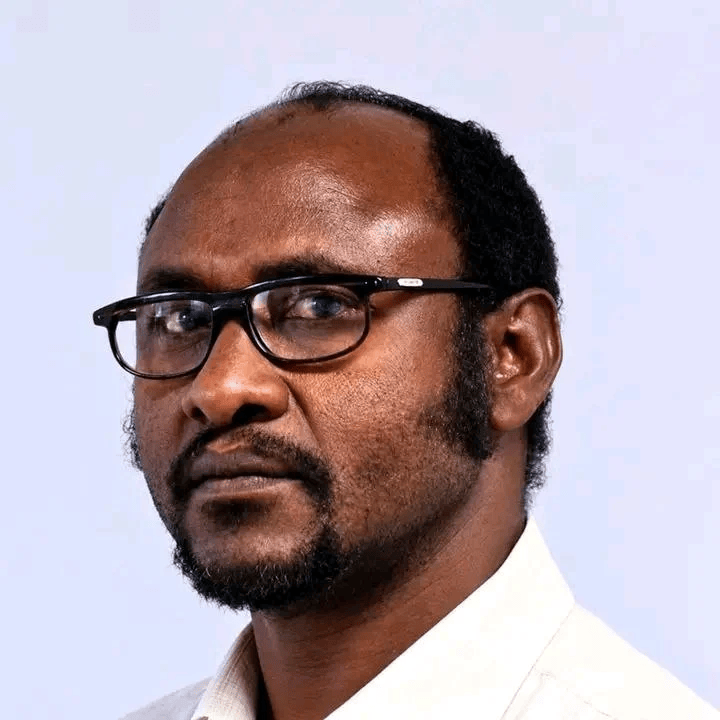
Professor Abdullahi Shongolo, whose decades of research on Borana Oromo culture, customary law, and history brought international recognition to the community’s heritage, passed away on 20 October at Nanyuki Hospital in Kenya following an illness. He was 68.
Born in 1958 in Moyale, Kenya, Professor Shongolo completed his education in Kenya and went on to serve in the country’s Ministry of Education, rising to the position of Assistant Director of Education. But it was his later turn to scholarship that would define his legacy.
Jaatani Diidaa, a cultural and historical researcher, told Addis Standard that Professor Shongolo devoted much of his life to in-depth research, making significant personal sacrifices to bring the educational and cultural heritage of the Oromo of Kenya and Ethiopia to international attention.
Professor Shongolo made substantial contributions to anthropological research, serving as a senior researcher at Germany’s renowned Max Planck Institute for Social Anthropology for more than two decades, from 1999 to 2019. During the 2000s, he also served as an Associate Research Fellow in the Department of Social Anthropology at the University of Gothenburg in Sweden, where he pursued research and academic work.
Among his major scholarly contributions were books co-authored with prominent German scholar Professor Günther Schlee, including Pastoralism and Politics in Northern Kenya and Southern Ethiopia and Islam and Ethnicity in Northern Kenya and Southern Ethiopia. He also documented traditional Borana oral literature and proverbs in Boran Proverbs in Their Cultural Context. These works helped bring greater international recognition to Oromo history, pastoral life, religious traditions, and customary systems of governance, particularly the Oromo customary governance system, the Gumii Gaayo Assembly.
Professor Shongolo’s passing “has brought profound grief and shock to the Borana Oromo community, the wider Oromo community across the world, and people in Kenya and Ethiopia, as well as to scholars in the international academic community,” Jaatani said.
His funeral was held on 21 October in Nanyuki, Kenya.

53 Years of Oromo Freedom Struggle, 53 Years of Impact
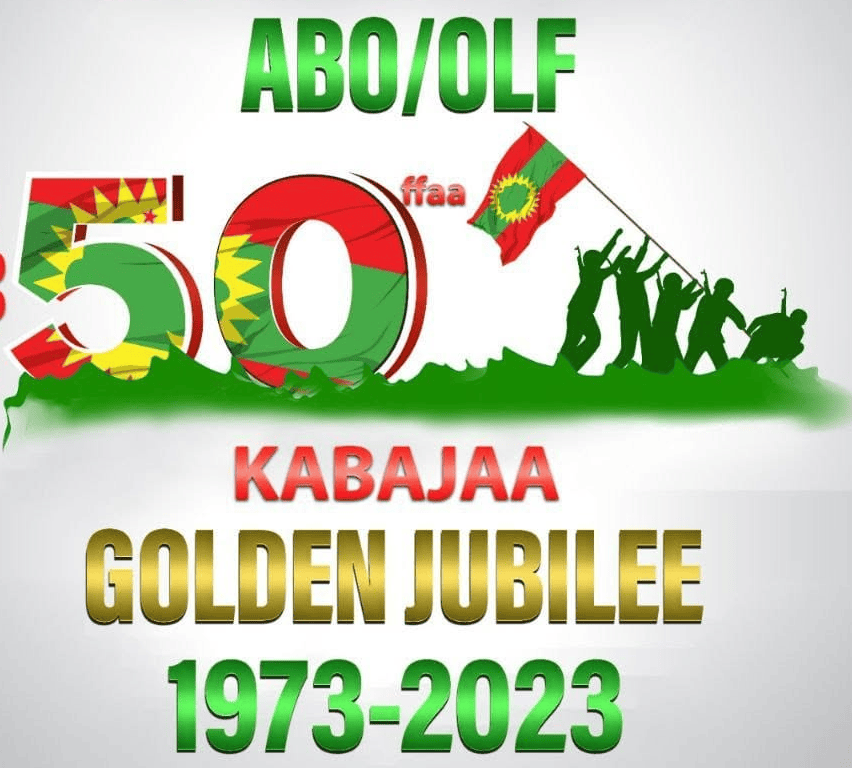
Half a century after a small band of nationalists took up the Oromo cause, the movement has transformed the political landscape of Ethiopia—even without achieving the independent state it once sought. Its deepest impact lies not in territorial control, but in the irreversible awakening of a people who can no longer be governed as before.
The Oromo Liberation Front was founded in 1973, emerging from the ferment of Oromo student activism and the memory of the banned Mecha-Tulama Self-Help Association . What began as a clandestine project among intellectuals would, over five decades, become the central axis of Ethiopian political contestation—not because it won, but because the questions it raised about identity, land, and power could never again be buried.
The early years were defined by armed insurgency and brutal repression. The OLF established itself as a guerrilla force operating across Wollega, Bale, and Hararghe, drawing recruits from peasants who had watched the imperial and then Derg regimes dispossess and marginalize them . The Derg’s response was predictable and catastrophic: mass arrests, executions, and a campaign of terror that killed thousands accused of harboring OLF sympathies. Yet repression produced what it so often does—martyrdom, recruitment, and an enduring sense of grievance that outlasted the gun.
The movement’s most significant impact, however, came not on the battlefield but in the realm of consciousness. The OLF’s founding vision articulated something that had been suppressed for generations: that the Oromo were a nation, not merely a labor force or a demographic majority to be managed. This idea, once planted, proved impossible to uproot. Even after the OLF was pushed out of the transitional government in 1992 and reduced to a marginal political actor, the seeds of Oromo nationalism continued to grow underground .
The eruption came in 2014, when the Qeerroo—Oromo youth—took to the streets over the Addis Ababa master plan, a policy they saw as another chapter in a long history of land dispossession. The protests spread, intensified, and by 2018 had forced the ruling coalition to install Abiy Ahmed, an Oromo, as prime minister . It was a remarkable inversion: a ruling party that had once sought to contain Oromo nationalism now depended on Oromo street power to survive.
The human cost of this struggle has never been abstract. In 2020, the assassination of Hachalu Hundessa, a musician whose lyrics had given voice to a generation’s anger and longing, triggered days of unrest that left at least 166 people dead, according to police figures . Hachalu’s music had become an instrument of the movement itself—his songs were sung at protests, his death a rallying cry. The violence that followed exposed how fragile the gains remained and how deeply the wounds of marginalization had festered.
Fifty-three years on, the struggle’s landscape is fractured. The OLF split in 2018, with its political wing entering legal politics and its armed wing—the Oromo Liberation Army—continuing an insurgency that the government has designated as terrorism . Peace talks between the government and the OLA have repeatedly collapsed, with Addis Ababa accusing the rebels of “unrealistic demands” and the OLA charging the government with seeking co-optation rather than addressing root causes . Meanwhile, the regional government in Oromia pursues a dual track: encouraging surrender through elders and Abba Gadas while waging military operations against those who refuse .
Yet the struggle’s most enduring legacy may lie elsewhere—in the cultural and intellectual infrastructure that no military campaign can dismantle. The Gada system, the indigenous Oromo governance structure that regulates political, social, and religious life through rotating eight-year cycles, was inscribed on UNESCO’s Representative List of the Intangible Cultural Heritage of Humanity in 2016 . What was once dismissed or ignored by the Ethiopian state is now recognized globally as a sophisticated democratic tradition. Oromummaa—the articulation of Oromo peoplehood and identity—has become a force in Ethiopian politics that no government can afford to ignore .
What, then, does 53 years of impact look like? It looks like a language once suppressed now spoken in parliament. It looks like a youth movement that toppled a prime minister and then grew disillusioned with his successor. It looks like a struggle that began as a separatist insurgency and became, instead, a permanent renegotiation of what Ethiopia means. The OLF’s founding dream of an independent Oromia has not been realized. But the conditions that made that dream thinkable—a people conscious of their history, their numbers, and their rights—have become irreversible.
The next chapter remains contested. The government insists the answer is peace and reintegration. The OLF’s political wing insists it is negotiation. The OLA insists it is continued resistance. The Qeerroo, who inherited a struggle they did not start, wait to see which vision will prevail. What is certain is that 53 years after a handful of nationalists took up the Oromo cause, the question they raised is no longer a question at all. It is a fact of Ethiopian life, and it will not be resolved by ignoring it.

Family’s 30-Year Search for Missing Son Eliyaas Wadaajoo Fidaa
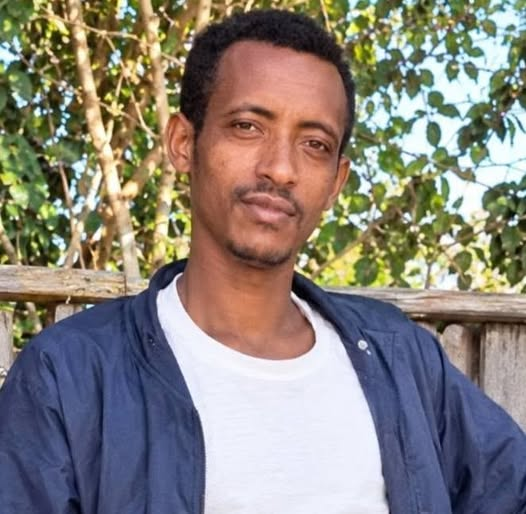
A Family’s Unwavering Hope: The Search for Eliyaas Continues After Three Decades
In the heart of Oromia, in West Wollega Zone, Bojji Chokorsa District, a family continues to hold onto hope after nearly 30 years of separation from their beloved son, Eliyaas Wadaajoo Fidaa.
Born and raised in Fiigaa Kobara Village, Kebele 01, Eliyaas completed his primary and secondary education at Fiigaa Kobara and Bojji Dirmaji schools respectively. Though the exact dates remain unclear, it is known that he graduated from college and worked as a teacher in the area before eventually venturing into business.
At the time he left his home region, Eliyaas was a young, unmarried man. However, for reasons that remain unknown, he departed from his birthplace approximately 30 years ago—and since that day, his family has had no knowledge of his whereabouts.
A Family’s Plea
For decades, Eliyaas’s family has been searching for him. His father and mother, along with his entire family, long to know where he is, how he is living, and whether he is safe. They have never given up hope, holding onto the possibility that they might one day hear news of him. Even if he has faced hardships, his family wants him to know they are waiting to embrace him with open arms.
How You Can Help
This is a heartfelt appeal to all who read this message:
- If you know Eliyaas Wadaajoo Fidaa or have any information about him, please share it with the family.
- If you know people who might recognize him, please pass this message along.
- If you have no information, please SHARE this message to help it reach as many people as possible.
Even the smallest piece of information could reunite a family that has been waiting for decades. One share could play a significant role in bringing together a family and a son who have been separated for far too long.
A Message to Eliyaas
Eliyaas, if you see this message, your family is searching for you. Please let them know you are safe.
Contact Information
Anyone with information about Eliyaas is kindly asked to reach out through the following numbers:
+251 920419911
+251 945322544
+251 932920632
+251 917928869
Share This Message—Help Reunite a Family
May God protect Eliyaas and bring joy to his family.
ULFAADHAA!!

Irreechaa: A Billion Hearts, One Festival of Light
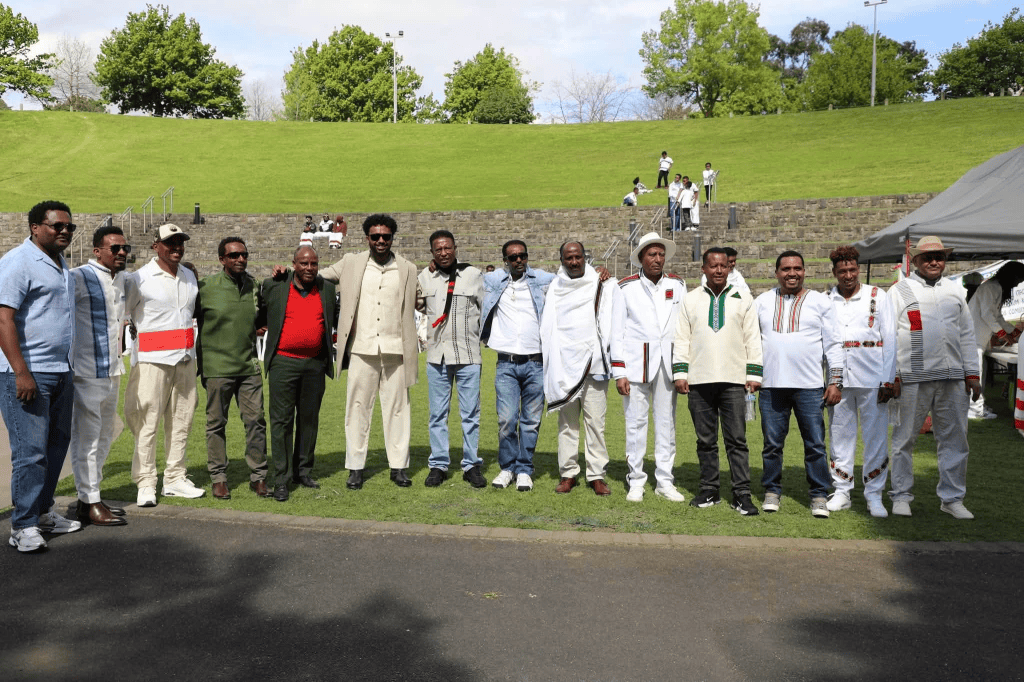
Across continents and generations, the Oromo nation celebrates the victory of light over darkness — a festival that unites, sustains, and inspires
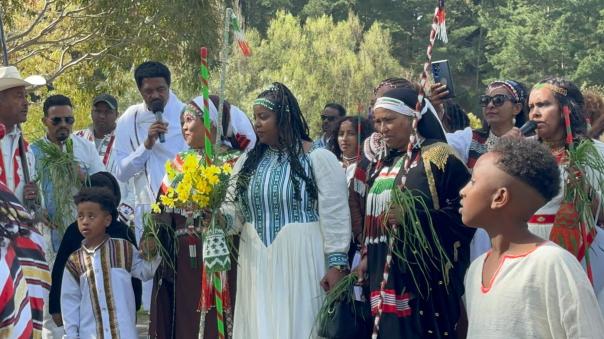
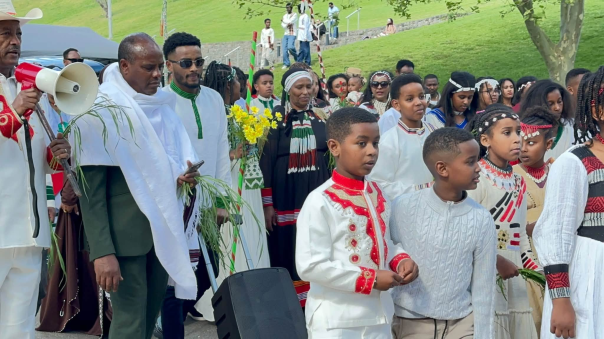
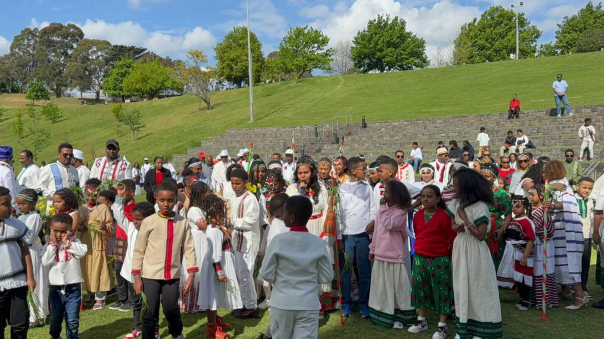
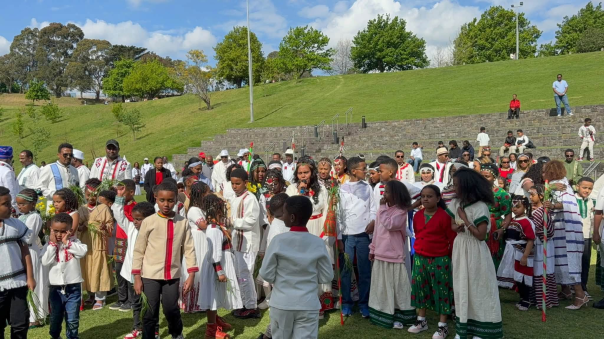
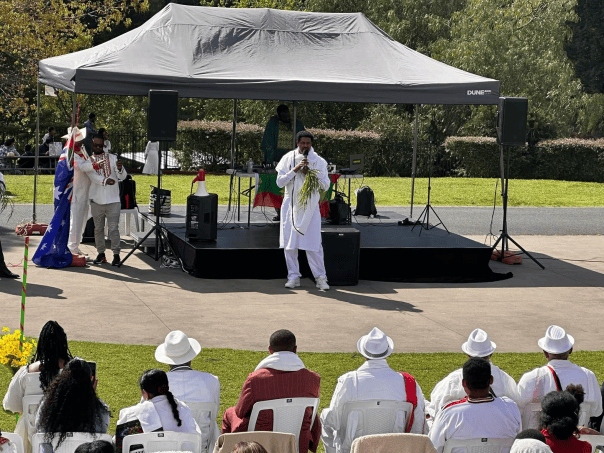
(MELBOURNE, AUSTRALIA, 27 September 2026) — This week, more than a billion people around the world are celebrating Irreechaa, the cultural festival celebrating the victory of light over darkness. It’s an important time for the Oromo nation. Across states, regions and cities, it fostered unity, sustainability, and joy, illuminating paths to prosperity and peace.
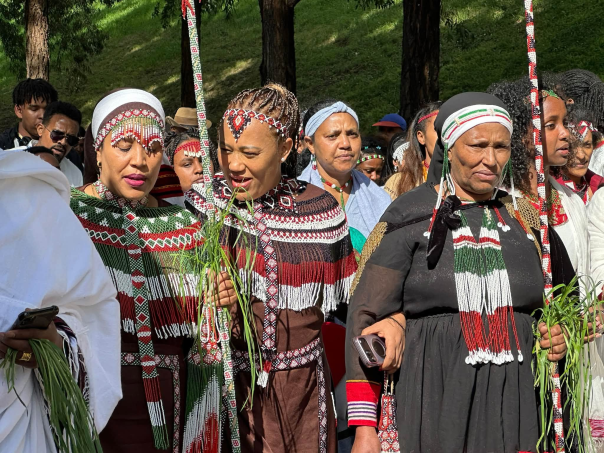
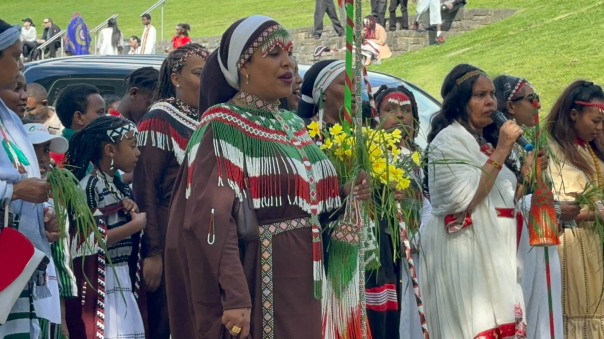
From the sacred shores of Hora Arsadi in Bishoftu to the riverbanks of the Awash, from the bustling streets of Addis Ababa to the quiet parks of Melbourne, Minneapolis, and London, the sounds of shaggooyyee and the colors of calanchi have once again filled the air. Irreechaa has returned — and with it, a message that transcends borders, generations, and circumstances.
A Festival Rooted in Gratitude
At its heart, Irreechaa is a thanksgiving. It marks the end of the rainy season and the beginning of the harvest, a moment when the Oromo people gather at the water’s edge to offer thanks to Waaqa (God) for the gift of life, fertility, and renewal. The festival is celebrated twice a year: Irreechaa Hiyyessa (the small Irreechaa) and Irreechaa Guddaa (the great Irreechaa), with the latter drawing millions to sacred sites across Oromia and beyond.
But Irreechaa is more than a ritual. It is a philosophy. The triumph of light over darkness is not merely a seasonal metaphor — it is a declaration of hope. It reminds us that even after the longest night, the sun rises. Even after the heaviest rain, the land blooms. Even in the face of adversity, a people united by faith and tradition can find their way forward.
Unity Across Divides
This year’s celebrations carried particular weight. In a world often divided by politics, religion, and geography, Irreechaa stood as a powerful counter-narrative. In cities across Ethiopia and the diaspora, people of all ages, backgrounds, and walks of life gathered side by side. Elders passed down blessings. Mothers sang songs of gratitude. Children danced in celebration. And for a moment, the divisions that so often define modern life seemed to dissolve.
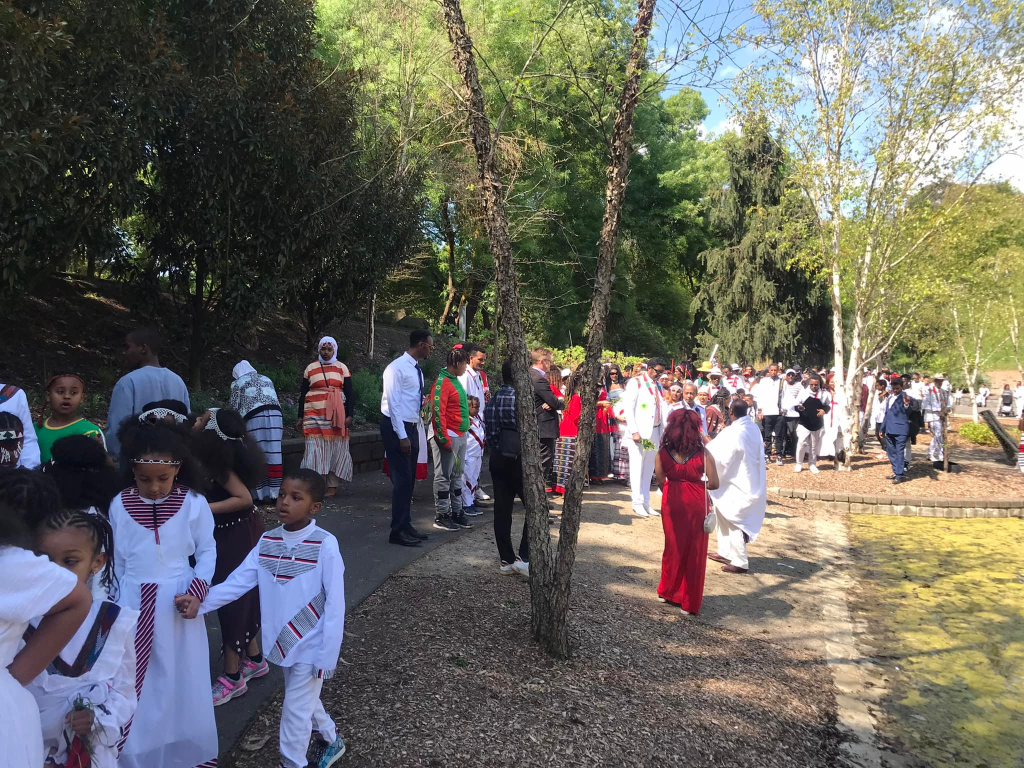
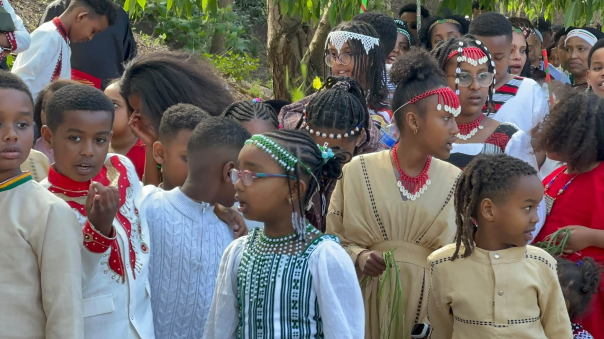
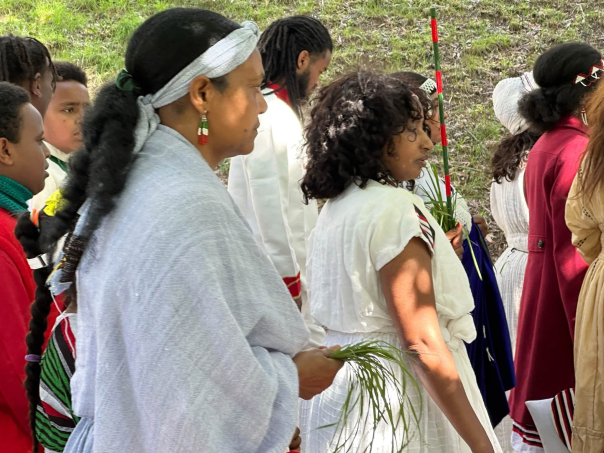
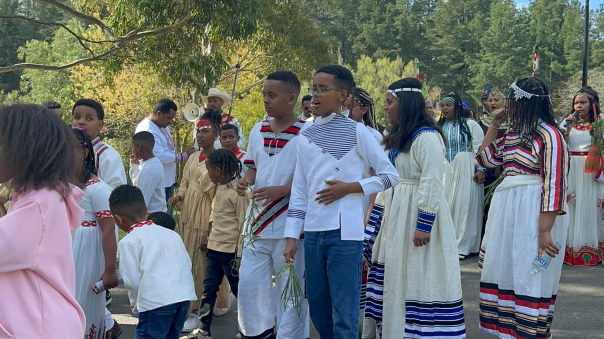
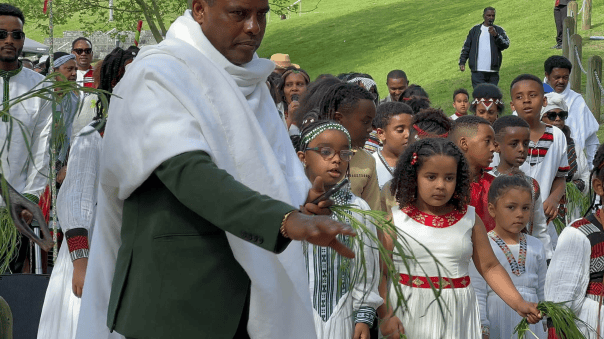
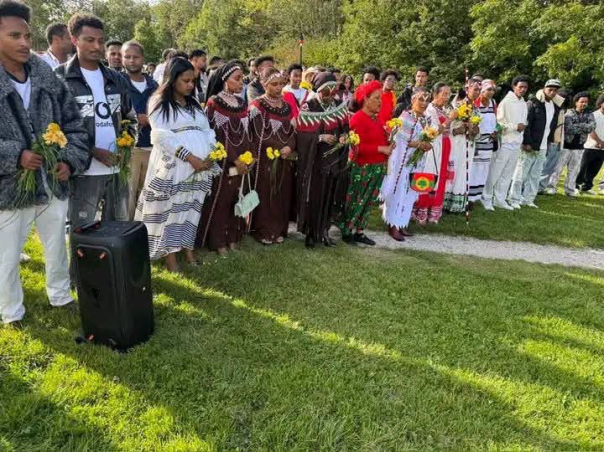
In Melbourne, where the Oromo community has grown into a vibrant and organized presence, Irreechaa was celebrated with the same reverence as it is in the homeland. Families dressed in traditional wandaboo and uffannaa aadaa, exchanged greetings of “Happy Irreechaa!” and shared meals that tasted of home. The event was a testament to the resilience of a people who, even thousands of miles from their ancestral land, refuse to let their culture fade.
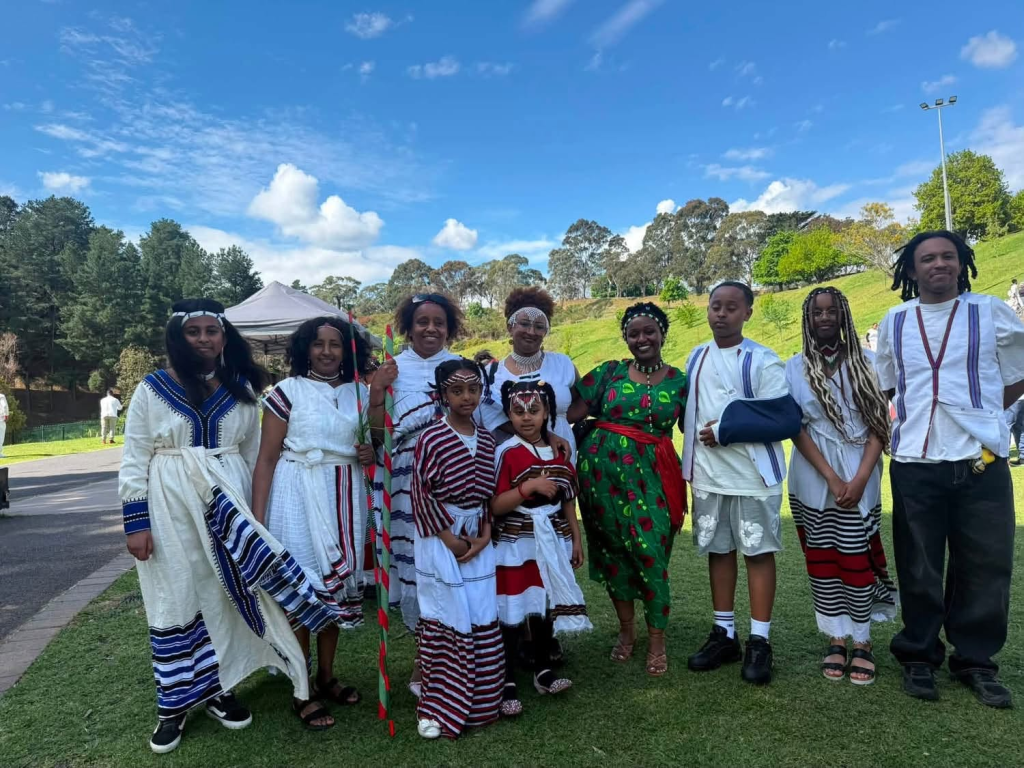
Sustainability: A Legacy of Respect for the Earth
Irreechaa is also a reminder of humanity’s relationship with nature. The festival is intrinsically tied to the land, the rivers, and the changing seasons. It teaches that gratitude must be accompanied by stewardship — that the earth is not ours to exploit but to protect.
In an era of climate crisis, this message could not be more urgent. The Oromo people’s reverence for water, land, and life offers a model of sustainability that the world would do well to heed. Irreechaa is not just a celebration of what we have received; it is a commitment to preserve it for those who come after us.
Joy as Resistance
Perhaps most powerfully, Irreechaa is a celebration of joy. In a world that often demands we focus on what divides us, the festival insists on what unites us. It is a reminder that joy is not frivolous — it is revolutionary. To celebrate in the face of hardship is to declare that hardship will not have the final word.
The images emerging from this year’s celebrations tell that story. A grandmother teaching her granddaughter the steps of a traditional dance. A young man helping an elder across the river. A group of friends laughing as they share a meal under the open sky. These are the moments that define Irreechaa. These are the memories that will be passed down.
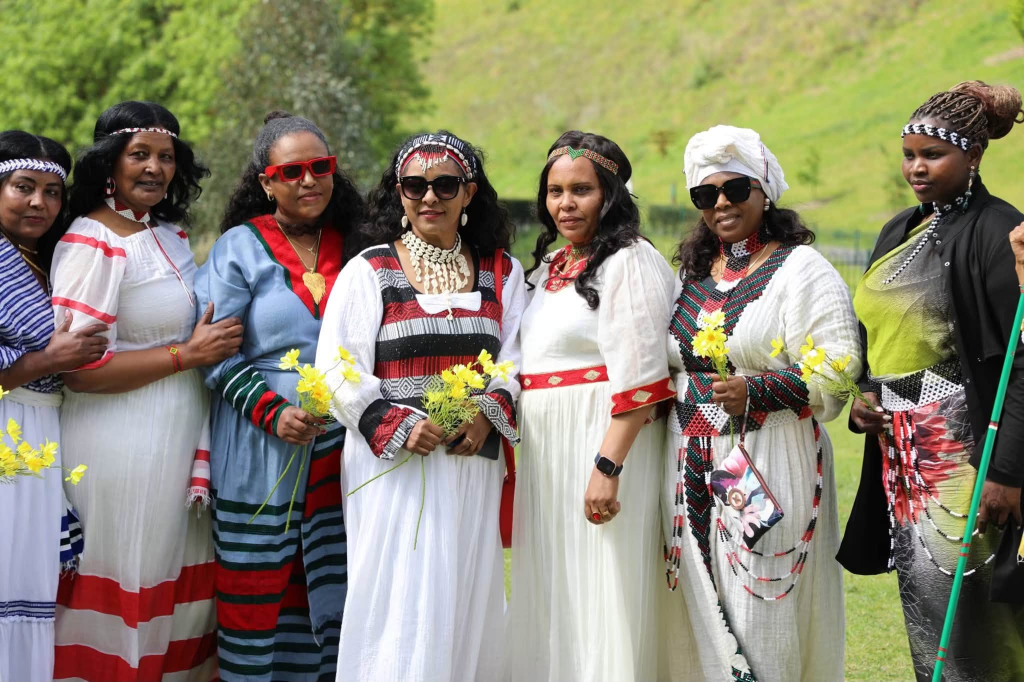
Illuminating Paths to Prosperity and Peace
As the celebrations draw to a close, the message of Irreechaa lingers. Light has triumphed over darkness. Gratitude has triumphed over despair. Unity has triumphed over division.
For the Oromo nation, Irreechaa is not just a festival — it is a compass. It points toward a future built on peace, prosperity, and mutual respect. It reminds us that the path forward is illuminated not by the brightness of any single star, but by the collective light of a people who refuse to be extinguished.
And as the sun rises on another year, that light shines on — in Bishoftu, in Melbourne, in Minneapolis, and in every corner of the world where the Oromo spirit lives.
Baga Irreechaa Nagayaan Geessan! Baga Bara Haaraa Geessan!
May the light of Irreechaa guide us all toward a year of peace, unity, and abundance.
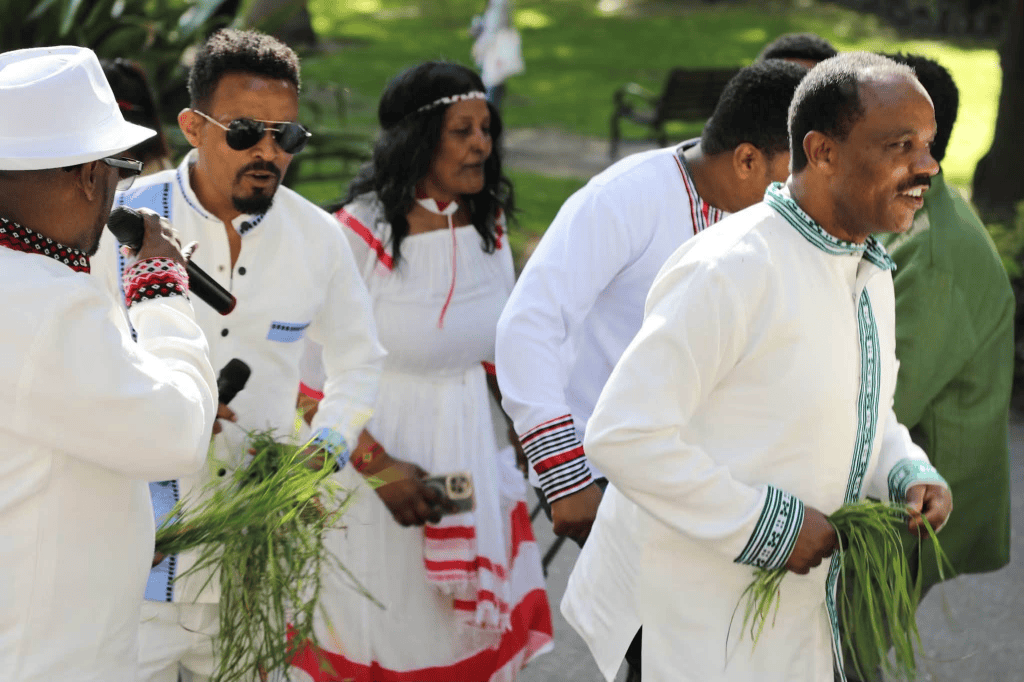
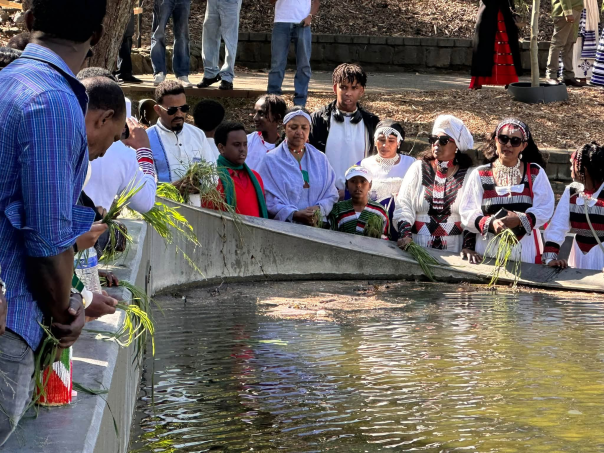
Irreechaa: A Living Memory Across Generations
“Irreechaa waggaatti naanna’e dhufa; ayyaana kana irratti yaadannoo barayyuu jiraatu dhalootaaf kahanii darbuu waanti fakkaatu hin jiru.”
Irreechaa returns year after year; there is nothing that seems to pass beyond the reach of generations when the memory of this festival lives on and is preserved.
This profound truth captures the essence of Irreechaa — a festival that refuses to be confined to a single moment in time. It is a celebration that travels with its people, crossing rivers, mountains, and oceans, carrying with it the sacred duty of remembrance.
A Festival That Travels With Its People
Irreechaa is more than a thanksgiving ceremony. It is a living testament to the resilience, faith, and unity of the Oromo people. Celebrated at the banks of rivers and lakes, it marks the transition from the rainy season to the harvest, a moment of gratitude to Waaqa (God) for the blessings of life, fertility, and community.
But when Irreechaa travels — as it has with the Oromo diaspora to cities like Melbourne — it does not lose its meaning. Instead, it multiplies. Each celebration in a new land becomes a bridge between the homeland and the heart, between ancestors and descendants, between memory and hope.
Melbourne: A New Chapter in an Ancient Story
The Irreechaa celebrations in Melbourne are a vivid reminder that distance does not diminish devotion. Under the open sky of a foreign land, Oromo families gather in their traditional attire, sing songs of praise, and perform the sacred rituals that have been passed down for centuries. The colors of the calanchi and the rhythm of the shaggooyyee echo the same spirit that fills the banks of the Hora Arsadi and the Awash River.
These gatherings are not merely cultural events; they are acts of survival. They are declarations that no matter where life takes a people, their identity remains rooted in their traditions.
The Power of Shared Memories
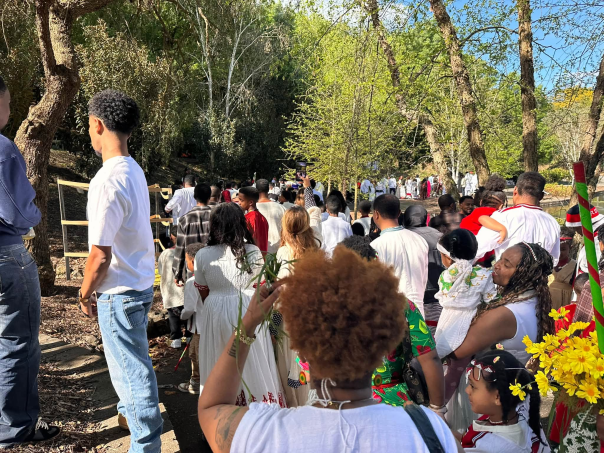
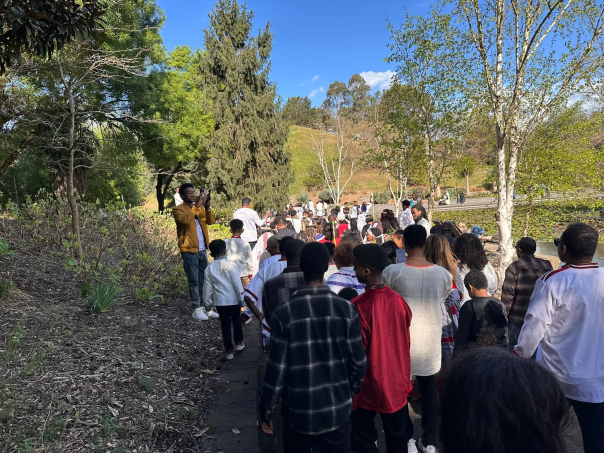
“Suuraalee Irreechaa Melbourne kana waliif qooduunis yaadannoo keenyatti lubbuu haa horru!”
Sharing the photos of this Irreechaa in Melbourne breathes life into our memory!
In the age of digital connection, every photograph, every video, every shared post becomes a vessel of memory. When we share these images, we are not simply documenting an event — we are breathing life into our collective story. We are telling the next generation: This is who we are. This is where we come from. This is what we carry with us.
For those who could not attend, these shared moments become a lifeline. For those who were present, they become anchors of joy. For those yet to be born, they become a legacy.
A Call to Keep the Flame Alive
We extend our deepest gratitude to Yadeta Lemu, Kasahun Soboka, Aliye Geleto, Dhabessa Wakjira, and Yadesa Bedhasa for their dedication in capturing and sharing the spirit of Irreechaa Melbourne. Their efforts ensure that the memory of this celebration does not fade with time but grows stronger with each passing year.
Their work reminds us that preserving culture is not a passive act. It requires effort, commitment, and love. It requires people who understand that when we share our traditions, we are not just looking back — we are building forward.
Conclusion: Irreechaa as a Bridge
Irreechaa is a bridge. It spans the distance between generations, between homelands, between hearts. It teaches us that as long as we remember, we are never truly far from home. As long as we celebrate, we are never truly alone.
So let us continue to share. Let us continue to remember. Let us continue to breathe life into our memories — for in doing so, we ensure that Irreechaa will indeed return, year after year, carrying our stories to generations yet to come.
Irreechaa fi yaadannoo keenya — dhalootaaf kahanii darbuu hin danda’u!
Irreechaa and our memory — they cannot pass beyond the reach of generations!

Oromia Restructures: Six New Administrative Clusters and Their Administrators
Ethiopia’s largest federal state moves to a clustered governance model, appointing six vice presidents to oversee regional zones
(ONA, Finfinne — Oromia)– Ethiopia’s largest and most populous federal state, is undergoing a significant administrative restructuring. Under a newly approved arrangement, the state will be organized into six administrative “clusters,” each led by a vice president responsible for coordinating the zones within their region.
The plan was approved during the first session of the Oromia Regional Council (Caffee Oromia) held in Adama. Governor Shimelis Abdisa was successfully reelected, and he subsequently nominated six vice presidents, all of whom were confirmed by the council.
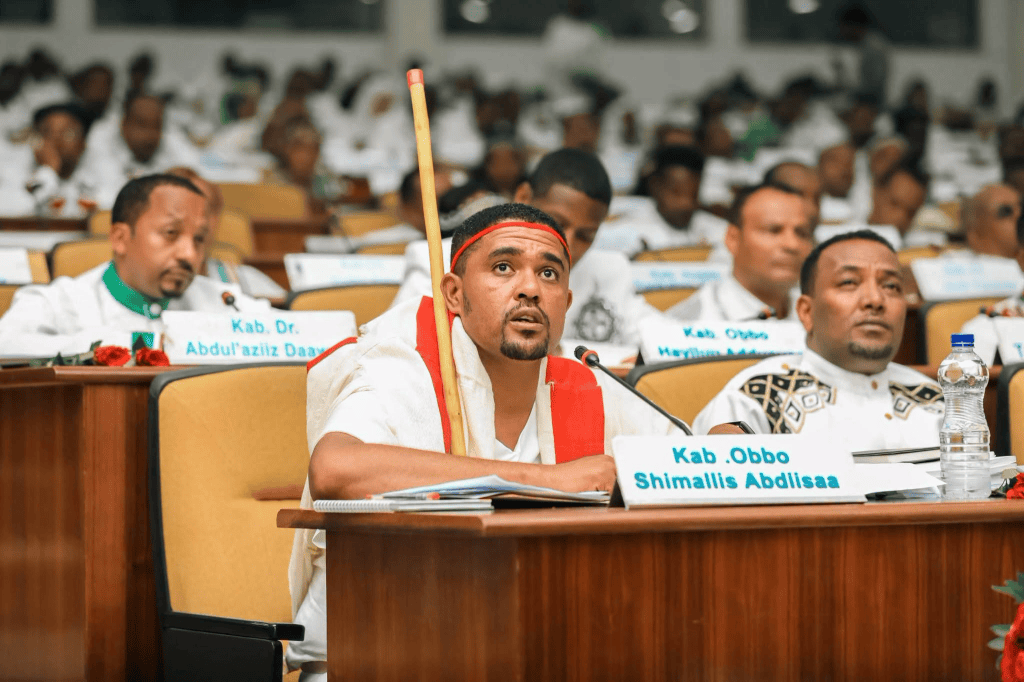
The Six Clusters and Their Administrators
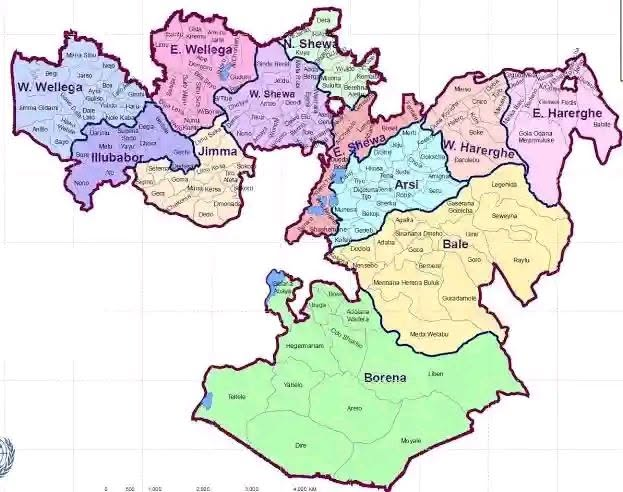
According to the approved plan, Oromia will be divided into the following six administrative regions:
1. East Oromia (2 Zones) — Administrator Ato Abdurahman Abdela
Oversees West Hararghe and East Hararghe. These zones are located in eastern Oromia, bordering the Somali Region and the Harari region.
2. Southeast Oromia (4 Zones) — Administrator Ato Ahmed Idris
Oversees Arsi, Bale, West Arsi, and East Bale. This cluster spans the Rift Valley area and includes important ecological resources such as Bale Mountains National Park.
3. South Oromia (4 Zones) — Administrator Ato Ahmed Haji
Oversees Guji, West Guji, Borena, and East Borena. These areas border Kenya and are primarily characterized by pastoralism and cross-border trade.
4. West Oromia (4 Zones) — Administrator Ato Melaku Melaku
Oversees East Wollega, West Wollega, Kellem Wollega, and Horro Guduru Wollega. This region is one of Ethiopia’s important coffee-producing areas.
5. Southwest Oromia (3 Zones) — Administrator Dr. Reshad Kemal
Oversees Iluababor, Buno Bedele, and Jimma. Jimma is known as Ethiopia’s coffee capital, and the region is rich in agricultural and forestry resources.
6. Central Oromia (4 Zones) — Administrator Dr. Mengistu Bekele
Oversees East Shewa, North Shewa, Southwest Shewa, and West Shewa. This cluster surrounds the capital, Addis Ababa, and includes important cities such as Adama.
Background and Controversy
This administrative restructuring comes at a time of profound change in Ethiopia’s political landscape. Reports suggest that the ruling Prosperity Party is considering a broader “clusterization” reform of the federal system nationwide, and Oromia’s six-cluster plan may be part of that larger blueprint.
Supporters argue that dividing a vast administrative region into smaller management units can bring government closer to the people, improve administrative efficiency, and enhance public service delivery. Oromia covers an area of 353,600 square kilometers with a population of over 27 million, and single-tier management indeed faces enormous challenges.
However, criticism is equally strong. Some analysts suggest the restructuring may carry political motives — weakening Oromia’s cohesion and negotiating power as a single political entity by dividing it. Some commentators have described it as “a systematic weakening of Oromo political power.”
Human rights observers also worry that pushing through such a major administrative reform while security conditions in parts of Oromia remain unstable could exacerbate tensions at the local level.
What Comes Next
With the six vice presidents now in place, they are expected to begin forming coordination bodies for each cluster. However, the specific division of powers, financial arrangements, and relationships with existing zonal administrative units remain to be clarified.
In his address to the council, Governor Shimelis stated that the new term would “consolidate development gains and advance reforms,” but did not elaborate on the controversial aspects of the administrative reorganization.
For Oromia — a central player in Ethiopia’s political landscape — this quiet administrative revolution may have implications far beyond a single list of appointments.

Irreechaa: Its Significance in the Context of Other Religions
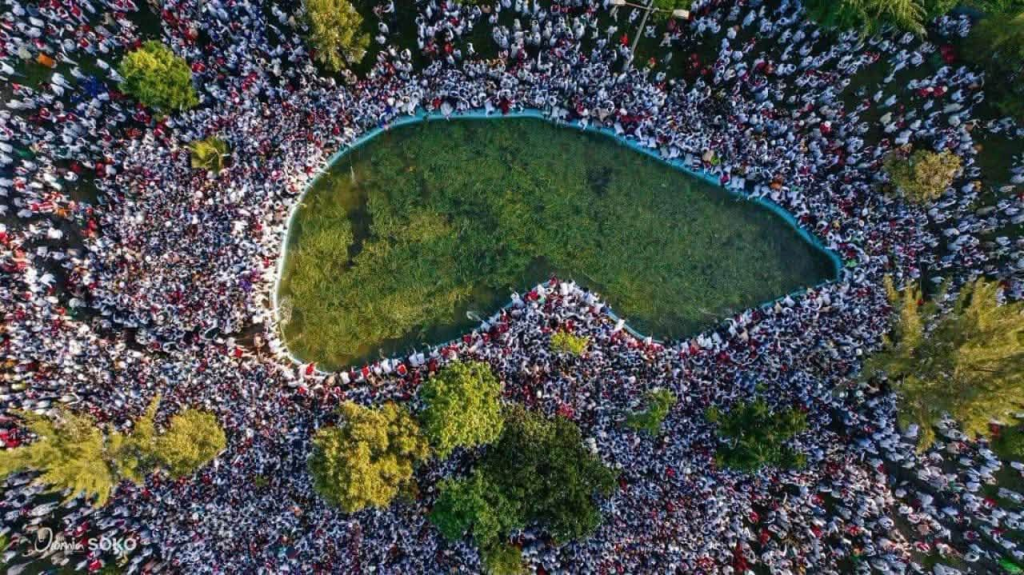
“Irreechaa is a Day of Thanksgiving!” — Why This Concept Embraces All Faiths
A study by Dr. Yoseph Mulugeta Baba (2024) examines the Irreechaa festival within the context of other religions and finds a central concept that cannot be logically wrong and carries a positive meaning. That concept is simply this: “Irreechaa is a Day of Thanksgiving.”
According to the paper, this concept carries the following meaning:
“Irreechaa is a day of thanksgiving where the gifts of the Creator are returned to the Creator in gratitude. Every individual who participates in the Irreechaa festival holds fresh green grass in both hands and gives thanks to their Creator. Fresh green grass is a symbol of peace and prosperity. Above all, they gather together to thank their great and holy Creator who saved them from the winter’s ice, heavy winds, floods, and storms. They also pray to their God to bless the harvest and the crops. Therefore, the Irreechaa festival is a tribute given to God who brought them from darkness to light.”
“Whom Are We Thanking?” — The Oromo Worldview’s Answer
A related question arises: “Whom are we thanking?” To answer this question correctly and unambiguously, we must clearly set out what the indigenous Oromo ontology (Oromo Ontology) teaches about the Creator, or Waaqa.
The indigenous Oromo understanding defines Waaqa with care, and its definition is as follows:
“Waaqa is the Creator of all things. Waaqa is omniscient, omnipresent, eternal, absolute, and infinite. Waaqa is absolutely one.”
Relationship with Christianity and Islam
Within this definition, there is no concept that directly contradicts the teachings of either Christianity or Islam regarding the Creator. Why?
The famous Catholic philosopher and theologian St. Thomas Aquinas, in his magnificent work Summa Theologica, correctly observes:
“That there exists one truth which every human being calls ‘God’ — the beginning and end of all creatures — the human creature can comprehend in many ways!”
This is why the Bible, when translated into different languages, does not give a new name to the Creator. A name already known in the indigenous religion and capable of correctly expressing the attributes of the Creator listed above is directly adopted. For example: Magano, Waa, Yeri, Waaqayo, Egziabher, Jowok, and so on.
Where Does the Difference Lie?
Therefore, the difference lies not in the attributes of God, but in the canon, tradition, and rules that each religion follows and teaches. The source of this difference may be historical or related to our use of language in theological interpretation.
As St. Thomas Aquinas says:
“Regarding God, what we can comprehend is not what He is, but what He is not, and what He resembles in comparison with other creatures.”
This is called the problem of religious language. God is above all creatures. Therefore, our human thought must adjust its limited, image-bound, and imperfect language about God so that it does not distort the identity of God — which has no expression, which cannot be fully known, which is invisible and intangible. The words we use will always fall short of expressing the mystery of God!
“Guracha” — The Name of Waaqa and Its Meaning
For example, in the Oromo indigenous religion, the word Waaqa, whether written or spoken, is accompanied by the adjective “Guracha.” Its literal translation is “black,” and in Oromo ontology, blackness is not only a symbol of supremacy but also expresses the originality of Waaqa. Blackness is a concept that expresses that the essence of Waaqa is an absolutely perfect mystery that cannot be reached by the human mind.
Irreechaa and the Universal Knowledge of the Creator
Therefore, when we celebrate the Irreechaa festival, we do so in a manner that takes into account the attributes of God. Since such knowledge of the Creator is universal, a follower of any religion can celebrate it with joy and in a true spirit, giving it a positive meaning.
The American Example: Thanksgiving Day
Above all, we must avoid actions that undermine the unity of a people under the guise of religion without properly understanding religious studies.
America is a country with a population of 340 million and five of the world’s major religions. When the people celebrate “Thanksgiving Day” every year, they have never once entered into a hair-splitting question or argument about “Whom are they thanking?”
The Human Being Is a Spiritual Creature
In the world in general, and in Ethiopia in particular, let us take the following ontological characteristics of human existence as an example to show that there is confusion regarding religious studies.
The human being is a spiritual being. Two faculties are given to human beings alone among all creatures, and other creatures intrinsically do not possess them at all: intellect and free will.
The human race knows and chooses to follow natural law because by nature it has the capacity to know universal truth and morality. For example, a Christian or a Muslim is able to know the natural law “Do not steal!” not because the commandment is written in the Bible or the Holy Quran, or because it exists in their faith’s teachings, but because the human being by nature and calling has the capacity and power to know this natural law.
Cultural Values Are Products of the Intellect
Cultural values are products of the human intellect. The intellect was created by God. God created the intellect for the primary purpose that we might investigate and understand the world. It must be emphasized that the cultural values that human beings have established since ancient times have their source in this faculty and tool of thought — the intellect — granted by the Creator. In human history, every society was able to establish its own culture and indigenous religion because of the intellect and free will given by God.
Human Limitation and the Need for Careful Interpretation
However, because the human being is limited by space and time, their knowledge is limited. The human intellect cannot reach absolute knowledge. The human being is a historical being. We are all products of history and geography!
Therefore, no society in human history has ever possessed absolutely perfect and error-free cultural values. This is why cultural values or indigenous religions must receive a careful interpretation (hermeneutics) that gives correct meaning within the context of time and place.
This article is based on the study by Dr. Yoseph Mulugeta Baba (2024).

“A Generation Like This Is Hope for Oromo! A Promise for Oromia!”
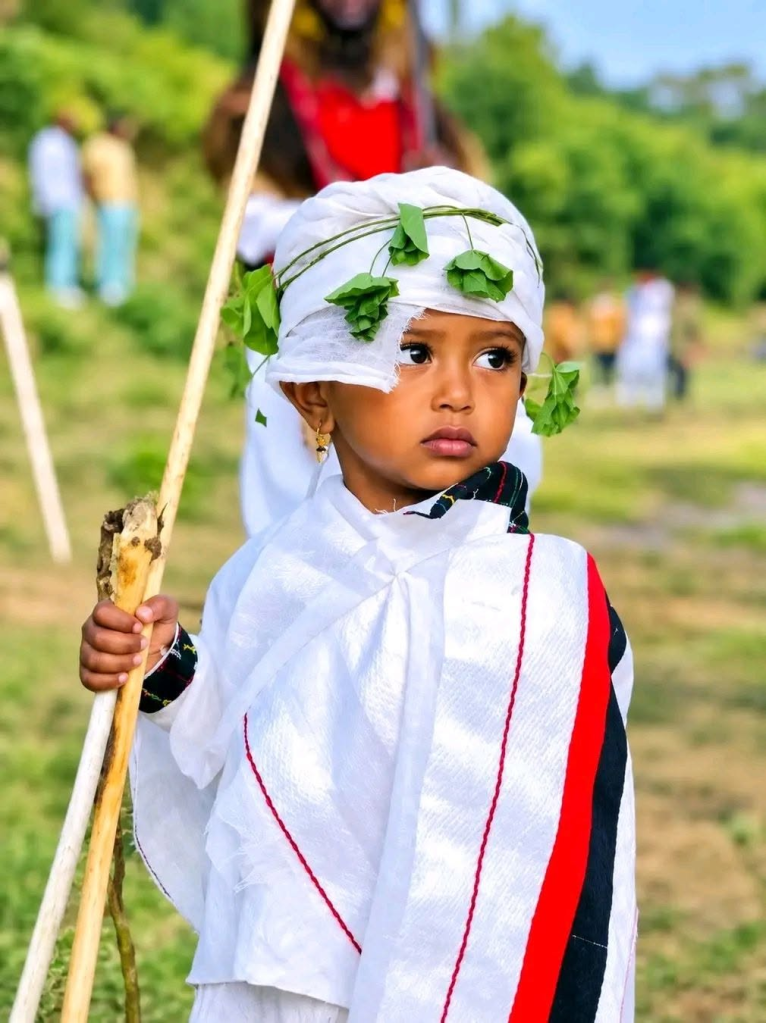
By Dhabessa Wakjira
There is a saying among the Oromo people that captures something profound about the relationship between a community and its youth: “Dhaloota akkanaatu, Oromoof abdiidha! Oromiyaaf wabiidha!” — “A generation like this is hope for Oromo! A promise for Oromia!”
It is more than a slogan. It is a declaration of faith in the future, spoken by elders who have witnessed both the pain of suppression and the resilience of a people who refused to disappear. It is a recognition that the young people rising today — educated, conscious, connected, and proud — carry within them the seeds of everything the Oromo struggle has long been working toward.
The Weight of History, The Light of Tomorrow
The Oromo people have endured centuries of marginalization, land dispossession, cultural suppression, and political exclusion. Through the imperial era, the Derg regime, and subsequent administrations, the flame of Oromummaa was kept alive in the hearts of the people — in the songs sung at Irreechaa, in the wisdom passed down through the Gadaa system, in the quiet defiance of families who spoke their language at home when the world outside forbade it.
That flame did not survive by accident. It survived because generation after generation refused to let it die.
Today, a new generation stands at the threshold. They are the children and grandchildren of those who carried the flame. But they are also something new: they are the first generation in modern Oromo history with broad access to education, to global networks, to digital platforms that amplify their voices beyond any border. They are the generation that can look back at history with clear eyes and forward to the future with determined hearts.
When elders say “Dhaloota akkanaatu, Oromoof abdii dha,” they are acknowledging this. They are saying: We endured so that you could rise. And you are rising.
What Makes This Generation Different?
Every generation believes it is special. But there are concrete reasons why this moment in Oromo history feels different — why the phrase “Oromiyaaf wabiidha” carries such weight.
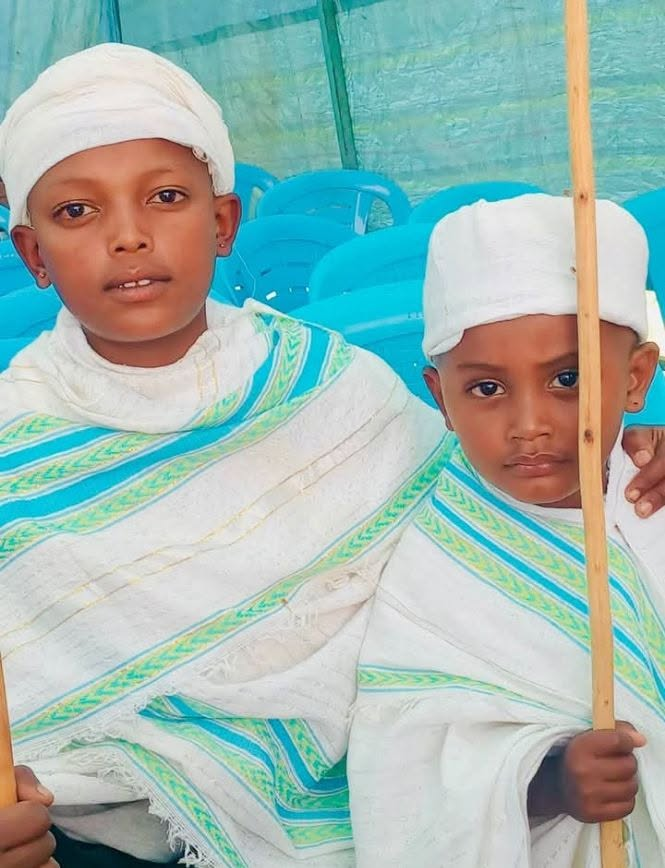
They are educated. Oromo youth are pursuing higher education in unprecedented numbers — in Ethiopia and across the diaspora. They are becoming doctors, engineers, lawyers, teachers, social workers, journalists, and leaders. Knowledge, once denied to their ancestors, is now their weapon and their tool.
They are connected. Social media has given Oromo youth a global platform. They organize, they inform, they advocate, and they build solidarity across continents. A student in Melbourne can exchange ideas with a student in Addis Ababa in real time. The isolation that once silenced Oromo voices has been shattered.
They are proud. Unlike previous generations who were sometimes forced to hide their identity to survive, this generation wears Oromummaa openly. They sing in Afaan Oromoo. They celebrate Irreechaa with millions. They carry the yellow daisies not as a secret symbol but as a public declaration of who they are.
They are global and local at once. They understand the world beyond Oromia — human rights, international law, digital advocacy, multiculturalism — while remaining deeply rooted in Oromo values of community, respect for elders, and connection to land and Waaqa.
They are bridge-builders. This generation navigates multiple worlds: tradition and modernity, Oromia and the diaspora, local struggles and global movements. They are learning to carry their heritage into new contexts without losing its essence.
Hope Is Not Passive
It is important to be clear: “Dhaloota akkanaatu, Oromoof abdii dha” is not a statement of complacency. It is not a declaration that the future will simply take care of itself because the youth are impressive.
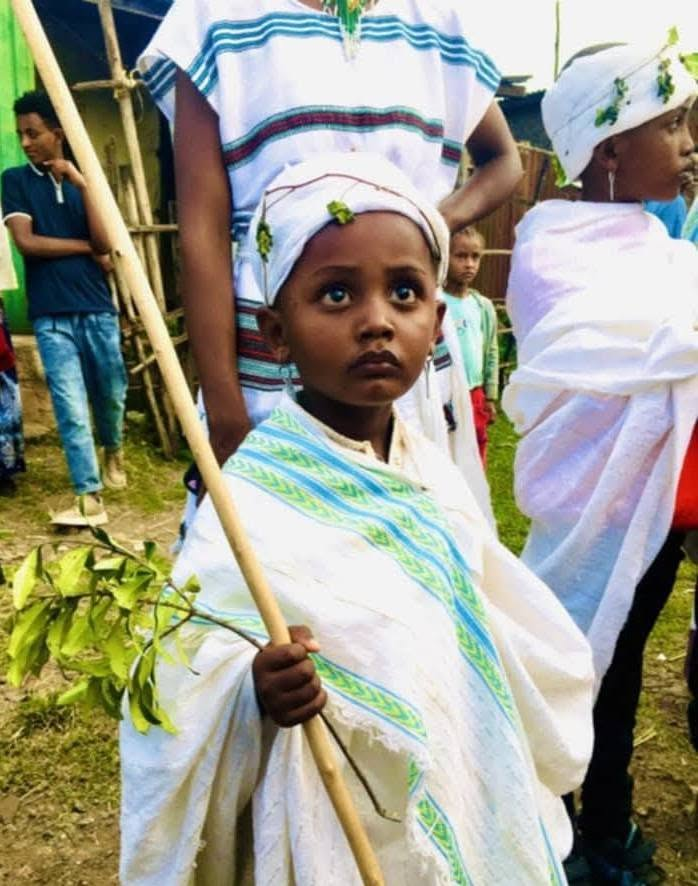
Hope, in the Oromo understanding, is active. It is the hope of the farmer who plants seeds and tends them. It is the hope of the marcher who walks toward the water carrying fresh grass. It is the hope that requires discipline, sacrifice, and unity.
For this generation to truly be the hope of Oromo, it must:
- Learn — from elders, from history, from education, and from one another.
- Preserve — the language, the traditions, the Gadaa wisdom, the sacred rituals of Irreechaa.
- Build — institutions, networks, and platforms that serve the community.
- Unite — across regions, across diaspora communities, across generations.
- Stay rooted — in Oromo values of respect, community, and connection to Waaqa and the land.
A Promise to Oromia
“Oromiyaaf wabiidha” — a promise for Oromia.
A promise is not a guarantee. It is a commitment. It is a covenant between a generation and the land that birthed it. It says: We will not forget where we came from. We will not squander what our ancestors sacrificed for. We will not let the flame go out.
This generation carries the dreams of every Oromo who came before — the farmer who lost his land, the mother who sang lullabies in a language she was told to abandon, the student who was punished for speaking the truth, the elder who kept the traditions alive in secret.
They also carry the hopes of every Oromo yet to be born — children who will one day ask, What did you do when it was your turn?
The answer being written today, by this generation, is this: We rose. We learned. We built. We stayed united. We honored those who came before us, and we prepared the way for those who will come after.
The Question That Remains
When elders look at the youth of today and say “Dhaloota akkanaatu, Oromoof abdiidha! Oromiyaaf wabiidha!”, they are offering both a blessing and a challenge.
The blessing is this: You are enough. You are capable. You are the ones we have been waiting for.
The challenge is this: Now prove it. Not with words alone, but with action. Not for a moment, but for a lifetime.
Every generation is given a choice. This generation — educated, connected, conscious, and proud — has been given the opportunity to be the generation that turns centuries of struggle into a future of dignity, justice, and flourishing for all Oromo people.
That is the hope.
That is the promise.
Dhaloota akkanaatu, Oromoof abdii dha! Oromiyaaf wabii dha!
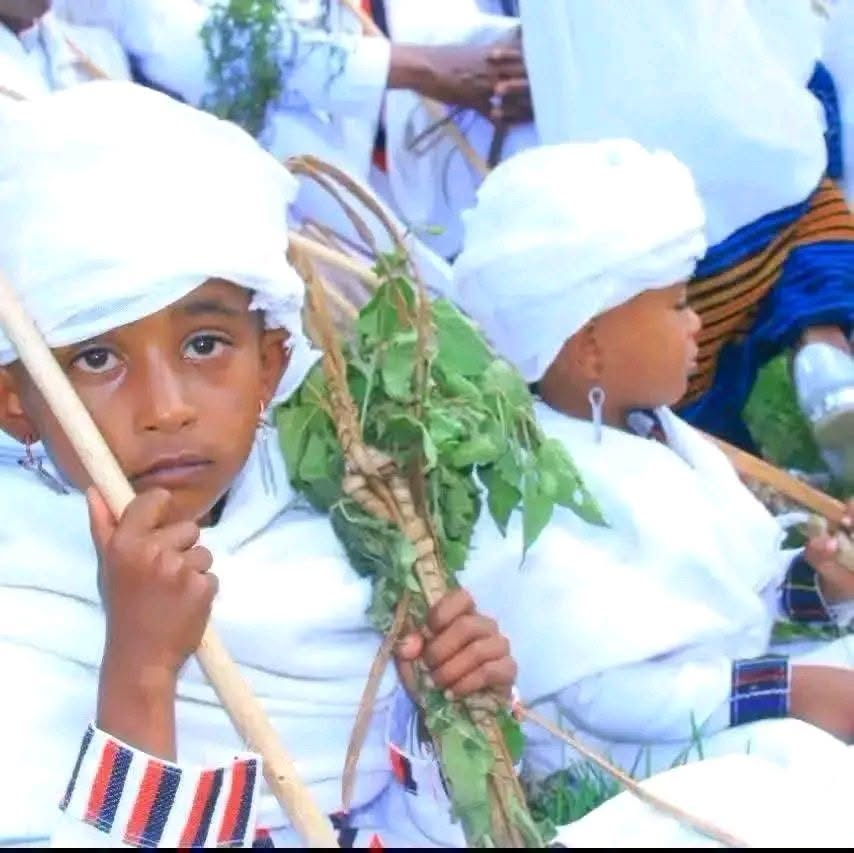

Why is Irreechaa celebrated in Australia?
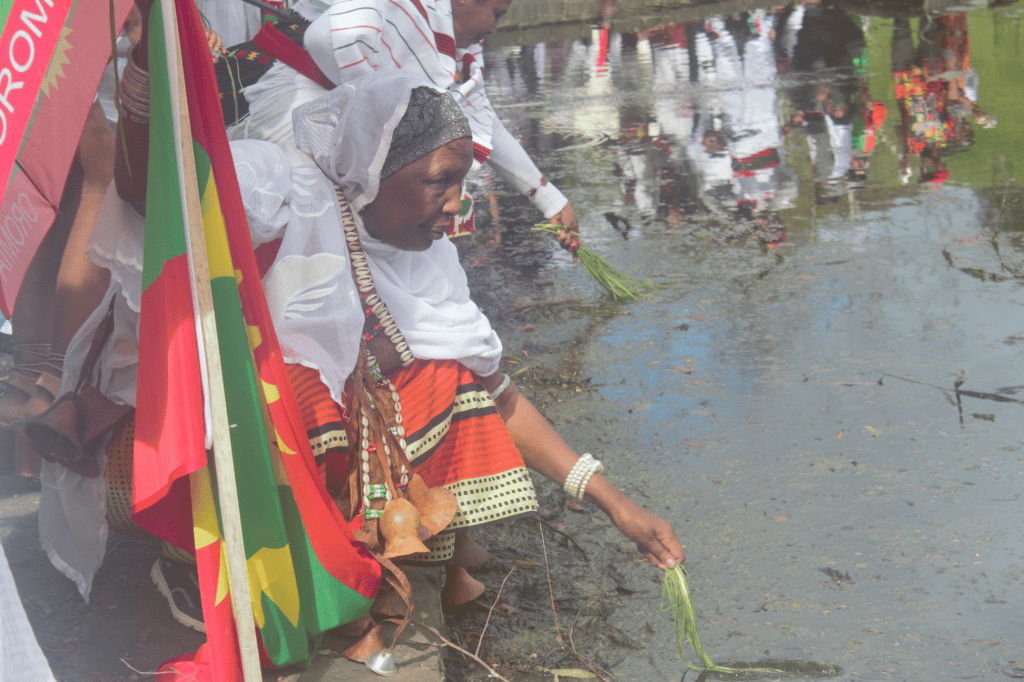
Irreechaa is celebrated in Australia because it serves as an essential cultural anchor and a vital tool for preserving Oromo identity for the diaspora community. For Oromos living far from their homeland, the festival bridges the physical distance, allowing them to maintain a profound connection to their heritage, land, and community.
🌏 Maintaining Connection to Homeland
For the Oromo diaspora in Australia, Irreechaa is not merely a tradition but a spiritual and cultural lifeline. As community members explain, the festival creates a “cultural ambiance that connects the people to Oromo land and the creator, Waaqa”. It serves as a powerful bridge, reinforcing the bond between those living abroad and their ancestral roots, ensuring that their connection to Oromia remains strong despite the geographical separation.
🎶 Preserving Identity Across Generations
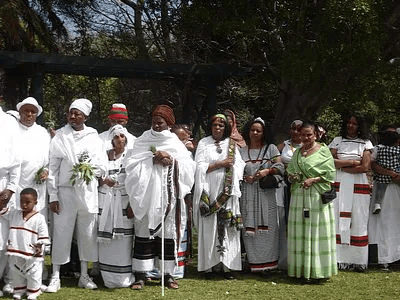
The celebration plays a critical role in fostering Oromummaa (Oromo identity) in a new environment. By organizing these events, the community ensures that younger generations born or raised in Australia can learn about and embrace their heritage. The festival includes traditional blessings by elders, cultural performances like the Siiqqee and Gumii dances, and communal meals, all of which educate and immerse participants in Oromo traditions. This active practice is vital for intergenerational learning and instills a sense of pride in Oromo culture among the youth.
🤝 Building Community and Belonging
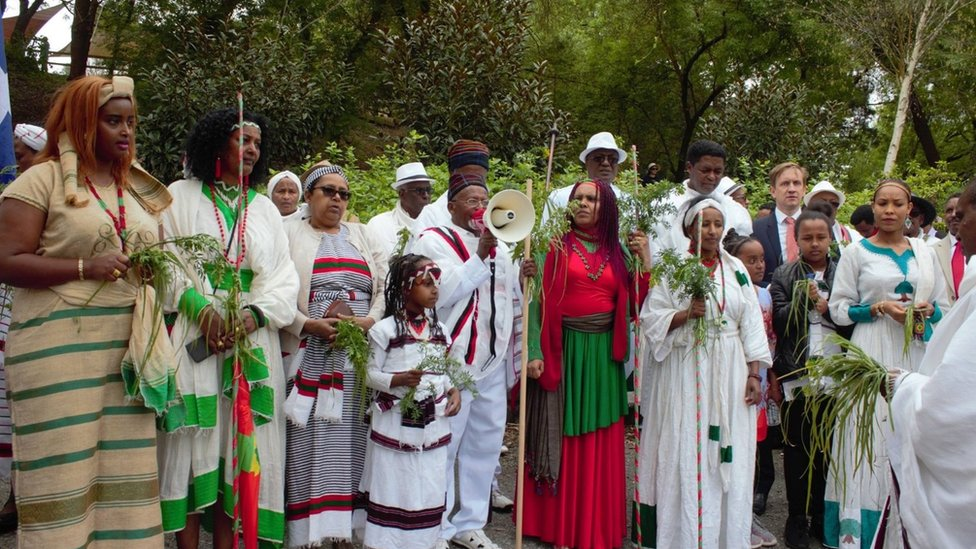
Irreechaa provides a crucial opportunity for the Oromo diaspora to unite and strengthen their communal bonds. In cities like Melbourne, the celebration brings together families and individuals to share in a collective expression of gratitude, peace, and solidarity. The festival has been held annually in Australia since 2009, growing steadily in participation. It serves as a platform to build a sense of belonging and mutual support within the community, creating a home away from home.
🌉 Bridging Cultures
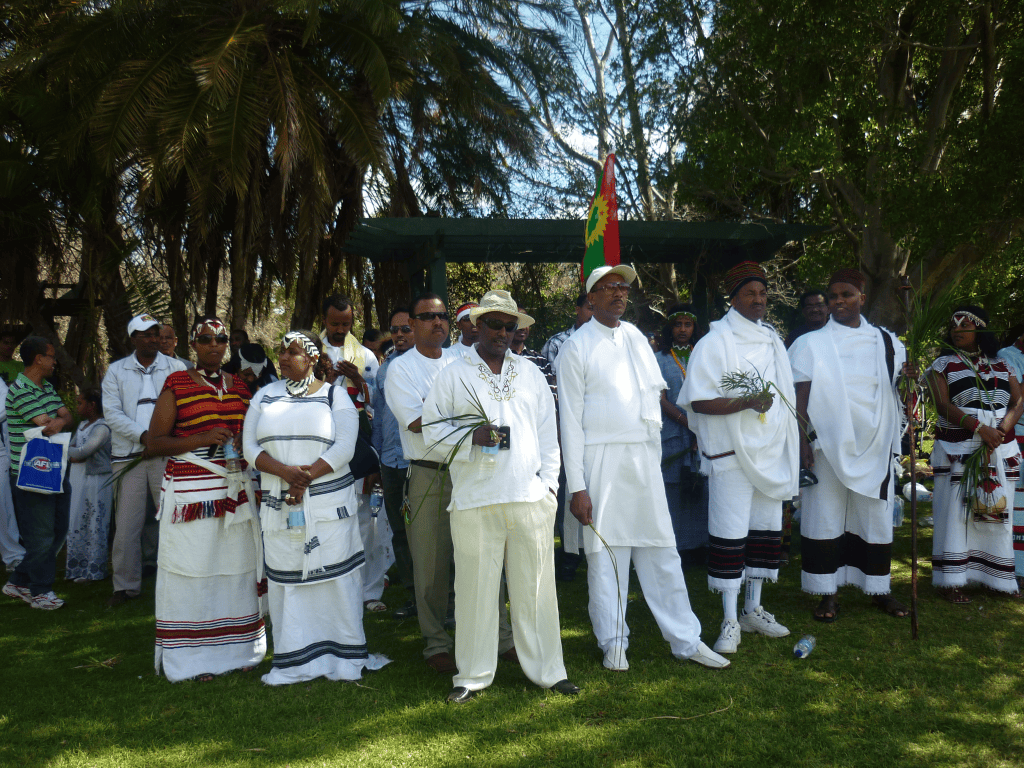
The celebration also acts as a cultural bridge to the wider Australian society. Many Irreechaa events invite local government officials, multicultural organizations, and curious residents, encouraging mutual respect and intercultural exchange. By sharing their traditions openly, the Oromo community not only sustains its own cultural practices but also contributes to the vibrant multicultural fabric of Australia.
In essence, Irreechaa in Australia is a dynamic and necessary adaptation of a sacred tradition. It allows the Oromo diaspora to give thanks, celebrate their shared history, and ensure their culture continues to thrive and be recognized for generations to come.