Irreechaa: Its Significance in the Context of Other Religions
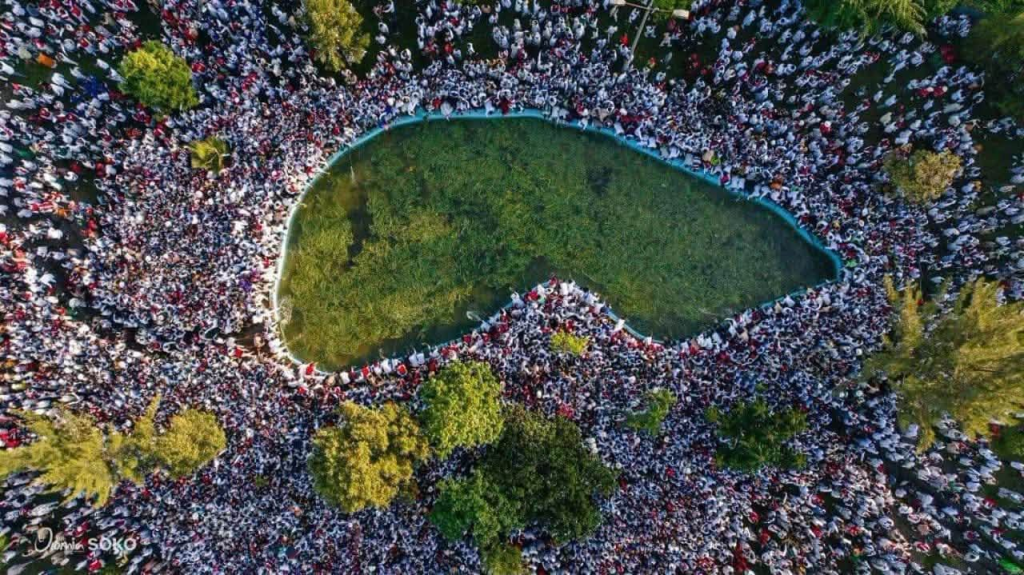
“Irreechaa is a Day of Thanksgiving!” — Why This Concept Embraces All Faiths
A study by Dr. Yoseph Mulugeta Baba (2024) examines the Irreechaa festival within the context of other religions and finds a central concept that cannot be logically wrong and carries a positive meaning. That concept is simply this: “Irreechaa is a Day of Thanksgiving.”
According to the paper, this concept carries the following meaning:
“Irreechaa is a day of thanksgiving where the gifts of the Creator are returned to the Creator in gratitude. Every individual who participates in the Irreechaa festival holds fresh green grass in both hands and gives thanks to their Creator. Fresh green grass is a symbol of peace and prosperity. Above all, they gather together to thank their great and holy Creator who saved them from the winter’s ice, heavy winds, floods, and storms. They also pray to their God to bless the harvest and the crops. Therefore, the Irreechaa festival is a tribute given to God who brought them from darkness to light.”
“Whom Are We Thanking?” — The Oromo Worldview’s Answer
A related question arises: “Whom are we thanking?” To answer this question correctly and unambiguously, we must clearly set out what the indigenous Oromo ontology (Oromo Ontology) teaches about the Creator, or Waaqa.
The indigenous Oromo understanding defines Waaqa with care, and its definition is as follows:
“Waaqa is the Creator of all things. Waaqa is omniscient, omnipresent, eternal, absolute, and infinite. Waaqa is absolutely one.”
Relationship with Christianity and Islam
Within this definition, there is no concept that directly contradicts the teachings of either Christianity or Islam regarding the Creator. Why?
The famous Catholic philosopher and theologian St. Thomas Aquinas, in his magnificent work Summa Theologica, correctly observes:
“That there exists one truth which every human being calls ‘God’ — the beginning and end of all creatures — the human creature can comprehend in many ways!”
This is why the Bible, when translated into different languages, does not give a new name to the Creator. A name already known in the indigenous religion and capable of correctly expressing the attributes of the Creator listed above is directly adopted. For example: Magano, Waa, Yeri, Waaqayo, Egziabher, Jowok, and so on.
Where Does the Difference Lie?
Therefore, the difference lies not in the attributes of God, but in the canon, tradition, and rules that each religion follows and teaches. The source of this difference may be historical or related to our use of language in theological interpretation.
As St. Thomas Aquinas says:
“Regarding God, what we can comprehend is not what He is, but what He is not, and what He resembles in comparison with other creatures.”
This is called the problem of religious language. God is above all creatures. Therefore, our human thought must adjust its limited, image-bound, and imperfect language about God so that it does not distort the identity of God — which has no expression, which cannot be fully known, which is invisible and intangible. The words we use will always fall short of expressing the mystery of God!
“Guracha” — The Name of Waaqa and Its Meaning
For example, in the Oromo indigenous religion, the word Waaqa, whether written or spoken, is accompanied by the adjective “Guracha.” Its literal translation is “black,” and in Oromo ontology, blackness is not only a symbol of supremacy but also expresses the originality of Waaqa. Blackness is a concept that expresses that the essence of Waaqa is an absolutely perfect mystery that cannot be reached by the human mind.
Irreechaa and the Universal Knowledge of the Creator
Therefore, when we celebrate the Irreechaa festival, we do so in a manner that takes into account the attributes of God. Since such knowledge of the Creator is universal, a follower of any religion can celebrate it with joy and in a true spirit, giving it a positive meaning.
The American Example: Thanksgiving Day
Above all, we must avoid actions that undermine the unity of a people under the guise of religion without properly understanding religious studies.
America is a country with a population of 340 million and five of the world’s major religions. When the people celebrate “Thanksgiving Day” every year, they have never once entered into a hair-splitting question or argument about “Whom are they thanking?”
The Human Being Is a Spiritual Creature
In the world in general, and in Ethiopia in particular, let us take the following ontological characteristics of human existence as an example to show that there is confusion regarding religious studies.
The human being is a spiritual being. Two faculties are given to human beings alone among all creatures, and other creatures intrinsically do not possess them at all: intellect and free will.
The human race knows and chooses to follow natural law because by nature it has the capacity to know universal truth and morality. For example, a Christian or a Muslim is able to know the natural law “Do not steal!” not because the commandment is written in the Bible or the Holy Quran, or because it exists in their faith’s teachings, but because the human being by nature and calling has the capacity and power to know this natural law.
Cultural Values Are Products of the Intellect
Cultural values are products of the human intellect. The intellect was created by God. God created the intellect for the primary purpose that we might investigate and understand the world. It must be emphasized that the cultural values that human beings have established since ancient times have their source in this faculty and tool of thought — the intellect — granted by the Creator. In human history, every society was able to establish its own culture and indigenous religion because of the intellect and free will given by God.
Human Limitation and the Need for Careful Interpretation
However, because the human being is limited by space and time, their knowledge is limited. The human intellect cannot reach absolute knowledge. The human being is a historical being. We are all products of history and geography!
Therefore, no society in human history has ever possessed absolutely perfect and error-free cultural values. This is why cultural values or indigenous religions must receive a careful interpretation (hermeneutics) that gives correct meaning within the context of time and place.
This article is based on the study by Dr. Yoseph Mulugeta Baba (2024).

Posted on September 29, 2026, in Aadaa, Afaan, AMES, AU, Bokkkuu, Daaniyaa, Diaspora, Election, Events, family violence, Finfinne, freedom, gadaa, Grief Support, health, Information, Irreechaa, Kindness, Language, Media, News, Oromia, Oromo diaspora, Press Release, Promotion, SBO, SBS, Siinqee, Sirna Oromo, Waaqeffannaa. Bookmark the permalink. Leave a comment.






Leave a comment
Comments 0