Category Archives: News

Good Morning from Gesse Grassland: A Window into Ethiopia’s UNESCO-Recognized Bale Mountains
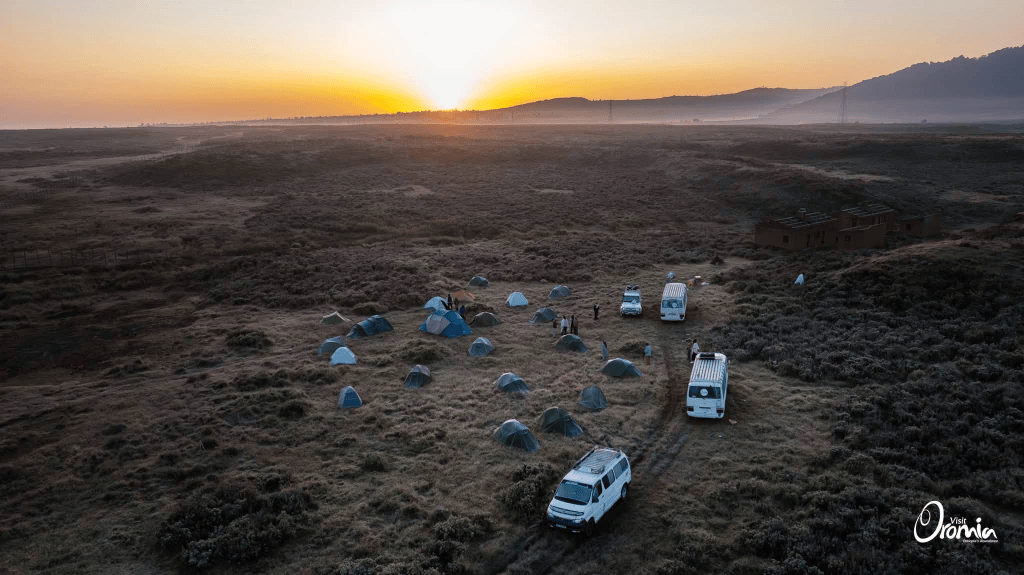
By Bona Oromia
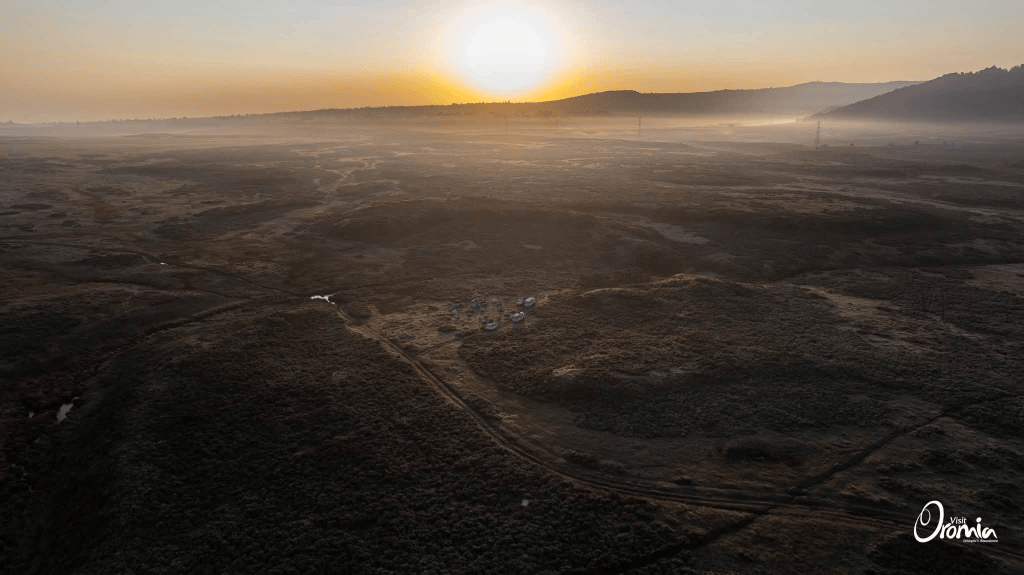
BALE MOUNTAINS NATIONAL PARK, Oromia — Good morning from Gesse Grassland, where the sun rises over one of Ethiopia’s most spectacular and ecologically significant landscapes—the UNESCO-recognized Bale Mountains National Park.
A Land of Origins
The Bale Mountains, located in the Oromia region of southeastern Ethiopia, are part of the Ethiopian Highlands and represent one of the country’s most important natural treasures. The park is home to the largest continuous area of Afro-alpine habitat on the African continent, covering approximately 2,200 square kilometers of stunning landscapes ranging from cloud forests to glacial lakes and vast grasslands like Gesse.
Ethiopia, often called the “Land of Origins,” is the cradle of humankind and a country of extraordinary natural and cultural diversity. The Bale Mountains embody this identity—a place where ancient landscapes meet modern conservation efforts, and where the richness of Oromia’s natural heritage is on full display.
A UNESCO World Heritage Site
In 2023, the Bale Mountains National Park was inscribed as a UNESCO World Heritage Site, recognizing its outstanding universal value. The park is home to an extraordinary array of endemic species found nowhere else on Earth, including:
- The Ethiopian wolf (Canis simensis)—the world’s rarest canid, with more than half of its global population living in the Bale Mountains
- The mountain nyala (Tragelaphus buxtoni)—a large antelope species endemic to Ethiopia
- The Bale monkey (Chlorocebus djamdjamensis)—a rare primate found only in the bamboo forests of the Bale Mountains
- Giant lobelias and other Afro-alpine plant species that create surreal, otherworldly landscapes
The park is also a critical water source, feeding rivers that supply water to millions of people in Ethiopia and neighboring countries.
Gesse Grassland: A Place of Beauty and Biodiversity
Gesse Grassland, where this morning’s greeting originates, is one of the park’s most iconic landscapes. The open grasslands, framed by volcanic peaks and dotted with grazing livestock and wild herbivores, offer visitors a chance to experience the African highlands in their most pristine form. It is a place where the silence of the mountains is broken only by the calls of birds and the rustle of the wind—a reminder of what the world looked like before modernity reshaped so much of the planet.
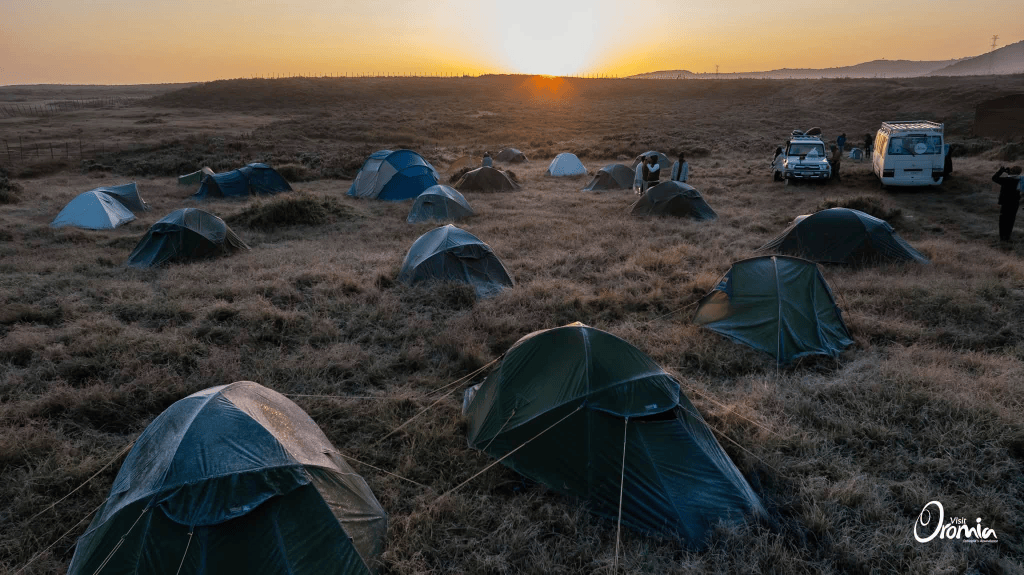
Ethiopia’s Abundance
Ethiopia is a country of remarkable abundance—not only in its wildlife and landscapes but in its cultural heritage and the diversity of its peoples. The Oromo people, the largest ethnic group in Ethiopia, have inhabited these lands for centuries, developing a deep relationship with the natural world that is reflected in their culture, traditions, and indigenous governance systems like the Gadaa.
The promotion of tourism in Oromia and Ethiopia more broadly is part of a larger effort to share this abundance with the world—to invite visitors to experience the Land of Origins firsthand, while also supporting conservation and community development.
A Call to Visit
For travelers seeking adventure, natural beauty, and cultural richness, Ethiopia offers an unparalleled experience. From the Bale Mountains to the Simien Mountains, from the rock-hewn churches of Lalibela to the ancient obelisks of Axum, from the Great Rift Valley lakes to the Danakil Depression—Ethiopia is a country of endless discovery.
Good morning from Gesse Grassland. Good morning from the Bale Mountains. Good morning from Ethiopia—the Land of Origins.
Visitoromia.org | Visitethiopia.et | Ethiopia: Land of Origins
#VisitOromia #EthiopiasAbundance #VisitEthiopia #LandOfOrigins #Oromia #Ethiopia

“From Words to Deeds”: PMO Ethiopia Releases Ninth Volume of “From Meskerem to Meskerem”
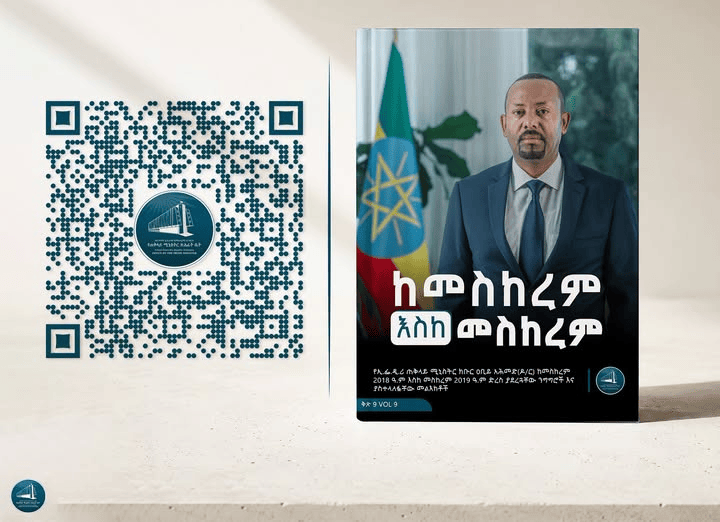
By Bona Oromia
ADDIS ABABA — The Office of the Prime Minister of the Federal Democratic Republic of Ethiopia has released the ninth volume of its annual publication, “From Meskerem to Meskerem” (ከመስከረም እስከ መስከረም), a series that documents the speeches, messages, and historical moments of Prime Minister Abiy Ahmed (PhD).
The publication, now in its ninth edition, continues its mission of preserving the words and actions that have shaped Ethiopia’s journey of change—ensuring that the vision articulated by its leaders is recorded and transmitted to future generations.
Words Express Vision, Actions Transform It
The guiding philosophy of the series is captured in its opening message: “Words express vision; actions transform vision into reality.” Recording and preserving the speeches, messages, and historical events of leaders is described as a crucial way to transmit the nation’s journey of change and its history to future generations.
This ninth volume documents the Prime Minister’s speeches and messages delivered at various events and ceremonies from Meskerem 2018 to Meskerem 2019 in the Ethiopian calendar. It covers a period of significant national transformation—a time when the government’s rhetoric of reform was tested against the demands of implementation.
From Promise to Tangible Asset
The publication is described as telling the story of a journey “from words to deeds, from hope to tangible asset”—a transition from vision to execution and from aspiration to measurable progress. Within its pages are messages that connect national change, development, economic progress, national dignity, and international cooperation with a forward-looking vision for the future.
The volume serves as a concrete testimony to leadership, implementation, and nation-building—a record of the Ethiopian journey of change, from speech to event, from vision to result.
A Record for History
The series is more than a collection of speeches. It is a historical document—a record of the ideas, commitments, and actions that have defined a pivotal period in Ethiopia’s modern history. By compiling and publishing these materials annually, the Prime Minister’s Office ensures that the country’s political discourse and policy direction are preserved in a form that scholars, citizens, and future leaders can study and learn from.
The ninth volume’s release comes at a time when Ethiopia continues to navigate complex economic, political, and social challenges. The publication’s emphasis on “progress verified by action” rather than rhetoric alone reflects a recognition that words must be matched by results.
Read the Full Book
The full publication is available for reading via the following link:
https://pmo.gov.et/…/efb1bd26-fc75-4c5a-96d1…
“Beyond words, progress verified by action. Happy reading!” the announcement concludes.
#PMOEthiopia #FromMeskeremToMeskerem #Ethiopia #Leadership #NationBuilding

SOOLANEE: Award-Winning Oromo Film Now Available on YouTube

By Dhabessa Wakjira
MELBOURNE — SOOLANEE, a landmark Oromo-language film released in 2024, is now available for free viewing on YouTube. The film’s producers are warmly inviting the broader Oromo community and film lovers everywhere to subscribe to Guuboo Entertainment and watch the acclaimed production.
A Film of Many Firsts
SOOLANEE was written by Keeyeroon Darajjee and directed by Rabbirraa Daadhii and Eliyaas Kifilu. Produced by 5 STAR FILM PRODUCTION, the film was released in 2024 and has since become a significant milestone in Oromo cinema.
The film’s title, Soolanee, carries cultural resonance, and its production values have earned it recognition beyond Ethiopia’s borders.
International Acclaim
In 2025, SOOLANEE won the Best International Film award at the Charlotte Black Film Festival in North Carolina, USA. The film has also been selected and screened at numerous international film festivals, earning widespread recognition and critical acclaim. Additionally, SOOLANEE was nominated for a Gumaa Award, further cementing its place as one of the most celebrated Oromo films of recent years.
Now Available to All
The full film is now available on YouTube, and the producers are inviting everyone to watch, subscribe, like, comment, and share.
Watch SOOLANEE here: https://www.youtube.com/watch?v=vAV2vWGKlXU
The film’s release on YouTube marks an important moment for Oromo-language cinema—making an internationally recognized production accessible to audiences around the world, free of charge.
A Call to the Community
The producers extend their warm invitation: “Guutummaa Soolanee YouTube irraa akka daawattan kabajaan afeeramtanii jirtu”—”You are respectfully invited to watch the entirety of Soolanee on YouTube.”
They also encourage viewers to Subscribe, Like, Comment, and Share, helping to amplify the reach of Oromo cinema and support the growing industry of Afaan Oromoo filmmaking.
Watch SOOLANEE now: https://www.youtube.com/watch?v=vAV2vWGKlXU
#SOOLANEE #OromoFilm #AfaanOromoo #GuubooEntertainment #OromoCinema

The Seed and the Rock: Why Life’s Hardest Beginnings Build Life’s Strongest Foundations
By Bona Oromia
In a quiet corner of nature, two seeds begin their journey through life. One finds open space, sunlight, and an easy path to growth. The other encounters a rock. Its path is blocked. Its progress is slow. It must struggle just to reach the surface. If these seeds could speak, the struggling one might ask: “Why is my journey so difficult when the other seed has it so easy?”
This simple fable, animated and shared widely online, carries a profound lesson for anyone who has ever wondered why success seems harder to achieve than it does for others. The struggling seed finds a way forward, develops strong roots, and eventually grows into a magnificent tree. When the storm arrives, its journey takes on a whole new meaning—what once seemed like a disadvantage becomes the very source of its strength.
Your Beginning Does Not Decide Your Ending
Some people start their careers with the best education, supportive managers, and excellent opportunities. Others begin with limited resources, rejection, and difficult circumstances. The fable reminds us that while your starting point may influence your journey, it does not have to determine your destination. The seed that had to fight its way around a rock grew deeper roots than the one that had it easy—and it was the one that survived the storm.
Obstacles Can Teach What Comfort Cannot
The rock forced the struggling seed to find another way to grow. In the same way, a lost sale can teach a salesperson to ask better questions. A failed project can sharpen a manager’s judgment. A business setback can teach an entrepreneur financial discipline. The lesson is counterintuitive but powerful: sometimes the experience we desperately want to avoid becomes the lesson we desperately need.
Build Your Roots Before Chasing Visible Success
A tree’s strength is not just in its height. Much of it lies beneath the ground, where nobody can see it. In professional life, these roots are knowledge, discipline, relationships, integrity, and the ability to learn. The fable warns against becoming so busy chasing promotions, titles, and rewards that we forget to build the capabilities needed to sustain them. Visibility is not the same as strength.
Stop Comparing Your Journey with Someone Else’s
You may see someone moving ahead while you are struggling to take the next step. But you rarely know the full story behind another person’s success or the strengths you are developing through your own challenges. The fable’s message is clear: measure yourself against who you were yesterday, not merely against where someone else stands today.
Leaders, Don’t Remove Every Obstacle—Build Capability
Managers, parents, and mentors often try to make everything easy for the people they care about. Support is essential, but solving every problem for others can prevent them from learning to solve problems themselves. Give people guidance, resources, and encouragement—then give them the opportunity to think, act, make mistakes, and grow. The rock, in other words, may be the most valuable teacher of all.
Remember: The Storm Will Eventually Come
Markets change. Customers say no. Projects fail. Careers take unexpected turns. You cannot control every storm, but you can prepare yourself before it arrives. The real measure of growth is not how tall you stand on a sunny day, but how well you face the difficult days.
The animated fable of the two seeds is a reminder that struggle is not a sign of failure. It is often the precondition for resilience, wisdom, and lasting success. The seed that had to fight for its place in the sun grew strong enough to survive the storm—and when the storm came, its struggle was revealed for what it always was: the beginning of its strength.
#InspiresOromia #PersonalGrowth #Resilience #Leadership #Motivation

The Gadaa System: A Living Democratic Heritage of the Oromo People
By Bona Oromia
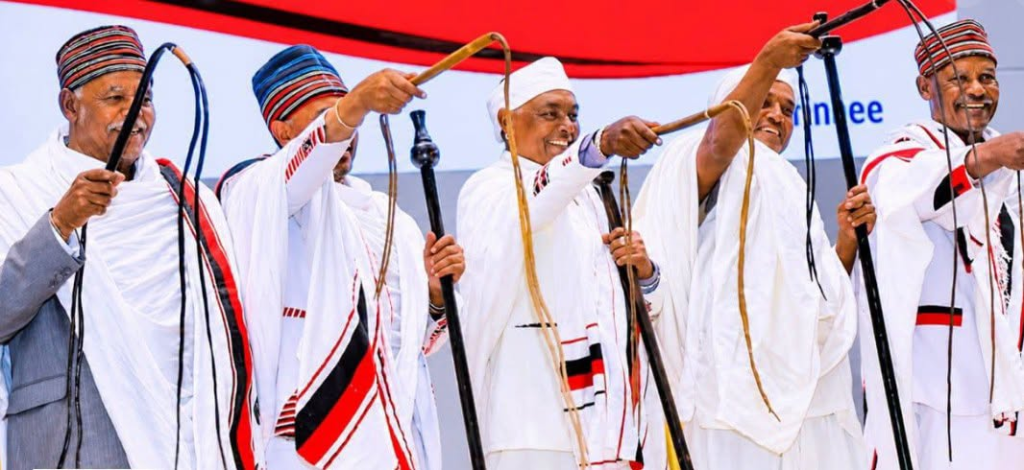
FINFINNE — Ten years ago, on November 21, 2009, the Oromo Gadaa system was inscribed by UNESCO as Intangible Cultural Heritage. A decade later, the Gadaa system remains not merely a historical relic but a living, functioning democratic order that continues to regulate the political, economic, and social life of the Oromo people. Drawing on materials from the Oromia Culture and Sport Bureau, this feature explores the principles, institutions, and enduring significance of one of Africa’s most sophisticated indigenous governance systems.
A Democratic System of Governance
Gadaa is the traditional system of governance through which the Oromo people have organized their political, economic, and social life for centuries. It is a democratic system in which all members of society participate on equal footing. The system organizes the Oromo people into five Gadaa groups, without dividing them by clan or class, and each group governs in rotation for a period of eight years.
Gadaa is not limited to a single dimension of life. It encompasses all aspects of Oromo existence and provides guidance in every direction. As the source material emphasizes, “Gadaa is not merely a celebration or a feast. Within Gadaa, there are cultural institutions such as Guddifachaa (adoption), Gumaa (compensation), Araara (reconciliation), Meedhacha (mediation), Raakoo (assembly), Waaqeffannaa (traditional worship), Irreecha (thanksgiving festival), Siiqqee (women’s institution), Marabbaa (council), and many others.”
The Role of Women in Gadaa
In the Oromo Gadaa system, women hold an elevated and respected position. The dignity of women is an undeniable truth within the system. The major institutions associated with women under Gadaa include:
Qanafaa — a symbol of honor that Oromo women, particularly among the Arsii, wear on their heads during childbirth. The Qanafaa is tied with fresh grass, grain flowers, and butter.
Siiqqee — a straight staff made from the Harooressa tree, which a mother gives with honor to her daughter upon marriage, along with a Barree Itittuu and Buqqee (Hodhaa). The Siiqqee is the instrument through which Oromo women assert and protect their rights.
Ateetee — a system with its own rules and procedures, practiced by Oromo women, connected to spirituality. It is the cultural institution through which women honor their rights and pray to and through the Creator (Waaqayyo).
The Qeerroo and the Gadaa System
The term Qeerroo refers to a young man who has not yet married. In the Gadaa system, young men in the Kuusaa (Foollee) and Raabaa grades are considered Qeerroo. In the Gadaa system, young men in these grades do not marry; marriage is permitted when they reach the Doorii grade.
In the construction of Oromo military power, the special force trained for high military duty is known as Qeerroo or Buttuu. This force is selected from the Foollee (Kuusaa) grade and takes shape in the Raabaa grade.
In the Gadaa system, the military or defense force of the country is known as Raayyaa. The Oromo Raayyaa is composed of three types of soldiers: the Cavalry Force (Humna Waraana Fardaa), the Infantry Force (Humna Waraana Lafoo), and the Special Force (Humna Addaa). The Special Force, trained and organized for special missions, is known as Buttuu in some places and Qeerroo in others. The meaning is strong, decisive, fast, and unyielding—symbolizing determination.
Qaalluu and Ayyaantuu
In the Gadaa system, the Qaalluu is the leading religious institution, and below it are smaller religious leadership structures known as Waayyuu and Ayyaantuu. The Qaalluu institution is led by Abbaa Muudaa.
The Qaalluu exists among all Oromo groups, with the most senior being the Qaalluu of Warra Odituu. Others include the Qaalluu Beerree. Among the Gujii, the Qaalluu is Warra Odituu. The Odituu is known among the Maccaa, Tuulamaa, and Booranaa, while the Qaalluu of Warra Sapha is also known among the Tuulamaa. Among the institutions under the Qaalluu, Ayyaantuu is one, while Waayyuu is considered the backbone of the great Qaalluu. In some places, Waayyuu acts in place of the Qaalluu and leads the people.
A Living Heritage
The Gadaa system’s inscription by UNESCO a decade ago was a recognition of its global significance as a democratic heritage. But for the Oromo people, Gadaa is not a museum piece. It is a living system that continues to shape governance, resolve disputes, transmit values, and bind the community together. Its principles—equality, rotation of power, accountability, and the participation of all—remain as relevant today as they have been for centuries.
As the Oromo people continue to navigate the challenges of the modern world, the Gadaa system offers a foundation rooted in their own history and traditions—a source of identity, resilience, and hope for the future.
Source: Barii (Gaazexaa Bariisaa), October 15, 2019; Oromia Culture and Sport Bureau; UNESCO Intangible Cultural Heritage.

Oromia Eyes AI, Agriculture, and Climate Finance in High-Level Talks with Nedamco Africa
By Dhabessa Wakjira
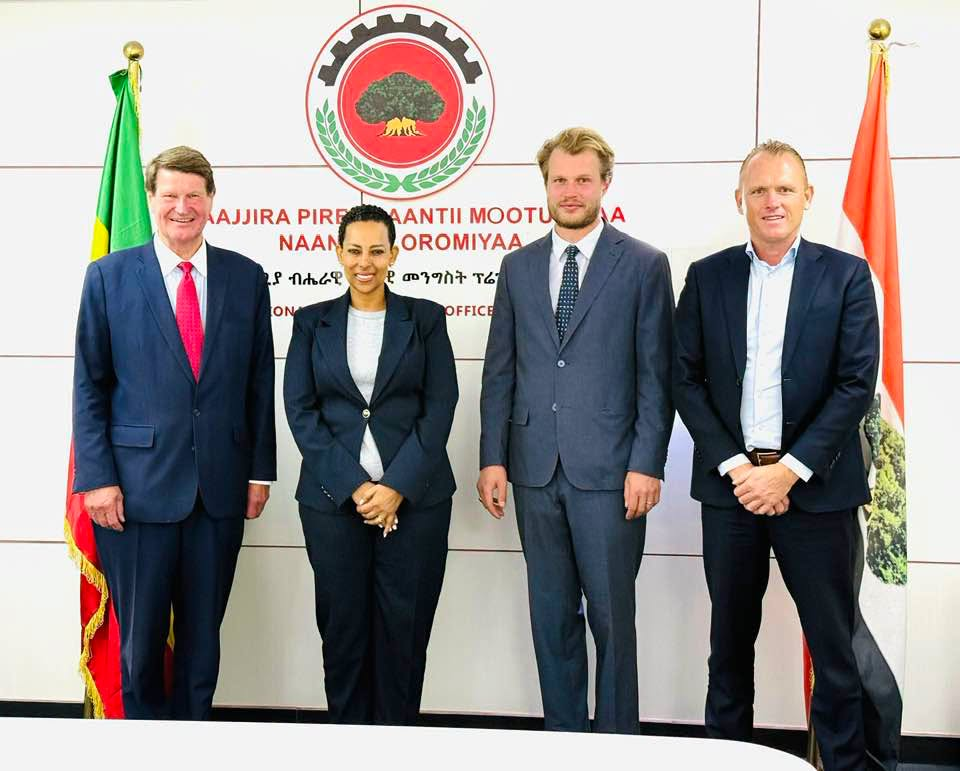
ADDIS ABABA — In a significant step toward positioning Oromia at the forefront of technological innovation and sustainable development, the President of the Oromia Region welcomed the Nedamco Africa team to the Oromia President Office for a forward-looking discussion on opportunities at the intersection of artificial intelligence, agriculture, climate finance, and international investment.
A Vision for Technology-Driven Development
The meeting, described by the President as “a pleasure,” explored exciting possibilities for leveraging technology and international partnerships to advance agricultural productivity, strengthen climate resilience, unlock investment, and build local technological capacity. The discussions signal a growing recognition that Oromia’s future prosperity will depend not only on its vast natural resources and agricultural potential but on its ability to harness the tools of the digital age.
Artificial intelligence, in particular, was identified as a transformative force capable of revolutionizing how the region approaches farming, resource management, and climate adaptation. By integrating AI into agricultural systems, Oromia could improve crop yields, optimize water usage, and provide farmers with data-driven insights that enhance productivity and sustainability.
Climate Finance and COP32
The timing of the discussions is significant. As Ethiopia prepares for COP32 and continues to advance its digital ambitions, the Oromia regional government is positioning itself as a key player in the global conversation on climate finance and sustainable development. The meeting with Nedamco Africa explored how international partnerships could unlock investment for climate-resilient infrastructure, renewable energy, and agricultural adaptation.
The President emphasized that bringing together innovation, investment, and development is essential to creating lasting benefits for the Oromo people. “I see significant potential in bringing together innovation, investment, and development to create lasting benefits for our people,” he stated.
Building Local Capacity
Beyond the immediate opportunities for investment and technology transfer, the discussions focused on building local technological capacity—a critical component of any sustainable development strategy. Without a skilled local workforce equipped to manage and innovate within these new systems, the benefits of AI and digital technology would remain dependent on external expertise.
The meeting with Nedamco Africa thus signals a commitment not only to attracting investment but to ensuring that Oromia develops the human capital needed to sustain and expand technological innovation in the years ahead.
A Promising Beginning
“I welcome Nedamco Africa’s interest in exploring these opportunities with us,” the President said. “This is the beginning of a promising conversation, and I look forward to what we can build together.”
The discussions represent a new chapter in Oromia’s engagement with the global technology and investment community. As the region continues to position itself as a hub for innovation and sustainable development, partnerships like the one with Nedamco Africa will be instrumental in transforming vision into reality.
#Oromia #Ethiopia #COP32 #AI #Agriculture #ClimateFinance #Innovation #SustainableDevelopment

Diwali Across Victoria: A Festival of Light, Hope, and Community
By Dhabessa Wakjira
MELBOURNE — On 8 November, many Victorians will celebrate Diwali, the Festival of Lights. Observed by Hindu, Jain, Sikh, and Buddhist communities, Diwali holds different meanings and traditions across cultures and faiths. Across these celebrations, the festival is associated with hope, the triumph of good over evil, light over darkness, and knowledge over ignorance.
A Festival Shared Across Faiths
Diwali, also known as Deepavali, is one of the most widely celebrated festivals in the world. Its name derives from the Sanskrit word deepavali, meaning “row of lights.” For Hindus, it marks the return of Lord Rama to Ayodhya after fourteen years of exile and his victory over the demon king Ravana—a celebration of the triumph of dharma (righteousness) over adharma (evil). For Jains, it commemorates the attainment of nirvana by Lord Mahavira. For Sikhs, it marks the release of Guru Hargobind Ji from imprisonment and the Bandi Chhor Divas, a celebration of freedom and justice. For Buddhists, particularly in Nepal and parts of India, it is associated with the day Emperor Ashoka embraced Buddhism.
Despite these different origins, the common thread is unmistakable: light overcoming darkness, knowledge overcoming ignorance, and hope overcoming despair.
How Victorians Celebrate
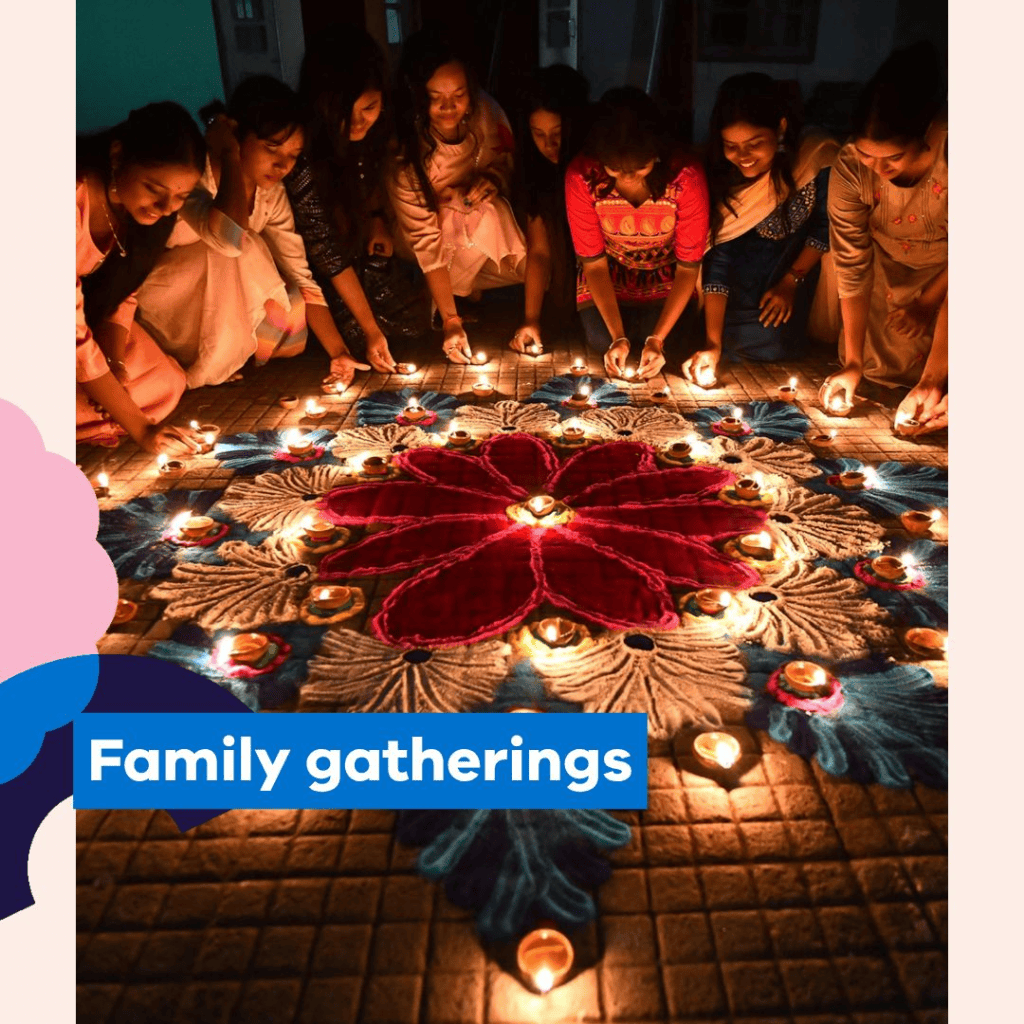
Across Victoria, Diwali is celebrated with a richness that reflects the diversity of the communities who observe it. Homes are cleaned and decorated with rangoli—intricate patterns made from coloured powders, rice, and flower petals. Diyas (oil lamps) are lit and placed around homes and in temples, symbolizing the light of knowledge and the presence of the divine. Families gather for prayers, share sweets and festive meals, and exchange gifts.
In Melbourne, public celebrations have become a major feature of the city’s cultural calendar. From Federation Square to local community halls, Diwali events bring together thousands of people each year for music, dance, food, and fireworks. Temples across the state—including the Shree Swaminarayan Temple in Tarneit, the Sri Durga Temple in Rockbank, and the Hindu Society of Victoria in Carrum Downs—hold special services and celebrations. Community organisations host cultural programs, and the annual Diwali at Fed Square has become one of the city’s most anticipated multicultural events.
A Celebration of Community
Beyond the lights and the festivities, Diwali carries a deeper message about community and belonging. It is a time when families come together, when neighbours exchange greetings, and when the bonds of friendship are renewed. For the Indian diaspora in Victoria—one of the fastest-growing communities in the state—Diwali is also an opportunity to share their heritage with the wider public, fostering understanding and connection across cultural boundaries.
The festival’s emphasis on hope and renewal resonates beyond the communities who celebrate it. In a world often marked by division and uncertainty, the image of lamps lit against the darkness speaks to something universal: the human desire for goodness, knowledge, and peace.
Wishing Everyone a Joyful Diwali
As Victorians prepare to celebrate, the message is one of warmth and inclusivity. Whether through the lighting of diyas, the sharing of sweets, the explosion of fireworks, or the simple act of gathering with loved ones, Diwali is a reminder that light—however small—has the power to dispel darkness.
Wishing everyone celebrating a joyful Diwali!
#Diwali2026 #FestivalOfLights #Victoria #MulticulturalAustralia #DiwaliMelbourne

Why Oromo Unity Remains a Constant Theme in the Oromo Freedom Struggle?
By Bona Oromia
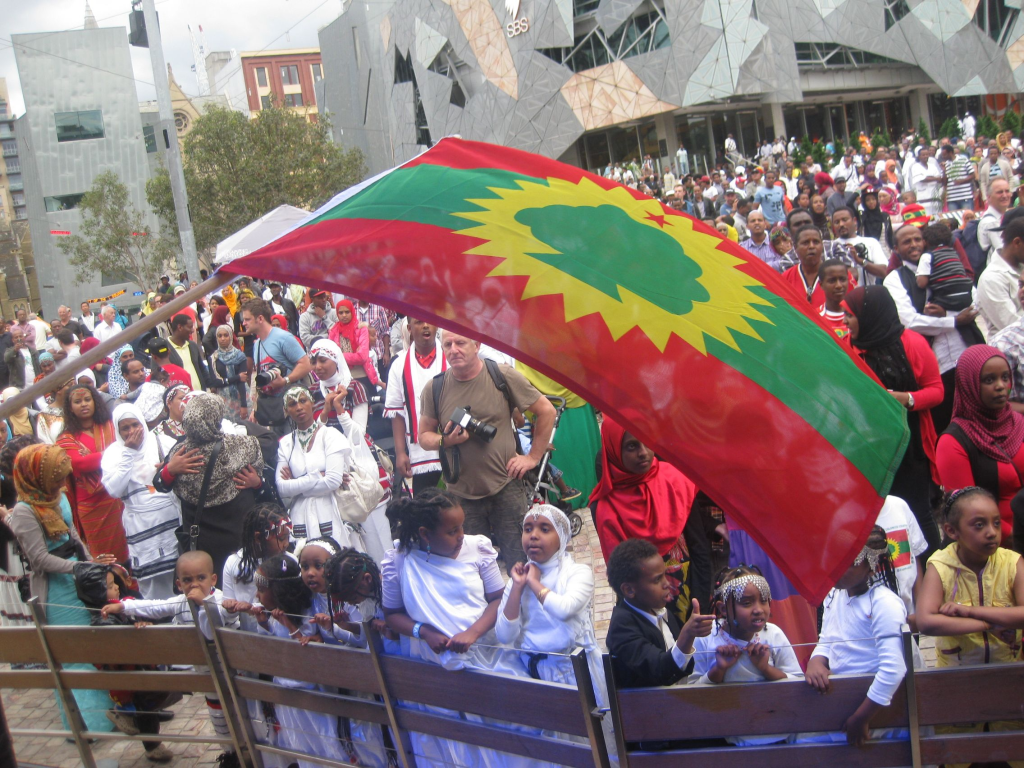
Across more than a century of the Oromo freedom struggle, “unity” (Tokkummaa) has remained an unavoidable core theme. It serves both as a profound diagnosis of historical setbacks and as a fundamental precondition for the future. The Oromo people constitute the largest ethnic group in the Horn of Africa, yet they have long been politically marginalized. This paradox—a majority without power—makes unity not merely a moral appeal but a strategic necessity for survival and liberation.
The Official Diagnosis: Lack of Internal Unity as the Main Reason the Struggle Remains Unfinished
In October 2026, Ethiopian Prime Minister Abiy Ahmed, in an interview on Oromia Broadcasting Network, offered a rare systematic assessment of why the Oromo struggle has not achieved rapid victory. He categorized the Oromo people’s core demands into three pillars: economic (autonomy over land and resources), identity (preservation of culture, language, and moral values—Safuu), and democratic (self-governance based on Gadaa principles).
However, he explicitly stated that despite the struggle having lasted more than a century, it has not achieved its desired victory, and one of the primary reasons is a lack of internal unity. He explained that although the Oromo are geographically dispersed and share an identity, political conspiracies, religious divisions, and geographic boundaries formed by rivers and regional lines have prevented them from maintaining strong internal cohesion. This judgment from the highest level of government confirms, from another angle, the central place of the unity question in Oromo political discourse.
Historical Echoes: Unity Was the Starting Point of the Movement
The history of modern Oromo political mobilization is itself a history of the practice of unity. In 1963, three limited-scale Oromo self-help associations—Jibat and Macha, Metta Robii, and Tulama Shawa—merged to form the Macha-Tulama Self-Help Association. The significance of this merger went far beyond organizational integration: it “embraced all Oromo irrespective of religion and region,” and within just three years registered over two million members, becoming the symbol of the public rise of Oromo nationalism.
Although the association’s charter was framed around social services such as education, healthcare, and road construction, its core orientation was “Oromo national development.” As scholarly literature notes, its formation “laid the foundation for the centralized leadership of the Oromo liberation struggle.” In other words, the organizational form of unity—integrating scattered self-help groups into a unified national movement—was precisely the starting point of all subsequent political struggle. When the imperial government banned the association in 1967, it had already demonstrated the energy that unity could unleash.
Cultural Wisdom: Unity as a Defense Against Being “Consumed from Within”
In Oromo political discourse, the emphasis on unity also stems from a deep cultural vigilance. Academic research has analyzed metaphors in Oromo political speeches: How does a weak wolf defeat a strong elephant? The answer is “from inside the elephant’s belly.” This analogy is used to explain why Oromo unity is difficult for external enemies to shake, yet easily weakened by “a few Oromo politicians pursuing personal interests.”
This “self-centeredness” is seen as a corrosive agent of unity. Another set of metaphors in the speeches—the sickle and the saw—further illustrates this point: the curved blade of the sickle symbolizes politicians who take everything for themselves, while the straightness of the saw symbolizes fair sharing. These cultural expressions reveal a core understanding: the greatest threat to unity is often not external oppression itself, but internal division and self-interest. For this reason, the call for unity carries enduring urgency in Oromo political culture.
Contemporary Echoes: Religious Leaders Practicing Unity
The theme of unity has not remained confined to history or rhetoric. In September 2026, in Finfinnee (Addis Ababa), leaders of the three major faith pillars of Oromo society—Waaqeffannaa (traditional belief), Christianity, and Islam—gathered at a rare roundtable dialogue. Participants reached a series of consensus points, the most central of which was the commitment: “Yoo rakkoon jiraate waliin dhaabbannee hiikuu”—”If difficulty comes, we will stand together and solve it.”
Religious leaders also explicitly condemned “any act that uses religious identity to sow discord or harm the Oromo nation,” and pledged to use the Oromo language and culture as tools of unity rather than weapons of division. This event demonstrates that unity remains, in contemporary Oromo society, a practical goal that must be actively constructed and continually reaffirmed—not an accomplished fact to be taken for granted.
Conclusion
Oromo unity remains a constant theme in the freedom struggle because it simultaneously carries three functions: diagnostic—it explains why the Oromo people, despite their large population, have not achieved their political goals; historical—it was the organizational principle through which the modern Oromo national movement was born; and normative—it is seen as the fundamental safeguard against internal division and for consolidating collective strength. In Oromo political discourse, unity has never been a settled question, but a task that each generation must take up anew.

Hillary Clinton Celebrates “Historic Gains” as Record Number of Democratic Women Win Seats Across America

By Dhabessa Wakjira
WASHINGTON, D.C. — Former Secretary of State Hillary Clinton took to X on Wednesday to celebrate the sweeping victories of Democratic women in the 2026 midterm elections, highlighting a series of historic firsts that will reshape the face of American political power. From the halls of Congress to statehouses across the country, Democratic women achieved representation milestones that Clinton described as “historic gains”.
” There is much to celebrate this week, but I want to call specific attention to historic gains Democratic women made in representation,” Clinton wrote, before listing the achievements that have defined this election cycle.
A Record-Breaking House
For the first time in American history, more than 100 Democratic women will serve in the U.S. House of Representatives. According to Rutgers University’s Center for American Women and Politics, at least 100 Democratic women will serve in the House in 2027, surpassing the previous Democratic record of 95 set in 2025. The center’s analysis identified at least 116 Democratic women entering Congress overall, including members of both chambers.
The milestone was also celebrated by Speaker Emerita Nancy Pelosi, who issued a statement marking the historic election of over 100 Democratic women to the House. The surge represents a substantial expansion of women’s representation within the Democratic congressional delegation, giving women a larger presence in the chamber where federal legislation and oversight of the executive branch are debated.
New Records in the Senate and Governors’ Mansions
Clinton also highlighted the election of at least 16 Democratic women to the U.S. Senate. While the overall number of women in the Senate is expected to decline from the current 27, the Democratic women entering the chamber will establish a new record for their party. Among the most consequential individual victories is that of Minnesota Lt. Gov. Peggy Flanagan, whose election makes her the first Native American woman elected to the Senate.
The gubernatorial results represent another major part of the historic gains. At least 14 Democratic women will serve as governors in 2027, surpassing the previous record of 10. Across both parties, at least 17 women are expected to occupy governors’ offices, breaking the previous national record of 14—meaning women will lead at least 34% of the country’s governorships.
Breaking Barriers Across the States
Clinton specifically noted that four states elected their first woman governor: Georgia, Minnesota, Ohio, and Tennessee. The victories involved four different political careers: Democrat Keisha Lance Bottoms in Georgia, Democrat Amy Klobuchar in Minnesota, Democrat Amy Acton in Ohio, and Republican Marsha Blackburn in Tennessee.
Among the most significant national firsts was the election of Keisha Lance Bottoms in Georgia. Her victory makes her the first Black woman elected governor of a U.S. state, ending a longstanding absence of Black women in the country’s governorships. Bottoms previously served as mayor of Atlanta from 2018 through 2022.
In New Mexico, Democrat Deb Haaland—who previously made history as one of the first Native American women elected to Congress and as the first Native American cabinet secretary—will become the first Native American woman governor. In Texas, Democrat Gina Hinojosa will become the first Latina governor of the state.
A Groundswell at the State Level
Beyond the federal and gubernatorial races, Clinton drew attention to the groundswell of Democratic women running for state legislatures. A record of 2,600 Democratic women running for seats in state legislatures helped flip 12 majorities and break 11 supermajorities. This grassroots surge reflects a broader mobilization of women entering politics at every level of government.
A Legacy of Leadership
The significance of Clinton’s message extends beyond her reaction to individual election victories. She is one of the most prominent women in modern American political history, having served as first lady, represented New York in the U.S. Senate, and served as secretary of state. In 2016, she became the first woman nominated for president by a major U.S. political party. Her recognition of the latest generation of women entering public office carries particular weight—a torch passed from one trailblazer to many.
“I am beyond excited to see these extraordinary people and public servants tackle accountability, affordability, and our other challenges to make life better for everyone in this country,” Clinton wrote. “Congratulations to everyone who ran, win or lose, fighting for what’s right is always worth it”.
A New Political Landscape
The 2026 midterms have produced a political landscape that is more reflective of America’s demographics than ever before. With Democrats projected to retake control of both the House and the Senate, the women elected this cycle will not only be present in the halls of power—they will be positioned to shape the legislative agenda, conduct oversight, and influence the direction of the country.
For Clinton, the moment represents both a culmination and a beginning. The gains she celebrated are the result of years of organizing, recruitment, and the stubborn belief that American democracy works best when it looks like America itself. And as the women elected in 2026 prepare to take office, they carry with them the weight of history—and the promise of what comes next.
#Election2026 #WomenInPolitics #DemocraticWomen #RepresentationMatters #HillaryClinton

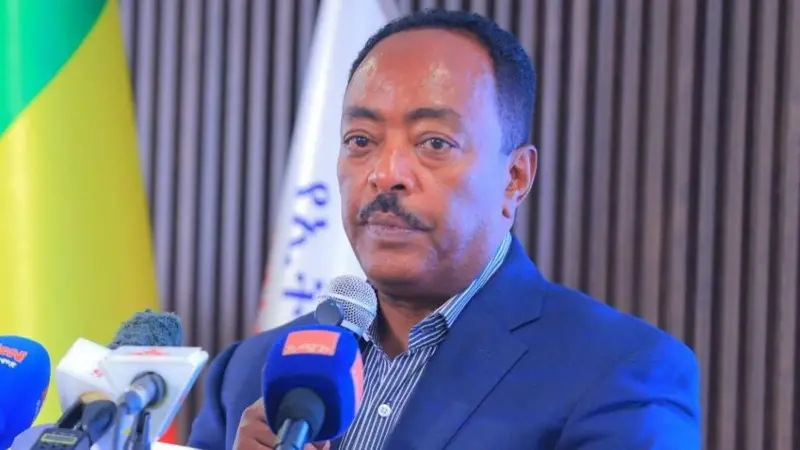
Ethiopia’s Media Regulator Under Fire: Ambassador Redwan Hussein’s Warning Remarks Spark Debate
By Daandii Ragabaa
ADDIS ABABA — Ethiopia’s top media regulator has sparked debate after stating that no media outlet has ever been warned more than five times without being told what it did wrong, what damage it caused, or which law it violated. The remarks, made by Ambassador Redwan Hussein, Board Chairperson of the Ethiopian Media Authority (EMA), came in a speech at the Media Excellence Center graduation ceremony on October 26, 2026.
A Warning Without a Wrongdoing?
Ambassador Redwan’s comments centered on the country’s media landscape—its problems, its challenges, and the ways some outlets operate. He stated that no media outlet has ever been warned more than five times without being told what it did wrong, what damage it caused, or which law it violated. The remark appeared to suggest that the regulatory body has been transparent and patient in its dealings with media organizations.
The comments came just days after the Authority announced that the registration certificate of the Media and Communication Center—the publisher of Reporter, a newspaper that has been in print for 30 years, and its English-language counterpart The Reporter—had been suspended “for an indefinite period.” The Authority stated that the newspapers published under the institution would remain “completely barred from printing and broadcasting.”
The EMA said it had monitored Reporter‘s content for over a year and confirmed repeated violations of “the law and professional ethics.” Among the accusations leveled against the newspaper were: disseminating content contrary to national interest; amplifying topics with significant negative impact on the political, social, and economic context; creating suspicion and confusion among the public through misleading reports; and transmitting information that undermines the unity and values of the people.
A Call for Responsible Media
Ambassador Redwan, who also serves as Director of National Intelligence and Security, said the government “encourages responsible media” and noted that the number of media outlets has increased since Prime Minister Abiy Ahmed came to power.
However, he also acknowledged that print media is declining—not only in Ethiopia but globally. He warned that no one can live above the law. “No matter how many embassies know me, how many foreigners speak for me, how much money I have, or how many years I have lived,” he said, “one cannot live above the law.”
He noted that some outlets had been advised as many as 15 times, and that each time they had been shown what they did wrong and had promised to correct it. The media, he said, had agreed to rectify its mistakes.
International Criticism
The suspension of Reporter has drawn criticism from international human rights organizations. Human Rights Watch condemned the move, describing it as part of the Ethiopian government’s “attack on the country’s media and civil space.” HRW called Reporter “one of the few independent institutions remaining in the country” and urged the government to reverse its decision immediately, calling on the country’s partners to pressure the government.
The Challenges of Ethiopia’s Media Landscape
Ambassador Redwan also addressed the broader challenges facing Ethiopian media. He noted that some individuals have launched media outlets simply because they have money, without knowing anything about journalism. “They don’t even know the identity of the person they hired,” he said.
He emphasized that a journalist has a professional responsibility beyond the owner of the outlet. While some “deliberately work to incite the country,” he said, the vast majority make mistakes out of ignorance. He cited Al Jazeera as an example of foreign media that “treats Ethiopia’s affairs in a balanced way” comparable to the BBC.
He warned that a media outlet with a license should not appear to be above both the country’s parliament and its government. “Media can be criticized and questioned,” he said. “There is no need for a campaign. There must be cooperation through procedure.”
A Warning Against Victimhood
In a pointed remark, Ambassador Redwan said: “If you are advised forty times, make forty mistakes, and then, when you are warned once, you campaign about it, you are thinking you have more power than Ethiopia.”
He emphasized the importance of knowing the country’s laws, its interests, and one’s own role. “When we make mistakes, we need to correct them,” he said.
He recalled that there have been media outlets that made mistakes and were corrected. “If they make mistakes five times, they will be corrected five times,” he said. “The main thing is whether they are ready to be corrected.”
The Road Ahead
The suspension of Reporter and the remarks of Ambassador Redwan have reignited debate about press freedom in Ethiopia—a debate that has intensified in recent years as the government has taken action against media outlets it accuses of violating the law. Last year, the licenses of Addis Standard and Wazema were revoked, and the reporting credentials of foreign media were cancelled.
For the Ethiopian government, the actions are a matter of enforcing the law and protecting national interests. For critics, they represent a narrowing of the space for independent journalism in a country where access to information is already constrained. What is clear is that the relationship between the Ethiopian state and its media remains fraught—and the debate over where the line between regulation and repression lies is far from resolved.
Source: BBC Amharic, Ethiopian Media Authority, Human Rights Watch






