Category Archives: Oromia

Irreecha Malkaa Daabanaa Celebrated with Tradition in Bedelle
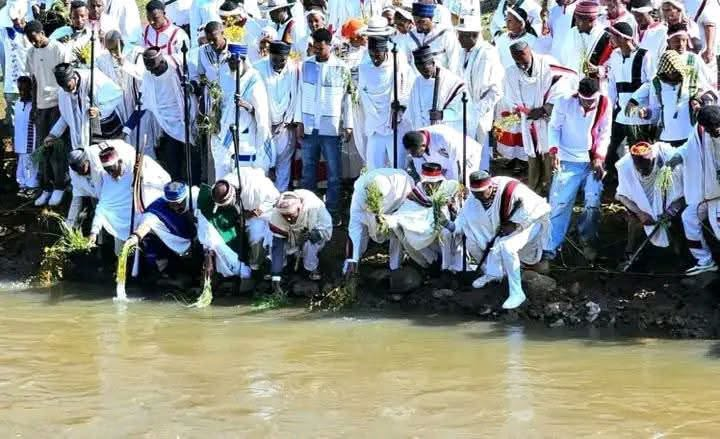
Birbirsa Lakkuu, Bedelle District — Under the open sky and amid the resonant chants of thanksgiving, the Irreecha Malkaa Daabanaa festival was celebrated in Birbirsa Lakkuu, in the Bedelle district of the South West Oromia Zone, with the traditional rites of the festival observed in full.
The celebration drew together elders, Abbaa Gadaa, community leaders, and thousands of participants who gathered to honor one of the most cherished cultural and spiritual traditions of the Oromo people. From the early hours of the morning, the grounds of Birbirsa Lakkuu filled with color, song, and the scent of fresh grass and flowers — symbols of renewal and gratitude that lie at the heart of Irreecha.
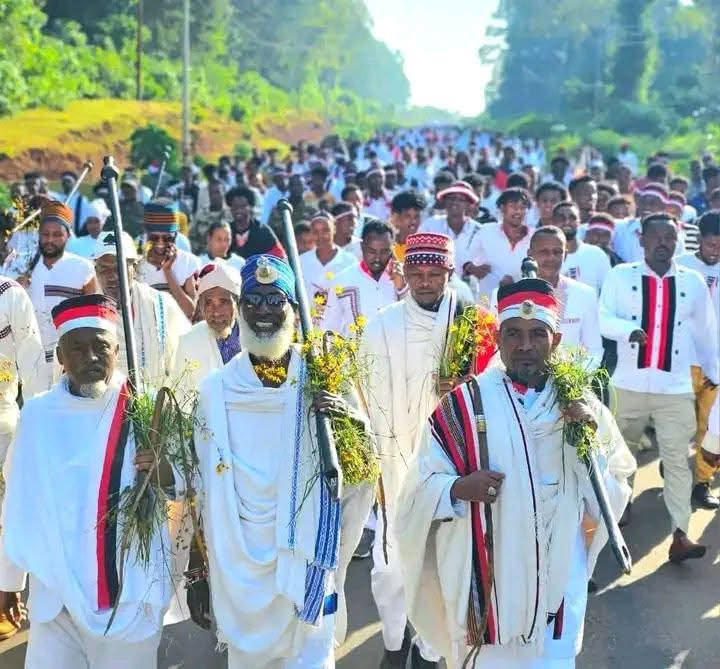
Speaking at the celebration, Abbaa Gadaa Maccaa, Abbaa Gadaa Warqinaa Tarreessaa, said that Irreecha demonstrates Oromo identity and strengthens coexistence among the Oromo people and other nations. He emphasized that the festival is more than a cultural gathering — it is a living expression of unity, mutual respect, and shared humanity.
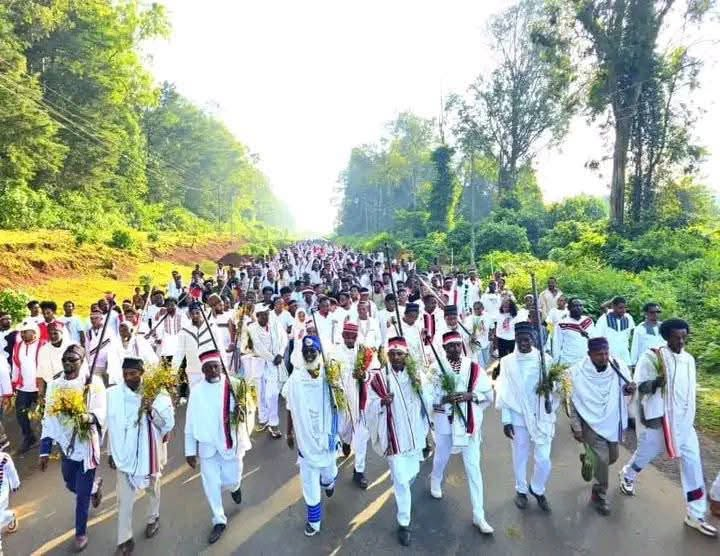
He further noted that Oromo tradition and culture are a source of democracy, a path to peace, and therefore the current generation should embrace Oromo tradition early and use it to empower themselves. The values embedded in the Gadaa system, he explained, offer timeless lessons in governance, justice, and social harmony that remain deeply relevant today.
The Abbaa Gadaa and participants of the festival stated that they are working to strengthen the traditions of Irreecha and pass them on to the younger generation. They stressed that the youth — the custodians of tomorrow — must be actively engaged in learning and practicing these traditions so that the cultural heritage of the Oromo people continues to flourish for generations to come.
For the community of Bedelle, the celebration was a powerful reminder of the enduring bond between the people and their land, their faith, and their history. As participants departed with blessings and renewed hope, the message of Irreecha Malkaa Daabanaa echoed far beyond the festival grounds: a call to unity, peace, and the preservation of a proud and living heritage.

Arming the Party: The Perils of Military Training for Civilian Political Leadership in Ethiopia
An Analysis of Kader Nour Elmi’s Statement on Prosperity Party Cadre Training
By ONA Staff Reporter
In fragile democracies and transitional states, the line between the ruling party and the state apparatus is often perilously thin. When that line is crossed—particularly concerning the national armed forces—the implications for democratic governance, human rights, and long-term stability are profound.
A recent statement by Kader Nour Elmi, a member of the Freedom and Equality Party (Somali Region), raises critical alarm bells regarding the provision of military and security-related training to the civilian leadership of Ethiopia’s ruling Prosperity Party (PP). Elmi’s analysis touches upon one of the most sensitive fault lines in contemporary Ethiopian politics: the creeping militarization of partisan politics and the potential weaponization of state security institutions.
The Two Faces of Leadership Training
Elmi’s statement offers a nuanced starting point. On the surface, providing security and strategic training to civilian leaders is not inherently sinister. In an increasingly volatile geopolitical environment—characterized by asymmetric warfare, cyber threats, and complex regional conflicts—leaders with a robust understanding of national security can, theoretically, govern more effectively. Capacity building can improve strategic foresight and institutional resilience.
However, the context in which this training occurs is everything. Elmi rightly notes that establishing a “special relationship” between a ruling party and the national armed forces invites legitimate and grave concerns. When the Prosperity Party—a partisan political entity—receives specialized military or security training, it risks blurring the fundamental distinction between the party and the state.
In a true democratic system, the military belongs to the republic, not to the party in power. The Ethiopian National Defense Force (ENDF) and other security apparatuses are constitutionally mandated to protect the sovereignty of the state and the rights of all citizens, irrespective of their political affiliations. When the ruling party co-opts military institutions for its own cadre development, it sends a dangerous message: that the military exists to protect the party’s grip on power, rather than the nation’s constitutional order.
The Threat to Military Neutrality and Political Equality
Elmi’s most potent point is the concern over military neutrality and political equality. Ethiopia is a deeply diverse nation, home to numerous political parties and armed resistance movements, particularly in Oromia and Amhara. If the armed forces are perceived as being ideologically aligned with, or trained to protect, the Prosperity Party, the military loses its legitimacy as a neutral arbiter and national unifier.
This dynamic breeds profound inequality. If PP leaders are trained in security and military strategy while opposition parties are left out, it creates a two-tiered political system. The ruling party becomes a quasi-military entity, while opposition groups are relegated to a position of structural vulnerability. In such an environment, democratic competition ceases to be a battle of ideas and becomes a contest of force. The military and security services, rather than being the shield of the people, become the sword of the incumbent.
The Need for Transparency and Accountability
Elmi’s call for transparency is not just a procedural demand; it is a constitutional necessity. The purpose, content, funding, and legal framework of providing military training to civilian party leaders must be subjected to rigorous public scrutiny.
Who is funding this training? Is it being conducted by the Ministry of Defense, the National Intelligence and Security Service (NISS), or foreign entities? What is the curriculum? Are state resources—which are funded by the taxes of all Ethiopians, including those who oppose the Prosperity Party—being diverted to strengthen a partisan political machine?
Without transparent legal frameworks and accountability mechanisms, these training programs risk becoming shadowy operations that entrench authoritarianism. The use of state security institutions to advance partisan interests is a hallmark of state capture—a phenomenon that undermines the rule of law and erodes public trust in the very institutions meant to protect them.
A Warning from the Opposition
Kader Nour Elmi’s statement, coming from a member of an opposition party in the Somali region—an area that has experienced its own complex dynamics of regional security and political marginalization—serves as a timely warning. It highlights that the concerns over the Prosperity Party’s relationship with the military are not isolated to one region or one ethnic group; they are a national dilemma.
The Prosperity Party came to power promising a new era of unity and prosperity. However, when the ruling party engages in military-style training for its cadres, it signals a reliance on security apparatuses to maintain control, rather than on democratic consensus and the ballot box. This approach mirrors the tactics of previous authoritarian regimes, where the military was used to suppress dissent and ensure the survival of the ruling elite.
Conclusion: Preserving the Democratic Boundary
The integrity of Ethiopia’s democratic transition hinges on the strict separation of party and state. Elmi’s analysis is a vital contribution to the national discourse, reminding us that national security institutions must remain firmly under the control of constitutional law, not the partisan whims of a ruling party.
If the Prosperity Party truly believes in democracy, it must ensure that its leadership training is fully transparent, legally sanctioned, and devoid of any military or security dimensions that violate the principle of civilian oversight and military neutrality.
As Elmi concludes, preserving this distinction is essential. It is the only way to safeguard democracy, strengthen the rule of law, and ensure that the national armed forces serve the people of Ethiopia, rather than the narrow political interests of those in power.

Irreecha at Malkaa Meexxii: A Community’s Thanksgiving in West Oromia
By Daandii Ragabaa
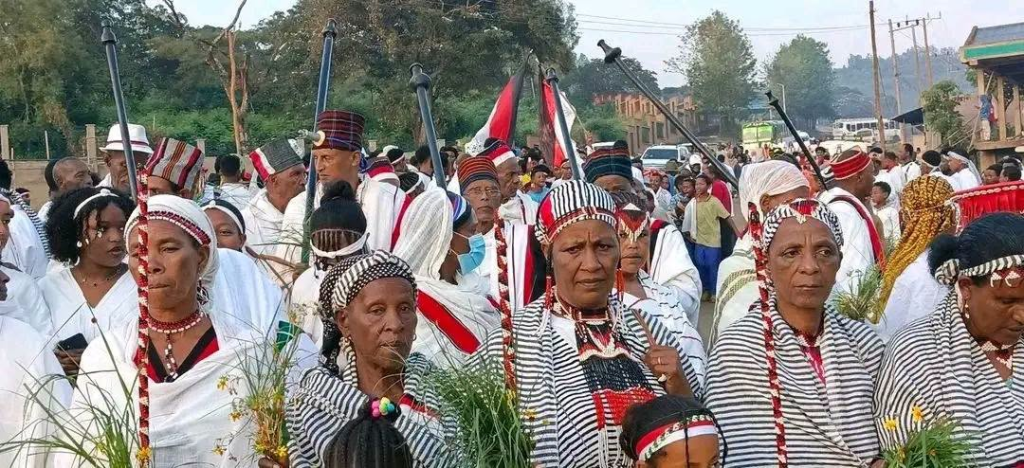
DAMBI DOLLO, West Oromia — The waters of Malkaa Meexxii ran clear and the grass was fresh as the Oromo community of Sayyo District gathered to celebrate Irreecha, the annual thanksgiving festival that marks the transition from the dark rainy season of Ganna into the light and renewal of Birraa. The celebration, held in Dambi Dollo, brought together Gadaa leaders, women elders, youth, and the wider community in a display of unity and gratitude that echoed traditions stretching back generations .
A Festival of Gratitude and Renewal
Irreecha is, at its core, a profound act of thanksgiving. The Oromo people gather at Malkaa—places associated with water—to give thanks to Waaqa (God) for life, rain, peace, and the blessings of the year that has passed, while praying for prosperity and a good season ahead . For the community of Sayyo, the celebration at Malkaa Meexxii was a moment to mark the end of the hardships of the rainy season and to welcome the renewal that Birraa brings.
The significance of the season is embedded in Oromo cosmology. The rainy months of June to September are understood as a time of difficulty—swollen rivers, floods, and the separation of families unable to travel. Irreecha marks the passage out of that darkness. As participants gather at the water’s edge, carrying fresh green grass and flowers, they enact a ritual of gratitude for survival and hope for what lies ahead.
The Presence of Gadaa and Elders
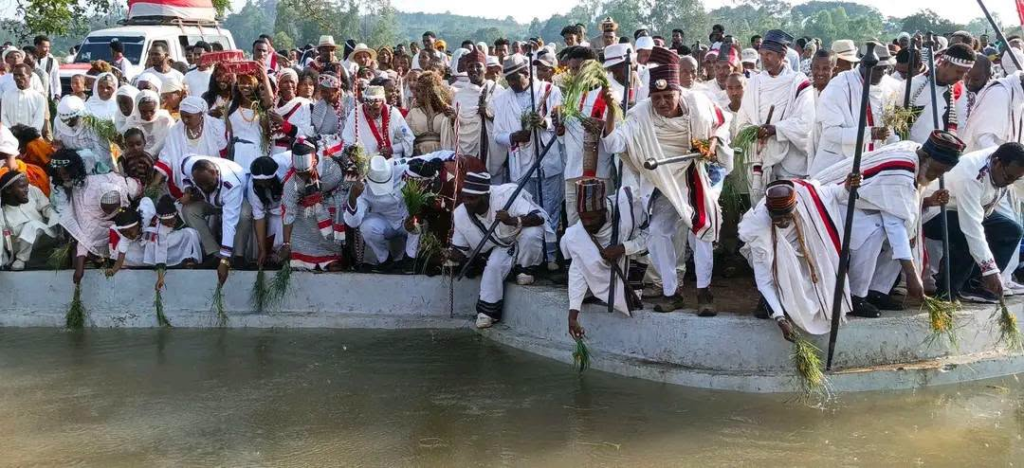
The celebration at Malkaa Meexxii was honored by the presence of the Abbootii Gadaa (Gadaa leaders) and Haadholii Siinqee (women elders), whose participation lends the festival its spiritual and institutional authority . In Oromo tradition, the Gadaa system provides the framework within which Irreecha is celebrated—an indigenous democratic order that regulates political, economic, social, and religious life . The elders’ presence at the river is not ceremonial decoration; it is the living expression of a system that has transmitted knowledge, values, and social organization across generations.
The Abbaa Malkaa (father of the river) and the Abbaa Gadaa play central roles in the blessing that precedes the communal thanksgiving. Traditionally, the Haati Malkaa (mother of the river) first cleanses the site, and the Abbaa Malkaa then blesses it, followed by the Abbaa Gadaa, before the gathered community is blessed in turn . At Malkaa Meexxii, this sequence unfolded as it has for countless seasons, connecting the present celebration to an unbroken chain of practice.
Youth and the Energy of Continuity
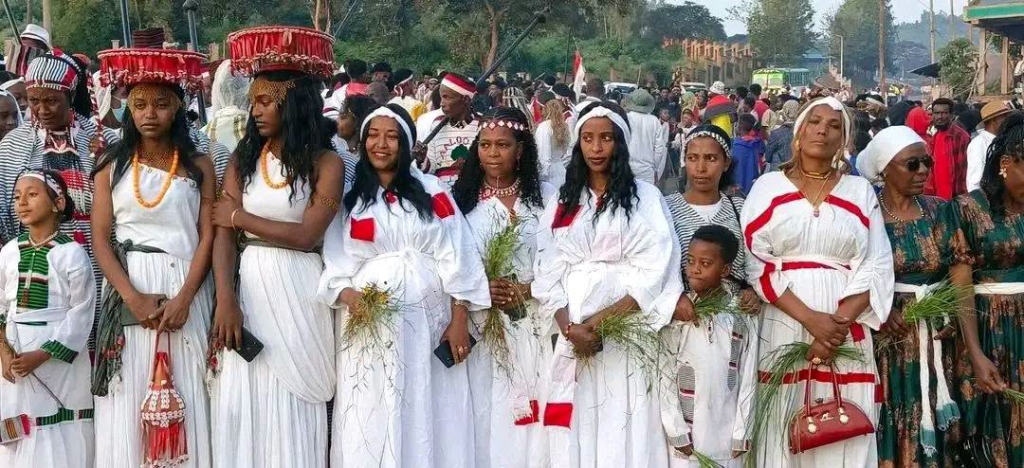
The festival was not only a gathering of elders. The youth were present in force, their energy a reminder that Irreecha is a living tradition, not a relic. The Qeerroo generation—young Oromo who have grown up in the wake of the cultural and political awakening of recent decades—brought their own vitality to the celebration. Their participation ensures that the knowledge and values embedded in Irreecha will be carried forward, even as each generation brings its own experiences and aspirations to the riverbank .
This intergenerational dimension is central to Irreecha’s enduring power. The festival is described as a meeting place between generations, where memory and modern life stand together. Elders pass on the values of peace, reconciliation, and respect for creation, while the young bring the energy that keeps the tradition alive.
A Call for Peace and Reconciliation
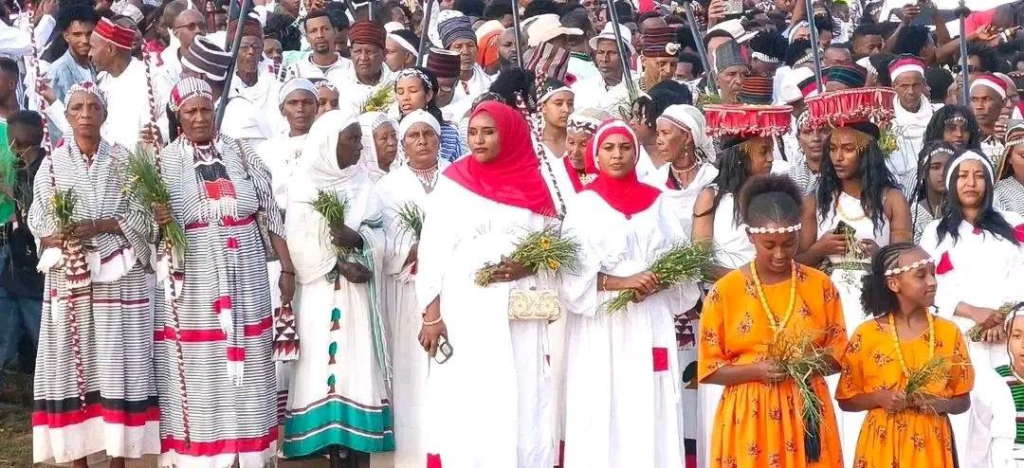
Irreecha is not only about gratitude for the past; it is also about repairing relationships for the future. Traditional teachings emphasize that people should reconcile before entering the sacred gathering. Conflict, insults, and resentment have no place at the water’s edge. The elders ask the gathered crowd: Are you at peace with each other? Are you at peace with the Creator? Are you at peace with creation? Only when the community affirms its peace does the thanksgiving officially begin .
At Malkaa Meexxii, this spirit of reconciliation was palpable. The festival brought together people from across the district, transcending the divisions that ordinary life can impose. For a day, the community was united in gratitude and hope—a reminder of what Irreecha at its best can achieve.
A Tradition That Lives
The celebration at Malkaa Meexxii is one of countless Irreecha gatherings taking place across Oromia and among the Oromo diaspora this season. While the largest celebrations draw millions to Hora Finfinnee in Addis Ababa and Hora Arsadi in Bishoftu, the festival’s meaning is not diluted in smaller settings. Indeed, it is in places like Dambi Dollo, at rivers like Malkaa Meexxii, that the tradition remains most intimately connected to the land and the community .
As the sun set on the celebration and families returned to their homes, the prayers offered at the water’s edge carried forward an ancient message: be grateful for what has been received, seek peace and reconciliation, respect creation, and face the future with hope. For the people of Sayyo, Irreecha at Malkaa Meexxii was not merely a festival. It was an affirmation of who they are—a nation that gives thanks, that remembers, and that endures.
Baga Irreecha Malkaa Meexxiitiin nu gahe!

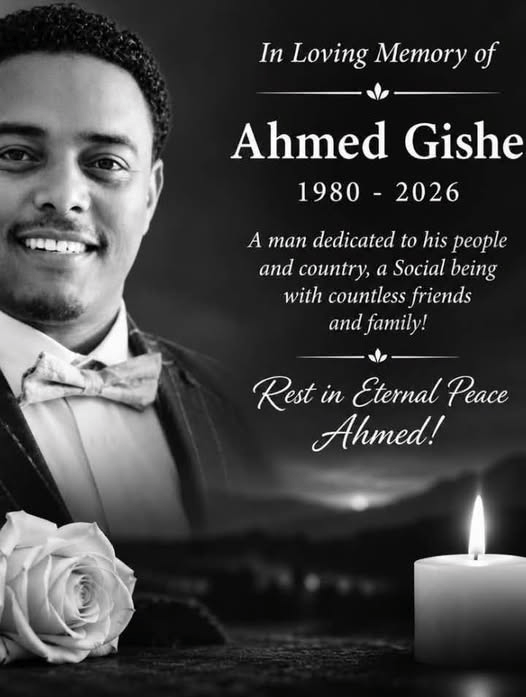
A Family’s Gratitude and a Call for Dignity: The Ahmad Gishee Memorial Statement
By Dhabessa Wakjira
October 31, 2026 — In a statement released to the media, the family of the late Ahmad Gishee has expressed profound gratitude to friends, relatives, and the wider Oromo community for their support during a time of inconsolable grief, while also issuing a powerful call for responsible communication and respect for the family’s privacy.
The statement, titled “A Statement of Gratitude, Honour for a Life Lived, and a Pillar for the Legacy of Ahmad Gishee,” opens with a direct address to Ahmad’s friends, loved ones, relatives, and the broader Oromo public. “In this time of heart-breaking grief caused by Ahmad’s passing, we say thank you and we are grateful for standing with us, for encouraging us, and for sharing our pain,” the family writes.
Gratitude for a Community’s Support
The family’s gratitude is expansive and specific. They thank those who, “without hesitating,” stood by Ahmad when he needed help. They acknowledge those who traveled from far distances to attend his funeral and those who demonstrated that Ahmad was “a son of the broader Oromo nation” to the family and the district. “You have been a strong force for us to bear this heavy grief,” the statement reads. “Your honour is immense, immense!”
The family also requests that the community remember Ahmad in their prayers and supplications, and that they seek forgiveness and reconciliation on his behalf.
A Life Lived Without Regret
The statement offers a portrait of Ahmad as a man who lived his life fully and on his own terms. “The time Ahmad lived on this earth was very short. But he had no regret about the way and manner in which he lived his life,” the family writes. Before departing for the afterlife, Ahmad left a message for those he left behind: he had lived his life as he wished, he would not change anything, and he had done and seen much of what he wanted to do and see in his life.
When the time of death came to him, the family says, Ahmad confirmed to them that he was prepared. “This has given us some peace of mind,” they write. “The sorrow that struck us with his heart-breaking departure has shaken us. The wound created in our hearts has pained us.”
A Legacy of Achievement and Connection
In his short life, Ahmad achieved much and cultivated many friendships. He was a man who “embraced the Oromo nation broadly” and “sacrificed to the extent of his capacity.” His death revealed just how beloved and respected he was. The memorials and tributes being prepared for him, the family says, demonstrate not only that he was a strong man but that he was “a son of the entire Oromo nation.”
The family finds great comfort in knowing that Ahmad’s life held profound meaning for many people. They have resolved to honour his life, to respect the legacy he left behind, and to work to complete the tasks he had undertaken. “His work is foundational,” they write, “and this legacy must be passed from generation to generation.”
A Warning Against Misinformation
The statement takes a serious turn as the family addresses a troubling development: the spread of unverified information and harmful rumors about Ahmad’s life and death. “As people who have a responsibility to look after their community, we are seeing many who are opening empty spaces among these people,” the family writes. “Unverified, harmful, and baseless news is spreading without limit in the community’s social circles.”
Some of this information, the family says, has touched the emotions of family, relatives, and loved ones, and some displays a lack of respect for the family and for Ahmad himself. “This is putting pressure on the family,” they state. “We strongly and respectfully ask that unverified information, false news, or various speculations—especially on social media—not be spread.”
At this time, the family says, what helps Ahmad and them is to seek forgiveness for him and to offer encouragement to the living. “Give thought and human respect to him and his family. Refrain from raising irrelevant matters, spreading, publishing, and reporting things that have no basis—and prevent others from doing so!”
A Call for Responsibility
The family uses the statement to reflect on the power of words and actions. “We have great respect for those who, in this role, recognize that their words and actions have caused harm, and who apologize sincerely,” they write. “When we speak about the lives of other people, we want to remind each other that it is a great responsibility to weigh the good and the harm it carries.”
The way we live together and our relationships as a community must be characterized by compassion, respect, and self-restraint, the family argues. “Words create wounds that do not heal easily; actions bring harm that later requires correction. A painful experience must serve as a lesson for others, helping them understand emotions, and enabling them to cultivate kindness and humanity within themselves. We believe Ahmad’s passing must be a strong force for this.”
Honouring Ahmad’s Legacy
The family acknowledges the many people, both within the country and abroad, who have expressed their desire to honour Ahmad’s life and sacrifice together. “We are grateful for this! Your thoughts are greatly encouraging us. We have great gratitude for your efforts.”
The family extends an open invitation for support and participation in preserving Ahmad’s legacy. “Together, we believe we can pass on the life he lived and the principles he believed in to future generations. For the positive change he brought to the lives of many people, we have great hope that we can follow in his footsteps and honour him in a meaningful way.”
A memorial program for Ahmad will be organized in the near future, and a short-term committee is being established to coordinate it. Further information will be communicated promptly.
A Request for Privacy
In a pointed conclusion, the family states that it has not authorized the collection of any financial or other form of support at this time. “Until further information is communicated to you, we respectfully ask that you understand and respect the decision and direction the family has taken.”
The statement ends with renewed gratitude. “For the kindness, compassion, prayers, and support you have given us, we want to again express our great gratitude in Ahmad’s name. Your support has a meaning beyond words for our family. Thank you all once again.”
Maatii Ahmad Gishee (The Family of Ahmad Gishee)
October 31, 2026
This feature story is based on the family’s official statement. For further information about the memorial program, please await official communication from the family committee.

Lallaba Galataa fi Yaadannoo: Maatiin Ahmad Gishee Hawaasa Oromootti Dhaamsa Garaawaa Ergate
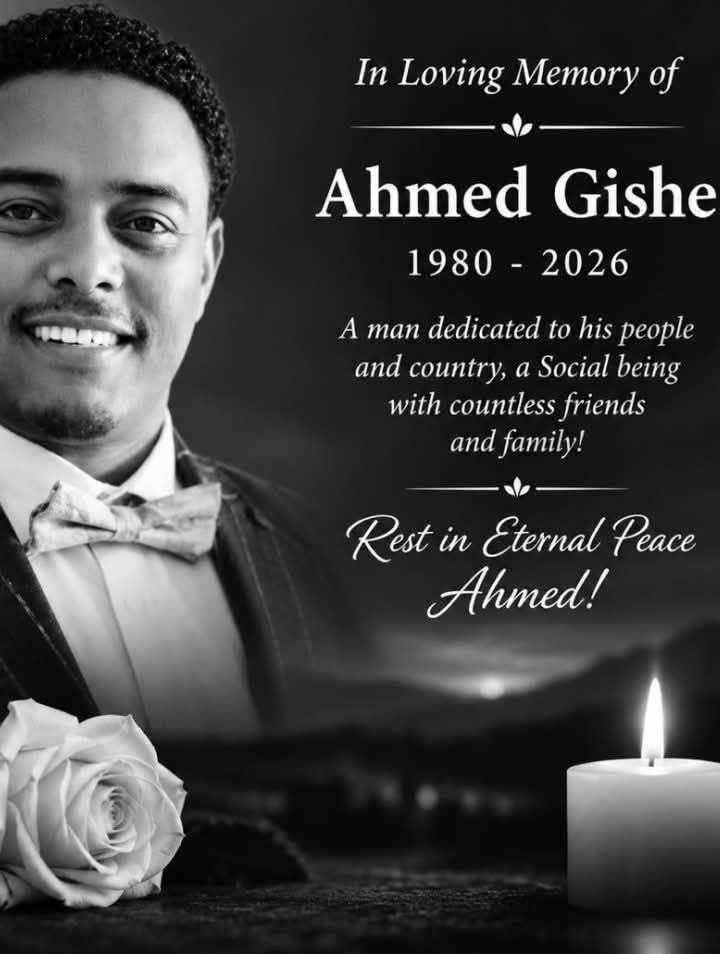
(Onkololeessa 31, Bara 2026) Aartii fi aadaa Oromoo keessatti, duuti nama jaallatamaa fi kabajamaa ta’e gadda cimaa hawaasa keessatti uuma. Ahmad Gishee—ilma saba Oromoo, jaalala fi kabajaa guddaa qabu—lubbuu dhabuun isaatiin maatiin isaa fi hawaasni bal’aan gadda onnee nama cabsu keessa jiraatu. Yeroo kana keessatti maatiin Ahmad Gishee lallaba galataa fi yaadannoo hawaasa Oromootti erganii jiran.
Galata Hawaasaaf
Lallabni maatii keessaa, duraan duraan, hiriyoota Ahmad, jaalalloo, darabootaa fi hawaasa bal’aa Oromootiif galata guddaa dhiyeesseera. “Gadda onnee nama cabsu yeroo keessa jiru kanatti, nu bira dhaabattanii, nu jajjabeessuu fi miidhama keenna nu waliin hirachuu keessaniif, ulfaadhaa, wayyamaa,” jedhanii maatiin ibsaniiru.
Maatiin Ahmad akka jedhetti, “Gargaarsinii fi ergaan gara-nyaattoo, tumsinii fi dhaamsi keessan madda obsaa nuu ta’ee jira; kanaafillee galata guddaa nu biraa qabdani.” Yeroo Ahmad gargaarsa barbaadetti, firaa fi hiriyyoon uduu hin hifatin isa bira dhaabbatanii jiran. “Haga inni darbellee, fageenna dheeraa irraa imaluun geegessaa isaa tolchitan. Ahmad ka saba bal’aa Oromoo ta’uu isaa maatii fi aanaa maratti argisiiftan. Gadda ulfaata kana akka obsinuuf humna jabaa nuu taatan. Ulfinni keessan dacha, dachaadha!”
Jireenya Gabaabduu Garuu Hiikkaa Guddaa Qabu
Ahmad jireenya isaa keessatti milkii hedduu arge, jaalalloo baay’ee horate. Ummata Oromoo bal’aan wal-baratee, waan haga humna isaa gumaachee lufe. “Yeroon Ahmad lafa tana irra jiraatee baay’ee gabaabduudha. Garuu inni haalaa fi akkaataa jiruu dabarse irraa gaabbii hin qabu,” jedhanii maatiin ibsaniiru.
Inni gara fuula akeraa deemuun duratti warra bira turaniif dhaamsa darbee jira. “Jireenna isaa akka fedhii isaatti jiraateera. Waan tokkollee jijjiiruu akka hin barbaanne, waan jiruu isa kessatti godhuu fi arguu fedhu hedduu isaa akka godhee fi arge dubbate. Hireen du’aa yoo isa geette, akka qophaa’aa ture nuuf mirkaneesseera. Kun haga tokko tasgabbii sammuu nuuf kennee jira.”
Dhaamsa Hawaasaaf: Oduu Soba irraa Of Qusachuu
Maatiin Ahmad hawaasa Oromootti dhaamsa guddaa erganii jiran—oduu dharaa fi soba miidiyaa hawaasaa irratti tamsa’aa jiru irraa of qusachuu. “Oduu dharaa, hamaa fi hasaassaa daangaa hin qabnetu marsaa hawaasummaa irratti tamsa’aa jira. Wanti gariin, maatii, firaa fi jaalalloo miira tuqaa jira. Kun ammoo maatii obsa dhooggaa jira.”
“Odeeffannoo ragaa hin qabne, oduu sobaa ykn tilmaama adda addaa, keessattuu miidiyaa hawaasaa irratti, akka hin tamsaafne cimsinee kabajaan isin gaafanna. Yeroo ammaa kanatti wanti Ahmadii fi nullee nu gargaaru, isaaf araarama kadhatuu; ka jiruuf ammoo jajjabinna kennuu callaadha. Isaa fi maatii isaatiillee, yaadaa, kabaja namoomaa kennaa. Ardha irraa kaasaatii, waan qabatama hin qabne, facaasuu, maxxansuu fi himuu irraa of qusadhaa—walillee ittisaa!”
Yaadannoo fi Dhaala
Maatiin Ahmad namoonni hedduun, biyya keessaa fi alaa, gadda callaa uduu hin taane; jireenya Ahmad waliin kabajuu fi gumaata isaa yaadachuuf qophii godhuu qabu jedhanii yaada nuun geettanii jirtan. “Kanaaf wayyamaa! Yaadni keessan, guddisee nu jajjabeessaa jira. Carraaqiiwwan keessan kanaaf galata guddaa isinif qabna.”
Nutis dhaala inni nuuf dhiisee darbe kana akka eeggamuuf waliin hojjechuu waan barbaanuuf, deeggarsa fi yaada, akkasumas hirmaannaa keessan garaa gutuun feena. “Waliin taanee, jireenya inni jiraate, duudhaalee inni itti amanee dhaabateef, dhaalootaaf dabarsuun waan aaga jennee amanna.”
Murtii Maatii: Deeggarsa Maallaqaa Hin Barbaadan
Maatiin Ahmad hubachiisuu barbaade, yeroo ammaa kana deeggarsa maallaqaa yookaan gargaarsa bifa biraa kamiyyuu akka walitti qabamu hayyama akka hin kennin. “Odeeffannoo dabalataa hanga isinitti himamutti, murtii fi ejjennoo maatiin qabate kana akka hubattan kabajaa guddaan isin gaafanna.”
Galata Xumuraa
“Gaarummaa, gara-laafina, kadhannaa fi deeggarsa nuuf gootaniif irra deebi’uun galata guddaa maqaa Ahmadiitiin isiiniif galchuu barbaanna. Deeggarsi keessan maatii keennaaf jechootaan ibsuu caalaa hiika guddaa qaba. Mara keessanuu ammallee irra deebinee galatoomaa isiniin jenna.”
Maatiin Ahmad Gishee, Onkololeessa 31, Bara 2026.
Maatii Ahmad Gishee — Lallaba galataa fi yaadannoo hawaasa Oromootti erganii jiran.

Ethiopia’s Leaders Trade Suits for Uniforms: A Wartime Cabinet in Training
By ONA Staff Reporter
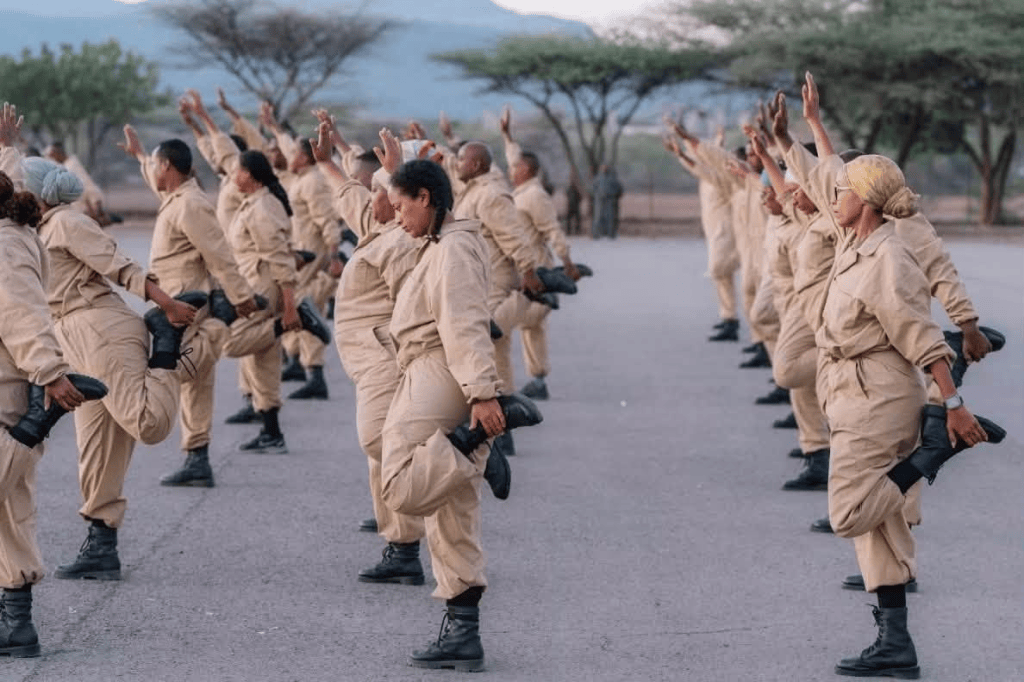
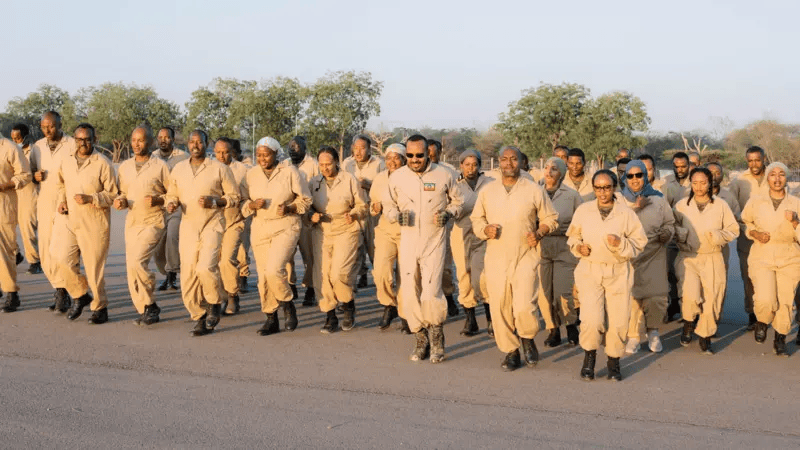
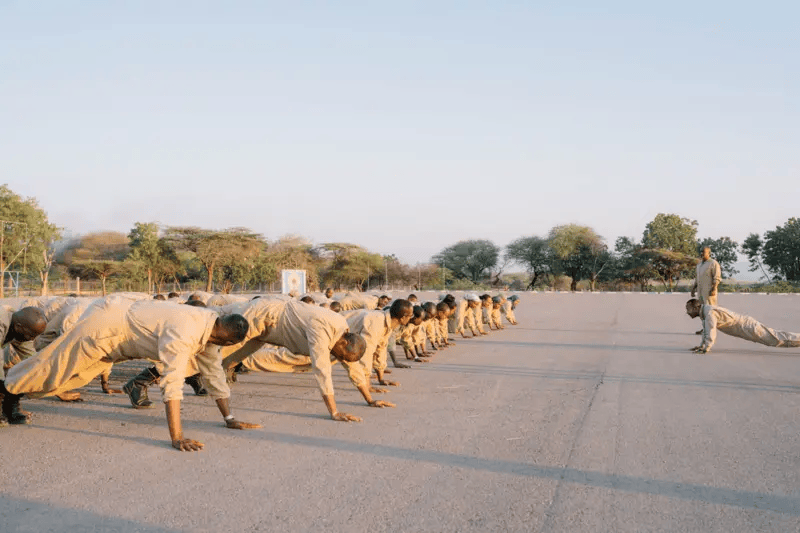
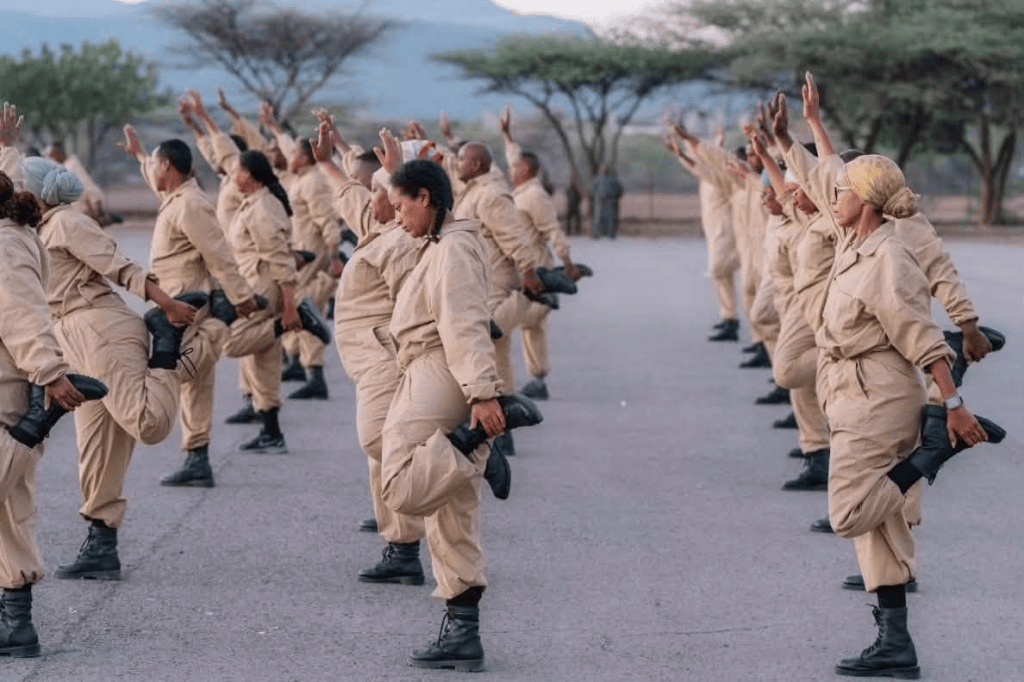
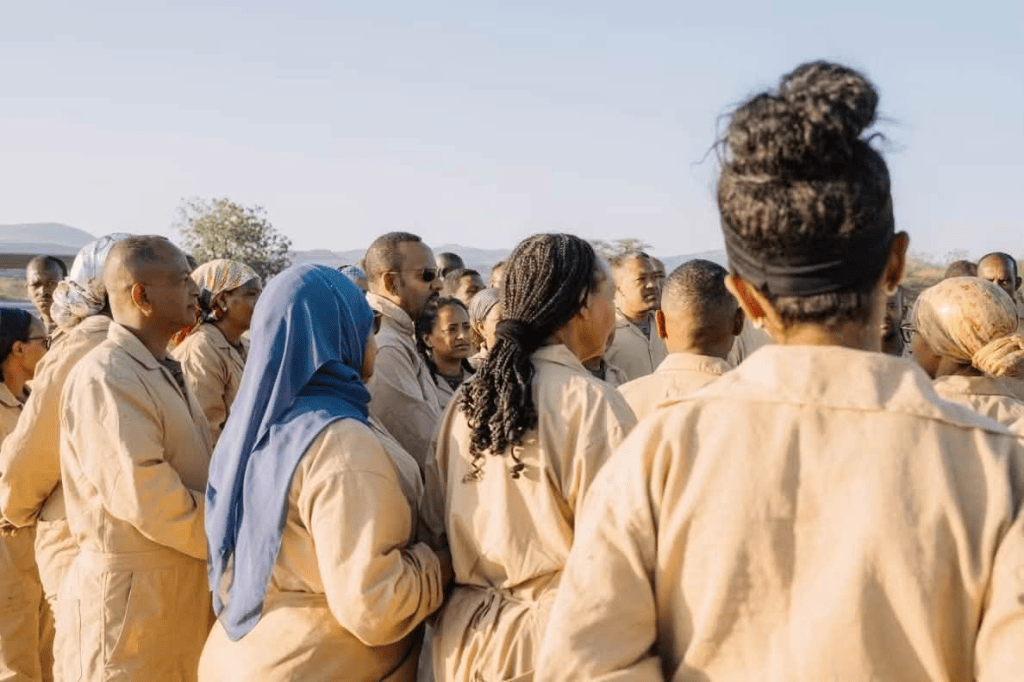
ADDIS ABABA — In a striking image that has circulated widely across Ethiopian social media, Prime Minister Abiy Ahmed stands shoulder to shoulder with his cabinet members and senior officials, not in the dark suits of governance but in the olive-green fatigues of military trainees. The photographs, shared on the Prime Minister’s own social media pages on Saturday, October 31, 2026, reveal a government preparing for war—and framing that preparation as a strategic necessity.
A Cabinet in Uniform
Among those pictured in military training gear at the Hurso facility were Mufrihat Kamil, Speaker of the Federation Council; Dr. Fitsum Assefa, Minister of Finance; and Dr. Mekdes Daba, Minister of Health. They were not observing exercises from a distance. They were participating in them.
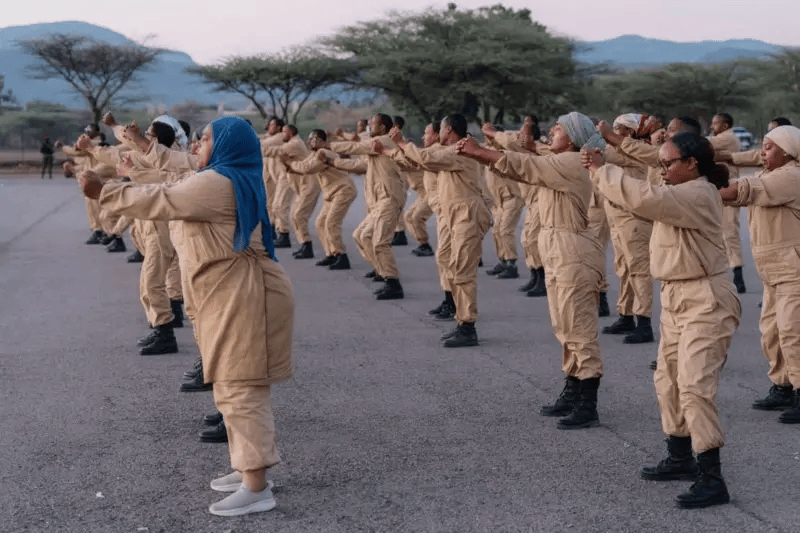
According to the Prime Minister’s statement, the officials are undergoing military training at Hurso, a site that has become synonymous with the government’s increasingly militarized approach to statecraft. The training, Abiy explained, is designed to help officials “properly understand and implement” the ideas contained in what he calls the “Great Strategy of Additive Civilization” (Ye Medemer Siltenie Talaku Strategy).
The “Additive Civilization” Doctrine
The strategy, as articulated by the Prime Minister, contains principles that read as much like a wartime manifesto as a governance blueprint: “ensuring national security at all times,” “building a strong country that cannot be bent by anyone or anything,” and “mobilizing the structure from bottom to top for a national purpose.”
Military science, Abiy wrote, “has no competitor in shaping the purpose and humanity of a person.” He described it as a discipline that makes people “physically, spiritually, morally, and in execution disciplined.” The knowledge, skills, and experience drawn “from military science and life,” he argued, are essential to implementing the strategy.
“Leaders of the Additive government are taking military training at the Hurso military training camp,” Abiy wrote. “Soldiers have targets; civilians have objectives. The goal of both is to register victory. By combining both disciplines, we will create a generation that hits the target and achieves the objective.”
The Context: A Region on Edge
The timing of the training is not incidental. It comes as the Ethiopian National Defense Force (ENDF) has moved closer to the border with Eritrea, amid mounting fears that the two countries—locked in a diplomatic freeze over accusations of supporting insurgents and a dispute over sea access—could be drawn into war. The two nations have severed diplomatic relations, and the threat of renewed conflict hangs over the Horn of Africa.
The training also comes as the government continues to consolidate its military posture. This week, during a visit to Russia, Prime Minister Abiy announced that Ethiopia had received Su-35 fighter jets—advanced aircraft that would make Ethiopia the first sub-Saharan African nation to operate them. The delivery represents a significant escalation in the country’s aerial capabilities.
The Prime Minister has repeatedly stated that strengthening Ethiopia’s military capacity across all sectors is among his objectives. The images of his cabinet in uniform are not merely symbolic; they are a signal that the government’s approach to governance has become inseparable from its approach to war.
A Government at War with Itself?
The photographs raise uncomfortable questions. A finance minister in fatigues, a health minister in combat gear—what does it mean for a government to train its civilian leadership for battle? The Prime Minister’s framing suggests a belief that military discipline is the antidote to the indiscipline of civilian governance, that the battlefield’s clarity of purpose should be brought to the messy work of running a state.
But critics may see something else: a government that has increasingly turned to military solutions for political problems. The training at Hurso, the procurement of advanced fighter jets, the escalating rhetoric—all of this unfolds against a backdrop of internal conflict, including renewed fighting with forces in northern Ethiopia and ongoing unrest in Oromia.
The government has not disclosed when the training began or how long it will last. What is clear is that the image of a cabinet in uniform is intended to convey a message: Ethiopia’s leadership is preparing for something. Whether that something is defense, deterrence, or the prosecution of war remains to be seen.
The Image That Speaks
In a region where symbols carry enormous weight, the photograph of Abiy and his officials in military fatigues is more than a social media post. It is a declaration of intent. The “Great Strategy of Additive Civilization” is being taught at a military camp, to a cabinet, in a country on the brink. The soldiers have targets; the civilians have objectives. And the Prime Minister has made clear that he expects both to hit them.
As Ethiopia navigates a precarious moment in its history, the sight of its leaders in uniform offers a glimpse of how they see the road ahead: not as a path of diplomacy and civilian governance, but as a campaign to be won.
Source: EBC (Ethiopian Broadcasting Corporation) and the Prime Minister’s official social media pages.

Reflections on Professor Beyene’s Essay: A Call for Evidence, Clarity, and Intellectual Honesty in the Oromo Nationalist Discourse
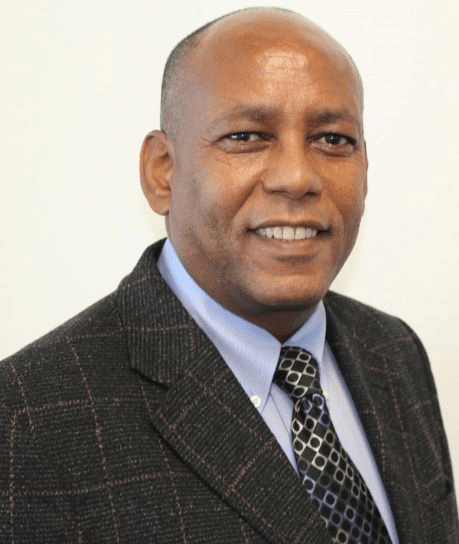
By Hambisa Belina, Morgan State University
In a political landscape too often shaped by rhetoric and presumption, Professor Beyene’s recent essay stands out as a model of what rigorous intellectual engagement should look like. As a scholar reading his work, I found the piece both eloquently written and intellectually engaging—a rare combination that invites readers not merely to agree or disagree, but to think more carefully about the contested narratives shaping political discourse across Ethiopia and the wider Horn of Africa.
Situating the Debate in Historical and Regional Context
What makes Professor Beyene’s contribution particularly valuable is his skill in exploring the historical circumstances and political happenstances that evoke our collective memory. He does not treat contemporary debates as isolated phenomena but situates them within a broader historical and regional context, encouraging readers to grapple with enduring questions of identity, power, historical justice, and political legitimacy. This contextual approach is essential. Too often, discussions about nationalism and self-determination are conducted in a historical vacuum, as if the grievances and aspirations of today emerged from nowhere. Professor Beyene resists that tendency, reminding us that the present is always in conversation with the past.
The Insistence on Evidence
One of the article’s most compelling contributions is its insistence on evidence-based argumentation. Professor Beyene rightly questions the frequent assertion that Oromo nationalism has somehow crossed the line from demanding its own rights to infringing upon the rights of others. This is a serious accusation, and as he argues, it should be supported by concrete evidence rather than broad claims or political rhetoric. His call for a more rigorous examination of these allegations is both justified and necessary.
I concur with Professor Beyene’s observation that I have not seen any Oromo political party or prominent Oromo politician advocate for the repression, subjugation, or denial of the rights of other societies. This is not a claim of perfection—all political movements should be subject to scrutiny and criticism. But such criticism must rest on verifiable facts rather than assumptions or unfounded characterizations. The distinction matters, not only for the sake of fairness but for the integrity of public debate itself.
The Responsibility of Clarity
At the same time, I believe it is important for Oromo nationalists to continue articulating clearly what Oromo nationalism stands for and what it seeks to achieve. Greater clarity regarding its principles, objectives, and vision for coexistence can help dispel misconceptions, strengthen public understanding, and foster more constructive dialogue among Ethiopia’s diverse communities and the peoples of the wider Horn of Africa. This is not a concession to critics but a strengthening of the movement’s own foundation. A nationalism that knows what it stands for is better equipped to withstand misrepresentation and to build the alliances necessary for lasting peace.
Vigilance Against Misrepresentation
Moreover, Oromo political thinkers, legal experts, intellectuals, and political organizations should remain vigilant against efforts to misrepresent, delegitimize, or slander Oromo aspirations. They have an important responsibility to defend and explain the legitimacy of Oromo efforts to restore political authorship over their land, resources, laws, institutions, culture, and language. Such vigilance is necessary not only to counter mischaracterizations but also to ensure that the movement remains anchored in democratic principles, justice, equality, and respect for the rights of all peoples and all individuals. The struggle for Oromo rights is, at its core, a struggle for the right to define one’s own future—and that right must be exercised with the same commitment to justice that the movement demands for itself.
A Timely and Important Contribution
Ultimately, Professor Beyene’s essay raises an important challenge: political accusations should be assessed on the basis of evidence, not presumption. His thoughtful intervention serves as a valuable reminder that discussions about nationalism, self-determination, political rights, and historical justice are best advanced through careful historical analysis, intellectual honesty, and a commitment to factual debate. In that regard, his essay is a timely and important contribution to an ongoing conversation about the future of Ethiopia and the broader Horn of Africa.
As scholars and citizens alike continue to navigate these contested questions, the standard Professor Beyene sets—evidence over assumption, clarity over ambiguity, and intellectual honesty over political convenience—offers a path toward more constructive dialogue. It is a standard worth upholding.
Hambisa Belina
Morgan State University
ORCID | Google Scholar | LinkedIn

The Man Who Would Redefine Ethiopia
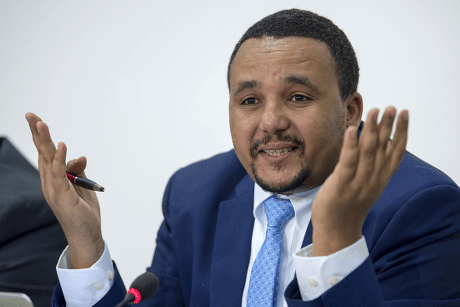
Jawar Mohammed’s “Progressive Patriotism” and the Oromo Question: A New Chapter in Ethiopia’s National Story
By Sultan Abda Neja, Ph.D.
—
For much of modern Ethiopian history, the question of who owns the nation has been answered in blood, in policy, and in silence. It is a question that has haunted the Oromo people—Ethiopia’s largest ethnolinguistic community—for generations. Their relationship with the modern Ethiopian state has been shaped by conquest, land dispossession, political exclusion, and cultural marginalization. Yet something is shifting. The old binary of Oromo resistance versus Ethiopian state nationalism is being challenged—not by a soldier, not by a separatist, but by a media-savvy activist-turned-thinker named Jawar Mohammed.
At the heart of this shift is a deceptively simple concept: Progressive Patriotism. It is Jawar’s attempt to articulate a political framework in which Oromo identity and Ethiopian national belonging are not mutually exclusive. It asks a new question: Can Oromo nationalism help redefine Ethiopian nationalism from within?
—
The Long Road from Resistance
To understand the weight of Jawar’s proposition, one must first understand the weight of history. Oromo nationalism did not emerge in a vacuum. It grew out of the expansion and consolidation of the modern Ethiopian state, the incorporation of Oromo territories, and subsequent struggles over land, language, religion, and political representation.
The Ethiopian state-building project, for much of its history, was associated with centralized authority, cultural homogenization, and the marginalization of groups whose languages and political identities differed from those of the ruling elite. The Oromo Liberation Front (OLF), founded in 1973, became the most prominent expression of Oromo resistance. But even then, Oromo nationalism was never monolithic. Some advocated independence; others supported multinational federalism, stronger regional autonomy, or a democratic Ethiopian state.
The 1995 Constitution, which formally recognized the rights of nations, nationalities, and peoples—including the right to self-determination up to secession—represented a significant shift. Yet constitutional recognition did not automatically produce democratic governance. The political crisis that culminated in the 2014–2018 protests exposed the limits of the existing order. Oromo protesters mobilized against political exclusion, human rights abuses, and the proposed expansion of Addis Ababa into surrounding Oromia.
Then came 2018. Abiy Ahmed, an Oromo politician, became prime minister. It was a moment of symbolic triumph—an Oromo had reached the highest office in the land. But symbolism, as Jawar would later argue, is not transformation.
—
Jawar’s Intervention: From Resistance to Governance
Jawar Mohammed’s political trajectory—from a fiery activist and media owner to a prominent voice in the debate over Ethiopia’s future—mirrors the broader evolution of Oromo political consciousness. His call for a transition from resistance politics to governance politics, and from ethnonationalism to broader nation-building, represents a significant shift.
In his writings and interviews, Jawar argues that Oromo politics must evolve beyond its traditional oppositional orientation. A movement that has historically defined itself through resistance must now demonstrate its capacity to govern, build institutions, deliver public services, and contribute to national stability. Political legitimacy cannot be sustained indefinitely through historical grievances alone.
This is not to suggest that Jawar asks Oromos to abandon their identity or their legitimate demands. Rather, he challenges the assumption that protecting Oromo interests and building a common Ethiopian political future are mutually exclusive. Given the Oromo people’s demographic significance, geographical position, cultural influence, and historical role in Ethiopia, their political participation is essential to any sustainable project of national reconstruction.
In a recent interview on Kallatti Media, Jawar explained that Ethiopian nationalism should not be understood as an identity or political project owned exclusively by historically dominant groups. Oromos, like other peoples of Ethiopia, have an equal right to define, shape, and participate in the national project. An Oromo can embrace Ethiopian citizenship, contribute to national unity, and take pride in a shared political identity without surrendering Oromo cultural identity or constitutional rights.
From this standpoint, Progressive Patriotism challenges the historical tendency to associate Ethiopian nationalism with cultural assimilation, political centralization, or the dominance of one group. It opens the possibility of an inclusive nationalism in which belonging to Ethiopia does not require becoming less Oromo.
—
The Goobana Question: Heroes, Traitors, and the Politics of Memory
Jawar’s concept of Progressive Patriotism extends beyond constitutional arrangements. It also engages with the politics of memory—specifically, the way political movements construct historical narratives that distinguish heroes from traitors.
In his text, Goobana: The Hero-Traitor Narrative in the Oromo Struggle, Jawar examines how the figure of Goobana Daacee—a historical Oromo figure remembered as a collaborator with Emperor Menelik II and, consequently, a traitor—has been used within the Oromo national movement. The narrative of betrayal, Jawar argues, can serve important political purposes: it mobilizes communities, establishes collective memory, and defines political loyalties.
But when a movement moves from resistance to governance, such narratives become liabilities. A movement operating in opposition can organize its political identity around a clear distinction between the oppressed and the oppressor, resistance and collaboration, liberation and betrayal. A political movement that enters government, however, must negotiate competing interests, govern citizens with different identities, and build institutions that extend beyond its original constituency.
Jawar suggests that political movements may need to move from a resistance narrative toward a governing narrative. Figures previously condemned may be reassessed; figures celebrated may be subjected to new scrutiny. The task, he argues, is not to replace every hero with a traitor, but to create a political culture in which historical disagreements can be examined without becoming grounds for denying citizenship, identity, or political legitimacy.
—
The Abiy Paradox: An Oromo Leader, but an Oromo-Empowering Government?
The question of Oromo ownership of Ethiopian nationalism cannot be separated from the political trajectory of Abiy Ahmed. His rise to power in 2018 symbolized the opportunity to translate Oromo political mobilization into democratic transformation at the national level.
His early reform agenda generated expectations of political liberalization, reconciliation, and greater openness. His government’s peace initiative with Eritrea further strengthened the image of a leader seeking to move beyond longstanding regional hostility. But the subsequent political project—associated with the formation of the Prosperity Party in 2019 and the language of Medemer—proved contentious.
Supporters interpreted Medemer as an attempt to overcome political fragmentation and the limitations of ethnic-based party organization. Critics, including Oromo nationalists, argued that it weakened the political and institutional protections established under multinational federalism. The war in Tigray, the subsequent armed conflicts in other regions, political polarization, and serious allegations of abuses by state and non-state actors exposed the limitations of a political transition that did not produce a broadly accepted democratic settlement.
The broader lesson is that an Oromo’s accession to the center of Ethiopian power does not automatically mean that Oromo nationalism has achieved its democratic objectives. An Oromo-led government is not necessarily an Oromo-empowering government, just as an Ethiopian national identity is not necessarily an exclusionary identity. The decisive issue is the character of the institutions and policies through which political power is exercised.
—
The Critics Speak: Progressive Patriotism Under the Microscope
Jawar’s Progressive Patriotism has not gone unchallenged. Critics from across the political spectrum have raised important questions about its conceptual clarity, its practical implications, and its relationship to the status quo.
Moges Zewdu Teshome argues that Jawar conflates multinational federalism, multicultural federalism, and a multicultural unitary state—distinct institutional arrangements that cannot be resolved simply by democratizing an allegedly flawed constitutional structure. He advocates revisiting the constitutional order, strengthening an inclusive civic identity, and building a political community in which citizenship is not subordinated to ethnic affiliation.
Professor Messay Kebede challenges Jawar’s claim that ethnonationalism has become effectively irreversible, reasoning that political identities and institutions are historically constructed and can therefore change. He proposes democratic or civic nationalism as a more coherent alternative, arguing that inclusive democratic institutions can protect cultural diversity without making ethnic political sovereignty the organizing principle of the state.
Benti Geleta Buli, through a sentiment analysis of Jawar’s proposal, notes that the term “progressive” remains inadequately defined and could become a rhetorical framework that preserves the status quo rather than resolving Ethiopia’s political divisions. He presents constitutional patriotism as a more constructive alternative grounded in shared constitutional values, democratic participation, and inclusive citizenship.
And in my own earlier critique, I argued that Jawar’s distinction between “centripetal” and “centrifugal” political forces unfairly portrays ethnonationalist movements while underemphasizing the historical injustices, assimilationist policies, and authoritarian practices that gave rise to them. Appealing to right-wing Ethiopian nationalists by equating their historical responsibilities with those of ethnonationalist movements risks undermining the legitimate struggles and sacrifices of nations and nationalities, including the Oromo people.
These critiques are not dismissive. They are, in fact, a sign of the seriousness with which Jawar’s intervention is being taken. They demand that Progressive Patriotism move beyond slogan and toward institutional specificity.
—
Toward a Constitutional Patriotism: The Roadmap
If Progressive Patriotism is to become more than a rhetorical compromise, it must be grounded in concrete institutional commitments. One possible way to clarify it is to connect it to constitutional patriotism—attachment to a political community based on shared constitutional principles, democratic institutions, equal citizenship, and fundamental rights rather than ethnic or cultural uniformity.
For Ethiopia, such a framework would require at least five commitments:
1. Meaningful regional self-government and the rights of nations, nationalities, and peoples must be constitutionally protected.
2. Federal and regional governments must be accountable through genuinely competitive political processes and an independent judiciary.
3. Minorities within regional states must enjoy equal citizenship, cultural rights, security, and political participation.
4. National institutions must be accessible to citizens regardless of language, ethnicity, religion, or political affiliation.
5. Disputes over federal authority, regional boundaries, resources, and political representation must be resolved through credible constitutional procedures rather than coercion.
Beyond these constitutional commitments, a pragmatic roadmap for Oromo ownership of Ethiopian nationalism requires several practical steps: protecting political pluralism within Oromo society, democratizing multinational federalism, establishing credible national dialogue, creating effective mechanisms for accountability, promoting an inclusive national historical narrative, and defining Progressive Patriotism institutionally.
It also requires a crucial conceptual separation: national unity must be separated from unconditional support for a government. Citizens should be able to oppose a prime minister, criticize the federal government, or demand constitutional change without being branded enemies of Ethiopia. Likewise, support for Oromo rights should not require unconditional loyalty to an Oromo political organization.
—
The Future of Ethiopian Nationalism: A Shared Project
The most important question, ultimately, is not whether Oromo nationalism should disappear into Ethiopian nationalism or remain permanently opposed to it. It is whether both can be transformed through democratic institutions so that neither requires the political subordination of the other.
Jawar Mohammed’s Progressive Patriotism is an attempt to articulate a framework in which ethnic identity and shared national belonging can coexist. Its credibility depends on democratic institutions, constitutional protections, political pluralism, and an explicit rejection of coercive assimilation. Abiy Ahmed’s experience illustrates the dangers of attempting to build national cohesion by weakening the political forces and constitutional guarantees through which historically marginalized communities sought recognition.
The future of Ethiopian nationalism will depend on whether the country can build a political community in which unity is freely sustained rather than coercively imposed, ethnic identities are protected rather than demonized, and national citizenship is shared rather than monopolized.
Oromo nationalism’s most consequential contribution to Ethiopia may ultimately be its capacity to help transform Ethiopian nationalism from an inherited claim of state authority into a genuinely shared project of democratic citizenship. That is the promise of Progressive Patriotism. Whether it becomes a reality depends not on the eloquence of its advocates, but on the institutions through which it is enacted—and on the willingness of all Ethiopians, Oromo and non-Oromo alike, to engage in the difficult, patient work of democratic negotiation.
The question is no longer whether the Oromo belong to Ethiopia. The question is what kind of Ethiopia can belong equally to Oromos and all other citizens. The answer, if it comes, will not be found in slogans or in the shadow of a single leader. It will be found in the constitution, in the ballot box, and in the everyday practice of citizenship.
—
Sultan Abda Neja, Ph.D., is a political analyst and author specializing in Ethiopian politics, federalism, and ethnonationalism. His work has appeared in Borkena and other outlets.
The full article can be accessed:

The Pen and the Sword: Remembering Jaal Kumsaa Buraayyuu, a Titan of the Oromo Struggle
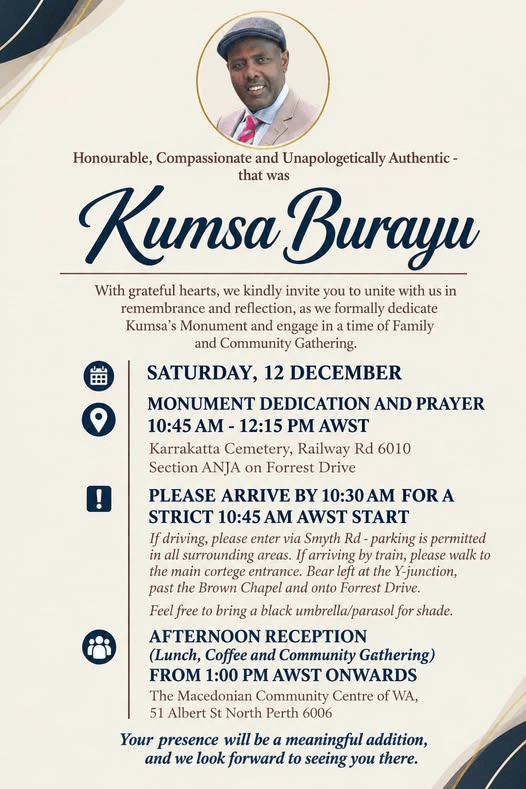
By Dhabessa Wakjira
In the long and arduous history of the Oromo people’s struggle for self-determination, the weapons of resistance have not only been rifles and guerrilla tactics; they have also been the pen, the novel, and the printing press. On July 15, 2025, the Oromo nation lost one of its most formidable intellectual warriors. Jaal Kumsaa Buraayyuu (Kumsa Burayu Balo)—a prominent nationalist, author, journalist, and political activist—passed away, leaving behind a monumental legacy that fundamentally shaped Oromo literature and political consciousness.
His life was a testament to the power of words in the face of state repression. From the rural heartlands of East Wallagga to the global stage of international exile, Kumsaa Buraayyuu dedicated his life to ensuring that the Oromo story was not just preserved, but weaponized for liberation.
Forging a Cultural Renaissance
Born in November 1969 in the Horro Guduru zone of East Wallagga, Oromia, Kumsaa grew up immersed in the rich oral traditions and cultural heritage of his people. This early exposure to indigenous knowledge would become the bedrock of his later work.
The 1990s were a pivotal time for Ethiopia. As the brutal Derg regime collapsed, Kumsaa Buraayyuu emerged as a pioneering voice in the Oromo cultural recovery movement. In 1993, he authored Suuraa Abdii (The Picture of Hope), one of the earliest and most influential novels written in Afaan Oromo. The novel was not just a work of fiction; it was a searing, critical examination of the oppressive realities of the Derg regime. For a people whose language and history had been systematically marginalized, Suuraa Abdii was a radical act of reclaiming identity.
Furthermore, Kumsaa was an early and fierce advocate for the expansion of Afaan Oromo literacy using the Qubee (Latin) script. Recognizing that a language is the lifeblood of a culture, he championed the written word as the primary vehicle for Oromo emancipation.
The Cost of Truth
Kumsaa’s literary brilliance was matched by his journalistic courage. In 1993, he co-founded the Madda Walaabuu publishing and advertisement organization, which became a vital hub for Oromo intellectual thought. He also served as an editor for early Oromo political and cultural magazines, most notably Odolee.
Through these platforms, Kumsaa provided a space for Oromo voices that the state wanted silenced. But speaking truth to power in Ethiopia carries a heavy price. Because of his relentless work and his advocacy for Oromo rights, Kumsaa faced severe political persecution and imprisonment under the incoming EPRDF regime. The state recognized what many already knew: his ideas were a threat to their centralized, hegemonic control.
Exile and the Unyielding Struggle
Faced with the impossibility of continuing his work safely within Ethiopia, Kumsaa was forced to flee in 1996. After a brief period in Djibouti, he resettled in Australia in 1997. Yet, for a true patriot, exile is not a retreat; it is merely a change of battleground.
From his new home in the Global South, Kumsaa Buraayyuu remained highly active in the political struggle. He joined the Oromo Liberation Front (OLF/ABO), dedicating his strategic mind to the cause. From 1998 to 2009, he served as a senior OLF official and led the OLF South Pacific branches, organizing and mobilizing the Oromo diaspora across Australia and New Zealand.
In an era where the Ethiopian government and its allies actively abused their influence in international media and institutions to demonize the Oromo people and their organizations, Kumsaa’s diplomatic and journalistic work in the Pacific region became an essential counter-narrative. He understood that the struggle for Oromia had to be fought simultaneously in the homeland and in the halls of international opinion.
A Legacy that Breathes
Jaal Kumsaa Buraayyuu was a bridge between the traditional oral historians of the past and the modern, globalized digital activists of the future. He understood that the Gadaa system, the ancient democratic governance model of the Oromo, was not just a relic of history, but a guiding philosophy for a better future—one rooted in human security, compromise, and consensus.
His passing on July 15, 2025, is a profound loss to the Oromo nation. He leaves behind a generation of writers, readers, and activists who were inspired by Suuraa Abdii and who learned the Qubee script through his advocacy.
Though Kumsaa Buraayyuu is gone, the “picture of hope” he painted through his life’s work remains. He proved that while the state can imprison the body, it can never imprison the Afaan Oromo language, nor the indomitable spirit of the people who speak it.
May his memory be a blessing, and may his legacy continue to fuel the fight for freedom, justice, and self-determination for generations of Oromos to come.

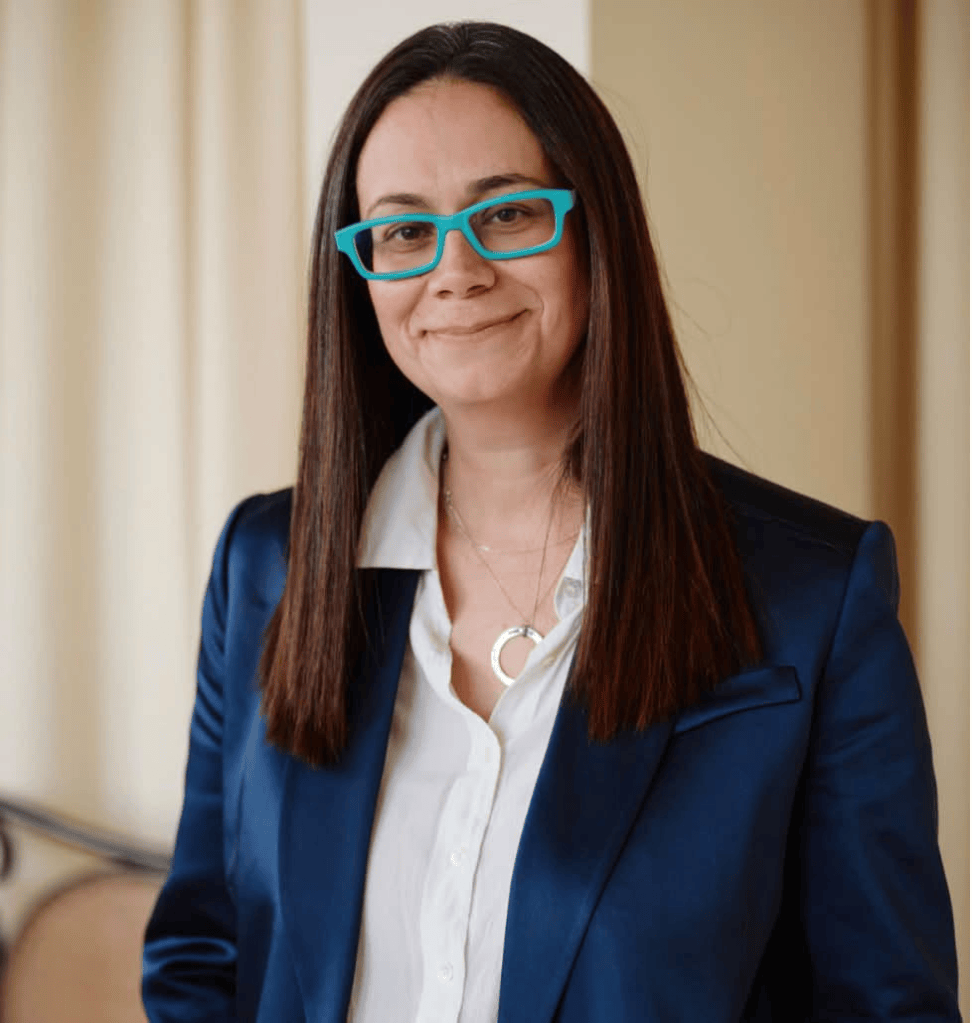
From Refugee Roots to Leadership: Louise Perry to Lead Victoria’s Multicultural Commission
By Dhabessa Wakjira
MELBOURNE – Victoria’s commitment to fostering an inclusive and harmonious society has found a steadfast champion. Multicultural and Multifaith Victoria (MMV) has announced that Ms. Louise Perry will continue her tenure as the Interim Multicultural Coordinator General.
While the title is long, the mission is deeply personal. For Perry, the role is not just a bureaucratic appointment, but a culmination of a life shaped by migration, resilience, and a profound dedication to human rights.
As a Burmese woman, a migrant, and the daughter of a refugee, Perry brings a unique duality to the position. She merges her lived experience with significant professional expertise across the public, development, and human rights sectors. It is this combination of personal insight and professional acumen that MMV leadership believes will be instrumental in driving the organization forward.
“Louise brings extensive experience across government, human rights, and international development, along with a lifelong commitment to strengthening inclusion and opportunity for diverse communities,” MMV said in a statement announcing her continued appointment.
Having traversed the complex landscapes of international development and public service, Perry is acutely aware of the challenges and opportunities facing Victoria’s diverse populace. Her career has been defined by a drive to ensure that systemic barriers are dismantled and that opportunity is accessible to all, regardless of background.
In her role as Interim Coordinator General, Perry is tasked with positioning MMV as a trusted, effective, and robust institution. She is passionate about ensuring the organization builds strong, meaningful partnerships across a wide spectrum of stakeholders—from grassroots community groups and government bodies to businesses and the broader Victorian public.
Her vision for MMV is one of active engagement and tangible results. By fostering these cross-sector alliances, Perry aims to deliver meaningful change, ensuring that the voices of multicultural and multifaith communities are not just heard, but are integral to the shaping of policy and public life in Victoria.
As she continues to lead the organization through its establishment phase, Perry stands as a testament to the very values MMV seeks to uphold: that diversity is a strength, and that leadership is often most powerful when informed by the journey of those who have lived it.






